E-Waste
Management (Part-1)
Mr. Vijay R Joshi
Faculty BBA
Dhanwate National College
Introduction & Definition
 People now a days are using more and more electronic devices world wide.
 The usage period of these electronic devices are not more 5 years.
 As we know that the technology is changing rapidly these devices are replaced by the latest one.
 Buying the latest technological device is not the problem but the problem is with the OLD device.
 That old device which is of no use leads to waste, such waste is generated form electronic device,
which is called as “E-Waste”.
 E-waste can lead to adverse effects on human health and environmental pollution.
 The rapid expansion of technology means that a very large amount of e-waste is created every minute.
 Electronic waste or e-waste describes discarded electrical or electronic devices.
 Used electronics which are destined for reuse, resale, salvage, recycling, or disposal are also
considered as e-waste.
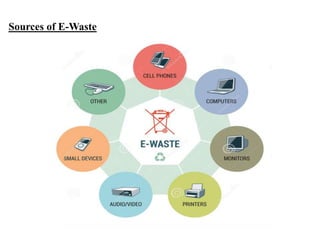
Sources of E-Waste
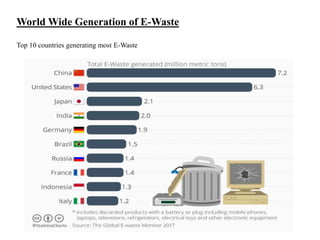
World Wide Generation of E-Waste
Top 10 countries generating most E-Waste
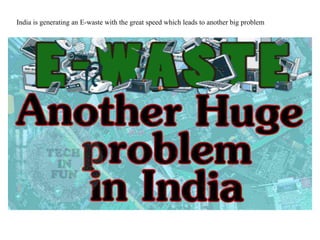
India is generating an E-waste with the great speed which leads to another big problem
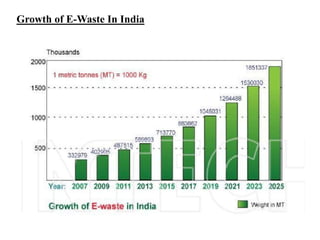
Growth of E-Waste In India
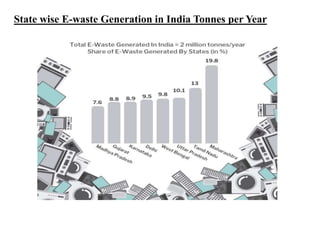
State wise E-waste Generation in India Tonnes per Year
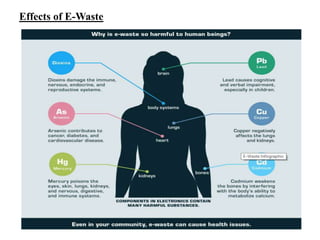
Effects of E-Waste
Can we reduce our E-waste
If Yes how ?
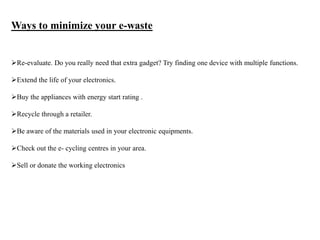
Ways to minimize your e-waste
Re-evaluate. Do you really need that extra gadget? Try finding one device with multiple functions.
Extend the life of your electronics.
Buy the appliances with energy start rating .
Recycle through a retailer.
Be aware of the materials used in your electronic equipments.
Check out the e- cycling centres in your area.
Sell or donate the working electronics
E-mail ID:- vrjoshi18@gmail.com
Contact:- 7020293381
Twitter Id:- @vrjoshi18

E waste Management

  • 1.
    E-Waste Management (Part-1) Mr. VijayR Joshi Faculty BBA Dhanwate National College
  • 2.
    Introduction & Definition People now a days are using more and more electronic devices world wide.  The usage period of these electronic devices are not more 5 years.  As we know that the technology is changing rapidly these devices are replaced by the latest one.  Buying the latest technological device is not the problem but the problem is with the OLD device.  That old device which is of no use leads to waste, such waste is generated form electronic device, which is called as “E-Waste”.  E-waste can lead to adverse effects on human health and environmental pollution.  The rapid expansion of technology means that a very large amount of e-waste is created every minute.  Electronic waste or e-waste describes discarded electrical or electronic devices.  Used electronics which are destined for reuse, resale, salvage, recycling, or disposal are also considered as e-waste.
  • 3.
  • 4.
    World Wide Generationof E-Waste Top 10 countries generating most E-Waste
  • 5.
    India is generatingan E-waste with the great speed which leads to another big problem
  • 6.
  • 7.
    State wise E-wasteGeneration in India Tonnes per Year
  • 8.
  • 9.
    Can we reduceour E-waste
  • 10.
  • 11.
    Ways to minimizeyour e-waste Re-evaluate. Do you really need that extra gadget? Try finding one device with multiple functions. Extend the life of your electronics. Buy the appliances with energy start rating . Recycle through a retailer. Be aware of the materials used in your electronic equipments. Check out the e- cycling centres in your area. Sell or donate the working electronics
  • 12.
    E-mail ID:- vrjoshi18@gmail.com Contact:-7020293381 Twitter Id:- @vrjoshi18