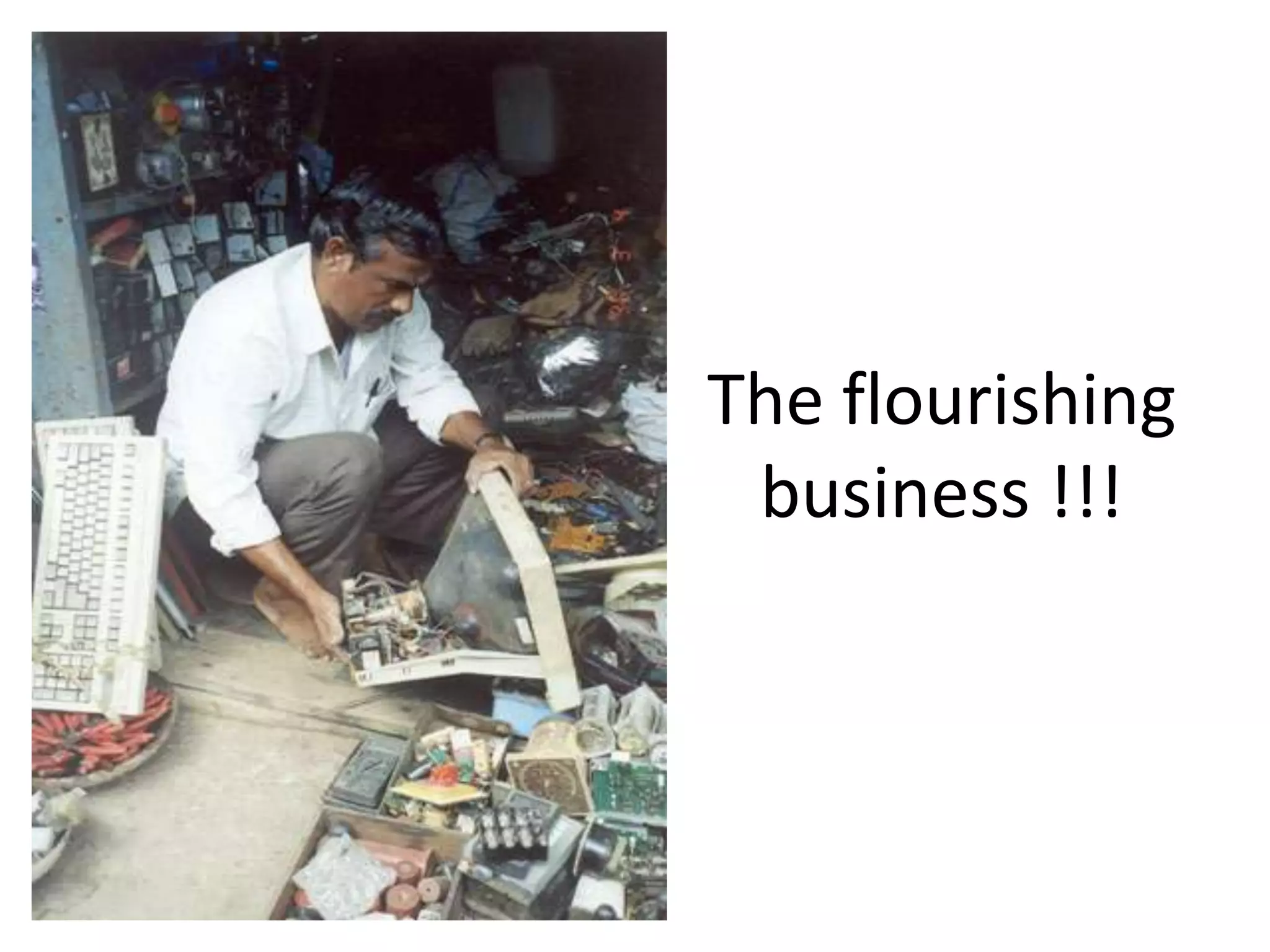
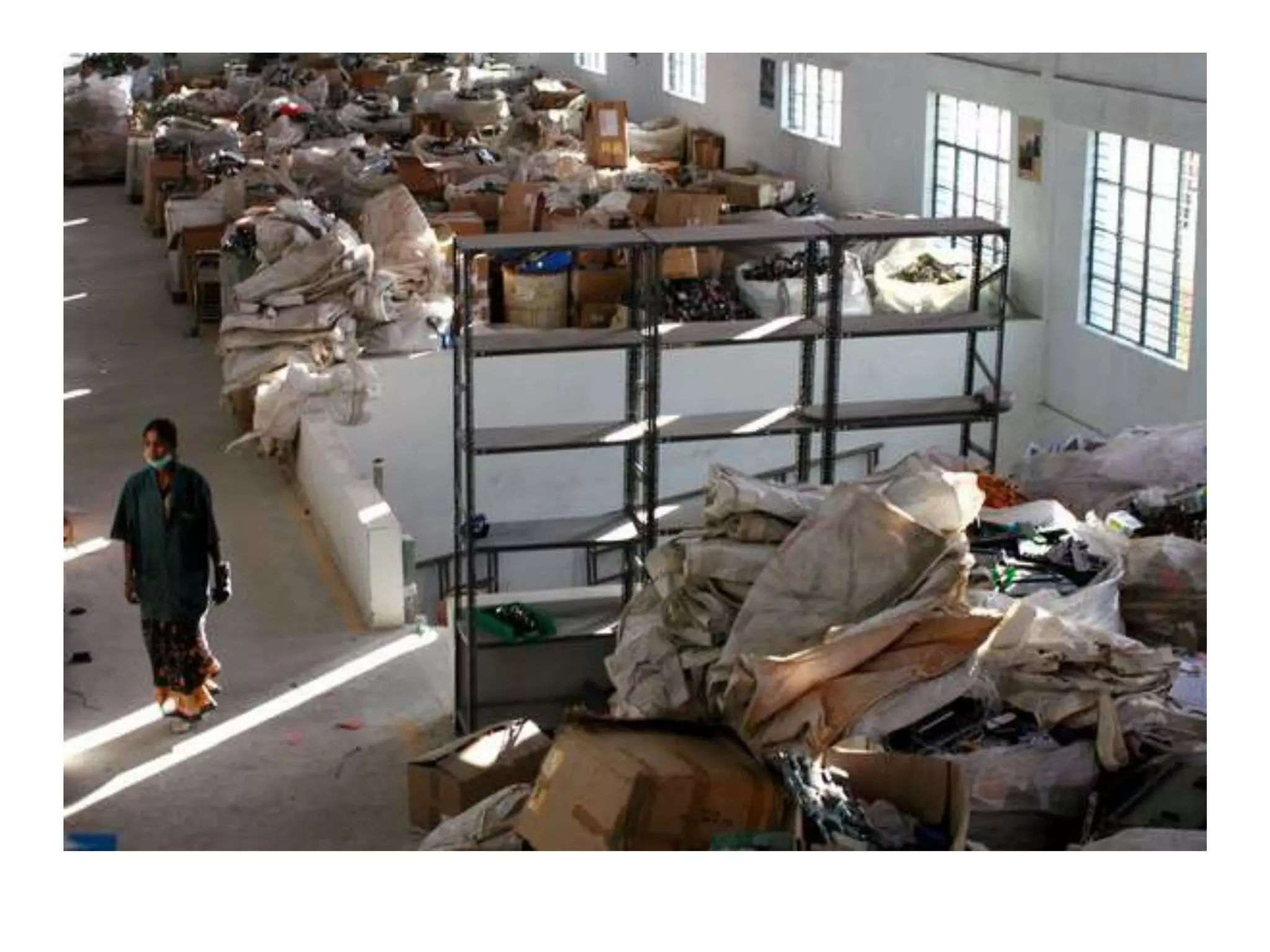
The flourishing
 business !!!
E-waste: Definition
Are those electronic equipments/ products
that connect with power plug, batteries which
have become obsolete due to :
 - advancement in technology
 - changes in fashion, style and status
 - nearing the end of their useful life
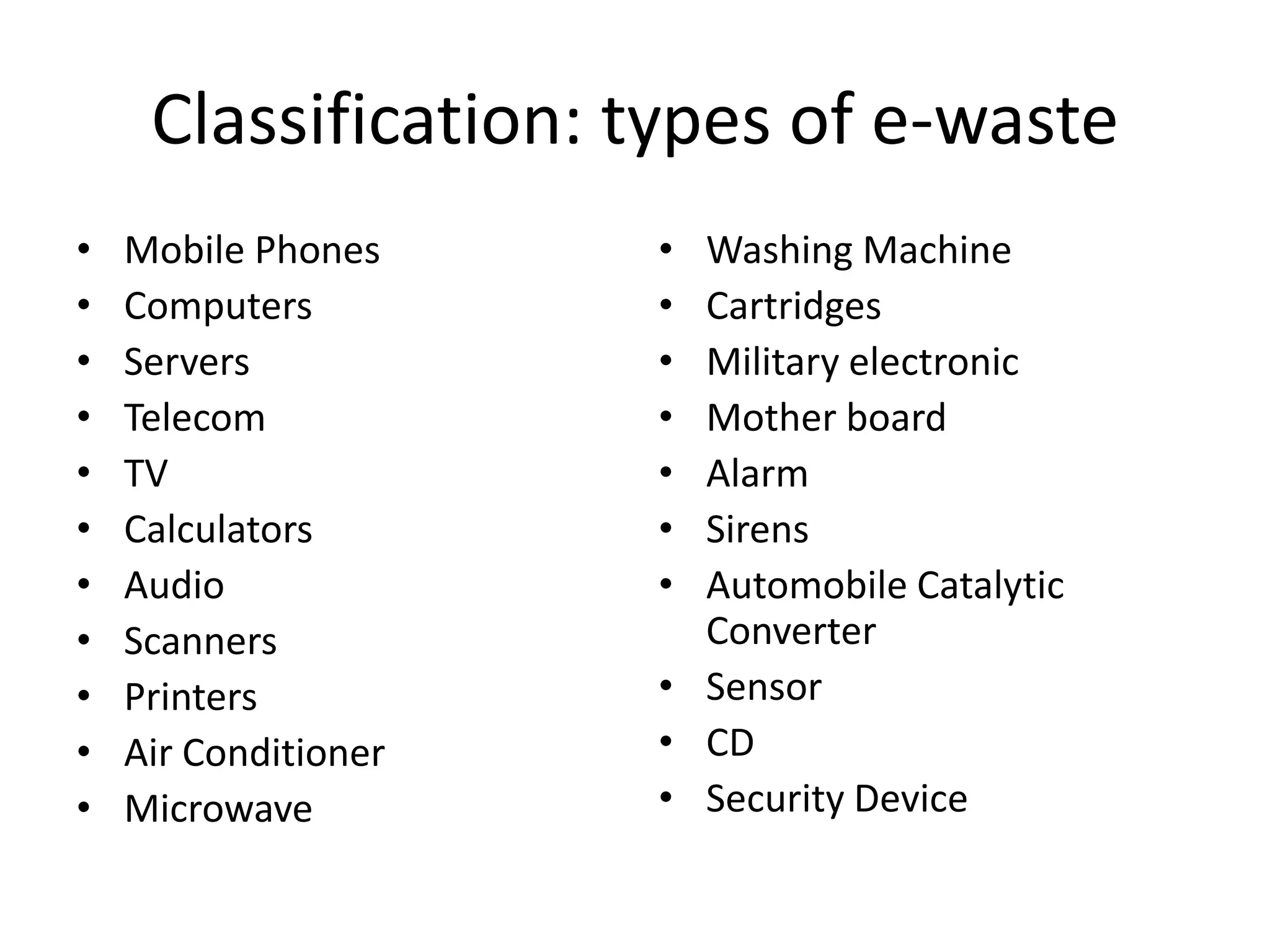
Classification: types of e-waste
•   Mobile Phones     • Washing Machine
•   Computers         • Cartridges
•   Servers           • Military electronic
•   Telecom           • Mother board
•   TV                • Alarm
•   Calculators       • Sirens
•   Audio             • Automobile Catalytic
•   Scanners            Converter
•   Printers          • Sensor
•   Air Conditioner   • CD
•   Microwave         • Security Device
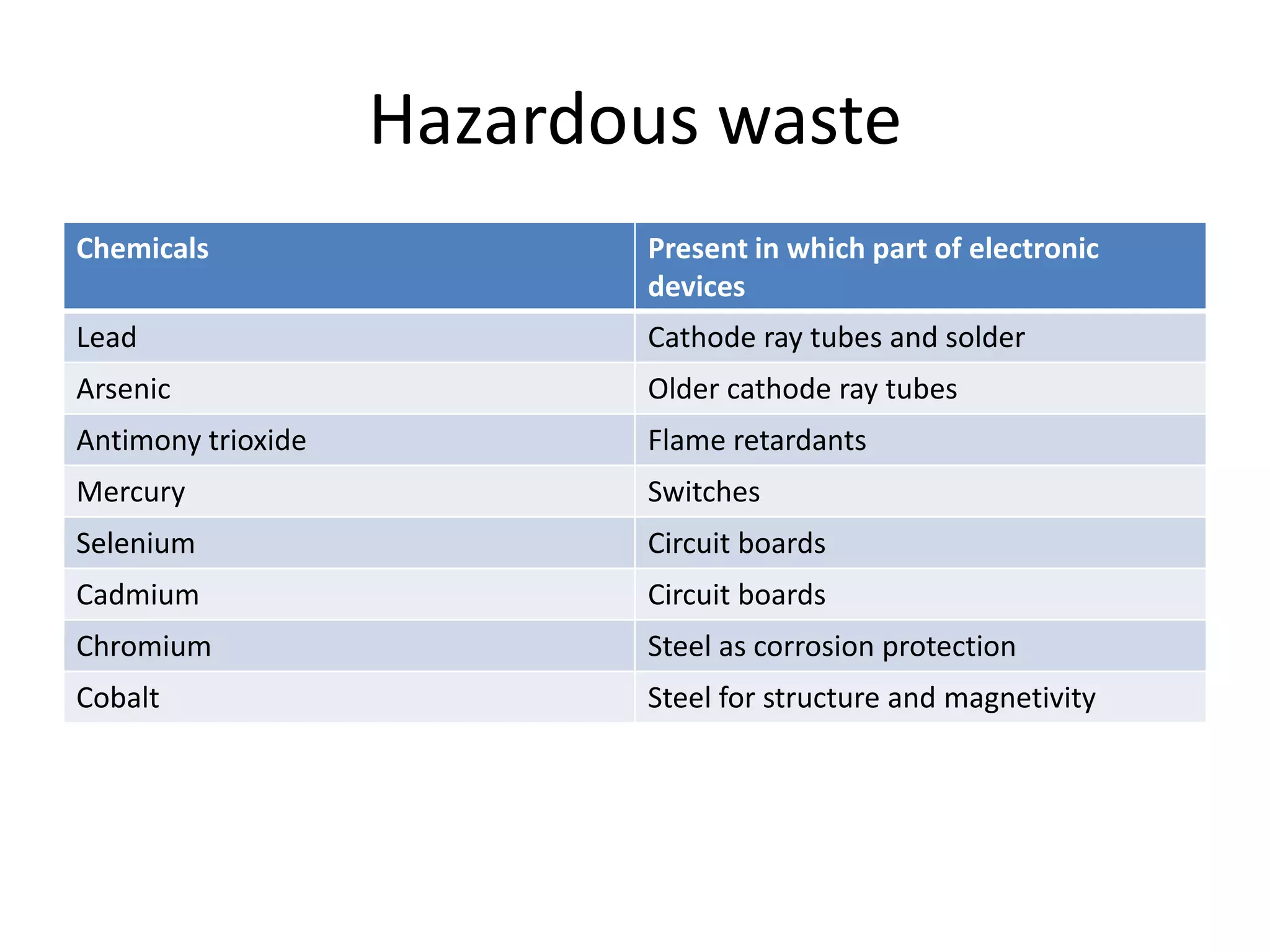
Hazardous waste
Chemicals                  Present in which part of electronic
                           devices
Lead                       Cathode ray tubes and solder
Arsenic                    Older cathode ray tubes
Antimony trioxide          Flame retardants
Mercury                    Switches
Selenium                   Circuit boards
Cadmium                    Circuit boards
Chromium                   Steel as corrosion protection
Cobalt                     Steel for structure and magnetivity
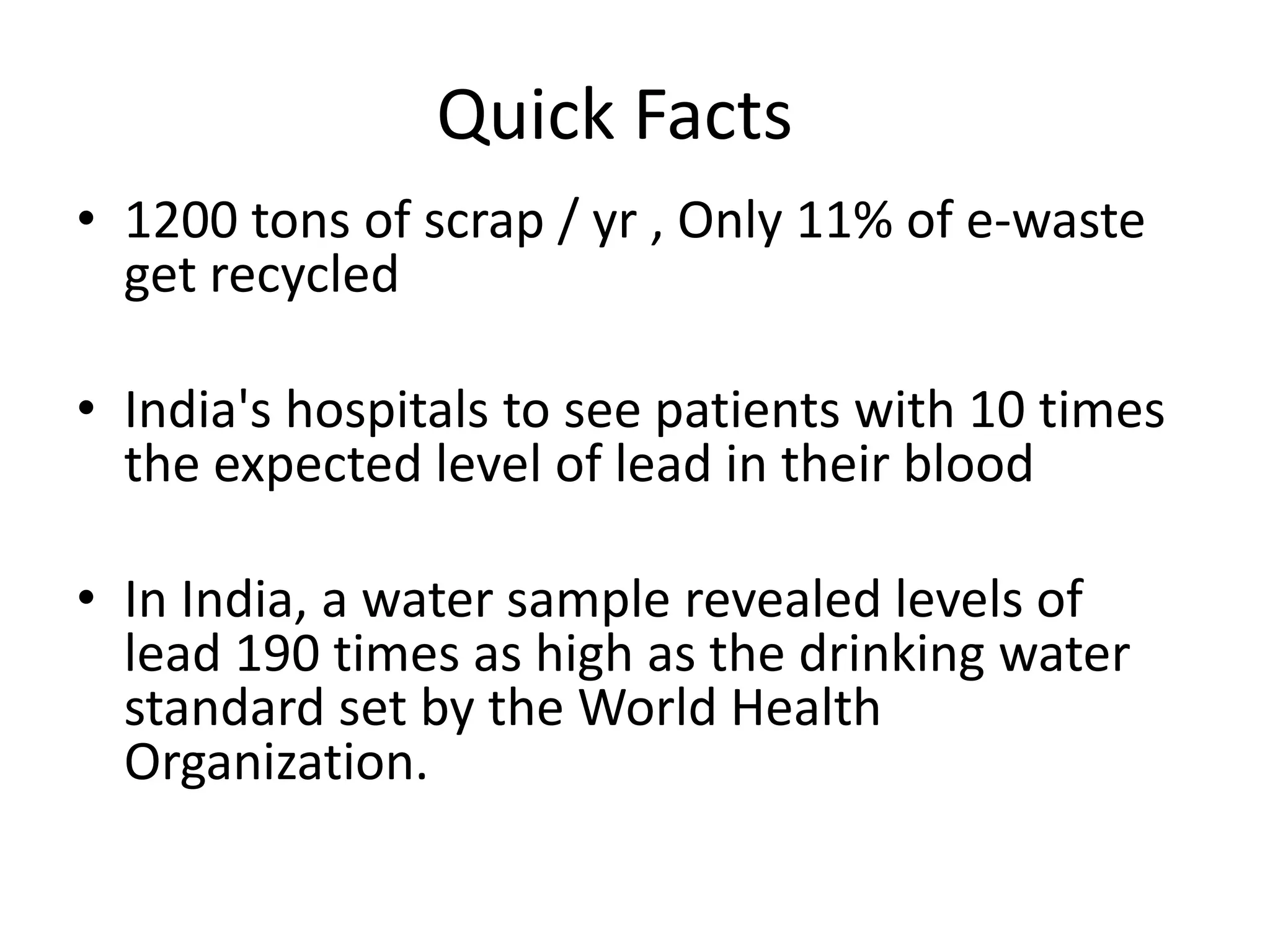
Quick Facts
• 1200 tons of scrap / yr , Only 11% of e-waste
  get recycled

• India's hospitals to see patients with 10 times
  the expected level of lead in their blood

• In India, a water sample revealed levels of
  lead 190 times as high as the drinking water
  standard set by the World Health
  Organization.
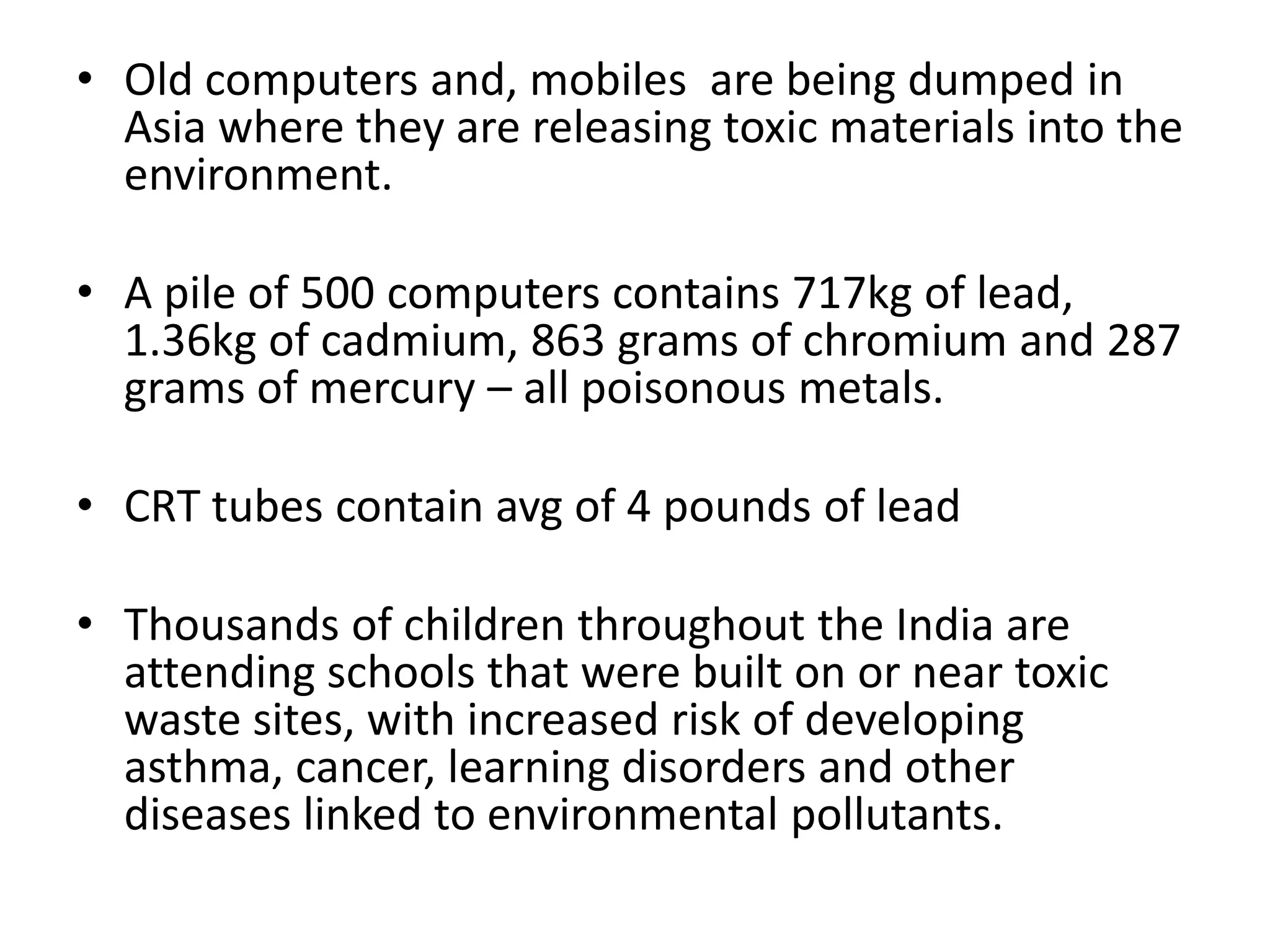
• Old computers and, mobiles are being dumped in
  Asia where they are releasing toxic materials into the
  environment.

• A pile of 500 computers contains 717kg of lead,
  1.36kg of cadmium, 863 grams of chromium and 287
  grams of mercury – all poisonous metals.

• CRT tubes contain avg of 4 pounds of lead

• Thousands of children throughout the India are
  attending schools that were built on or near toxic
  waste sites, with increased risk of developing
  asthma, cancer, learning disorders and other
  diseases linked to environmental pollutants.
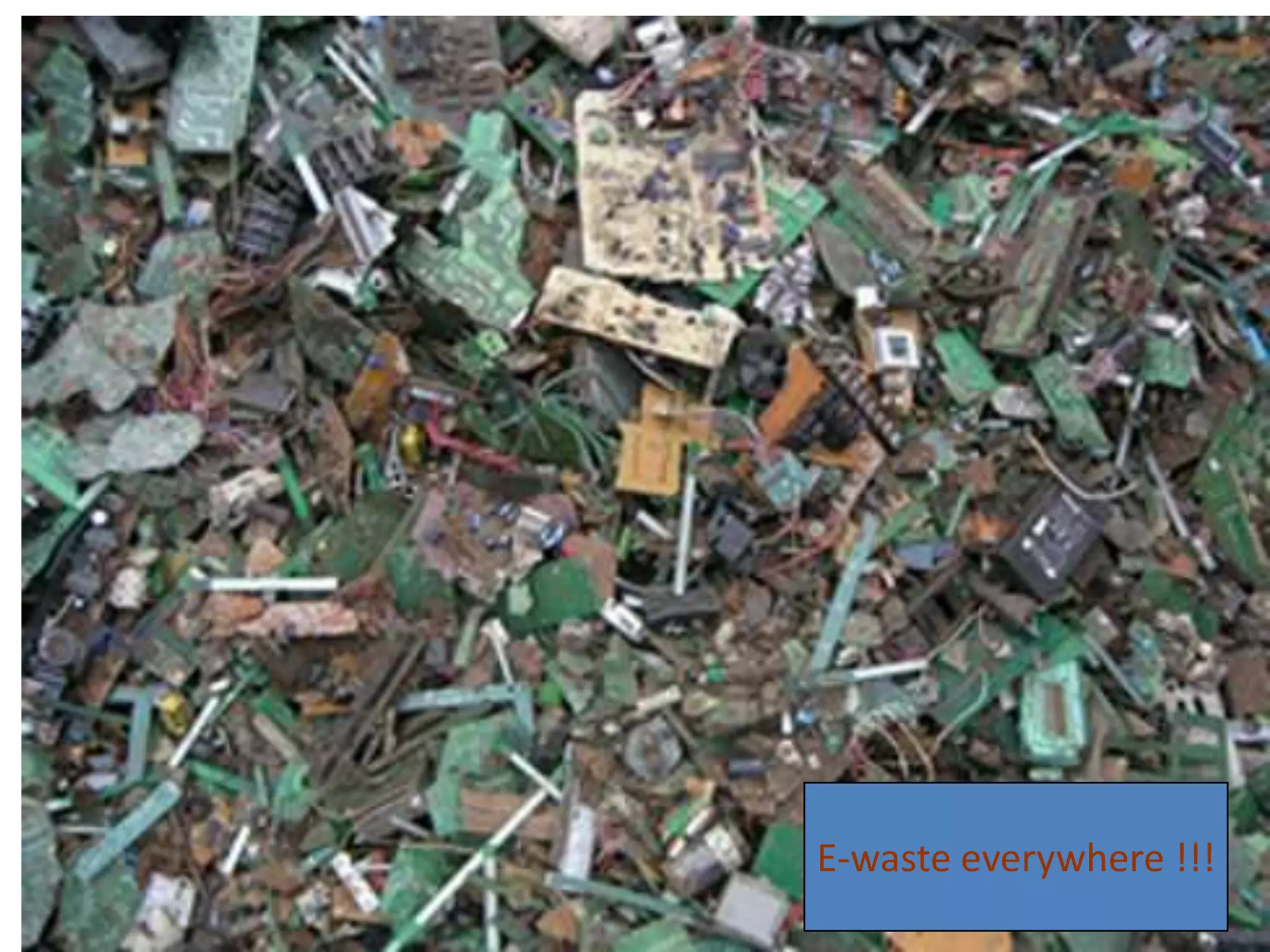
E-waste everywhere !!!
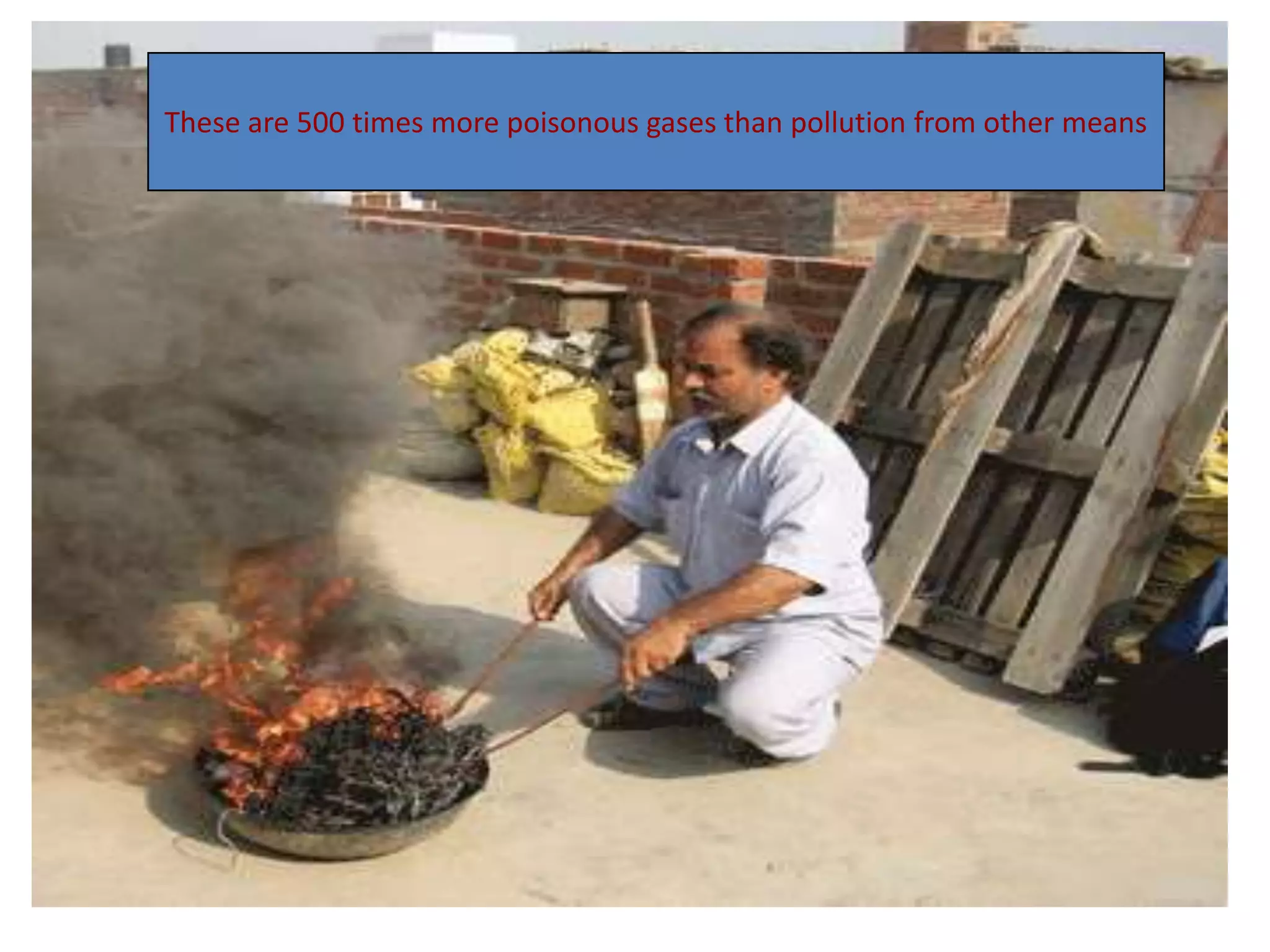
These are 500 times more poisonous gases than pollution from other means
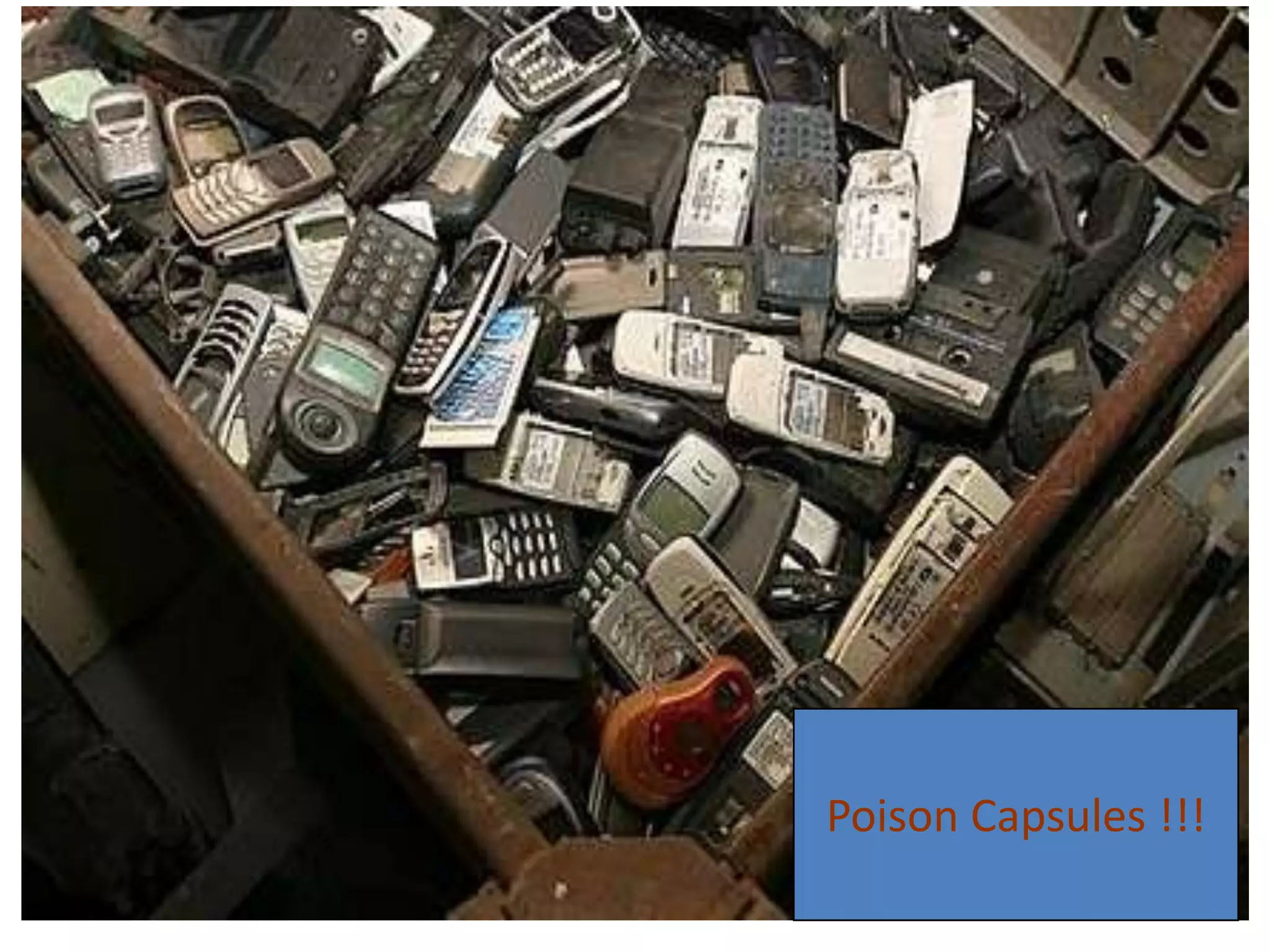
Poison Capsules !!!
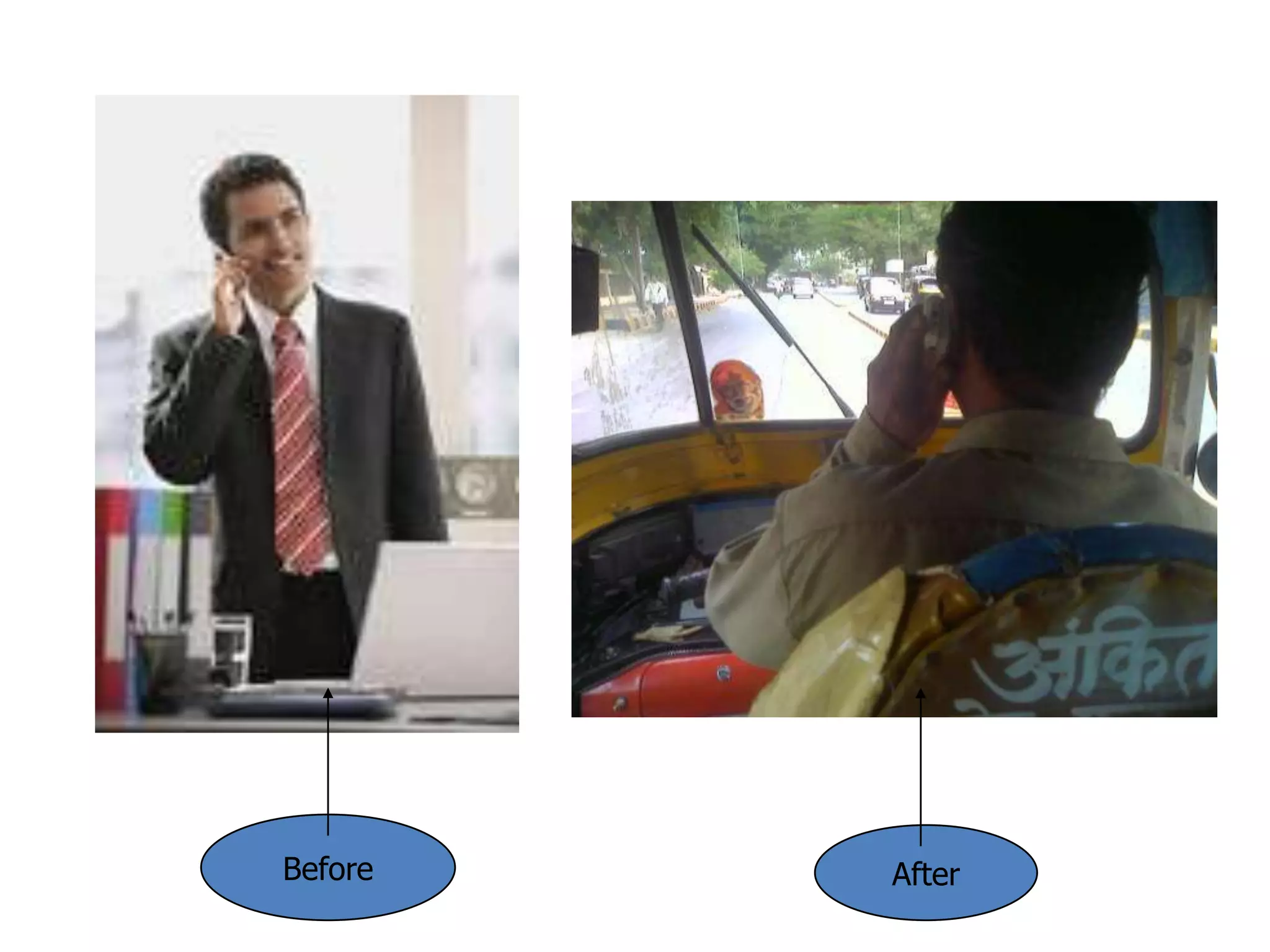
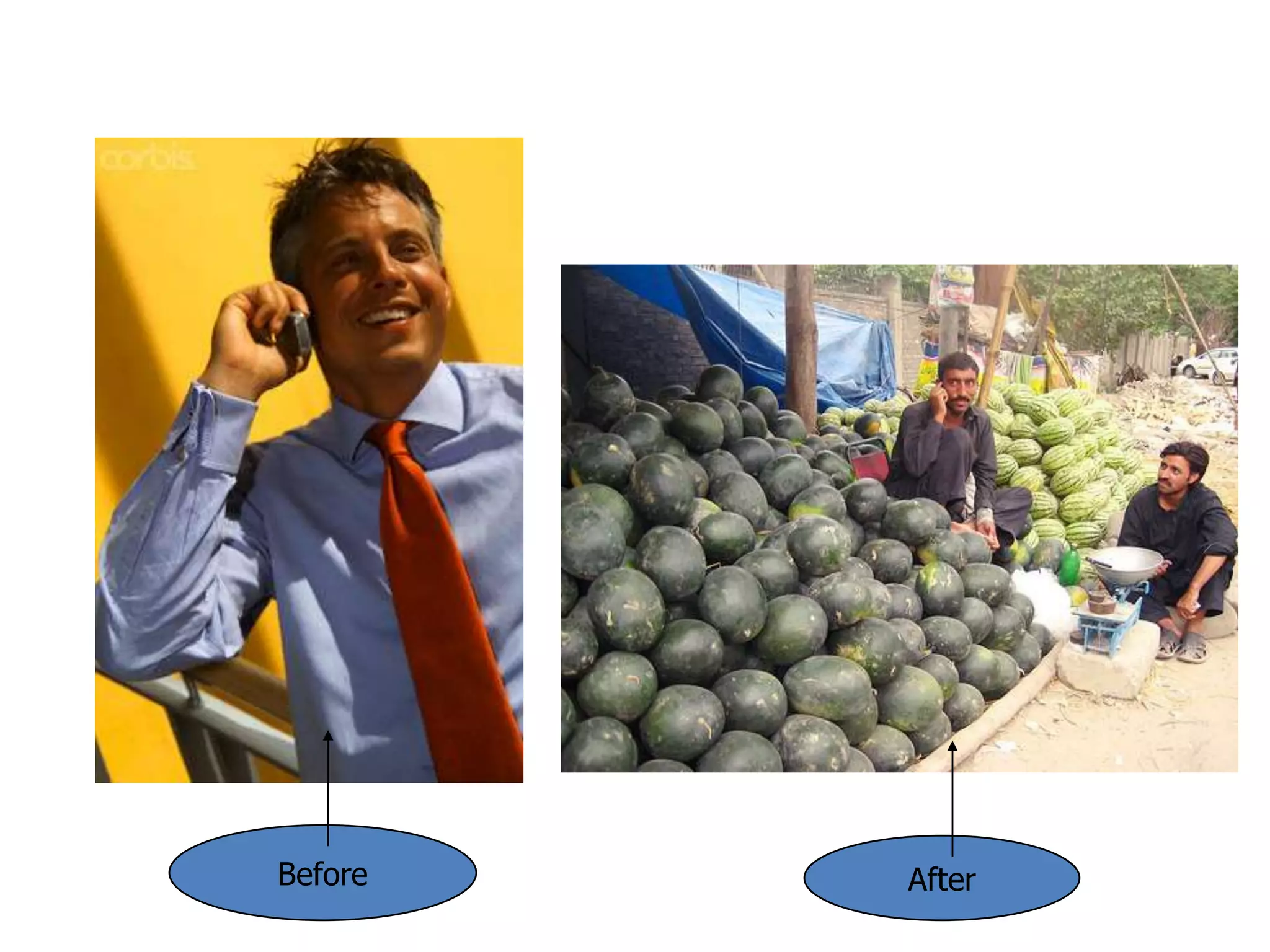
Before   After
Scenario
• Batteries have toxic constituents such as cadmium and
  brominated flame-retardants and are replaced at least once
  before retiring the phones.

• Indian mobile phone users are expected to rise to over 120
  million by 2008, making telecom sector one of the most
  lucrative markets.

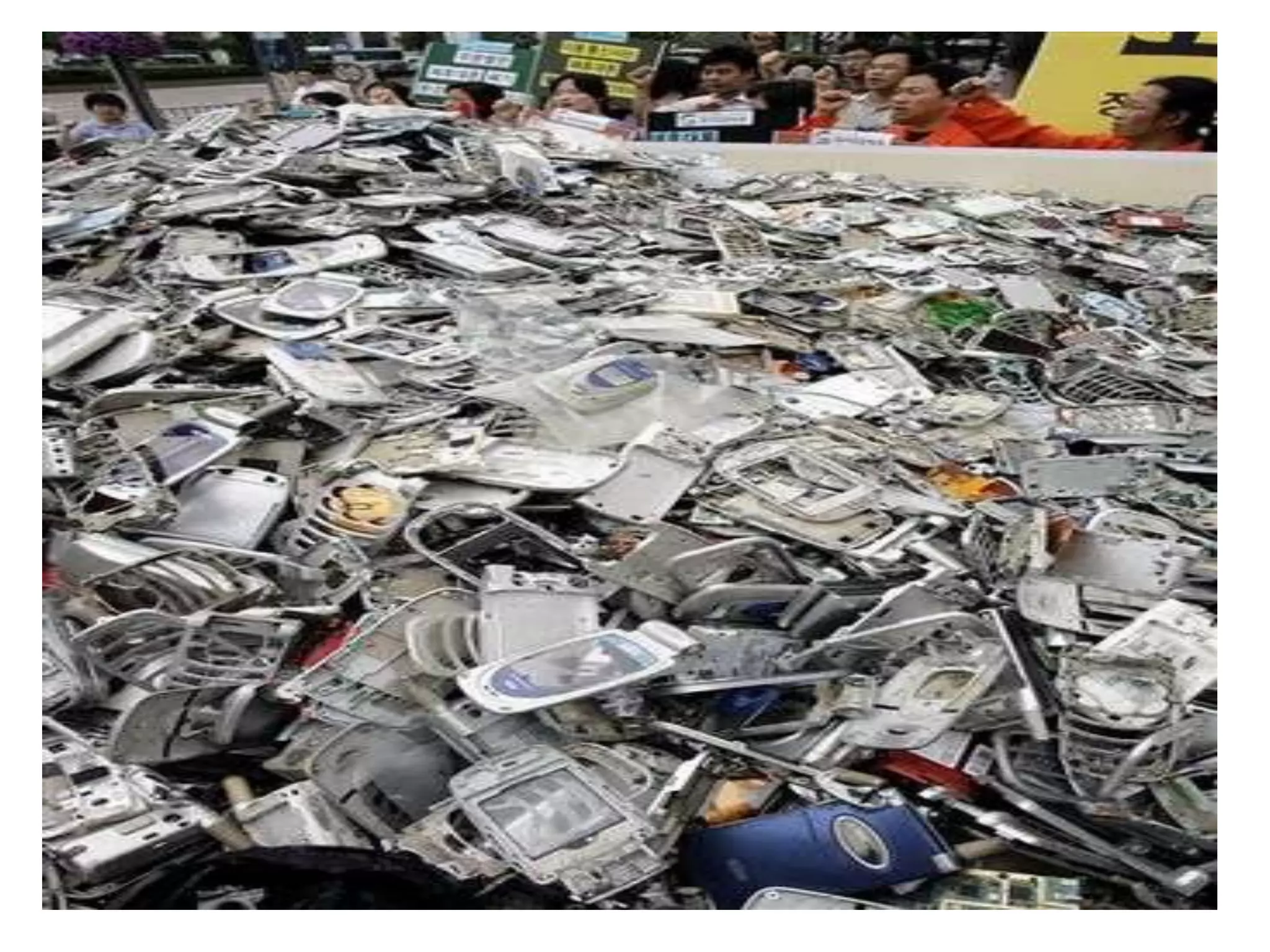
• In the United States alone, experts estimate that 130 million
  cell phones will be discarded by the year 2005, resulting in
  65,000 tonnes of cell phone waste -- most probably headed
  towards Indian shores to be dumped here.
Before   After
The Indian picture
• India, one of the fastest growing mobile
  telephone markets in the world

• Boasted over 14.17 million mobile phone
  subscribers in May 2003

• About 102.8 per cent more than the previous
  year.
• Mobile phone users are expected to rise to
  over 120 million by 2008

• The advent of ‘use and throw’ , ‘low value-low
  life’ CHINA MOBILES has caused havoc in e-
  waste.
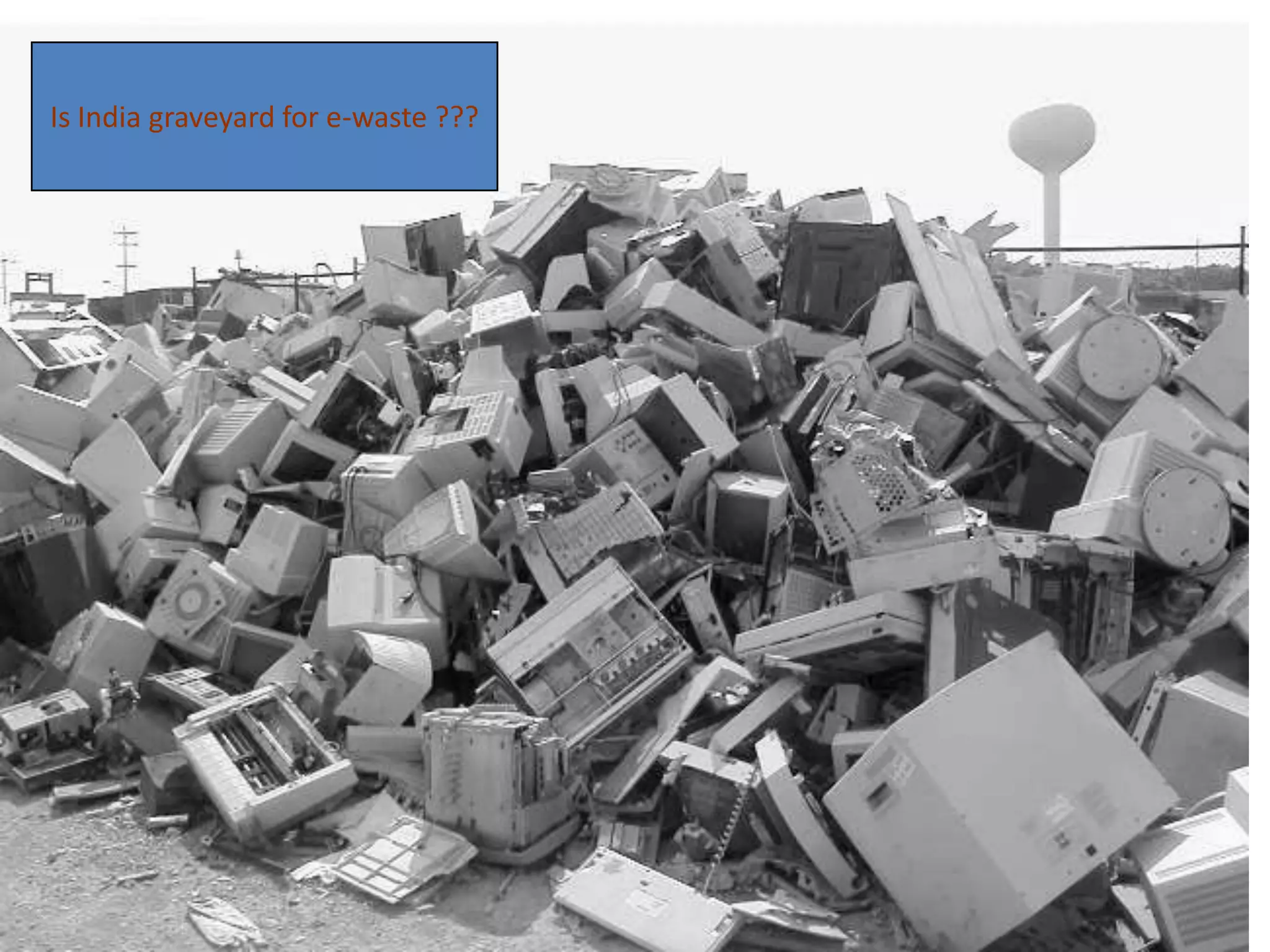
Is India graveyard for e-waste ???
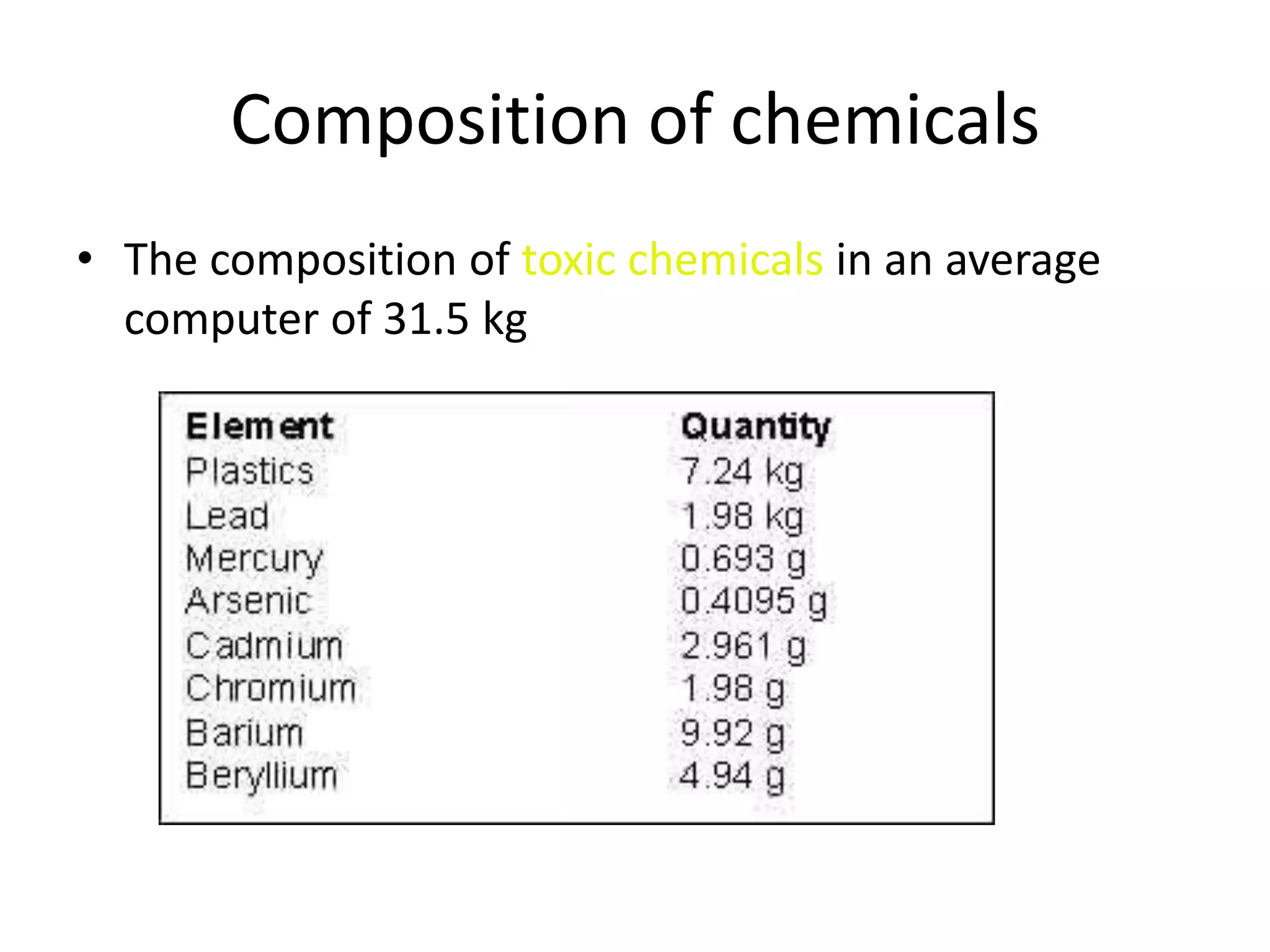
Composition of chemicals
• The composition of toxic chemicals in an average
  computer of 31.5 kg
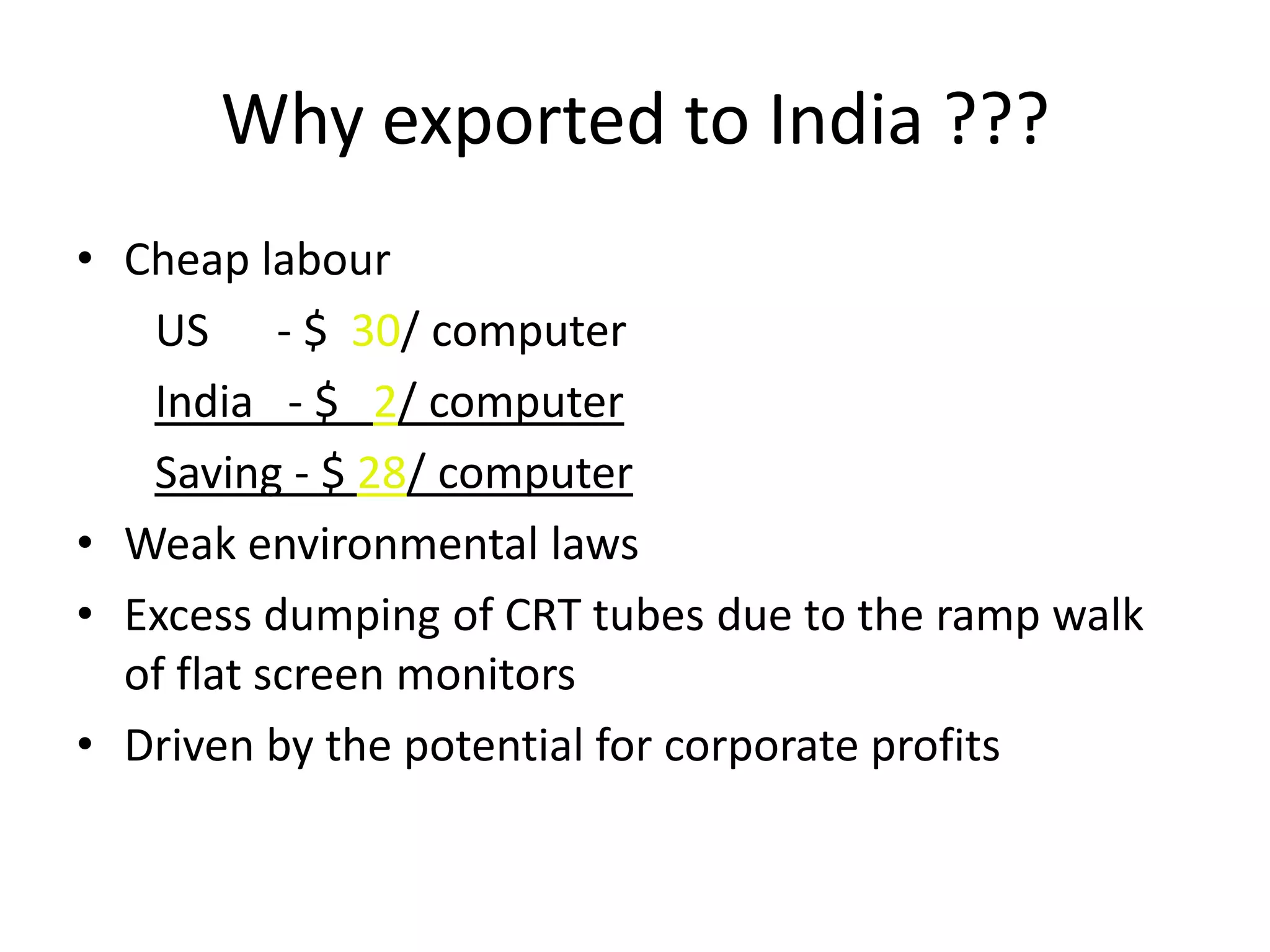
Why exported to India ???
• Cheap labour
   US - $ 30/ computer
   India - $ 2/ computer
   Saving - $ 28/ computer
• Weak environmental laws
• Excess dumping of CRT tubes due to the ramp walk
  of flat screen monitors
• Driven by the potential for corporate profits
Indian Scenario
•   Delhi, Bangalore, Hyderabad-largest contributors
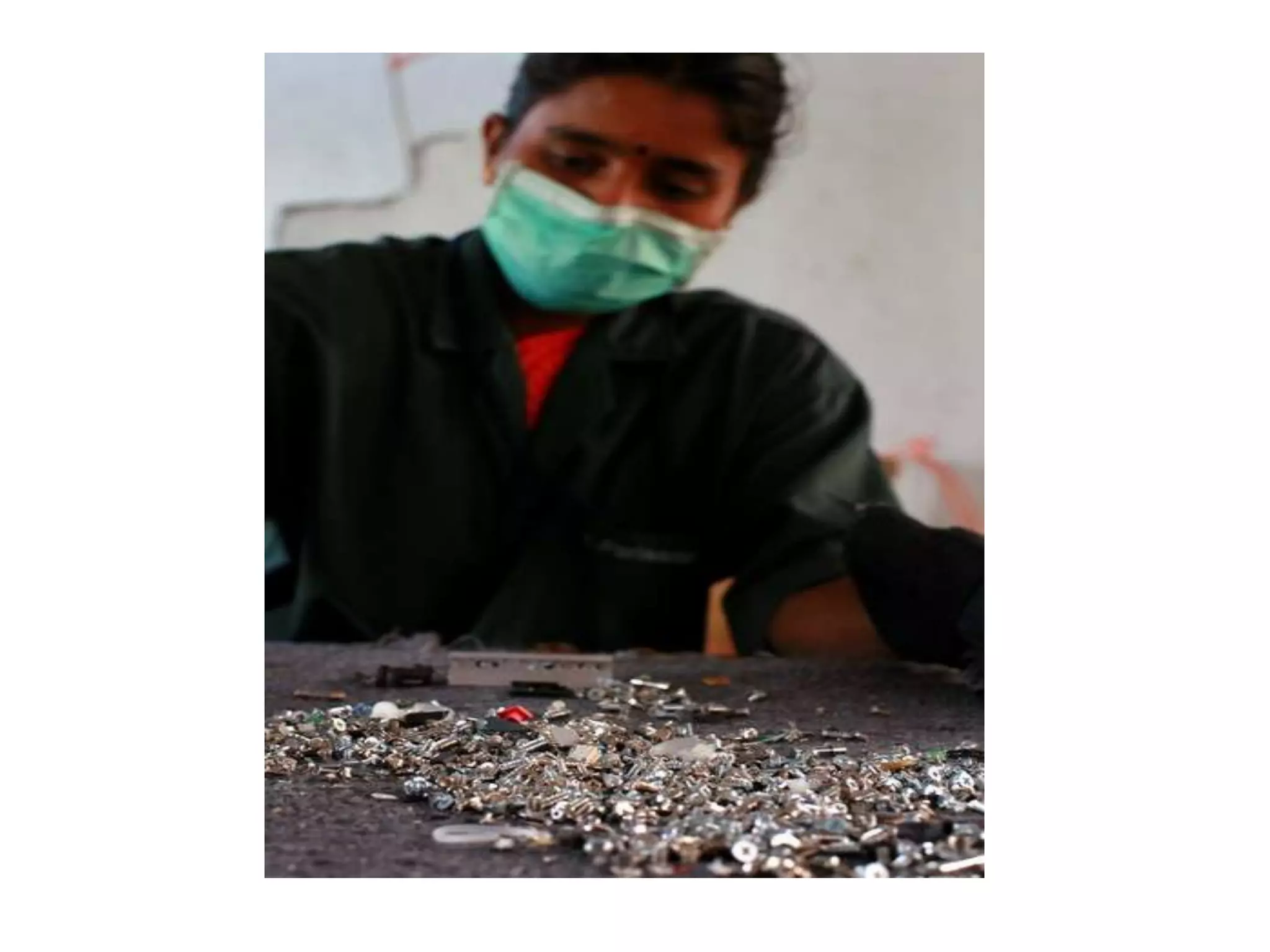
•   Informal recylers (cheap labour)
•   Technology rudimentary
•   7 million ppl in Bangalore – direct contributors of e-
    waste
•   Dioxins in the recyling place
•   Lead to cancer
•   330000 tonnes generated in 2007
•   19000 processed
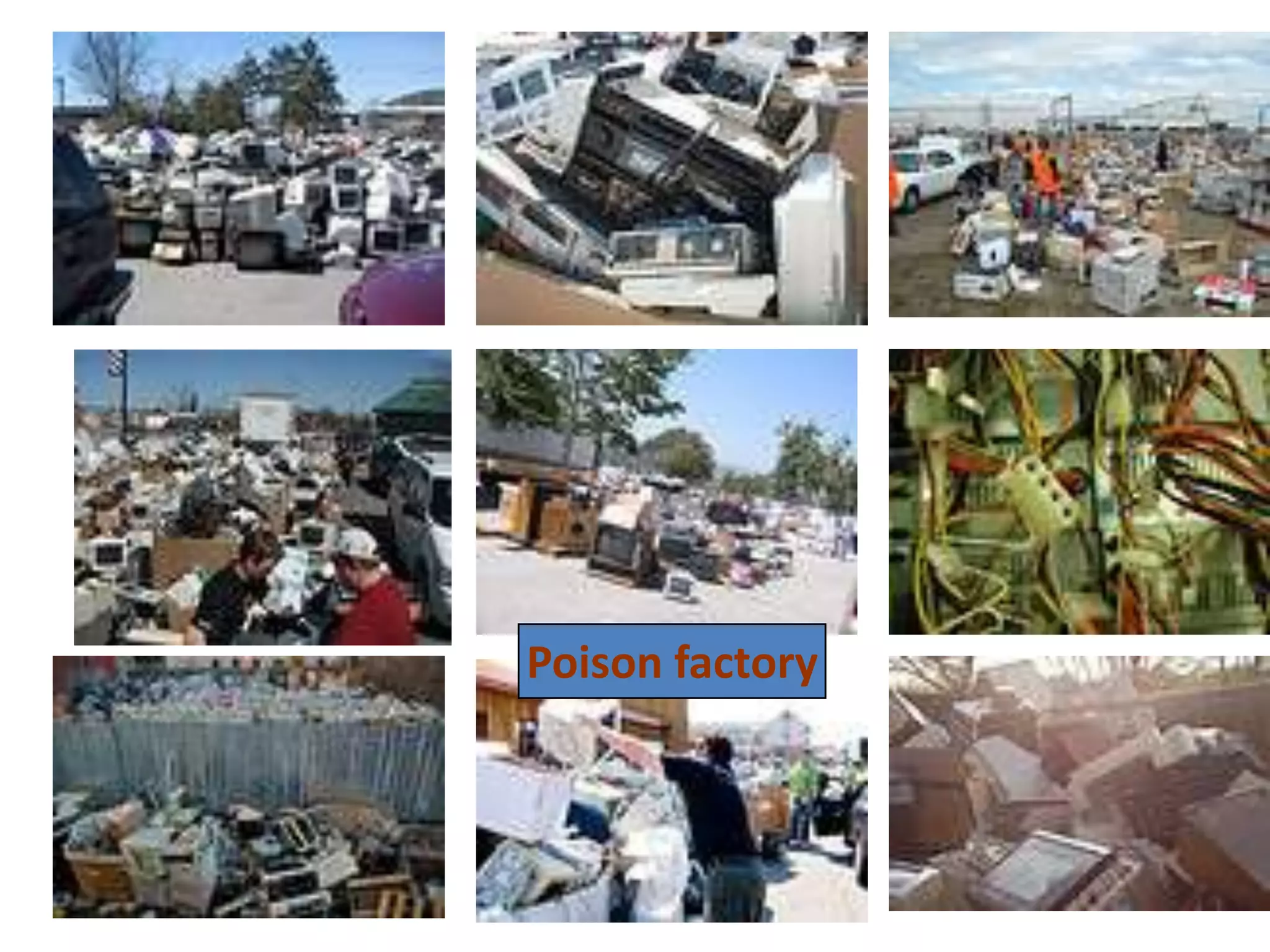
Poison factory
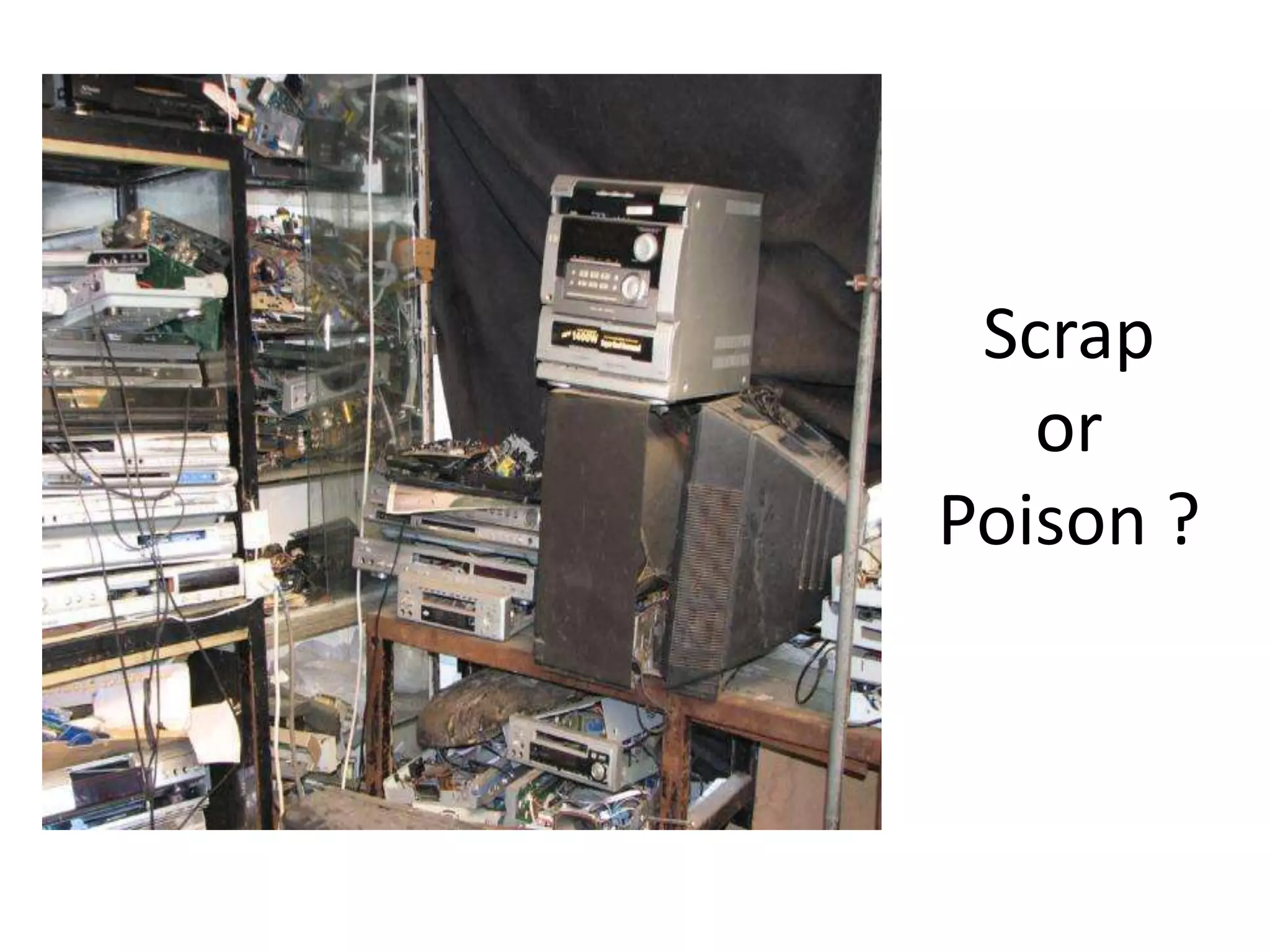
Scrap
   or
Poison ?
The poisonous gases !!!
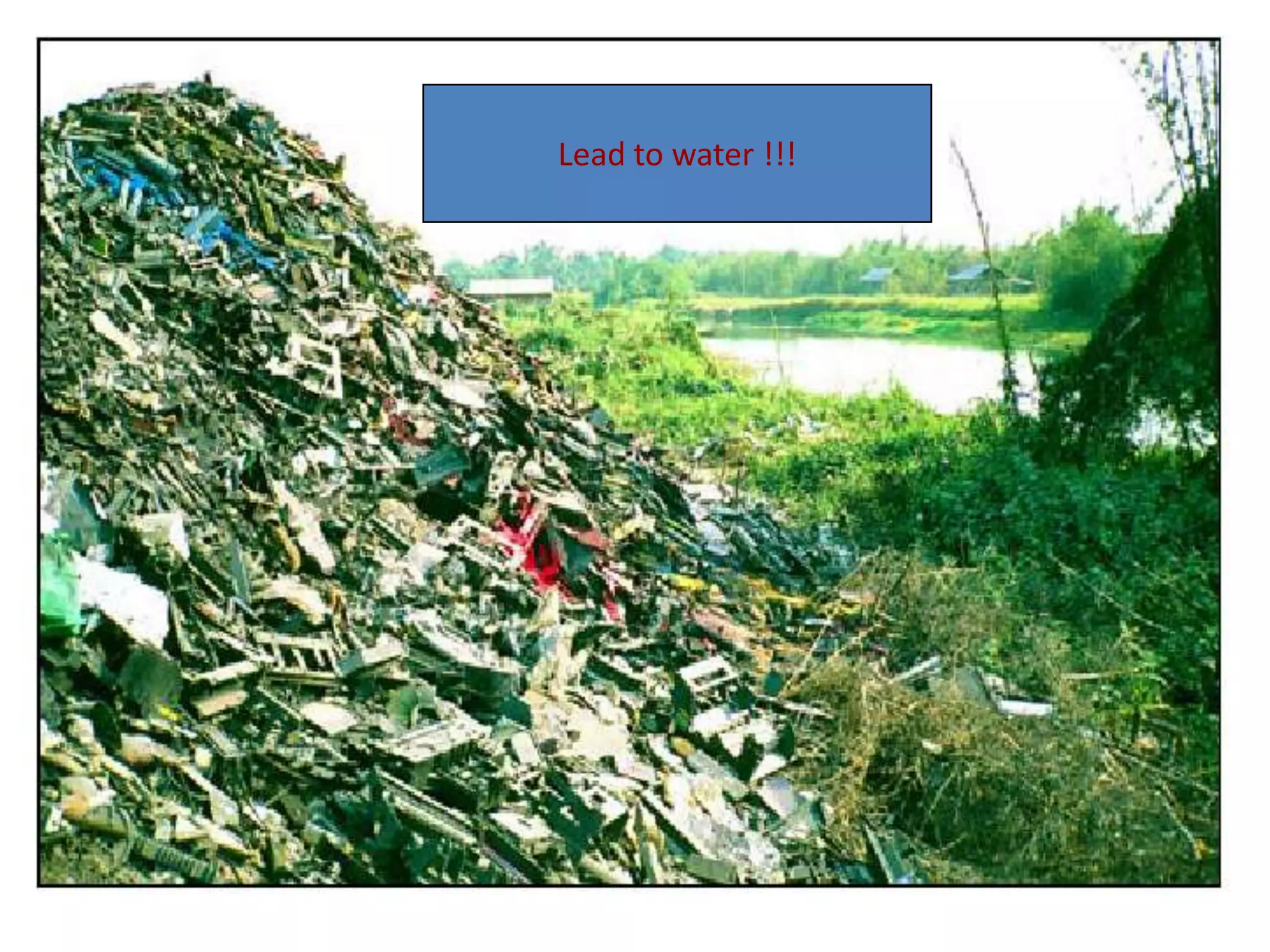
Waste Lead to water !!!
      Near Water
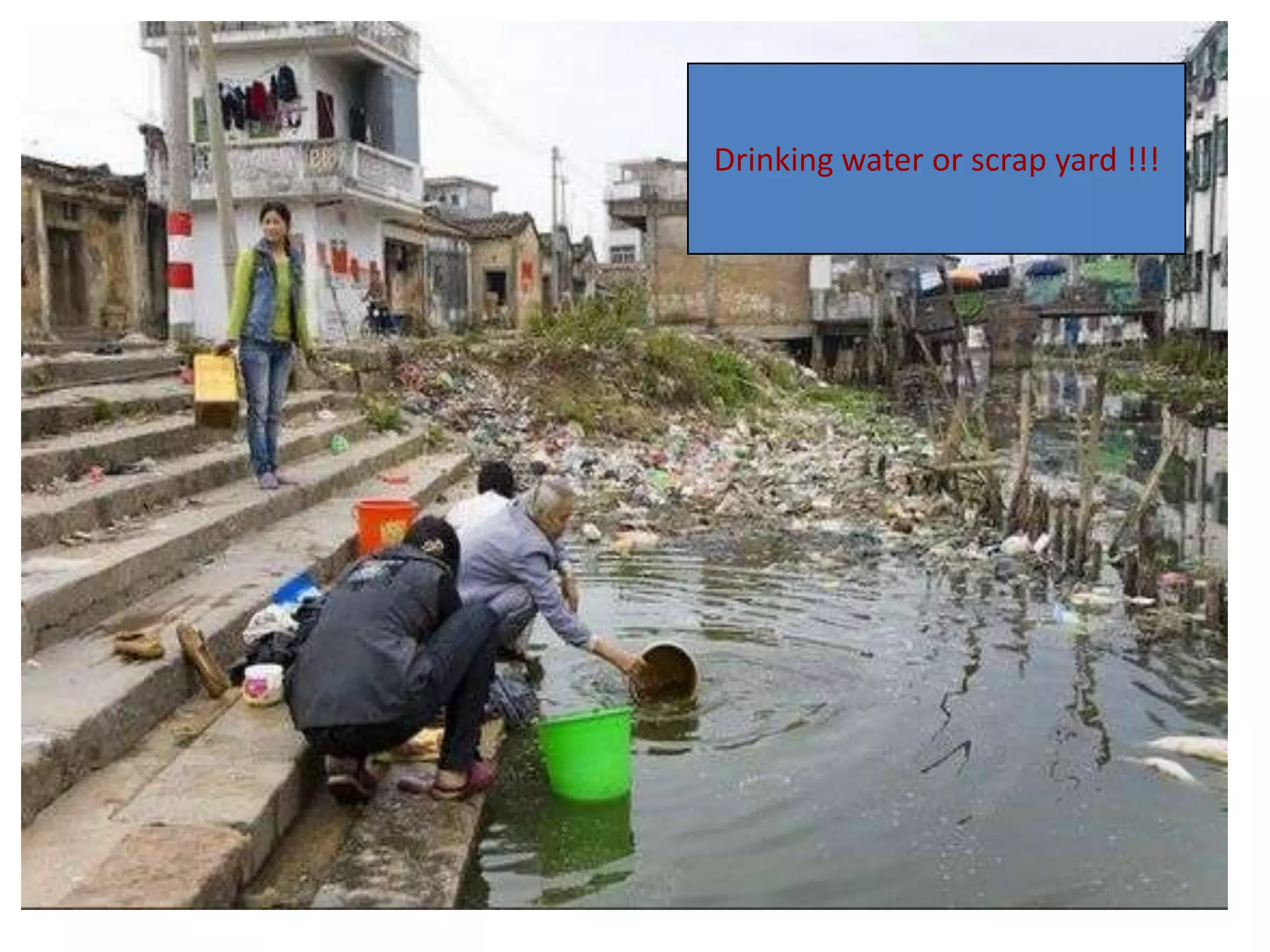
Drinking water or scrap yard !!!
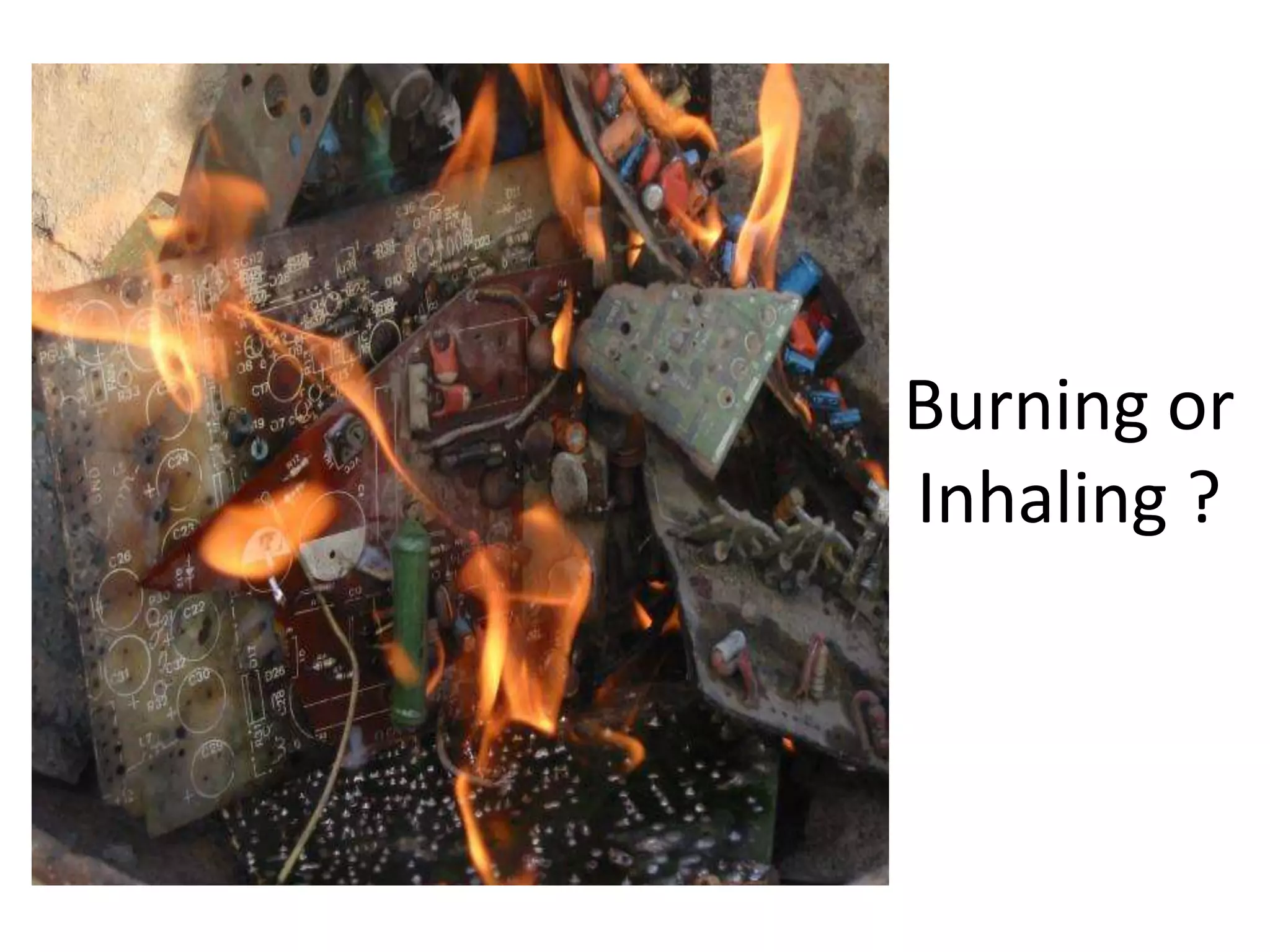
Burning or
Inhaling ?
Growth of e-waste !!!
Health impact
•   DNA : damage in lymphocytes, fetal and developmental toxicity; growth
    retardation; abnormal brain development, which can result in intellectual
    impairment; and possible long-term impacts on memory, learning and
    behaviour.

•   Nervous System: damage to the central nervous system (CNS) and blood system,
    including CNS depression and neurotoxicity; immune system suppression,
    including inhibition of a key blood cell enzyme.

•   Organs : damage to the brain, including swelling; liver, including liver necrosis;
    kidney, including renal toxicity; thyroid; pancreas; lymph nodes; spleen; and
    bone, including bone toxicity.
•
    Skin : contact dermatitis; skin lesions; carcinogenic, including tumour promotion
    and lung cancer; anaemia; CBD (a currently-incurable, debilitating disease that
    can sometimes be fatal); and mortality.
•
    Other: hypertension (high blood pressure); cardiovascular and heart disease;
    respiratory tract irritation, including irritation of the nose, mouth and eyes.
Growth of the trade


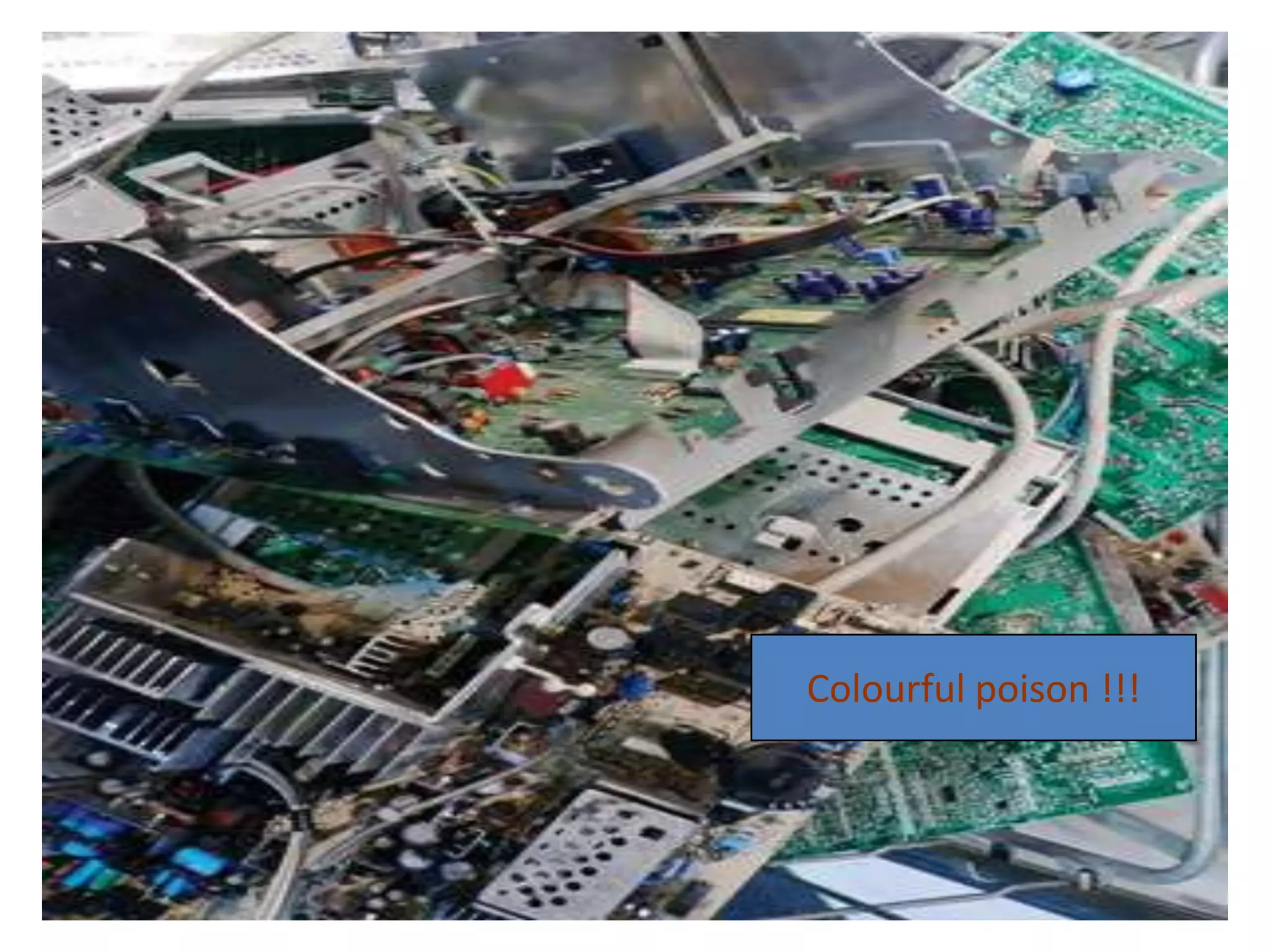
              Colourful poison !!!
Future !!!
• India emerging as a graveyard for the world’s e-waste

• More amount of money to be spent on medical bills
  if proper attention and care not given importance

• Less availability of space as playgrounds for children
  and the presence of more number of dumping
  grounds
Recommendations
• Promote recycling units to ease process and to
  encourage generators to have proper e-waste
  disposal

• Impart training to generators on e-waste
  handling

• Awareness program on recycling
• Fix duties and responsibilities to recyclers

• Tax incentives for scrap dealers

• Reward and reprimand schemes for
  performance and non-compliance of e-waste
  management

• To make recycling business viable one
• Government should encroach legal import of e-waste

• Should subsidize recyling and disposal industry

• Incentive schemes for garbage collectors, general
  public

• Disposal fee from manufacturers and consumers
E waste management
E waste management

E waste management

  • 4.
  • 5.
    E-waste: Definition Are thoseelectronic equipments/ products that connect with power plug, batteries which have become obsolete due to : - advancement in technology - changes in fashion, style and status - nearing the end of their useful life
  • 6.
    Classification: types ofe-waste • Mobile Phones • Washing Machine • Computers • Cartridges • Servers • Military electronic • Telecom • Mother board • TV • Alarm • Calculators • Sirens • Audio • Automobile Catalytic • Scanners Converter • Printers • Sensor • Air Conditioner • CD • Microwave • Security Device
  • 7.
    Hazardous waste Chemicals Present in which part of electronic devices Lead Cathode ray tubes and solder Arsenic Older cathode ray tubes Antimony trioxide Flame retardants Mercury Switches Selenium Circuit boards Cadmium Circuit boards Chromium Steel as corrosion protection Cobalt Steel for structure and magnetivity
  • 8.
    Quick Facts • 1200tons of scrap / yr , Only 11% of e-waste get recycled • India's hospitals to see patients with 10 times the expected level of lead in their blood • In India, a water sample revealed levels of lead 190 times as high as the drinking water standard set by the World Health Organization.
  • 9.
    • Old computersand, mobiles are being dumped in Asia where they are releasing toxic materials into the environment. • A pile of 500 computers contains 717kg of lead, 1.36kg of cadmium, 863 grams of chromium and 287 grams of mercury – all poisonous metals. • CRT tubes contain avg of 4 pounds of lead • Thousands of children throughout the India are attending schools that were built on or near toxic waste sites, with increased risk of developing asthma, cancer, learning disorders and other diseases linked to environmental pollutants.
  • 10.
  • 11.
    These are 500times more poisonous gases than pollution from other means
  • 12.
  • 13.
    Before After
  • 14.
    Scenario • Batteries havetoxic constituents such as cadmium and brominated flame-retardants and are replaced at least once before retiring the phones. • Indian mobile phone users are expected to rise to over 120 million by 2008, making telecom sector one of the most lucrative markets. • In the United States alone, experts estimate that 130 million cell phones will be discarded by the year 2005, resulting in 65,000 tonnes of cell phone waste -- most probably headed towards Indian shores to be dumped here.
  • 15.
    Before After
  • 16.
    The Indian picture •India, one of the fastest growing mobile telephone markets in the world • Boasted over 14.17 million mobile phone subscribers in May 2003 • About 102.8 per cent more than the previous year.
  • 17.
    • Mobile phoneusers are expected to rise to over 120 million by 2008 • The advent of ‘use and throw’ , ‘low value-low life’ CHINA MOBILES has caused havoc in e- waste.
  • 19.
    Is India graveyardfor e-waste ???
  • 20.
    Composition of chemicals •The composition of toxic chemicals in an average computer of 31.5 kg
  • 21.
    Why exported toIndia ??? • Cheap labour US - $ 30/ computer India - $ 2/ computer Saving - $ 28/ computer • Weak environmental laws • Excess dumping of CRT tubes due to the ramp walk of flat screen monitors • Driven by the potential for corporate profits
  • 22.
    Indian Scenario • Delhi, Bangalore, Hyderabad-largest contributors • Informal recylers (cheap labour) • Technology rudimentary • 7 million ppl in Bangalore – direct contributors of e- waste • Dioxins in the recyling place • Lead to cancer • 330000 tonnes generated in 2007 • 19000 processed
  • 23.
  • 24.
    Scrap or Poison ?
  • 25.
  • 26.
    Waste Lead towater !!! Near Water
  • 27.
    Drinking water orscrap yard !!!
  • 28.
  • 29.
  • 30.
    Health impact • DNA : damage in lymphocytes, fetal and developmental toxicity; growth retardation; abnormal brain development, which can result in intellectual impairment; and possible long-term impacts on memory, learning and behaviour. • Nervous System: damage to the central nervous system (CNS) and blood system, including CNS depression and neurotoxicity; immune system suppression, including inhibition of a key blood cell enzyme. • Organs : damage to the brain, including swelling; liver, including liver necrosis; kidney, including renal toxicity; thyroid; pancreas; lymph nodes; spleen; and bone, including bone toxicity. • Skin : contact dermatitis; skin lesions; carcinogenic, including tumour promotion and lung cancer; anaemia; CBD (a currently-incurable, debilitating disease that can sometimes be fatal); and mortality. • Other: hypertension (high blood pressure); cardiovascular and heart disease; respiratory tract irritation, including irritation of the nose, mouth and eyes.
  • 32.
    Growth of thetrade Colourful poison !!!
  • 33.
    Future !!! • Indiaemerging as a graveyard for the world’s e-waste • More amount of money to be spent on medical bills if proper attention and care not given importance • Less availability of space as playgrounds for children and the presence of more number of dumping grounds
  • 34.
    Recommendations • Promote recyclingunits to ease process and to encourage generators to have proper e-waste disposal • Impart training to generators on e-waste handling • Awareness program on recycling
  • 35.
    • Fix dutiesand responsibilities to recyclers • Tax incentives for scrap dealers • Reward and reprimand schemes for performance and non-compliance of e-waste management • To make recycling business viable one
  • 36.
    • Government shouldencroach legal import of e-waste • Should subsidize recyling and disposal industry • Incentive schemes for garbage collectors, general public • Disposal fee from manufacturers and consumers