FORCE ANALYSIS AND
FLYWHEELS
 Static force analysis of mechanisms
 D ’ Alemberts principle - Inertia force and
Inertia torque
 Dynamic force analysis - Dynamic Analysis in
Reciprocating Engines
 Gas Forces - Equivalent masses - Bearing
loads
 Crank shaft Torque–Engine shaking Forces -
Turning moment diagrams
 Flywheels of engines and punch press
 If components of a machine accelerate, inertia is
produced due to their masses. However the
magnitudes of these forces are small compared to
externally applied loads. Hence the inertia effects due
to masses are neglected. Such an analysis is known as
static force analysis.
Force:
 Force is a pull or push, which acts on the body
changes or tends to change the state of rest or
uniform motion of the body.
Applied forces:
 The external force acting on a system of body from
outside the system are called as applied forces.
Inertia:
 The property of matter offering resistance to any
change of its state of rest or of uniform motion in a
straight line is known as inertia.
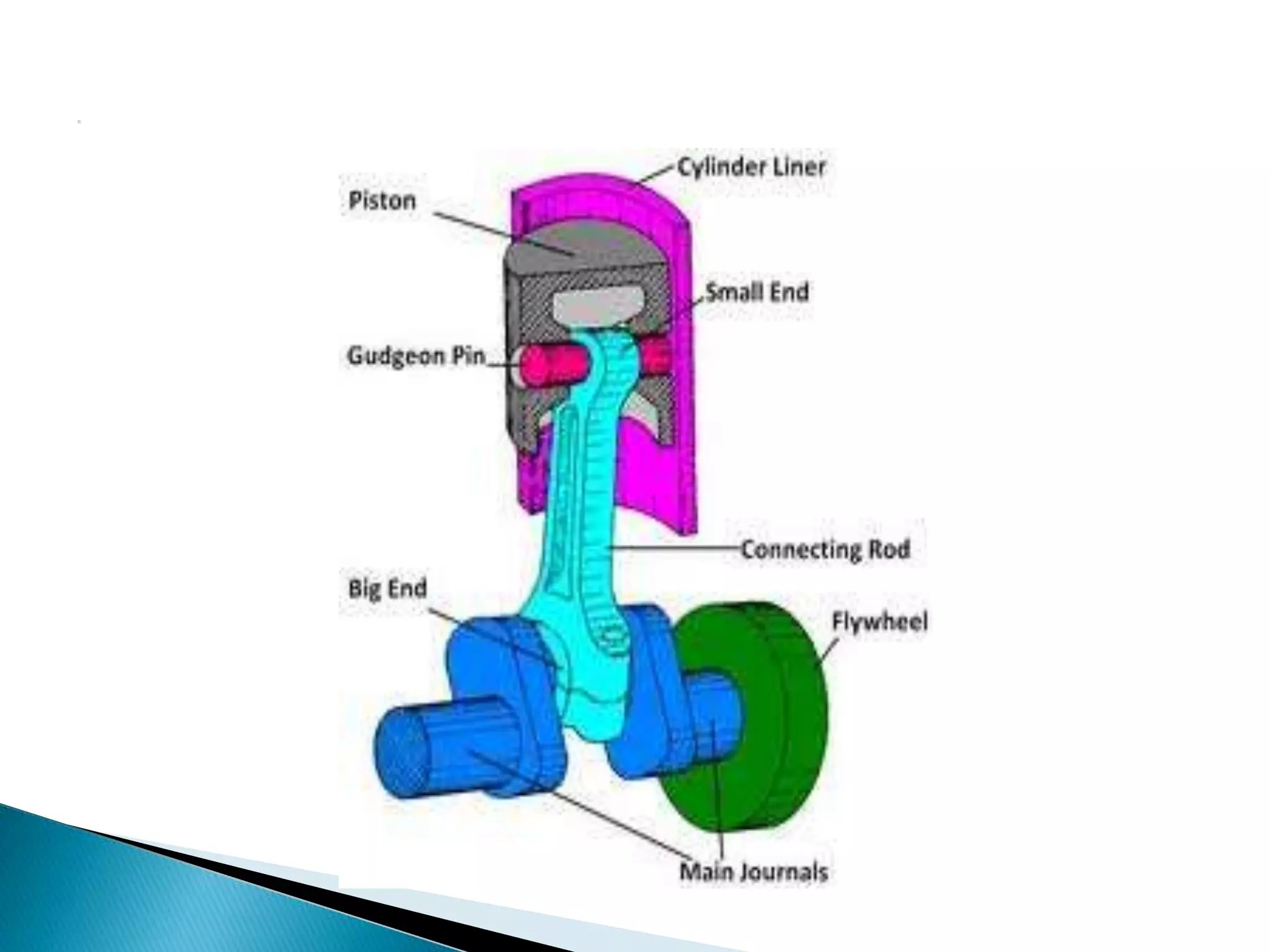
 Piston effort is defined as the net or effective
force applied on the piston, along the line of
stroke. It is also known as effective driving
force (or) net load on the gudgeon pin.
Crank effort:
 Crank effort is the net effort (force) applied at
the crank pin perpendicular to the crank,
which gives the required turning moment on
the crankshaft.
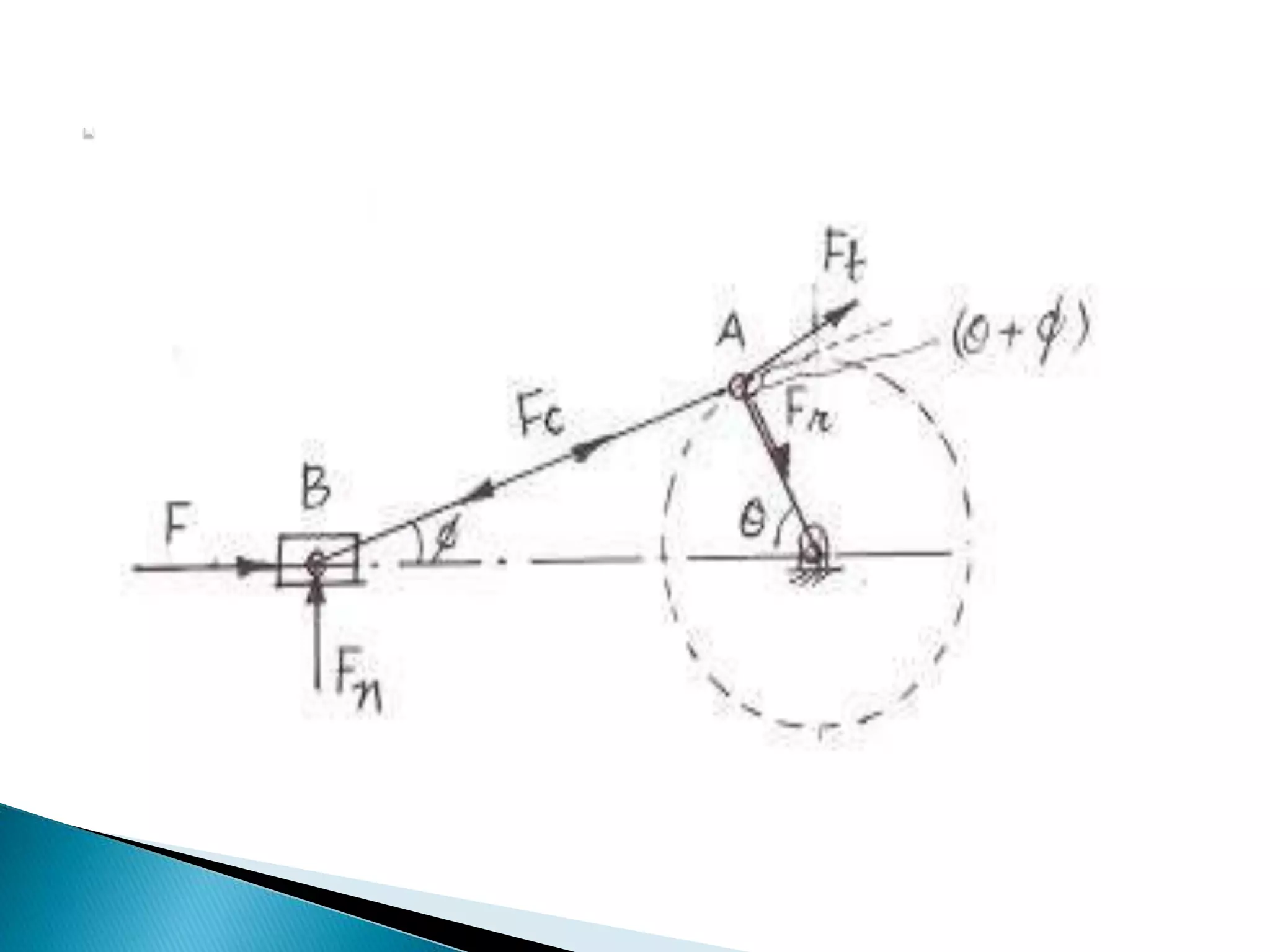
crank-pin effort:
 The component of force acting along the
connecting rod perpendicular to the crank is
known as crank-pin effort.
 D’Alembert’s principle states that the inertia forces
and torques, and the external forces and torques
acting together result in static equilibrium.
Conditions for Two force members are in
equilibrium.
 * When the two forces are of same magnitude.
 * The forces acting along same line.
 * The forces are in opposite direction.
Dynamic force analysis.
 If the inertia effect due to masses of the
component is also considered it is called as
dynamic force analysis.
 A flywheel is a rotating mechanical device that is
used to store rotational energy.
 The function of flywheel is to store the energy
during the period when the supply of energy is
more than the requirement, and to give away the
same energy when the requirement of energy is
more than the supply.
 Flywheel simply reduces the fluctuations of
speed, it does not maintain constant speed.
Machines in which flywheel are used:
 A) Punching Machines
 B) Shearing Machines
 C) Rivetting Machines
 D) Crushing Machines.
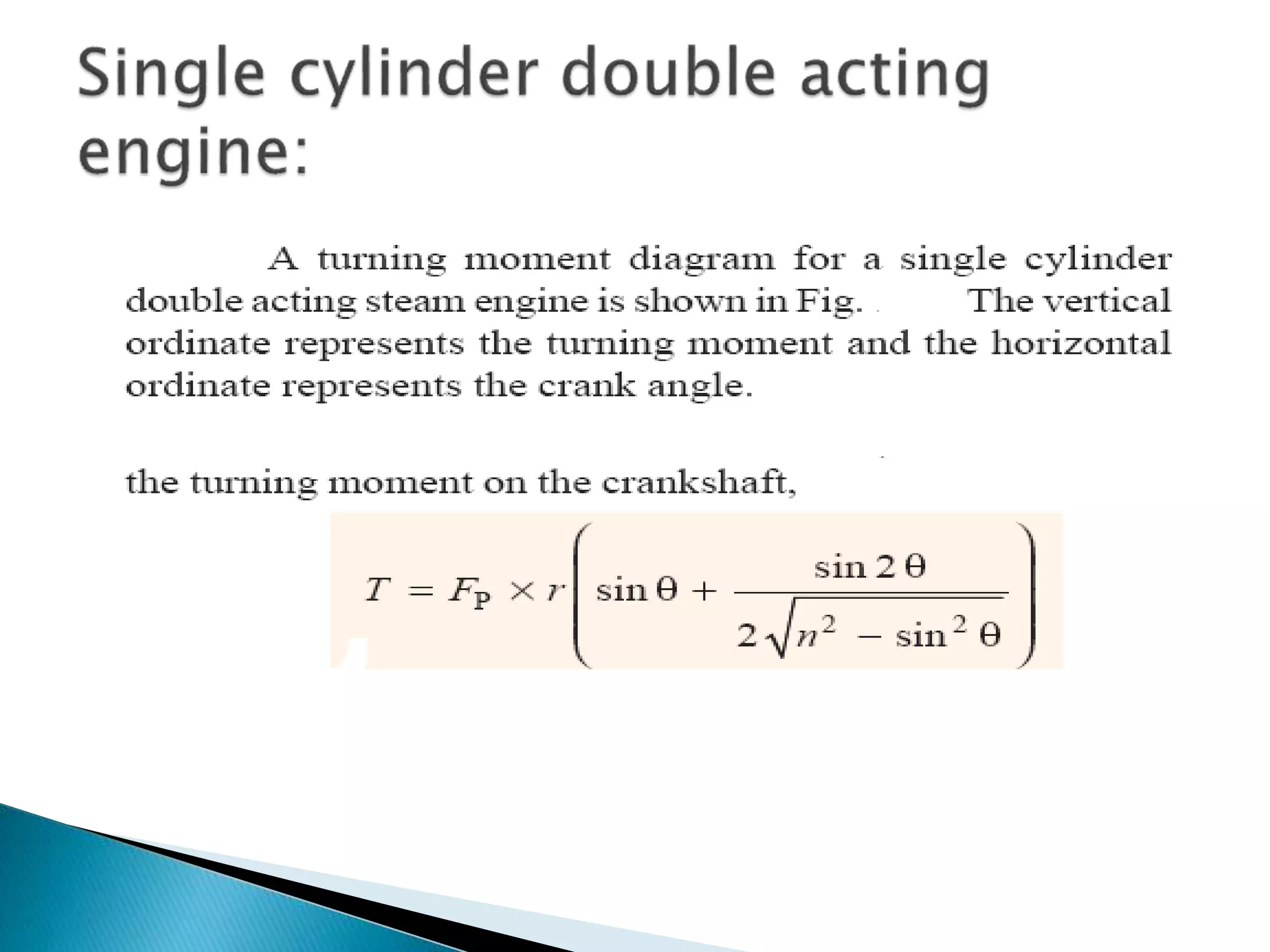
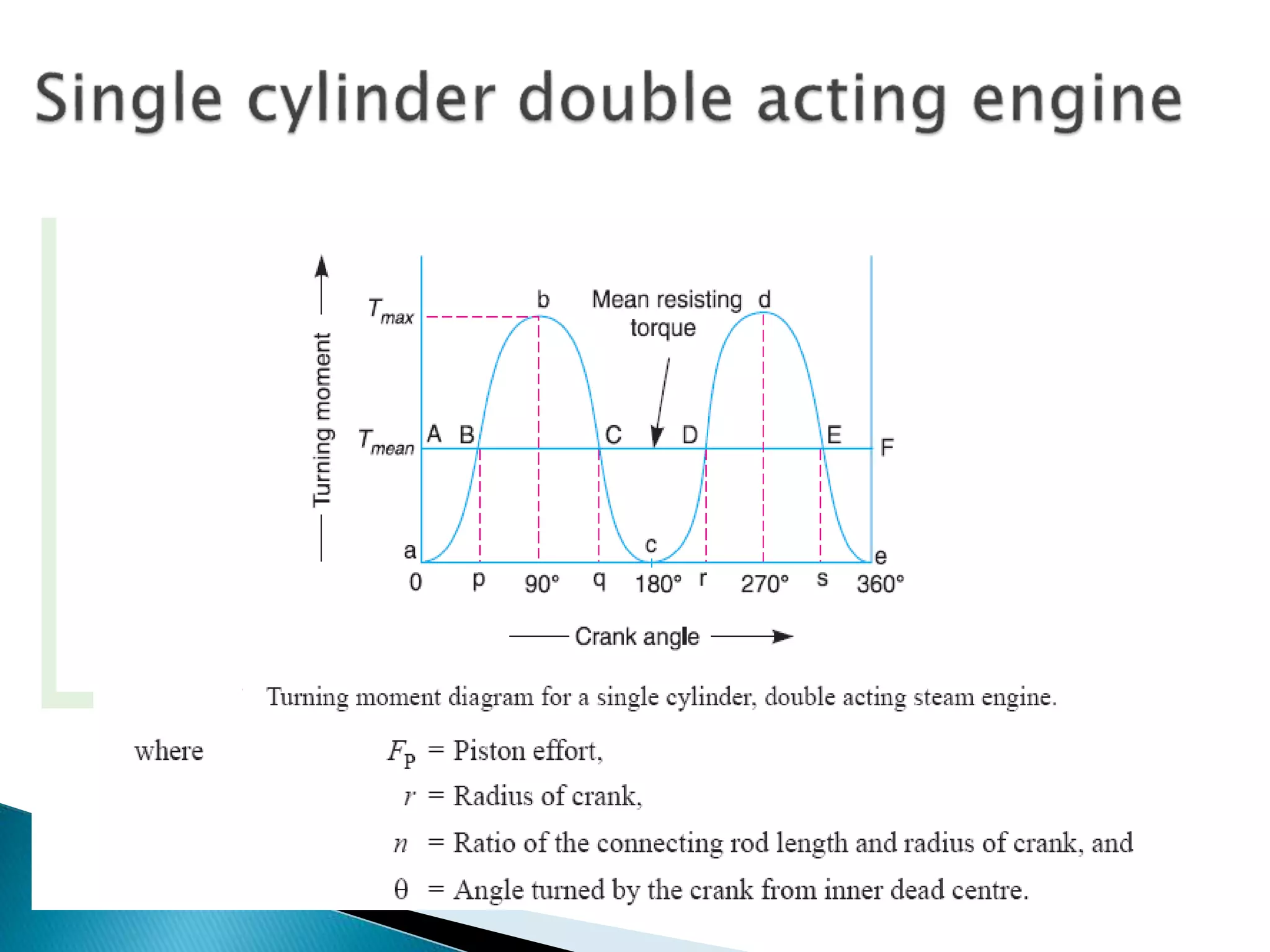
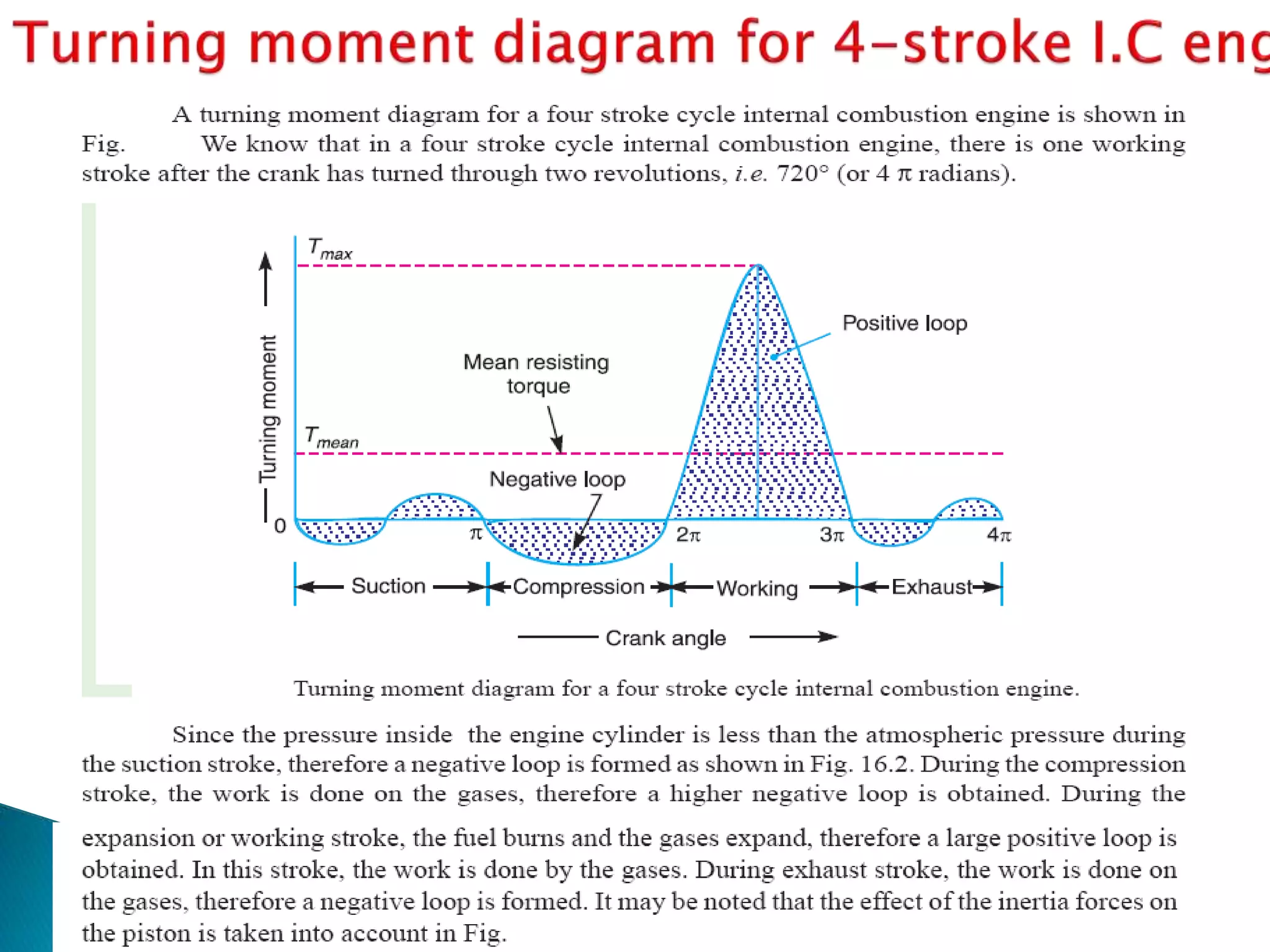
 The turning moment diagram is graphical
representation of the turning moment (T) or
crank effort for various positions of crank(θ).
 In turning moment diagram, the turning
moment is taken as the ordinate (Y-axis) and
crank angle as abscissa (X-axis).
Turning moment:
 In all reciprocating engines, force acting on
piston due to expansion of charges or gases,
develops a torque on crank shaft, by means
of connecting rod and crank mechanism. This
torque is called as turning moment or crank
effort.
 1) To determine the work done per cycle and power
developed:
 The area under the turning moment diagram represents
work done per cycle.
 The area multiplied by number of cycles per second gives
the power developed by the engine.
 2) To determine the mean torque & the fluctuation of
energy:
By dividing the area of the turning moment diagram with the
length of the base we get the mean turning moment.
3) To find the diameter of the crank shaft:
The max. ordinate of the turning moment diagram gives the
maximum torque to which the crank shaft is subjected.
This enables to find the diameter of crank shaft.
4. To design flywheel:
More importantly, the fluctuation of energy(determined from
turning moment diagram) helps to design the size of the
flywheel required.
 The fluctuation of the energy is the excess
energy developed by the engine between two
crank position or difference between maximum
and minimum energies is known as fluctuation of
energy
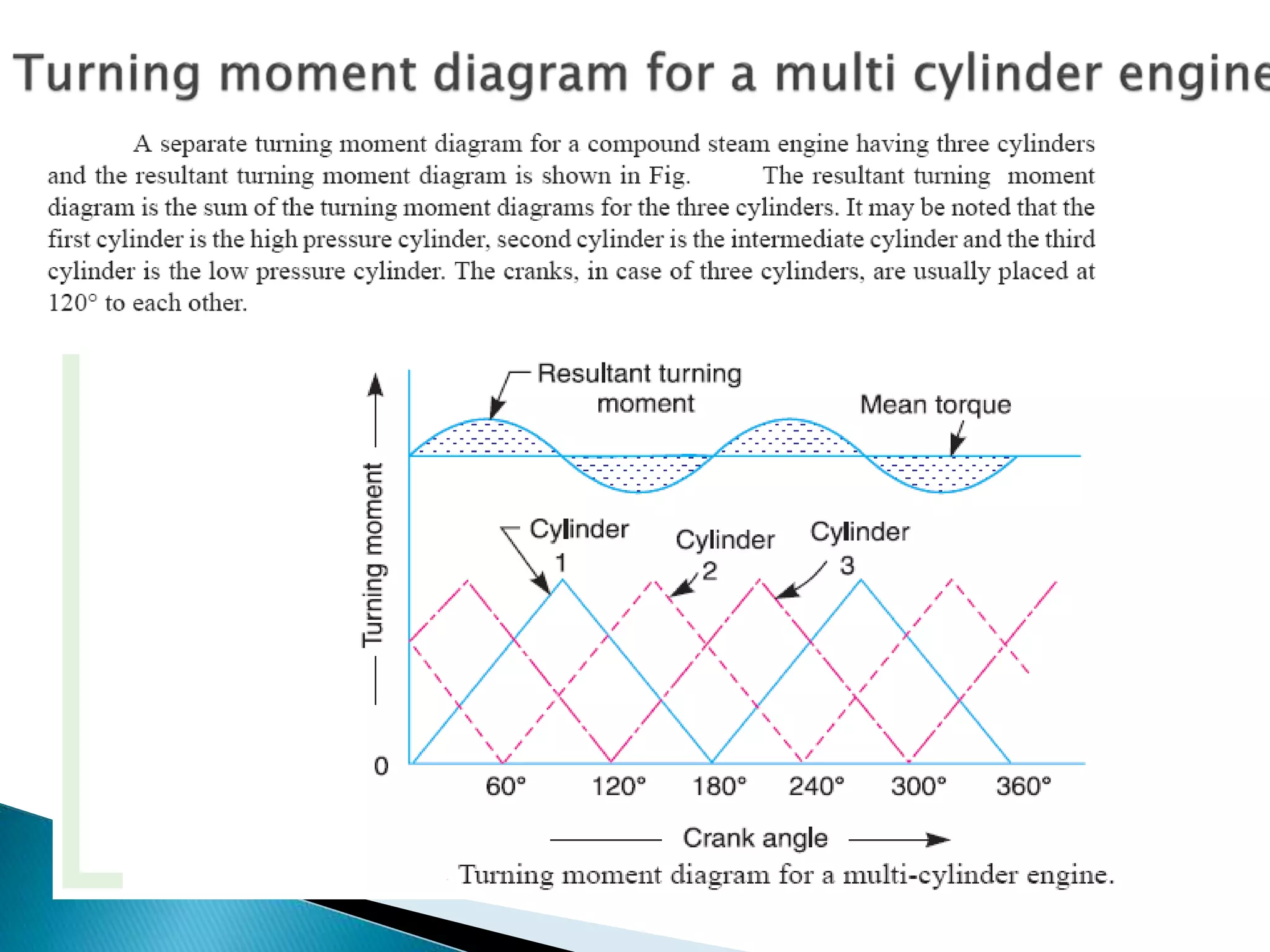
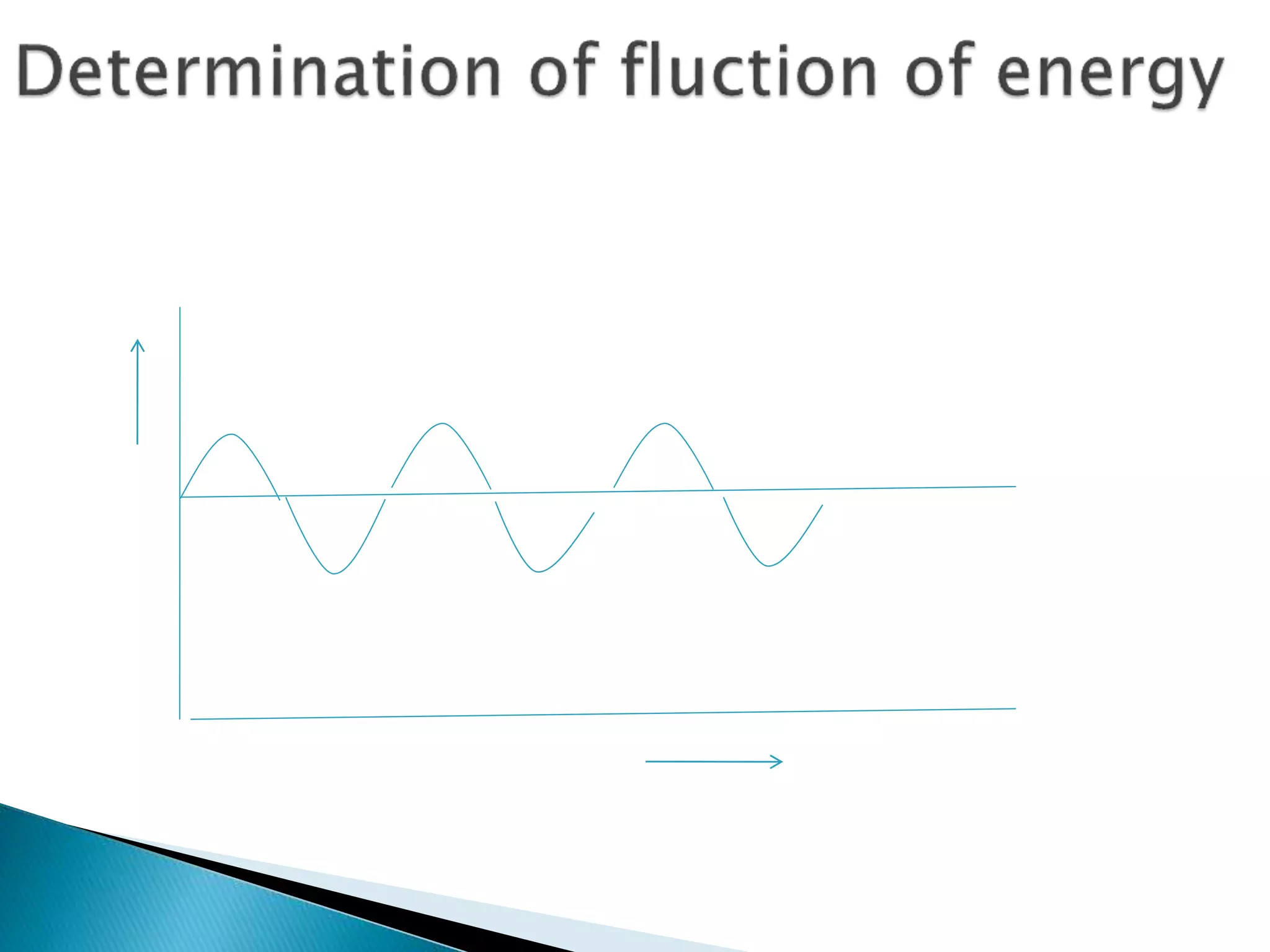
 TMD for a multi cylinder engine is as shown in
figure.
 The horizontal line AG represents mean torque
line.
 Let a1, a3, a5 be the areas above the mean
torque line a2, a4 & a6 be the areas below the
mean torque line. These areas represent some
quantity of energy which is either added or
subtracted from the energy of the moving part of
the engine.
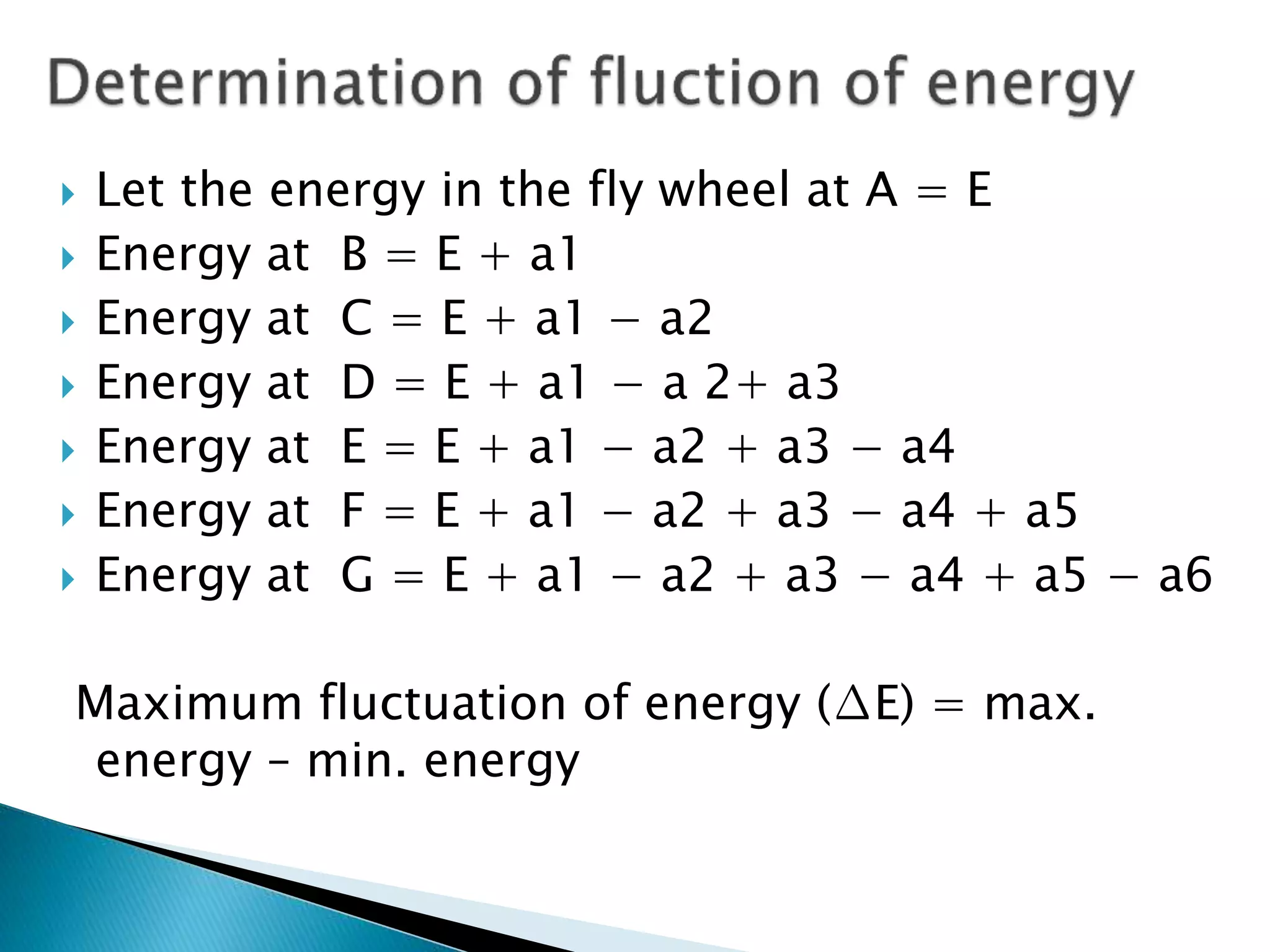
 Let the energy in the fly wheel at A = E
 Energy at B = E + a1
 Energy at C = E + a1 − a2
 Energy at D = E + a1 − a 2+ a3
 Energy at E = E + a1 − a2 + a3 − a4
 Energy at F = E + a1 − a2 + a3 − a4 + a5
 Energy at G = E + a1 − a2 + a3 − a4 + a5 − a6
Maximum fluctuation of energy (∆E) = max.
energy – min. energy
 .
Dynamics of machines-1

Dynamics of machines-1

  • 1.
  • 2.
     Static forceanalysis of mechanisms  D ’ Alemberts principle - Inertia force and Inertia torque  Dynamic force analysis - Dynamic Analysis in Reciprocating Engines  Gas Forces - Equivalent masses - Bearing loads  Crank shaft Torque–Engine shaking Forces - Turning moment diagrams  Flywheels of engines and punch press
  • 3.
     If componentsof a machine accelerate, inertia is produced due to their masses. However the magnitudes of these forces are small compared to externally applied loads. Hence the inertia effects due to masses are neglected. Such an analysis is known as static force analysis. Force:  Force is a pull or push, which acts on the body changes or tends to change the state of rest or uniform motion of the body. Applied forces:  The external force acting on a system of body from outside the system are called as applied forces. Inertia:  The property of matter offering resistance to any change of its state of rest or of uniform motion in a straight line is known as inertia.
  • 4.
     Piston effortis defined as the net or effective force applied on the piston, along the line of stroke. It is also known as effective driving force (or) net load on the gudgeon pin. Crank effort:  Crank effort is the net effort (force) applied at the crank pin perpendicular to the crank, which gives the required turning moment on the crankshaft. crank-pin effort:  The component of force acting along the connecting rod perpendicular to the crank is known as crank-pin effort.
  • 7.
     D’Alembert’s principlestates that the inertia forces and torques, and the external forces and torques acting together result in static equilibrium. Conditions for Two force members are in equilibrium.  * When the two forces are of same magnitude.  * The forces acting along same line.  * The forces are in opposite direction. Dynamic force analysis.  If the inertia effect due to masses of the component is also considered it is called as dynamic force analysis.
  • 8.
     A flywheelis a rotating mechanical device that is used to store rotational energy.  The function of flywheel is to store the energy during the period when the supply of energy is more than the requirement, and to give away the same energy when the requirement of energy is more than the supply.  Flywheel simply reduces the fluctuations of speed, it does not maintain constant speed. Machines in which flywheel are used:  A) Punching Machines  B) Shearing Machines  C) Rivetting Machines  D) Crushing Machines.
  • 9.
     The turningmoment diagram is graphical representation of the turning moment (T) or crank effort for various positions of crank(θ).  In turning moment diagram, the turning moment is taken as the ordinate (Y-axis) and crank angle as abscissa (X-axis). Turning moment:  In all reciprocating engines, force acting on piston due to expansion of charges or gases, develops a torque on crank shaft, by means of connecting rod and crank mechanism. This torque is called as turning moment or crank effort.
  • 10.
     1) Todetermine the work done per cycle and power developed:  The area under the turning moment diagram represents work done per cycle.  The area multiplied by number of cycles per second gives the power developed by the engine.  2) To determine the mean torque & the fluctuation of energy: By dividing the area of the turning moment diagram with the length of the base we get the mean turning moment. 3) To find the diameter of the crank shaft: The max. ordinate of the turning moment diagram gives the maximum torque to which the crank shaft is subjected. This enables to find the diameter of crank shaft. 4. To design flywheel: More importantly, the fluctuation of energy(determined from turning moment diagram) helps to design the size of the flywheel required.
  • 15.
     The fluctuationof the energy is the excess energy developed by the engine between two crank position or difference between maximum and minimum energies is known as fluctuation of energy  TMD for a multi cylinder engine is as shown in figure.  The horizontal line AG represents mean torque line.  Let a1, a3, a5 be the areas above the mean torque line a2, a4 & a6 be the areas below the mean torque line. These areas represent some quantity of energy which is either added or subtracted from the energy of the moving part of the engine.
  • 17.
     Let theenergy in the fly wheel at A = E  Energy at B = E + a1  Energy at C = E + a1 − a2  Energy at D = E + a1 − a 2+ a3  Energy at E = E + a1 − a2 + a3 − a4  Energy at F = E + a1 − a2 + a3 − a4 + a5  Energy at G = E + a1 − a2 + a3 − a4 + a5 − a6 Maximum fluctuation of energy (∆E) = max. energy – min. energy
  • 18.