Duodenum and Duodenal
Diverticulum
By
Rajasri Manimaran
Group 2
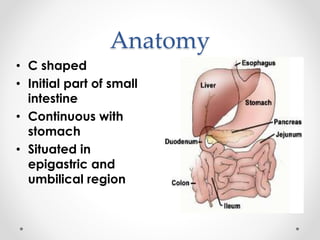
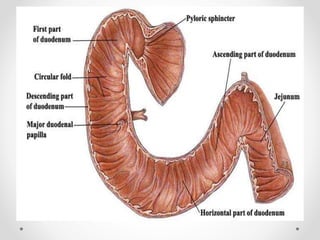
Anatomy
• C shaped
• Initial part of small
intestine
• Continuous with
stomach
• Situated in
epigastric and
umbilical region
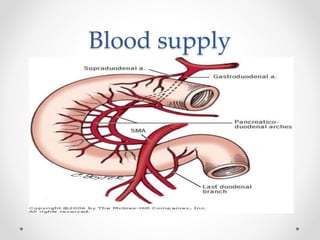
Blood supply
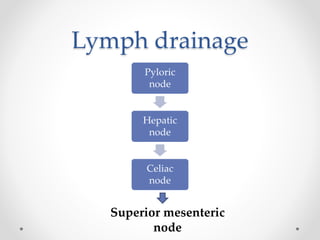
Lymph drainage
Pyloric
node
Hepatic
node
Celiac
node
Superior mesenteric
node
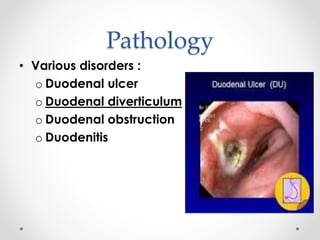
Pathology
• Various disorders :
o Duodenal ulcer
o Duodenal diverticulum
o Duodenal obstruction
o Duodenitis
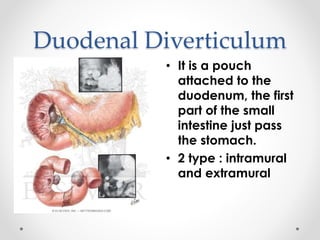
Duodenal Diverticulum
• It is a pouch
attached to the
duodenum, the first
part of the small
intestine just pass
the stomach.
• 2 type : intramural
and extramural
Extramural diverticulum
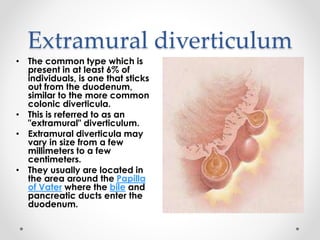
• The common type which is
present in at least 6% of
individuals, is one that sticks
out from the duodenum,
similar to the more common
colonic diverticula.
• This is referred to as an
"extramural" diverticulum.
• Extramural diverticula may
vary in size from a few
millimeters to a few
centimeters.
• They usually are located in
the area around the Papilla
of Vater where the bile and
pancreatic ducts enter the
duodenum.
Intramural diverticulum
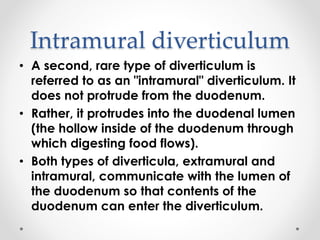
• A second, rare type of diverticulum is
referred to as an "intramural" diverticulum. It
does not protrude from the duodenum.
• Rather, it protrudes into the duodenal lumen
(the hollow inside of the duodenum through
which digesting food flows).
• Both types of diverticula, extramural and
intramural, communicate with the lumen of
the duodenum so that contents of the
duodenum can enter the diverticulum.
Symptoms
• 80 to 90% of patients are asymptomatic
• One of the main symptoms include upper
abdominal pain, right upper quadrant tenderness
• Often accompanied by a sense of fullness or
discomfort, and may have nausea, vomiting, or
vomiting
• Symptoms tend to appear in the diet or exacerbate,
relieved by vomiting.
• Diverticulum oppression of the common bile duct in
addition to intermittent abdominal pain, and can be
intermittent jaundice.
Symptoms
Causes
• The cause of extramural diverticula is not
definitely known; however, they are
believed to be acquired (not present from
birth) due to a herniation (protrusion) of the
duodenum through a defect in the muscle of
the wall of the duodenum, perhaps in an
area where arteries pass through the
intestinal muscle to nourish the lining of the
intestine.
• Due to the different types of diverticula, its
causes are also different.
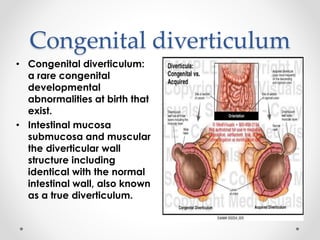
Congenital diverticulum
• Congenital diverticulum:
a rare congenital
developmental
abnormalities at birth that
exist.
• Intestinal mucosa
submucosa and muscular
the diverticular wall
structure including
identical with the normal
intestinal wall, also known
as a true diverticulum.
Primary and secondary
diverticulum
• Primary diverticulum: congenital anatomical
defects due to part of the bowel wall, out
due to the the intestines increased pressure
leaving the premises intestinal mucosa and
submucosa tissue prolapse formation of
diverticula. Such diverticular wall muscularis
tissue is absent or weak.
• Secondary diverticulum: duodenal ulcer
scar contraction or the chronic cholecystitis
adhesions caused by traction, it occurred in
the duodenum, the first one, also known as
false diverticula.
Complications
• If the diverticulum is very close to the Ampulla of Vater,
patients more frequently develop gallstones, particularly in the
bile duct, and may develop all of the complications of
gallstones:
o biliary colic (the typical pain of obstruction of the bile
ducts),
o cholecystitis (inflammation of the gallbladder), and
o cholangitis (inflammation of the bile ducts due to the
spread of bacteria into the ducts from the duodenum).
• Pancreatitis also may occur. These complications are believed
to be due to interference by the diverticula with the normal
function of the bile and pancreatic ducts.
Diagnosis
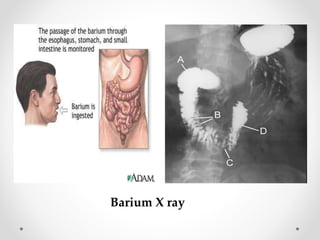
• Barium X rays
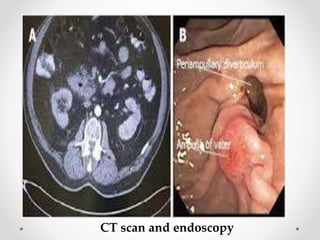
• Endoscopy
• Ultrasonography
• Computerized tomographic (CT) scans
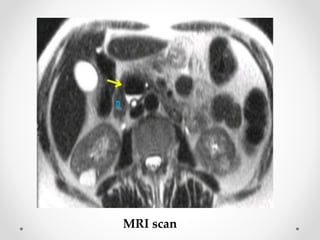
• Magnetic resonance imaging (MRI) studies
Barium X ray
CT scan and endoscopy
MRI scan
Treatment
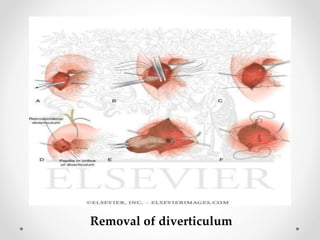
• If treatment is necessary, extramural diverticula can
be surgically removed from the outside of the
duodenum.
• The diverticula also may be inverted into the lumen
of the duodenum and removed through an incision
in the wall of the duodenum.
• (Sometimes, the diverticulum is inverted but left
attached to the wall of the duodenum and
protruding into the duodenum.)
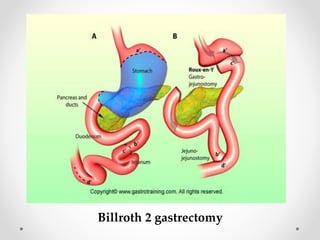
• In case of multiple diverticula, billroth II
gastrectomy is performed
Removal of diverticulum
Billroth 2 gastrectomy
Duodenum and duodenal diverticulum

Duodenum and duodenal diverticulum

  • 1.
  • 2.
    Anatomy • C shaped •Initial part of small intestine • Continuous with stomach • Situated in epigastric and umbilical region
  • 4.
  • 5.
  • 6.
    Pathology • Various disorders: o Duodenal ulcer o Duodenal diverticulum o Duodenal obstruction o Duodenitis
  • 7.
    Duodenal Diverticulum • Itis a pouch attached to the duodenum, the first part of the small intestine just pass the stomach. • 2 type : intramural and extramural
  • 8.
    Extramural diverticulum • Thecommon type which is present in at least 6% of individuals, is one that sticks out from the duodenum, similar to the more common colonic diverticula. • This is referred to as an "extramural" diverticulum. • Extramural diverticula may vary in size from a few millimeters to a few centimeters. • They usually are located in the area around the Papilla of Vater where the bile and pancreatic ducts enter the duodenum.
  • 9.
    Intramural diverticulum • Asecond, rare type of diverticulum is referred to as an "intramural" diverticulum. It does not protrude from the duodenum. • Rather, it protrudes into the duodenal lumen (the hollow inside of the duodenum through which digesting food flows). • Both types of diverticula, extramural and intramural, communicate with the lumen of the duodenum so that contents of the duodenum can enter the diverticulum.
  • 10.
    Symptoms • 80 to90% of patients are asymptomatic • One of the main symptoms include upper abdominal pain, right upper quadrant tenderness • Often accompanied by a sense of fullness or discomfort, and may have nausea, vomiting, or vomiting • Symptoms tend to appear in the diet or exacerbate, relieved by vomiting. • Diverticulum oppression of the common bile duct in addition to intermittent abdominal pain, and can be intermittent jaundice.
  • 11.
  • 12.
    Causes • The causeof extramural diverticula is not definitely known; however, they are believed to be acquired (not present from birth) due to a herniation (protrusion) of the duodenum through a defect in the muscle of the wall of the duodenum, perhaps in an area where arteries pass through the intestinal muscle to nourish the lining of the intestine. • Due to the different types of diverticula, its causes are also different.
  • 13.
    Congenital diverticulum • Congenitaldiverticulum: a rare congenital developmental abnormalities at birth that exist. • Intestinal mucosa submucosa and muscular the diverticular wall structure including identical with the normal intestinal wall, also known as a true diverticulum.
  • 14.
    Primary and secondary diverticulum •Primary diverticulum: congenital anatomical defects due to part of the bowel wall, out due to the the intestines increased pressure leaving the premises intestinal mucosa and submucosa tissue prolapse formation of diverticula. Such diverticular wall muscularis tissue is absent or weak. • Secondary diverticulum: duodenal ulcer scar contraction or the chronic cholecystitis adhesions caused by traction, it occurred in the duodenum, the first one, also known as false diverticula.
  • 16.
    Complications • If thediverticulum is very close to the Ampulla of Vater, patients more frequently develop gallstones, particularly in the bile duct, and may develop all of the complications of gallstones: o biliary colic (the typical pain of obstruction of the bile ducts), o cholecystitis (inflammation of the gallbladder), and o cholangitis (inflammation of the bile ducts due to the spread of bacteria into the ducts from the duodenum). • Pancreatitis also may occur. These complications are believed to be due to interference by the diverticula with the normal function of the bile and pancreatic ducts.
  • 17.
    Diagnosis • Barium Xrays • Endoscopy • Ultrasonography • Computerized tomographic (CT) scans • Magnetic resonance imaging (MRI) studies
  • 18.
  • 19.
    CT scan andendoscopy
  • 20.
  • 21.
    Treatment • If treatmentis necessary, extramural diverticula can be surgically removed from the outside of the duodenum. • The diverticula also may be inverted into the lumen of the duodenum and removed through an incision in the wall of the duodenum. • (Sometimes, the diverticulum is inverted but left attached to the wall of the duodenum and protruding into the duodenum.) • In case of multiple diverticula, billroth II gastrectomy is performed
  • 22.
  • 23.