Colorectal polyps
Chea Chan Hooi
Surgeon
Department of Surgery
Sibu Hospital
Content
• Definition
• Classification
• Pathophysiology
• Investigations
• Management
Definition
• Protuberant growth above surrounding
mucosa of hollow viscus
Classification
• Anatomical
– Respiratory, GI tracts
• Morphology
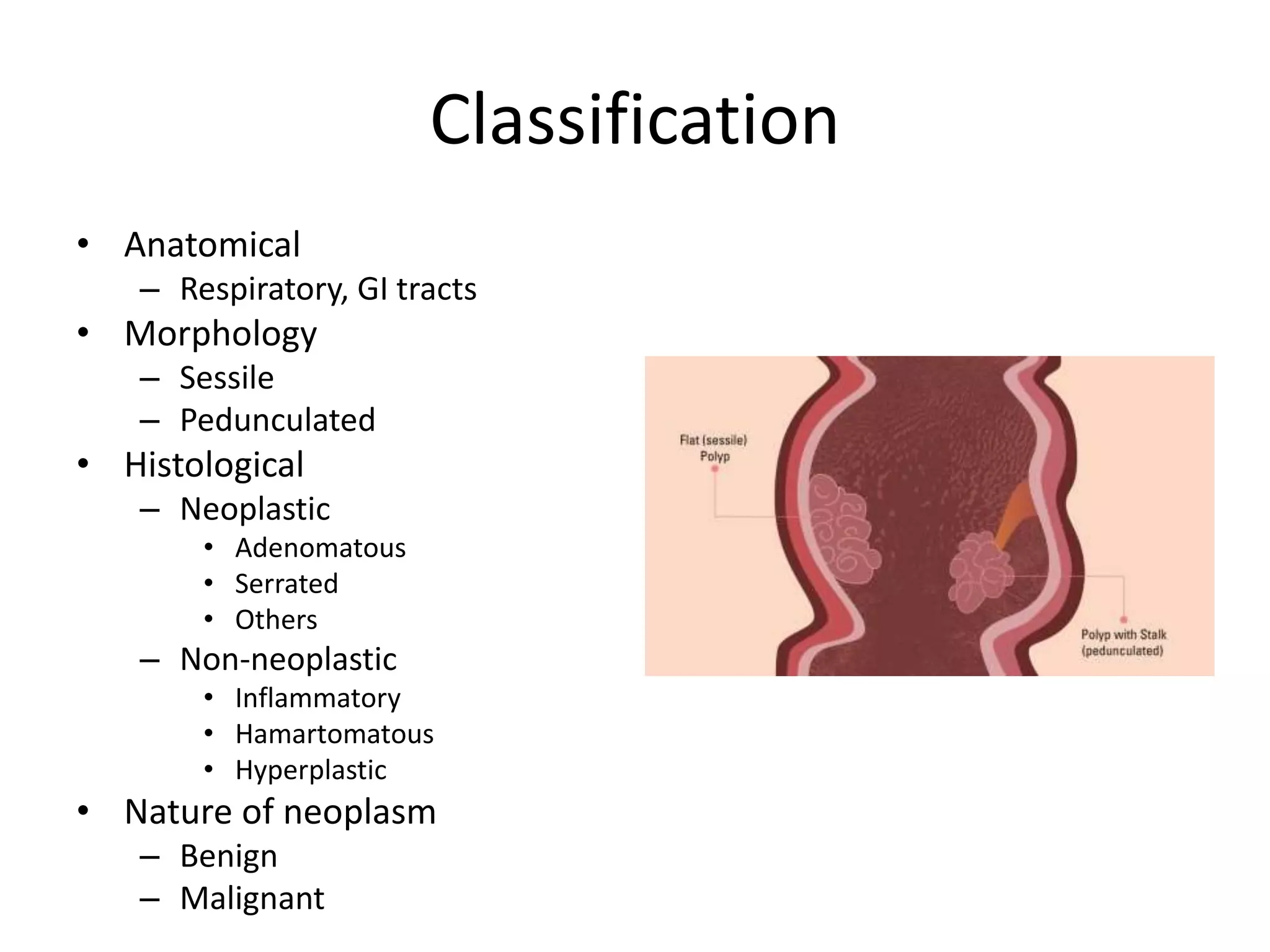
– Sessile
– Pedunculated
• Histological
– Neoplastic
• Adenomatous
• Serrated
• Others
– Non-neoplastic
• Inflammatory
• Hamartomatous
• Hyperplastic
• Nature of neoplasm
– Benign
– Malignant
Adenomatous polyps
Tubular Tubulovillous Villous
Frequency 75% 15% 10%
Anatomical
preponderance
Throughout Throughout Rectum
Malignant % <5 25 40
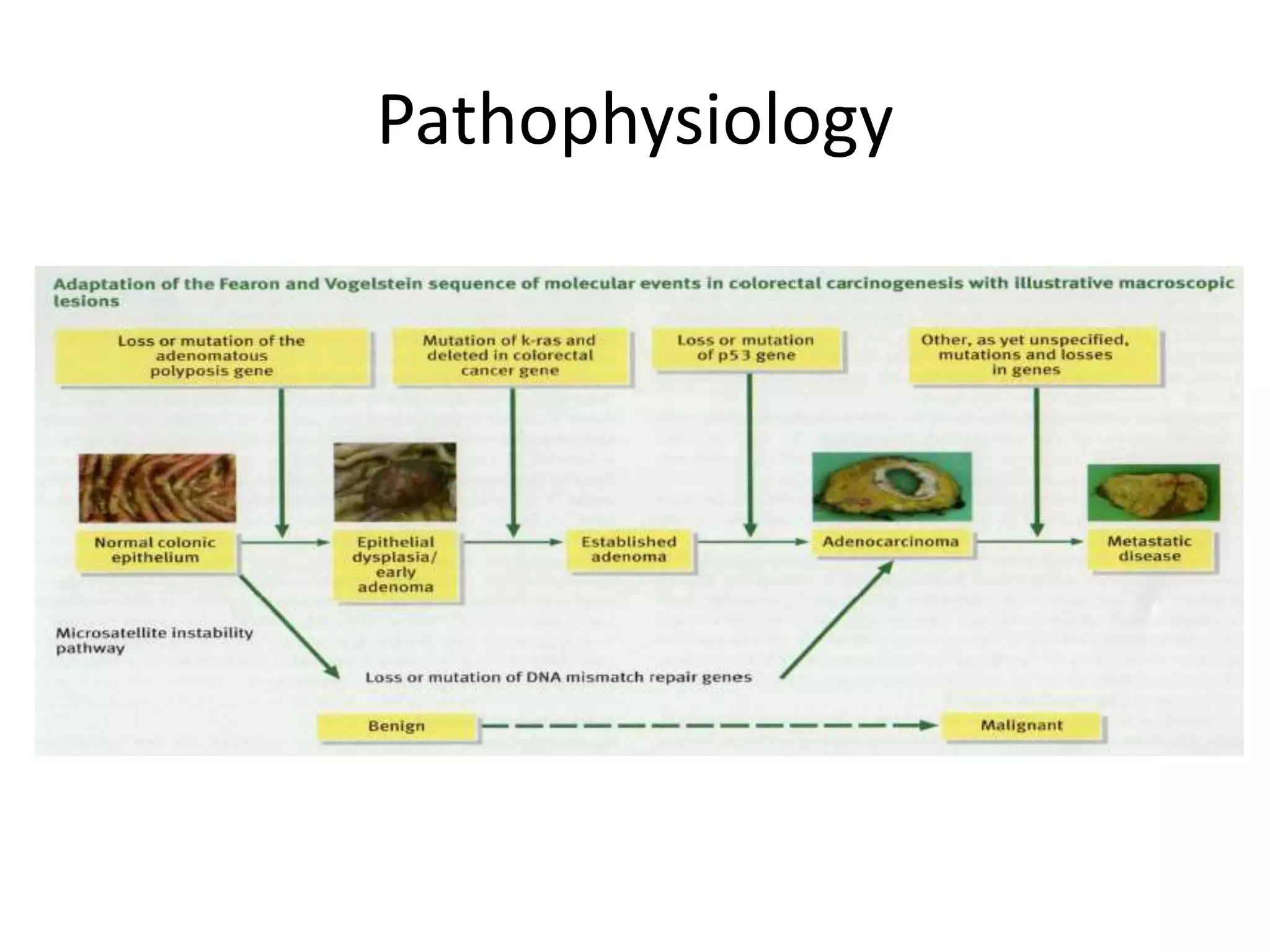
Pathophysiology
• Risk of malignancy
– ≥3 polyps
– ≥1cm
– Villous
– High grade dysplasia (35%)
Non-neoplastic polyps
• Inflammatory
– IBD, diverticulitis, infective
– Usually small <5mm
• Hamartomatous
– Large (up to 3cm), smooth,pedunculated
– Juvenile polyp
• Infant & children, if adult (retention polyp)
– Peutz-Jegher
• Mucocutaneous melanin pigmentation
• GI polyps (malignant potential) & extra-intestinal tumours
• Hyperplastic
– Usual-type: plaque-like, small <5mm, no malignant potential
– Serrated type: >5mm, pre-malignant, MSI, commonly right-sided
(recently designated as neoplastic by WHO)
Clinical features
• Aymptomatic
• Bleeding
– Iron-deficiency anaemia
– Frank per rectal bleeding
• Tenesmus
• Prolapse → mistaken as haemorrhoid
• Intussusception
• Diarrhoea ± mucus discharge (esp. villous)
– Dehydration & electrolyte imbalance (esp. K +)
Diagnosis
• Colonoscopy
– Location
– Number
– Size
– Malignant transformation
– Biopsy/polypectomy/EMR/ESD
– Arrest active bleeding
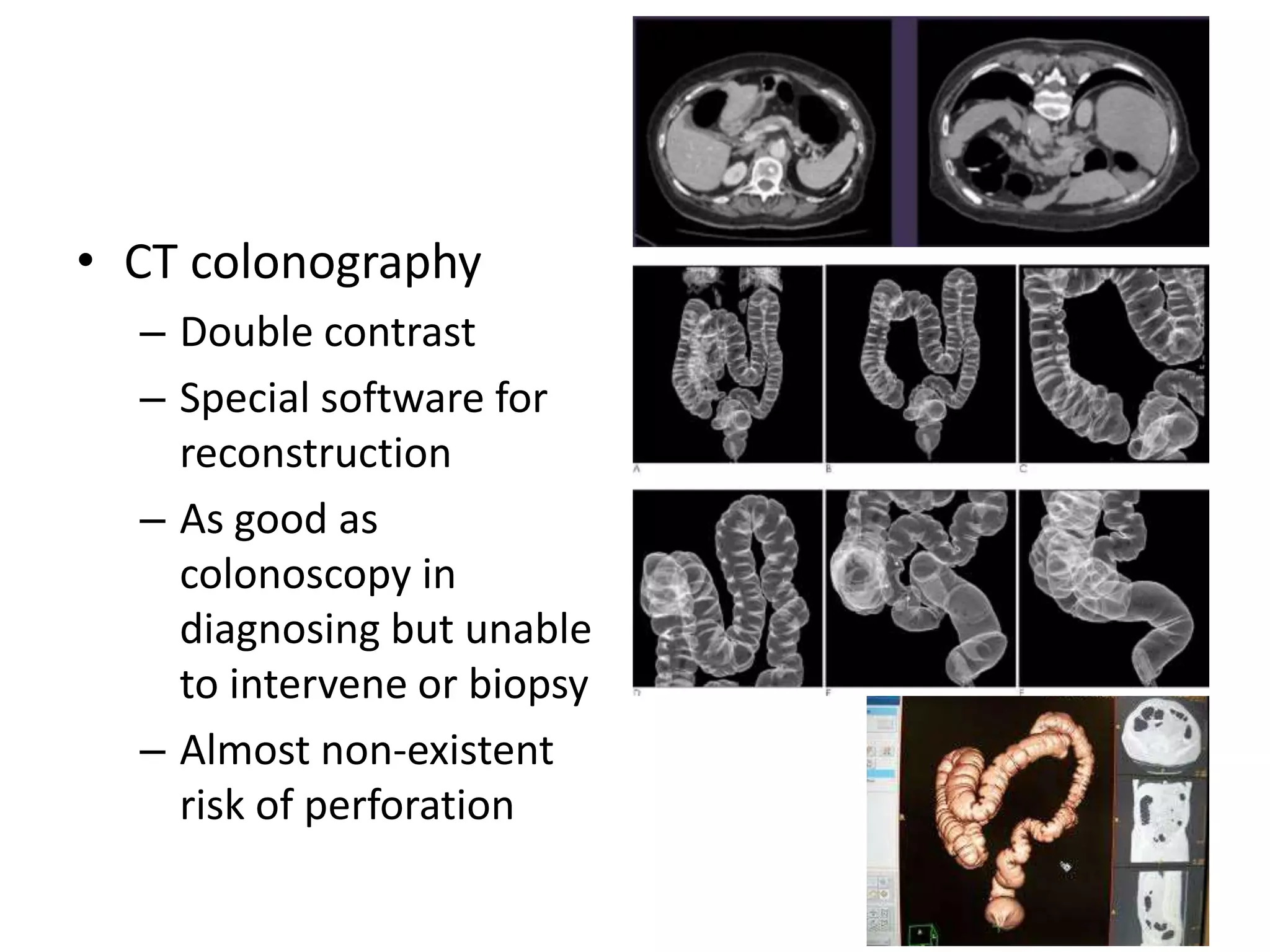
• CT colonography
– Double contrast
– Special software for
reconstruction
– As good as
colonoscopy in
diagnosing but unable
to intervene or biopsy
– Almost non-existent
risk of perforation
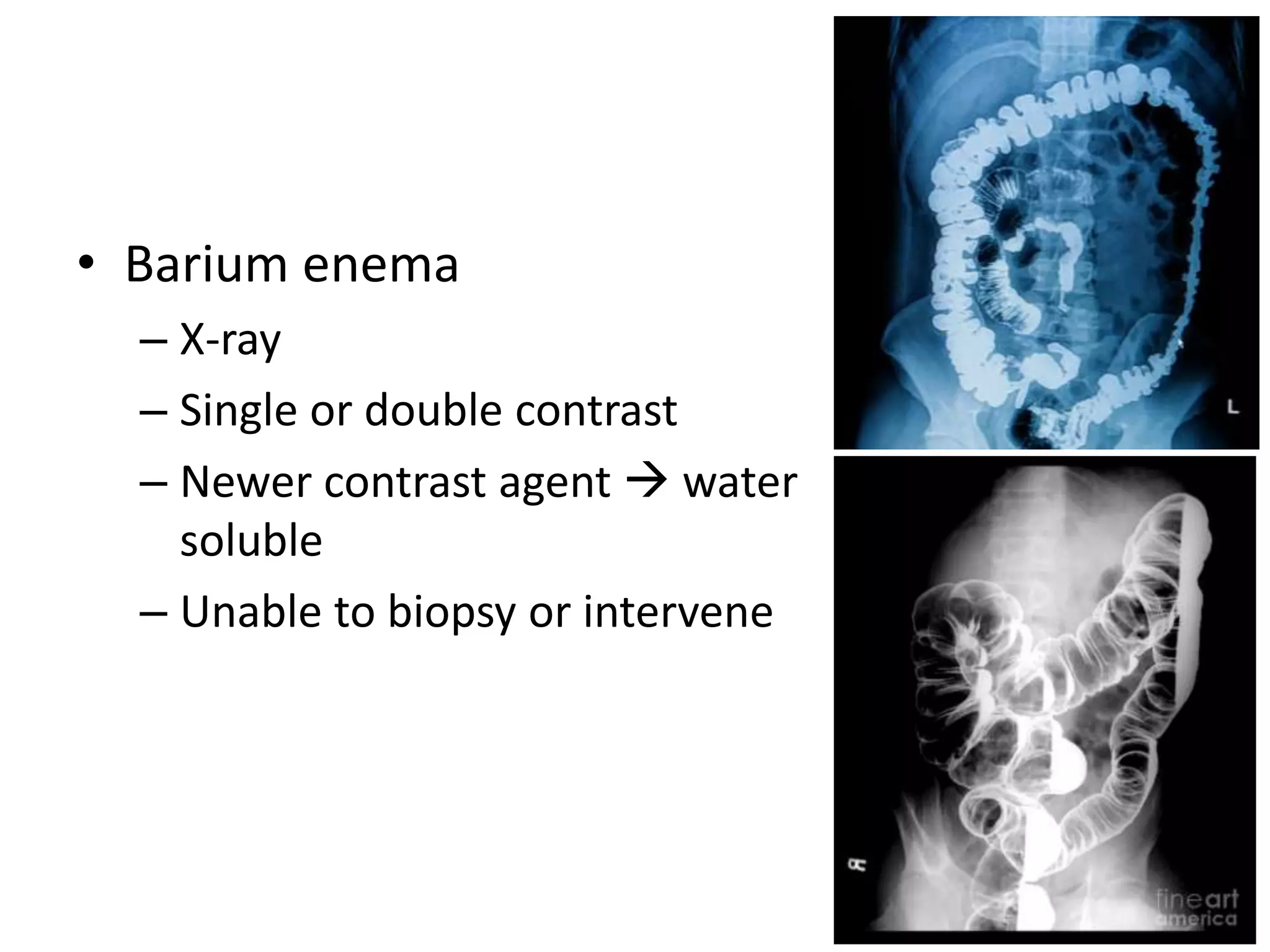
• Barium enema
– X-ray
– Single or double contrast
– Newer contrast agent  water
soluble
– Unable to biopsy or intervene
Management
• Endoscopic
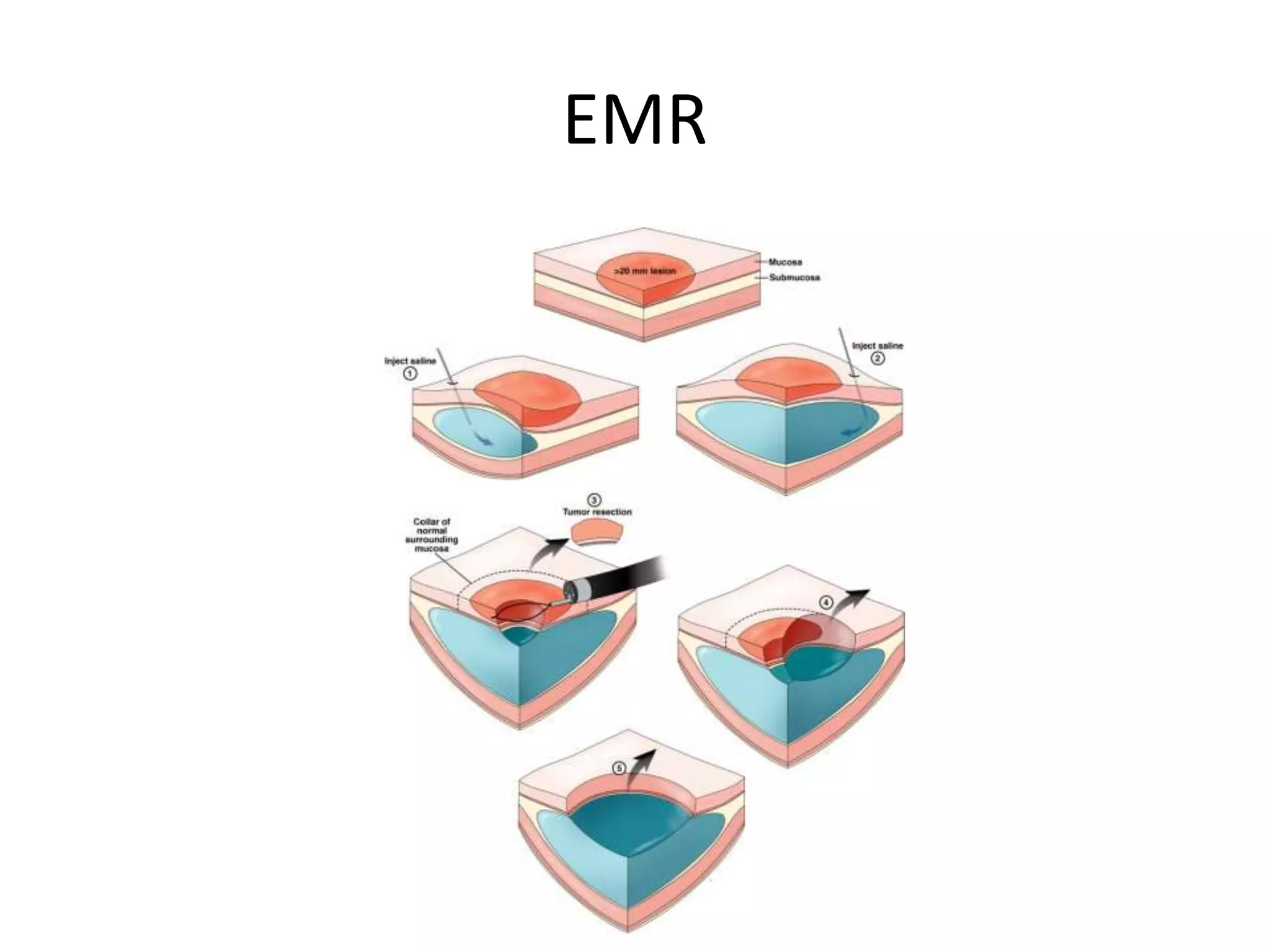
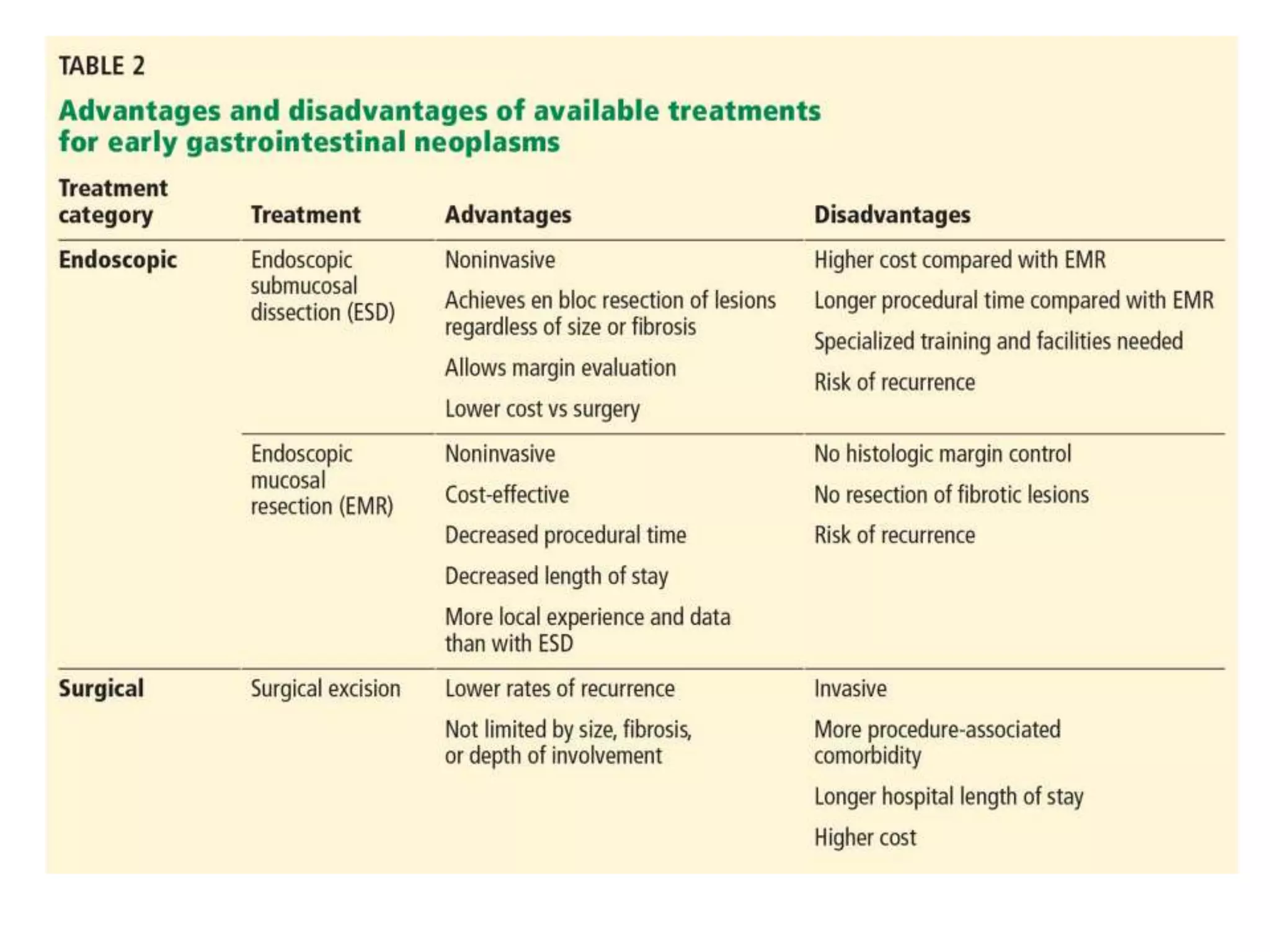
– Endoscopic mucosal resection (EMR)
– Endoscopic submucosal dissection (ESD)
• Surgical
– Transanal excision
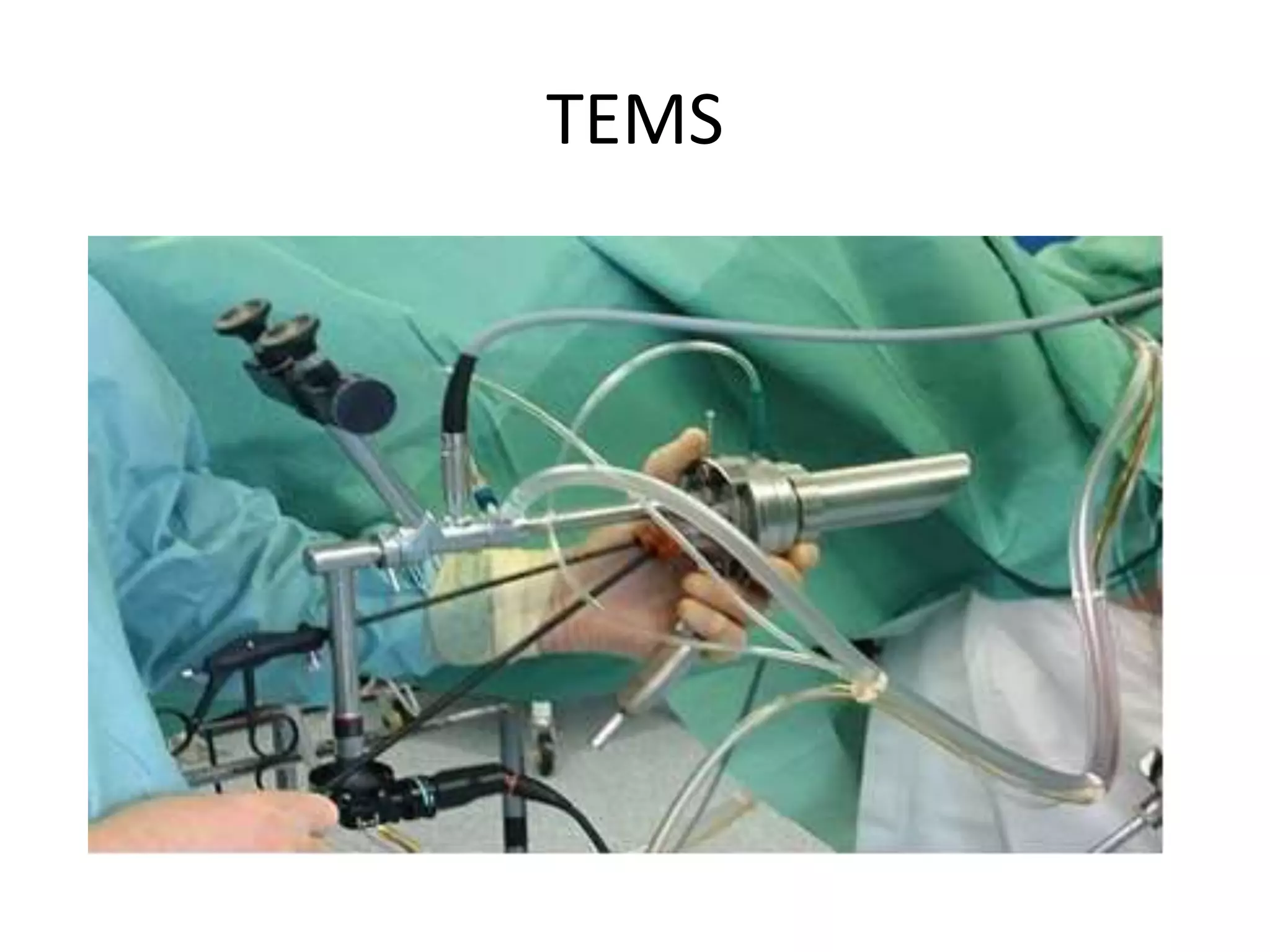
– Transanal endoscopic microsurgery (TEMS)
– Transanal minimally invasive surgery (TAMIS)
EMR
ESD
TEMS
TAMIS
TQ!
Q&A?

Colorectal polyps

  • 1.
    Colorectal polyps Chea ChanHooi Surgeon Department of Surgery Sibu Hospital
  • 2.
    Content • Definition • Classification •Pathophysiology • Investigations • Management
  • 3.
    Definition • Protuberant growthabove surrounding mucosa of hollow viscus
  • 4.
    Classification • Anatomical – Respiratory,GI tracts • Morphology – Sessile – Pedunculated • Histological – Neoplastic • Adenomatous • Serrated • Others – Non-neoplastic • Inflammatory • Hamartomatous • Hyperplastic • Nature of neoplasm – Benign – Malignant
  • 5.
    Adenomatous polyps Tubular TubulovillousVillous Frequency 75% 15% 10% Anatomical preponderance Throughout Throughout Rectum Malignant % <5 25 40
  • 6.
  • 7.
    • Risk ofmalignancy – ≥3 polyps – ≥1cm – Villous – High grade dysplasia (35%)
  • 8.
    Non-neoplastic polyps • Inflammatory –IBD, diverticulitis, infective – Usually small <5mm • Hamartomatous – Large (up to 3cm), smooth,pedunculated – Juvenile polyp • Infant & children, if adult (retention polyp) – Peutz-Jegher • Mucocutaneous melanin pigmentation • GI polyps (malignant potential) & extra-intestinal tumours • Hyperplastic – Usual-type: plaque-like, small <5mm, no malignant potential – Serrated type: >5mm, pre-malignant, MSI, commonly right-sided (recently designated as neoplastic by WHO)
  • 9.
    Clinical features • Aymptomatic •Bleeding – Iron-deficiency anaemia – Frank per rectal bleeding • Tenesmus • Prolapse → mistaken as haemorrhoid • Intussusception • Diarrhoea ± mucus discharge (esp. villous) – Dehydration & electrolyte imbalance (esp. K +)
  • 10.
    Diagnosis • Colonoscopy – Location –Number – Size – Malignant transformation – Biopsy/polypectomy/EMR/ESD – Arrest active bleeding
  • 11.
    • CT colonography –Double contrast – Special software for reconstruction – As good as colonoscopy in diagnosing but unable to intervene or biopsy – Almost non-existent risk of perforation
  • 12.
    • Barium enema –X-ray – Single or double contrast – Newer contrast agent  water soluble – Unable to biopsy or intervene
  • 13.
    Management • Endoscopic – Endoscopicmucosal resection (EMR) – Endoscopic submucosal dissection (ESD) • Surgical – Transanal excision – Transanal endoscopic microsurgery (TEMS) – Transanal minimally invasive surgery (TAMIS)
  • 14.
  • 15.
  • 17.
  • 18.
  • 19.