

BY
AMALA SUNDARAM
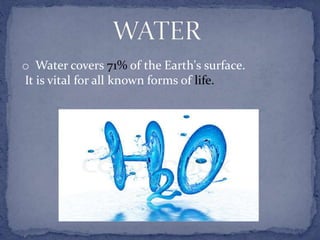
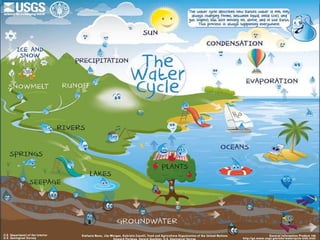
o Water covers 71% of the Earth's surface.
It is vital for all known forms of life.
 96.5% of the planet's water is found in seas and
oceans.
 1.7% in groundwater,
 1.7% in glaciers and the ice caps of Antarctica and
Greenland, a small fraction in other large water
bodies.
 0.001% in the air as vapor, clouds (formed of solid
and liquid water particles suspended in air),
and precipitation
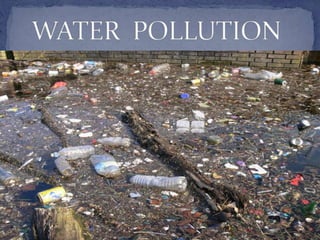
o Water pollution is the contamination
of water bodies
(e.g. lakes, rivers, oceans, aquifers and groundw
ater).
o Water pollution occurs when pollutants are
directly or indirectly discharged into water
bodies without adequate treatment to remove
harmful compounds.
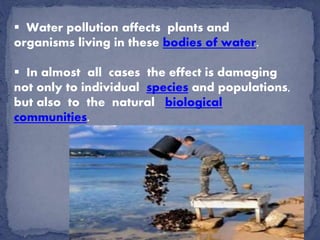
 Water pollution affects plants and
organisms living in these bodies of water.
 In almost all cases the effect is damaging
not only to individual species and populations,
but also to the natural biological
communities.
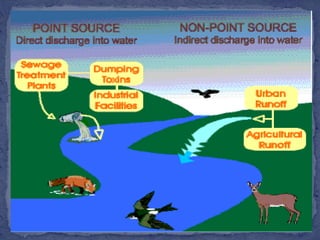
POINT SOURCE .
NON – POINT SOURCE .
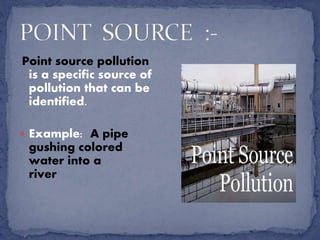
Point source pollution
is a specific source of
pollution that can be
identified.
 Example: A pipe
gushing colored
water into a
river
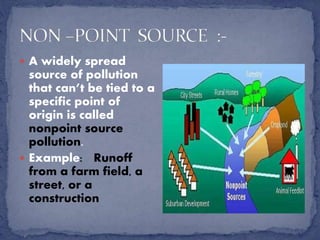
 A widely spread
source of pollution
that can’t be tied to a
specific point of
origin is called
nonpoint source
pollution.
 Example: Runoff
from a farm field, a
street, or a
construction
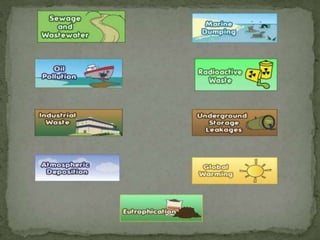
 CAUSES OF
WATER POLLUTION
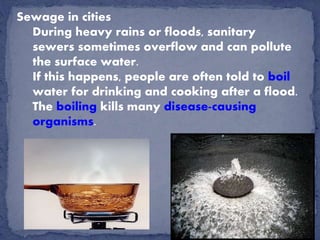
Sewage in cities
During heavy rains or floods, sanitary
sewers sometimes overflow and can pollute
the surface water.
If this happens, people are often told to boil
water for drinking and cooking after a flood.
The boiling kills many disease-causing
organisms.
 In rural areas, people must be careful where
they locate septic tanks.
 If a tank is too near a stream or on a hill,
wastewater can leak into the stream or flow
downhill to the area of a well.
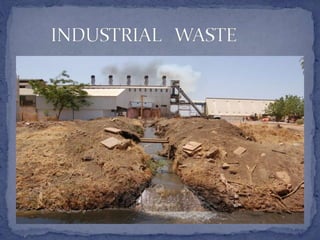
Chemicals, smoke , and heated water are
three types of pollutants produced by
factories, mines, and other industries.
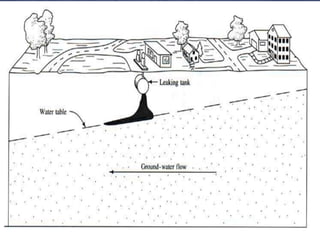
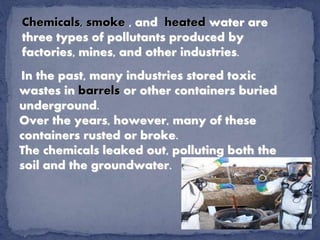
In the past, many industries stored toxic
wastes in barrels or other containers buried
underground.
Over the years, however, many of these
containers rusted or broke.
The chemicals leaked out, polluting both the
soil and the groundwater.
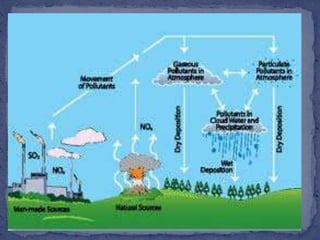
o When coal, oil, and gasoline are burned,
the gases sulfur dioxide and nitrogen oxide
are released into the atmosphere.
o The sulfur and nitrogen react with water,
forming sulfuric and nitric acids . The result is
acid rain.
o Acid rain can affect fish, harm trees, and eat
away the stone of buildings and statues
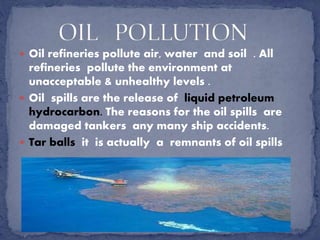
 Oil refineries pollute air, water and soil . All
refineries pollute the environment at
unacceptable & unhealthy levels .
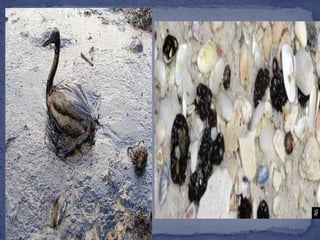
 Oil spills are the release of liquid petroleum
hydrocarbon. The reasons for the oil spills are
damaged tankers any many ship accidents.
 Tar balls it is actually a remnants of oil spills
• Amoebiasis
•Cho leRa
•Dysentery
•Diarrhea
•Hepatitis -a
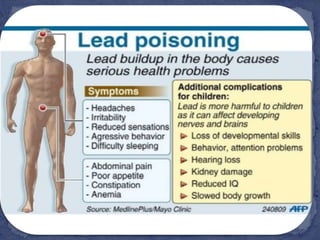
• Lead poisoning
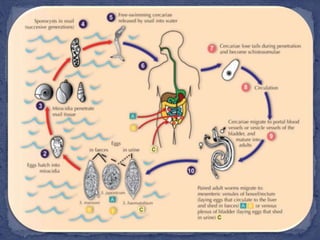
•SchistosomEasis
•Malaria
•Typhoid
•River blindness
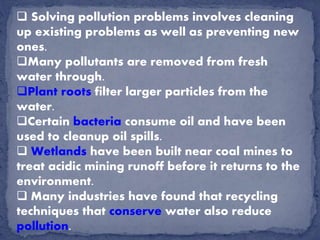
 Solving pollution problems involves cleaning
up existing problems as well as preventing new
ones.
Many pollutants are removed from fresh
water through.
Plant roots filter larger particles from the
water.
Certain bacteria consume oil and have been
used to cleanup oil spills.
 Wetlands have been built near coal mines to
treat acidic mining runoff before it returns to the
environment.
 Many industries have found that recycling
techniques that conserve water also reduce
pollution.
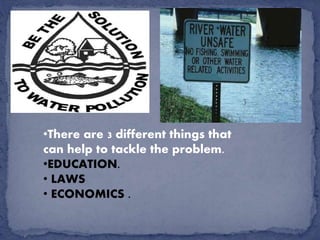
•There are 3 different things that
can help to tackle the problem.
•EDUCATION.
• LAWS
• ECONOMICS .
Water  pollution

Water pollution

  • 1.
  • 2.
    o Water covers71% of the Earth's surface. It is vital for all known forms of life.
  • 3.
     96.5% ofthe planet's water is found in seas and oceans.  1.7% in groundwater,  1.7% in glaciers and the ice caps of Antarctica and Greenland, a small fraction in other large water bodies.  0.001% in the air as vapor, clouds (formed of solid and liquid water particles suspended in air), and precipitation
  • 6.
    o Water pollutionis the contamination of water bodies (e.g. lakes, rivers, oceans, aquifers and groundw ater). o Water pollution occurs when pollutants are directly or indirectly discharged into water bodies without adequate treatment to remove harmful compounds.
  • 7.
     Water pollutionaffects plants and organisms living in these bodies of water.  In almost all cases the effect is damaging not only to individual species and populations, but also to the natural biological communities.
  • 8.
    POINT SOURCE . NON– POINT SOURCE .
  • 9.
    Point source pollution isa specific source of pollution that can be identified.  Example: A pipe gushing colored water into a river
  • 11.
     A widelyspread source of pollution that can’t be tied to a specific point of origin is called nonpoint source pollution.  Example: Runoff from a farm field, a street, or a construction
  • 12.
  • 14.
    Sewage in cities Duringheavy rains or floods, sanitary sewers sometimes overflow and can pollute the surface water. If this happens, people are often told to boil water for drinking and cooking after a flood. The boiling kills many disease-causing organisms.
  • 16.
     In ruralareas, people must be careful where they locate septic tanks.  If a tank is too near a stream or on a hill, wastewater can leak into the stream or flow downhill to the area of a well.
  • 18.
    Chemicals, smoke ,and heated water are three types of pollutants produced by factories, mines, and other industries. In the past, many industries stored toxic wastes in barrels or other containers buried underground. Over the years, however, many of these containers rusted or broke. The chemicals leaked out, polluting both the soil and the groundwater.
  • 19.
    o When coal,oil, and gasoline are burned, the gases sulfur dioxide and nitrogen oxide are released into the atmosphere. o The sulfur and nitrogen react with water, forming sulfuric and nitric acids . The result is acid rain. o Acid rain can affect fish, harm trees, and eat away the stone of buildings and statues
  • 21.
     Oil refineriespollute air, water and soil . All refineries pollute the environment at unacceptable & unhealthy levels .  Oil spills are the release of liquid petroleum hydrocarbon. The reasons for the oil spills are damaged tankers any many ship accidents.  Tar balls it is actually a remnants of oil spills
  • 25.
    • Amoebiasis •Cho leRa •Dysentery •Diarrhea •Hepatitis-a • Lead poisoning •SchistosomEasis •Malaria •Typhoid •River blindness
  • 31.
     Solving pollutionproblems involves cleaning up existing problems as well as preventing new ones. Many pollutants are removed from fresh water through. Plant roots filter larger particles from the water. Certain bacteria consume oil and have been used to cleanup oil spills.  Wetlands have been built near coal mines to treat acidic mining runoff before it returns to the environment.  Many industries have found that recycling techniques that conserve water also reduce pollution.
  • 33.
    •There are 3different things that can help to tackle the problem. •EDUCATION. • LAWS • ECONOMICS .