
Drilling machine
By
Polayya ( Asst Prof, Mech Dept)
Lendi Institute of Engineering &Tech
Introduction
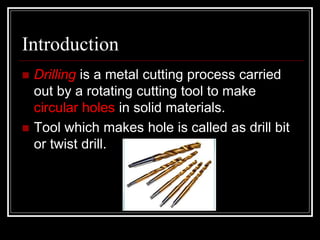
 Drilling is a metal cutting process carried
out by a rotating cutting tool to make
circular holes in solid materials.
 Tool which makes hole is called as drill bit
or twist drill.
Drilling machine
 A power operated machine tool which holds
the drill in its spindle rotating at high
speeds and when actuated move linearly
against the work piece produces a hole.
Types of drilling machine.
 Portable drilling machine
 Bench drilling machine
 Radial drilling machine
 Upright Drilling machine
 Gang drilling machine
 Multiple drilling machine
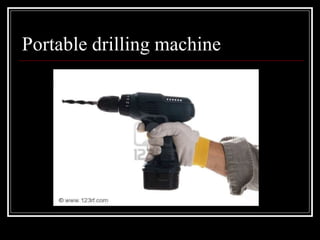
Portable drilling machine
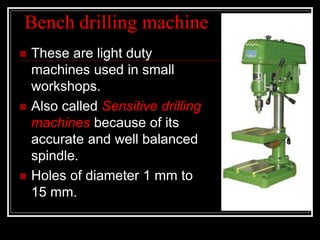
Bench drilling machine
 These are light duty
machines used in small
workshops.
 Also called Sensitive drilling
machines because of its
accurate and well balanced
spindle.
 Holes of diameter 1 mm to
15 mm.
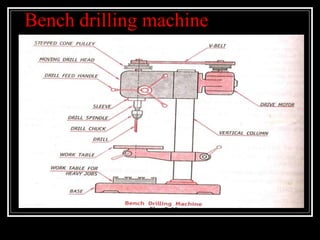
Bench drilling machine
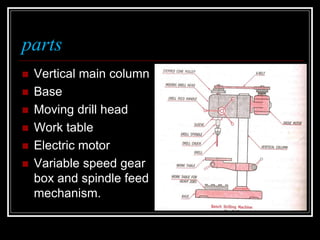
parts
 Vertical main column
 Base
 Moving drill head
 Work table
 Electric motor
 Variable speed gear
box and spindle feed
mechanism.
working
 Work piece with the exact location marked
on it with the centre punch is clamped
rigidly on the work table.
 spindle axis and center punch indentation
are in same line.
 Machine is started and drill bit is lowered
by rotating feed handle.
 Drill bit touches the work and starts
removing material.
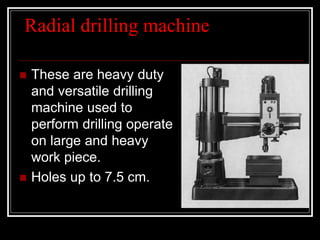
Radial drilling machine
 These are heavy duty
and versatile drilling
machine used to
perform drilling operate
on large and heavy
work piece.
 Holes up to 7.5 cm.
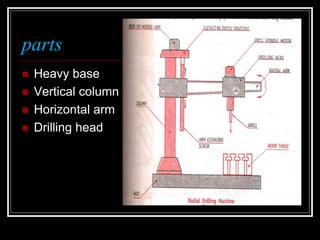
parts
 Heavy base
 Vertical column
 Horizontal arm
 Drilling head
working
 Work piece is marked for exact location
and mounted on the work table.
 Drill bit is then located by moving the radial
arm and drill to the marked location.
 By starting drill spindle motor holes are
drilled.
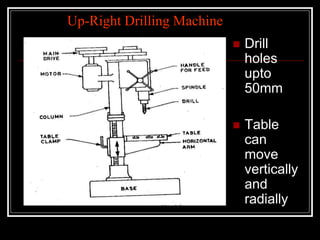
Up-Right Drilling Machine
 Drill
holes
upto
50mm
 Table
can
move
vertically
and
radially
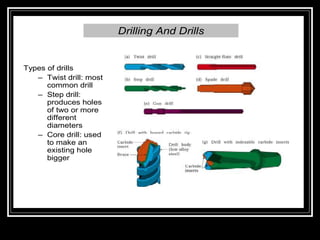
Drilling And Drills
Types of drills
– Twist drill: most
common drill
– Step drill:
produces holes
of two or more
different
diameters
– Core drill: used
to make an
existing hole
bigger
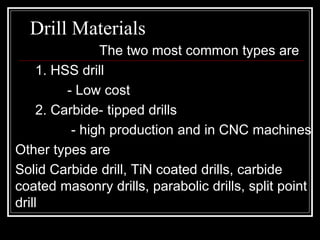
Drill Materials
The two most common types are
1. HSS drill
- Low cost
2. Carbide- tipped drills
- high production and in CNC machines
Other types are
Solid Carbide drill, TiN coated drills, carbide
coated masonry drills, parabolic drills, split point
drill
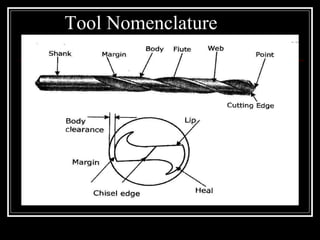
Tool Nomenclature
Drilling machine operations
 Reaming
 Boring
 Counter boring
 Counter sinking
 Spot facing
 Tapping
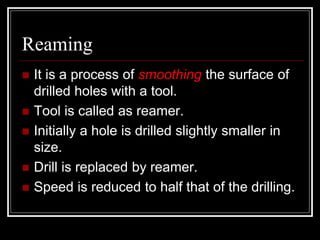
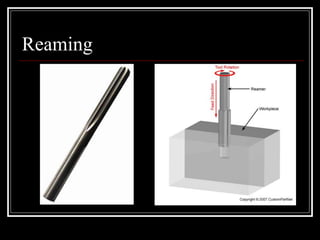
Reaming
 It is a process of smoothing the surface of
drilled holes with a tool.
 Tool is called as reamer.
 Initially a hole is drilled slightly smaller in
size.
 Drill is replaced by reamer.
 Speed is reduced to half that of the drilling.
Reaming
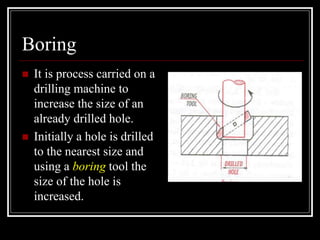
Boring
 It is process carried on a
drilling machine to
increase the size of an
already drilled hole.
 Initially a hole is drilled
to the nearest size and
using a boring tool the
size of the hole is
increased.
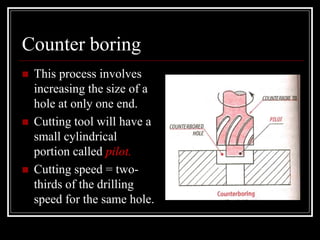
Counter boring
 This process involves
increasing the size of a
hole at only one end.
 Cutting tool will have a
small cylindrical
portion called pilot.
 Cutting speed = two-
thirds of the drilling
speed for the same hole.
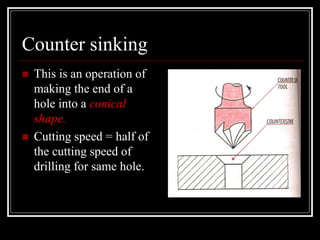
Counter sinking
 This is an operation of
making the end of a
hole into a conical
shape.
 Cutting speed = half of
the cutting speed of
drilling for same hole.
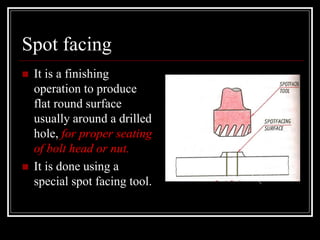
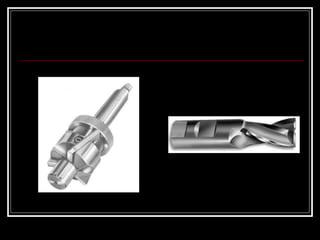
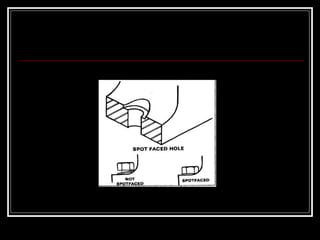
Spot facing
 It is a finishing
operation to produce
flat round surface
usually around a drilled
hole, for proper seating
of bolt head or nut.
 It is done using a
special spot facing tool.
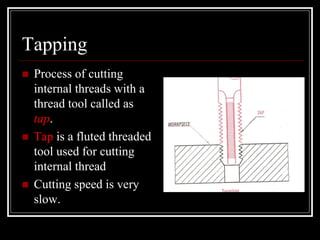
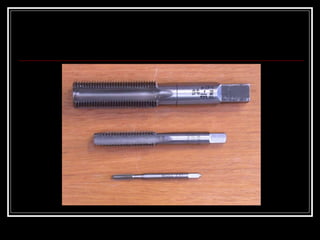
Tapping
 Process of cutting
internal threads with a
thread tool called as
tap.
 Tap is a fluted threaded
tool used for cutting
internal thread
 Cutting speed is very
slow.
Types of cutters
Reamers :-
Multi tooth cutting tool
Accurate way of sizing and finishing the
pre-existing hole.
Accuracy of 0.005mm can be achieved
Boring Tool:-
Single point cutting tool.
Boring tool is held in the boring bar which
has the shank.
Accuracy of 0.005mm can be achieved.
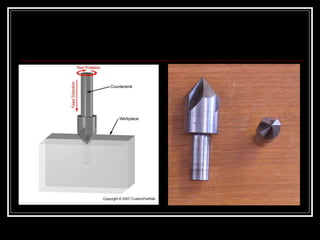
Countersinks :-
Special angled cone shaped enlargement at
the end of the hole
Cutting edges at the end of conical surface.
Cone angles of 60°, 82°, 90°, 100°, 110°,
120°
Counter Bore Tool:-
Special cutters uses a pilot to guide the
cutting action .
Accommodates the heads of bolts.
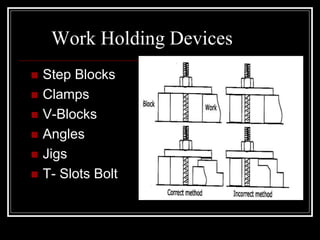
 Step Blocks
 Clamps
 V-Blocks
 Angles
 Jigs
 T- Slots Bolt
Work Holding Devices
Definitions
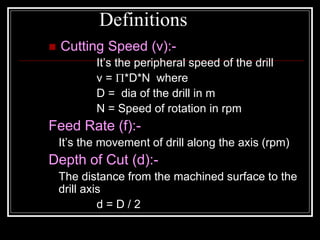
 Cutting Speed (v):-
It’s the peripheral speed of the drill
v = *D*N where
D = dia of the drill in m
N = Speed of rotation in rpm
Feed Rate (f):-
It’s the movement of drill along the axis (rpm)
Depth of Cut (d):-
The distance from the machined surface to the
drill axis
d = D / 2
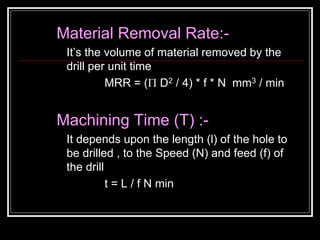
Material Removal Rate:-
It’s the volume of material removed by the
drill per unit time
MRR = ( D2 / 4) * f * N mm3 / min
Machining Time (T) :-
It depends upon the length (l) of the hole to
be drilled , to the Speed (N) and feed (f) of
the drill
t = L / f N min
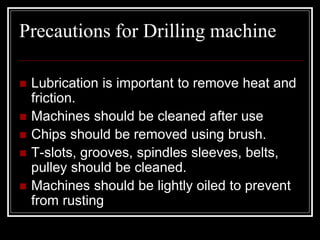
Precautions for Drilling machine
 Lubrication is important to remove heat and
friction.
 Machines should be cleaned after use
 Chips should be removed using brush.
 T-slots, grooves, spindles sleeves, belts,
pulley should be cleaned.
 Machines should be lightly oiled to prevent
from rusting
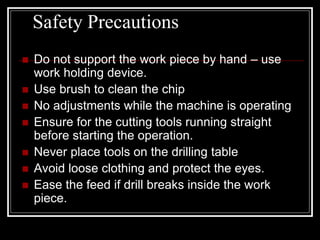
Safety Precautions
 Do not support the work piece by hand – use
work holding device.
 Use brush to clean the chip
 No adjustments while the machine is operating
 Ensure for the cutting tools running straight
before starting the operation.
 Never place tools on the drilling table
 Avoid loose clothing and protect the eyes.
 Ease the feed if drill breaks inside the work
piece.
Drilling machine class

Drilling machine class

  • 1.
    Drilling machine By Polayya (Asst Prof, Mech Dept) Lendi Institute of Engineering &Tech
  • 2.
    Introduction  Drilling isa metal cutting process carried out by a rotating cutting tool to make circular holes in solid materials.  Tool which makes hole is called as drill bit or twist drill.
  • 3.
    Drilling machine  Apower operated machine tool which holds the drill in its spindle rotating at high speeds and when actuated move linearly against the work piece produces a hole.
  • 4.
    Types of drillingmachine.  Portable drilling machine  Bench drilling machine  Radial drilling machine  Upright Drilling machine  Gang drilling machine  Multiple drilling machine
  • 5.
  • 6.
    Bench drilling machine These are light duty machines used in small workshops.  Also called Sensitive drilling machines because of its accurate and well balanced spindle.  Holes of diameter 1 mm to 15 mm.
  • 7.
  • 8.
    parts  Vertical maincolumn  Base  Moving drill head  Work table  Electric motor  Variable speed gear box and spindle feed mechanism.
  • 9.
    working  Work piecewith the exact location marked on it with the centre punch is clamped rigidly on the work table.  spindle axis and center punch indentation are in same line.  Machine is started and drill bit is lowered by rotating feed handle.  Drill bit touches the work and starts removing material.
  • 10.
    Radial drilling machine These are heavy duty and versatile drilling machine used to perform drilling operate on large and heavy work piece.  Holes up to 7.5 cm.
  • 11.
    parts  Heavy base Vertical column  Horizontal arm  Drilling head
  • 12.
    working  Work pieceis marked for exact location and mounted on the work table.  Drill bit is then located by moving the radial arm and drill to the marked location.  By starting drill spindle motor holes are drilled.
  • 13.
    Up-Right Drilling Machine Drill holes upto 50mm  Table can move vertically and radially
  • 14.
    Drilling And Drills Typesof drills – Twist drill: most common drill – Step drill: produces holes of two or more different diameters – Core drill: used to make an existing hole bigger
  • 15.
    Drill Materials The twomost common types are 1. HSS drill - Low cost 2. Carbide- tipped drills - high production and in CNC machines Other types are Solid Carbide drill, TiN coated drills, carbide coated masonry drills, parabolic drills, split point drill
  • 16.
  • 17.
    Drilling machine operations Reaming  Boring  Counter boring  Counter sinking  Spot facing  Tapping
  • 18.
    Reaming  It isa process of smoothing the surface of drilled holes with a tool.  Tool is called as reamer.  Initially a hole is drilled slightly smaller in size.  Drill is replaced by reamer.  Speed is reduced to half that of the drilling.
  • 19.
  • 20.
    Boring  It isprocess carried on a drilling machine to increase the size of an already drilled hole.  Initially a hole is drilled to the nearest size and using a boring tool the size of the hole is increased.
  • 21.
    Counter boring  Thisprocess involves increasing the size of a hole at only one end.  Cutting tool will have a small cylindrical portion called pilot.  Cutting speed = two- thirds of the drilling speed for the same hole.
  • 22.
    Counter sinking  Thisis an operation of making the end of a hole into a conical shape.  Cutting speed = half of the cutting speed of drilling for same hole.
  • 24.
    Spot facing  Itis a finishing operation to produce flat round surface usually around a drilled hole, for proper seating of bolt head or nut.  It is done using a special spot facing tool.
  • 27.
    Tapping  Process ofcutting internal threads with a thread tool called as tap.  Tap is a fluted threaded tool used for cutting internal thread  Cutting speed is very slow.
  • 29.
    Types of cutters Reamers:- Multi tooth cutting tool Accurate way of sizing and finishing the pre-existing hole. Accuracy of 0.005mm can be achieved Boring Tool:- Single point cutting tool. Boring tool is held in the boring bar which has the shank. Accuracy of 0.005mm can be achieved.
  • 30.
    Countersinks :- Special angledcone shaped enlargement at the end of the hole Cutting edges at the end of conical surface. Cone angles of 60°, 82°, 90°, 100°, 110°, 120° Counter Bore Tool:- Special cutters uses a pilot to guide the cutting action . Accommodates the heads of bolts.
  • 31.
     Step Blocks Clamps  V-Blocks  Angles  Jigs  T- Slots Bolt Work Holding Devices
  • 32.
    Definitions  Cutting Speed(v):- It’s the peripheral speed of the drill v = *D*N where D = dia of the drill in m N = Speed of rotation in rpm Feed Rate (f):- It’s the movement of drill along the axis (rpm) Depth of Cut (d):- The distance from the machined surface to the drill axis d = D / 2
  • 33.
    Material Removal Rate:- It’sthe volume of material removed by the drill per unit time MRR = ( D2 / 4) * f * N mm3 / min Machining Time (T) :- It depends upon the length (l) of the hole to be drilled , to the Speed (N) and feed (f) of the drill t = L / f N min
  • 34.
    Precautions for Drillingmachine  Lubrication is important to remove heat and friction.  Machines should be cleaned after use  Chips should be removed using brush.  T-slots, grooves, spindles sleeves, belts, pulley should be cleaned.  Machines should be lightly oiled to prevent from rusting
  • 35.
    Safety Precautions  Donot support the work piece by hand – use work holding device.  Use brush to clean the chip  No adjustments while the machine is operating  Ensure for the cutting tools running straight before starting the operation.  Never place tools on the drilling table  Avoid loose clothing and protect the eyes.  Ease the feed if drill breaks inside the work piece.