LENDI INSTITUTE OF ENGINEERING
AND TECHNOLOGY
METAL CUTTING AND MACHINE TOOLS
COURSE CODE: C302
REGULATION: R16
3rd BTECH 1st SEM
PREPARED BY :
POLAYYA CHINTADA M.TECH,M.B.A,(PhD)
ASSISTANT PROFESSOR
TOPIC:
MILLING OPERATIONS
MILLINGoperations :
2
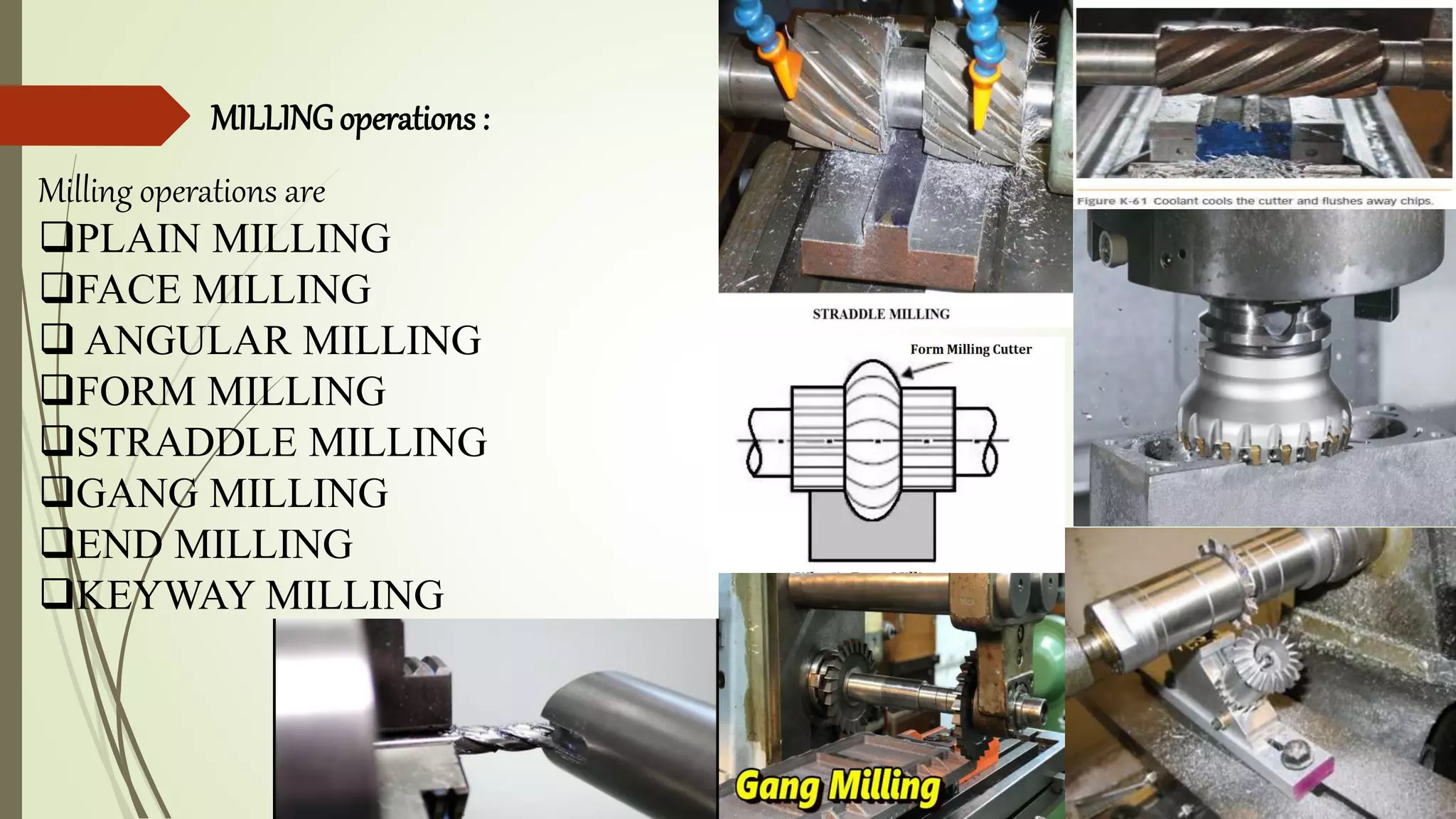
Milling operations are
PLAIN MILLING
FACE MILLING
 ANGULAR MILLING
FORM MILLING
STRADDLE MILLING
GANG MILLING
END MILLING
KEYWAY MILLING
MILLINGoperations :
3
PLAIN MILLING:
It is the operation of production of a flat
surface parallel to the axis of rotation of the
cutter.
It is also called as slab milling.
Plain milling cutters and slab milling cutters
are used to perform this operation
It can be carried out by both horizontal and
vertical machines
MILLINGoperations :
4
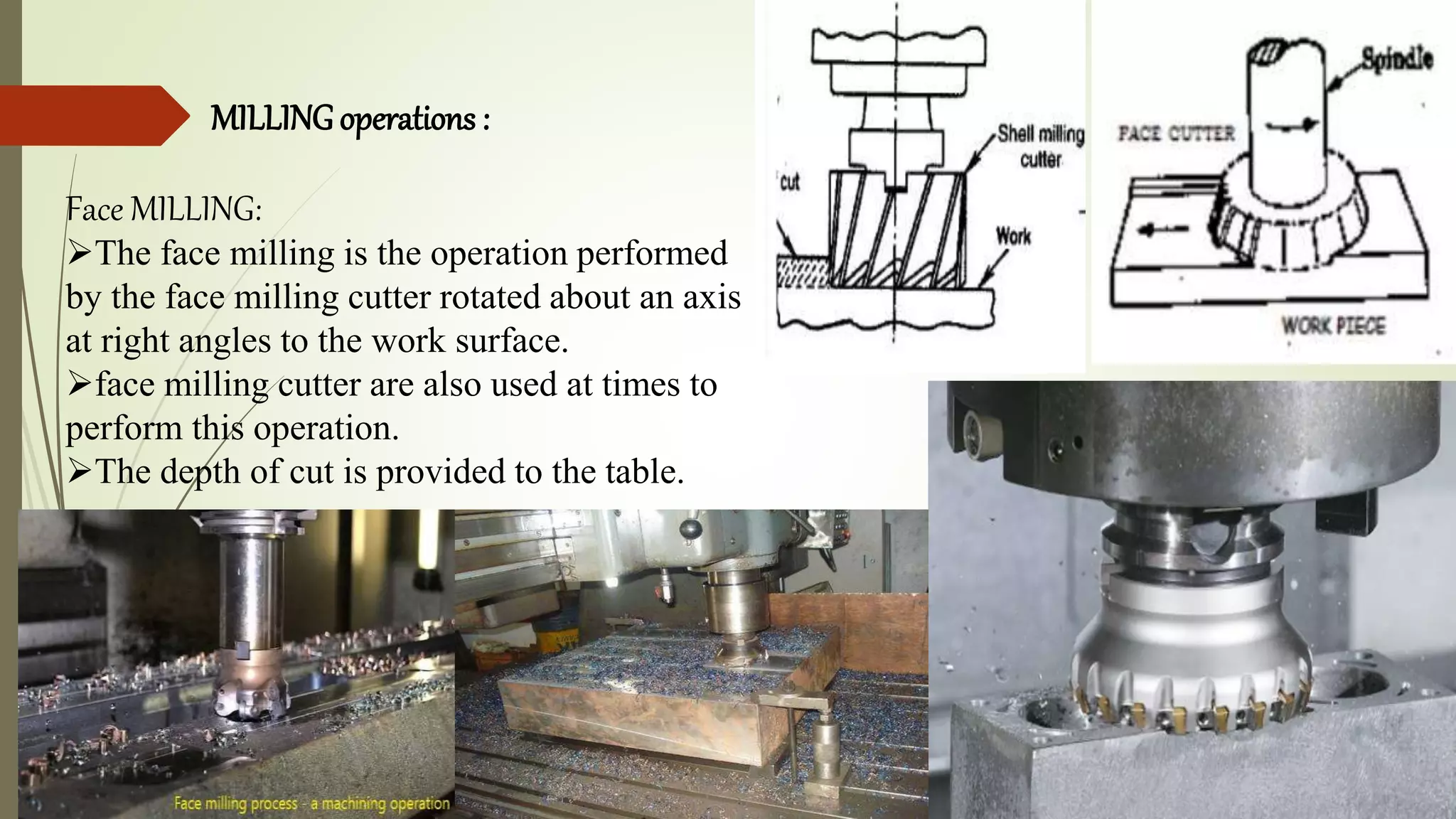
Face MILLING:
The face milling is the operation performed
by the face milling cutter rotated about an axis
at right angles to the work surface.
face milling cutter are also used at times to
perform this operation.
The depth of cut is provided to the table.
MILLINGoperations :
5
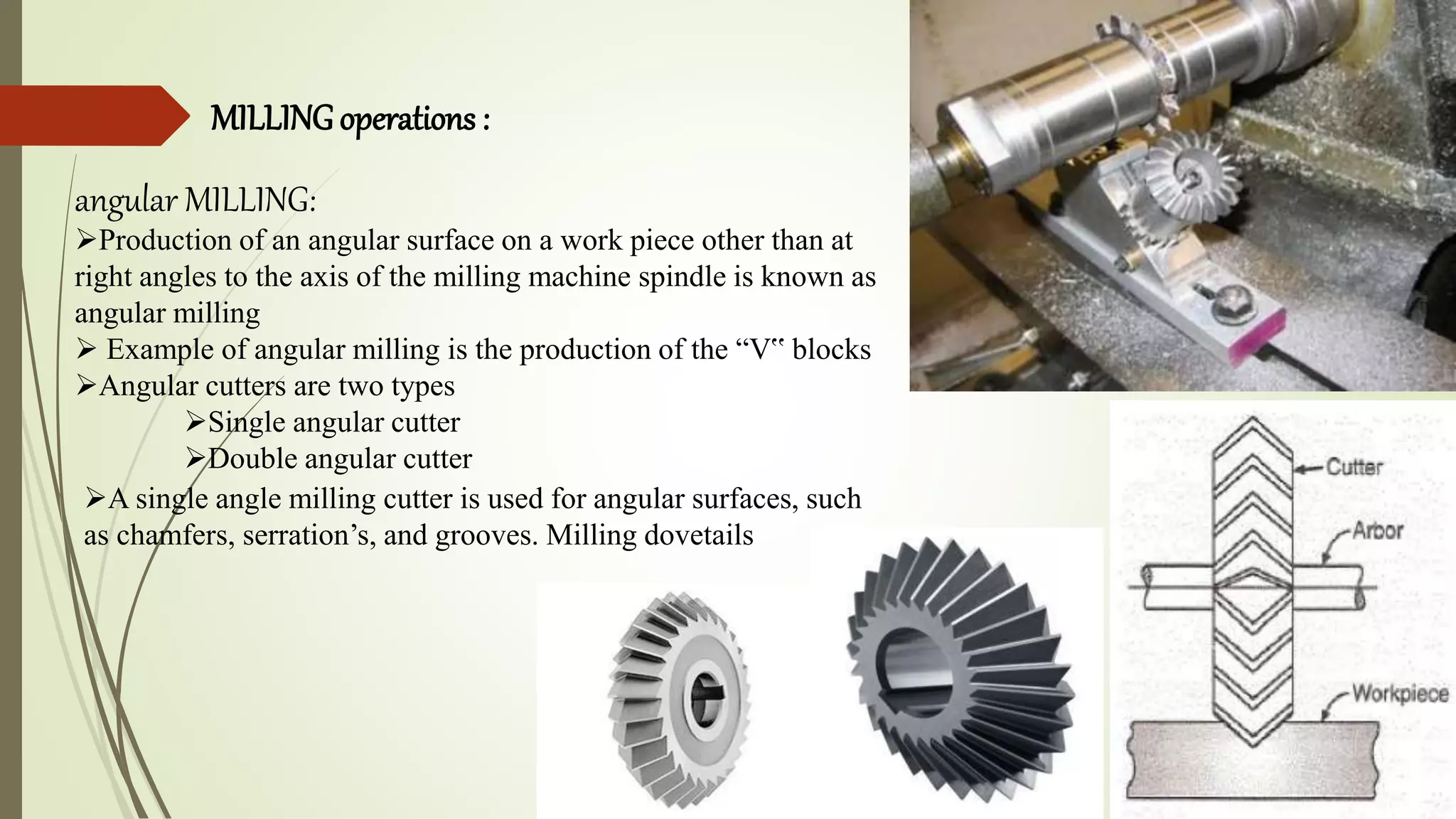
angular MILLING:
Production of an angular surface on a work piece other than at
right angles to the axis of the milling machine spindle is known as
angular milling
 Example of angular milling is the production of the “V‟ blocks
Angular cutters are two types
Single angular cutter
Double angular cutter
A single angle milling cutter is used for angular surfaces, such
as chamfers, serration’s, and grooves. Milling dovetails
MILLINGoperations :
6
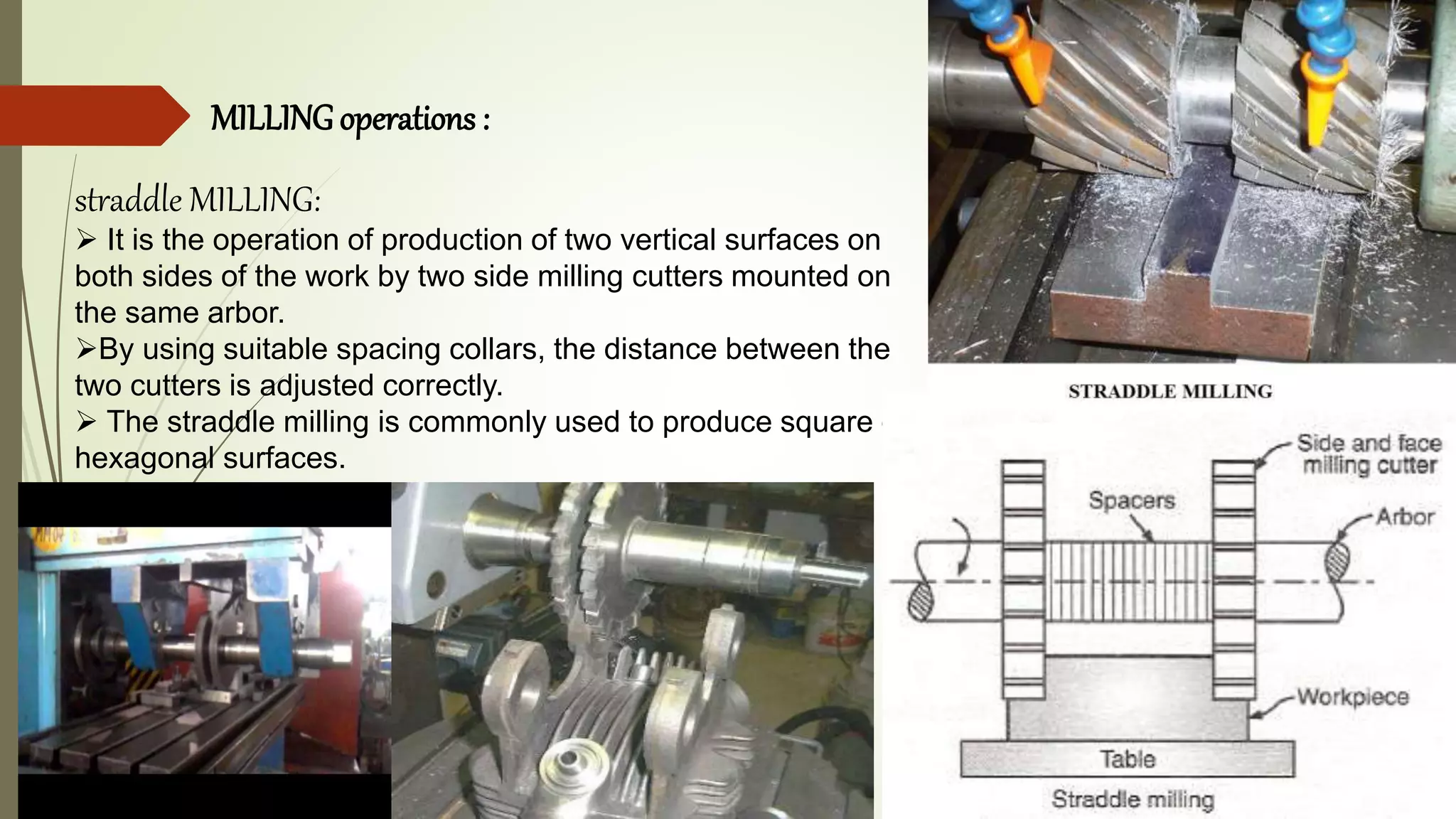
straddle MILLING:
 It is the operation of production of two vertical surfaces on
both sides of the work by two side milling cutters mounted on
the same arbor.
By using suitable spacing collars, the distance between the
two cutters is adjusted correctly.
 The straddle milling is commonly used to produce square or
hexagonal surfaces.
MILLINGoperations :
7
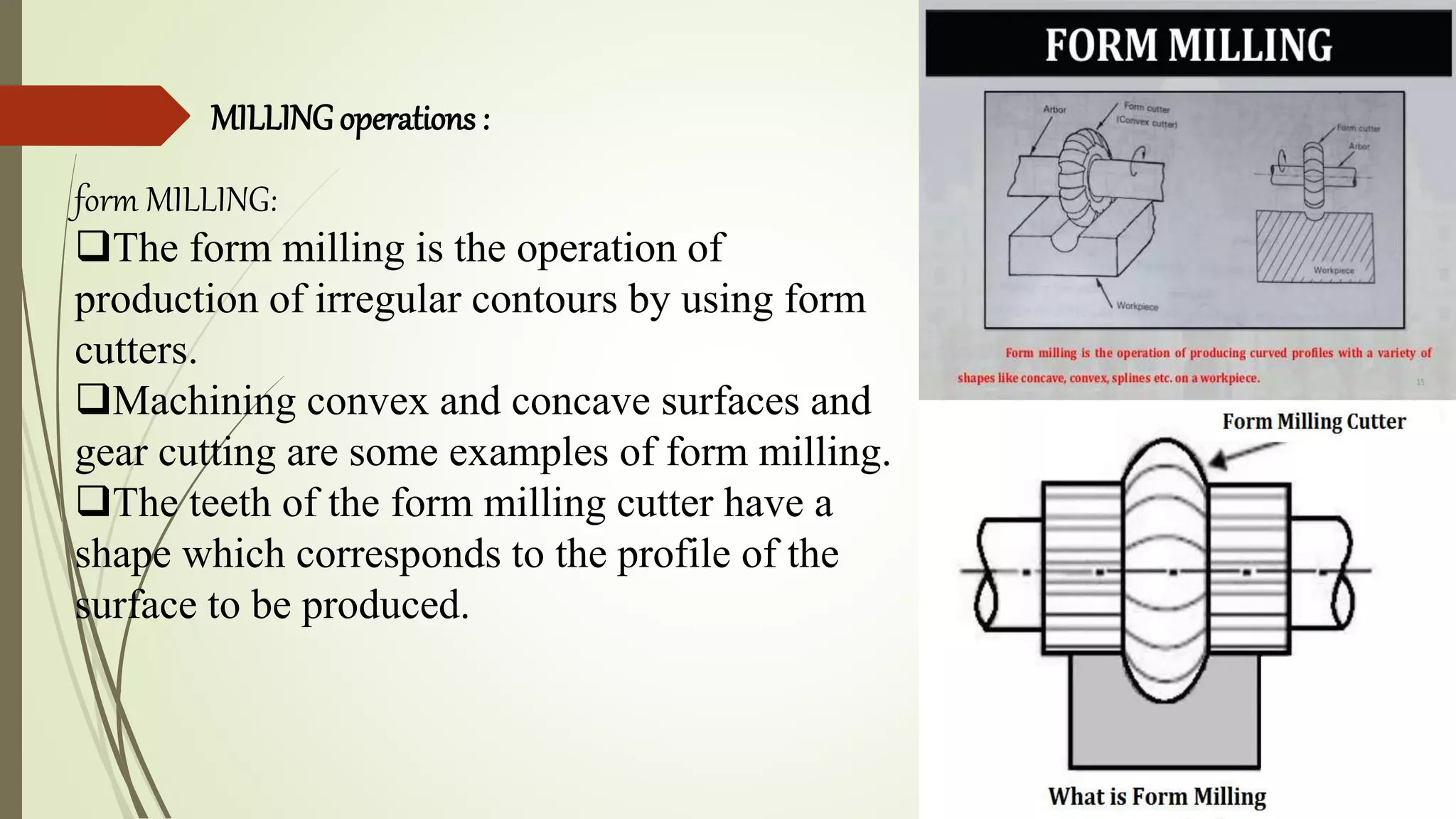
form MILLING:
The form milling is the operation of
production of irregular contours by using form
cutters.
Machining convex and concave surfaces and
gear cutting are some examples of form milling.
The teeth of the form milling cutter have a
shape which corresponds to the profile of the
surface to be produced.
MILLINGoperations :
8
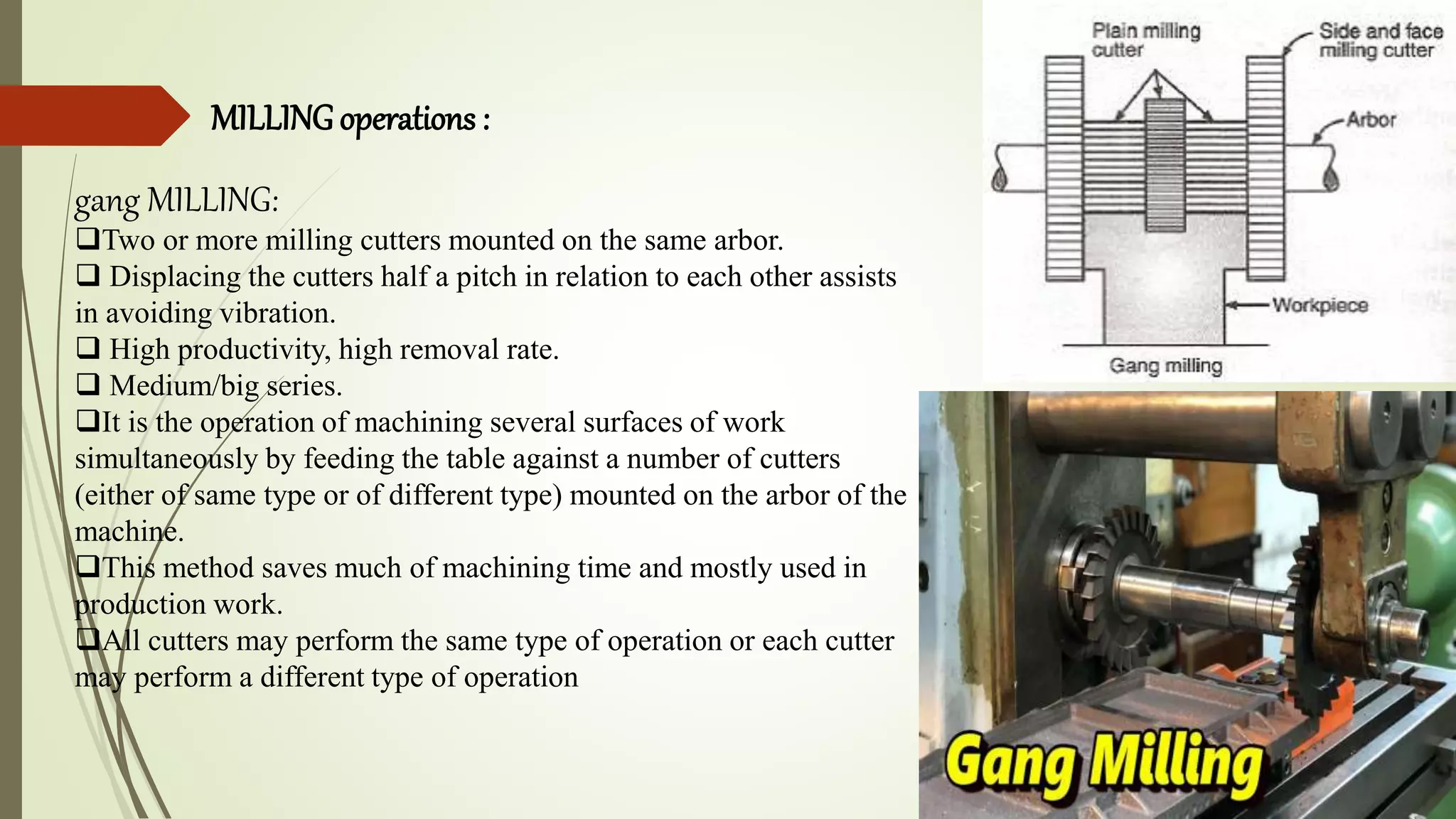
gang MILLING:
Two or more milling cutters mounted on the same arbor.
 Displacing the cutters half a pitch in relation to each other assists
in avoiding vibration.
 High productivity, high removal rate.
 Medium/big series.
It is the operation of machining several surfaces of work
simultaneously by feeding the table against a number of cutters
(either of same type or of different type) mounted on the arbor of the
machine.
This method saves much of machining time and mostly used in
production work.
All cutters may perform the same type of operation or each cutter
may perform a different type of operation
MILLINGoperations :
9
END MILLING:
It is the operation of producing a flat
surface which may be vertical, horizontal
or at an angle to the table surface.
The end milling is performed by a cutter
known as an end mill.
End milling is mostly performed in a
vertical milling machine.
MILLINGoperations :
10
KEYWAY MILLING:
The operation of production of keyways,
grooves and slots of different shapes and
sizes can be performed in a milling
machine by using a plain milling cutter, a
metal slitting saw, an end mill or by a side
milling cutter
Yours:
POLAYYA CHINTADA M.TECH,M.B.A,(PhD)
ASSISTANT PROFESSOR

MILLING MACHINE PPT3: MILLING OPERATIONS

  • 1.
    LENDI INSTITUTE OFENGINEERING AND TECHNOLOGY METAL CUTTING AND MACHINE TOOLS COURSE CODE: C302 REGULATION: R16 3rd BTECH 1st SEM PREPARED BY : POLAYYA CHINTADA M.TECH,M.B.A,(PhD) ASSISTANT PROFESSOR TOPIC: MILLING OPERATIONS
  • 2.
    MILLINGoperations : 2 Milling operationsare PLAIN MILLING FACE MILLING  ANGULAR MILLING FORM MILLING STRADDLE MILLING GANG MILLING END MILLING KEYWAY MILLING
  • 3.
    MILLINGoperations : 3 PLAIN MILLING: Itis the operation of production of a flat surface parallel to the axis of rotation of the cutter. It is also called as slab milling. Plain milling cutters and slab milling cutters are used to perform this operation It can be carried out by both horizontal and vertical machines
  • 4.
    MILLINGoperations : 4 Face MILLING: Theface milling is the operation performed by the face milling cutter rotated about an axis at right angles to the work surface. face milling cutter are also used at times to perform this operation. The depth of cut is provided to the table.
  • 5.
    MILLINGoperations : 5 angular MILLING: Productionof an angular surface on a work piece other than at right angles to the axis of the milling machine spindle is known as angular milling  Example of angular milling is the production of the “V‟ blocks Angular cutters are two types Single angular cutter Double angular cutter A single angle milling cutter is used for angular surfaces, such as chamfers, serration’s, and grooves. Milling dovetails
  • 6.
    MILLINGoperations : 6 straddle MILLING: It is the operation of production of two vertical surfaces on both sides of the work by two side milling cutters mounted on the same arbor. By using suitable spacing collars, the distance between the two cutters is adjusted correctly.  The straddle milling is commonly used to produce square or hexagonal surfaces.
  • 7.
    MILLINGoperations : 7 form MILLING: Theform milling is the operation of production of irregular contours by using form cutters. Machining convex and concave surfaces and gear cutting are some examples of form milling. The teeth of the form milling cutter have a shape which corresponds to the profile of the surface to be produced.
  • 8.
    MILLINGoperations : 8 gang MILLING: Twoor more milling cutters mounted on the same arbor.  Displacing the cutters half a pitch in relation to each other assists in avoiding vibration.  High productivity, high removal rate.  Medium/big series. It is the operation of machining several surfaces of work simultaneously by feeding the table against a number of cutters (either of same type or of different type) mounted on the arbor of the machine. This method saves much of machining time and mostly used in production work. All cutters may perform the same type of operation or each cutter may perform a different type of operation
  • 9.
    MILLINGoperations : 9 END MILLING: Itis the operation of producing a flat surface which may be vertical, horizontal or at an angle to the table surface. The end milling is performed by a cutter known as an end mill. End milling is mostly performed in a vertical milling machine.
  • 10.
    MILLINGoperations : 10 KEYWAY MILLING: Theoperation of production of keyways, grooves and slots of different shapes and sizes can be performed in a milling machine by using a plain milling cutter, a metal slitting saw, an end mill or by a side milling cutter
  • 11.