Orthogonal & Oblique Cutting
Shivam Kumar
40925511116
What is Metal Cutting?
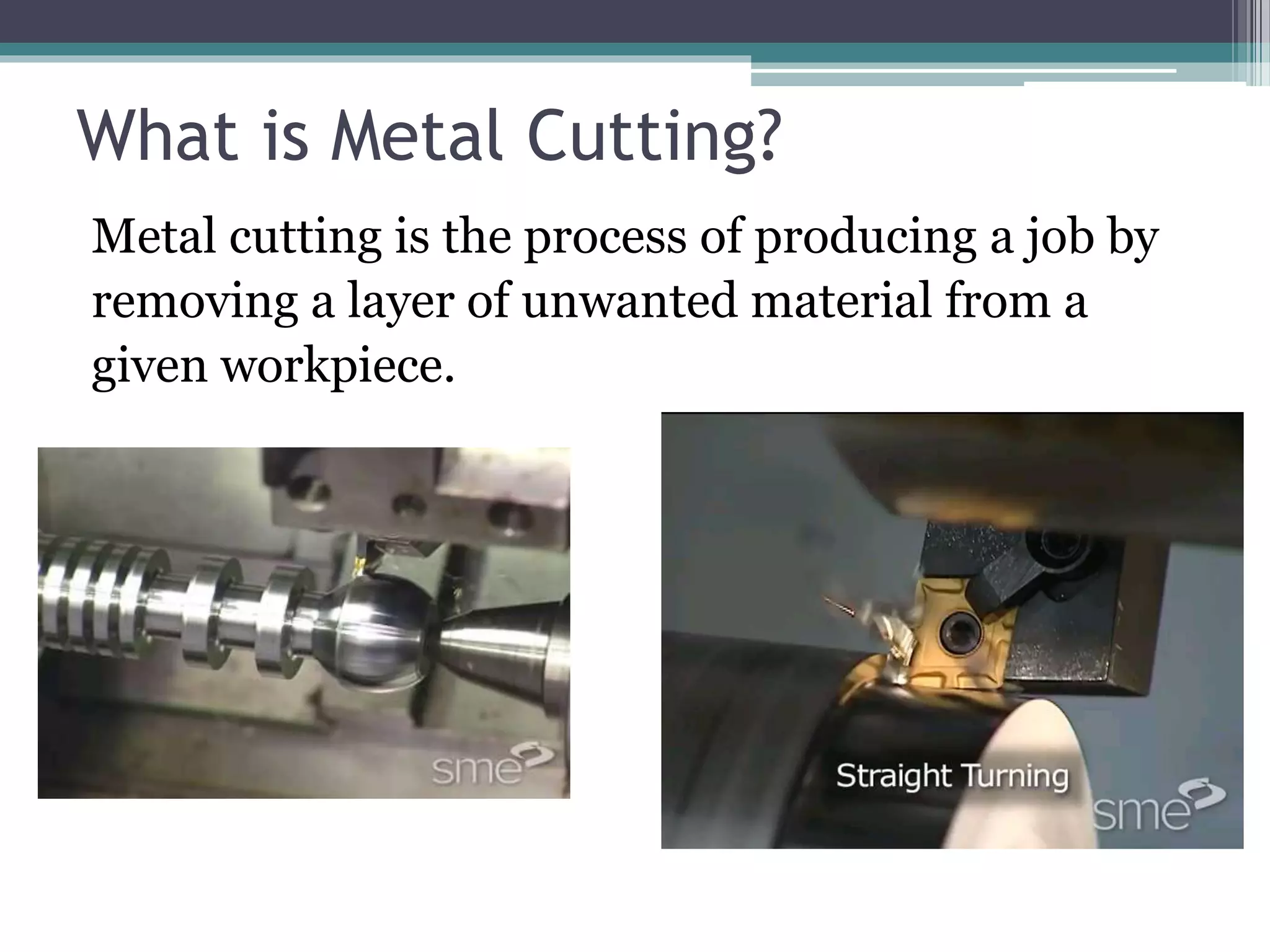
Metal cutting is the process of producing a job by
removing a layer of unwanted material from a
given workpiece.
Orthogonal Cutting
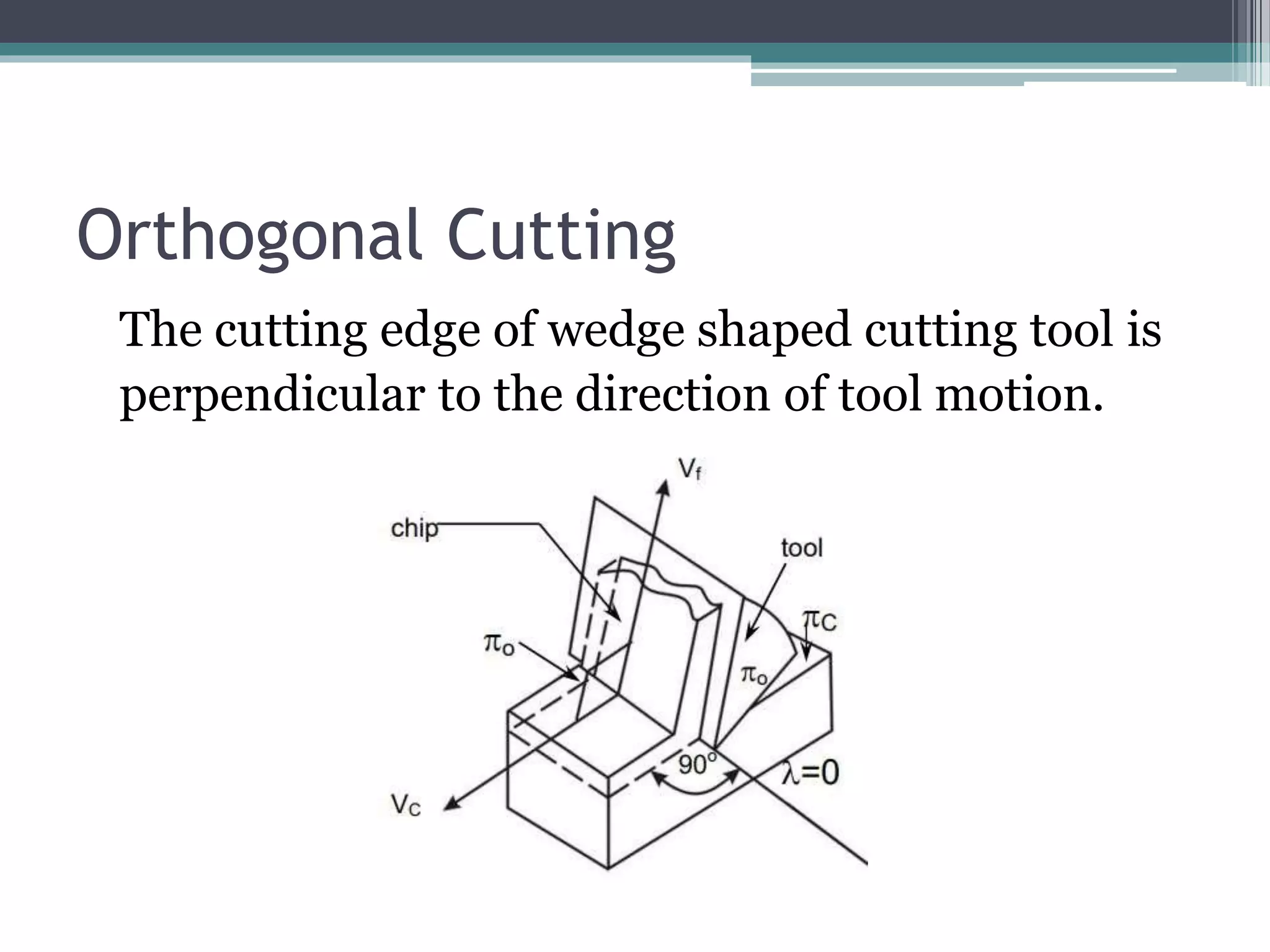
The cutting edge of wedge shaped cutting tool is
perpendicular to the direction of tool motion.
Oblique Cutting
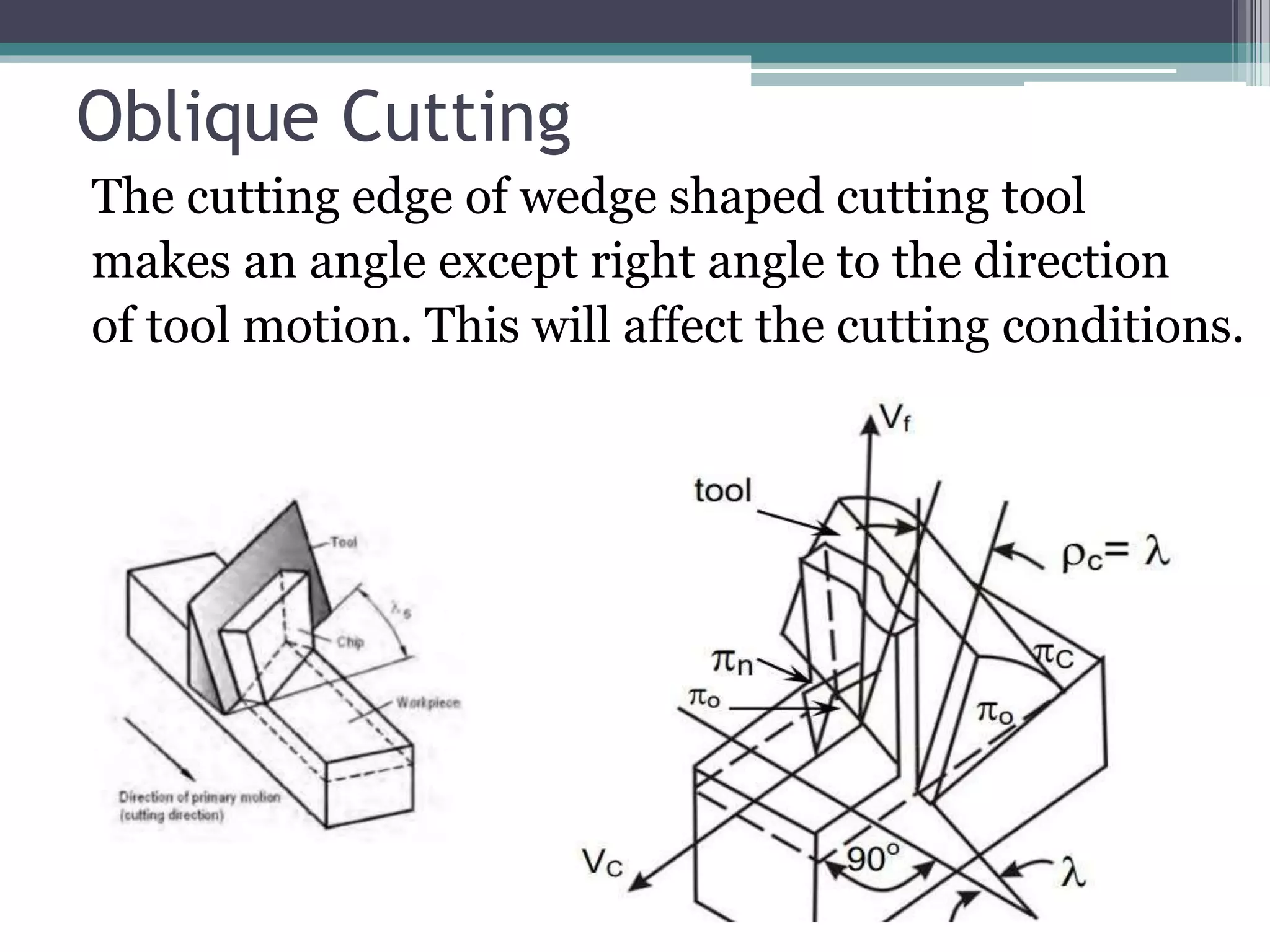
The cutting edge of wedge shaped cutting tool
makes an angle except right angle to the direction
of tool motion. This will affect the cutting conditions.
Differences
Orthogonal Cutting Oblique Cutting
• Chip flow is in the
direction perpendicular
to cutting edge.
• Chip flow is in sideways
direction.
Differences Contd.
• This cutting is also known as
2D cutting because the force
develop during cutting can be
plot on a plane or can be
represent by 2D coordinate.
• It is also known as 3D cutting
because the cutting force
develop during cutting cannot
be represent by 2D coordinate
or used 3D coordinate to
represent.
Differences Contd.
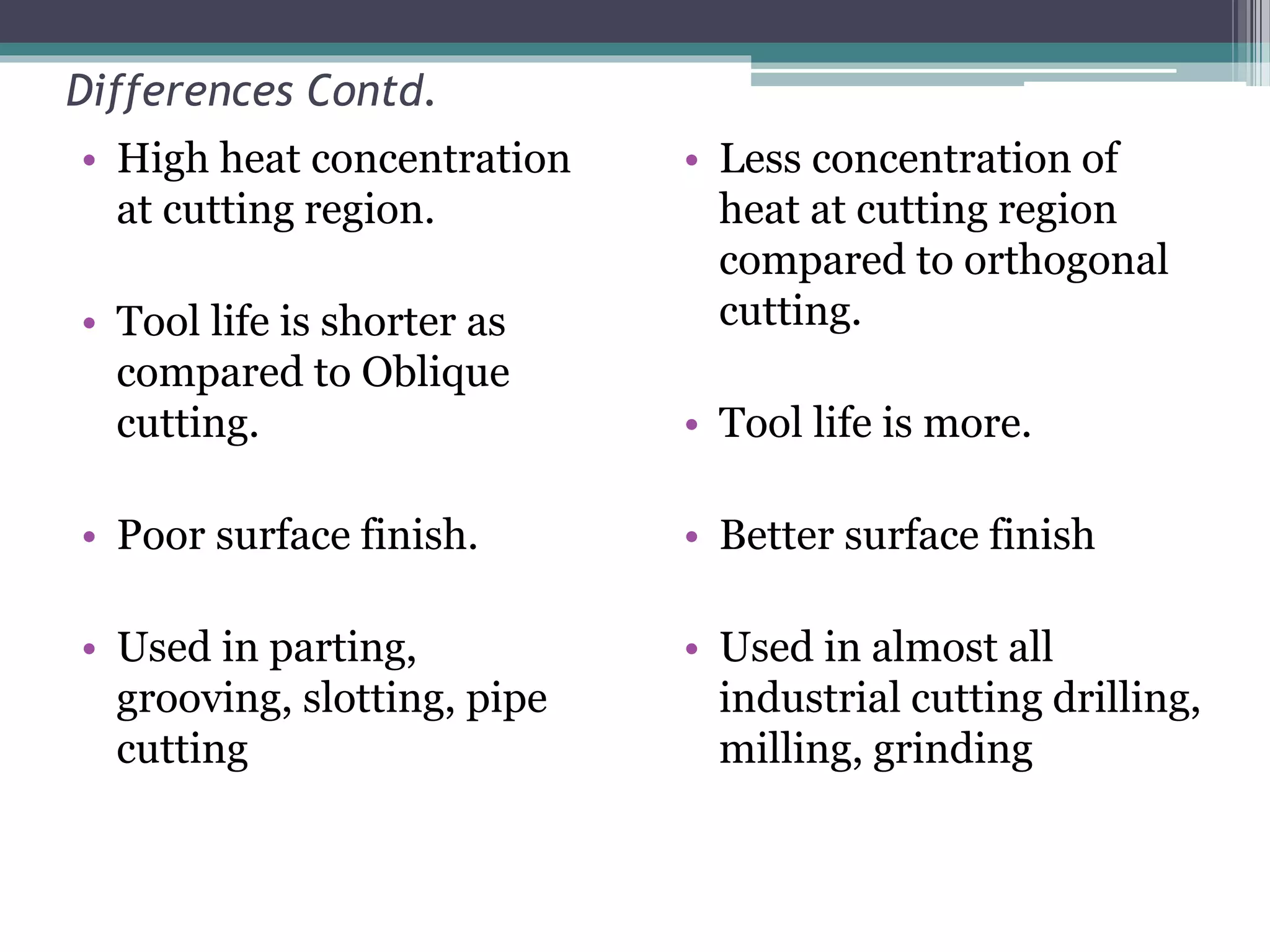
• High heat concentration
at cutting region.
• Tool life is shorter as
compared to Oblique
cutting.
• Poor surface finish.
• Used in parting,
grooving, slotting, pipe
cutting
• Less concentration of
heat at cutting region
compared to orthogonal
cutting.
• Tool life is more.
• Better surface finish
• Used in almost all
industrial cutting drilling,
milling, grinding
Thank You

Orthogonal & oblique cutting

  • 1.
    Orthogonal & ObliqueCutting Shivam Kumar 40925511116
  • 2.
    What is MetalCutting? Metal cutting is the process of producing a job by removing a layer of unwanted material from a given workpiece.
  • 3.
    Orthogonal Cutting The cuttingedge of wedge shaped cutting tool is perpendicular to the direction of tool motion.
  • 4.
    Oblique Cutting The cuttingedge of wedge shaped cutting tool makes an angle except right angle to the direction of tool motion. This will affect the cutting conditions.
  • 5.
    Differences Orthogonal Cutting ObliqueCutting • Chip flow is in the direction perpendicular to cutting edge. • Chip flow is in sideways direction.
  • 6.
    Differences Contd. • Thiscutting is also known as 2D cutting because the force develop during cutting can be plot on a plane or can be represent by 2D coordinate. • It is also known as 3D cutting because the cutting force develop during cutting cannot be represent by 2D coordinate or used 3D coordinate to represent.
  • 7.
    Differences Contd. • Highheat concentration at cutting region. • Tool life is shorter as compared to Oblique cutting. • Poor surface finish. • Used in parting, grooving, slotting, pipe cutting • Less concentration of heat at cutting region compared to orthogonal cutting. • Tool life is more. • Better surface finish • Used in almost all industrial cutting drilling, milling, grinding
  • 8.

Editor's Notes

  • #3 Under the action of force, pressure is exerted on the workpiece metal causing its compression near the tip of the tool. The metal undergoes shear type deformation and a piece or layer of metal gets repeated in the form of a chip.