Chapter 9+12 Fundamentals of Genetics And Human Genetics
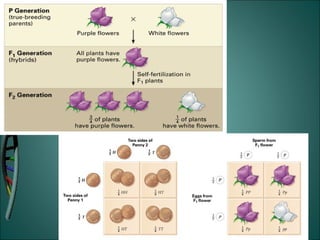
Gregor Mendel Austrian monk that studied heredity. Heredity is the transmission of characteristics from parents to offspring Experimented with pea plants in the garden to determine what traits were passed along. He discovered the basic rules of genetics.
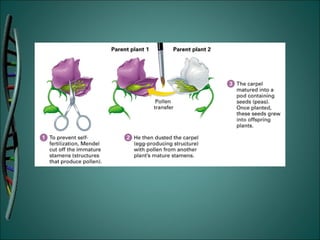
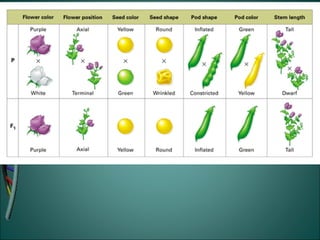
Pea Plants Mendel studied 7 traits. They were easily observable: plant height, flower position, pod color, pod appearance, seed texture, seed color and flower color. Mendel used cross pollination in his studies to make sure each parent was the correct one he wanted.
 
Important Vocabulary Pure- being a purebreed, parent always passes on one trait to the offspring P 1  generation-parent or first generation F 1 -filial generation or kids of the parent generation F 2 - grandkids of the parent generation
Important Vocabulary Dominant- a trait that always shows up in the F 1  generation, it is the strongest trait and will mask other traits Recessive- a trait that is weaker, usually doesn’t appear in F 1  generation but appears in F 2  generation Mendel discovered that certain traits were dominant and certain ones were recessive. Look in your book for the list of traits.
 
 
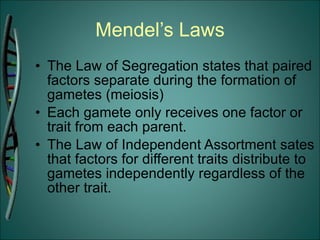
Mendel’s Laws The Law of Segregation states that paired factors separate during the formation of gametes (meiosis) Each gamete only receives one factor or trait from each parent. The Law of Independent Assortment sates that factors for different traits distribute to gametes independently regardless of the other trait.
Important Vocabulary An allele is the factor or gene that is passed only; it is a type of gene. There may be several alleles for one gene. Dominant alleles have capital letters and recessive alleles have lowercase letters. Genotype is the actual genetic makeup of the organism or what the genes say. Phenotype is the physical look of the organism like color or texture. You can see the phenotype but not the genotype.
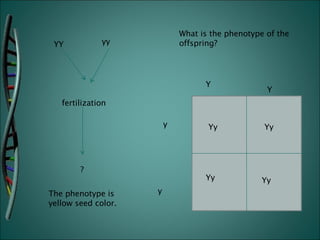
YY yy fertilization ? Y Y y y Yy Yy Yy Yy What is the phenotype of the offspring? The phenotype is yellow seed color.
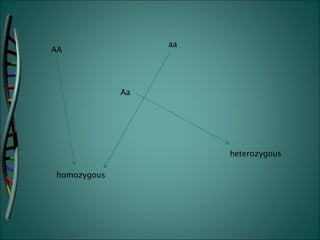
Important Vocabulary Homozygous means the organism has two of same alleles for a trait. Heterozygous means the organism has two different alleles for a trait. Heterozygous would automatically have one dominant allele and one recessive allele. Homozygous could have two dominant alleles or two recessive alleles.
AA aa Aa homozygous heterozygous
 
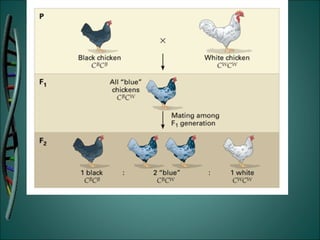
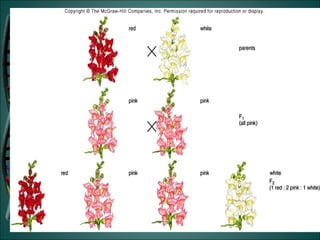
Incomplete Dominance (intermediate) When two or more alleles influence the phenotype, both are expressed so neither is completely dominant or recessive. This results in a third phenotype in addition to the originals. The heterozygous genotype is always the new phenotype.
 
 
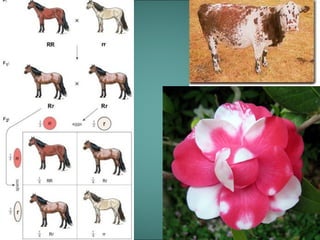
Codominance This results when two or more alleles are equally dominant and both alleles are expressed in heterozygous organisms Both alleles are expressed equally. This is different than incomplete dominance because it isn’t a blended phenotype, is both expressed. Human blood type is an example.
 
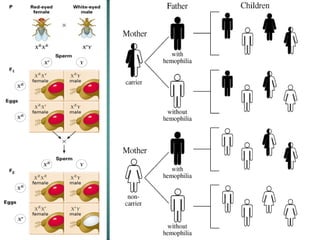
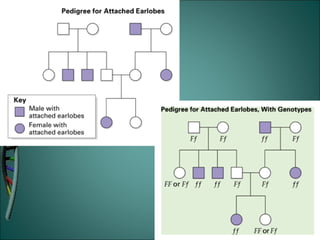
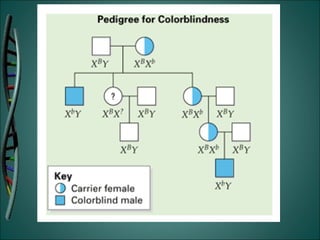
Sex Linked Inheritance Some genes are found only on the X-chromosome. Many disease are X-linked diseases and are more common in males than in females. Males need only one copy of the bad gene while females need two copies of the bad gene. Hemophilia, colorblindness and Duchenne muscular dystrophy are human diseases associated with this inheritance. A carrier is heterozygous for a disease but does not have the disease. It can be passed on to their children though. Sex-influences traits like baldness are influenced by the sex of the person and are expressed differently even if the gene is the same.
Important Vocabulary Polygenic traits are controlled by more than one gene. Skin color is controlled by at lease six genes which result is a different amount of pigment produced. Eye color is also polygenic as well as height although environment plays a part in that as well.
 
Mutations Down syndrome results when the chromosomes don’t split evenly during meiosis resulting in three chromosomes under number 21. Turner’s syndrome also occurs this way and results in one less sex chromosome. Disorders can also be inherited recessively or dominantly or even as a result of chromosome pieces breaking off or “jumping” around.
 
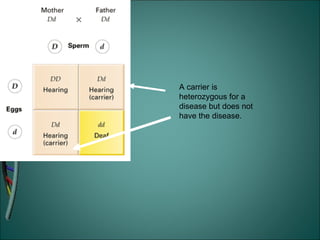
A carrier is heterozygous for a disease but does not have the disease.
 
 
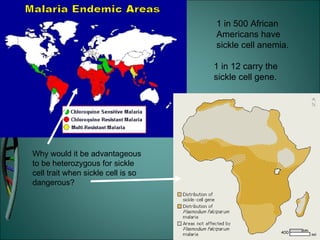
Why would it be advantageous to be heterozygous for sickle cell trait when sickle cell is so dangerous? 1 in 500 African Americans have sickle cell anemia. 1 in 12 carry the sickle cell gene.

Chapter 9+12 Notes

  • 1.
    Chapter 9+12 Fundamentalsof Genetics And Human Genetics
  • 2.
    Gregor Mendel Austrianmonk that studied heredity. Heredity is the transmission of characteristics from parents to offspring Experimented with pea plants in the garden to determine what traits were passed along. He discovered the basic rules of genetics.
  • 3.
    Pea Plants Mendelstudied 7 traits. They were easily observable: plant height, flower position, pod color, pod appearance, seed texture, seed color and flower color. Mendel used cross pollination in his studies to make sure each parent was the correct one he wanted.
  • 4.
  • 5.
    Important Vocabulary Pure-being a purebreed, parent always passes on one trait to the offspring P 1 generation-parent or first generation F 1 -filial generation or kids of the parent generation F 2 - grandkids of the parent generation
  • 6.
    Important Vocabulary Dominant-a trait that always shows up in the F 1 generation, it is the strongest trait and will mask other traits Recessive- a trait that is weaker, usually doesn’t appear in F 1 generation but appears in F 2 generation Mendel discovered that certain traits were dominant and certain ones were recessive. Look in your book for the list of traits.
  • 7.
  • 8.
  • 9.
    Mendel’s Laws TheLaw of Segregation states that paired factors separate during the formation of gametes (meiosis) Each gamete only receives one factor or trait from each parent. The Law of Independent Assortment sates that factors for different traits distribute to gametes independently regardless of the other trait.
  • 10.
    Important Vocabulary Anallele is the factor or gene that is passed only; it is a type of gene. There may be several alleles for one gene. Dominant alleles have capital letters and recessive alleles have lowercase letters. Genotype is the actual genetic makeup of the organism or what the genes say. Phenotype is the physical look of the organism like color or texture. You can see the phenotype but not the genotype.
  • 11.
    YY yy fertilization? Y Y y y Yy Yy Yy Yy What is the phenotype of the offspring? The phenotype is yellow seed color.
  • 12.
    Important Vocabulary Homozygousmeans the organism has two of same alleles for a trait. Heterozygous means the organism has two different alleles for a trait. Heterozygous would automatically have one dominant allele and one recessive allele. Homozygous could have two dominant alleles or two recessive alleles.
  • 13.
    AA aa Aahomozygous heterozygous
  • 14.
  • 15.
    Incomplete Dominance (intermediate)When two or more alleles influence the phenotype, both are expressed so neither is completely dominant or recessive. This results in a third phenotype in addition to the originals. The heterozygous genotype is always the new phenotype.
  • 16.
  • 17.
  • 18.
    Codominance This resultswhen two or more alleles are equally dominant and both alleles are expressed in heterozygous organisms Both alleles are expressed equally. This is different than incomplete dominance because it isn’t a blended phenotype, is both expressed. Human blood type is an example.
  • 19.
  • 20.
    Sex Linked InheritanceSome genes are found only on the X-chromosome. Many disease are X-linked diseases and are more common in males than in females. Males need only one copy of the bad gene while females need two copies of the bad gene. Hemophilia, colorblindness and Duchenne muscular dystrophy are human diseases associated with this inheritance. A carrier is heterozygous for a disease but does not have the disease. It can be passed on to their children though. Sex-influences traits like baldness are influenced by the sex of the person and are expressed differently even if the gene is the same.
  • 21.
    Important Vocabulary Polygenictraits are controlled by more than one gene. Skin color is controlled by at lease six genes which result is a different amount of pigment produced. Eye color is also polygenic as well as height although environment plays a part in that as well.
  • 22.
  • 23.
    Mutations Down syndromeresults when the chromosomes don’t split evenly during meiosis resulting in three chromosomes under number 21. Turner’s syndrome also occurs this way and results in one less sex chromosome. Disorders can also be inherited recessively or dominantly or even as a result of chromosome pieces breaking off or “jumping” around.
  • 24.
  • 25.
    A carrier isheterozygous for a disease but does not have the disease.
  • 26.
  • 27.
  • 28.
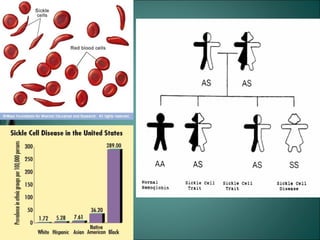
    Why would itbe advantageous to be heterozygous for sickle cell trait when sickle cell is so dangerous? 1 in 500 African Americans have sickle cell anemia. 1 in 12 carry the sickle cell gene.