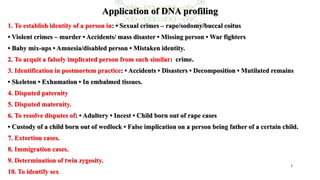
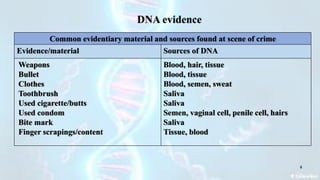
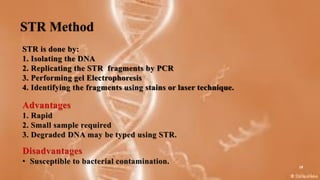
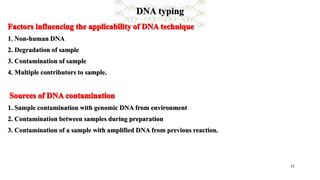
This document provides information on types of identification and the medicolegal importance of identification in living and dead persons. It discusses the data used for identification, including fingerprints, dental records, DNA typing, and blood groups. DNA profiling is described as the most remarkable advancement in forensic identification, allowing identification from very small samples. Applications of DNA profiling include identifying victims of crimes, accidents, or disasters. Common sources of DNA evidence and the process of short tandem repeat analysis are outlined. Advantages are its sensitivity and ability to identify with small samples, while limitations include expense and potential for contamination.