Downloaded 618 times
![GENETIC VARIABILITY
With larger numbers of alleles for a particular DNA marker, a greater number
of genotypes result. In general, if there are n alleles, there are n homozygous
genotypes and n(n − 1)/2 heterozygous ones.
For example a locus with ten possible alleles would exhibit 10 homozygous
possibilities plus [10×(10−1)]/2 heterozygous possibilities or 10 + 45 = 55 total
genotypes.](https://image.slidesharecdn.com/forensicdnatypingbyjohnbutler-130715030332-phpapp01/85/Forensic-dna-typing-by-John-M-Butler-27-320.jpg)
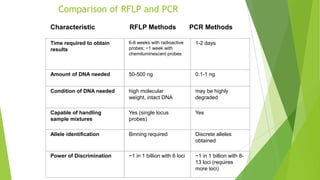
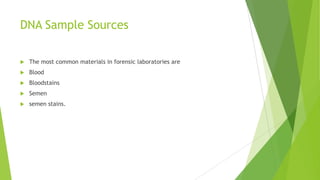
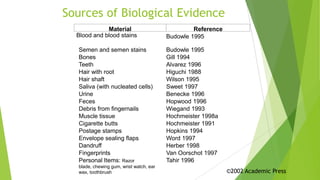
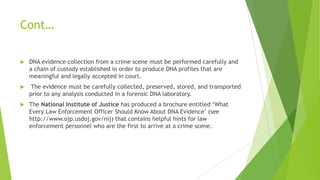
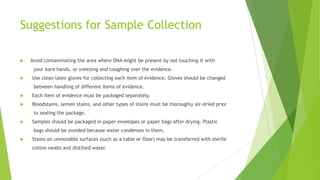
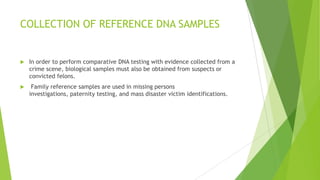



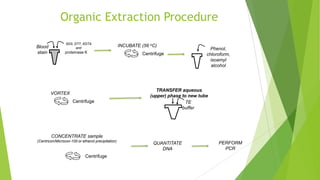
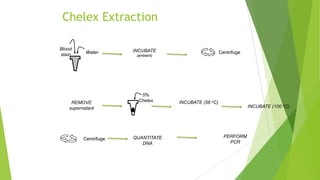
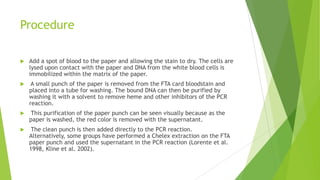

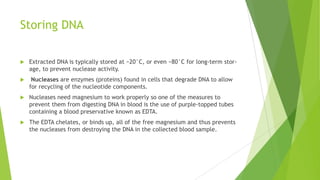
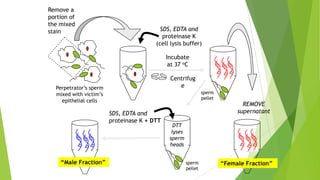




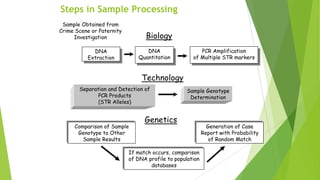
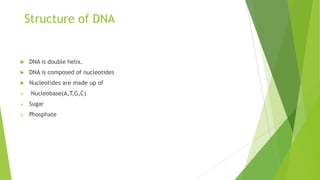
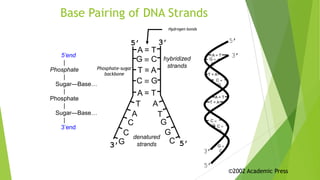
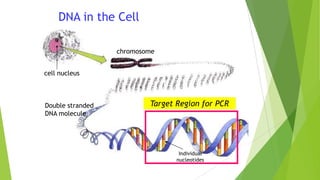
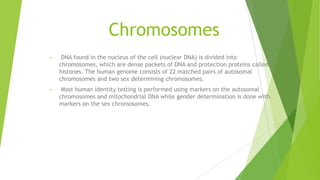
The document discusses the history and techniques of forensic DNA analysis. It describes how early methods like RFLP used repeated DNA regions called VNTRs to differentiate individuals. More recent STR techniques use short tandem repeats that allow analysis of low-quantity and degraded DNA samples. The document provides an overview of DNA structure and function, describing the double helix structure and how DNA is organized into chromosomes, genes, and loci. It also summarizes sample collection sources for DNA analysis and the basic workflow from extraction to profiling and comparison.


