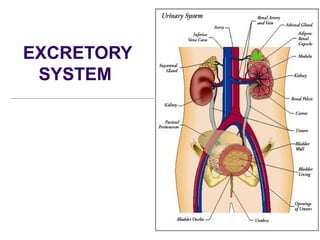
EXCRETORY
 SYSTEM
Excretory System


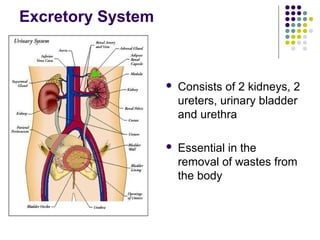
                      Consists of 2 kidneys, 2
                       ureters, urinary bladder
                       and urethra

                      Essential in the
                       removal of wastes from
                       the body
Parts of the Excretory System


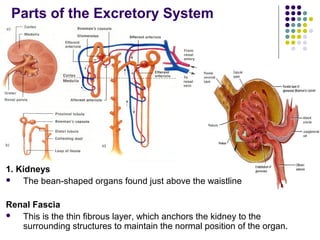
1. Kidneys
   The bean-shaped organs found just above the waistline

Renal Fascia
  This is the thin fibrous layer, which anchors the kidney to the
   surrounding structures to maintain the normal position of the organ.
The Work of the Kidneys
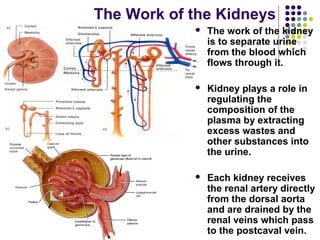
               The work of the kidney
                is to separate urine
                from the blood which
                flows through it.

               Kidney plays a role in
                regulating the
                composition of the
                plasma by extracting
                excess wastes and
                other substances into
                the urine.

               Each kidney receives
                the renal artery directly
                from the dorsal aorta
                and are drained by the
                renal veins which pass
                to the postcaval vein.
The Work of the Kidney
Three Processes:
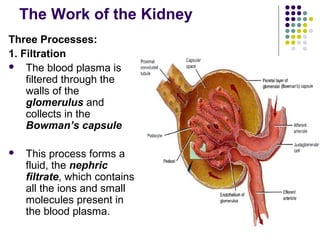
1. Filtration
 The blood plasma is
    filtered through the
    walls of the
    glomerulus and
    collects in the
    Bowman’s capsule

   This process forms a
    fluid, the nephric
    filtrate, which contains
    all the ions and small
    molecules present in
    the blood plasma.
The Work of the Kidney
Three Processes:
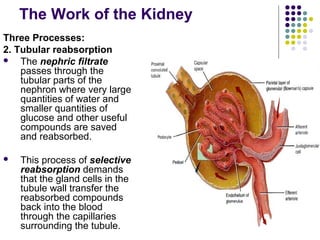
2. Tubular reabsorption
   The nephric filtrate
    passes through the
    tubular parts of the
    nephron where very large
    quantities of water and
    smaller quantities of
    glucose and other useful
    compounds are saved
    and reabsorbed.

   This process of selective
    reabsorption demands
    that the gland cells in the
    tubule wall transfer the
    reabsorbed compounds
    back into the blood
    through the capillaries
    surrounding the tubule.
The Work of the Kidney
Three Processes:
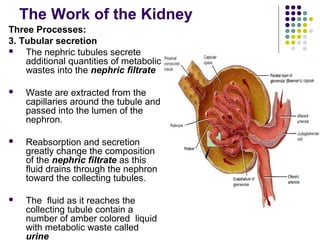
3. Tubular secretion
   The nephric tubules secrete
    additional quantities of metabolic
    wastes into the nephric filtrate

   Waste are extracted from the
    capillaries around the tubule and
    passed into the lumen of the
    nephron.

   Reabsorption and secretion
    greatly change the composition
    of the nephric filtrate as this
    fluid drains through the nephron
    toward the collecting tubules.

   The fluid as it reaches the
    collecting tubule contain a
    number of amber colored liquid
    with metabolic waste called
    urine
Excretory System
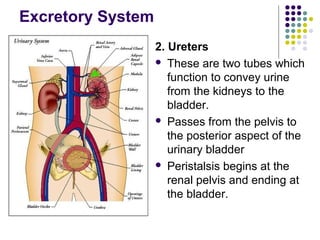
                   2. Ureters
                    These are two tubes which
                      function to convey urine
                      from the kidneys to the
                      bladder.
                    Passes from the pelvis to
                      the posterior aspect of the
                      urinary bladder
                    Peristalsis begins at the
                      renal pelvis and ending at
                      the bladder.
Parts of the Excretory System
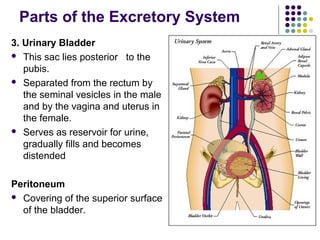
3. Urinary Bladder
 This sac lies posterior to the
   pubis.
 Separated from the rectum by
   the seminal vesicles in the male
   and by the vagina and uterus in
   the female.
 Serves as reservoir for urine,
   gradually fills and becomes
   distended

Peritoneum
 Covering of the superior surface
  of the bladder.
Parts of Excretory
System


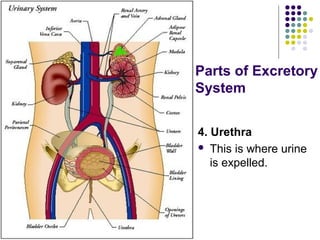
4. Urethra
 This is where urine
   is expelled.
Other Excretory Organ
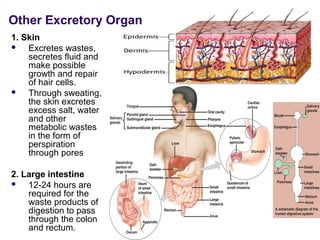
1. Skin
   Excretes wastes,
    secretes fluid and
    make possible
    growth and repair
    of hair cells.
   Through sweating,
    the skin excretes
    excess salt, water
    and other
    metabolic wastes
    in the form of
    perspiration
    through pores

2. Large intestine
   12-24 hours are
    required for the
    waste products of
    digestion to pass
    through the colon
    and rectum.
Other Excretory Organ
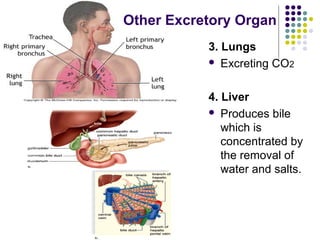
           3. Lungs
            Excreting CO2


           4. Liver
            Produces bile
              which is
              concentrated by
              the removal of
              water and salts.

Excretory system

  • 1.
  • 2.
    Excretory System  Consists of 2 kidneys, 2 ureters, urinary bladder and urethra  Essential in the removal of wastes from the body
  • 3.
    Parts of theExcretory System 1. Kidneys  The bean-shaped organs found just above the waistline Renal Fascia  This is the thin fibrous layer, which anchors the kidney to the surrounding structures to maintain the normal position of the organ.
  • 4.
    The Work ofthe Kidneys  The work of the kidney is to separate urine from the blood which flows through it.  Kidney plays a role in regulating the composition of the plasma by extracting excess wastes and other substances into the urine.  Each kidney receives the renal artery directly from the dorsal aorta and are drained by the renal veins which pass to the postcaval vein.
  • 5.
    The Work ofthe Kidney Three Processes: 1. Filtration  The blood plasma is filtered through the walls of the glomerulus and collects in the Bowman’s capsule  This process forms a fluid, the nephric filtrate, which contains all the ions and small molecules present in the blood plasma.
  • 6.
    The Work ofthe Kidney Three Processes: 2. Tubular reabsorption  The nephric filtrate passes through the tubular parts of the nephron where very large quantities of water and smaller quantities of glucose and other useful compounds are saved and reabsorbed.  This process of selective reabsorption demands that the gland cells in the tubule wall transfer the reabsorbed compounds back into the blood through the capillaries surrounding the tubule.
  • 7.
    The Work ofthe Kidney Three Processes: 3. Tubular secretion  The nephric tubules secrete additional quantities of metabolic wastes into the nephric filtrate  Waste are extracted from the capillaries around the tubule and passed into the lumen of the nephron.  Reabsorption and secretion greatly change the composition of the nephric filtrate as this fluid drains through the nephron toward the collecting tubules.  The fluid as it reaches the collecting tubule contain a number of amber colored liquid with metabolic waste called urine
  • 8.
    Excretory System 2. Ureters  These are two tubes which function to convey urine from the kidneys to the bladder.  Passes from the pelvis to the posterior aspect of the urinary bladder  Peristalsis begins at the renal pelvis and ending at the bladder.
  • 9.
    Parts of theExcretory System 3. Urinary Bladder  This sac lies posterior to the pubis.  Separated from the rectum by the seminal vesicles in the male and by the vagina and uterus in the female.  Serves as reservoir for urine, gradually fills and becomes distended Peritoneum  Covering of the superior surface of the bladder.
  • 10.
    Parts of Excretory System 4.Urethra  This is where urine is expelled.
  • 11.
    Other Excretory Organ 1.Skin  Excretes wastes, secretes fluid and make possible growth and repair of hair cells.  Through sweating, the skin excretes excess salt, water and other metabolic wastes in the form of perspiration through pores 2. Large intestine  12-24 hours are required for the waste products of digestion to pass through the colon and rectum.
  • 12.
    Other Excretory Organ 3. Lungs  Excreting CO2 4. Liver  Produces bile which is concentrated by the removal of water and salts.