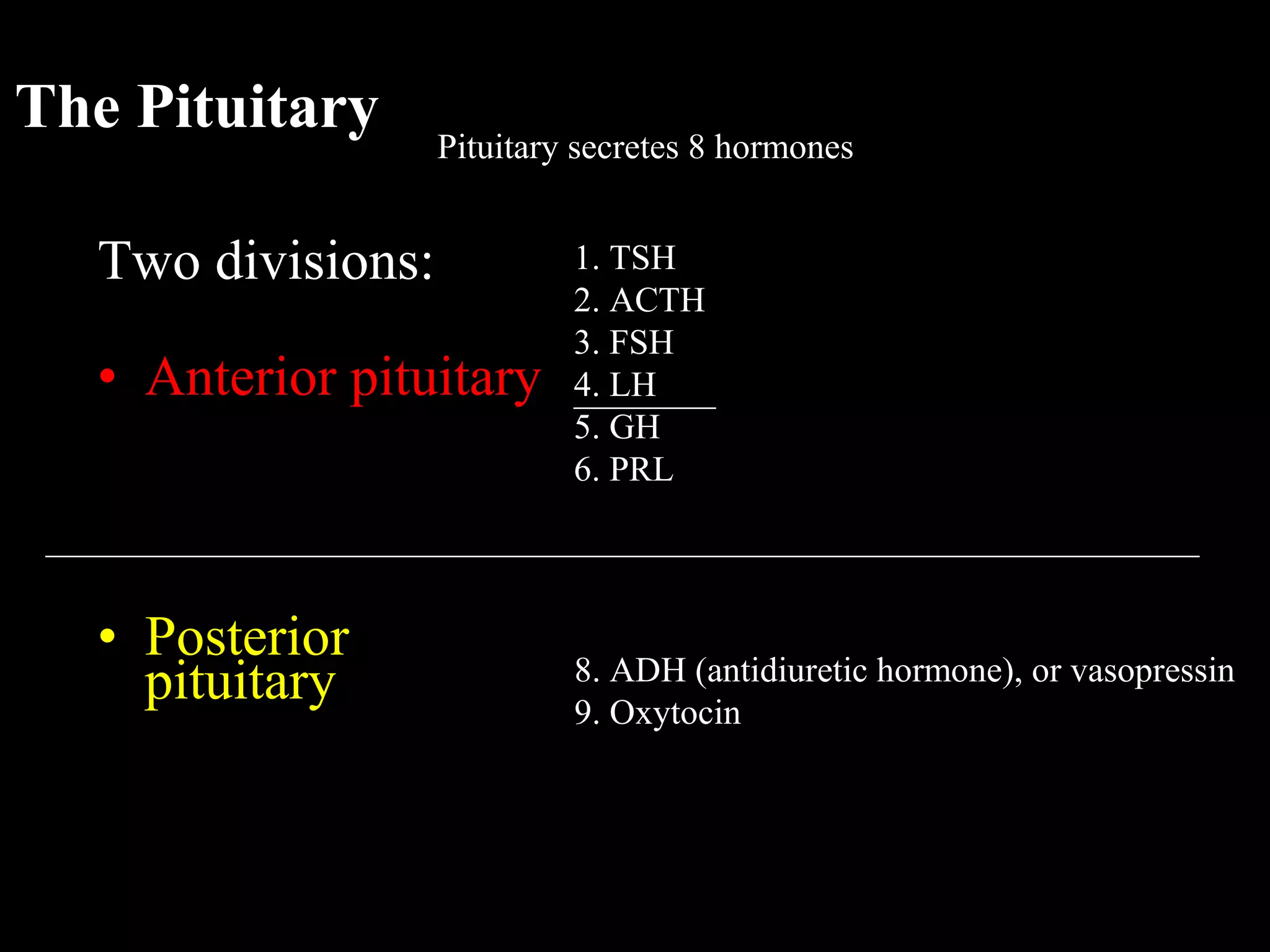
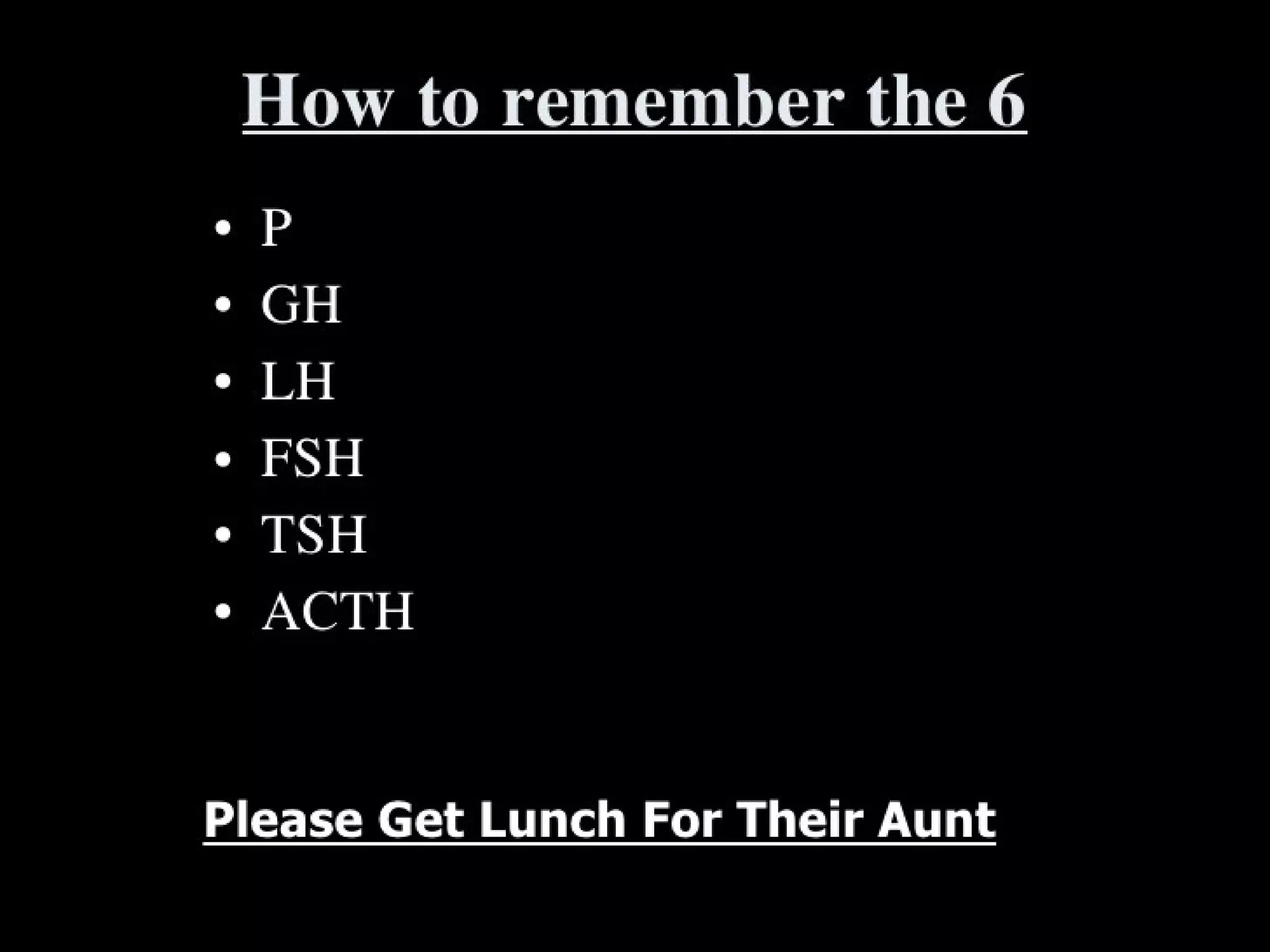
The Pituitary          Pituitary secretes 8 hormones


   Two divisions:               1. TSH
                                2. ACTH
                                3. FSH
   • Anterior pituitary         4. LH
                                ________
                                5. GH
                                6. PRL
 _________________________________________________________________


   • Posterior
     pituitary                  8. ADH (antidiuretic hormone), or vasopressin
                                9. Oxytocin
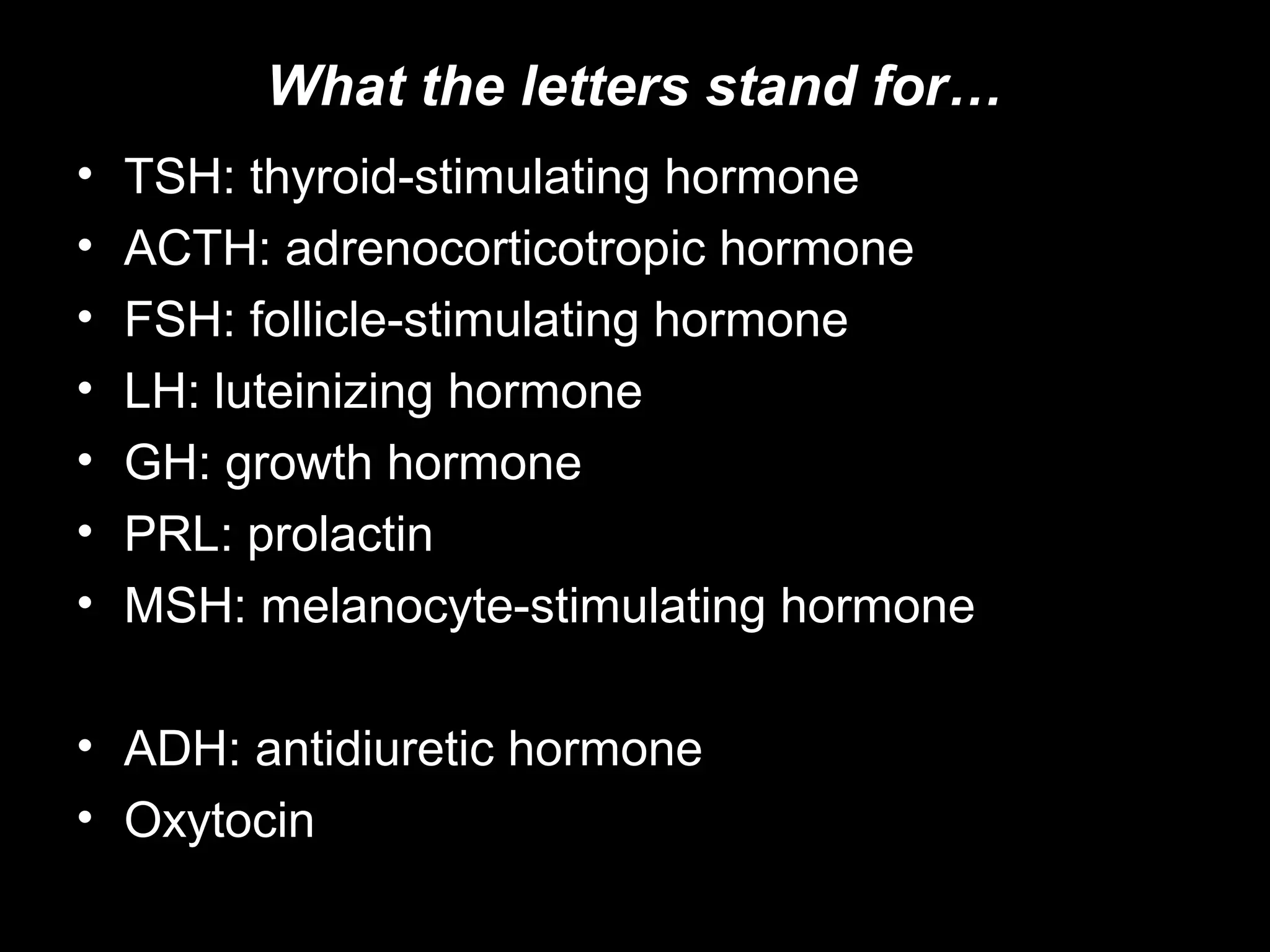
What the letters stand for…
•   TSH: thyroid-stimulating hormone
•   ACTH: adrenocorticotropic hormone
•   FSH: follicle-stimulating hormone
•   LH: luteinizing hormone
•   GH: growth hormone
•   PRL: prolactin
•   MSH: melanocyte-stimulating hormone

• ADH: antidiuretic hormone
• Oxytocin
Pathology
• Pituitary
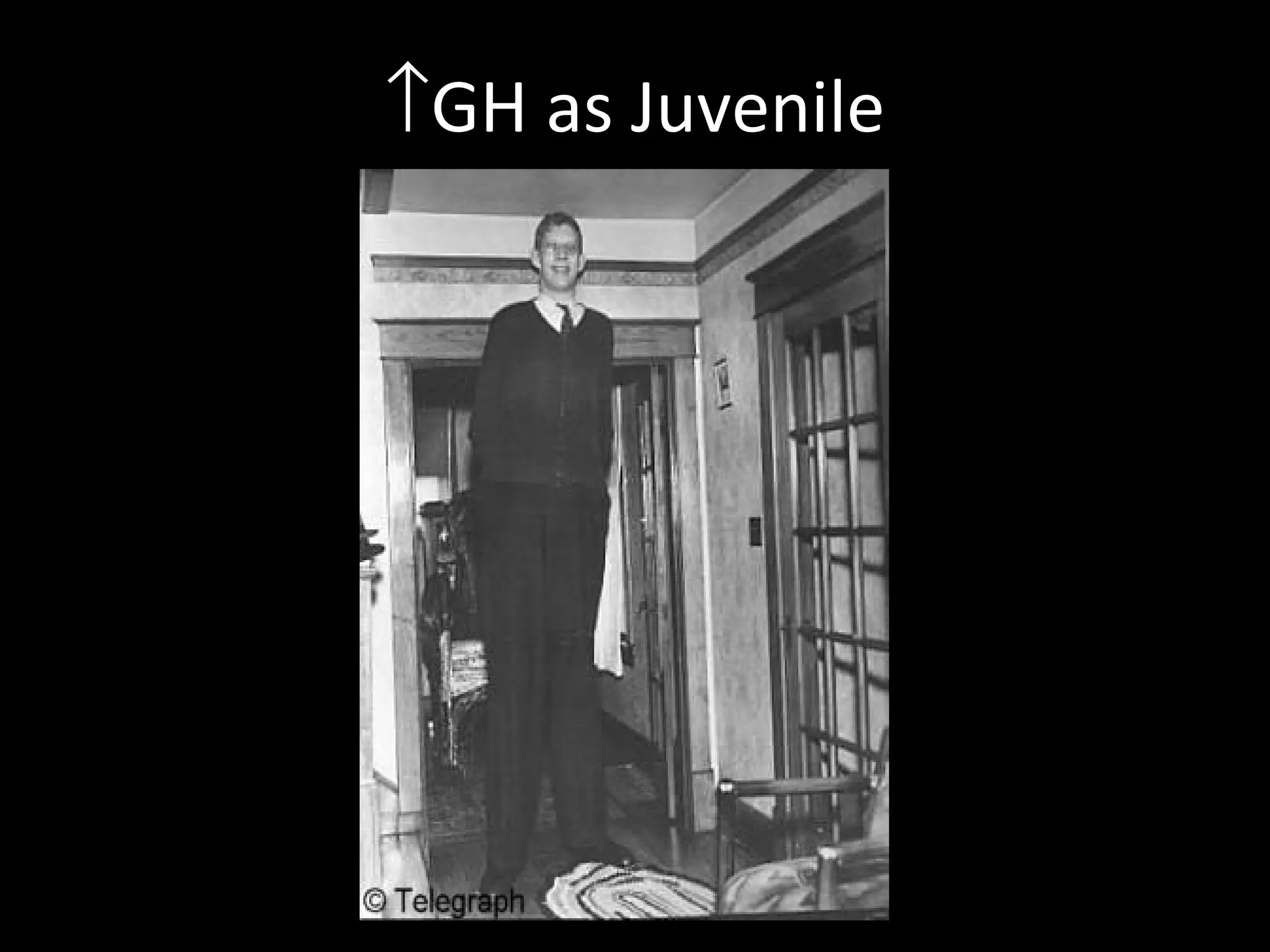
   –   Gigantism –too much GH in childhood
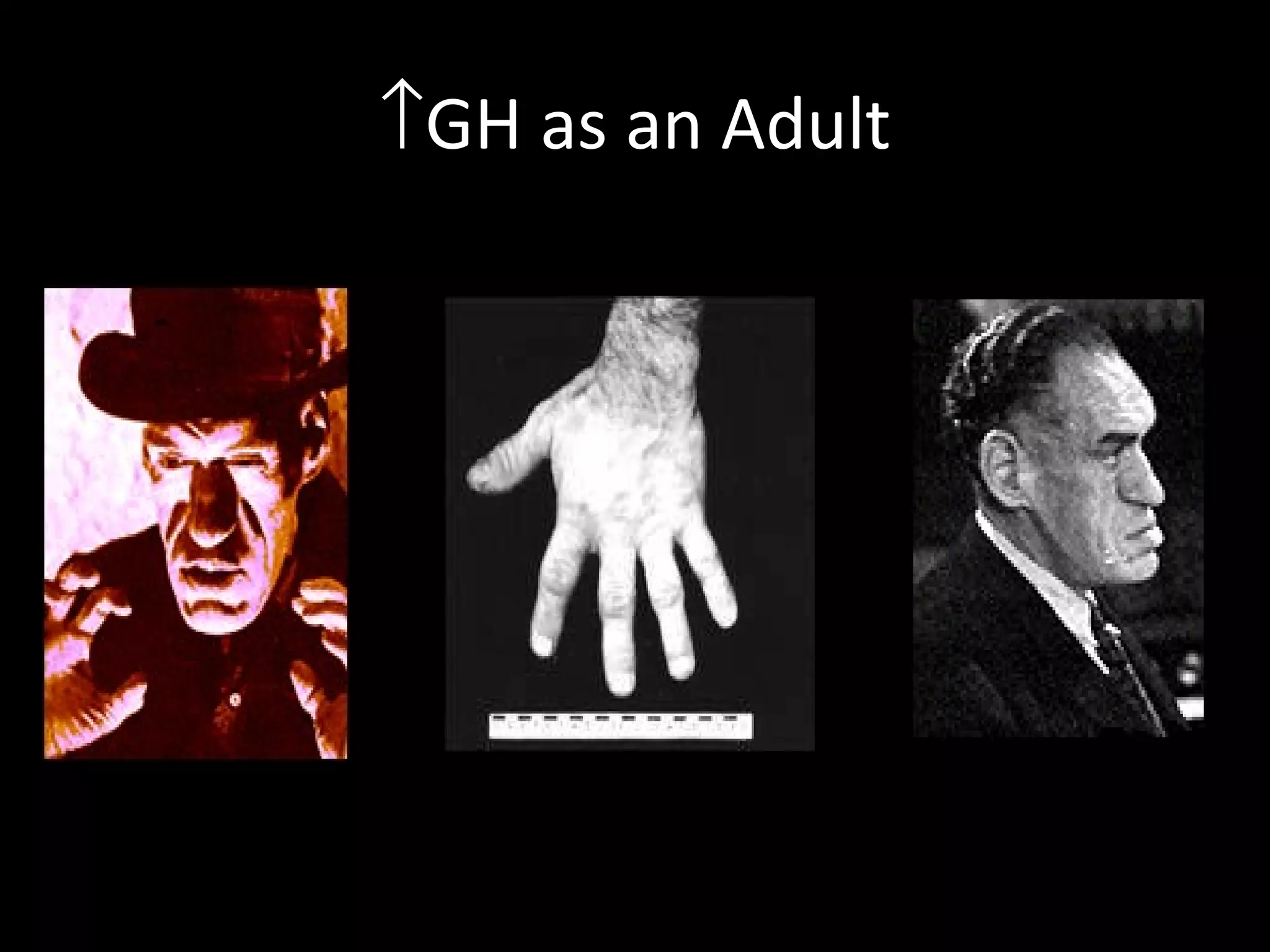
   –   Acromegaly – too much GH in adulthood
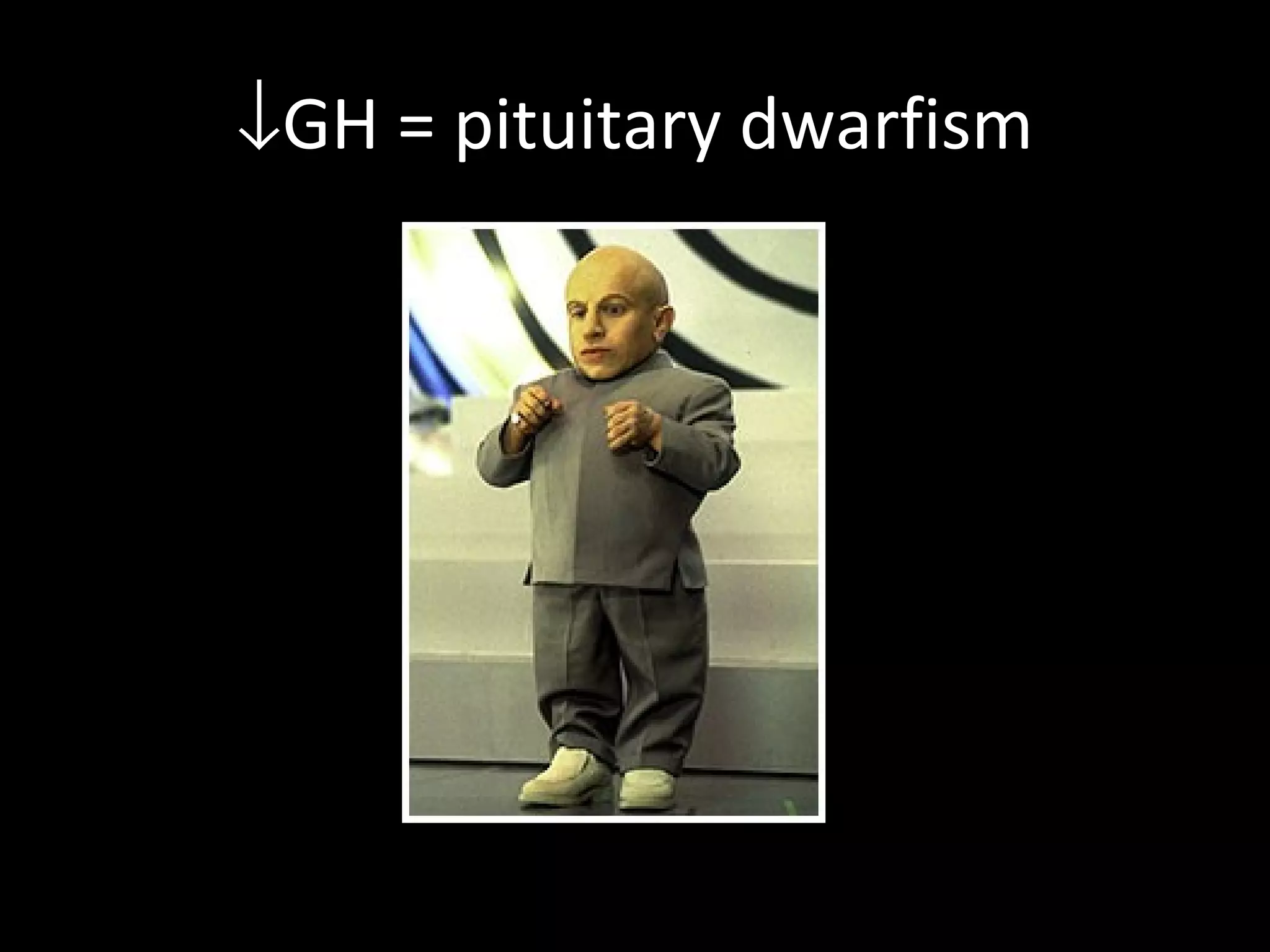
   –   Pituitary dwarfs – too little GH in childhood
   –   Diabetes insipidus - too much ADH
• Pancreas
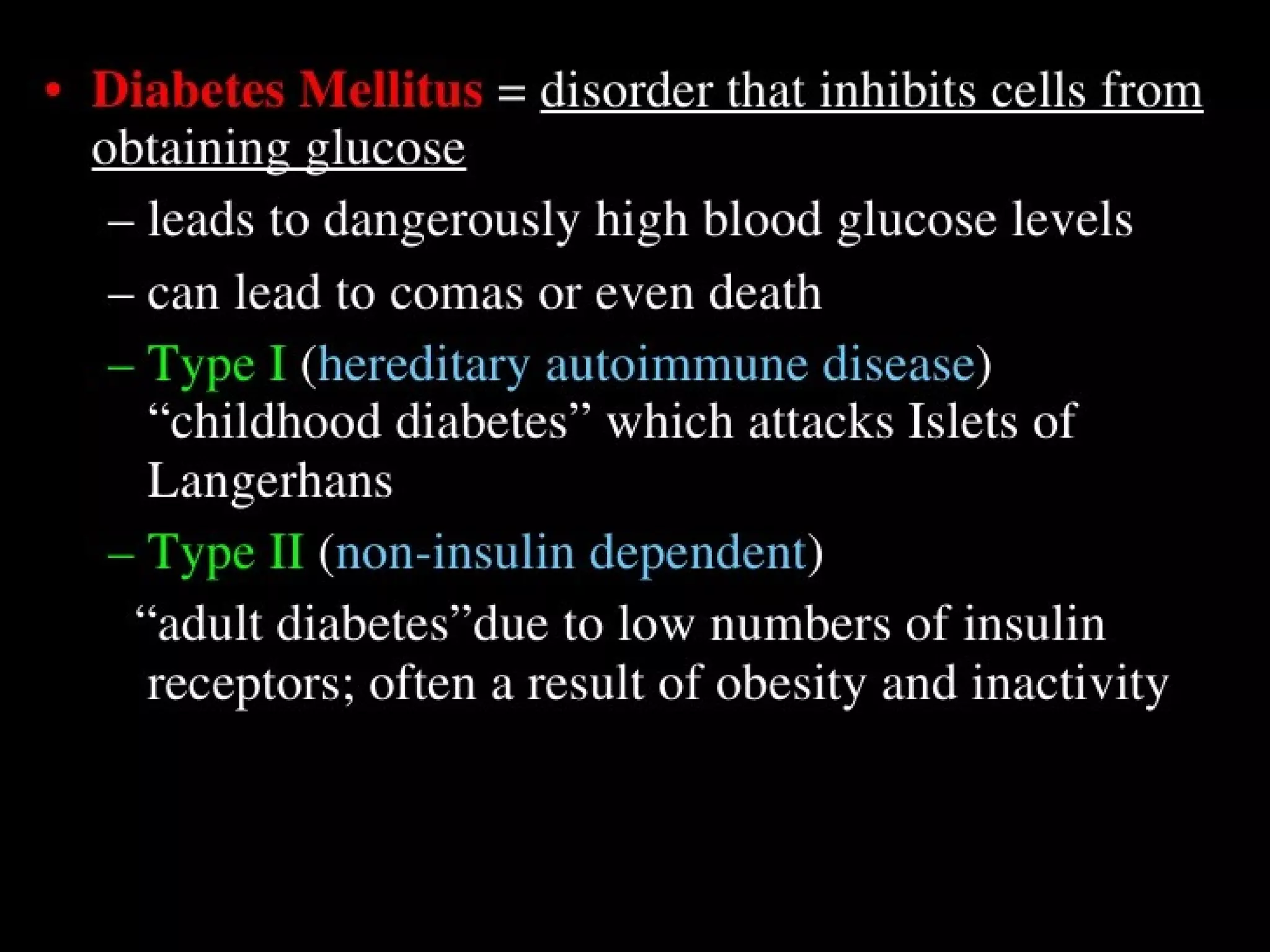
   – Diabetes mellitus – one type of insulin (not enough)
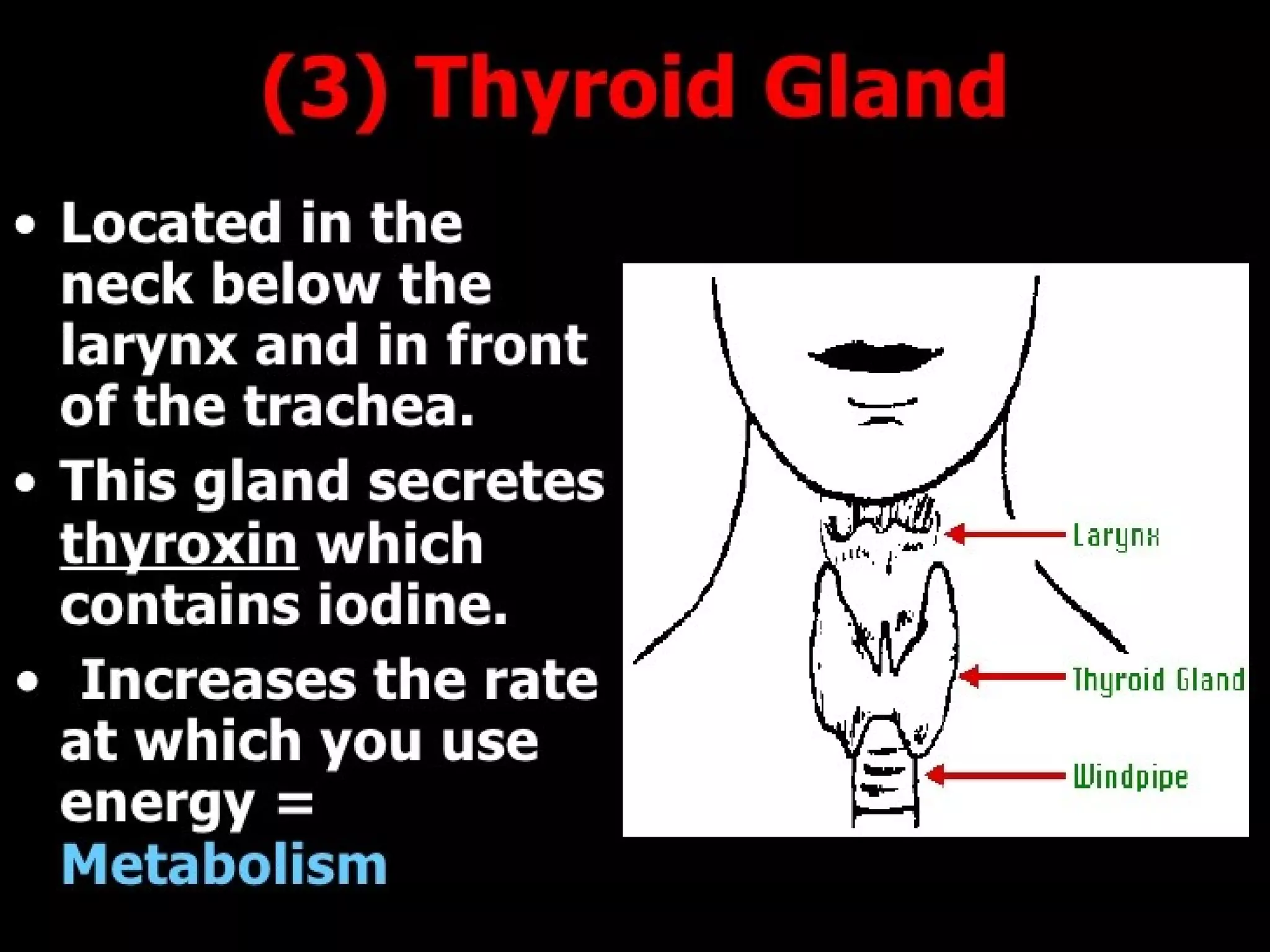
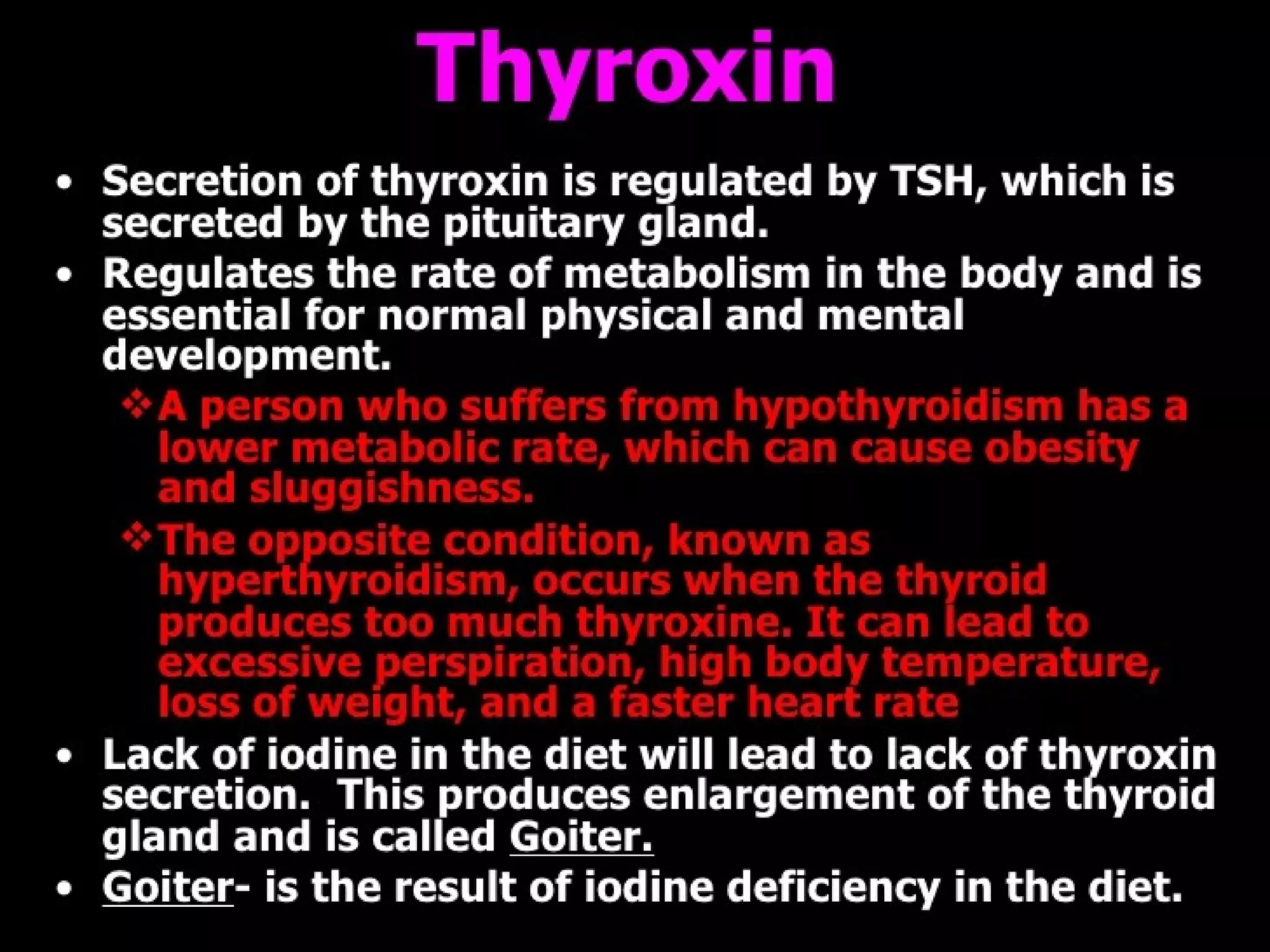
• Thyroid
   – Hyperthyroidism, commonest is Grave’s disease
     (autoimmune)
   – Hypothyroidism
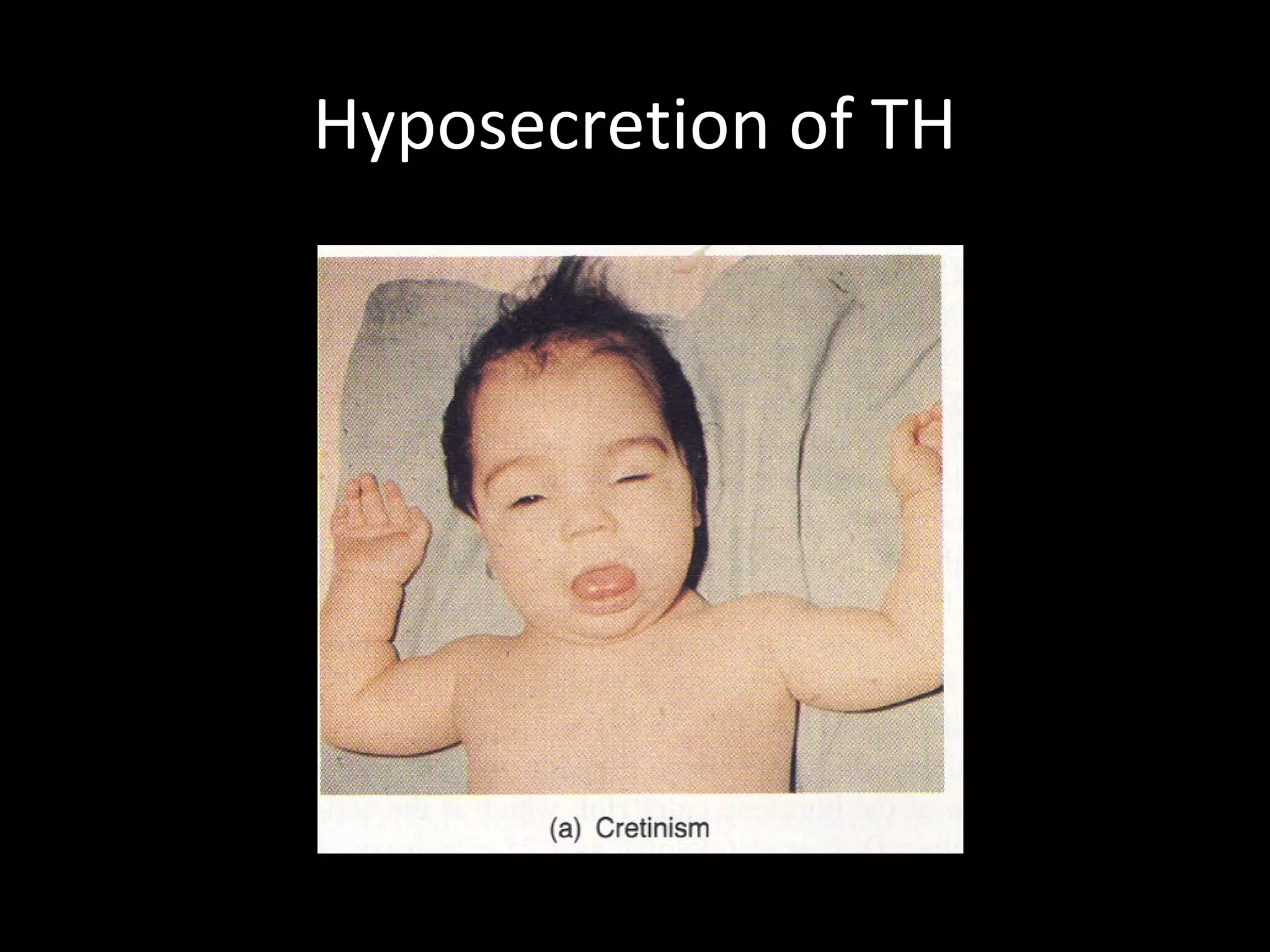
        • In childhood leads to cretinism
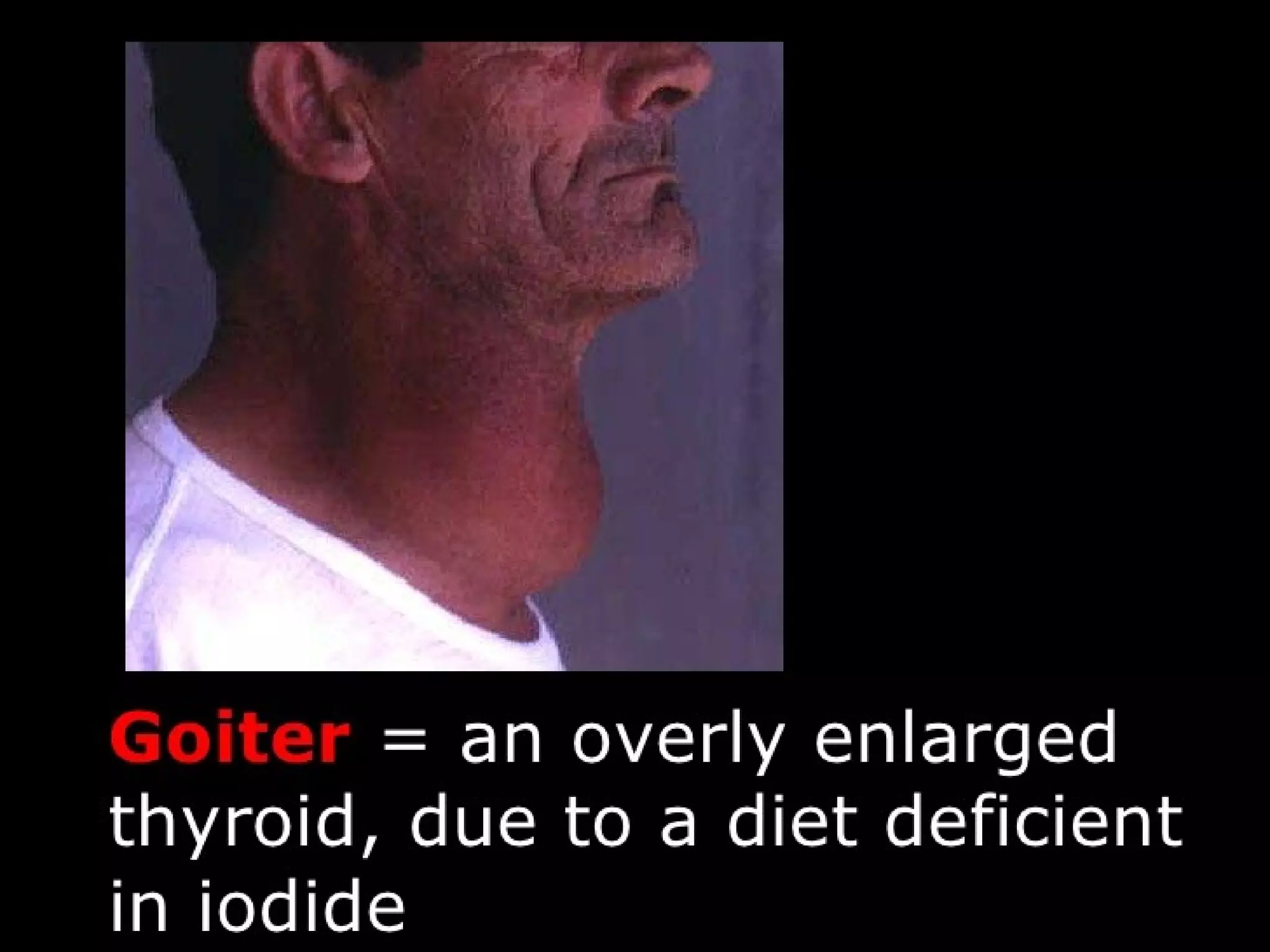
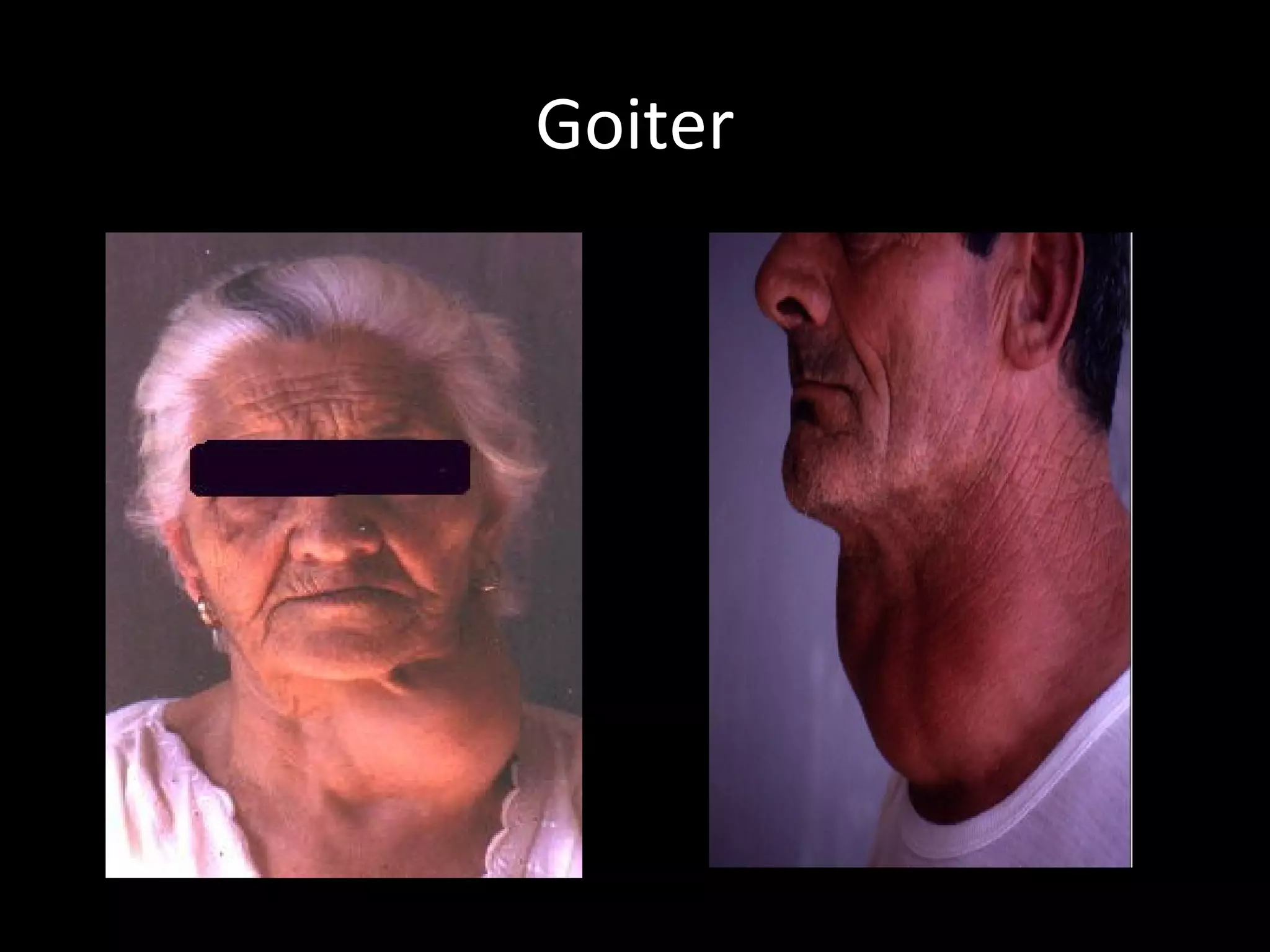
        • Endemic goiter from insufficient iodine in diet
        • Adult hypothyroidism (myxedema): autoimmune
                                                            42
Pathology, continued
• Adrenal gland
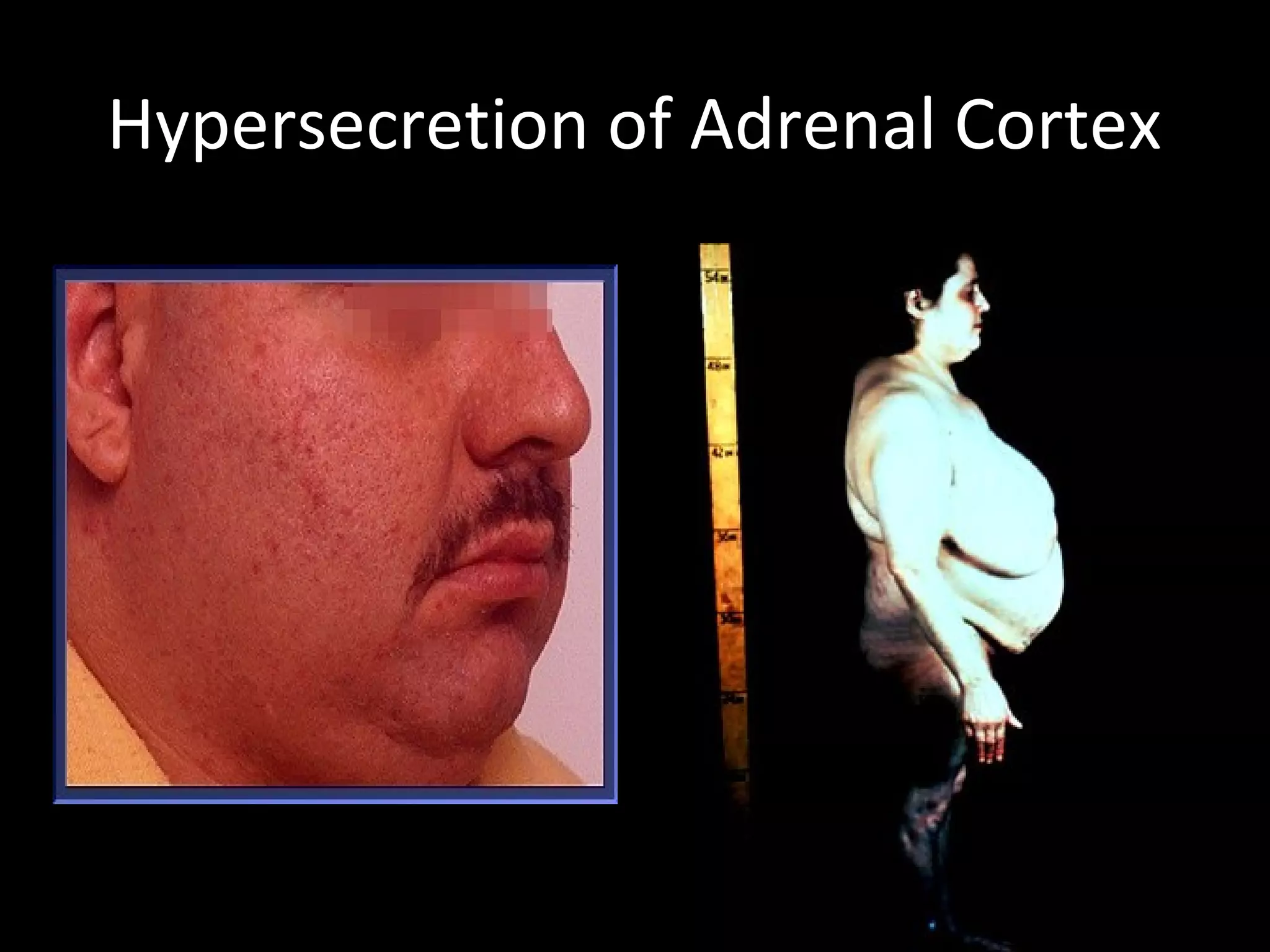
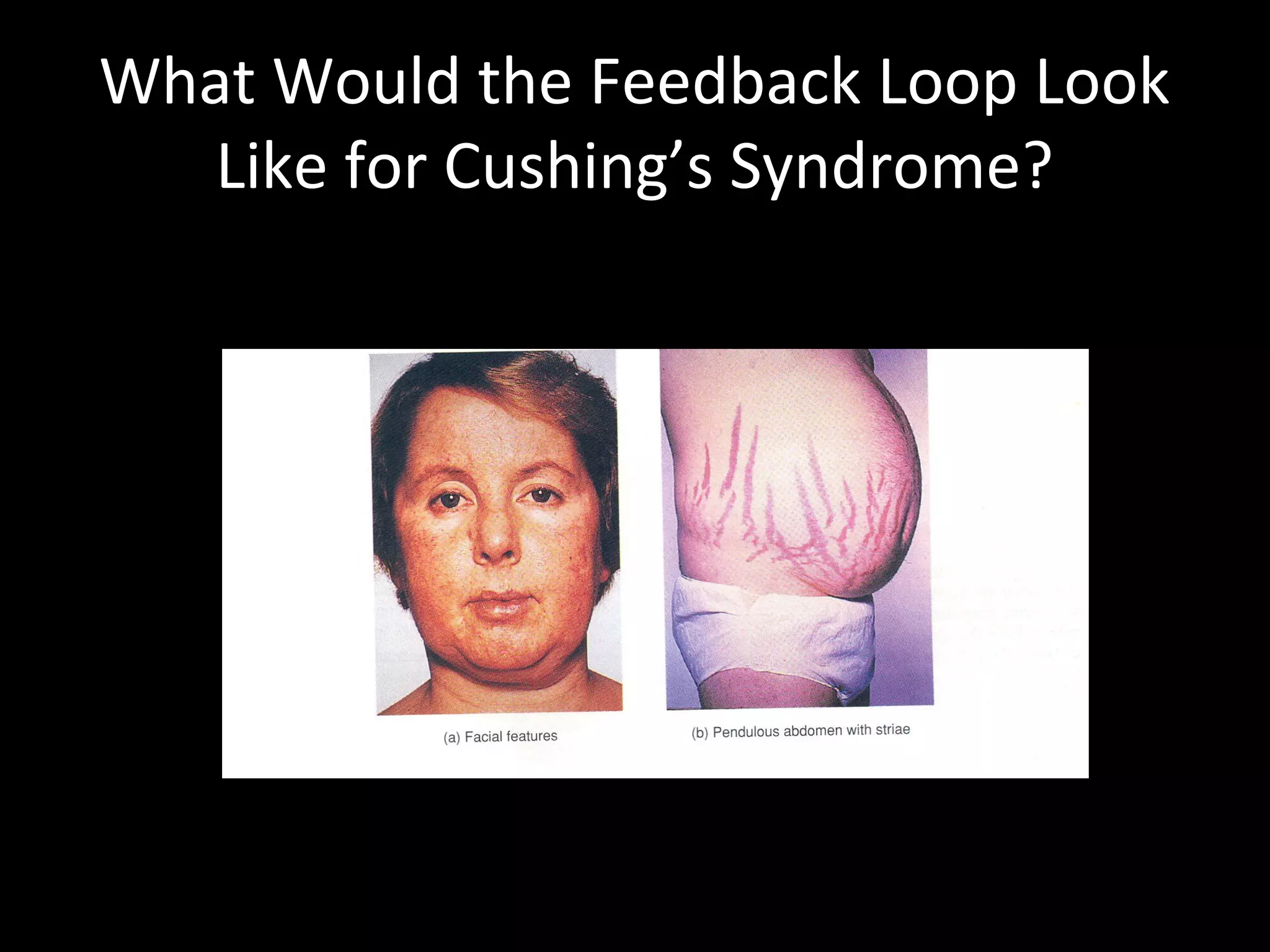
  – Cushing’s syndrome (see next pic)
     • Usually caused by an ACTH-secreting pituitary tumor
     • Rarely by tumor of adrenal cortex
     • Iatrogenic
  – Addison’s disease
     • Hyposecretion (under secretion) of adrenal cortex
     • Usually involves cortisol and aldosterone: low blood
       glucose and sodium, severe dehydration, fatigue, loss
       of appetetie, abdominal pain
       (Jane Austin)

                                                               43
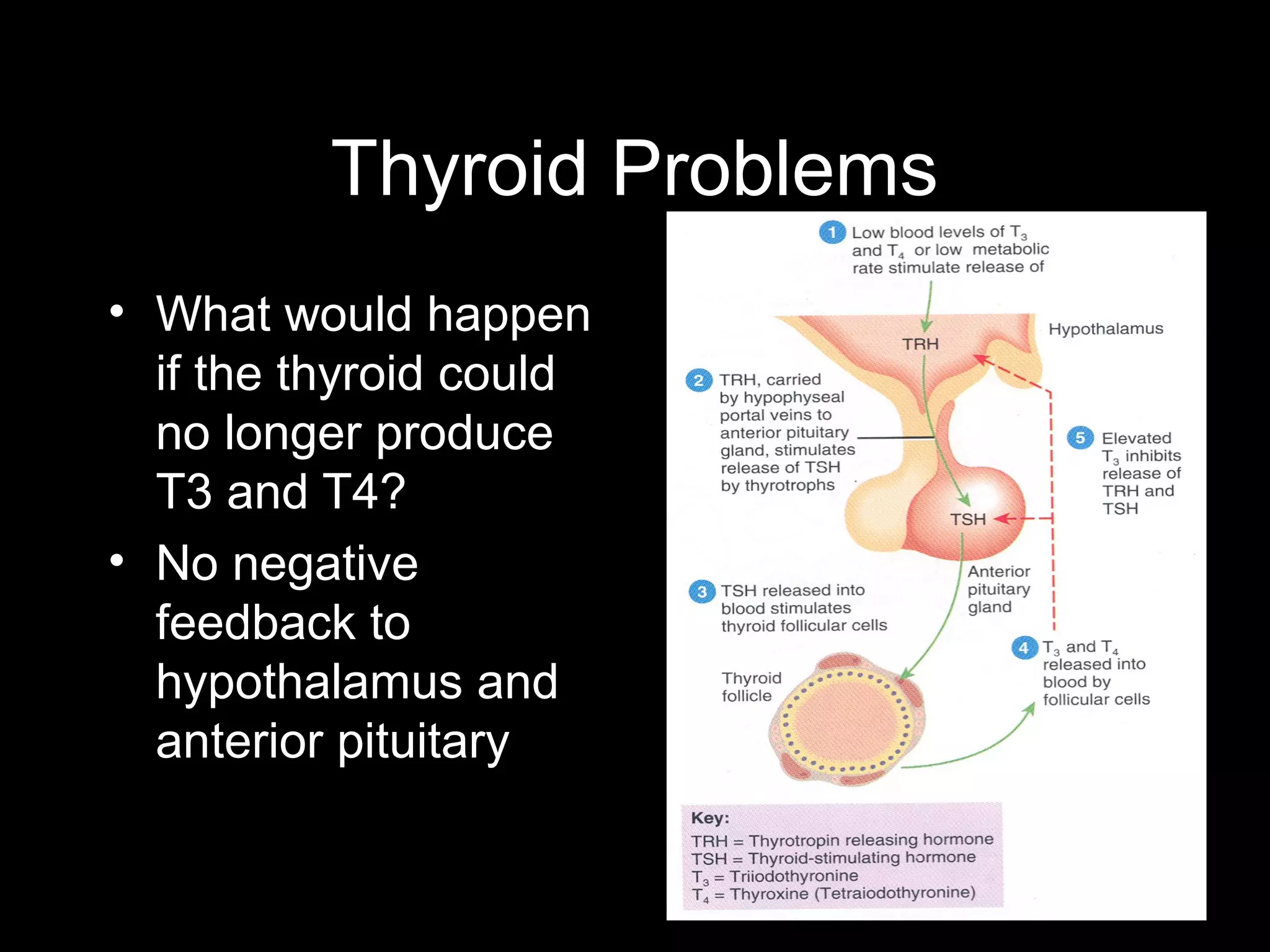
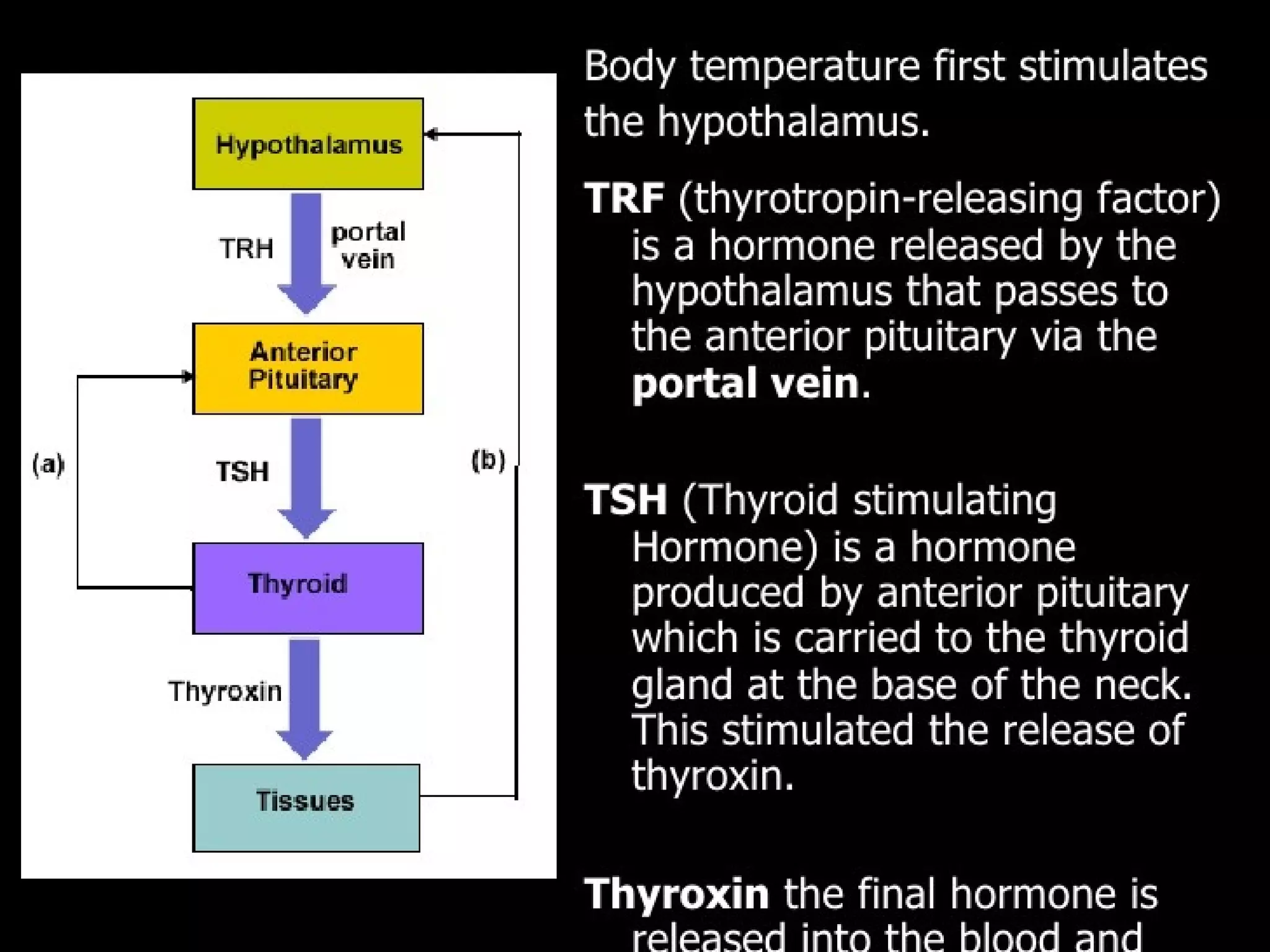
Thyroid Problems
• What would happen
  if the thyroid could
  no longer produce
  T3 and T4?
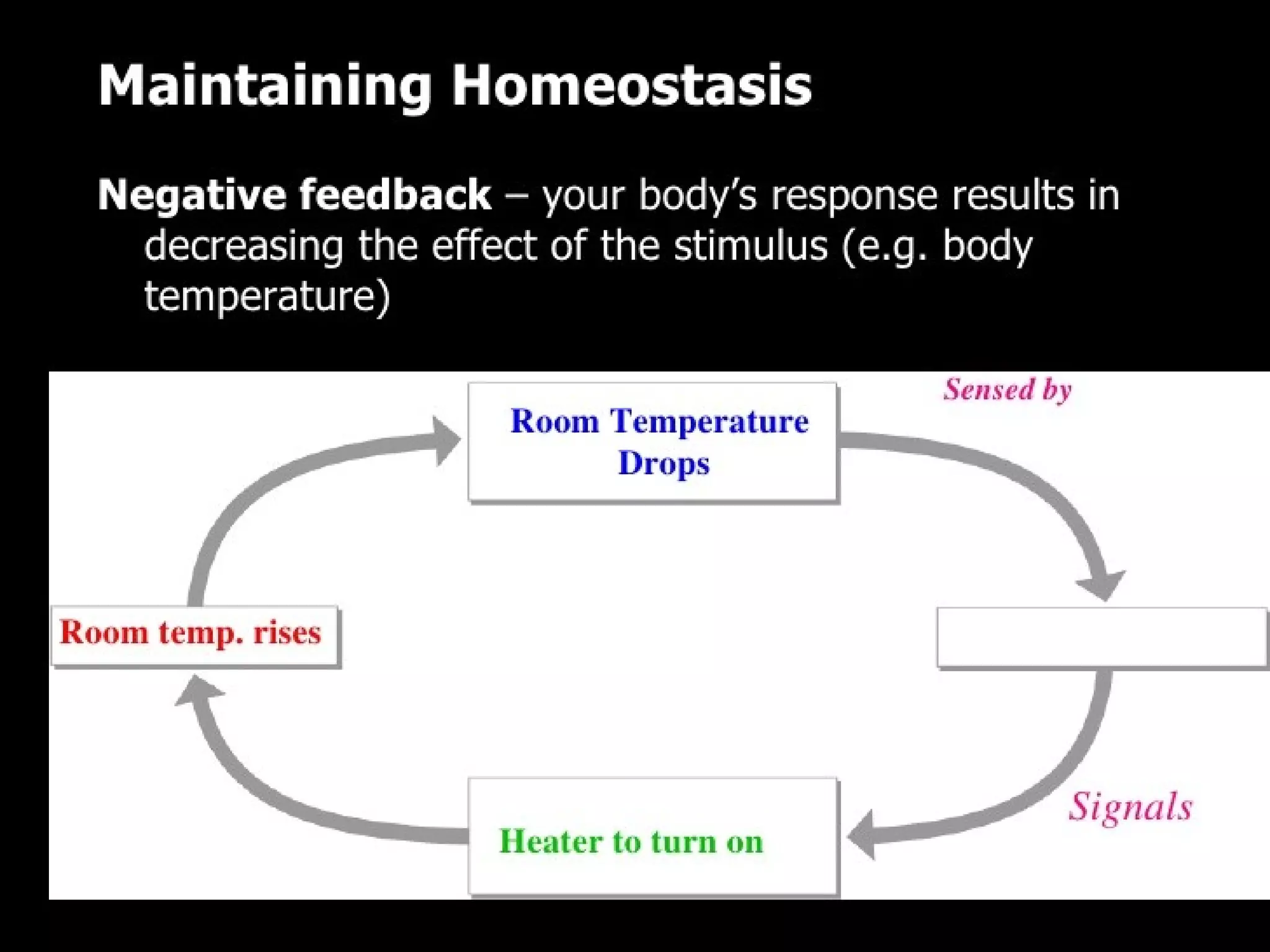
• No negative
  feedback to
  hypothalamus and
  anterior pituitary
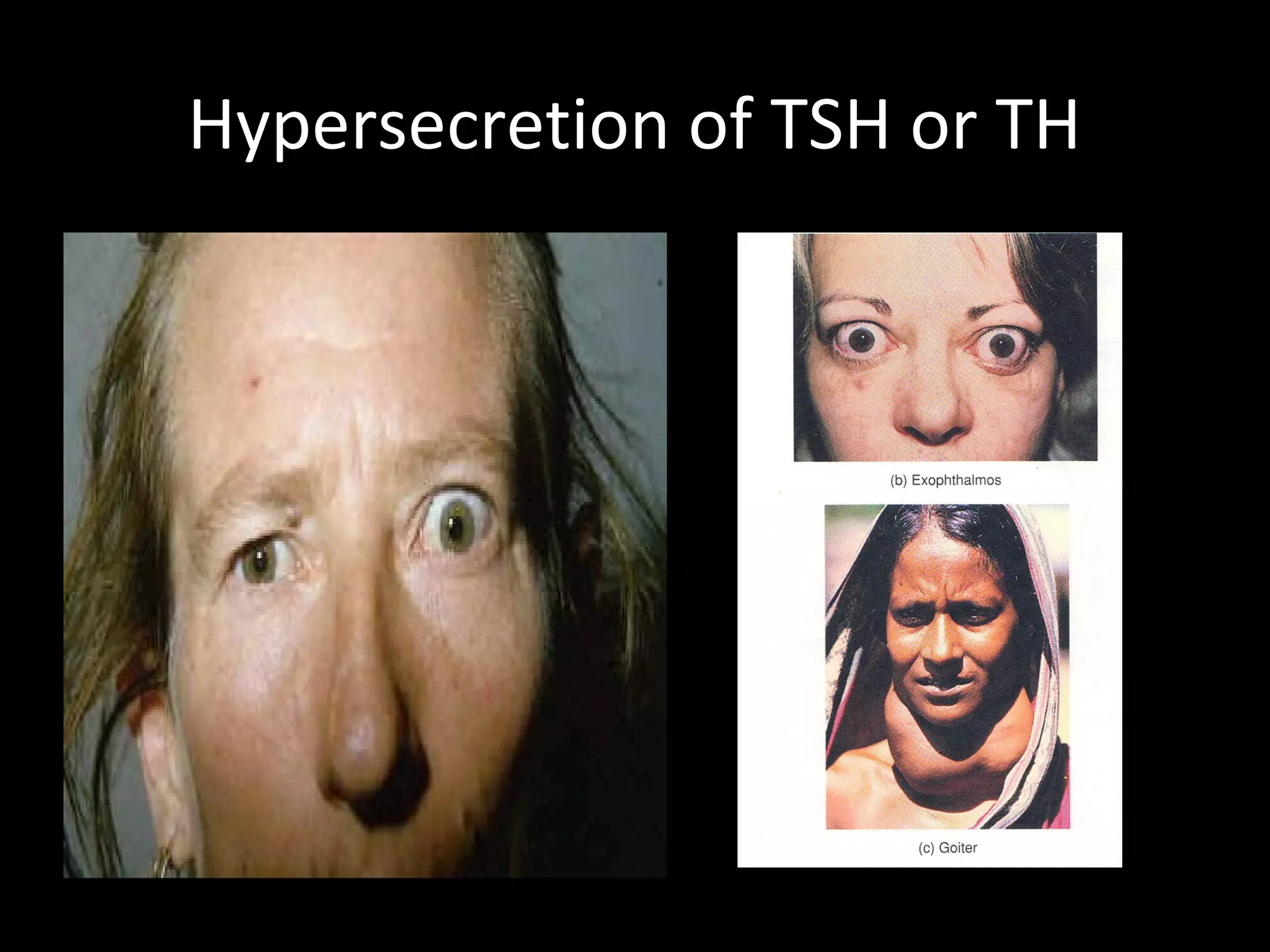
Goiter
Hypersecretion of TSH or TH
Hyposecretion of TH
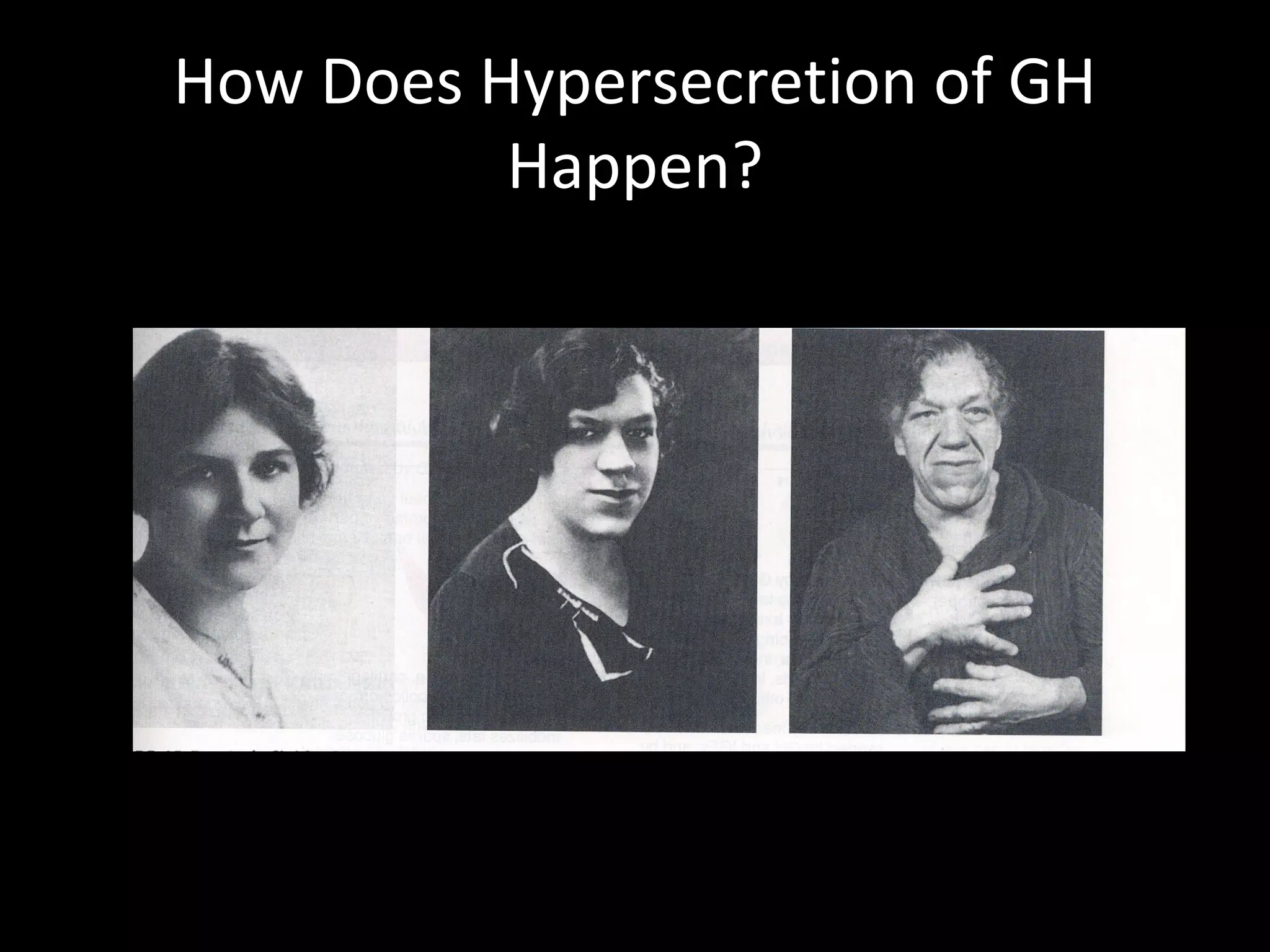
↑GH as Juvenile
↑GH as an Adult
How Does Hypersecretion of GH
          Happen?
↓GH = pituitary dwarfism
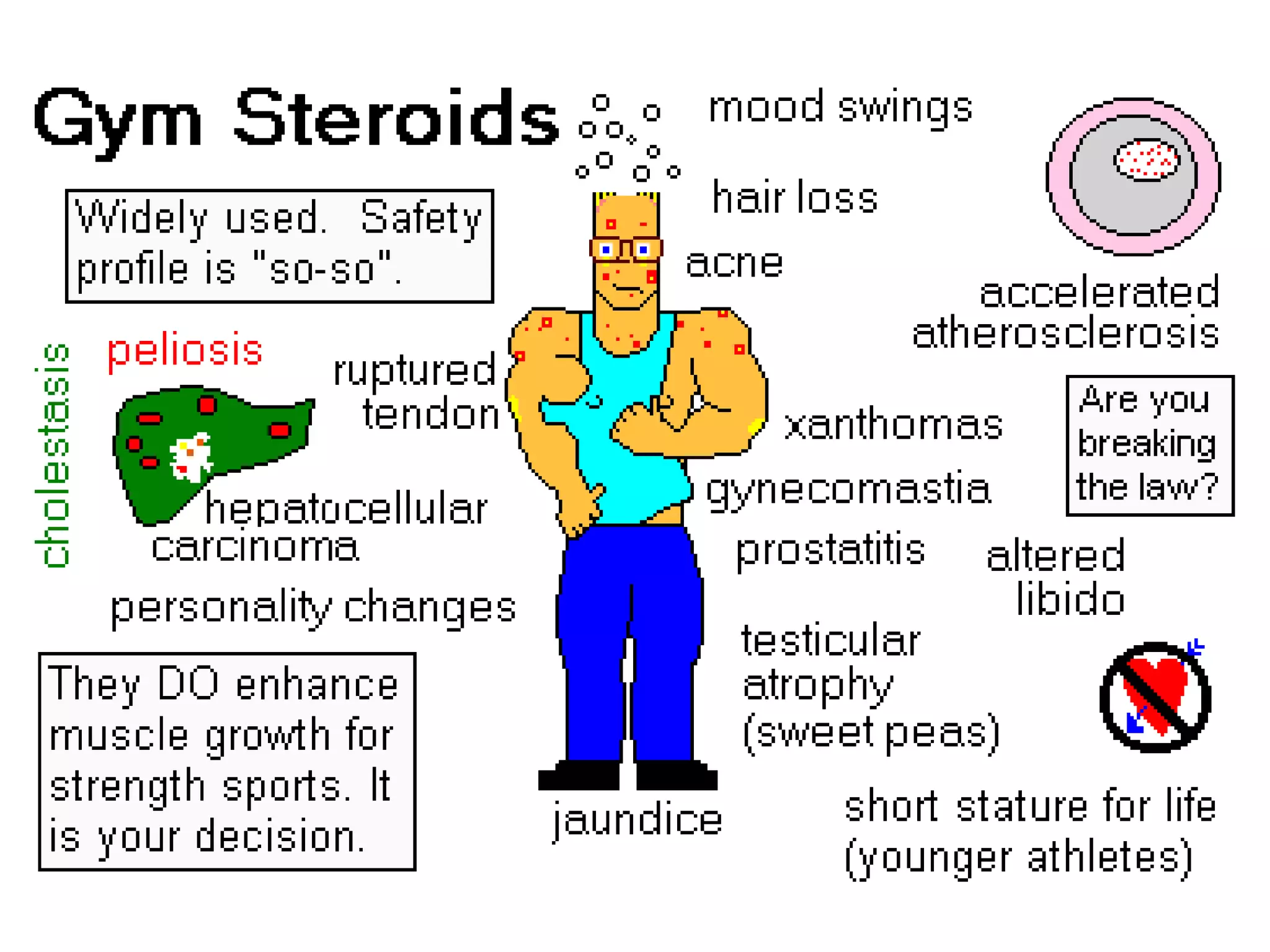
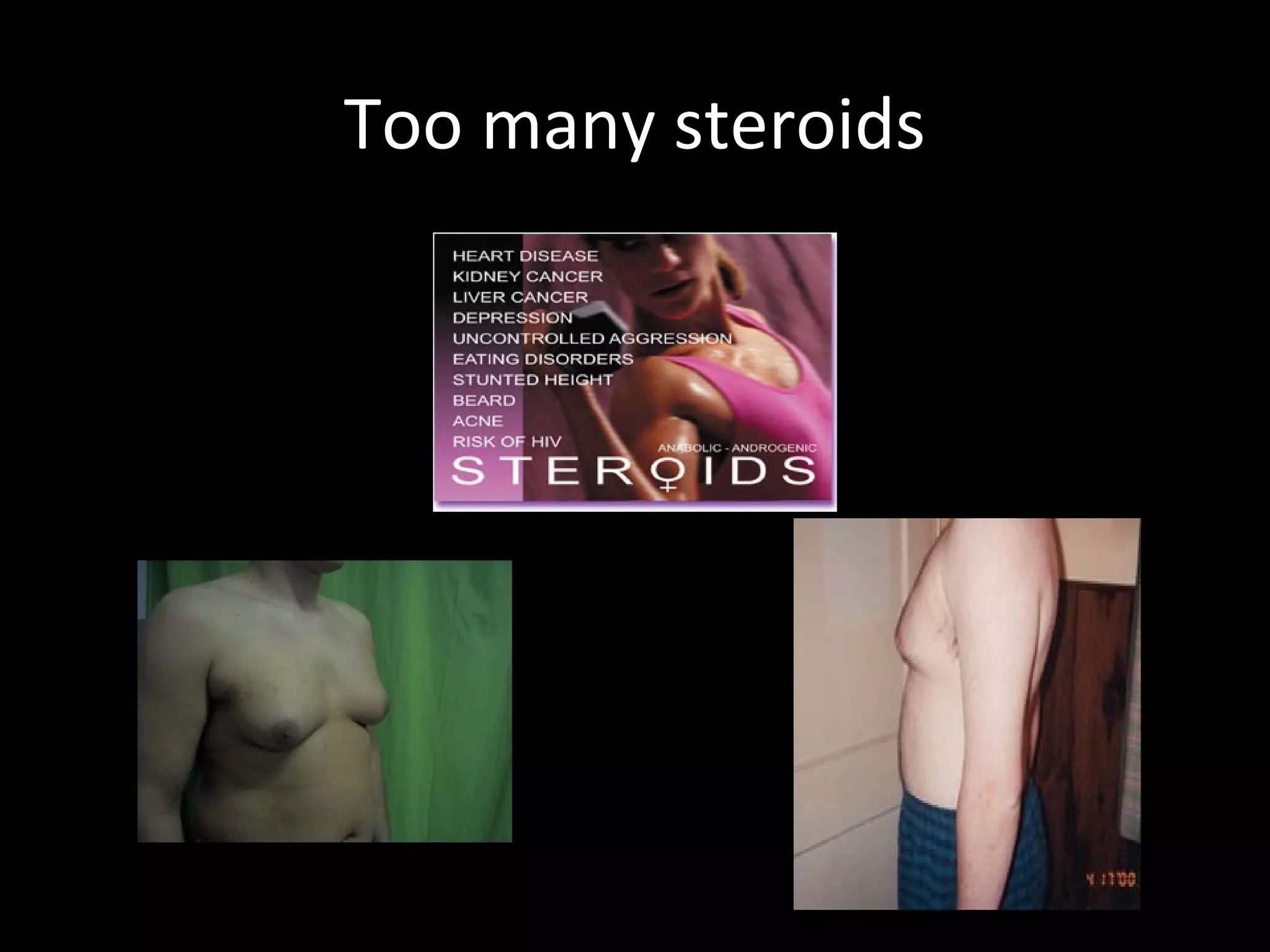
Too many steroids
Hypersecretion of Adrenal Cortex
What Would the Feedback Loop Look
   Like for Cushing’s Syndrome?
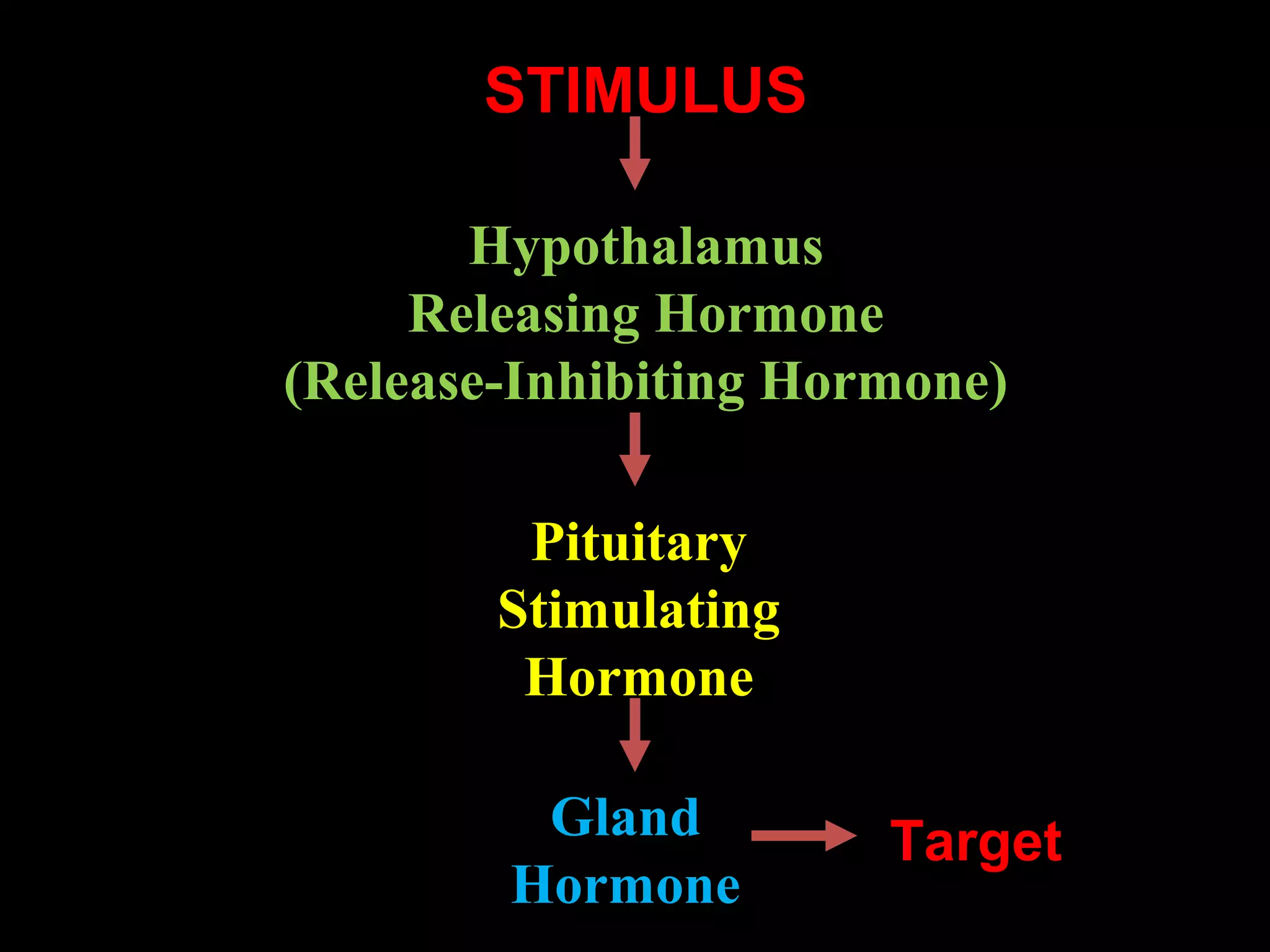
STIMULUS

       Hypothalamus
     Releasing Hormone
(Release-Inhibiting Hormone)

         Pituitary
        Stimulating
         Hormone

         Gland         Target
        Hormone

Endocrine system

  • 11.
    The Pituitary Pituitary secretes 8 hormones Two divisions: 1. TSH 2. ACTH 3. FSH • Anterior pituitary 4. LH ________ 5. GH 6. PRL _________________________________________________________________ • Posterior pituitary 8. ADH (antidiuretic hormone), or vasopressin 9. Oxytocin
  • 12.
    What the lettersstand for… • TSH: thyroid-stimulating hormone • ACTH: adrenocorticotropic hormone • FSH: follicle-stimulating hormone • LH: luteinizing hormone • GH: growth hormone • PRL: prolactin • MSH: melanocyte-stimulating hormone • ADH: antidiuretic hormone • Oxytocin
  • 42.
    Pathology • Pituitary – Gigantism –too much GH in childhood – Acromegaly – too much GH in adulthood – Pituitary dwarfs – too little GH in childhood – Diabetes insipidus - too much ADH • Pancreas – Diabetes mellitus – one type of insulin (not enough) • Thyroid – Hyperthyroidism, commonest is Grave’s disease (autoimmune) – Hypothyroidism • In childhood leads to cretinism • Endemic goiter from insufficient iodine in diet • Adult hypothyroidism (myxedema): autoimmune 42
  • 43.
    Pathology, continued • Adrenalgland – Cushing’s syndrome (see next pic) • Usually caused by an ACTH-secreting pituitary tumor • Rarely by tumor of adrenal cortex • Iatrogenic – Addison’s disease • Hyposecretion (under secretion) of adrenal cortex • Usually involves cortisol and aldosterone: low blood glucose and sodium, severe dehydration, fatigue, loss of appetetie, abdominal pain (Jane Austin) 43
  • 44.
    Thyroid Problems • Whatwould happen if the thyroid could no longer produce T3 and T4? • No negative feedback to hypothalamus and anterior pituitary
  • 45.
  • 46.
  • 47.
  • 48.
  • 49.
  • 50.
  • 51.
  • 53.
  • 54.
  • 55.
    What Would theFeedback Loop Look Like for Cushing’s Syndrome?
  • 56.
    STIMULUS Hypothalamus Releasing Hormone (Release-Inhibiting Hormone) Pituitary Stimulating Hormone Gland Target Hormone