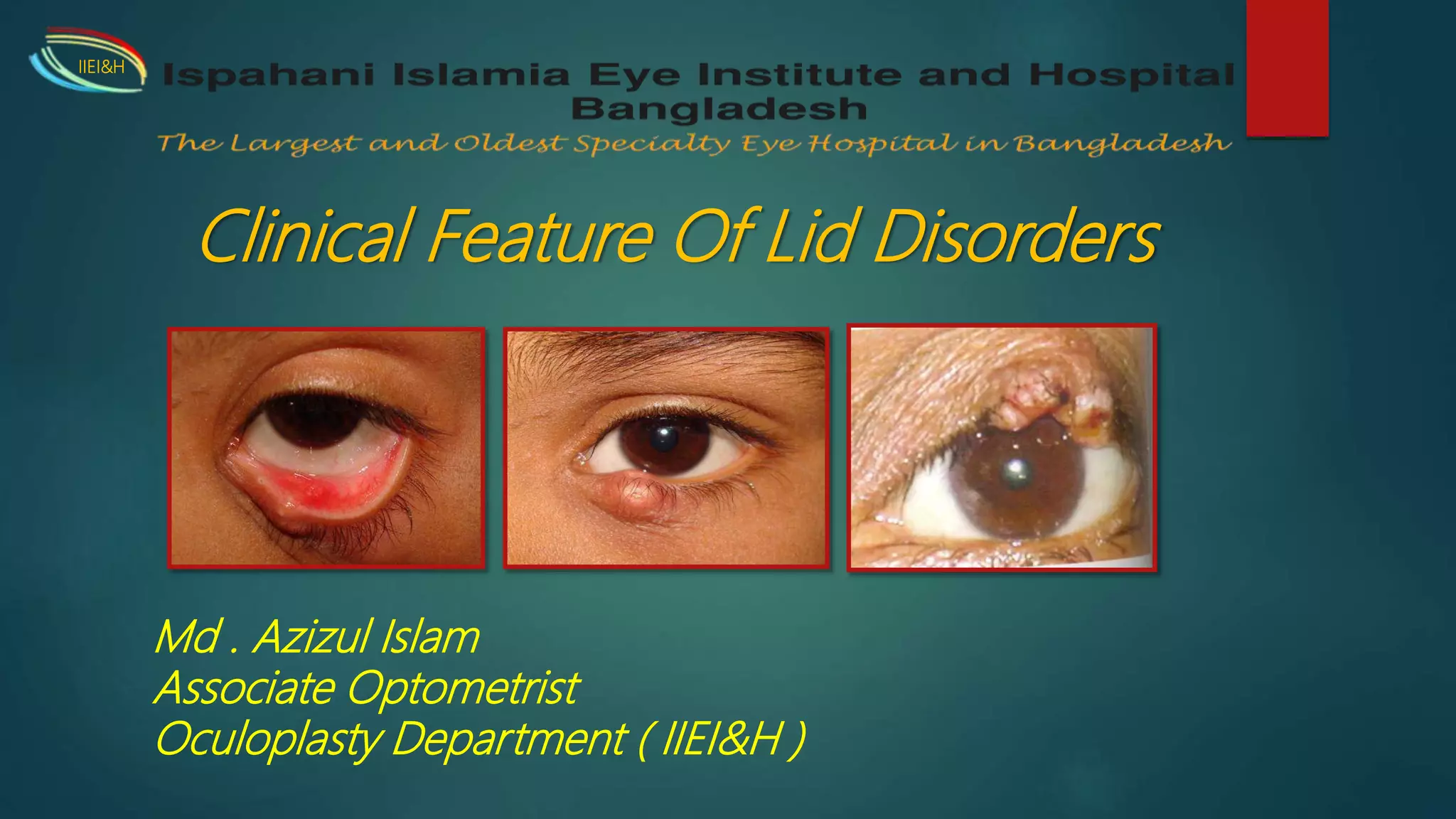
Clinical Feature Of Lid Disorders
Md . Azizul Islam
Associate Optometrist
Oculoplasty Department ( IIEI&H )
IIEI&H
Finding of lids
1. Nodules
• Chalazion
• Hordeolum
2. Cysts
• Cyst of Moll
• Cyst of Zeiss
• Sebaceous cyst
3. Tumours
• Xanthelasma
•Naevi
• Capillary haemangioma
• Pyogenic granuloma
• Cutaneous horn
• Molluscum
IIEI&H
Chalazion
Hard painless swelling little away from lid margin.
(One or Multiple)Swelling increases gradually in size without
pain.(Nodular,Roundish).
IIEI&H
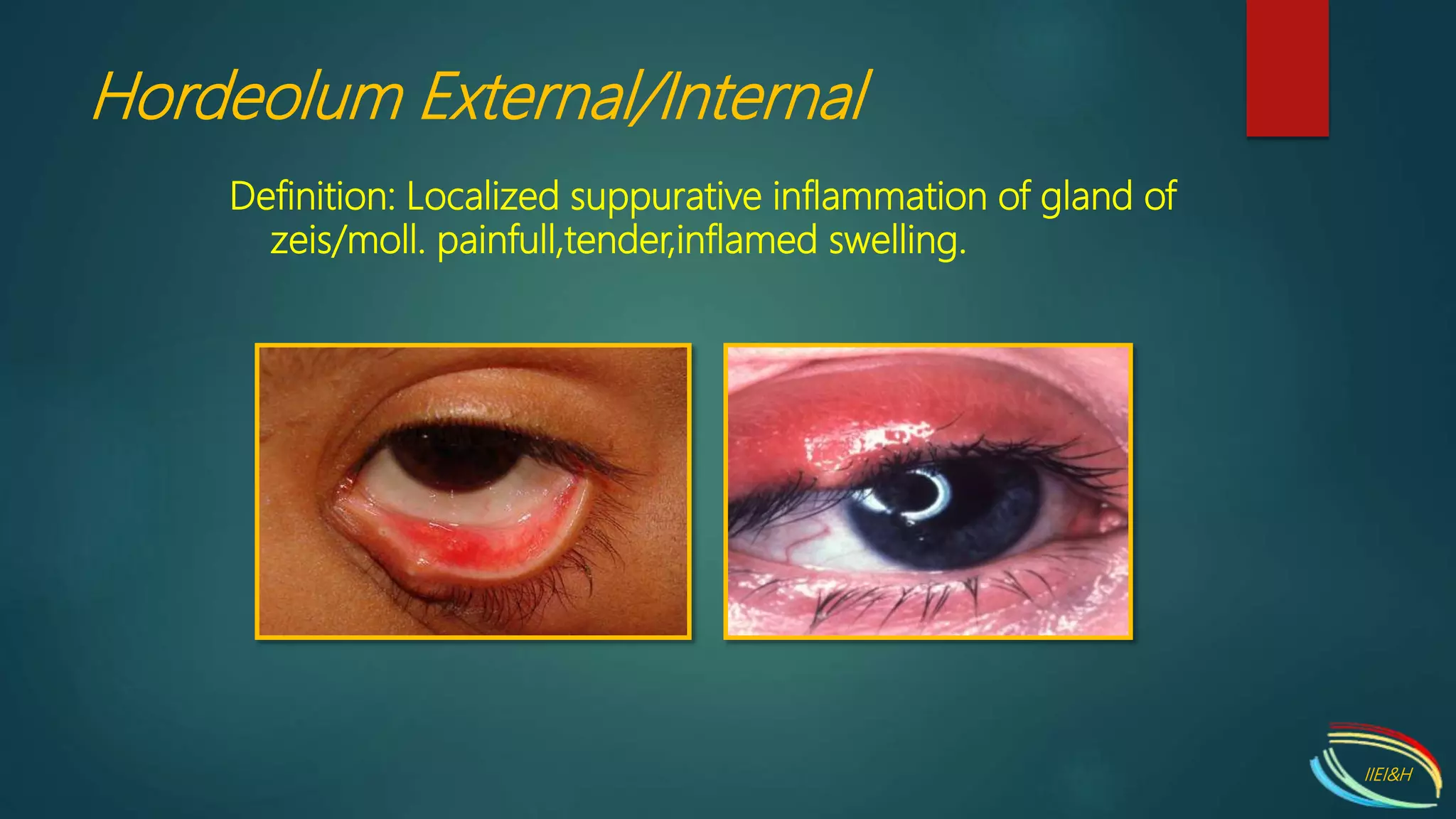
Hordeolum External/Internal
Definition: Localized suppurative inflammation of gland of
zeis/moll. painfull,tender,inflamed swelling.
IIEI&H
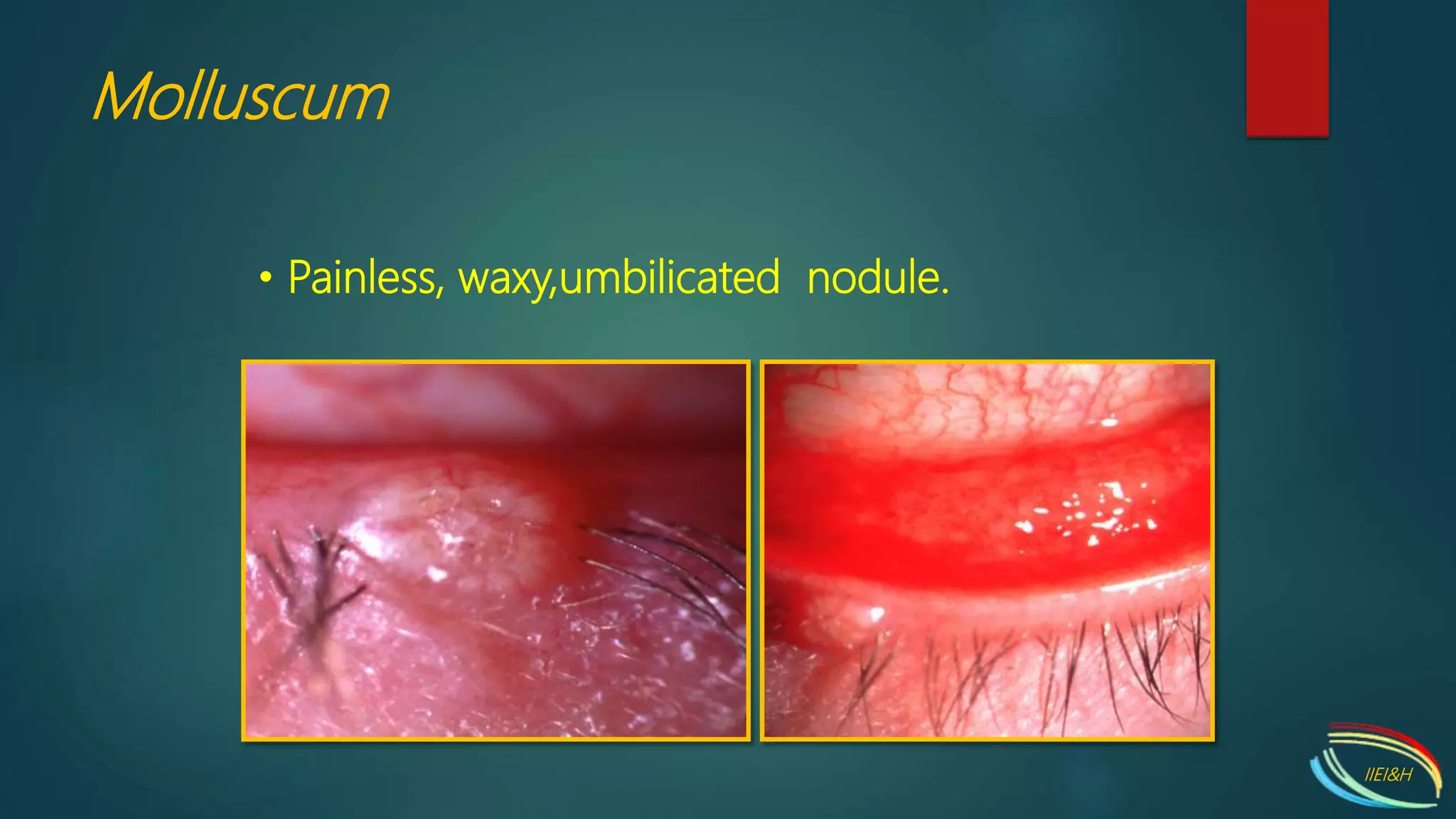
Molluscum
• Painless, waxy,umbilicated nodule.
IIEI&H
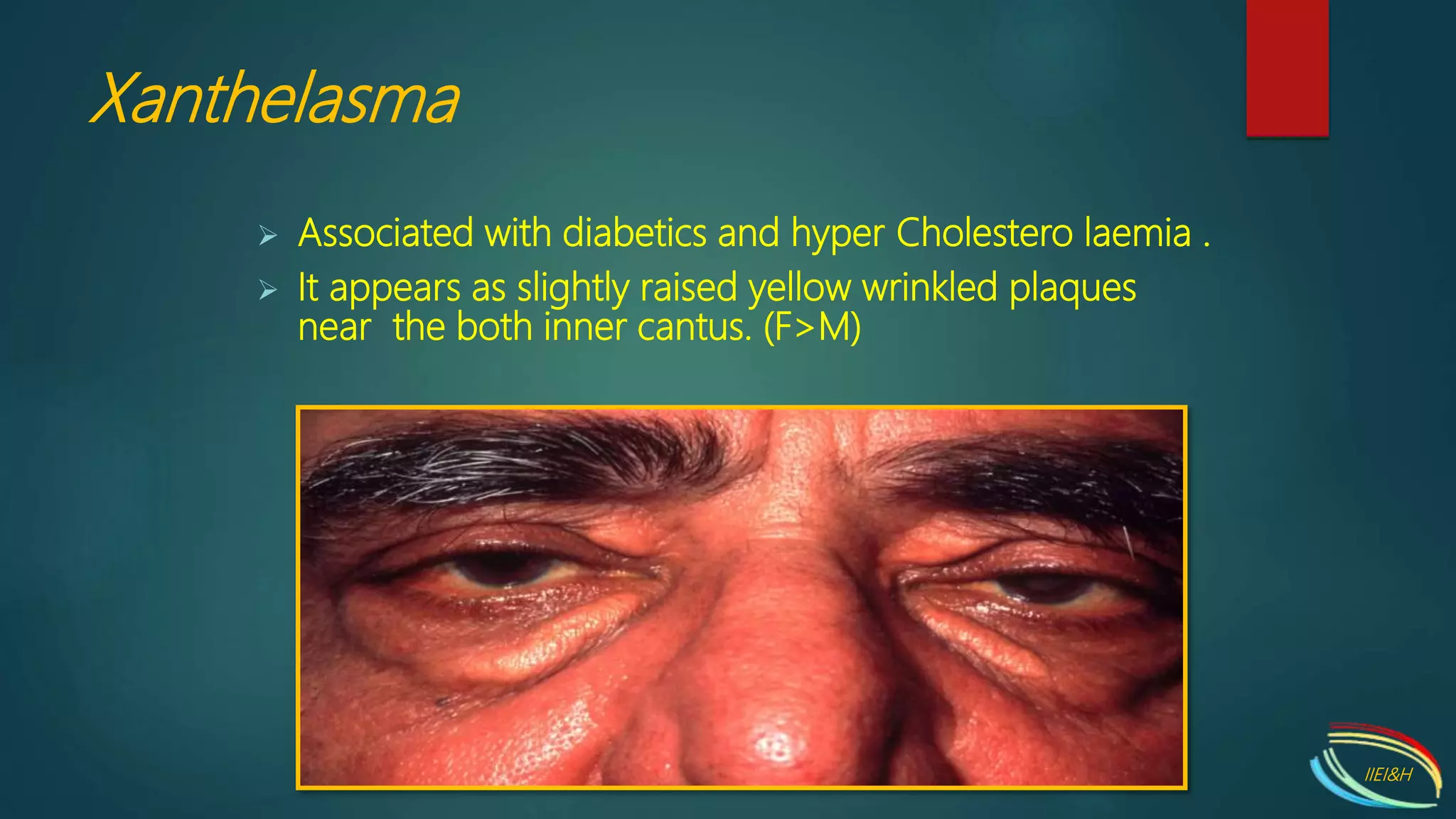
Xanthelasma
 Associated with diabetics and hyper Cholestero laemia .
 It appears as slightly raised yellow wrinkled plaques
near the both inner cantus. (F>M)
IIEI&H
.
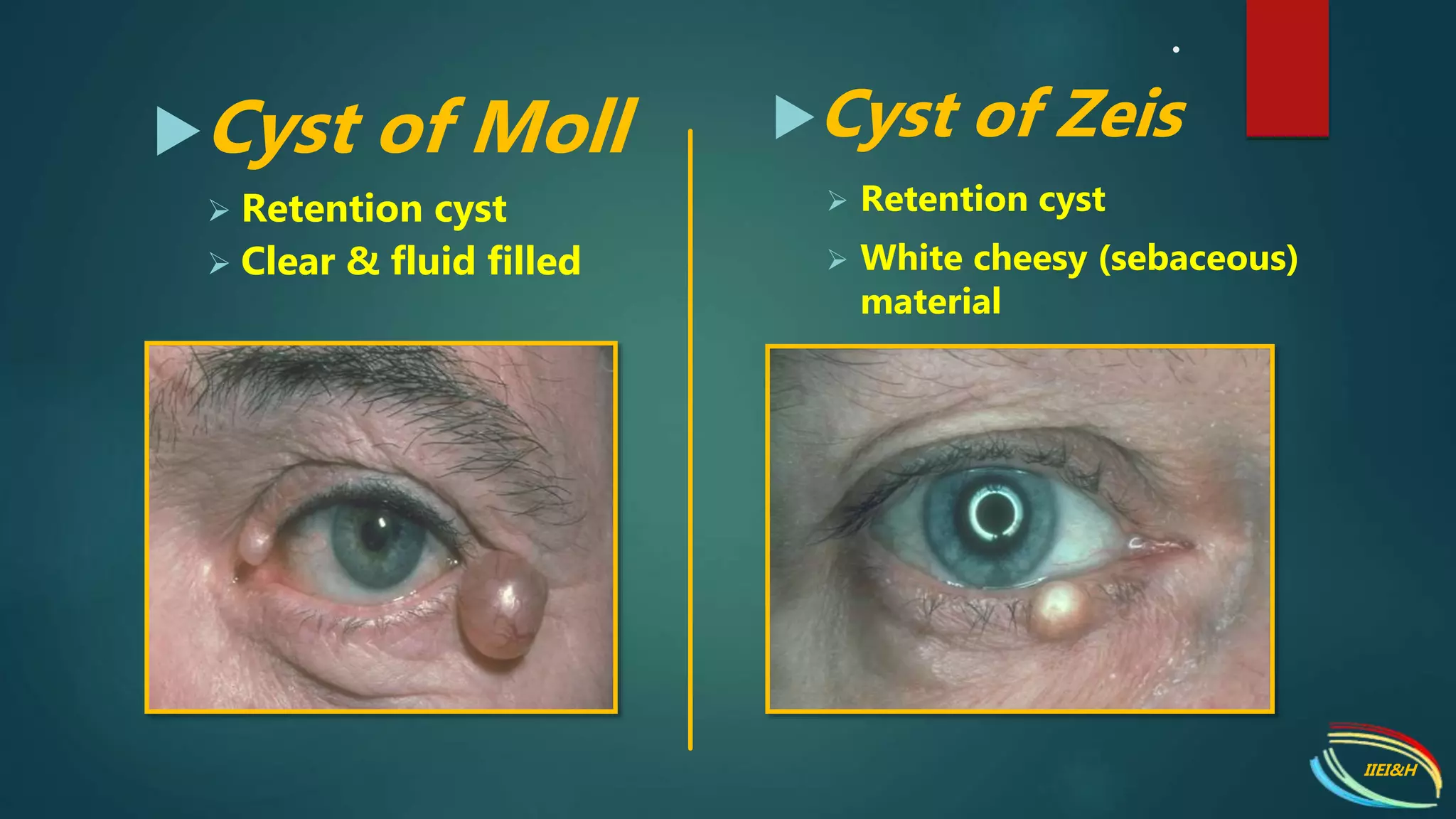
Cyst of Moll
 Retention cyst
 Clear & fluid filled
Cyst of Zeis
 Retention cyst
 White cheesy (sebaceous)
material
IIEI&H
Sebaceous cyst
 It looks like a dermoid.
 The sebaceous cyst is not attached firmly to the
underlying structures.
IIEI&H
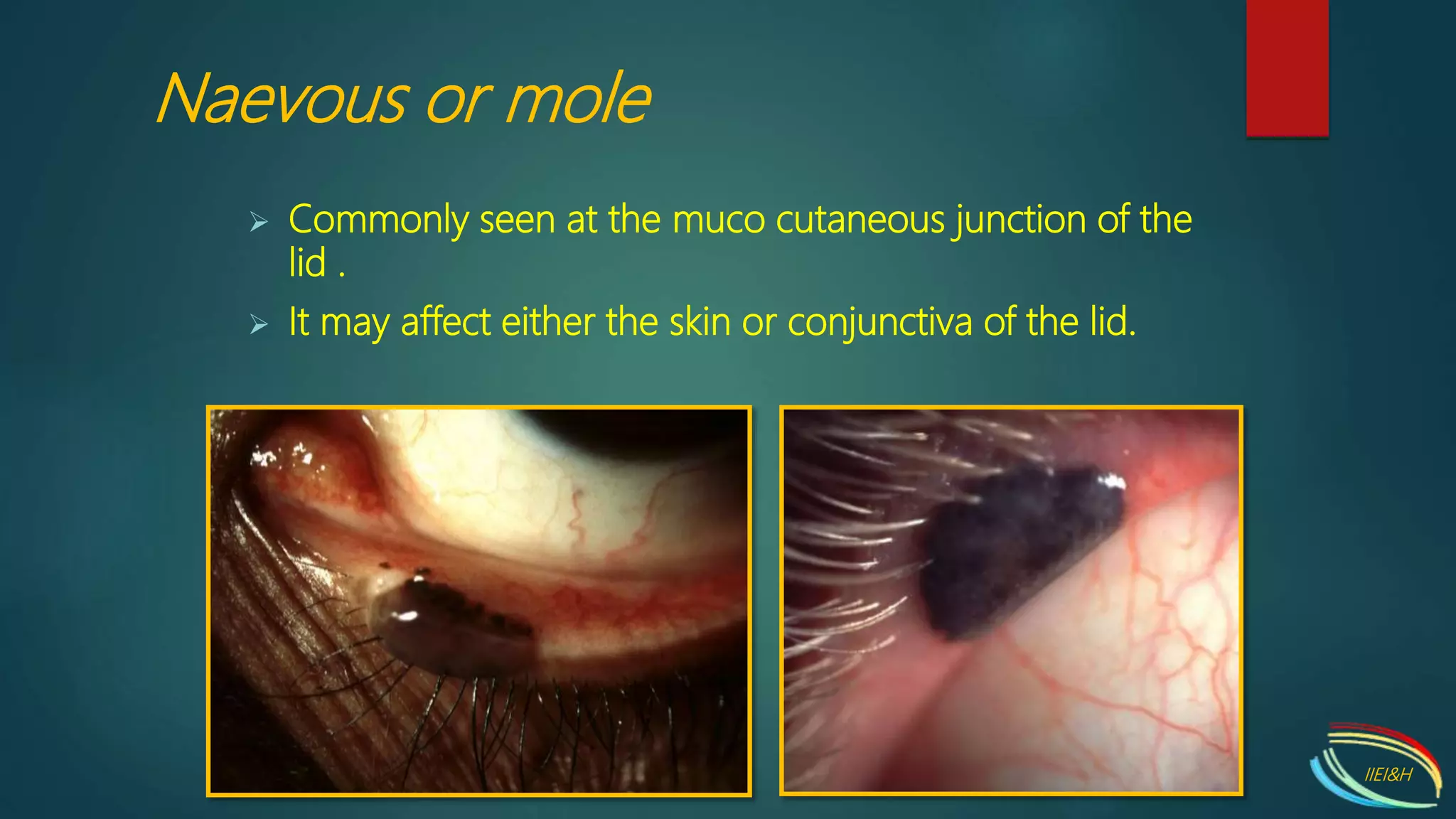
Naevous or mole
 Commonly seen at the muco cutaneous junction of the
lid .
 It may affect either the skin or conjunctiva of the lid.
IIEI&H
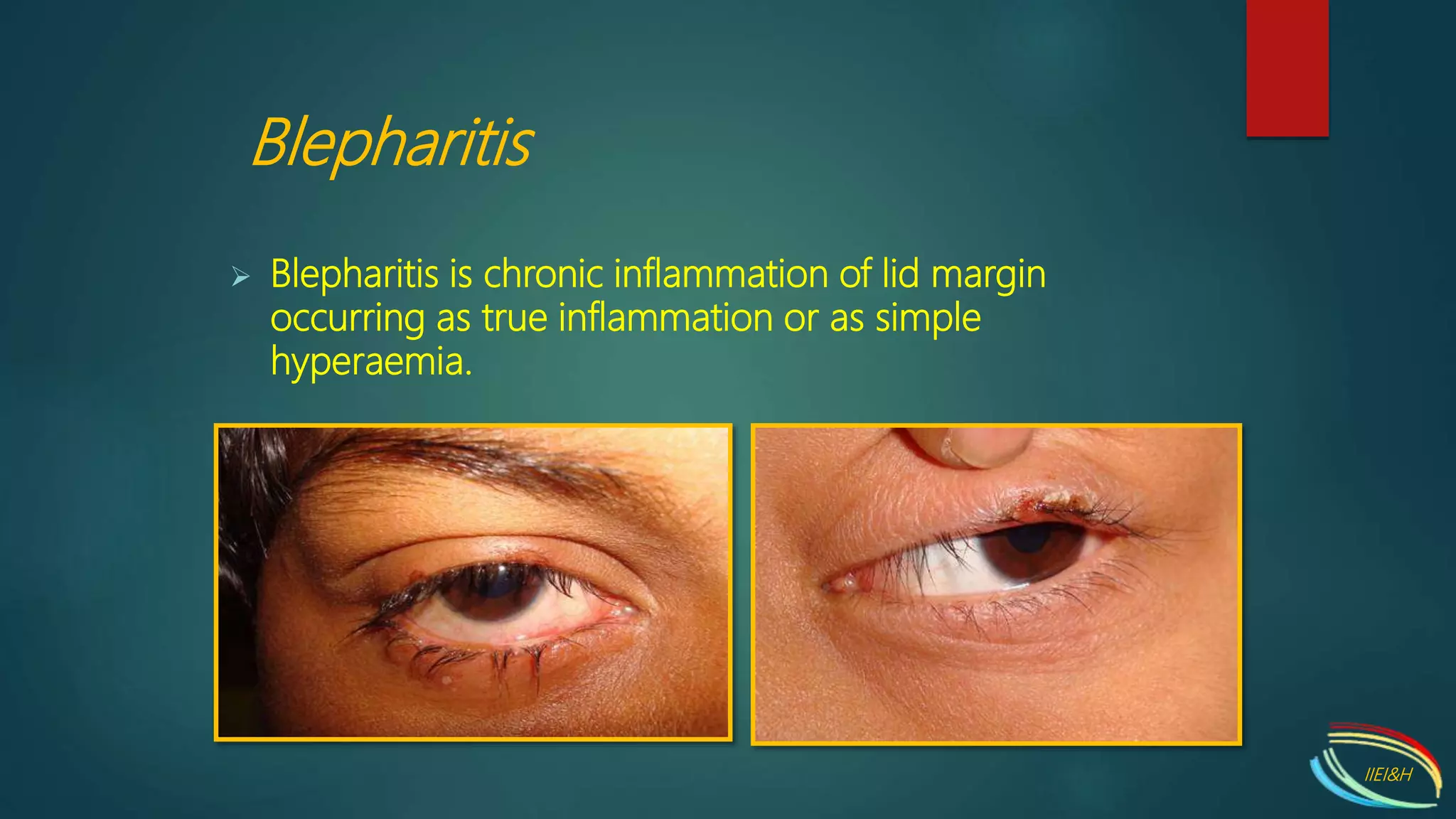
Blepharitis
 Blepharitis is chronic inflammation of lid margin
occurring as true inflammation or as simple
hyperaemia.
IIEI&H
Herpes simplex
 Signs
 Crops of small vesicles
 Rupture and crust
 Heal without scarring
 after 7 days
IIEI&H
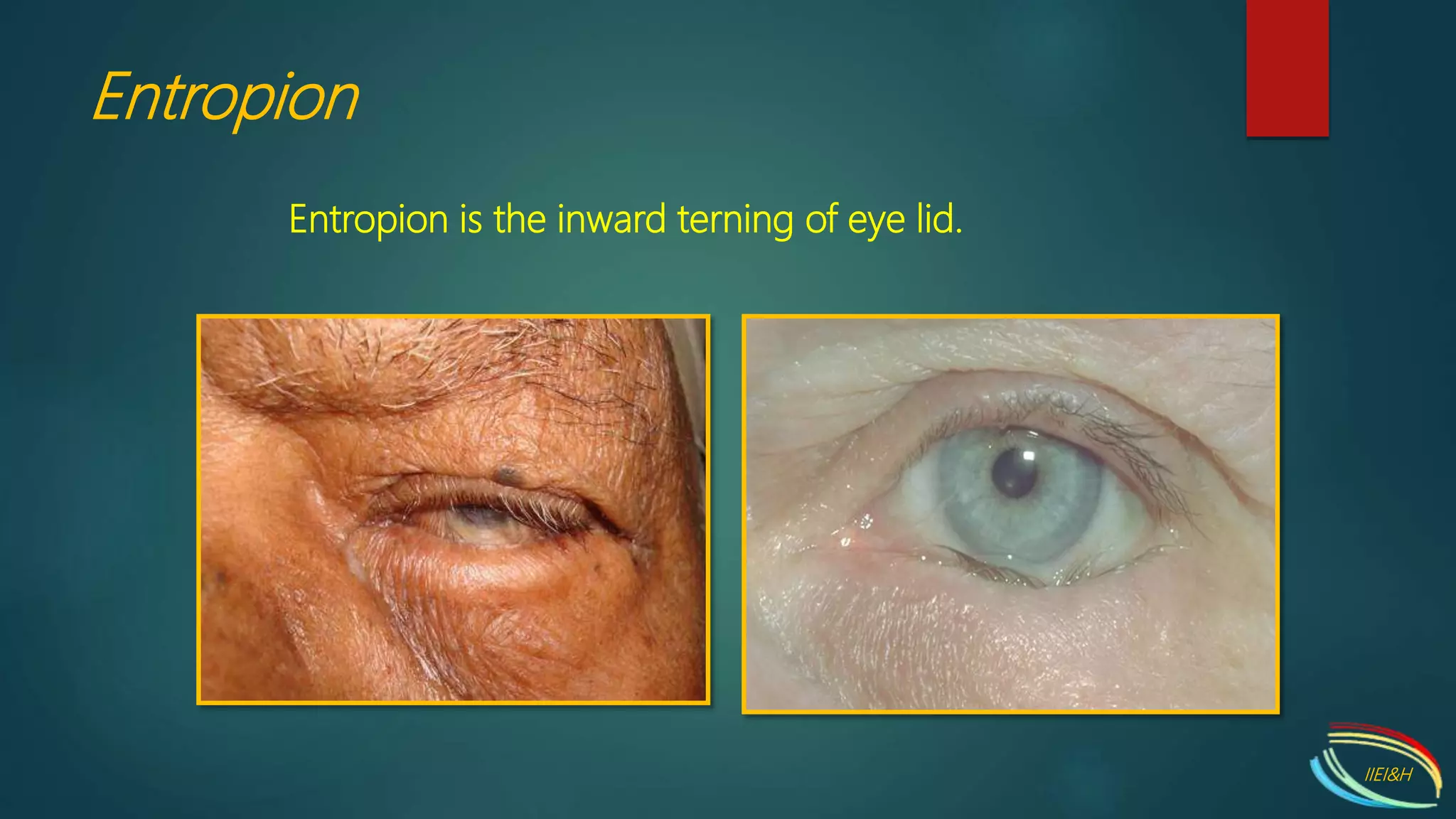
Entropion
Entropion is the inward terning of eye lid.
IIEI&H
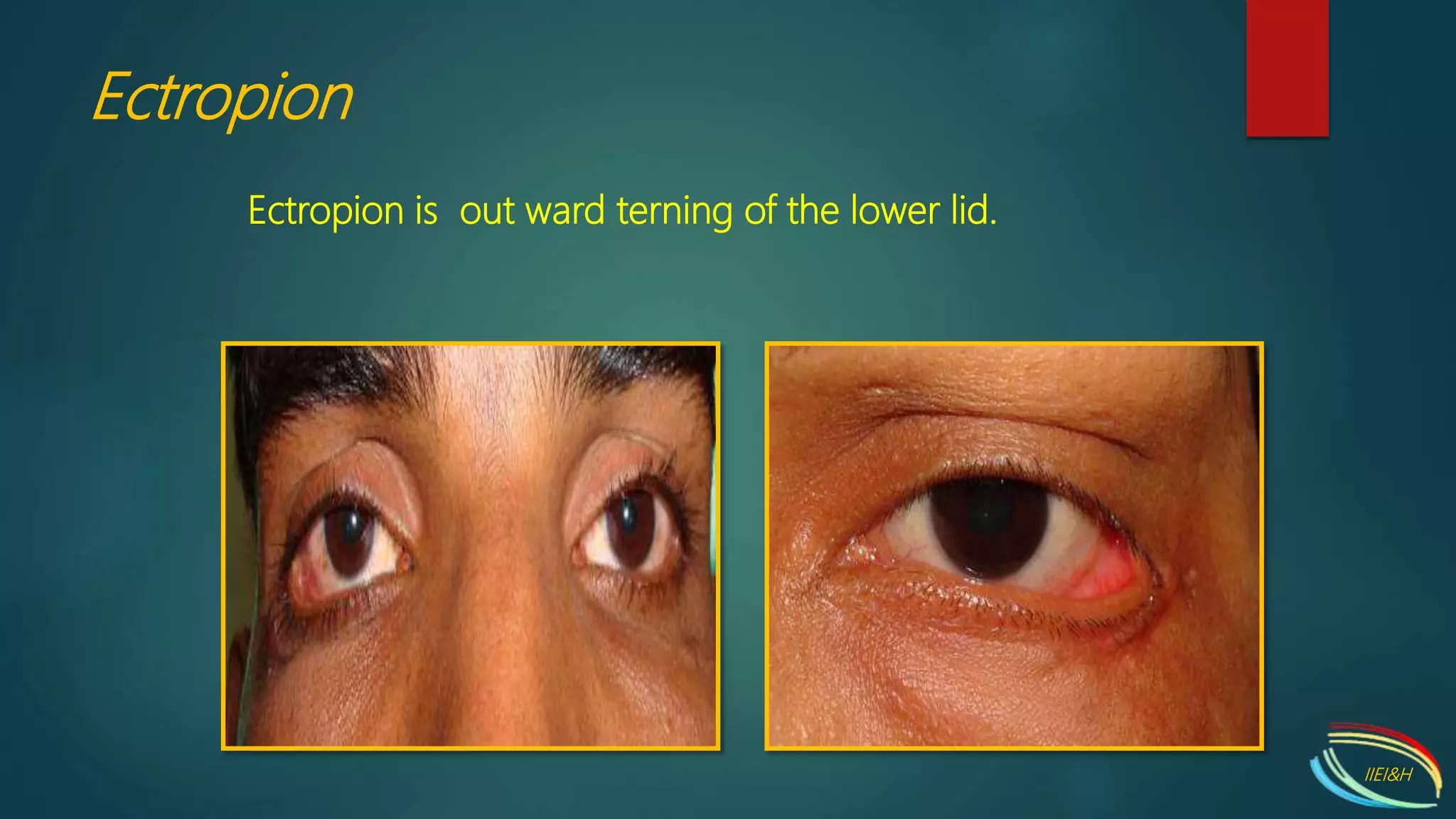
Ectropion
Ectropion is out ward terning of the lower lid.
IIEI&H
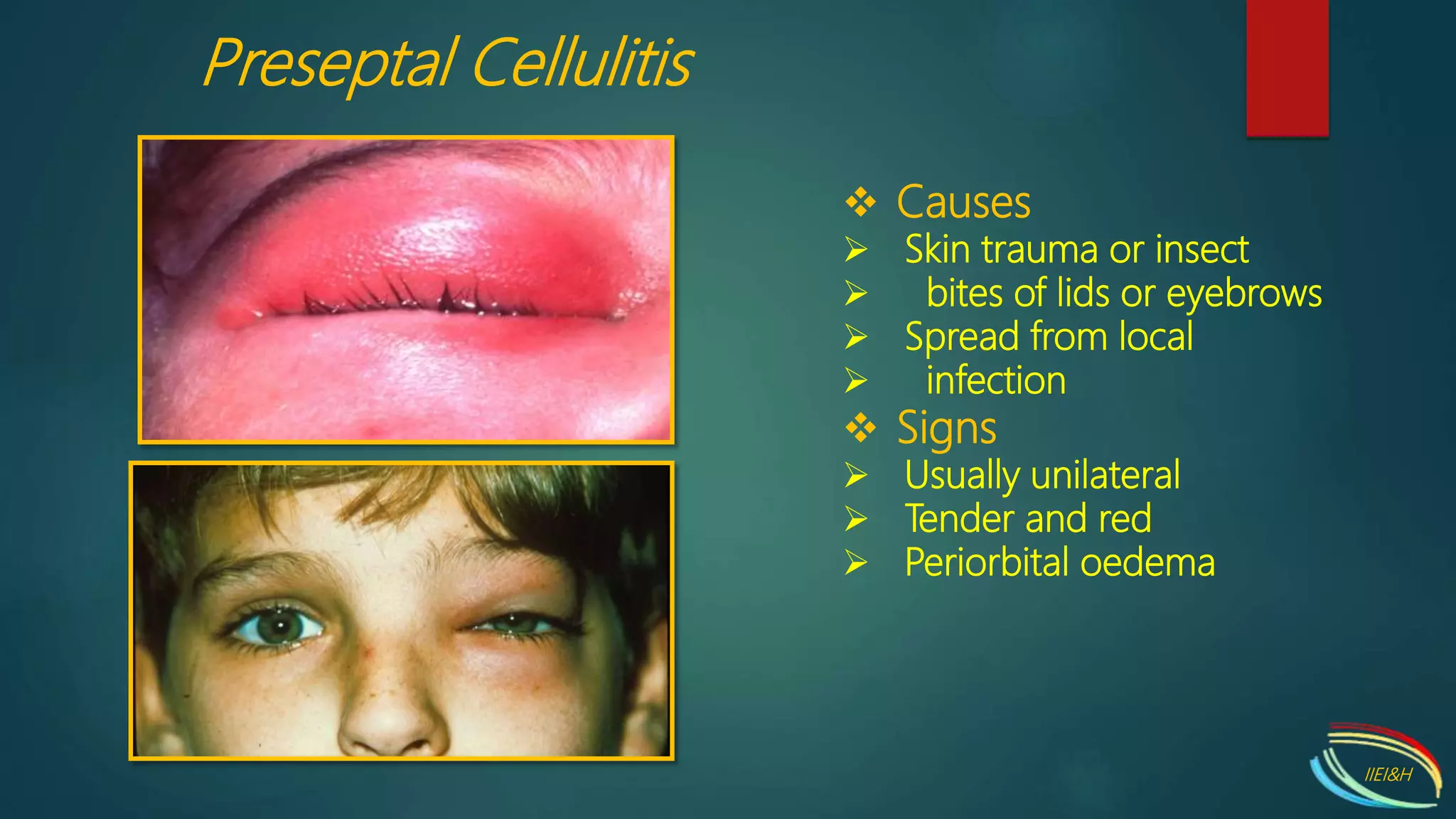
Preseptal Cellulitis
 Causes
 Skin trauma or insect
 bites of lids or eyebrows
 Spread from local
 infection
 Signs
 Usually unilateral
 Tender and red
 Periorbital oedema
IIEI&H
Systemic Causes of lid Oedema
 Renal disease.
 Congestive heart
failure.
 Obstruction of
superior vena cava.
IIEI&H
Blepharochalasis
 Uncommon, usually bilateral.
 Recurrent, non-pitting oedema
 Usually upper eyelids.
IIEI&H
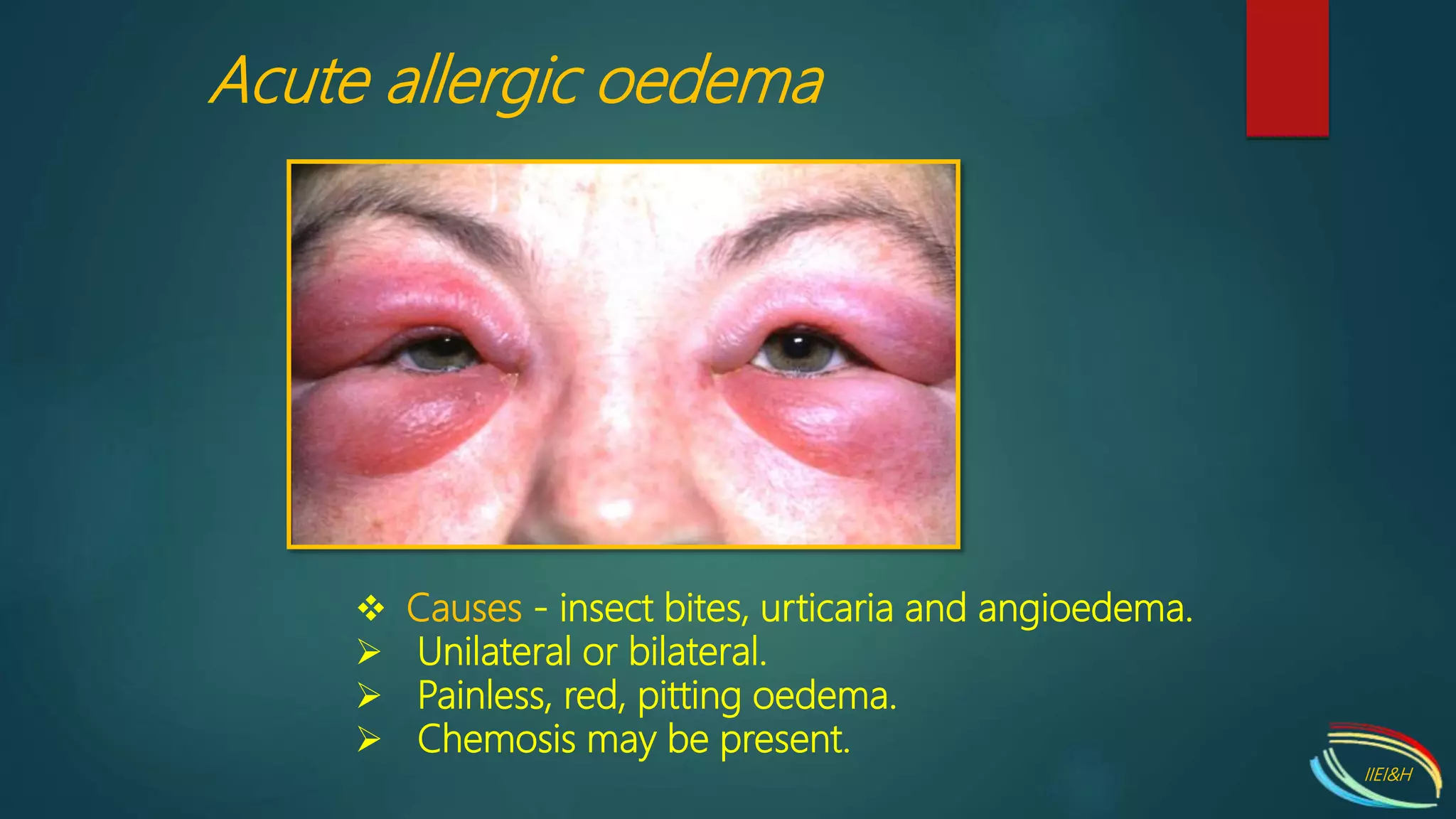
Acute allergic oedema
 Causes - insect bites, urticaria and angioedema.
 Unilateral or bilateral.
 Painless, red, pitting oedema.
 Chemosis may be present.
IIEI&H
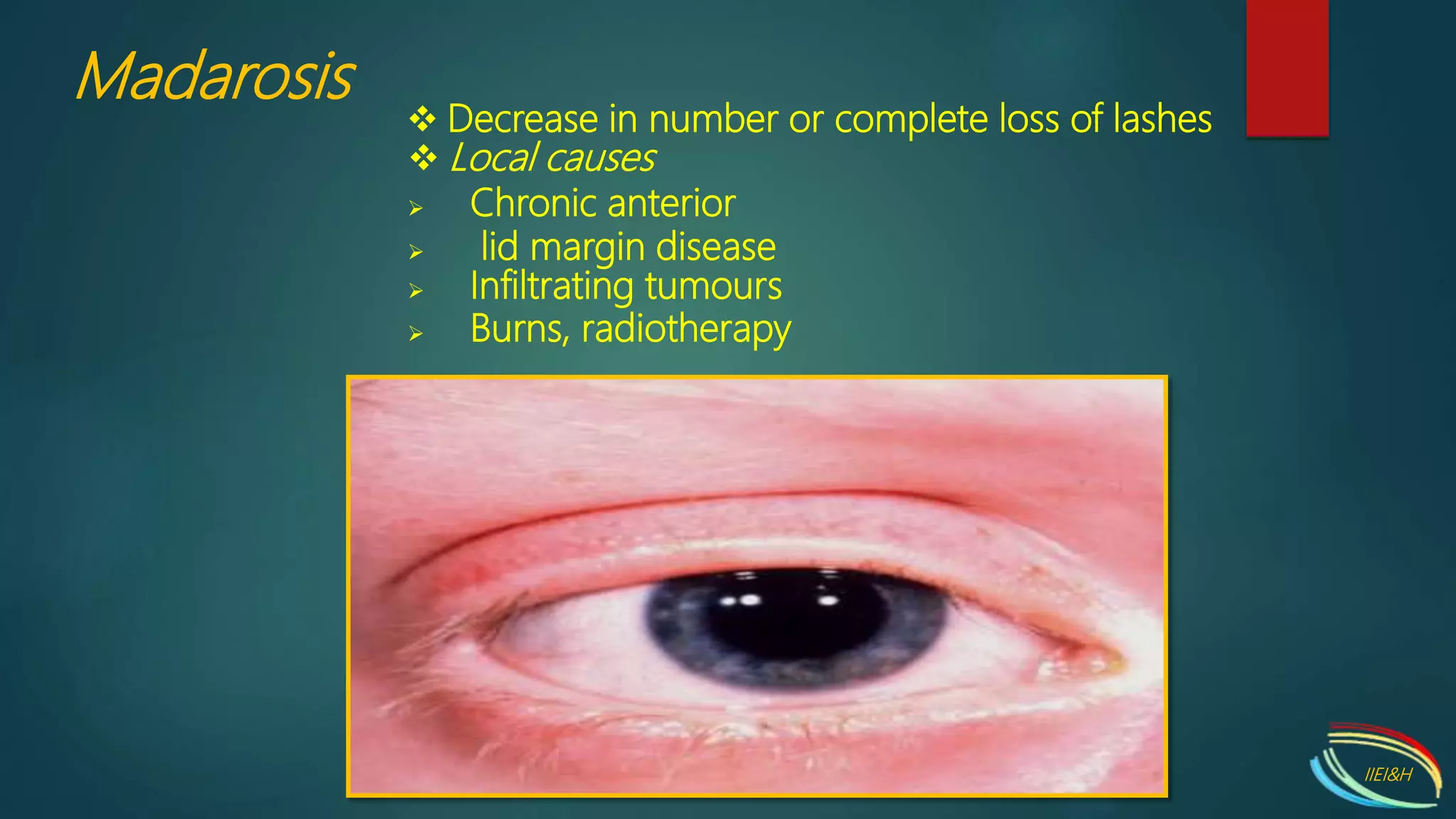
Madarosis
 Local causes
 Chronic anterior
 lid margin disease
 Infiltrating tumours
 Burns, radiotherapy
 Decrease in number or complete loss of lashes
IIEI&H
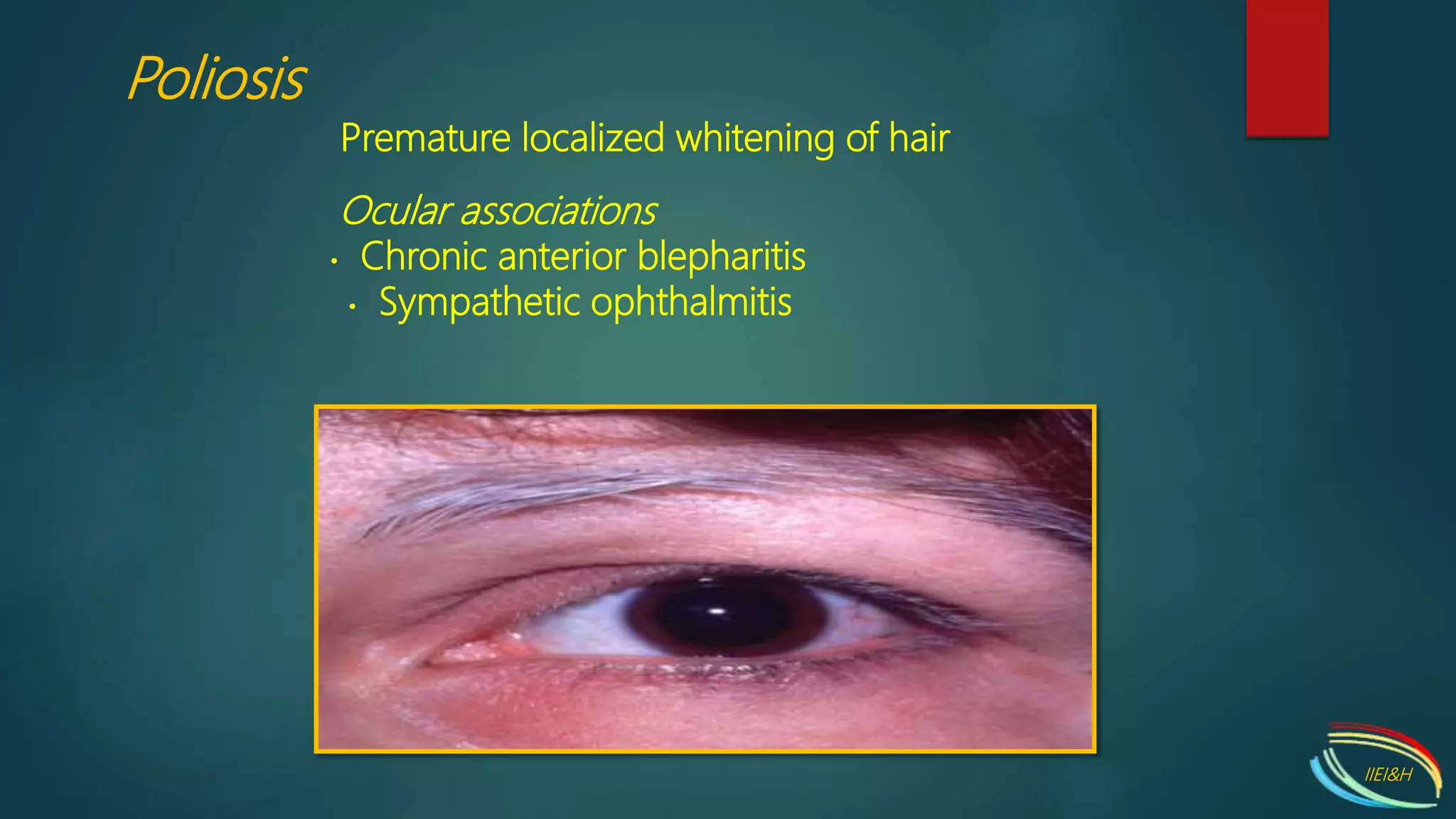
Poliosis
Premature localized whitening of hair
Ocular associations
• Chronic anterior blepharitis
• Sympathetic ophthalmitis
IIEI&H
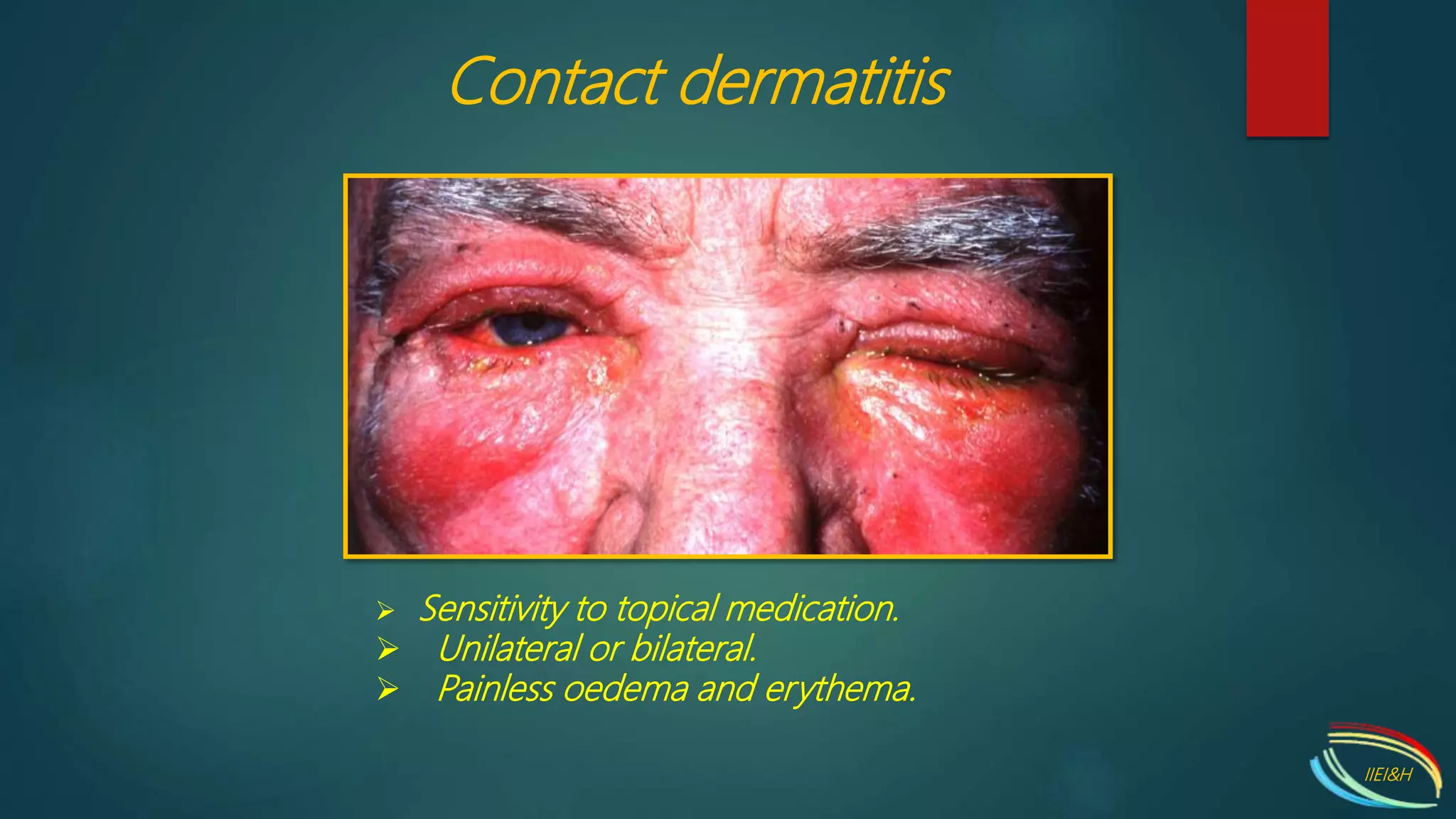
Contact dermatitis
 Sensitivity to topical medication.
 Unilateral or bilateral.
 Painless oedema and erythema.
IIEI&H
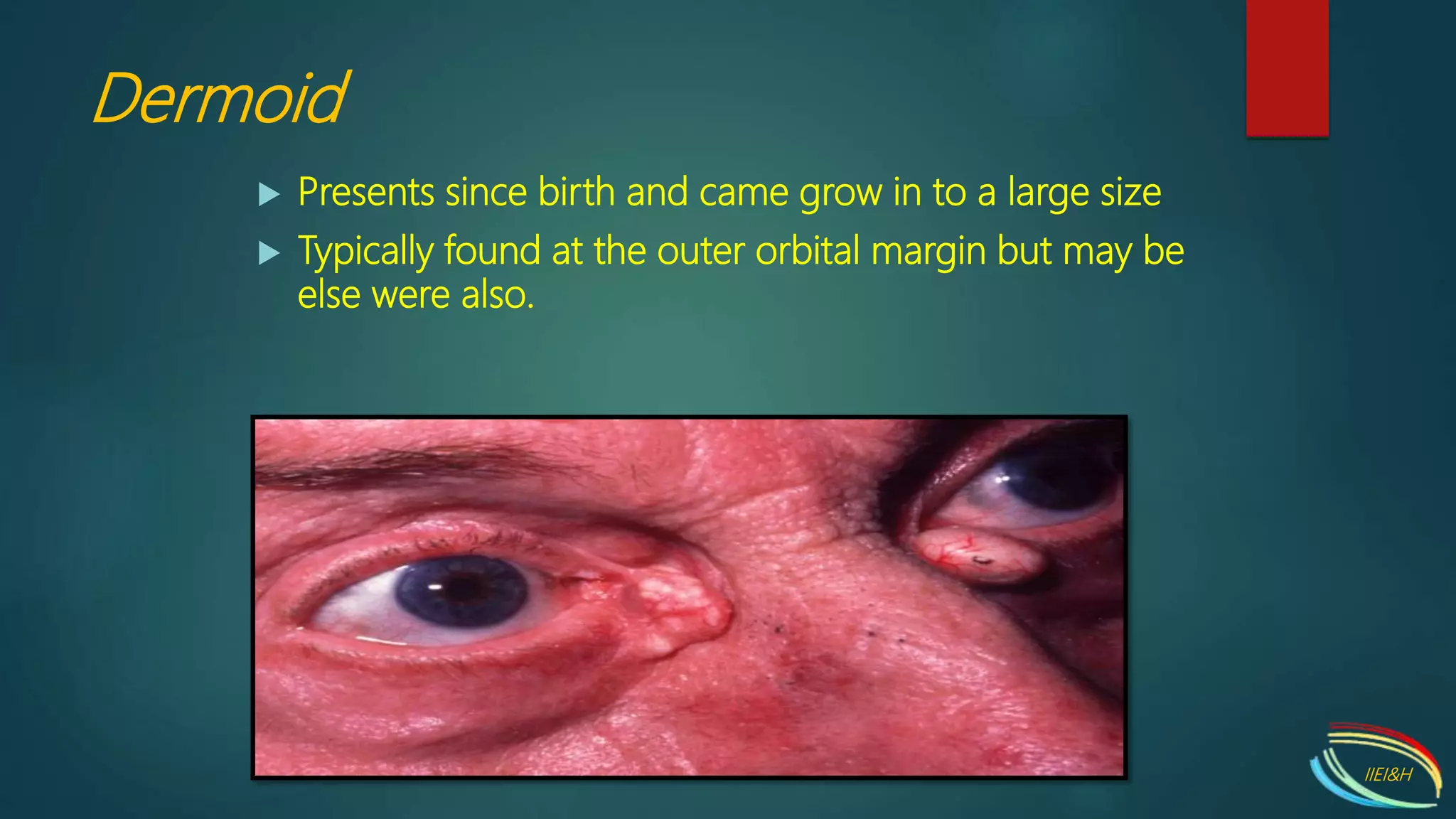
Dermoid
 Presents since birth and came grow in to a large size
 Typically found at the outer orbital margin but may be
else were also.
IIEI&H
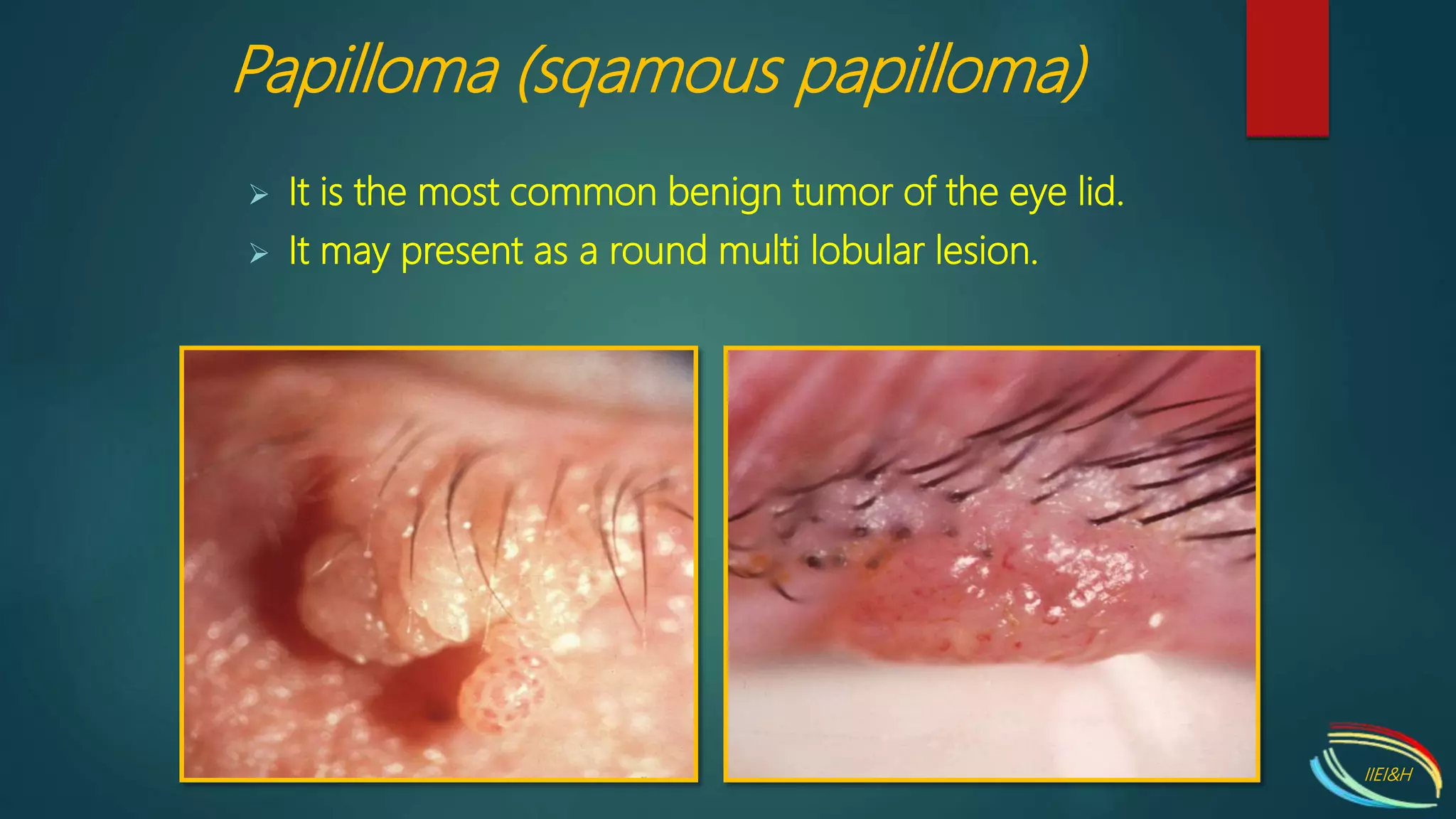
Papilloma (sqamous papilloma)
 It is the most common benign tumor of the eye lid.
 It may present as a round multi lobular lesion.
IIEI&H
Malignant melanoma
 It is a rare tumor of the lid ( less than 1%).
 It may arise from a pre existing melanotic naevus.
IIEI&H
Carcinomas
1. Basal cell carcinoma(Rodent Ulcer)
2. Squamous cell carcinoma.
3. Sebaceous cell carcinoma.
IIEI&H
Haemangioma
 Capillary hemangioma
 Manifests as bright red or portwine spots – composed
of dilated capillaries .
IIEI&H
Blepharospasm
 Involuntary tonic, spasmodic, bilateral eyelid closure
 F>M
 More common in older individuals (60+ yrs)
 Causes - idiopathic, Parkinson’s disease, psychogenic, post-
encephalitic, tetany, drugs e.g. Psychotropics.
IIEI&H
Traumatic Haematoma
 Lid margin.
 Lid tissue.
 Loss of lid tissue.
IIEI&H
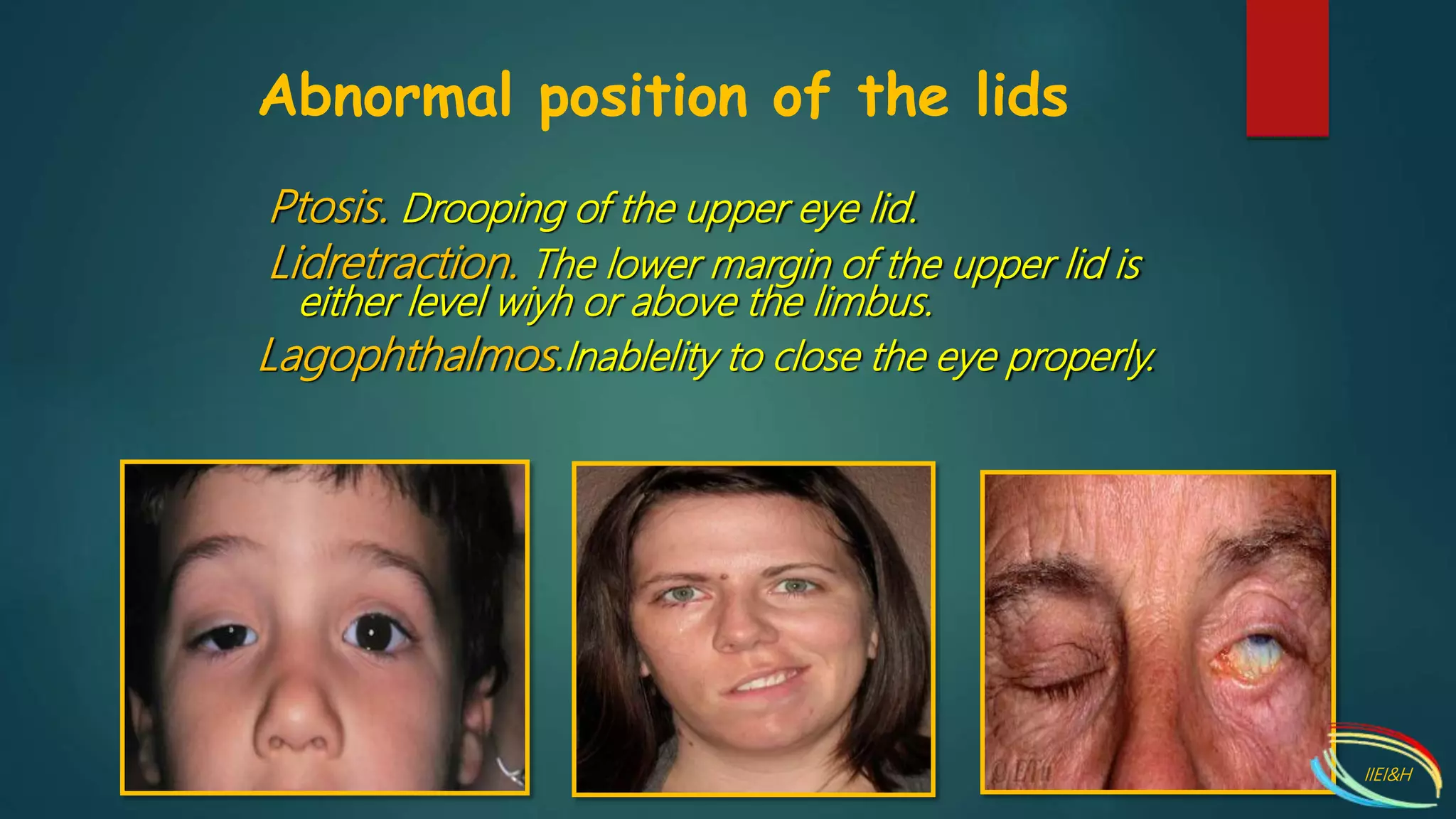
Ptosis. Drooping of the upper eye lid.
Lidretraction. The lower margin of the upper lid is
either level wiyh or above the limbus.
Lagophthalmos.Inablelity to close the eye properly.
Abnormal position of the lids
IIEI&H
.
Malposition of eye lids
Distichiasis: partial or complete second row of lashes.
Trichiasis: Inward turning of previously normal lashes.
Coloboma: An uncomon,bilateral or unilateral, partial
or full thickness defect involving the lid margin.
IIEI&H
References
 Comprehensive Ophthalmology, 4th Edition, by A. K. Khurana
 Kanski's Clinical Ophthalmology,7th Edition by Jack Kanski
 Essentials Of Ophthalmology, 4th Edition by Samar K Basak
 Picture+Vedio : Google + Me
IIEI&H
IIEI&H

Disorders of eyelids

  • 1.
    Clinical Feature OfLid Disorders Md . Azizul Islam Associate Optometrist Oculoplasty Department ( IIEI&H ) IIEI&H
  • 2.
    Finding of lids 1.Nodules • Chalazion • Hordeolum 2. Cysts • Cyst of Moll • Cyst of Zeiss • Sebaceous cyst 3. Tumours • Xanthelasma •Naevi • Capillary haemangioma • Pyogenic granuloma • Cutaneous horn • Molluscum IIEI&H
  • 3.
    Chalazion Hard painless swellinglittle away from lid margin. (One or Multiple)Swelling increases gradually in size without pain.(Nodular,Roundish). IIEI&H
  • 4.
    Hordeolum External/Internal Definition: Localizedsuppurative inflammation of gland of zeis/moll. painfull,tender,inflamed swelling. IIEI&H
  • 5.
  • 6.
    Xanthelasma  Associated withdiabetics and hyper Cholestero laemia .  It appears as slightly raised yellow wrinkled plaques near the both inner cantus. (F>M) IIEI&H
  • 7.
    . Cyst of Moll Retention cyst  Clear & fluid filled Cyst of Zeis  Retention cyst  White cheesy (sebaceous) material IIEI&H
  • 8.
    Sebaceous cyst  Itlooks like a dermoid.  The sebaceous cyst is not attached firmly to the underlying structures. IIEI&H
  • 9.
    Naevous or mole Commonly seen at the muco cutaneous junction of the lid .  It may affect either the skin or conjunctiva of the lid. IIEI&H
  • 10.
    Blepharitis  Blepharitis ischronic inflammation of lid margin occurring as true inflammation or as simple hyperaemia. IIEI&H
  • 11.
    Herpes simplex  Signs Crops of small vesicles  Rupture and crust  Heal without scarring  after 7 days IIEI&H
  • 12.
    Entropion Entropion is theinward terning of eye lid. IIEI&H
  • 13.
    Ectropion Ectropion is outward terning of the lower lid. IIEI&H
  • 14.
    Preseptal Cellulitis  Causes Skin trauma or insect  bites of lids or eyebrows  Spread from local  infection  Signs  Usually unilateral  Tender and red  Periorbital oedema IIEI&H
  • 15.
    Systemic Causes oflid Oedema  Renal disease.  Congestive heart failure.  Obstruction of superior vena cava. IIEI&H
  • 16.
    Blepharochalasis  Uncommon, usuallybilateral.  Recurrent, non-pitting oedema  Usually upper eyelids. IIEI&H
  • 17.
    Acute allergic oedema Causes - insect bites, urticaria and angioedema.  Unilateral or bilateral.  Painless, red, pitting oedema.  Chemosis may be present. IIEI&H
  • 18.
    Madarosis  Local causes Chronic anterior  lid margin disease  Infiltrating tumours  Burns, radiotherapy  Decrease in number or complete loss of lashes IIEI&H
  • 19.
    Poliosis Premature localized whiteningof hair Ocular associations • Chronic anterior blepharitis • Sympathetic ophthalmitis IIEI&H
  • 20.
    Contact dermatitis  Sensitivityto topical medication.  Unilateral or bilateral.  Painless oedema and erythema. IIEI&H
  • 21.
    Dermoid  Presents sincebirth and came grow in to a large size  Typically found at the outer orbital margin but may be else were also. IIEI&H
  • 22.
    Papilloma (sqamous papilloma) It is the most common benign tumor of the eye lid.  It may present as a round multi lobular lesion. IIEI&H
  • 23.
    Malignant melanoma  Itis a rare tumor of the lid ( less than 1%).  It may arise from a pre existing melanotic naevus. IIEI&H
  • 24.
    Carcinomas 1. Basal cellcarcinoma(Rodent Ulcer) 2. Squamous cell carcinoma. 3. Sebaceous cell carcinoma. IIEI&H
  • 25.
    Haemangioma  Capillary hemangioma Manifests as bright red or portwine spots – composed of dilated capillaries . IIEI&H
  • 26.
    Blepharospasm  Involuntary tonic,spasmodic, bilateral eyelid closure  F>M  More common in older individuals (60+ yrs)  Causes - idiopathic, Parkinson’s disease, psychogenic, post- encephalitic, tetany, drugs e.g. Psychotropics. IIEI&H
  • 27.
    Traumatic Haematoma  Lidmargin.  Lid tissue.  Loss of lid tissue. IIEI&H
  • 28.
    Ptosis. Drooping ofthe upper eye lid. Lidretraction. The lower margin of the upper lid is either level wiyh or above the limbus. Lagophthalmos.Inablelity to close the eye properly. Abnormal position of the lids IIEI&H
  • 29.
    . Malposition of eyelids Distichiasis: partial or complete second row of lashes. Trichiasis: Inward turning of previously normal lashes. Coloboma: An uncomon,bilateral or unilateral, partial or full thickness defect involving the lid margin. IIEI&H
  • 30.
    References  Comprehensive Ophthalmology,4th Edition, by A. K. Khurana  Kanski's Clinical Ophthalmology,7th Edition by Jack Kanski  Essentials Of Ophthalmology, 4th Edition by Samar K Basak  Picture+Vedio : Google + Me IIEI&H
  • 31.