NIT PATNA
DISASTER  MANAGEMENT Presented  by :  Uttam Kumar  (304/08) Pankaj Kumar  (305/08) Rupasha Rani  (306/08) Sujeet Kumar  (308/08) Rahul Kumar  (309/08) Mukesh Kumar  (310/08) Ranjeet Rana  (311/08) Pradeep Kumar  (312/08) Raman Kumar  (313/08)
DISASTER Disaster is a hazard causing heavy loss of life , property and livelihood. Features of disaster 1.Unpredictability 2.Unfamiliarity 3.Speed 4.Urgency 5.Uncertainity 6.Threat
Types of disaster Natural disaster 1.Earthquake 2.Flood 3.Cyclone 4.Drought Manmade disaster 1.Nuclear hazards 2.Traffic accidents 3.Biological and chemical warfare 4.Environmental pollution
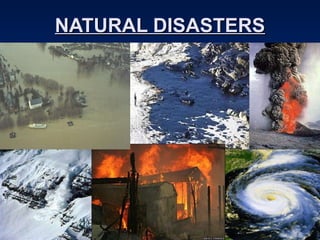
NATURAL DISASTERS
Effects of disaster 1.Destruction of natural resources life and property 2.Environmental degradation 3.Ecosystem disruption
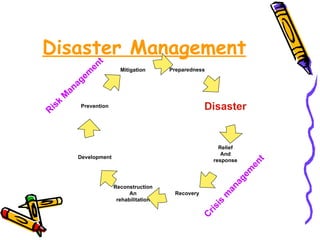
Disaster Management Risk Management Crisis management Preparedness Prevention Mitigation Disaster Relief And response Recovery Reconstruction An rehabilitation Development
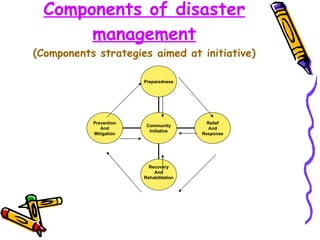
Components of disaster management (Components strategies aimed at initiative) Preparedness Relief And Response Recovery And Rehabilitation Prevention And Mitigation Community Initiative
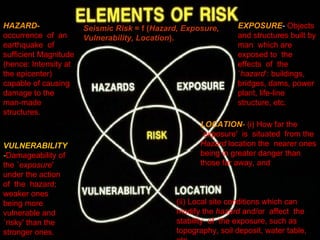
HAZARD-   occurrence  of  an  earthquake  of  sufficient Magnitude (hence: Intensity at the epicenter) capable of causing damage to the man-made structures.  Seismic Risk  = f ( Hazard, Exposure, Vulnerability, Location ). EXPOSURE -   Objects and structures built by man  which are exposed to  the  effects  of  the  ` hazard ‘: buildings, bridges, dams, power plant, life-line structure, etc. VULNERABILITY - Damageability of the ` exposure ' under the action of  the  hazard;  weaker ones being more vulnerable and `risky' than the stronger ones. LOCATION -   (i) How far the `exposure'  is  situated  from the  Hazard  location the  nearer ones being in greater danger than those far away, and (ii) Local site conditions which can modify the  hazard  and/or  affect  the stability  of  the exposure, such as topography, soil deposit, water table, etc.
 
Mechanism  of Changing Climatic Pattern  Leading to Disaster  It is believed that the  additional warming  will change the distribution of heat and thus the flow of energy through the climate system. This will, in turn, alter the circulation patterns of the atmosphere and the oceans, and it will also modify the  hydrological cycle  by which water is circulated between the Earth’s surface and the atmosphere. As a result,the position of many of the world’s major storm tracks could shift significantly. Secondly, it is expected that a warmer climate would affect the physical processes that generate different types of extreme weather events. A virtually certain outcome of a rise in global temperature is a widespread increase in the amount of water that is moved through the hydrological cycle. Consequently, more moisture will be available in the atmosphere to fall as rain or snow.  General circulation models  indicate that a warmer
atmosphere will increase the amount of moisture transported into the  middle and high latitudes of the Northern Hemisphere .  These models also suggest that the additional precipitation will likely occur in heavier falls rather than in more snow or rain The main concerns about increased flooding result from the fact that a warmer atmosphere can hold more moisture, and precipitation is expected to increase as a result. As well, the precipitation is expected to become more intense over smaller areas , which suggests greater flooding problems especially in smaller catchment areas. Conversely, regarding droughts, the concern is that with an increase in heavier rainfall events, the number of dry days between events may increase and drought will become more severe.

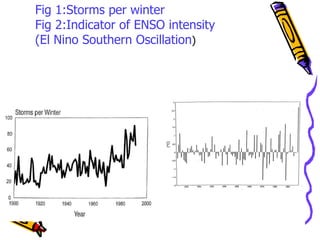
Fig 1:Storms per winter Fig 2:Indicator of ENSO intensity (El Nino Southern Oscillation )
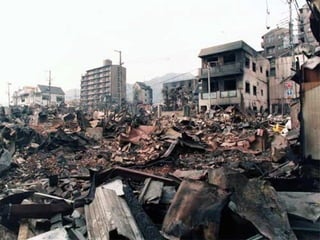
Earthquake Energetic condition of our planet Sudden onset hazard Typical effect 1.Panic 2.Physical damage 3.Public health 4.Civic services and conveyances 5.Disruption of economic activities 6.Fire
 
Hazard assessment Systematic evaluation of various mitigation strategies Development of coordinated and integrated approach Desirability and applicability of such strategies Inventory of mitigation measure Magnitude assessment of earthquakes Main mitigation strategies Public awareness and education Restoration of various lifelines Building by laws and codes
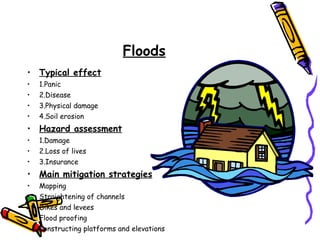
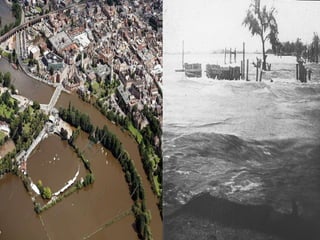
Floods Typical effect 1.Panic 2.Disease 3.Physical damage 4.Soil erosion Hazard assessment 1.Damage 2.Loss of lives 3.Insurance Main mitigation strategies Mapping Straightening of channels Dikes and levees Flood proofing Constructing platforms and elevations
 
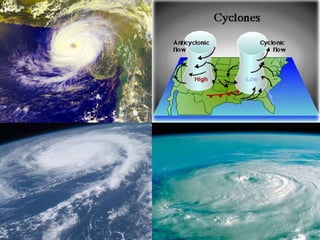
Cyclones Cyclone is an atmospheric condition generally called storms  An environmental hazard Typical effects 1.Shipping hazards 2.Life and property 3.Physical damage 4.Public health 5.essential services 6.Transport and communication 7.Crops Main mitigation strategies Cyclone proof structures Plant shelter belts Other strategies
 
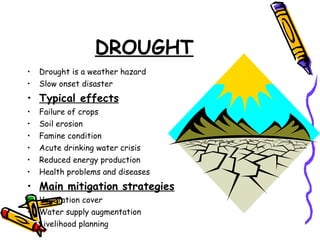
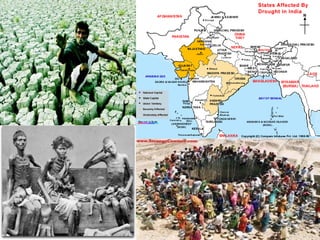
DROUGHT Drought is a weather hazard Slow onset disaster Typical effects Failure of crops Soil erosion Famine condition Acute drinking water crisis Reduced energy production Health problems and diseases Main mitigation strategies Vegetation cover Water supply augmentation Livelihood planning
 
MAN-MADE DISASTER FIRE CHEMICAL AND INDUSTRIAL ACCIDENTS EPIDEMICS NUCLEAR HAZARDS POPULATION BOMB TRAFFIC ACCIDENTS
FIRE Main mitigation strategies Evacuation Protective clothing Basic knowledge Safety precaution
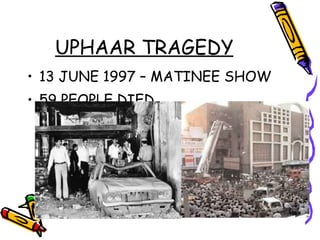
UPHAAR TRAGEDY 13 JUNE 1997 – MATINEE SHOW 59 PEOPLE DIED
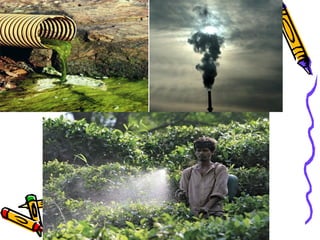
CHEMICAL AND INDUSTRIAL ACCIDENTS   Typical effects   Disabilities Environmental degradation Damage to building Main mitigation strategies Legal liability framework Inventory and mapping Land use planning Community preparedness Relocation of industries
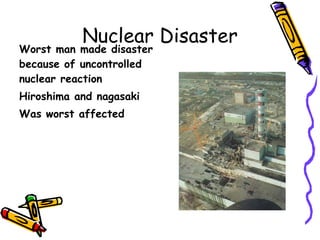
Nuclear Disaster Worst man made disaster because of uncontrolled nuclear reaction  Hiroshima and nagasaki Was worst affected
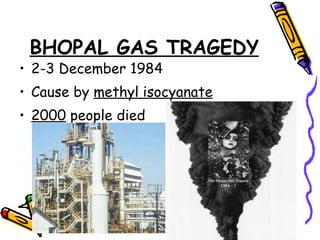
BHOPAL GAS TRAGEDY 2-3 December 1984 Cause by  methyl isocyanate 2000  people died
 
EPIDEMICS Main mitigation strategies Safe use principles Coordination between health personnel , civic officials , administrative units an hospital staffs  Control system Personnel protection training
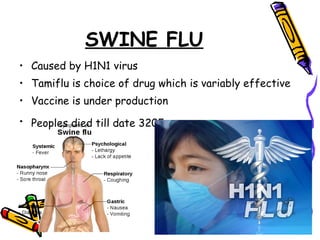
SWINE FLU Caused by H1N1 virus Tamiflu is choice of drug which is variably effective Vaccine is under production Peoples died till date 3205
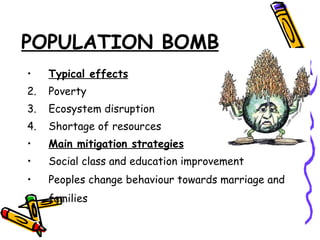
POPULATION BOMB Typical effects Poverty Ecosystem disruption Shortage of resources Main mitigation strategies Social class and education improvement Peoples change behaviour towards marriage and families
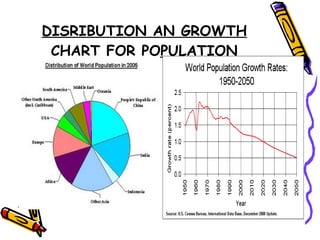
DISRIBUTION AN GROWTH CHART FOR POPULATION
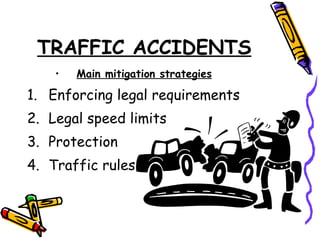
TRAFFIC ACCIDENTS Main mitigation strategies Enforcing legal requirements Legal speed limits Protection Traffic rules
Pre Disaster Preventive Measures Long-term measures •  Re-framing buildings' codes, guidelines, manuals and byelaws and their strict implementation. Tougher legislation for highly seismic areas. •  Incorporating earthquake resistant features in all buildings at high-risk areas. •  Making all public utilities like water supply systems, communication networks , electricity lines etc. earthquake-proof. Creating alternative arrangements to reduce damages to infrastructure facilities. •  Constructing earthquake-resistant community buildings and buildings (used to gather large groups during or after an earthquake) like schools, dharamshalas , hospitals, prayer halls, etc., especially in seismic zones of moderate to higher intensities. . • Evolving educational curricula in architecture and engineering institutions and technical training in polytechnics and schools to include disaster related topics. Medium term measures •  Retrofitting of weak structures in highly seismic zones. •  Preparation of disaster related literature in local languages with dos and don'ts for construction. •  Getting communities involved in the process of disaster mitigation through education and awareness. •  Networking of local NGOs working in the area of disaster management .
POST-DISASTER PREVENTIVE MEASURES •  Maintenance of law and order, prevention of trespassing, looting etc. •  Evacuation of people. •  Recovery of dead bodies and their disposal. •  Medical care for the injured. •  Supply of food and drinking water. •  Temporary shelters like tents, metal sheds etc. •  Repairing lines of communication and information. •  Restoring transport routes. •  Quick assessment of destruction and demarcation of destroyed areas, according to the grade of damage. •  Cordoning off severely damaged structures that are liable to collapse during aftershocks. * The following efforts will be useful for preparedness : •  Train communities  in high-risk areas in post-disaster search, rescue and relief. •  Practice an extensive programme of  mass drills  in high-risk areas for earthquake damage reduction. •  Train  local NGOs  and strengthen their capacity and capabilities. •  Inculcate basic know-how amongst  school kids  on earthquake  dos and donts  along with safety drills. •  Train field personnel in the science  and art of carrying out post disaster damage surveys, for (a) urgent relief purposes and (b) for repair, reconstruction and retrofitting
THANK YOU

Disaster Recent

  • 1.
  • 2.
    DISASTER MANAGEMENTPresented by : Uttam Kumar (304/08) Pankaj Kumar (305/08) Rupasha Rani (306/08) Sujeet Kumar (308/08) Rahul Kumar (309/08) Mukesh Kumar (310/08) Ranjeet Rana (311/08) Pradeep Kumar (312/08) Raman Kumar (313/08)
  • 3.
    DISASTER Disaster isa hazard causing heavy loss of life , property and livelihood. Features of disaster 1.Unpredictability 2.Unfamiliarity 3.Speed 4.Urgency 5.Uncertainity 6.Threat
  • 4.
    Types of disasterNatural disaster 1.Earthquake 2.Flood 3.Cyclone 4.Drought Manmade disaster 1.Nuclear hazards 2.Traffic accidents 3.Biological and chemical warfare 4.Environmental pollution
  • 5.
  • 6.
    Effects of disaster1.Destruction of natural resources life and property 2.Environmental degradation 3.Ecosystem disruption
  • 7.
    Disaster Management RiskManagement Crisis management Preparedness Prevention Mitigation Disaster Relief And response Recovery Reconstruction An rehabilitation Development
  • 8.
    Components of disastermanagement (Components strategies aimed at initiative) Preparedness Relief And Response Recovery And Rehabilitation Prevention And Mitigation Community Initiative
  • 9.
    HAZARD- occurrence of an earthquake of sufficient Magnitude (hence: Intensity at the epicenter) capable of causing damage to the man-made structures.  Seismic Risk = f ( Hazard, Exposure, Vulnerability, Location ). EXPOSURE - Objects and structures built by man which are exposed to the effects of the ` hazard ‘: buildings, bridges, dams, power plant, life-line structure, etc. VULNERABILITY - Damageability of the ` exposure ' under the action of the hazard; weaker ones being more vulnerable and `risky' than the stronger ones. LOCATION - (i) How far the `exposure' is situated from the Hazard location the nearer ones being in greater danger than those far away, and (ii) Local site conditions which can modify the hazard and/or affect the stability of the exposure, such as topography, soil deposit, water table, etc.
  • 10.
  • 11.
    Mechanism ofChanging Climatic Pattern Leading to Disaster It is believed that the additional warming will change the distribution of heat and thus the flow of energy through the climate system. This will, in turn, alter the circulation patterns of the atmosphere and the oceans, and it will also modify the hydrological cycle by which water is circulated between the Earth’s surface and the atmosphere. As a result,the position of many of the world’s major storm tracks could shift significantly. Secondly, it is expected that a warmer climate would affect the physical processes that generate different types of extreme weather events. A virtually certain outcome of a rise in global temperature is a widespread increase in the amount of water that is moved through the hydrological cycle. Consequently, more moisture will be available in the atmosphere to fall as rain or snow. General circulation models indicate that a warmer
  • 12.
    atmosphere will increasethe amount of moisture transported into the middle and high latitudes of the Northern Hemisphere . These models also suggest that the additional precipitation will likely occur in heavier falls rather than in more snow or rain The main concerns about increased flooding result from the fact that a warmer atmosphere can hold more moisture, and precipitation is expected to increase as a result. As well, the precipitation is expected to become more intense over smaller areas , which suggests greater flooding problems especially in smaller catchment areas. Conversely, regarding droughts, the concern is that with an increase in heavier rainfall events, the number of dry days between events may increase and drought will become more severe.
  • 13.
    Fig 1:Storms perwinter Fig 2:Indicator of ENSO intensity (El Nino Southern Oscillation )
  • 14.
    Earthquake Energetic conditionof our planet Sudden onset hazard Typical effect 1.Panic 2.Physical damage 3.Public health 4.Civic services and conveyances 5.Disruption of economic activities 6.Fire
  • 15.
  • 16.
    Hazard assessment Systematicevaluation of various mitigation strategies Development of coordinated and integrated approach Desirability and applicability of such strategies Inventory of mitigation measure Magnitude assessment of earthquakes Main mitigation strategies Public awareness and education Restoration of various lifelines Building by laws and codes
  • 17.
    Floods Typical effect1.Panic 2.Disease 3.Physical damage 4.Soil erosion Hazard assessment 1.Damage 2.Loss of lives 3.Insurance Main mitigation strategies Mapping Straightening of channels Dikes and levees Flood proofing Constructing platforms and elevations
  • 18.
  • 19.
    Cyclones Cyclone isan atmospheric condition generally called storms An environmental hazard Typical effects 1.Shipping hazards 2.Life and property 3.Physical damage 4.Public health 5.essential services 6.Transport and communication 7.Crops Main mitigation strategies Cyclone proof structures Plant shelter belts Other strategies
  • 20.
  • 21.
    DROUGHT Drought isa weather hazard Slow onset disaster Typical effects Failure of crops Soil erosion Famine condition Acute drinking water crisis Reduced energy production Health problems and diseases Main mitigation strategies Vegetation cover Water supply augmentation Livelihood planning
  • 22.
  • 23.
    MAN-MADE DISASTER FIRECHEMICAL AND INDUSTRIAL ACCIDENTS EPIDEMICS NUCLEAR HAZARDS POPULATION BOMB TRAFFIC ACCIDENTS
  • 24.
    FIRE Main mitigationstrategies Evacuation Protective clothing Basic knowledge Safety precaution
  • 25.
    UPHAAR TRAGEDY 13JUNE 1997 – MATINEE SHOW 59 PEOPLE DIED
  • 26.
    CHEMICAL AND INDUSTRIALACCIDENTS Typical effects Disabilities Environmental degradation Damage to building Main mitigation strategies Legal liability framework Inventory and mapping Land use planning Community preparedness Relocation of industries
  • 27.
    Nuclear Disaster Worstman made disaster because of uncontrolled nuclear reaction Hiroshima and nagasaki Was worst affected
  • 28.
    BHOPAL GAS TRAGEDY2-3 December 1984 Cause by methyl isocyanate 2000 people died
  • 29.
  • 30.
    EPIDEMICS Main mitigationstrategies Safe use principles Coordination between health personnel , civic officials , administrative units an hospital staffs Control system Personnel protection training
  • 31.
    SWINE FLU Causedby H1N1 virus Tamiflu is choice of drug which is variably effective Vaccine is under production Peoples died till date 3205
  • 32.
    POPULATION BOMB Typicaleffects Poverty Ecosystem disruption Shortage of resources Main mitigation strategies Social class and education improvement Peoples change behaviour towards marriage and families
  • 33.
    DISRIBUTION AN GROWTHCHART FOR POPULATION
  • 34.
    TRAFFIC ACCIDENTS Mainmitigation strategies Enforcing legal requirements Legal speed limits Protection Traffic rules
  • 35.
    Pre Disaster PreventiveMeasures Long-term measures • Re-framing buildings' codes, guidelines, manuals and byelaws and their strict implementation. Tougher legislation for highly seismic areas. • Incorporating earthquake resistant features in all buildings at high-risk areas. • Making all public utilities like water supply systems, communication networks , electricity lines etc. earthquake-proof. Creating alternative arrangements to reduce damages to infrastructure facilities. • Constructing earthquake-resistant community buildings and buildings (used to gather large groups during or after an earthquake) like schools, dharamshalas , hospitals, prayer halls, etc., especially in seismic zones of moderate to higher intensities. . • Evolving educational curricula in architecture and engineering institutions and technical training in polytechnics and schools to include disaster related topics. Medium term measures • Retrofitting of weak structures in highly seismic zones. • Preparation of disaster related literature in local languages with dos and don'ts for construction. • Getting communities involved in the process of disaster mitigation through education and awareness. • Networking of local NGOs working in the area of disaster management .
  • 36.
    POST-DISASTER PREVENTIVE MEASURES• Maintenance of law and order, prevention of trespassing, looting etc. • Evacuation of people. • Recovery of dead bodies and their disposal. • Medical care for the injured. • Supply of food and drinking water. • Temporary shelters like tents, metal sheds etc. • Repairing lines of communication and information. • Restoring transport routes. • Quick assessment of destruction and demarcation of destroyed areas, according to the grade of damage. • Cordoning off severely damaged structures that are liable to collapse during aftershocks. * The following efforts will be useful for preparedness : • Train communities in high-risk areas in post-disaster search, rescue and relief. • Practice an extensive programme of mass drills in high-risk areas for earthquake damage reduction. • Train local NGOs and strengthen their capacity and capabilities. • Inculcate basic know-how amongst school kids on earthquake dos and donts along with safety drills. • Train field personnel in the science and art of carrying out post disaster damage surveys, for (a) urgent relief purposes and (b) for repair, reconstruction and retrofitting
  • 37.