DYS:
It is a Greek Prefix.
Meaning: ‘Difficult,Disordered’.
Used specially in medical term as;
Abnormal: dysplasia.
Impaired: dysesthesia.
Difficult: dysphonia.
Bad: dyspepsia.
Disabilities is an umbrella term, covering
impairments, activity limitations, and participation
restrictions.
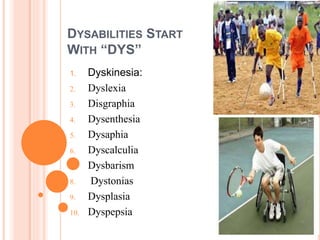
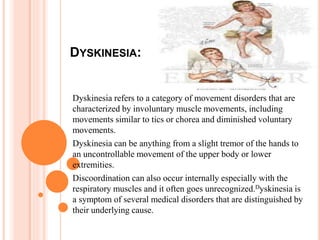
DYSABILITIES START
WITH “DYS”
1. Dyskinesia:
2. Dyslexia
3. Disgraphia
4. Dysenthesia
5. Dysaphia
6. Dyscalculia
7. Dysbarism
8. Dystonias
9. Dysplasia
10. Dyspepsia
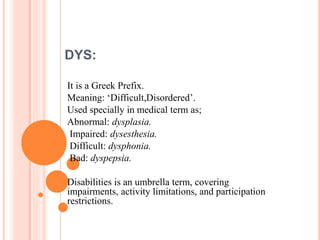
DYSKINESIA:
Dyskinesia refers to a category of movement disorders that are
characterized by involuntary muscle movements, including
movements similar to tics or chorea and diminished voluntary
movements.
Dyskinesia can be anything from a slight tremor of the hands to
an uncontrollable movement of the upper body or lower
extremities.
Discoordination can also occur internally especially with the
respiratory muscles and it often goes unrecognized.Dyskinesia is
a symptom of several medical disorders that are distinguished by
their underlying cause.
DYSMYELINATION:
Dysmyelination is the loss of the myelin sheath insulating the
nerves.
Symptoms:
 blurriness in the central visual field that affects only one
eye, may be accompanied by pain upon eye movement
 double vision
 loss of vision/hearing
 odd sensation in legs, arms, chest, or face, such as tingling
or numbness (neuropathy)
 weakness of arms or legs
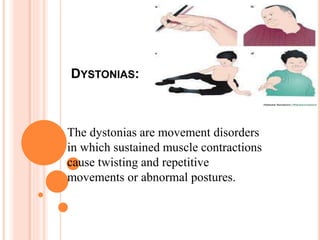
DYSTONIAS:
The dystonias are movement disorders
in which sustained muscle contractions
cause twisting and repetitive
movements or abnormal postures.
SYMPTOMS:
The movements, which are involuntary and
sometimes painful, may affect a single muscle;
a group of muscles such as those in the arms,
legs, or neck; or the entire body.
Early symptoms may include deterioration in
handwriting, foot cramps, or a dragging foot
after running or walking some distance.
Other possible symptoms are tremor and voice
or speech difficulties.
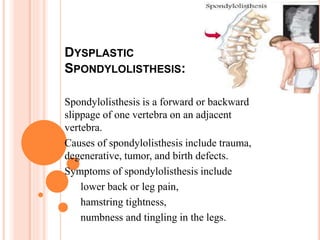
DYSPLASTIC
SPONDYLOLISTHESIS:
Spondylolisthesis is a forward or backward
slippage of one vertebra on an adjacent
vertebra.
Causes of spondylolisthesis include trauma,
degenerative, tumor, and birth defects.
Symptoms of spondylolisthesis include
lower back or leg pain,
hamstring tightness,
numbness and tingling in the legs.
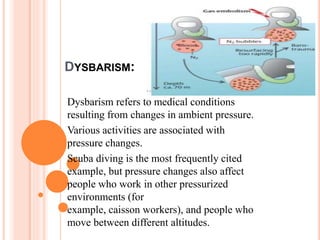
DYSBARISM:
Dysbarism refers to medical conditions
resulting from changes in ambient pressure.
Various activities are associated with
pressure changes.
Scuba diving is the most frequently cited
example, but pressure changes also affect
people who work in other pressurized
environments (for
example, caisson workers), and people who
move between different altitudes.
SYMSTOMPS:
DYSOSTOSIS :
A dysostosis is a defective
formation of bone.
Also called dysosteogenesis.
DYSLEXIA:
Dyslexia, also known as reading
disorder, is characterized by trouble
with reading despite
normal intelligence.
SIGNS AND SYMPTOMS:
In early childhood, symptoms that
correlate with a later diagnosis of
dyslexia include delayed onset of
speech, difficulty distinguishing left
from right, difficulty with direction, as
well as being easily distracted by
background noise
DYSSYNERGIA CEREBELLARIS
MYOCLONICA:
Dyssynergia Cerebellaris Myoclonica refers to a
collection of rare, degenerative, neurological
disorders characterized by epilepsy, cognitive
impairment, myoclonus, and progressive ataxia.
Symptoms:
Include seizures, tremor, and reduced muscle
coordination. Onset of the disorder generally
occurs in early adulthood. Tremor may begin in
one extremity and later spread to involve the entire
voluntary muscular system. Arms are usually more
affected than legs.
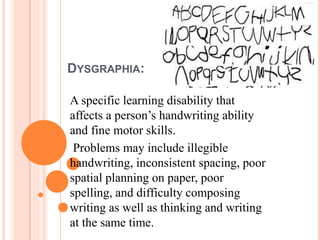
DYSGRAPHIA:
A specific learning disability that
affects a person’s handwriting ability
and fine motor skills.
Problems may include illegible
handwriting, inconsistent spacing, poor
spatial planning on paper, poor
spelling, and difficulty composing
writing as well as thinking and writing
at the same time.
DYSCALCULIA:
It is difficulty in learning or
comprehending arithmetic, such as
difficulty in understanding numbers,
learning how to manipulate numbers,
and learning facts in mathematics.
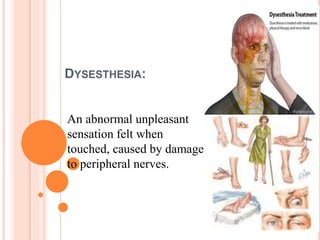
DYSESTHESIA:
An abnormal unpleasant
sensation felt when
touched, caused by damage
to peripheral nerves.
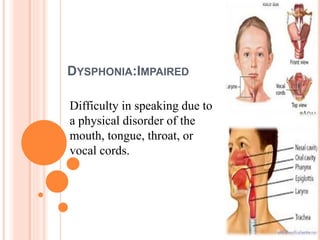
DYSPHONIA:IMPAIRED
Difficulty in speaking due to
a physical disorder of the
mouth, tongue, throat, or
vocal cords.
DYSPEPSIA:BAD
It is a condition of impaired digestion.
Also called Indigestion.
DYSPLASIA:
The enlargement of an organ or tissue
by the proliferation of cells of an
abnormal type, as a developmental
disorder or an early stage in the
development of cancer.
About half the cases of dystonia have no connection to disease or
injury and are called primary or idiopathic dystonia. Of the primary
dystonias, many cases appear to be inherited. Dystonias can also be
symptoms of other diseases, some of which may be hereditary.
Dystonia can occur at any age, but is often described as either early, or
childhood, onset versus adult onset.

Disabilities starts with Dys

  • 1.
    DYS: It is aGreek Prefix. Meaning: ‘Difficult,Disordered’. Used specially in medical term as; Abnormal: dysplasia. Impaired: dysesthesia. Difficult: dysphonia. Bad: dyspepsia. Disabilities is an umbrella term, covering impairments, activity limitations, and participation restrictions.
  • 2.
    DYSABILITIES START WITH “DYS” 1.Dyskinesia: 2. Dyslexia 3. Disgraphia 4. Dysenthesia 5. Dysaphia 6. Dyscalculia 7. Dysbarism 8. Dystonias 9. Dysplasia 10. Dyspepsia
  • 3.
    DYSKINESIA: Dyskinesia refers toa category of movement disorders that are characterized by involuntary muscle movements, including movements similar to tics or chorea and diminished voluntary movements. Dyskinesia can be anything from a slight tremor of the hands to an uncontrollable movement of the upper body or lower extremities. Discoordination can also occur internally especially with the respiratory muscles and it often goes unrecognized.Dyskinesia is a symptom of several medical disorders that are distinguished by their underlying cause.
  • 4.
    DYSMYELINATION: Dysmyelination is theloss of the myelin sheath insulating the nerves. Symptoms:  blurriness in the central visual field that affects only one eye, may be accompanied by pain upon eye movement  double vision  loss of vision/hearing  odd sensation in legs, arms, chest, or face, such as tingling or numbness (neuropathy)  weakness of arms or legs
  • 5.
    DYSTONIAS: The dystonias aremovement disorders in which sustained muscle contractions cause twisting and repetitive movements or abnormal postures.
  • 6.
    SYMPTOMS: The movements, whichare involuntary and sometimes painful, may affect a single muscle; a group of muscles such as those in the arms, legs, or neck; or the entire body. Early symptoms may include deterioration in handwriting, foot cramps, or a dragging foot after running or walking some distance. Other possible symptoms are tremor and voice or speech difficulties.
  • 7.
    DYSPLASTIC SPONDYLOLISTHESIS: Spondylolisthesis is aforward or backward slippage of one vertebra on an adjacent vertebra. Causes of spondylolisthesis include trauma, degenerative, tumor, and birth defects. Symptoms of spondylolisthesis include lower back or leg pain, hamstring tightness, numbness and tingling in the legs.
  • 8.
    DYSBARISM: Dysbarism refers tomedical conditions resulting from changes in ambient pressure. Various activities are associated with pressure changes. Scuba diving is the most frequently cited example, but pressure changes also affect people who work in other pressurized environments (for example, caisson workers), and people who move between different altitudes.
  • 9.
  • 10.
    DYSOSTOSIS : A dysostosisis a defective formation of bone. Also called dysosteogenesis.
  • 11.
    DYSLEXIA: Dyslexia, also knownas reading disorder, is characterized by trouble with reading despite normal intelligence.
  • 12.
    SIGNS AND SYMPTOMS: Inearly childhood, symptoms that correlate with a later diagnosis of dyslexia include delayed onset of speech, difficulty distinguishing left from right, difficulty with direction, as well as being easily distracted by background noise
  • 13.
    DYSSYNERGIA CEREBELLARIS MYOCLONICA: Dyssynergia CerebellarisMyoclonica refers to a collection of rare, degenerative, neurological disorders characterized by epilepsy, cognitive impairment, myoclonus, and progressive ataxia. Symptoms: Include seizures, tremor, and reduced muscle coordination. Onset of the disorder generally occurs in early adulthood. Tremor may begin in one extremity and later spread to involve the entire voluntary muscular system. Arms are usually more affected than legs.
  • 14.
    DYSGRAPHIA: A specific learningdisability that affects a person’s handwriting ability and fine motor skills. Problems may include illegible handwriting, inconsistent spacing, poor spatial planning on paper, poor spelling, and difficulty composing writing as well as thinking and writing at the same time.
  • 15.
    DYSCALCULIA: It is difficultyin learning or comprehending arithmetic, such as difficulty in understanding numbers, learning how to manipulate numbers, and learning facts in mathematics.
  • 16.
    DYSESTHESIA: An abnormal unpleasant sensationfelt when touched, caused by damage to peripheral nerves.
  • 17.
    DYSPHONIA:IMPAIRED Difficulty in speakingdue to a physical disorder of the mouth, tongue, throat, or vocal cords.
  • 19.
    DYSPEPSIA:BAD It is acondition of impaired digestion. Also called Indigestion.
  • 20.
    DYSPLASIA: The enlargement ofan organ or tissue by the proliferation of cells of an abnormal type, as a developmental disorder or an early stage in the development of cancer.
  • 21.
    About half thecases of dystonia have no connection to disease or injury and are called primary or idiopathic dystonia. Of the primary dystonias, many cases appear to be inherited. Dystonias can also be symptoms of other diseases, some of which may be hereditary. Dystonia can occur at any age, but is often described as either early, or childhood, onset versus adult onset.