Evaluation and
Diagnosis of Wrist
Pain: A Case-Based
Approach
Done By: Dr. Nabila Al-Balushi
Family Medicine
OMSB R14-23
Case1
• A 31-year-old woman presents with several months of
worsening radial left wrist pain that started insidiously.
She denies any specific trauma. She has no numbness
or tingling in the wrist, hand, or fingers. Her pain
worsens with gripping and grasping, and with picking
up her nine-month-old daughter. Physical examination
reveals no discoloration and minimal soft tissue
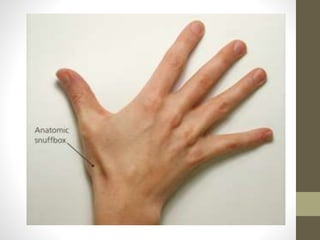
swelling along the radial styloid and anatomic snuffbox.
There is soft tissue tenderness about the anatomic
snuffbox and radial styloid. She has limited motion of
the thumb, with pain mostly in extension and
abduction. Her sensory and vascular examinations are
unremarkable.
Scaphoid Fracture
Presentation
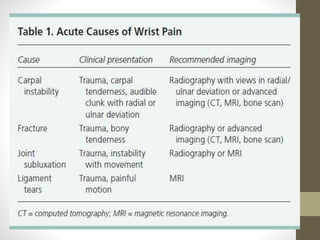
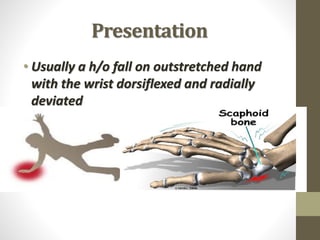
• Usually a h/o fall on outstretched hand
with the wrist dorsiflexed and radially
deviated
Presentation
• O/E:
a swollen wrist. Tenderness is usually located dorsally
around the distal radius
 may have painful wrist extension
loss of grip strength
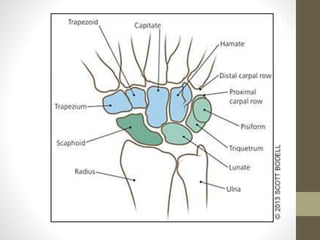
Swelling of the anatomic snuffbox + scaphoid tubercle
tenderness + pain with axial pressure on the first metacarpal
bone >>> approximately 100 percent sensitivity for scaphoid
fracture
DIAGNOSTIC TESTS
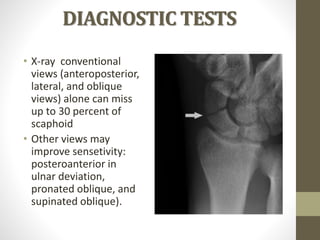
• X-ray conventional
views (anteroposterior,
lateral, and oblique
views) alone can miss
up to 30 percent of
scaphoid
• Other views may
improve sensetivity:
posteroanterior in
ulnar deviation,
pronated oblique, and
supinated oblique).
DIAGNOSTIC TESTS
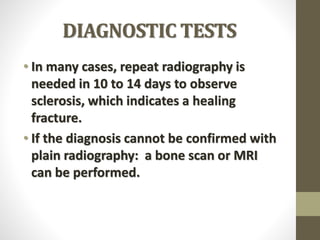
• In many cases, repeat radiography is
needed in 10 to 14 days to observe
sclerosis, which indicates a healing
fracture.
• If the diagnosis cannot be confirmed with
plain radiography: a bone scan or MRI
can be performed.
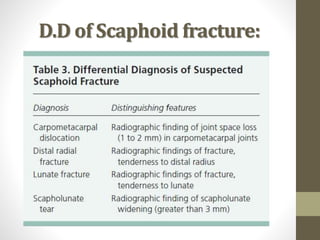
D.D of Scaphoid fracture:
Case2
• A 39-year-old right-handed woman presents with a four-week
history of wrist pain and numbness and tingling in her right
hand. There is no history of trauma or injury to the neck,
elbow, or wrist. She works mostly at a desk job but has not
had any changes in her work schedule. Physical examination of
the wrist reveals no soft tissue swelling, muscle atrophy, or
skin changes. She has painful wrist extension, as well as
reproduction of the tingling in her fifth finger with tapping
over the pisiform. Grip strength is normal and no other bony
tenderness is appreciated.
Ulnar Neuropathy
Presentation:
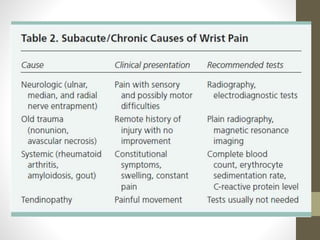
Wrist discomfort with sensory changes in the fourth and
fifth digits.
Grip weakness in chronic cases.
Usually no specific injury
Activities that involve repetitive or prolonged wrist
extension, such as cycling, karate, and baseball
(specifically catchers) may increase the risk of ulnar
neuropathy.
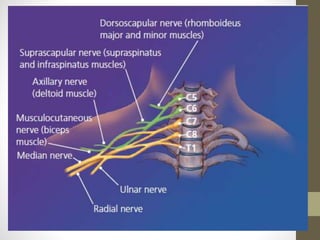
Physical Examination:
Pain reproduced on
moving this part
Likely site of lesion
in ulnar nerve
Neck cervical disk
Shoulder brachial plexus
compression of the
nerve at the ulnar
groove
elbow
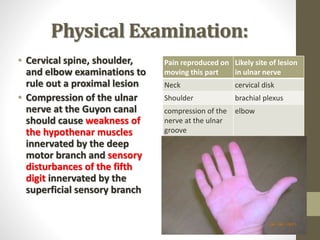
• Cervical spine, shoulder,
and elbow examinations to
rule out a proximal lesion
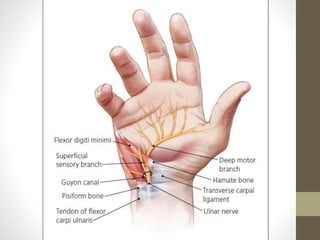
• Compression of the ulnar
nerve at the Guyon canal
should cause weakness of
the hypothenar muscles
innervated by the deep
motor branch and sensory
disturbances of the fifth
digit innervated by the
superficial sensory branch
Physical Examination:
Ulnar Neuropathy
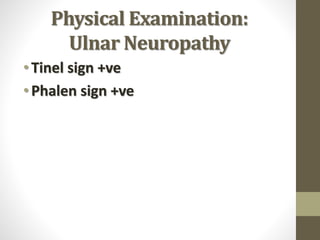
•Tinel sign +ve
•Phalen sign +ve
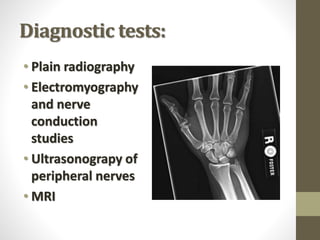
Diagnostic tests:
• Plain radiography
• Electromyography
and nerve
conduction
studies
• Ultrasonograpy of
peripheral nerves
• MRI
Case3
• A 31-year-old woman presents with several months of
worsening radial left wrist pain that started insidiously. She
denies any specific trauma. She has no numbness or tingling
in the wrist, hand, or fingers. Her pain worsens with gripping
and grasping, and with picking up her nine-month-old
daughter. Physical examination reveals no discoloration and
minimal soft tissue swelling along the radial styloid and
anatomic snuffbox. There is soft tissue tenderness about the
anatomic snuffbox and radial styloid. She has limited motion
of the thumb, with pain mostly in extension and abduction.
Her sensory and vascular examinations are unremarkable.
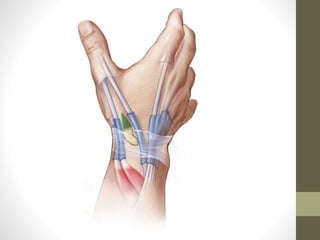
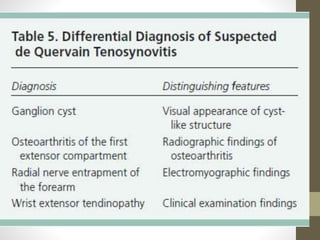
De Quervain
Tenosynovitis
Presentation
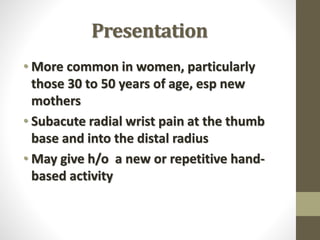
• More common in women, particularly
those 30 to 50 years of age, esp new
mothers
• Subacute radial wrist pain at the thumb
base and into the distal radius
• May give h/o a new or repetitive hand-
based activity
Physical Examination:
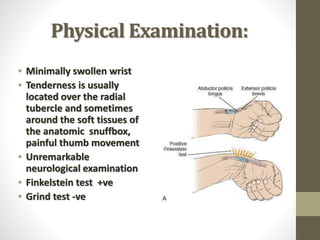
• Minimally swollen wrist
• Tenderness is usually
located over the radial
tubercle and sometimes
around the soft tissues of
the anatomic snuffbox,
painful thumb movement
• Unremarkable
neurological examination
• Finkelstein test +ve
• Grind test -ve
Diagnostic tests
•Dx is clinical
•Tests can be used to r/o other
causes
Management
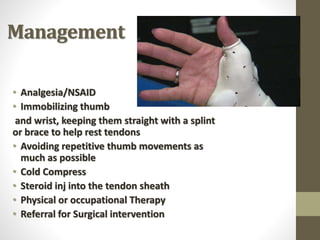
• Analgesia/NSAID
• Immobilizing thumb
and wrist, keeping them straight with a splint
or brace to help rest tendons
• Avoiding repetitive thumb movements as
much as possible
• Cold Compress
• Steroid inj into the tendon sheath
• Physical or occupational Therapy
• Referral for Surgical intervention
References
Evaluation and Diagnosis of Wrist Pain: A Case-
Based Approach - American Family Physician, Apr
15, 2013
Wrist pain

Wrist pain

  • 1.
    Evaluation and Diagnosis ofWrist Pain: A Case-Based Approach Done By: Dr. Nabila Al-Balushi Family Medicine OMSB R14-23
  • 6.
    Case1 • A 31-year-oldwoman presents with several months of worsening radial left wrist pain that started insidiously. She denies any specific trauma. She has no numbness or tingling in the wrist, hand, or fingers. Her pain worsens with gripping and grasping, and with picking up her nine-month-old daughter. Physical examination reveals no discoloration and minimal soft tissue swelling along the radial styloid and anatomic snuffbox. There is soft tissue tenderness about the anatomic snuffbox and radial styloid. She has limited motion of the thumb, with pain mostly in extension and abduction. Her sensory and vascular examinations are unremarkable.
  • 7.
  • 8.
    Presentation • Usually ah/o fall on outstretched hand with the wrist dorsiflexed and radially deviated
  • 9.
    Presentation • O/E: a swollenwrist. Tenderness is usually located dorsally around the distal radius  may have painful wrist extension loss of grip strength Swelling of the anatomic snuffbox + scaphoid tubercle tenderness + pain with axial pressure on the first metacarpal bone >>> approximately 100 percent sensitivity for scaphoid fracture
  • 10.
    DIAGNOSTIC TESTS • X-rayconventional views (anteroposterior, lateral, and oblique views) alone can miss up to 30 percent of scaphoid • Other views may improve sensetivity: posteroanterior in ulnar deviation, pronated oblique, and supinated oblique).
  • 11.
    DIAGNOSTIC TESTS • Inmany cases, repeat radiography is needed in 10 to 14 days to observe sclerosis, which indicates a healing fracture. • If the diagnosis cannot be confirmed with plain radiography: a bone scan or MRI can be performed.
  • 12.
    D.D of Scaphoidfracture:
  • 13.
    Case2 • A 39-year-oldright-handed woman presents with a four-week history of wrist pain and numbness and tingling in her right hand. There is no history of trauma or injury to the neck, elbow, or wrist. She works mostly at a desk job but has not had any changes in her work schedule. Physical examination of the wrist reveals no soft tissue swelling, muscle atrophy, or skin changes. She has painful wrist extension, as well as reproduction of the tingling in her fifth finger with tapping over the pisiform. Grip strength is normal and no other bony tenderness is appreciated.
  • 14.
  • 17.
    Presentation: Wrist discomfort withsensory changes in the fourth and fifth digits. Grip weakness in chronic cases. Usually no specific injury Activities that involve repetitive or prolonged wrist extension, such as cycling, karate, and baseball (specifically catchers) may increase the risk of ulnar neuropathy.
  • 18.
    Physical Examination: Pain reproducedon moving this part Likely site of lesion in ulnar nerve Neck cervical disk Shoulder brachial plexus compression of the nerve at the ulnar groove elbow • Cervical spine, shoulder, and elbow examinations to rule out a proximal lesion • Compression of the ulnar nerve at the Guyon canal should cause weakness of the hypothenar muscles innervated by the deep motor branch and sensory disturbances of the fifth digit innervated by the superficial sensory branch
  • 19.
  • 21.
    Diagnostic tests: • Plainradiography • Electromyography and nerve conduction studies • Ultrasonograpy of peripheral nerves • MRI
  • 22.
    Case3 • A 31-year-oldwoman presents with several months of worsening radial left wrist pain that started insidiously. She denies any specific trauma. She has no numbness or tingling in the wrist, hand, or fingers. Her pain worsens with gripping and grasping, and with picking up her nine-month-old daughter. Physical examination reveals no discoloration and minimal soft tissue swelling along the radial styloid and anatomic snuffbox. There is soft tissue tenderness about the anatomic snuffbox and radial styloid. She has limited motion of the thumb, with pain mostly in extension and abduction. Her sensory and vascular examinations are unremarkable.
  • 23.
  • 25.
    Presentation • More commonin women, particularly those 30 to 50 years of age, esp new mothers • Subacute radial wrist pain at the thumb base and into the distal radius • May give h/o a new or repetitive hand- based activity
  • 26.
    Physical Examination: • Minimallyswollen wrist • Tenderness is usually located over the radial tubercle and sometimes around the soft tissues of the anatomic snuffbox, painful thumb movement • Unremarkable neurological examination • Finkelstein test +ve • Grind test -ve
  • 27.
    Diagnostic tests •Dx isclinical •Tests can be used to r/o other causes
  • 28.
    Management • Analgesia/NSAID • Immobilizingthumb and wrist, keeping them straight with a splint or brace to help rest tendons • Avoiding repetitive thumb movements as much as possible • Cold Compress • Steroid inj into the tendon sheath • Physical or occupational Therapy • Referral for Surgical intervention
  • 30.
    References Evaluation and Diagnosisof Wrist Pain: A Case- Based Approach - American Family Physician, Apr 15, 2013