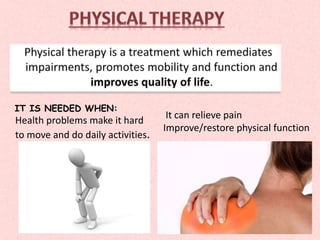
IT IS NEEDED WHEN:
Health problems make it hard
to move and do daily activities.
It can relieve pain
Improve/restore physical function
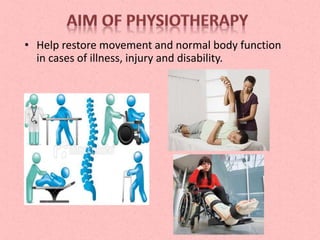
• Help restore movement and normal body function
in cases of illness, injury and disability.
ILLNESS is a disease or period of sickness
It may be :
infectious autoimmune
viral, bacterial etc. Abnormal immune response
e.g. influenza, Typhoid e.g. rheumatoid arthritis
INJURY
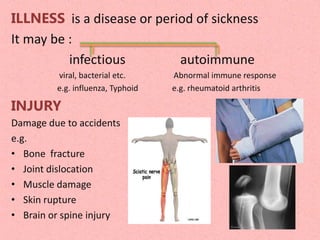
Damage due to accidents
e.g.
• Bone fracture
• Joint dislocation
• Muscle damage
• Skin rupture
• Brain or spine injury
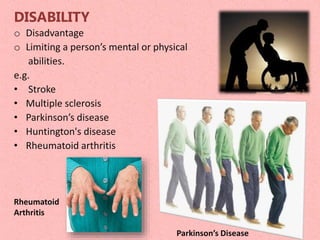
DISABILITY
o Disadvantage
o Limiting a person’s mental or physical
abilities.
e.g.
• Stroke
• Multiple sclerosis
• Parkinson’s disease
• Huntington's disease
• Rheumatoid arthritis
Parkinson’s Disease
Rheumatoid
Arthritis
A Physiotherapist is a health care professional who treats
problem related to movement and function.
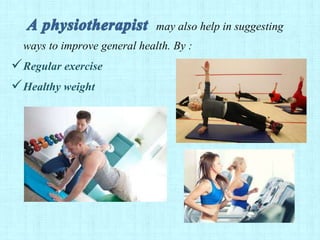
may also help in suggesting
ways to improve general health. By :
Regular exercise
Healthy weight
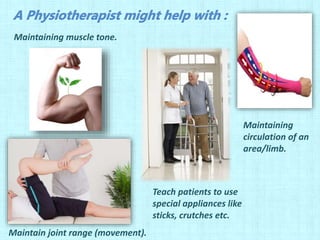
Maintaining muscle tone.
Maintaining
circulation of an
area/limb.
Maintain joint range (movement).
Teach patients to use
special appliances like
sticks, crutches etc.
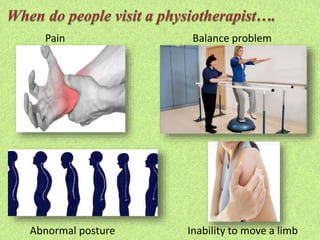
Pain
Inability to move a limbAbnormal posture
Balance problem
 Synonyms :
• Range
• reach
• freedom
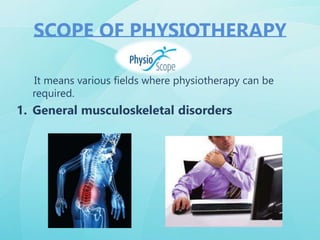
SCOPE OF PHYSIOTHERAPY
It means various fields where physiotherapy can be
required.
1. General musculoskeletal disorders
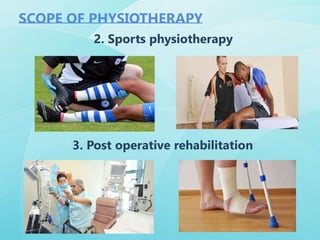
3. Post operative rehabilitation
2. Sports physiotherapy
SCOPE OF PHYSIOTHERAPY
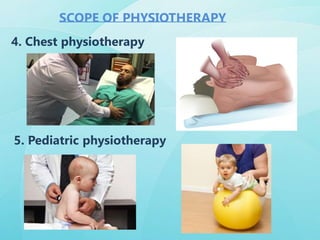
5. Pediatric physiotherapy
SCOPE OF PHYSIOTHERAPY
4. Chest physiotherapy
Who Needs Physiotherapy ?
Physical therapy can be required in many places.
It might be helpful to patients who have :
1. Cardiovascular disease ( e.g. stroke )
2. Pulmonary disease (e.g. COPD, emphysema, pneumonia)
3. Posture problems ( e.g. flat neck, scoliosis )
4. Degenerative diseases ( e.g. Alzheimer's disease )
5. Bone and joint problems (e.g. Osteoporosis, arthritis )
6. Spinal cord disorders /injuries ( e.g. disc slip, sciatica )
Scope and aims of physiotherapy

Scope and aims of physiotherapy

  • 3.
    IT IS NEEDEDWHEN: Health problems make it hard to move and do daily activities. It can relieve pain Improve/restore physical function
  • 4.
    • Help restoremovement and normal body function in cases of illness, injury and disability.
  • 5.
    ILLNESS is adisease or period of sickness It may be : infectious autoimmune viral, bacterial etc. Abnormal immune response e.g. influenza, Typhoid e.g. rheumatoid arthritis INJURY Damage due to accidents e.g. • Bone fracture • Joint dislocation • Muscle damage • Skin rupture • Brain or spine injury
  • 6.
    DISABILITY o Disadvantage o Limitinga person’s mental or physical abilities. e.g. • Stroke • Multiple sclerosis • Parkinson’s disease • Huntington's disease • Rheumatoid arthritis Parkinson’s Disease Rheumatoid Arthritis
  • 7.
    A Physiotherapist isa health care professional who treats problem related to movement and function.
  • 8.
    may also helpin suggesting ways to improve general health. By : Regular exercise Healthy weight
  • 9.
    Maintaining muscle tone. Maintaining circulationof an area/limb. Maintain joint range (movement). Teach patients to use special appliances like sticks, crutches etc.
  • 10.
    Pain Inability to movea limbAbnormal posture Balance problem
  • 11.
     Synonyms : •Range • reach • freedom
  • 12.
    SCOPE OF PHYSIOTHERAPY Itmeans various fields where physiotherapy can be required. 1. General musculoskeletal disorders
  • 13.
    3. Post operativerehabilitation 2. Sports physiotherapy SCOPE OF PHYSIOTHERAPY
  • 14.
    5. Pediatric physiotherapy SCOPEOF PHYSIOTHERAPY 4. Chest physiotherapy
  • 15.
    Who Needs Physiotherapy? Physical therapy can be required in many places. It might be helpful to patients who have : 1. Cardiovascular disease ( e.g. stroke ) 2. Pulmonary disease (e.g. COPD, emphysema, pneumonia) 3. Posture problems ( e.g. flat neck, scoliosis ) 4. Degenerative diseases ( e.g. Alzheimer's disease ) 5. Bone and joint problems (e.g. Osteoporosis, arthritis ) 6. Spinal cord disorders /injuries ( e.g. disc slip, sciatica )