Downloaded 389 times


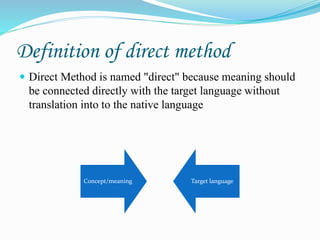
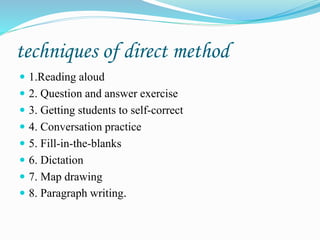
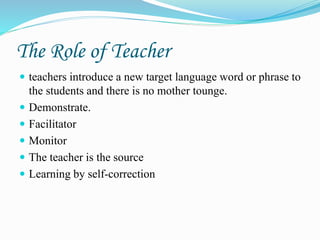
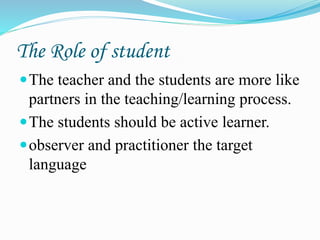
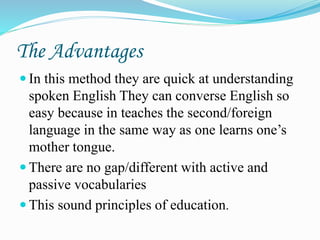


The document discusses the direct method approach to teaching foreign languages. It originated in the late 19th century in response to a need to develop oral proficiency in foreign languages. Key principles of the direct method include conducting classroom instruction solely in the target language without translation, teaching everyday vocabulary through pictures and objects, inductive grammar instruction, and encouraging students to think in the target language. Speaking is taught before reading or writing, and translation is banned. Techniques include reading aloud, question-and-answer exercises, conversation practice, and dictation. The teacher's role is to demonstrate and facilitate without using the native language. The advantages include quick understanding of spoken language and easy conversation skills, while the disadvantages include difficulty learning without relying on


