Direct Method
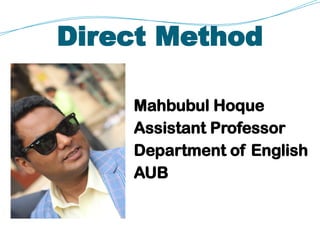
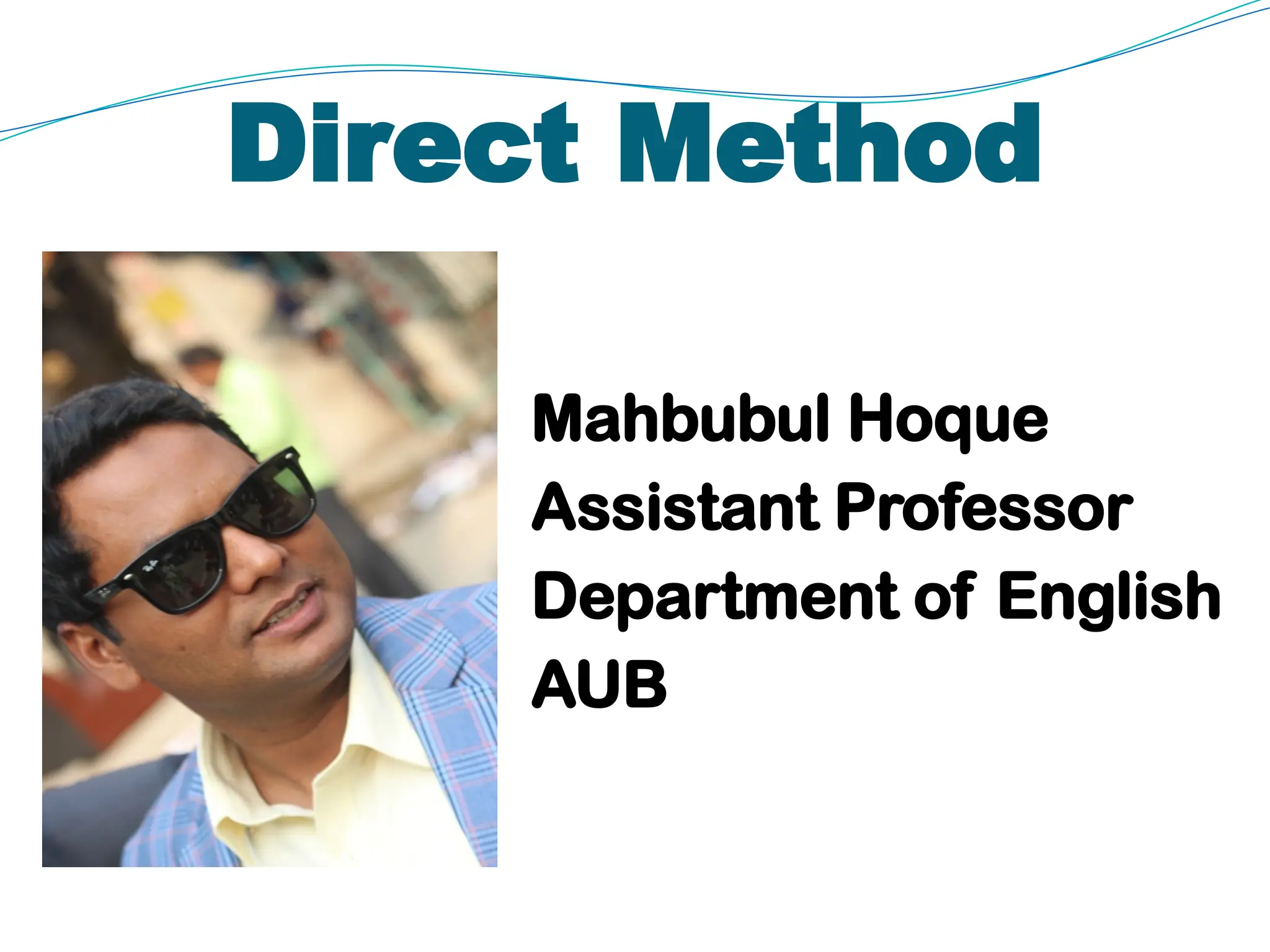
Mahbubul Hoque
Assistant Professor
Department of English
AUB
Background of Direct Method
 In the mid and late 19 century, Europe
experience a wave of increasing opportunities
of communication , due to industrialization
and international trade and travel.
 A need was felt to develop oral proficiency
in foreign language. Language teachers
had already found Grammar-translation
method inadequate and ineffective in
developing communicative ability in
learners. It is the method that later on
came to be known as the direct method. It
is also known as Berlitz method.
Aims of DM
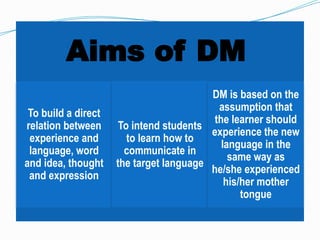
To build a direct
relation between
experience and
language, word
and idea, thought
and expression
To intend students
to learn how to
communicate in
the target language
DM is based on the
assumption that
the learner should
experience the new
language in the
same way as
he/she experienced
his/her mother
tongue
Direct Method?
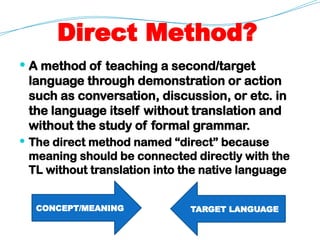
 A method of teaching a second/target
language through demonstration or action
such as conversation, discussion, or etc. in
the language itself without translation and
without the study of formal grammar.
 The direct method named “direct” because
meaning should be connected directly with the
TL without translation into the native language
CONCEPT/MEANING TARGET LANGUAGE
Principles of Direct Method
1. Classroom instruction is conducted in the target
language ( no translate , demonstrate )
2. Only everyday vocabulary
3. Vocabulary is taught through pictures and objects.
4. Grammar is taught inductively
5. Students are encouraged to think in the target
language
6. Speaking is taught first before reading or writing
7. Translation is completely banished from any
classroom activity. Classroom activities are carried
out only in the target language
Techniques of Direct Method
1. Reading aloud
2. Question and answer exercise
3. Getting students to self-correct
4. Conversation practice
5. Fill-in-the-blanks
6. Dictation
7. Map drawing
8. Paragraph writing.
The Role of Teacher
 Teachers introduce a new target language word or
phrase to the students and there is no mother
language.
 Demonstrate.
 Facilitator
 Monitor
 The teacher is the source
 Learning by self-correction
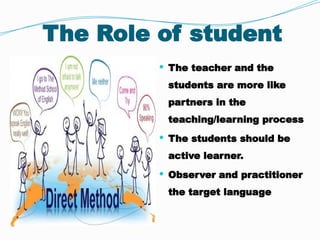
The Role of student
 The teacher and the
students are more like
partners in the
teaching/learning process
 The students should be
active learner.
 Observer and practitioner
the target language
The Advantages
 In this method they are quick at understanding
spoken English. They can converse English so easy
because in teaches the second/foreign language
in the same way as one learners one’s mother
tongue.
 There are no gap/different with active and
passive vocabularies
 This sound principles of education.
The Disadvantages
 To be that second language should be
learned without pay attention first
language.
 Difficult in language learning process.
 Compare learning of second language
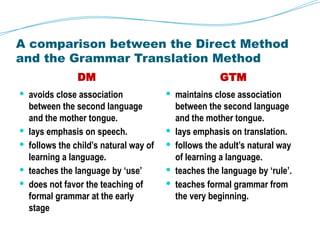
A comparison between the Direct Method
and the Grammar Translation Method
DM GTM
 avoids close association
between the second language
and the mother tongue.
 lays emphasis on speech.
 follows the child’s natural way of
learning a language.
 teaches the language by ‘use’
 does not favor the teaching of
formal grammar at the early
stage
 maintains close association
between the second language
and the mother tongue.
 lays emphasis on translation.
 follows the adult’s natural way
of learning a language.
 teaches the language by ‘rule’.
 teaches formal grammar from
the very beginning.
Thank You

Direct method Teaching Approach & Method

  • 1.
    Direct Method Mahbubul Hoque AssistantProfessor Department of English AUB
  • 2.
    Background of DirectMethod  In the mid and late 19 century, Europe experience a wave of increasing opportunities of communication , due to industrialization and international trade and travel.  A need was felt to develop oral proficiency in foreign language. Language teachers had already found Grammar-translation method inadequate and ineffective in developing communicative ability in learners. It is the method that later on came to be known as the direct method. It is also known as Berlitz method.
  • 3.
    Aims of DM Tobuild a direct relation between experience and language, word and idea, thought and expression To intend students to learn how to communicate in the target language DM is based on the assumption that the learner should experience the new language in the same way as he/she experienced his/her mother tongue
  • 4.
    Direct Method?  Amethod of teaching a second/target language through demonstration or action such as conversation, discussion, or etc. in the language itself without translation and without the study of formal grammar.  The direct method named “direct” because meaning should be connected directly with the TL without translation into the native language CONCEPT/MEANING TARGET LANGUAGE
  • 5.
    Principles of DirectMethod 1. Classroom instruction is conducted in the target language ( no translate , demonstrate ) 2. Only everyday vocabulary 3. Vocabulary is taught through pictures and objects. 4. Grammar is taught inductively 5. Students are encouraged to think in the target language 6. Speaking is taught first before reading or writing 7. Translation is completely banished from any classroom activity. Classroom activities are carried out only in the target language
  • 6.
    Techniques of DirectMethod 1. Reading aloud 2. Question and answer exercise 3. Getting students to self-correct 4. Conversation practice 5. Fill-in-the-blanks 6. Dictation 7. Map drawing 8. Paragraph writing.
  • 7.
    The Role ofTeacher  Teachers introduce a new target language word or phrase to the students and there is no mother language.  Demonstrate.  Facilitator  Monitor  The teacher is the source  Learning by self-correction
  • 8.
    The Role ofstudent  The teacher and the students are more like partners in the teaching/learning process  The students should be active learner.  Observer and practitioner the target language
  • 9.
    The Advantages  Inthis method they are quick at understanding spoken English. They can converse English so easy because in teaches the second/foreign language in the same way as one learners one’s mother tongue.  There are no gap/different with active and passive vocabularies  This sound principles of education.
  • 10.
    The Disadvantages  Tobe that second language should be learned without pay attention first language.  Difficult in language learning process.  Compare learning of second language
  • 11.
    A comparison betweenthe Direct Method and the Grammar Translation Method DM GTM  avoids close association between the second language and the mother tongue.  lays emphasis on speech.  follows the child’s natural way of learning a language.  teaches the language by ‘use’  does not favor the teaching of formal grammar at the early stage  maintains close association between the second language and the mother tongue.  lays emphasis on translation.  follows the adult’s natural way of learning a language.  teaches the language by ‘rule’.  teaches formal grammar from the very beginning.
  • 12.