In Cardiomyopathy–Dilated Cardiomyopathy may be the
most common form. The blood flow is stagnant or slow
in an area in the chambers of dilated heart. This is also
called “stasis". This adds to the development of a blood
clot also known as thrombus. If this "thrombus" is
pumped out of the heart because of dislodging, it may
cause a stroke or similar ischemic conditions. In dilated
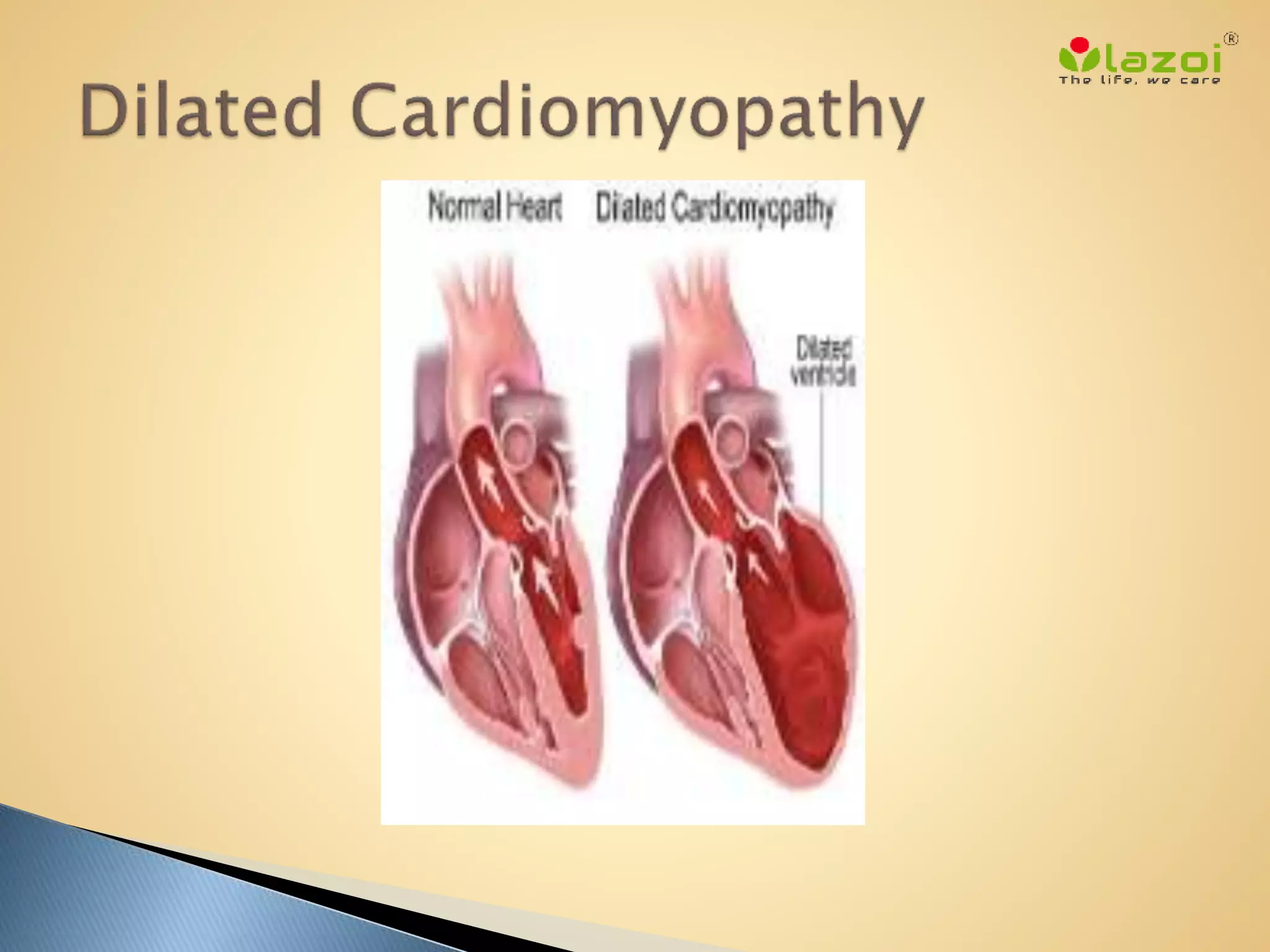
cardiomyopathy, the cavity becomes dilated which
means enlarged and its ability to pump blood reduces
significantly. Many patients with prolonged dilated
Cardiomyopathy may have high risk of heart failure.
Abnormal heart rhythm disorder may also develop with
prolonged dilated Cardiomyopathy condition.
Myocardium structural or functional abnormalities
lead to Cardiomyopathies. Even though some cases
are because of idiopathic causes. However in some
cases of infectious diseases, cancer chemotherapy,
toxins, alcoholism, diseases related to connective
tissues or nutritional deficiencies may be the
causes for this disease. Dilated cardiomyopathy
also known as DCM, is a condition where heart’s
function to pump the blood reduces.
Continue:
 Dilated Cardiomyopathy
 Hypertrophic Cardiomyopathy
 Restrictive Cardiomyopathy
 Sometimes Dilated congestive patients may or may
not have any symptoms. Even if the symptoms
prevail, they might not be major. In some cases
some patients develop symptoms which only get
worse by time and damage the heart.
Dilated cardiomyopathy can be related to family
history or genes.
Any Severe coronary artery disease
Excessive Alcoholism
Any Thyroid disease history
Blood Sugar Levels - Diabetes
Viral infections in heart
Abnormalities of Heart valve
Drugs usage – cocaine, meth, ecstasy etc. that are
toxic.
Dilated cardiomyopathy is diagnosed based on
your family history, study of your genetics etc.. It
also requires a physical exam electrocardiogram
also called ‘ECG’, blood tests, chest X-Ray, Echo
cardiogram, stress test while exercising etc. In rare
cases a test called ‘myocardial biopsy’ is done to
diagnose this condition. In this test a sample from
the tissue is collected and analyzed under
microscope to find the cause this condition.
Sometimes study of genes or genetic studies also
help identifying the cause of the symptom.
Dilated congestive may develop at any age and
may show the following symptoms:
 Symptoms related to Heart Failure -
breathlessness, fatigue.
 Swelling in the lower extremities.
 Fatigue – feeling tired or exhausted.
 Sudden weight gain.
 Fainting – it is acondition of falling unconscious –
it could happen at rest or while doing aphysical
activity.
 Palpitations – whichis abnormal heart rhythm or
heart beats
 Lightheadedness or dizziness
In the dilated leftventricle, blood clots can form. If
these blood clots burst, it may lodge inthe artery
and disrupt the blood flow to the brain. This can
cause a heart orbrain stroke, sometimes may prove
to be very fatal.
Experiencing chest pain or pressure is very
common.
Sudden death – could follow after a prolonged
untreated condition.
Continue:
Treatment of Dilated Cardiomyopathy:
 To stimulate the heart for normal functioning and
restoration – digitalis may be used.
 Diuretics could help facilitate and promote excreting
the water and bringing the blood pressure down.
 Bed rest – Could be recommended by doctors for some
patients and sometimes for an extended period of time.
 The intensity and extent of myocardial damage will
decide the prognosis. Deaths in this condition of dilated
Cardiomyopathy result from the failure of left ventricles
and usually happen within 5 years of being diagnosed
of this condition.
Hypertrophic Cardiomyopathy happens when the
thickening of the inter- ventricular septum
happens. Mostly it is genetically related disorder.
Though the heart may seem to be normal in size
but the thickening of inter- ventricular septum
reduces the functioning capacity of ventricles.
Related Disease:Cardiac Arrest
 Breathing difficulty
 Pain in chest
Continue:
Logon to
www.lazoi.com
Like us on Facebook
https://www.facebook.com/LazoiTheLife
Follow us on Twitter
https://www.twitter.com/lazoithelife
Follow us on Pinterest
https://www.in.pinterest.com/lazoithelife

Dilated cardiomyopathy

  • 2.
    In Cardiomyopathy–Dilated Cardiomyopathymay be the most common form. The blood flow is stagnant or slow in an area in the chambers of dilated heart. This is also called “stasis". This adds to the development of a blood clot also known as thrombus. If this "thrombus" is pumped out of the heart because of dislodging, it may cause a stroke or similar ischemic conditions. In dilated cardiomyopathy, the cavity becomes dilated which means enlarged and its ability to pump blood reduces significantly. Many patients with prolonged dilated Cardiomyopathy may have high risk of heart failure. Abnormal heart rhythm disorder may also develop with prolonged dilated Cardiomyopathy condition.
  • 3.
    Myocardium structural orfunctional abnormalities lead to Cardiomyopathies. Even though some cases are because of idiopathic causes. However in some cases of infectious diseases, cancer chemotherapy, toxins, alcoholism, diseases related to connective tissues or nutritional deficiencies may be the causes for this disease. Dilated cardiomyopathy also known as DCM, is a condition where heart’s function to pump the blood reduces. Continue:
  • 4.
     Dilated Cardiomyopathy Hypertrophic Cardiomyopathy  Restrictive Cardiomyopathy  Sometimes Dilated congestive patients may or may not have any symptoms. Even if the symptoms prevail, they might not be major. In some cases some patients develop symptoms which only get worse by time and damage the heart.
  • 5.
    Dilated cardiomyopathy canbe related to family history or genes. Any Severe coronary artery disease Excessive Alcoholism Any Thyroid disease history Blood Sugar Levels - Diabetes Viral infections in heart Abnormalities of Heart valve Drugs usage – cocaine, meth, ecstasy etc. that are toxic.
  • 6.
    Dilated cardiomyopathy isdiagnosed based on your family history, study of your genetics etc.. It also requires a physical exam electrocardiogram also called ‘ECG’, blood tests, chest X-Ray, Echo cardiogram, stress test while exercising etc. In rare cases a test called ‘myocardial biopsy’ is done to diagnose this condition. In this test a sample from the tissue is collected and analyzed under microscope to find the cause this condition. Sometimes study of genes or genetic studies also help identifying the cause of the symptom.
  • 7.
    Dilated congestive maydevelop at any age and may show the following symptoms:  Symptoms related to Heart Failure - breathlessness, fatigue.  Swelling in the lower extremities.  Fatigue – feeling tired or exhausted.  Sudden weight gain.  Fainting – it is acondition of falling unconscious – it could happen at rest or while doing aphysical activity.  Palpitations – whichis abnormal heart rhythm or heart beats  Lightheadedness or dizziness
  • 8.
    In the dilatedleftventricle, blood clots can form. If these blood clots burst, it may lodge inthe artery and disrupt the blood flow to the brain. This can cause a heart orbrain stroke, sometimes may prove to be very fatal. Experiencing chest pain or pressure is very common. Sudden death – could follow after a prolonged untreated condition. Continue:
  • 9.
    Treatment of DilatedCardiomyopathy:  To stimulate the heart for normal functioning and restoration – digitalis may be used.  Diuretics could help facilitate and promote excreting the water and bringing the blood pressure down.  Bed rest – Could be recommended by doctors for some patients and sometimes for an extended period of time.  The intensity and extent of myocardial damage will decide the prognosis. Deaths in this condition of dilated Cardiomyopathy result from the failure of left ventricles and usually happen within 5 years of being diagnosed of this condition.
  • 10.
    Hypertrophic Cardiomyopathy happenswhen the thickening of the inter- ventricular septum happens. Mostly it is genetically related disorder. Though the heart may seem to be normal in size but the thickening of inter- ventricular septum reduces the functioning capacity of ventricles. Related Disease:Cardiac Arrest  Breathing difficulty  Pain in chest Continue:
  • 11.
    Logon to www.lazoi.com Like uson Facebook https://www.facebook.com/LazoiTheLife Follow us on Twitter https://www.twitter.com/lazoithelife Follow us on Pinterest https://www.in.pinterest.com/lazoithelife