Dilated cardiomyopathy
Dr. Avinash D. Arke
MD FNB
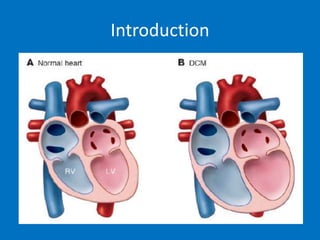
Introduction
• Definition:
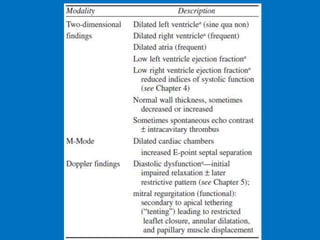
– Dilated left ventricle with systolic dysfunction
– not caused by Ischaemic or valvular heart disease
– Cardiac dilatation with systolic dysfunction
Learning objectives
• Epidemiology
• Etiology
• Pathology
• Genetics
• Clinical features
• Natural history
• Diagnosis
• Management
IDIOPATHIC DILATED CARDIOMYPATHY
EPIDEMIOLOGY
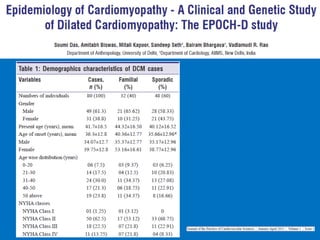
• ANNUAL INCIDENCE 5-8/100,000
• PREVELANCE 36/ 100,000
• INCREASED RISK ASSOCIATED WITH:
– MALE GENDER
– BLACK RACE
– HYPERTENSION
– CHRONIC BETA-AGONIST USE
Causes
Causes
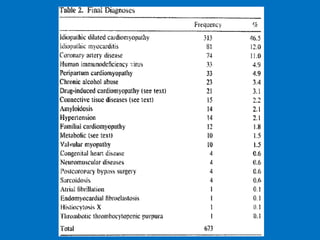
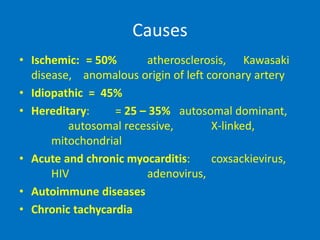
• Ischemic: = 50% atherosclerosis, Kawasaki
disease, anomalous origin of left coronary artery
• Idiopathic = 45%
• Hereditary: = 25 – 35% autosomal dominant,
autosomal recessive, X-linked,
mitochondrial
• Acute and chronic myocarditis: coxsackievirus,
HIV adenovirus,
• Autoimmune diseases
• Chronic tachycardia
• Drugs: alcohol, sympathomimetics, anthracyclines
• End-stage hypertrophic cardiomyopathy
• Endocrine: growth hormone deficiency, hyperthyroidism,
hypothyroidism, hypocalcemia,
diabetes mellitus, pheochromocytoma
• Inborn errors of metabolism
• Muscular dystrophies
• Nutritional deficiency: selenium, carnitine, thiamine
• Peripartum
• Structural heart disease
• Systemic hypertension
• Toxins: cobalt, lead
Pathology
• Cardiac dilatation
– ? Adaptive – due to increased loading conditions
– Idiopathic DCM – maladaptive..
• Myocellular hypertrophy and cell death
– Cardiac hypertrophy – adaptive response
increase in collagen content
preserves myocardial performance
– Cumulative loss of myofibrils and cardiac
myocytes
apoptosis, cellular necrosis
decrease in the wall thickness
• Extracellular matrix remodeling
– Cardiac fibroblast proliferate
– Mechanically stable cross linked collagen is
degraded by metalloproteinases
– Excess of poorly cross-linked collagen is deposited
into interstitium
– Increase myocardial mass, intersitial fibrosis,
ventricular dilatation
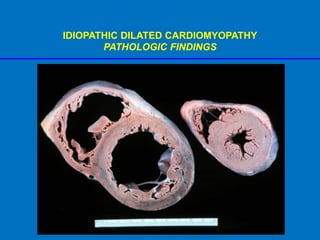
IDIOPATHIC DILATED CARDIOMYOPATHY
PATHOLOGIC FINDINGS
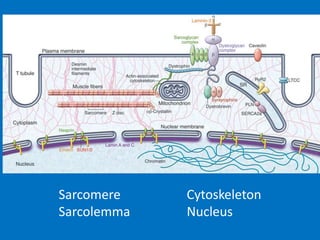
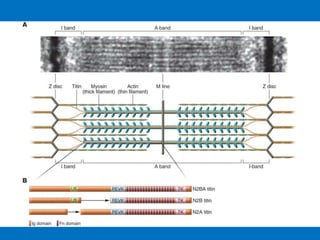
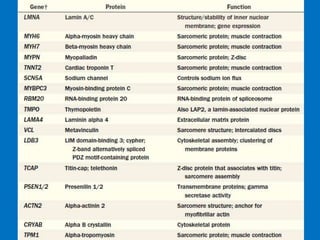
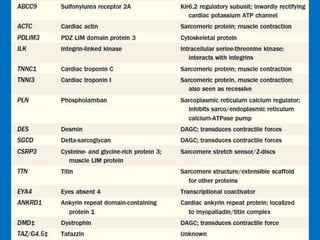
GENETICS
Sarcomere Cytoskeleton
Sarcolemma Nucleus
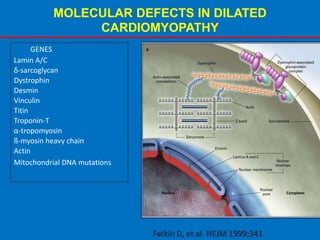
MOLECULAR DEFECTS IN DILATED
CARDIOMYOPATHY
Fatkin D, et al. NEJM 1999;341
GENES
Lamin A/C
δ-sarcoglycan
Dystrophin
Desmin
Vinculin
Titin
Troponin-T
α-tropomyosin
ß-myosin heavy chain
Actin
Mitochondrial DNA mutations
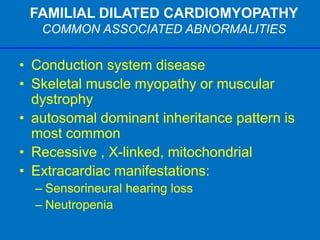
FAMILIAL DILATED CARDIOMYOPATHY
COMMON ASSOCIATED ABNORMALITIES
• Conduction system disease
• Skeletal muscle myopathy or muscular
dystrophy
• autosomal dominant inheritance pattern is
most common
• Recessive , X-linked, mitochondrial
• Extracardiac manifestations:
– Sensorineural hearing loss
– Neutropenia
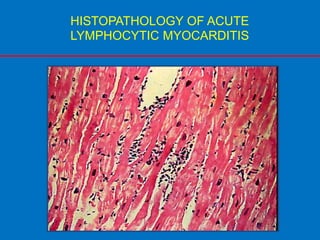
HISTOPATHOLOGY OF ACUTE
LYMPHOCYTIC MYOCARDITIS
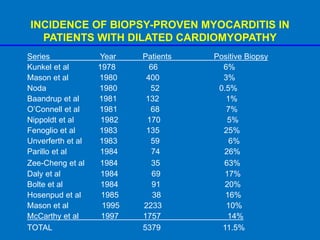
INCIDENCE OF BIOPSY-PROVEN MYOCARDITIS IN
PATIENTS WITH DILATED CARDIOMYOPATHY
Series Year Patients Positive Biopsy
Kunkel et al 1978 66 6%
Mason et al 1980 400 3%
Noda 1980 52 0.5%
Baandrup et al 1981 132 1%
O’Connell et al 1981 68 7%
Nippoldt et al 1982 170 5%
Fenoglio et al 1983 135 25%
Unverferth et al 1983 59 6%
Parillo et al 1984 74 26%
Zee-Cheng et al 1984 35 63%
Daly et al 1984 69 17%
Bolte et al 1984 91 20%
Hosenpud et al 1985 38 16%
Mason et al 1995 2233 10%
McCarthy et al 1997 1757 14%
TOTAL 5379 11.5%
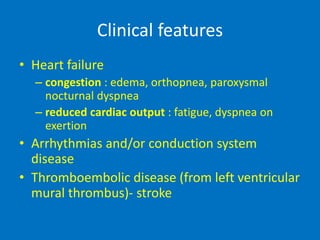
Clinical features
• Heart failure
– congestion : edema, orthopnea, paroxysmal
nocturnal dyspnea
– reduced cardiac output : fatigue, dyspnea on
exertion
• Arrhythmias and/or conduction system
disease
• Thromboembolic disease (from left ventricular
mural thrombus)- stroke
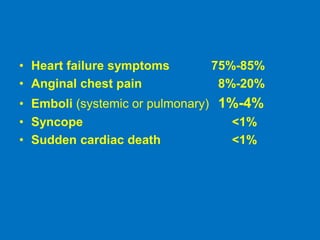
• Heart failure symptoms 75%-85%
• Anginal chest pain 8%-20%
• Emboli (systemic or pulmonary) 1%-4%
• Syncope <1%
• Sudden cardiac death <1%
Diagnosis
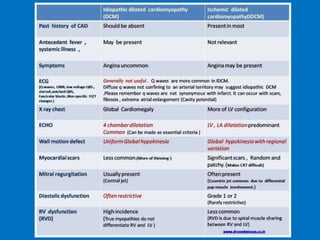
• ECG
• CXR
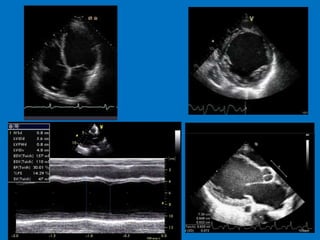
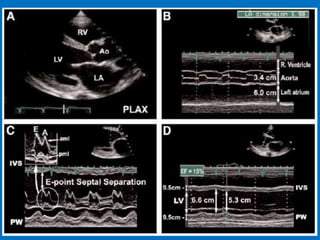
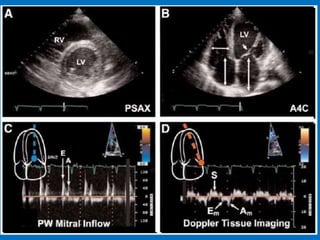
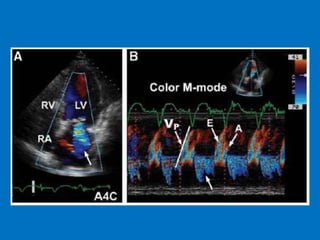
• 2 D - Echo
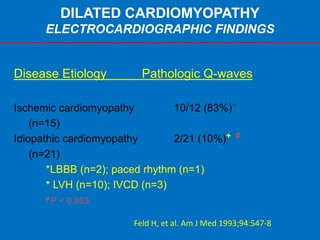
DILATED CARDIOMYOPATHY
ELECTROCARDIOGRAPHIC FINDINGS
Disease Etiology Pathologic Q-waves
Ischemic cardiomyopathy 10/12 (83%)*
(n=15)
Idiopathic cardiomyopathy 2/21 (10%)+ #
(n=21)
*LBBB (n=2); paced rhythm (n=1)
+ LVH (n=10); IVCD (n=3)
# P < 0.003
Feld H, et al. Am J Med 1993;94:547-8
SEGMENTAL WALL MOTION ABNORMALITIES
IN DILATED CARDIOMYOPATHY
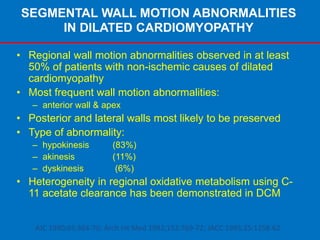
• Regional wall motion abnormalities observed in at least
50% of patients with non-ischemic causes of dilated
cardiomyopathy
• Most frequent wall motion abnormalities:
– anterior wall & apex
• Posterior and lateral walls most likely to be preserved
• Type of abnormality:
– hypokinesis (83%)
– akinesis (11%)
– dyskinesis (6%)
• Heterogeneity in regional oxidative metabolism using C-
11 acetate clearance has been demonstrated in DCM
AJC 1990;65:364-70; Arch Int Med 1992;152:769-72; JACC 1995;25:1258-62
MRI
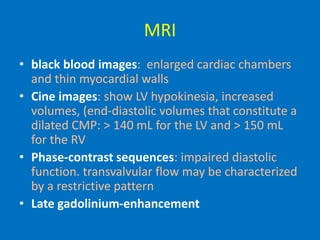
• black blood images: enlarged cardiac chambers
and thin myocardial walls
• Cine images: show LV hypokinesia, increased
volumes, (end-diastolic volumes that constitute a
dilated CMP: > 140 mL for the LV and > 150 mL
for the RV
• Phase-contrast sequences: impaired diastolic
function. transvalvular flow may be characterized
by a restrictive pattern
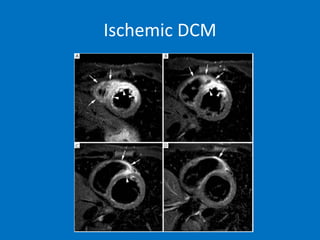
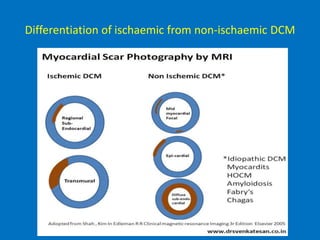
• Late gadolinium-enhancement
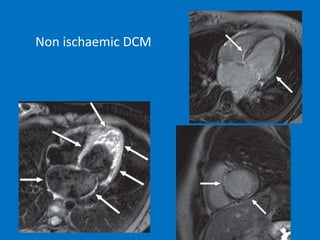
Non ischaemic DCM
Ischemic DCM
Differentiation of ischaemic from non-ischaemic DCM
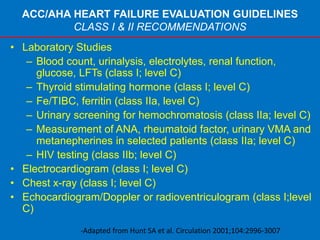
ACC/AHA HEART FAILURE EVALUATION GUIDELINES
CLASS I & II RECOMMENDATIONS
• Laboratory Studies
– Blood count, urinalysis, electrolytes, renal function,
glucose, LFTs (class I; level C)
– Thyroid stimulating hormone (class I; level C)
– Fe/TIBC, ferritin (class IIa, level C)
– Urinary screening for hemochromatosis (class IIa; level C)
– Measurement of ANA, rheumatoid factor, urinary VMA and
metanepherines in selected patients (class IIa; level C)
– HIV testing (class IIb; level C)
• Electrocardiogram (class I; level C)
• Chest x-ray (class I; level C)
• Echocardiogram/Doppler or radioventriculogram (class I;level
C)
-Adapted from Hunt SA et al. Circulation 2001;104:2996-3007
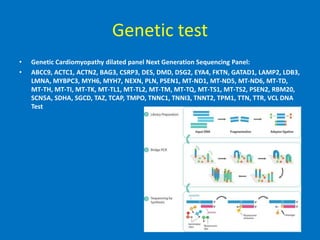
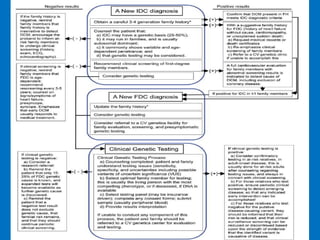
Genetic test
• Genetic Cardiomyopathy dilated panel Next Generation Sequencing Panel:
• ABCC9, ACTC1, ACTN2, BAG3, CSRP3, DES, DMD, DSG2, EYA4, FKTN, GATAD1, LAMP2, LDB3,
LMNA, MYBPC3, MYH6, MYH7, NEXN, PLN, PSEN1, MT-ND1, MT-ND5, MT-ND6, MT-TD,
MT-TH, MT-TI, MT-TK, MT-TL1, MT-TL2, MT-TM, MT-TQ, MT-TS1, MT-TS2, PSEN2, RBM20,
SCN5A, SDHA, SGCD, TAZ, TCAP, TMPO, TNNC1, TNNI3, TNNT2, TPM1, TTN, TTR, VCL DNA
Test
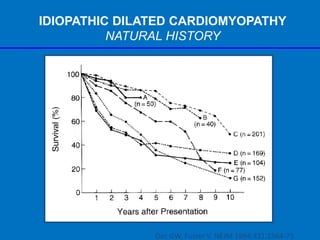
IDIOPATHIC DILATED CARDIOMYOPATHY
NATURAL HISTORY
Dec GW, Fuster V. NEJM 1994;331:1564-75
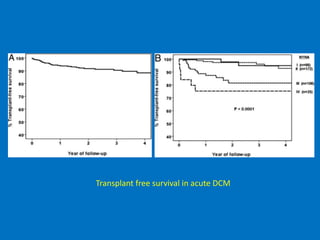
Transplant free survival in acute DCM
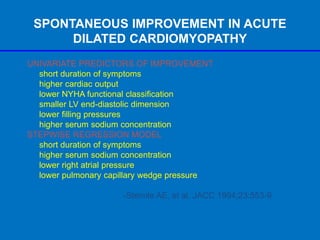
SPONTANEOUS IMPROVEMENT IN ACUTE
DILATED CARDIOMYOPATHY
UNIVARIATE PREDICTORS OF IMPROVEMENT
short duration of symptoms
higher cardiac output
lower NYHA functional classification
smaller LV end-diastolic dimension
lower filling pressures
higher serum sodium concentration
STEPWISE REGRESSION MODEL
short duration of symptoms
higher serum sodium concentration
lower right atrial pressure
lower pulmonary capillary wedge pressure
-Steimle AE, et al. JACC 1994;23:553-9
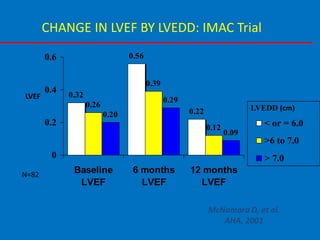
CHANGE IN LVEF BY LVEDD: IMAC Trial
0.32
0.56
0.22
0.26
0.39
0.12
0.20
0.29
0.09
0
0.2
0.4
0.6
Baseline
LVEF
6 months
LVEF
12 months
LVEF
< or = 6.0
>6 to 7.0
> 7.0
LVEDD (cm)
LVEF
McNamara D, et al.
AHA, 2001
N=82
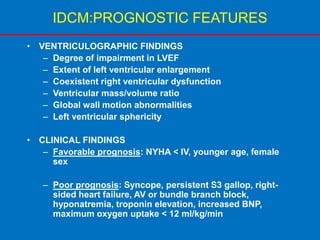
IDCM:PROGNOSTIC FEATURES
• VENTRICULOGRAPHIC FINDINGS
– Degree of impairment in LVEF
– Extent of left ventricular enlargement
– Coexistent right ventricular dysfunction
– Ventricular mass/volume ratio
– Global wall motion abnormalities
– Left ventricular sphericity
• CLINICAL FINDINGS
– Favorable prognosis: NYHA < IV, younger age, female
sex
– Poor prognosis: Syncope, persistent S3 gallop, right-
sided heart failure, AV or bundle branch block,
hyponatremia, troponin elevation, increased BNP,
maximum oxygen uptake < 12 ml/kg/min
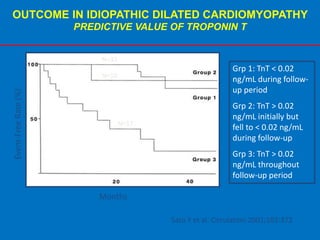
OUTCOME IN IDIOPATHIC DILATED CARDIOMYOPATHY
PREDICTIVE VALUE OF TROPONIN T
Months
Event-FreeRate(%)
Sato Y et al. Circulation 2001;103:372
Grp 1: TnT < 0.02
ng/mL during follow-
up period
Grp 2: TnT > 0.02
ng/mL initially but
fell to < 0.02 ng/mL
during follow-up
Grp 3: TnT > 0.02
ng/mL throughout
follow-up period
N=33
N=10
N=17
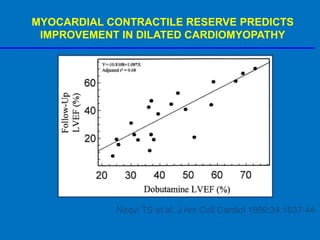
MYOCARDIAL CONTRACTILE RESERVE PREDICTS
IMPROVEMENT IN DILATED CARDIOMYOPATHY
Naqvi TS et al. J Am Coll Cardiol 1999;34:1537-44
668N =
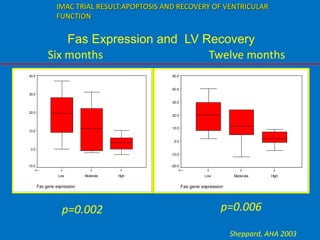
Fas gene expression
HighModerateLow
ChangeinEFat12months(%)
50.0
40.0
30.0
20.0
10.0
0.0
-10.0
-20.0
668N =
Fas gene expression
HighModerateLow
40.0
30.0
20.0
10.0
0.0
-10.0
Fas Expression and LV Recovery
p=0.002 p=0.006
Six months Twelve months
Sheppard, AHA 2003
IMAC TRIAL RESULT:APOPTOSIS AND RECOVERY OF VENTRICULAR
FUNCTION
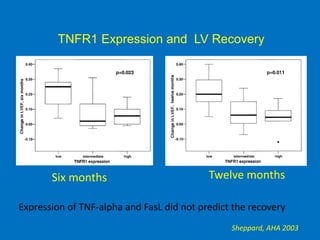
Expression of TNF-alpha and FasL did not predict the recovery
Sheppard, AHA 2003
TNFR1 Expression and LV Recovery
Six months Twelve months
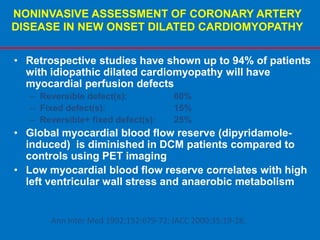
NONINVASIVE ASSESSMENT OF CORONARY ARTERY
DISEASE IN NEW ONSET DILATED CARDIOMYOPATHY
• Retrospective studies have shown up to 94% of patients
with idiopathic dilated cardiomyopathy will have
myocardial perfusion defects
– Reversible defect(s): 60%
– Fixed defect(s): 15%
– Reversible+ fixed defect(s): 25%
• Global myocardial blood flow reserve (dipyridamole-
induced) is diminished in DCM patients compared to
controls using PET imaging
• Low myocardial blood flow reserve correlates with high
left ventricular wall stress and anaerobic metabolism
Ann Inter Med 1992;152:679-72; JACC 2000;35:19-28.
INDICATIONS FOR CORONARY ANGIOGRAPHY IN NEW
ONSET CARDIOMYOPATHY
ACC/AHA CONSENSUS GUIDELINES (2001)
• Patients with Known Coronary Artery Disease/Angina Pectoris
– Revascularization recommended in vast majority of such individuals
with multivessel disease. Little role for non-invasive testing.
– Coronary angiography considered Class I Recommendation (Level of
evidence: B)
• Patients with Known Coronary Artery Disease Who Lack Angina
– No controlled trials have examined whether coronary revascularization
can improve outcomes in this population
– Many centers first evaluate patient for myocardial hibernation
– Coronary angiography considered Class IIa Recommendation (Level of
Evidence:C)
• Patients with or without Chest Pain in Whom Coronary Artery
Disease has Not Been Evaluated
– Approximately 35% of patients with IDCM will report angina-like pain
– Coronary angiography should be considered Class IIa
recommendation (Level of Evidence: C)
Hunt SA,et al. Circulation 2001;104:2996
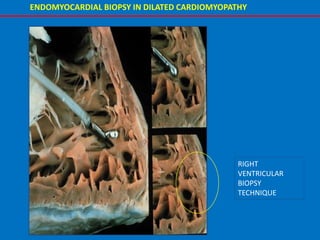
RIGHT
VENTRICULAR
BIOPSY
TECHNIQUE
ENDOMYOCARDIAL BIOPSY IN DILATED CARDIOMYOPATHY
INDICATIONS FOR ENDOMYOCARDIAL
BIOPSY
• Acute dilated cardiomyopathy with refractory heart failure
symptoms
• Rapidly progressive ventricular dysfunction in an
unexplained cardiomyopathy of recent onset
• New onset cardiomyopathy with recurrent ventricular
tachycardia or high grade heart block
• Heart failure in the setting of fever, rash, and peripheral
eosinophilia
• Dilated cardiomyopathy in setting of systemic diseases
known to affect the myocardium (systemic lupus erythematosus,
polymyositis, sarcoidosis)
Wu LA, et al. Mayo Clin Proc 2001;76:1030-8
DILATED CARDIOMYOPATHY
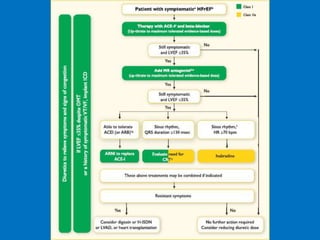
PROVEN THERAPEUTIC OPTIONS
TREATMENT INDICATIONS
ACE Inhibitors Symptomatic heart failure and
asymptomatic LV dysfunction
ARBs ACE intolerance
Hydralazine- nitrates ACE intolerance
Diuretics Volume overload
Potassium/Magnesium Diuretic-induced depletion
Beta-blockers Symptomatic heart failure in addition to
ACE inhibitor
Digoxin Persistent heart failure despite
diuretics, ACE inhibitor
Warfarin Chronic or paroxysmal atrial fibrillation
LV thrombus or prior embolic event
ICD Cardiac arrest; uncontrolled VT
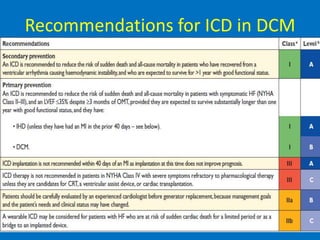
Recommendations for ICD in DCM
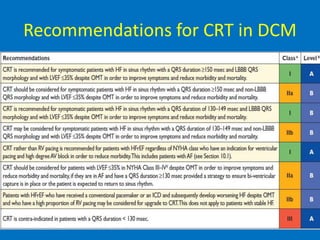
Recommendations for CRT in DCM
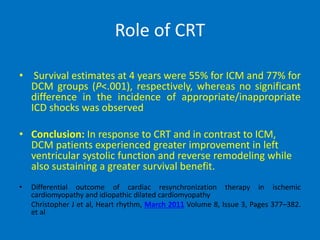
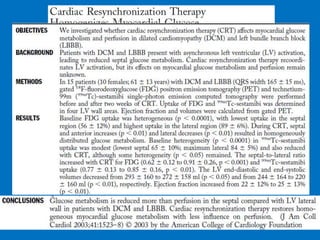
Role of CRT
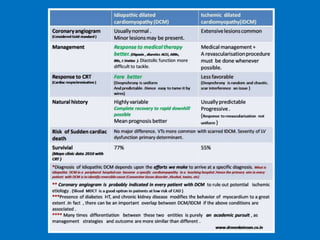
• Survival estimates at 4 years were 55% for ICM and 77% for
DCM groups (P<.001), respectively, whereas no significant
difference in the incidence of appropriate/inappropriate
ICD shocks was observed
• Conclusion: In response to CRT and in contrast to ICM,
DCM patients experienced greater improvement in left
ventricular systolic function and reverse remodeling while
also sustaining a greater survival benefit.
• Differential outcome of cardiac resynchronization therapy in ischemic
cardiomyopathy and idiopathic dilated cardiomyopathy
Christopher J et al, Heart rhythm, March 2011 Volume 8, Issue 3, Pages 377–382.
et al
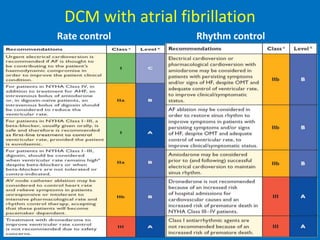
DCM with atrial fibrillation
Rate control Rhythm control
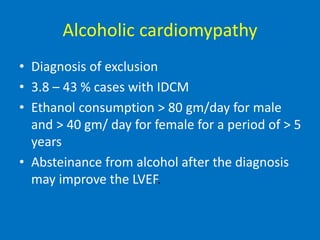
Alcoholic cardiomypathy
• Diagnosis of exclusion
• 3.8 – 43 % cases with IDCM
• Ethanol consumption > 80 gm/day for male
and > 40 gm/ day for female for a period of > 5
years
• Absteinance from alcohol after the diagnosis
may improve the LVEF.
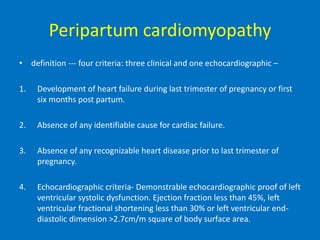
Peripartum cardiomyopathy
• definition --- four criteria: three clinical and one echocardiographic –
1. Development of heart failure during last trimester of pregnancy or first
six months post partum.
2. Absence of any identifiable cause for cardiac failure.
3. Absence of any recognizable heart disease prior to last trimester of
pregnancy.
4. Echocardiographic criteria- Demonstrable echocardiographic proof of left
ventricular systolic dysfunction. Ejection fraction less than 45%, left
ventricular fractional shortening less than 30% or left ventricular end-
diastolic dimension >2.7cm/m square of body surface area.
Novel surgical options
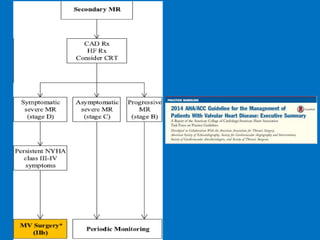
• Mitral valve repair
• Surgical ventricular reconstruction
• Surgical attempts to regenerate lost or
damaged myocardium with transplanted stem
cells.
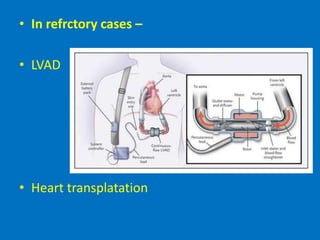
• In refrctory cases –
• LVAD
• Heart transplatation
Summary
• DCM – important cause of morbidity and
mortality
• Ischaemic CMP and Familial DCM – major causes
of DCM: role of CAG and genetic counselling
• Advancement in immunoabsorption and
immunosuppression therapy for myocarditis has
improved the survival in recent years.
• further studies are needed to fill the lacuna in our
knowledge about DCM
Thank you !

Dilated cardiomyopathy

  • 1.
  • 2.
    Introduction • Definition: – Dilatedleft ventricle with systolic dysfunction – not caused by Ischaemic or valvular heart disease – Cardiac dilatation with systolic dysfunction
  • 3.
    Learning objectives • Epidemiology •Etiology • Pathology • Genetics • Clinical features • Natural history • Diagnosis • Management
  • 4.
    IDIOPATHIC DILATED CARDIOMYPATHY EPIDEMIOLOGY •ANNUAL INCIDENCE 5-8/100,000 • PREVELANCE 36/ 100,000 • INCREASED RISK ASSOCIATED WITH: – MALE GENDER – BLACK RACE – HYPERTENSION – CHRONIC BETA-AGONIST USE
  • 6.
  • 8.
    Causes • Ischemic: =50% atherosclerosis, Kawasaki disease, anomalous origin of left coronary artery • Idiopathic = 45% • Hereditary: = 25 – 35% autosomal dominant, autosomal recessive, X-linked, mitochondrial • Acute and chronic myocarditis: coxsackievirus, HIV adenovirus, • Autoimmune diseases • Chronic tachycardia
  • 9.
    • Drugs: alcohol,sympathomimetics, anthracyclines • End-stage hypertrophic cardiomyopathy • Endocrine: growth hormone deficiency, hyperthyroidism, hypothyroidism, hypocalcemia, diabetes mellitus, pheochromocytoma • Inborn errors of metabolism • Muscular dystrophies • Nutritional deficiency: selenium, carnitine, thiamine • Peripartum • Structural heart disease • Systemic hypertension • Toxins: cobalt, lead
  • 10.
    Pathology • Cardiac dilatation –? Adaptive – due to increased loading conditions – Idiopathic DCM – maladaptive.. • Myocellular hypertrophy and cell death – Cardiac hypertrophy – adaptive response increase in collagen content preserves myocardial performance – Cumulative loss of myofibrils and cardiac myocytes apoptosis, cellular necrosis decrease in the wall thickness
  • 11.
    • Extracellular matrixremodeling – Cardiac fibroblast proliferate – Mechanically stable cross linked collagen is degraded by metalloproteinases – Excess of poorly cross-linked collagen is deposited into interstitium – Increase myocardial mass, intersitial fibrosis, ventricular dilatation
  • 12.
  • 13.
  • 14.
  • 16.
    MOLECULAR DEFECTS INDILATED CARDIOMYOPATHY Fatkin D, et al. NEJM 1999;341 GENES Lamin A/C δ-sarcoglycan Dystrophin Desmin Vinculin Titin Troponin-T α-tropomyosin ß-myosin heavy chain Actin Mitochondrial DNA mutations
  • 19.
    FAMILIAL DILATED CARDIOMYOPATHY COMMONASSOCIATED ABNORMALITIES • Conduction system disease • Skeletal muscle myopathy or muscular dystrophy • autosomal dominant inheritance pattern is most common • Recessive , X-linked, mitochondrial • Extracardiac manifestations: – Sensorineural hearing loss – Neutropenia
  • 20.
  • 21.
    INCIDENCE OF BIOPSY-PROVENMYOCARDITIS IN PATIENTS WITH DILATED CARDIOMYOPATHY Series Year Patients Positive Biopsy Kunkel et al 1978 66 6% Mason et al 1980 400 3% Noda 1980 52 0.5% Baandrup et al 1981 132 1% O’Connell et al 1981 68 7% Nippoldt et al 1982 170 5% Fenoglio et al 1983 135 25% Unverferth et al 1983 59 6% Parillo et al 1984 74 26% Zee-Cheng et al 1984 35 63% Daly et al 1984 69 17% Bolte et al 1984 91 20% Hosenpud et al 1985 38 16% Mason et al 1995 2233 10% McCarthy et al 1997 1757 14% TOTAL 5379 11.5%
  • 22.
    Clinical features • Heartfailure – congestion : edema, orthopnea, paroxysmal nocturnal dyspnea – reduced cardiac output : fatigue, dyspnea on exertion • Arrhythmias and/or conduction system disease • Thromboembolic disease (from left ventricular mural thrombus)- stroke
  • 23.
    • Heart failuresymptoms 75%-85% • Anginal chest pain 8%-20% • Emboli (systemic or pulmonary) 1%-4% • Syncope <1% • Sudden cardiac death <1%
  • 24.
  • 25.
    DILATED CARDIOMYOPATHY ELECTROCARDIOGRAPHIC FINDINGS DiseaseEtiology Pathologic Q-waves Ischemic cardiomyopathy 10/12 (83%)* (n=15) Idiopathic cardiomyopathy 2/21 (10%)+ # (n=21) *LBBB (n=2); paced rhythm (n=1) + LVH (n=10); IVCD (n=3) # P < 0.003 Feld H, et al. Am J Med 1993;94:547-8
  • 31.
    SEGMENTAL WALL MOTIONABNORMALITIES IN DILATED CARDIOMYOPATHY • Regional wall motion abnormalities observed in at least 50% of patients with non-ischemic causes of dilated cardiomyopathy • Most frequent wall motion abnormalities: – anterior wall & apex • Posterior and lateral walls most likely to be preserved • Type of abnormality: – hypokinesis (83%) – akinesis (11%) – dyskinesis (6%) • Heterogeneity in regional oxidative metabolism using C- 11 acetate clearance has been demonstrated in DCM AJC 1990;65:364-70; Arch Int Med 1992;152:769-72; JACC 1995;25:1258-62
  • 32.
    MRI • black bloodimages: enlarged cardiac chambers and thin myocardial walls • Cine images: show LV hypokinesia, increased volumes, (end-diastolic volumes that constitute a dilated CMP: > 140 mL for the LV and > 150 mL for the RV • Phase-contrast sequences: impaired diastolic function. transvalvular flow may be characterized by a restrictive pattern • Late gadolinium-enhancement
  • 33.
  • 34.
  • 37.
    Differentiation of ischaemicfrom non-ischaemic DCM
  • 38.
    ACC/AHA HEART FAILUREEVALUATION GUIDELINES CLASS I & II RECOMMENDATIONS • Laboratory Studies – Blood count, urinalysis, electrolytes, renal function, glucose, LFTs (class I; level C) – Thyroid stimulating hormone (class I; level C) – Fe/TIBC, ferritin (class IIa, level C) – Urinary screening for hemochromatosis (class IIa; level C) – Measurement of ANA, rheumatoid factor, urinary VMA and metanepherines in selected patients (class IIa; level C) – HIV testing (class IIb; level C) • Electrocardiogram (class I; level C) • Chest x-ray (class I; level C) • Echocardiogram/Doppler or radioventriculogram (class I;level C) -Adapted from Hunt SA et al. Circulation 2001;104:2996-3007
  • 39.
    Genetic test • GeneticCardiomyopathy dilated panel Next Generation Sequencing Panel: • ABCC9, ACTC1, ACTN2, BAG3, CSRP3, DES, DMD, DSG2, EYA4, FKTN, GATAD1, LAMP2, LDB3, LMNA, MYBPC3, MYH6, MYH7, NEXN, PLN, PSEN1, MT-ND1, MT-ND5, MT-ND6, MT-TD, MT-TH, MT-TI, MT-TK, MT-TL1, MT-TL2, MT-TM, MT-TQ, MT-TS1, MT-TS2, PSEN2, RBM20, SCN5A, SDHA, SGCD, TAZ, TCAP, TMPO, TNNC1, TNNI3, TNNT2, TPM1, TTN, TTR, VCL DNA Test
  • 41.
    IDIOPATHIC DILATED CARDIOMYOPATHY NATURALHISTORY Dec GW, Fuster V. NEJM 1994;331:1564-75
  • 42.
  • 43.
    SPONTANEOUS IMPROVEMENT INACUTE DILATED CARDIOMYOPATHY UNIVARIATE PREDICTORS OF IMPROVEMENT short duration of symptoms higher cardiac output lower NYHA functional classification smaller LV end-diastolic dimension lower filling pressures higher serum sodium concentration STEPWISE REGRESSION MODEL short duration of symptoms higher serum sodium concentration lower right atrial pressure lower pulmonary capillary wedge pressure -Steimle AE, et al. JACC 1994;23:553-9
  • 44.
    CHANGE IN LVEFBY LVEDD: IMAC Trial 0.32 0.56 0.22 0.26 0.39 0.12 0.20 0.29 0.09 0 0.2 0.4 0.6 Baseline LVEF 6 months LVEF 12 months LVEF < or = 6.0 >6 to 7.0 > 7.0 LVEDD (cm) LVEF McNamara D, et al. AHA, 2001 N=82
  • 45.
    IDCM:PROGNOSTIC FEATURES • VENTRICULOGRAPHICFINDINGS – Degree of impairment in LVEF – Extent of left ventricular enlargement – Coexistent right ventricular dysfunction – Ventricular mass/volume ratio – Global wall motion abnormalities – Left ventricular sphericity • CLINICAL FINDINGS – Favorable prognosis: NYHA < IV, younger age, female sex – Poor prognosis: Syncope, persistent S3 gallop, right- sided heart failure, AV or bundle branch block, hyponatremia, troponin elevation, increased BNP, maximum oxygen uptake < 12 ml/kg/min
  • 46.
    OUTCOME IN IDIOPATHICDILATED CARDIOMYOPATHY PREDICTIVE VALUE OF TROPONIN T Months Event-FreeRate(%) Sato Y et al. Circulation 2001;103:372 Grp 1: TnT < 0.02 ng/mL during follow- up period Grp 2: TnT > 0.02 ng/mL initially but fell to < 0.02 ng/mL during follow-up Grp 3: TnT > 0.02 ng/mL throughout follow-up period N=33 N=10 N=17
  • 47.
    MYOCARDIAL CONTRACTILE RESERVEPREDICTS IMPROVEMENT IN DILATED CARDIOMYOPATHY Naqvi TS et al. J Am Coll Cardiol 1999;34:1537-44
  • 49.
    668N = Fas geneexpression HighModerateLow ChangeinEFat12months(%) 50.0 40.0 30.0 20.0 10.0 0.0 -10.0 -20.0 668N = Fas gene expression HighModerateLow 40.0 30.0 20.0 10.0 0.0 -10.0 Fas Expression and LV Recovery p=0.002 p=0.006 Six months Twelve months Sheppard, AHA 2003 IMAC TRIAL RESULT:APOPTOSIS AND RECOVERY OF VENTRICULAR FUNCTION
  • 50.
    Expression of TNF-alphaand FasL did not predict the recovery Sheppard, AHA 2003 TNFR1 Expression and LV Recovery Six months Twelve months
  • 51.
    NONINVASIVE ASSESSMENT OFCORONARY ARTERY DISEASE IN NEW ONSET DILATED CARDIOMYOPATHY • Retrospective studies have shown up to 94% of patients with idiopathic dilated cardiomyopathy will have myocardial perfusion defects – Reversible defect(s): 60% – Fixed defect(s): 15% – Reversible+ fixed defect(s): 25% • Global myocardial blood flow reserve (dipyridamole- induced) is diminished in DCM patients compared to controls using PET imaging • Low myocardial blood flow reserve correlates with high left ventricular wall stress and anaerobic metabolism Ann Inter Med 1992;152:679-72; JACC 2000;35:19-28.
  • 52.
    INDICATIONS FOR CORONARYANGIOGRAPHY IN NEW ONSET CARDIOMYOPATHY ACC/AHA CONSENSUS GUIDELINES (2001) • Patients with Known Coronary Artery Disease/Angina Pectoris – Revascularization recommended in vast majority of such individuals with multivessel disease. Little role for non-invasive testing. – Coronary angiography considered Class I Recommendation (Level of evidence: B) • Patients with Known Coronary Artery Disease Who Lack Angina – No controlled trials have examined whether coronary revascularization can improve outcomes in this population – Many centers first evaluate patient for myocardial hibernation – Coronary angiography considered Class IIa Recommendation (Level of Evidence:C) • Patients with or without Chest Pain in Whom Coronary Artery Disease has Not Been Evaluated – Approximately 35% of patients with IDCM will report angina-like pain – Coronary angiography should be considered Class IIa recommendation (Level of Evidence: C) Hunt SA,et al. Circulation 2001;104:2996
  • 53.
  • 54.
    INDICATIONS FOR ENDOMYOCARDIAL BIOPSY •Acute dilated cardiomyopathy with refractory heart failure symptoms • Rapidly progressive ventricular dysfunction in an unexplained cardiomyopathy of recent onset • New onset cardiomyopathy with recurrent ventricular tachycardia or high grade heart block • Heart failure in the setting of fever, rash, and peripheral eosinophilia • Dilated cardiomyopathy in setting of systemic diseases known to affect the myocardium (systemic lupus erythematosus, polymyositis, sarcoidosis) Wu LA, et al. Mayo Clin Proc 2001;76:1030-8
  • 55.
    DILATED CARDIOMYOPATHY PROVEN THERAPEUTICOPTIONS TREATMENT INDICATIONS ACE Inhibitors Symptomatic heart failure and asymptomatic LV dysfunction ARBs ACE intolerance Hydralazine- nitrates ACE intolerance Diuretics Volume overload Potassium/Magnesium Diuretic-induced depletion Beta-blockers Symptomatic heart failure in addition to ACE inhibitor Digoxin Persistent heart failure despite diuretics, ACE inhibitor Warfarin Chronic or paroxysmal atrial fibrillation LV thrombus or prior embolic event ICD Cardiac arrest; uncontrolled VT
  • 57.
  • 58.
  • 59.
    Role of CRT •Survival estimates at 4 years were 55% for ICM and 77% for DCM groups (P<.001), respectively, whereas no significant difference in the incidence of appropriate/inappropriate ICD shocks was observed • Conclusion: In response to CRT and in contrast to ICM, DCM patients experienced greater improvement in left ventricular systolic function and reverse remodeling while also sustaining a greater survival benefit. • Differential outcome of cardiac resynchronization therapy in ischemic cardiomyopathy and idiopathic dilated cardiomyopathy Christopher J et al, Heart rhythm, March 2011 Volume 8, Issue 3, Pages 377–382. et al
  • 61.
    DCM with atrialfibrillation Rate control Rhythm control
  • 62.
    Alcoholic cardiomypathy • Diagnosisof exclusion • 3.8 – 43 % cases with IDCM • Ethanol consumption > 80 gm/day for male and > 40 gm/ day for female for a period of > 5 years • Absteinance from alcohol after the diagnosis may improve the LVEF.
  • 63.
    Peripartum cardiomyopathy • definition--- four criteria: three clinical and one echocardiographic – 1. Development of heart failure during last trimester of pregnancy or first six months post partum. 2. Absence of any identifiable cause for cardiac failure. 3. Absence of any recognizable heart disease prior to last trimester of pregnancy. 4. Echocardiographic criteria- Demonstrable echocardiographic proof of left ventricular systolic dysfunction. Ejection fraction less than 45%, left ventricular fractional shortening less than 30% or left ventricular end- diastolic dimension >2.7cm/m square of body surface area.
  • 64.
    Novel surgical options •Mitral valve repair • Surgical ventricular reconstruction • Surgical attempts to regenerate lost or damaged myocardium with transplanted stem cells.
  • 66.
    • In refrctorycases – • LVAD • Heart transplatation
  • 67.
    Summary • DCM –important cause of morbidity and mortality • Ischaemic CMP and Familial DCM – major causes of DCM: role of CAG and genetic counselling • Advancement in immunoabsorption and immunosuppression therapy for myocarditis has improved the survival in recent years. • further studies are needed to fill the lacuna in our knowledge about DCM
  • 68.