Diglossia
By
Prof.R.R.Borse,
Asst.Prof.,
BP Arts, SMA Sci, KKC Com. College,
Chalisgaon
The word “Diglossia” derived from
the Greek word “diglossos” meaning
‘bilingual’ based on the pattern of French
“diglossie”.
The term Diglossia was first introduced in
English by Charles A. Ferguson in 1959.
He is credited to be the first linguist who
used the specific term, “diglossia in his
article‟(1959) entitled, “Diglossia”
Diglossia: A Snapshot..!
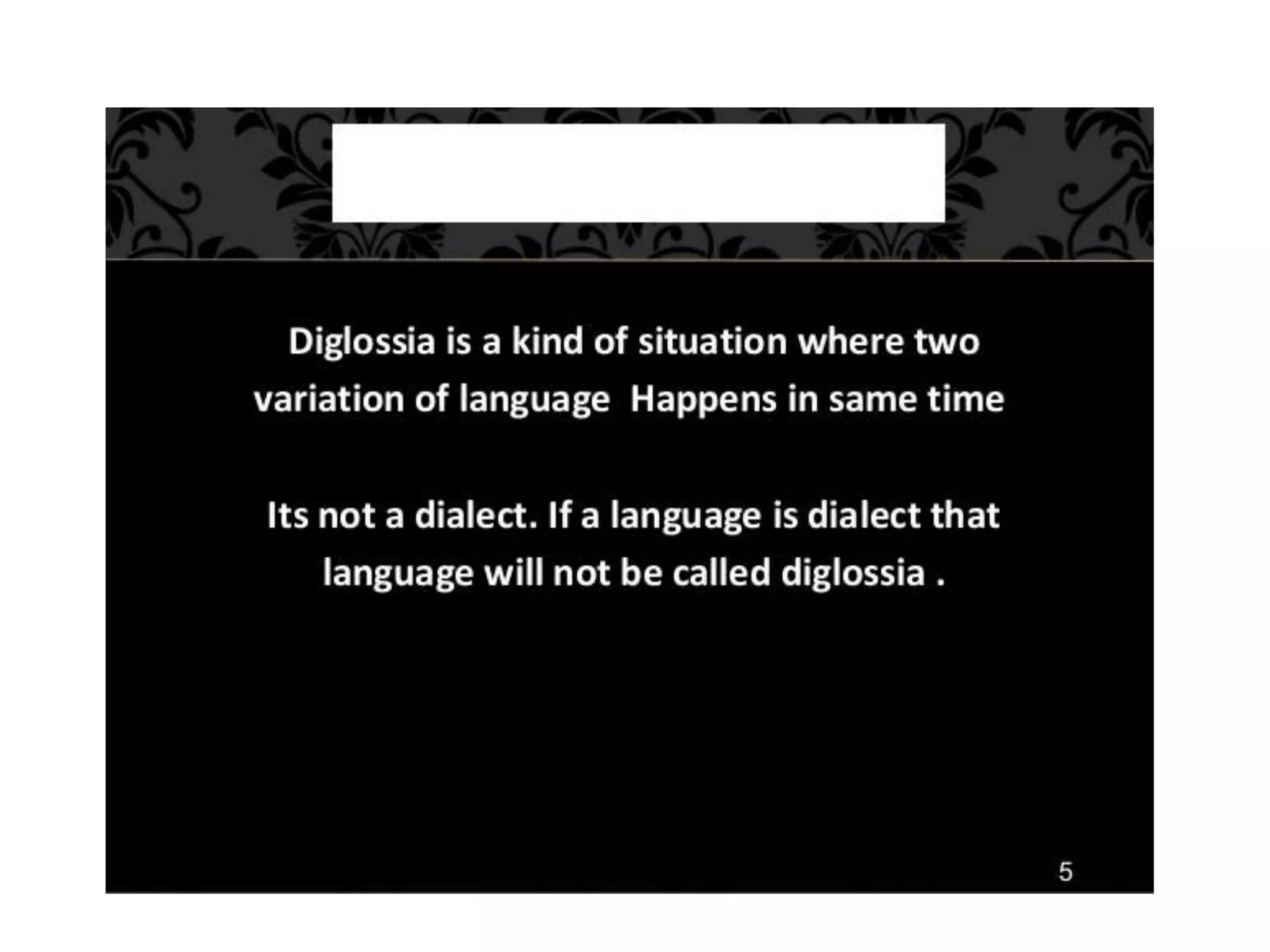
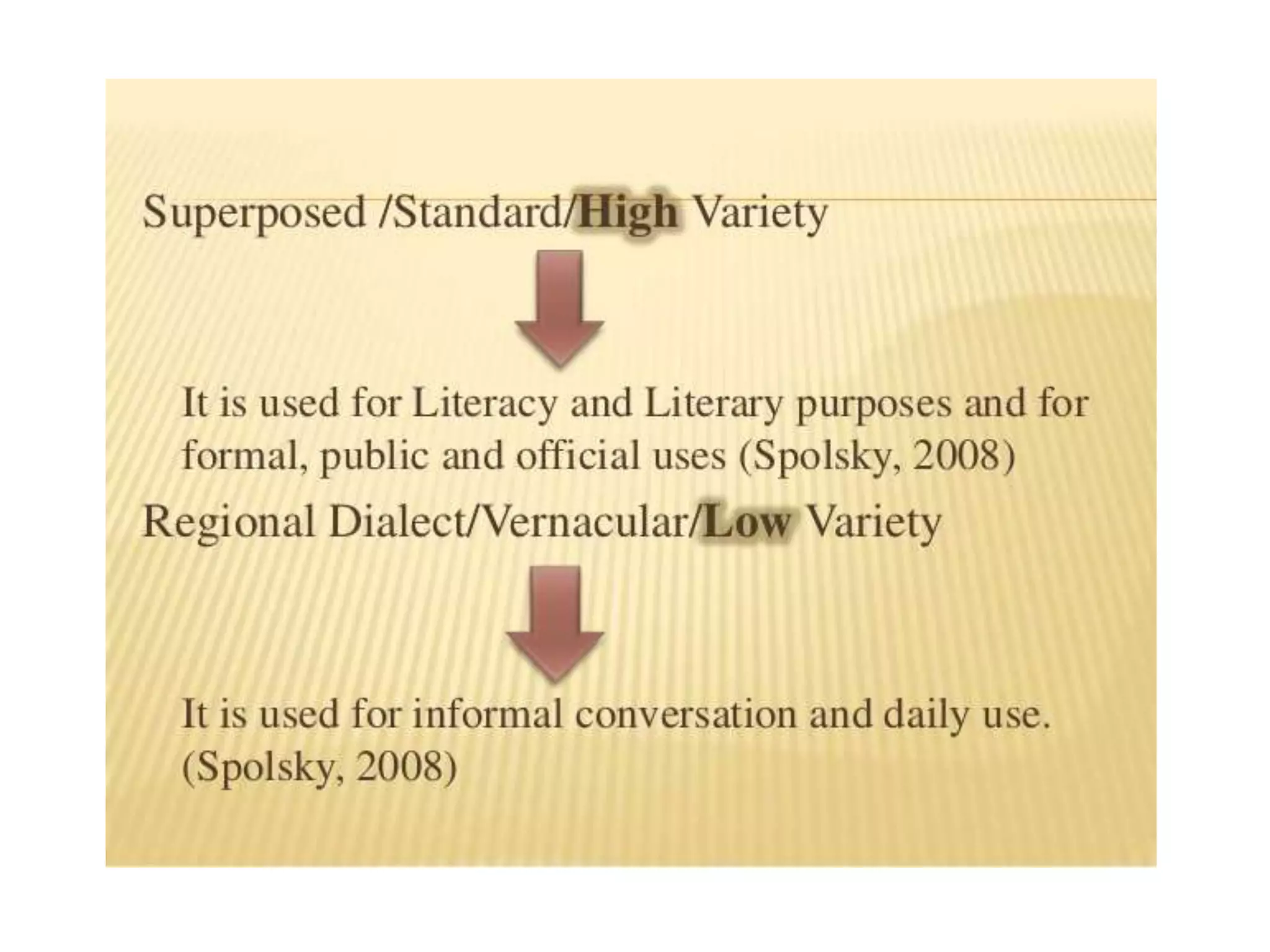
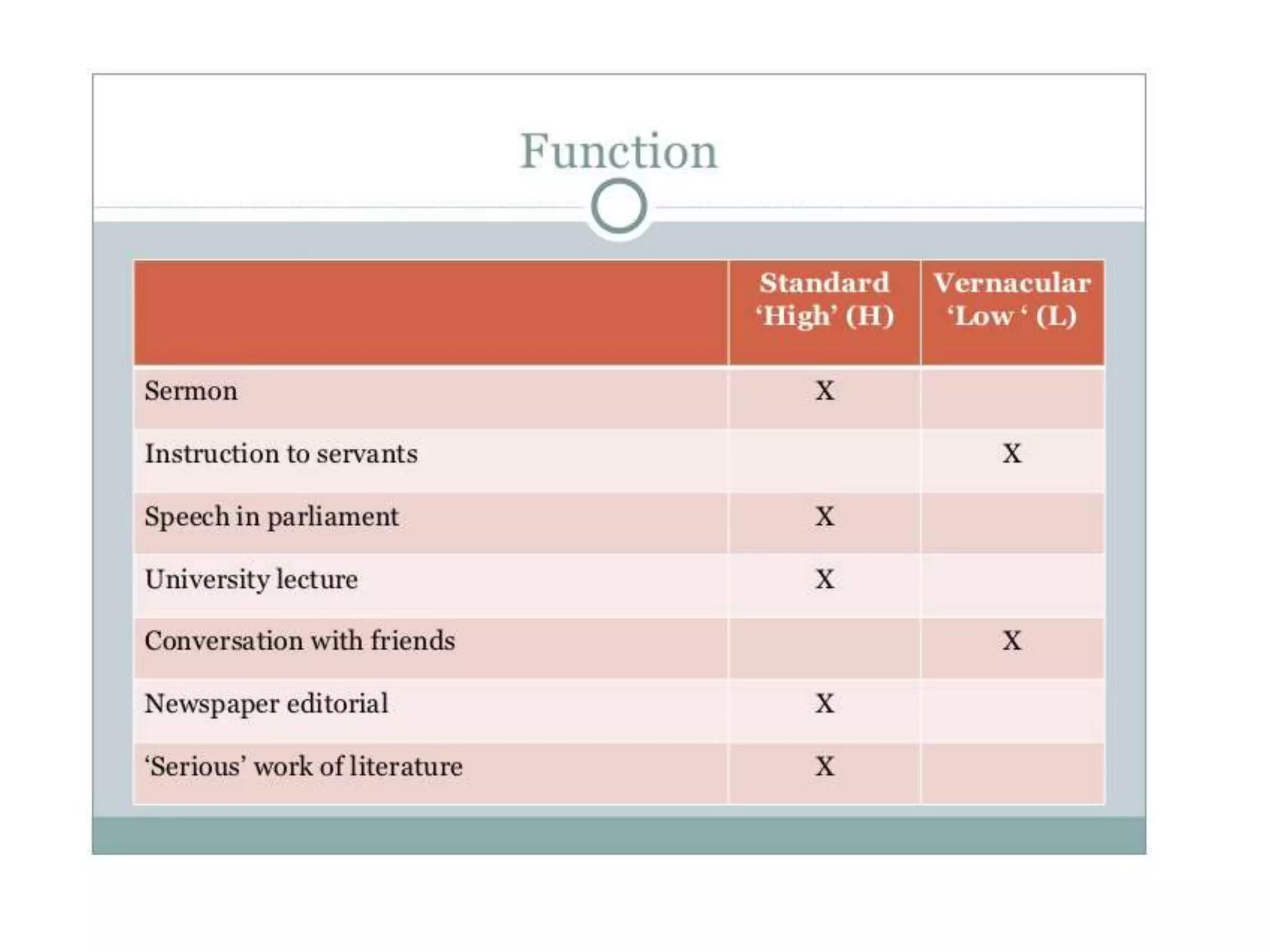
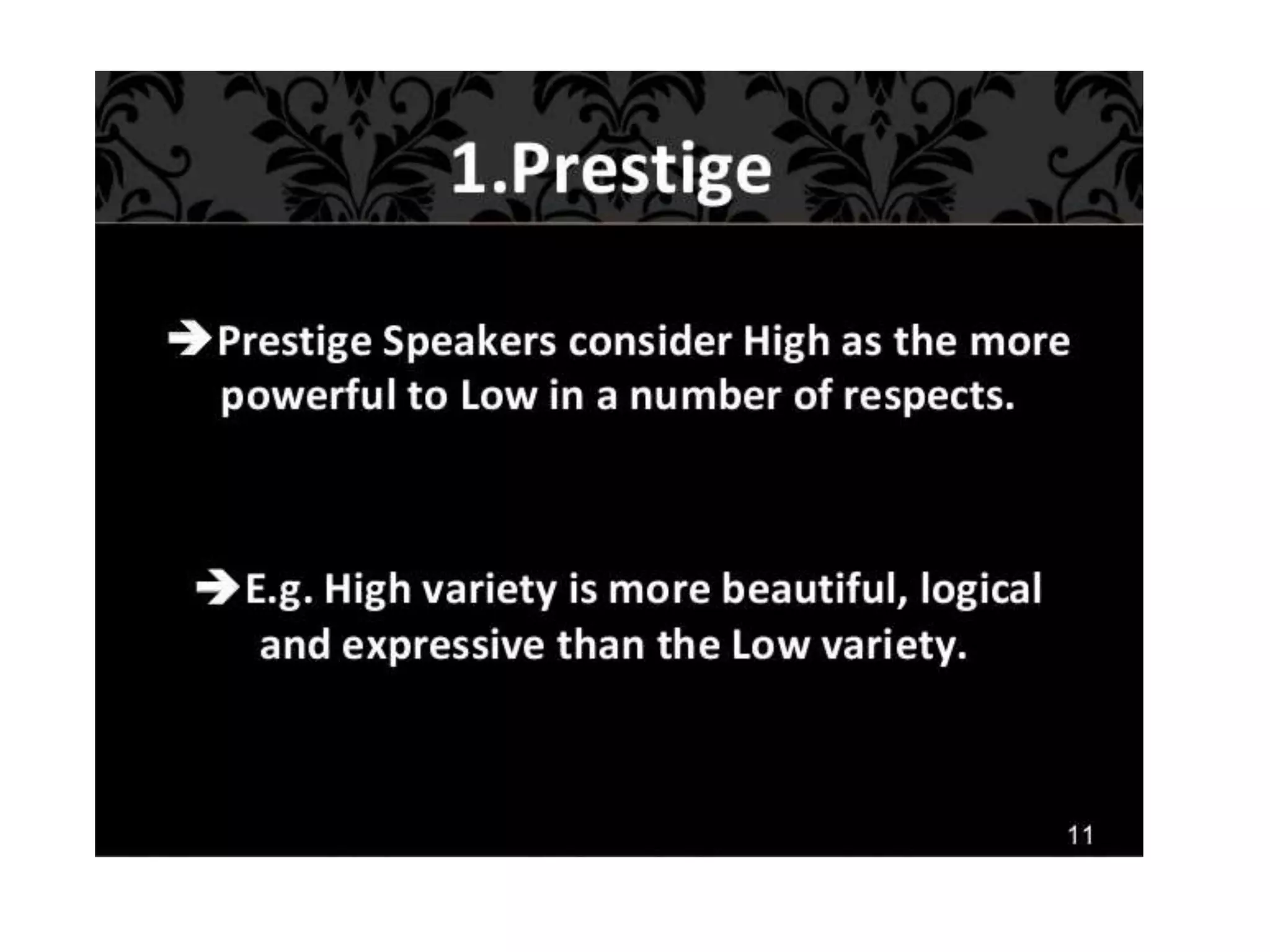
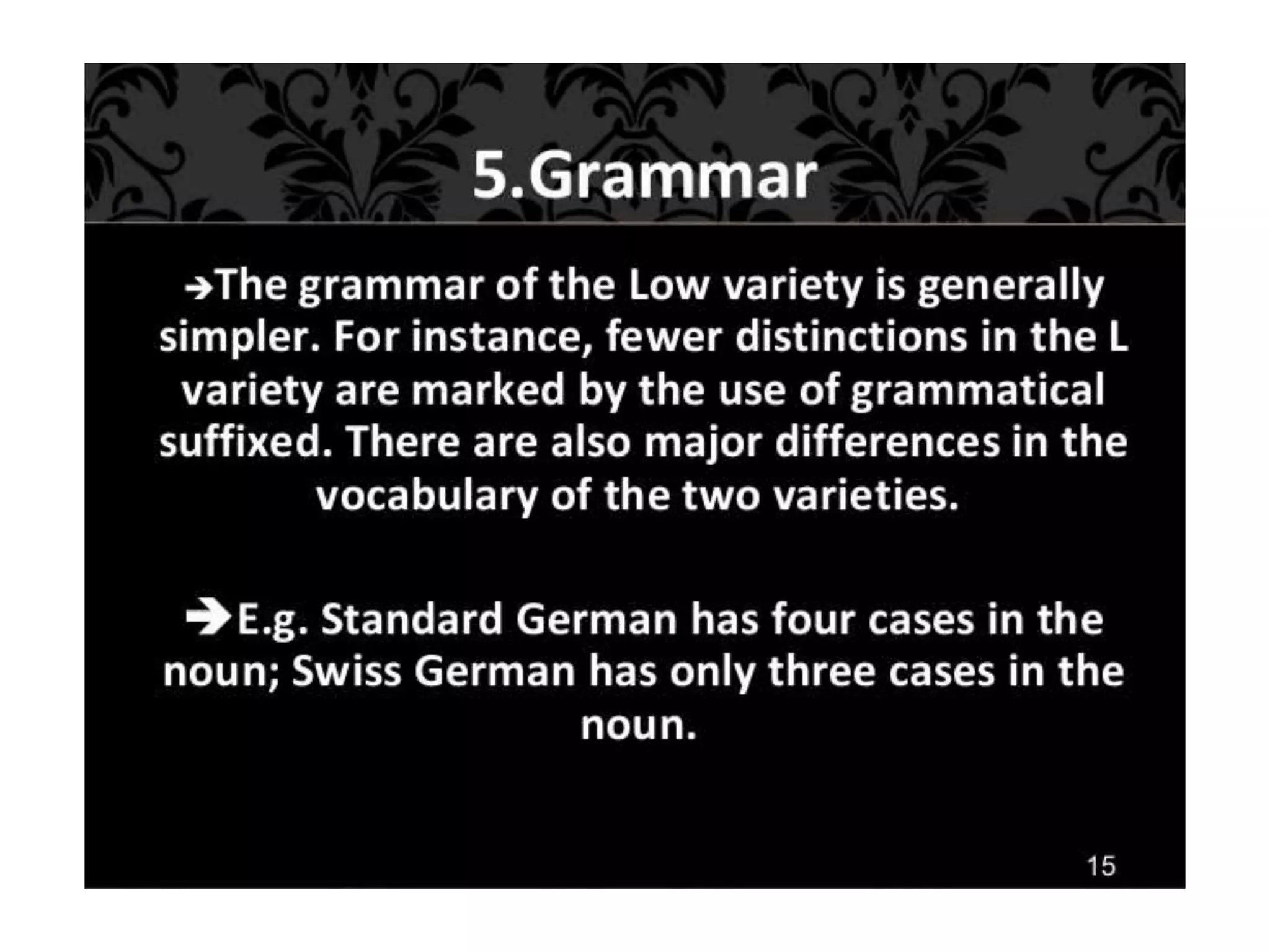
In linguistics, diglossia is a situation in which two
varieties of language are used by a single language
community. In addition to the community's everyday or
vernacular language variety (labeled "L" or "low"
variety), a second, highly codified lect (labeled "H" or
"high") is used in certain situations such as literature,
formal education, or other specific settings, but not used
normally for ordinary conversation.
Diglossia
Diglossia
Diglossia
Diglossia
Diglossia
Diglossia
Diglossia
Diglossia
Diglossia
Diglossia
Diglossia
Diglossia
Diglossia

Diglossia

  • 1.
  • 3.
    The word “Diglossia”derived from the Greek word “diglossos” meaning ‘bilingual’ based on the pattern of French “diglossie”.
  • 4.
    The term Diglossiawas first introduced in English by Charles A. Ferguson in 1959. He is credited to be the first linguist who used the specific term, “diglossia in his article‟(1959) entitled, “Diglossia”
  • 7.
  • 9.
    In linguistics, diglossiais a situation in which two varieties of language are used by a single language community. In addition to the community's everyday or vernacular language variety (labeled "L" or "low" variety), a second, highly codified lect (labeled "H" or "high") is used in certain situations such as literature, formal education, or other specific settings, but not used normally for ordinary conversation.