Ian McEnteggart,
Instron® Composites Marketing Manager
An Introduction to
Digital Image Correlation (DIC)
2
What is Digital Image Correlation?
Images Displacement Strain
Analysis of image
surface over time
Use of cross correlation to
determine displacement
Strain calculated
from displacement
An optical method to measure deformation on an object’s surface
3
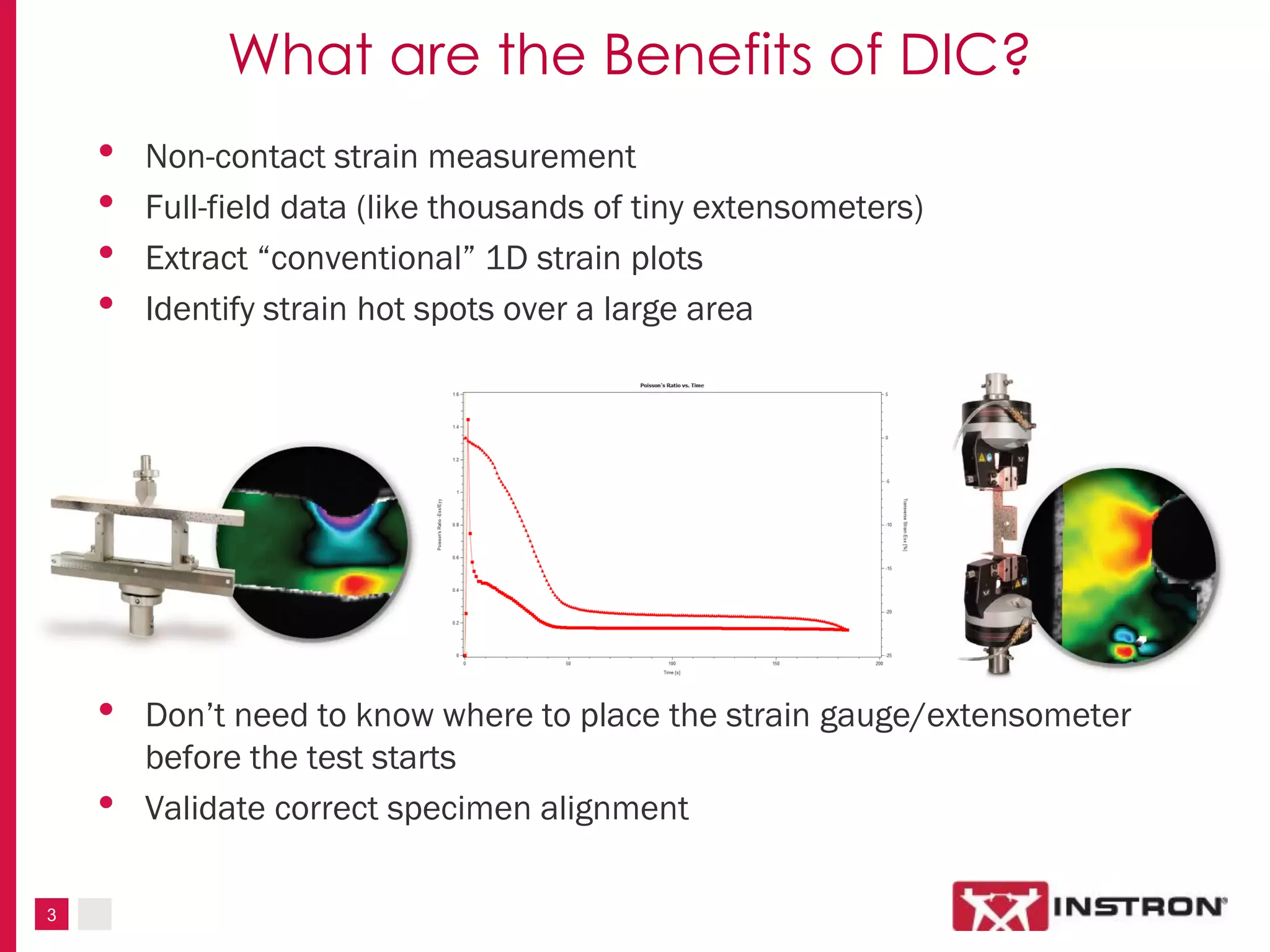
• Non-contact strain measurement
• Full-field data (like thousands of tiny extensometers)
• Extract “conventional” 1D strain plots
• Identify strain hot spots over a large area
• Don’t need to know where to place the strain gauge/extensometer
before the test starts
• Validate correct specimen alignment
What are the Benefits of DIC?
4
Sample Preparation
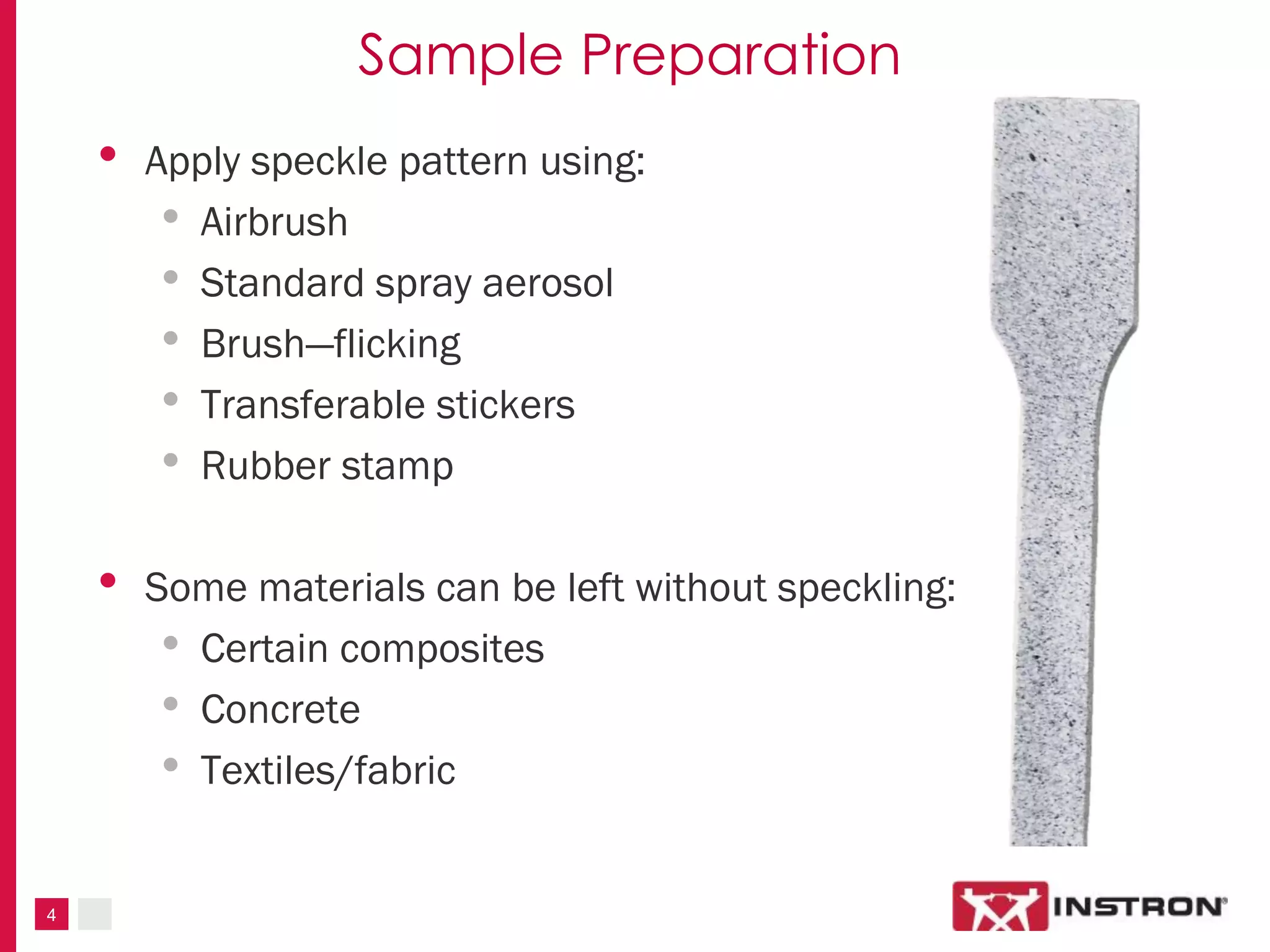
• Apply speckle pattern using:
• Airbrush
• Standard spray aerosol
• Brush—flicking
• Transferable stickers
• Rubber stamp
• Some materials can be left without speckling:
• Certain composites
• Concrete
• Textiles/fabric
5
How Does It Work?
6
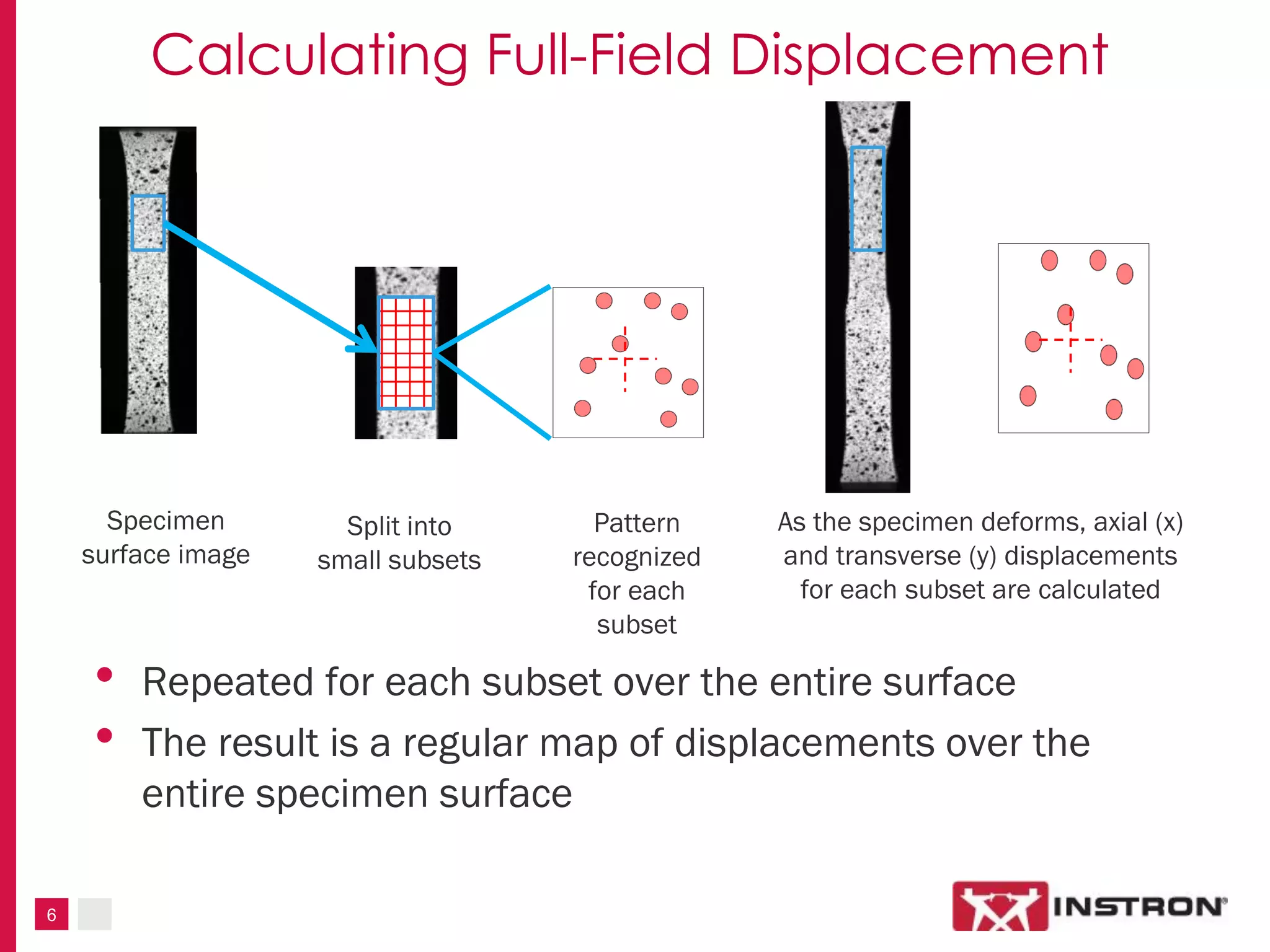
Calculating Full-Field Displacement
• Repeated for each subset over the entire surface
• The result is a regular map of displacements over the
entire specimen surface
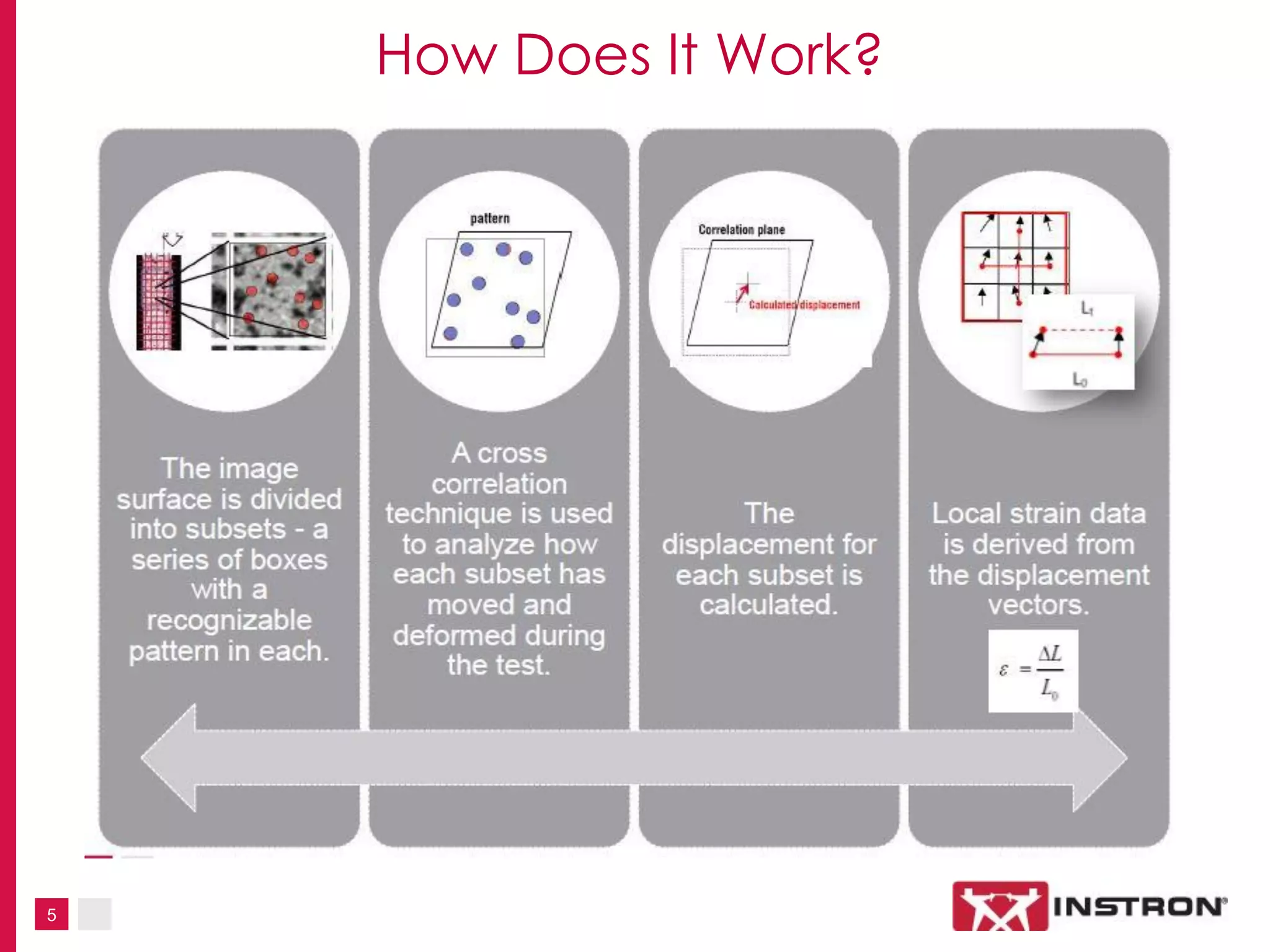
Specimen
surface image
Split into
small subsets
Pattern
recognized
for each
subset
As the specimen deforms, axial (x)
and transverse (y) displacements
for each subset are calculated
7
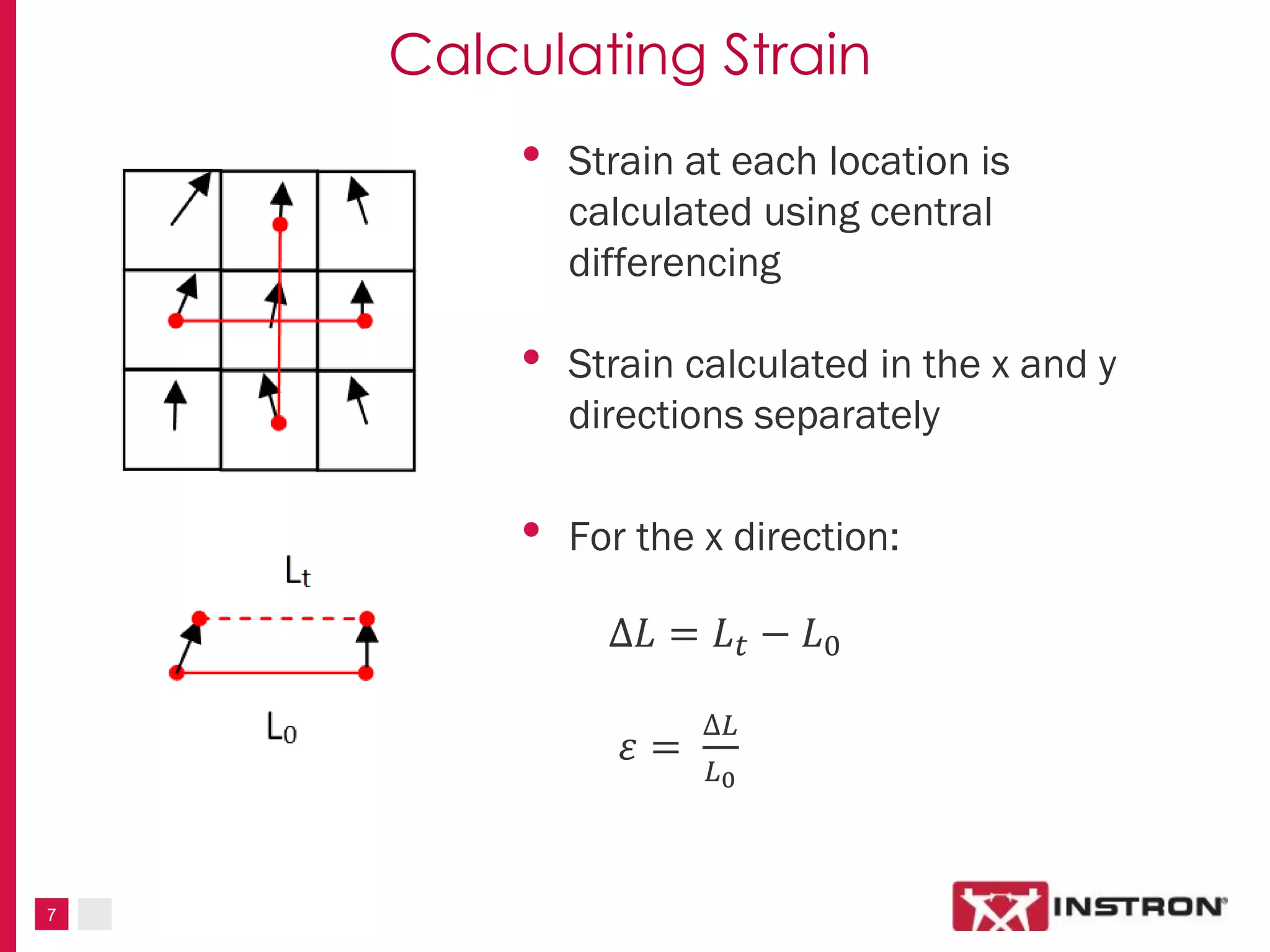
Calculating Strain
• Strain at each location is
calculated using central
differencing
• Strain calculated in the x and y
directions separately
• For the x direction:
∆𝐿 = 𝐿 𝑡 − 𝐿0
𝜀 =
∆𝐿
𝐿0
8
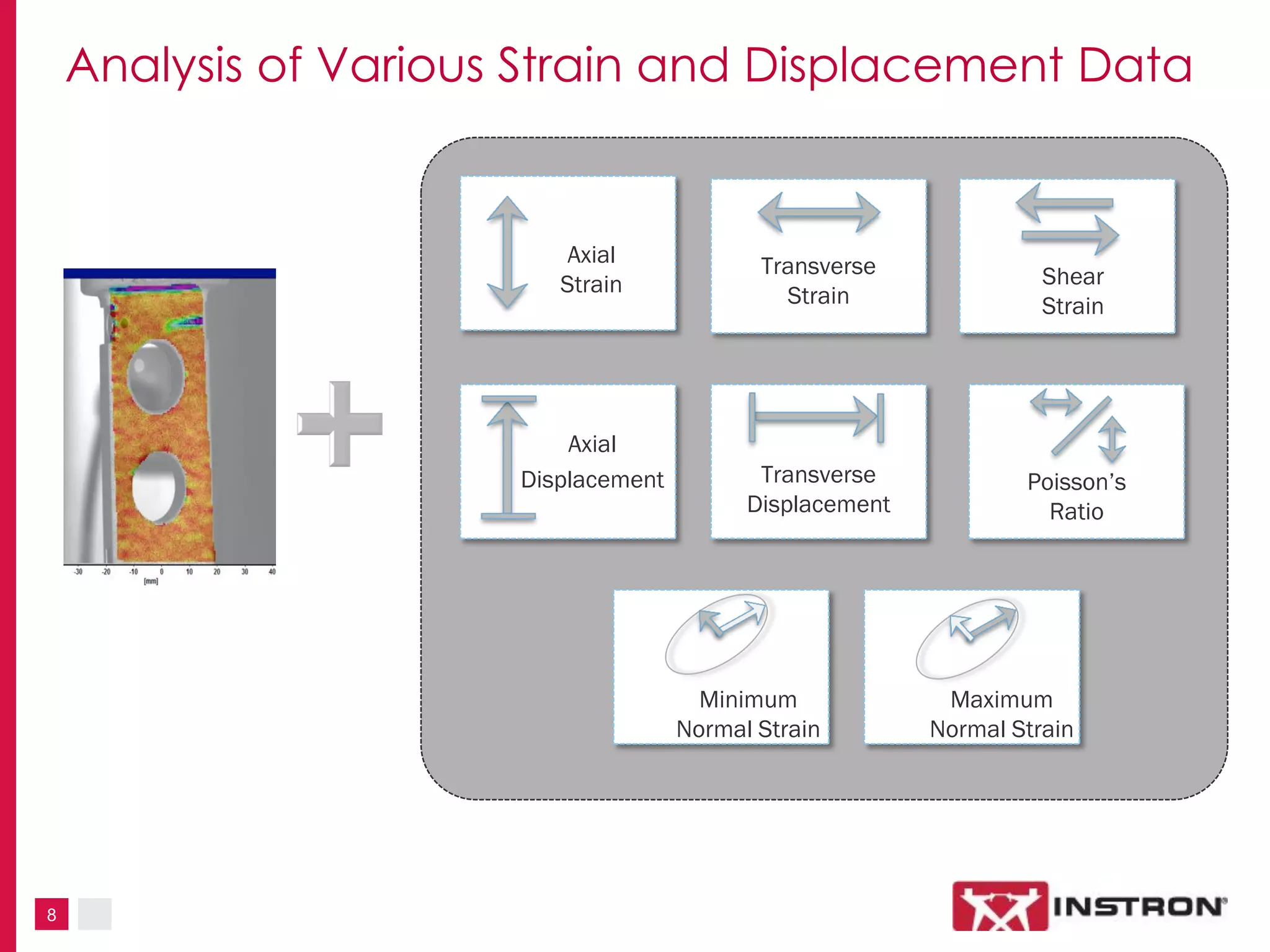
Analysis of Various Strain and Displacement Data
Axial
Strain
Transverse
Strain
Shear
Strain
Poisson’s
Ratio
Minimum
Normal Strain
Maximum
Normal Strain
Axial
Displacement Transverse
Displacement
9
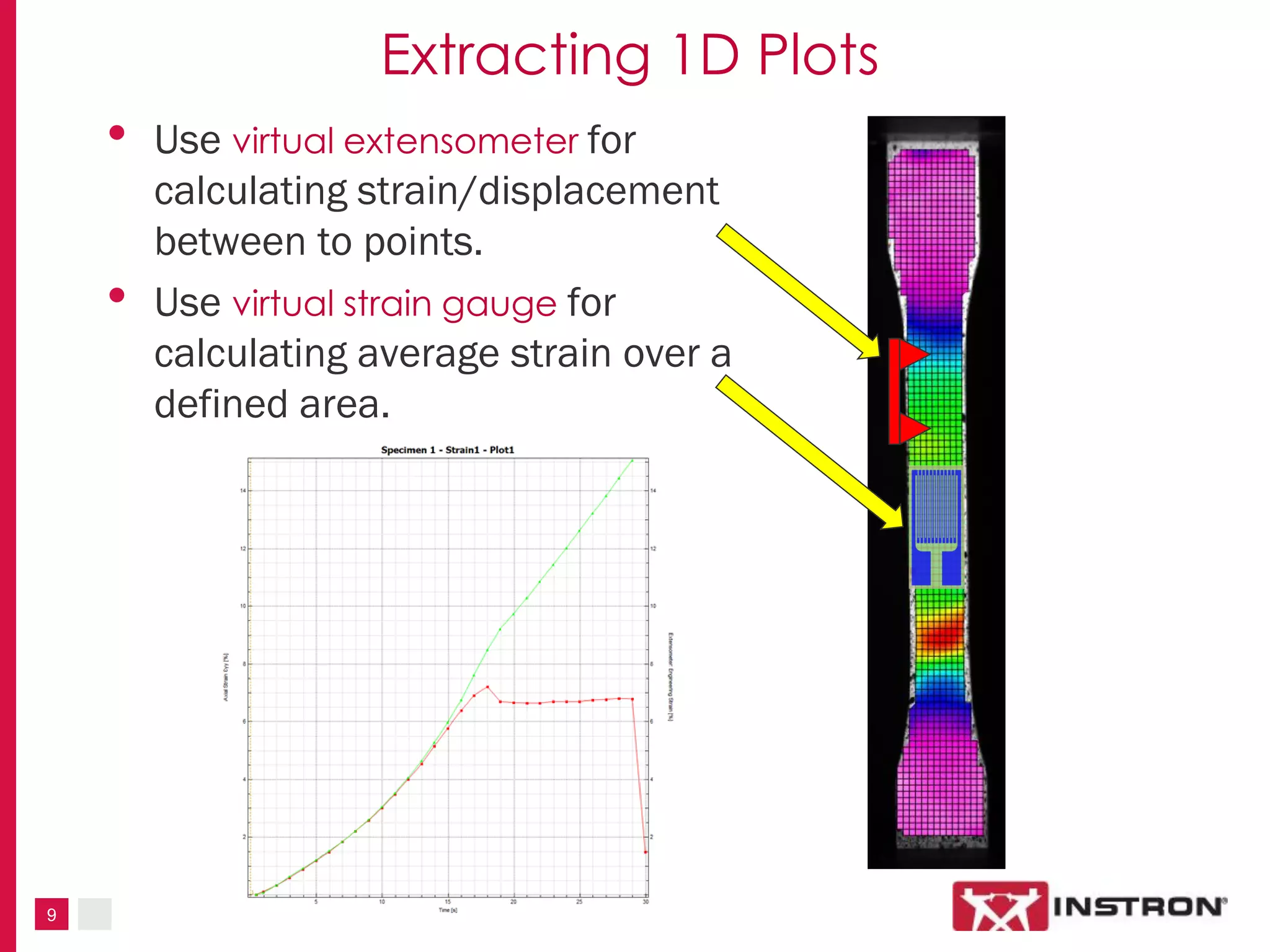
Extracting 1D Plots
• Use virtual extensometer for
calculating strain/displacement
between to points.
• Use virtual strain gauge for
calculating average strain over a
defined area.
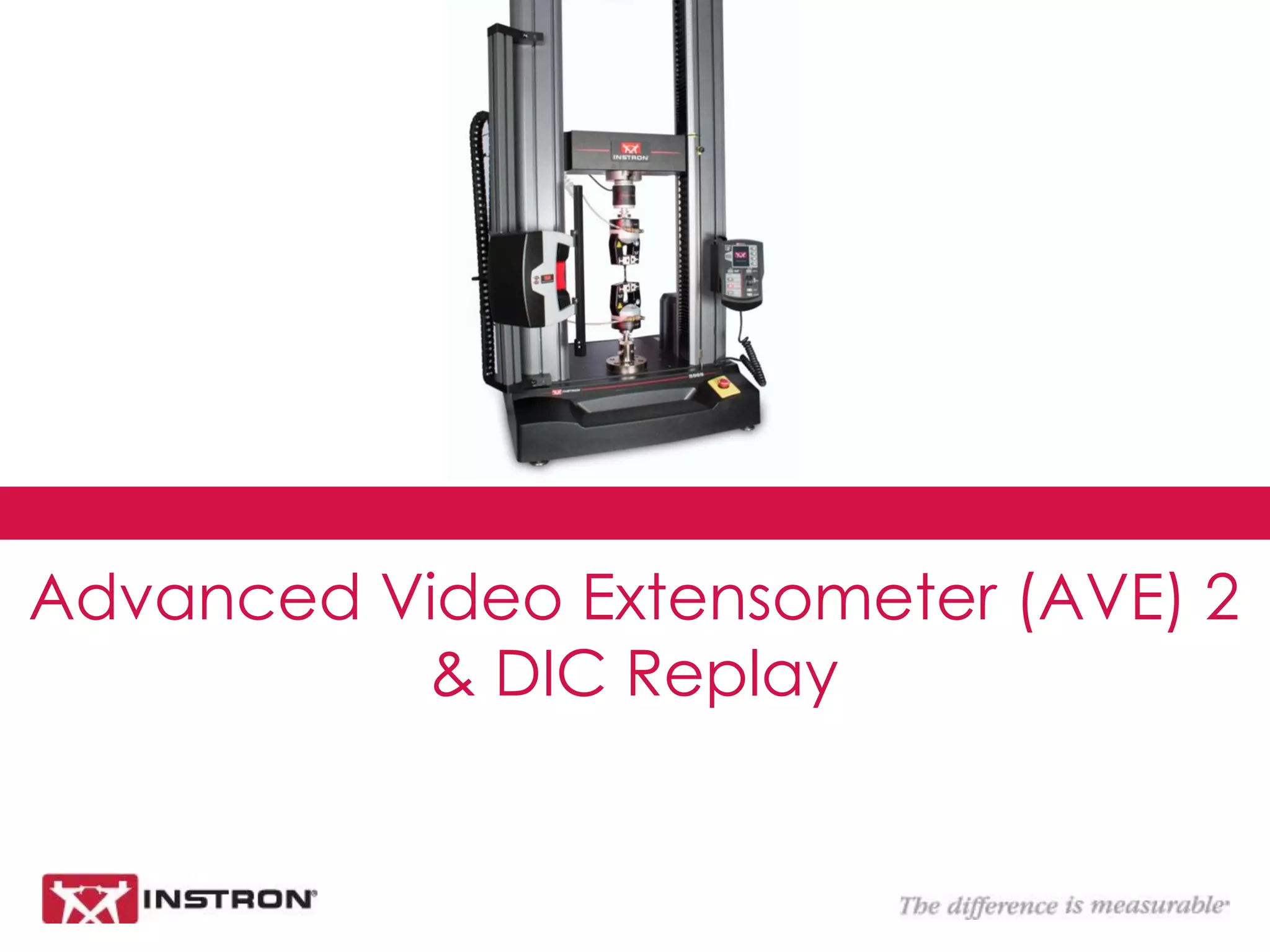
Advanced Video Extensometer (AVE) 2
& DIC Replay
11
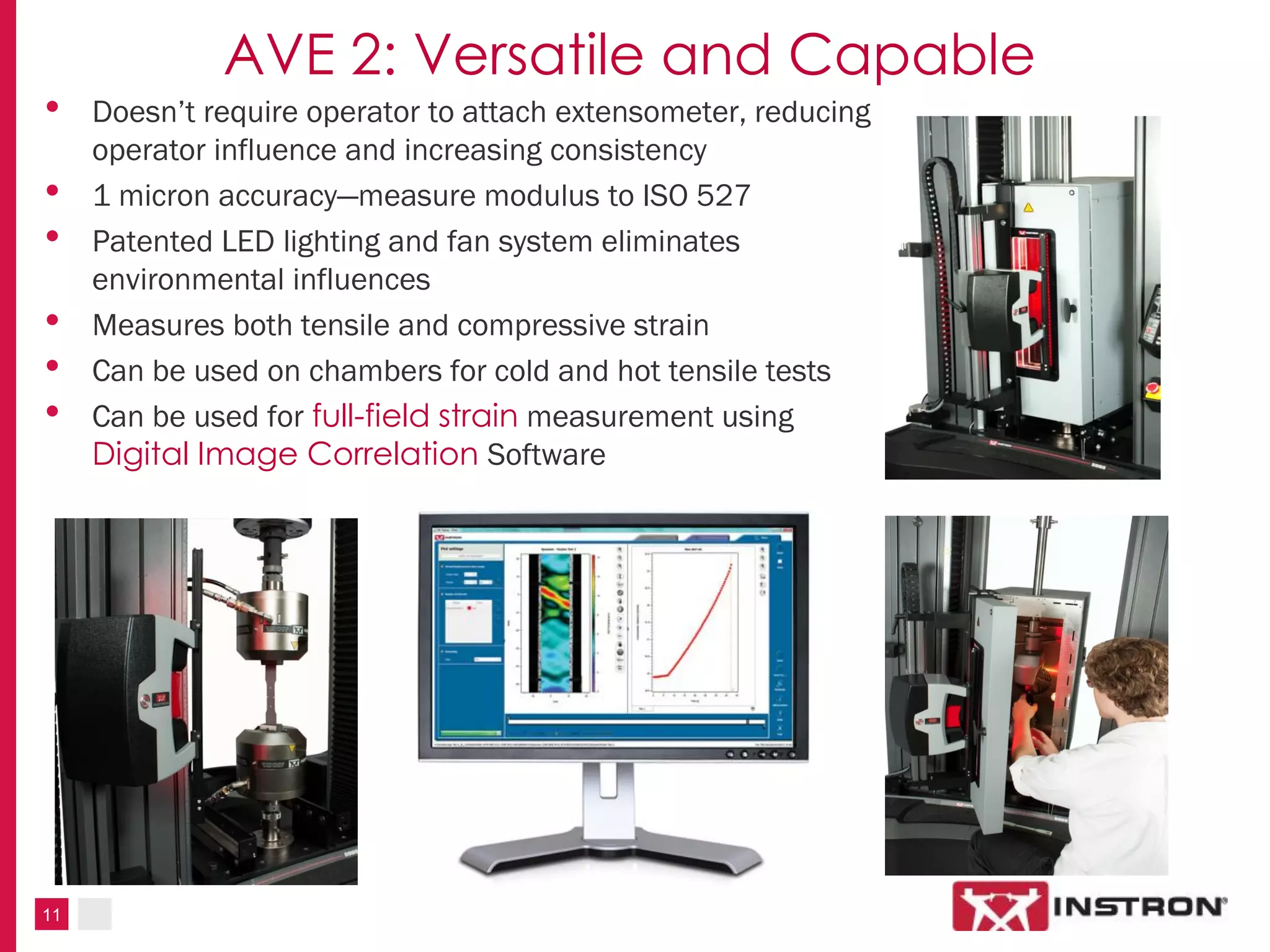
AVE 2: Versatile and Capable
• Doesn’t require operator to attach extensometer, reducing
operator influence and increasing consistency
• 1 micron accuracy—measure modulus to ISO 527
• Patented LED lighting and fan system eliminates
environmental influences
• Measures both tensile and compressive strain
• Can be used on chambers for cold and hot tensile tests
• Can be used for full-field strain measurement using
Digital Image Correlation Software
12
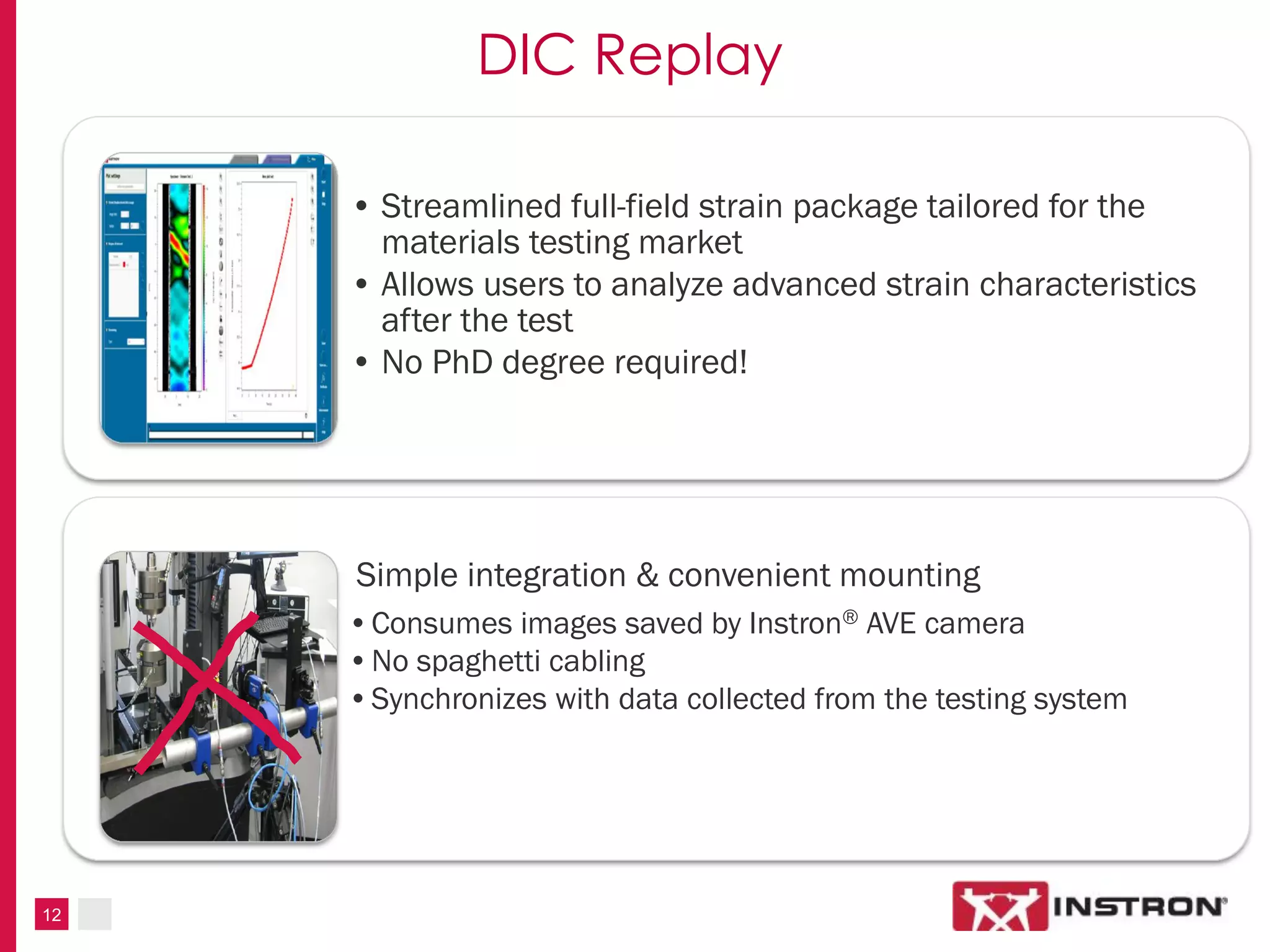
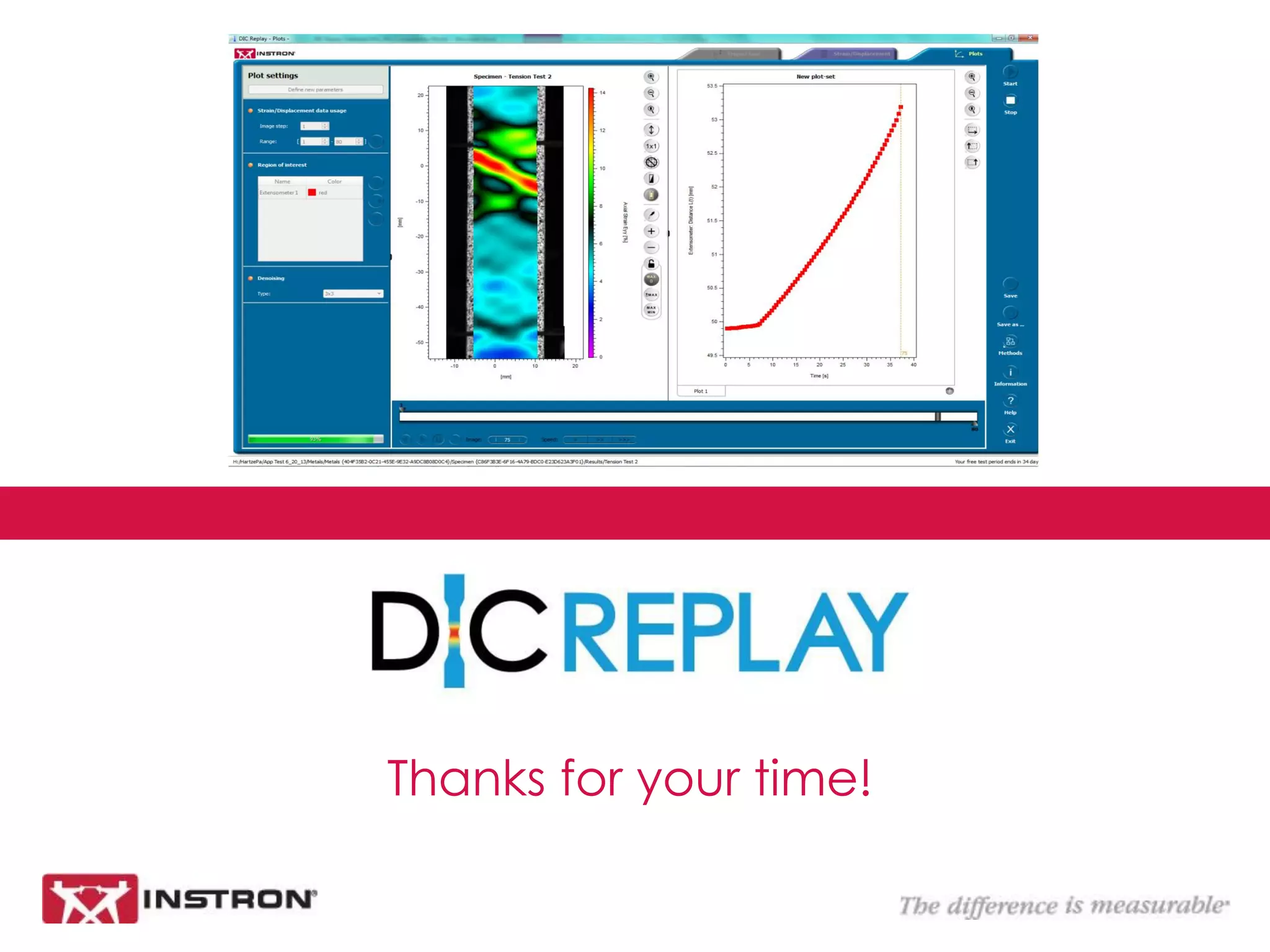
DIC Replay
• Streamlined full-field strain package tailored for the
materials testing market
• Allows users to analyze advanced strain characteristics
after the test
• No PhD degree required!
Simple integration & convenient mounting
•Consumes images saved by Instron® AVE camera
•No spaghetti cabling
•Synchronizes with data collected from the testing system
13
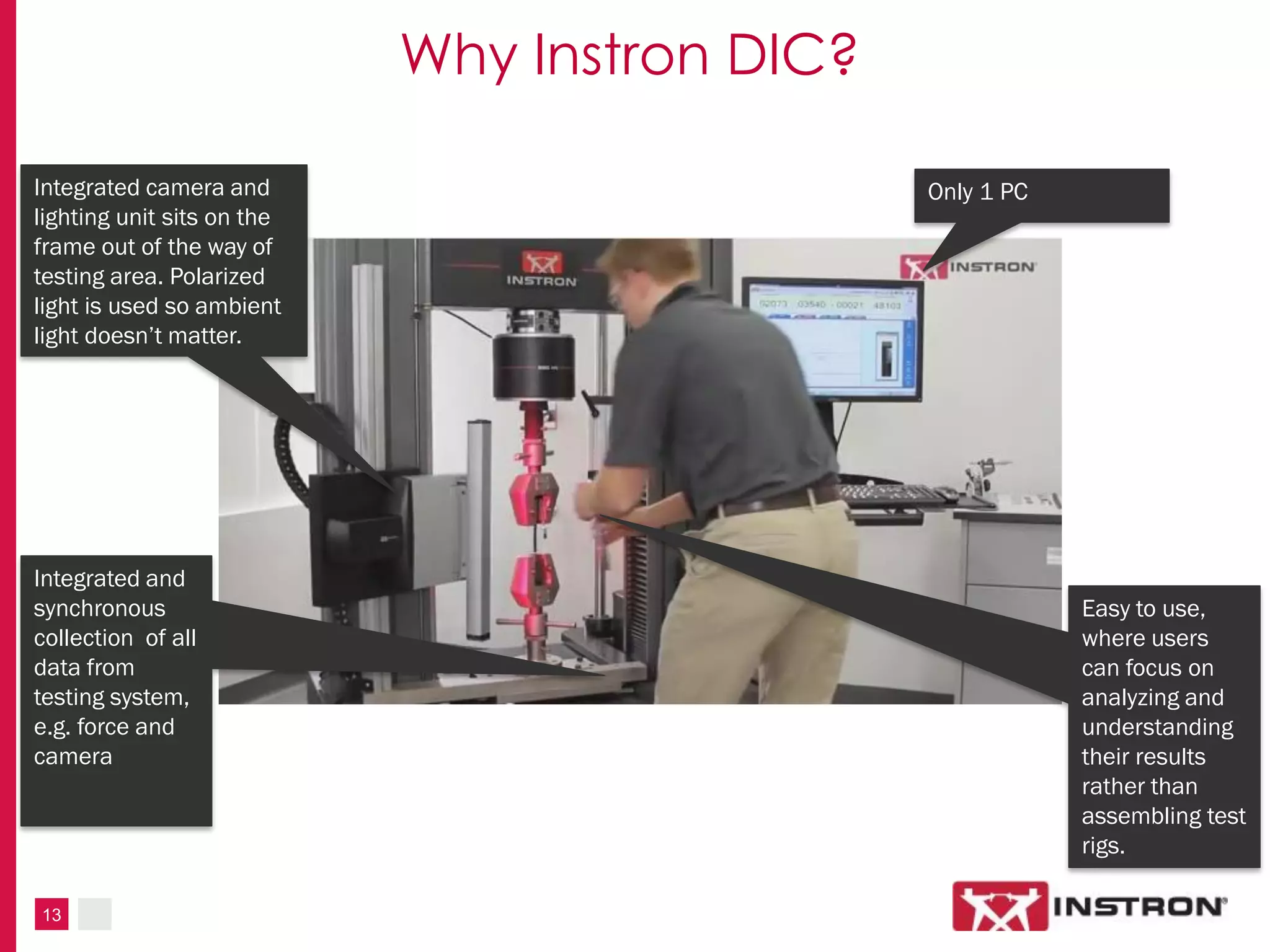
Why Instron DIC?
Integrated and
synchronous
collection of all
data from
testing system,
e.g. force and
camera
Only 1 PCIntegrated camera and
lighting unit sits on the
frame out of the way of
testing area. Polarized
light is used so ambient
light doesn’t matter.
Easy to use,
where users
can focus on
analyzing and
understanding
their results
rather than
assembling test
rigs.
14
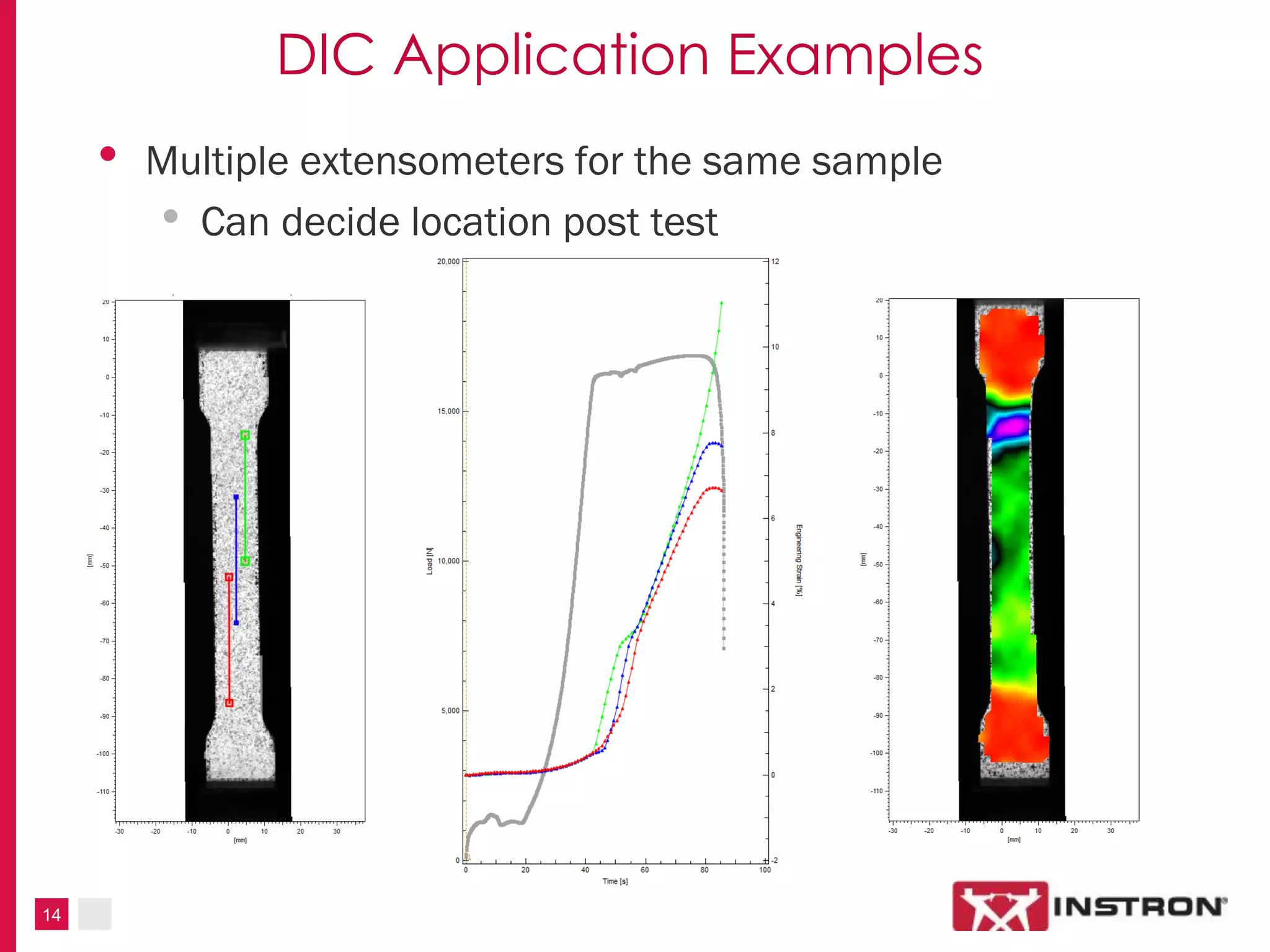
DIC Application Examples
• Multiple extensometers for the same sample
• Can decide location post test
15
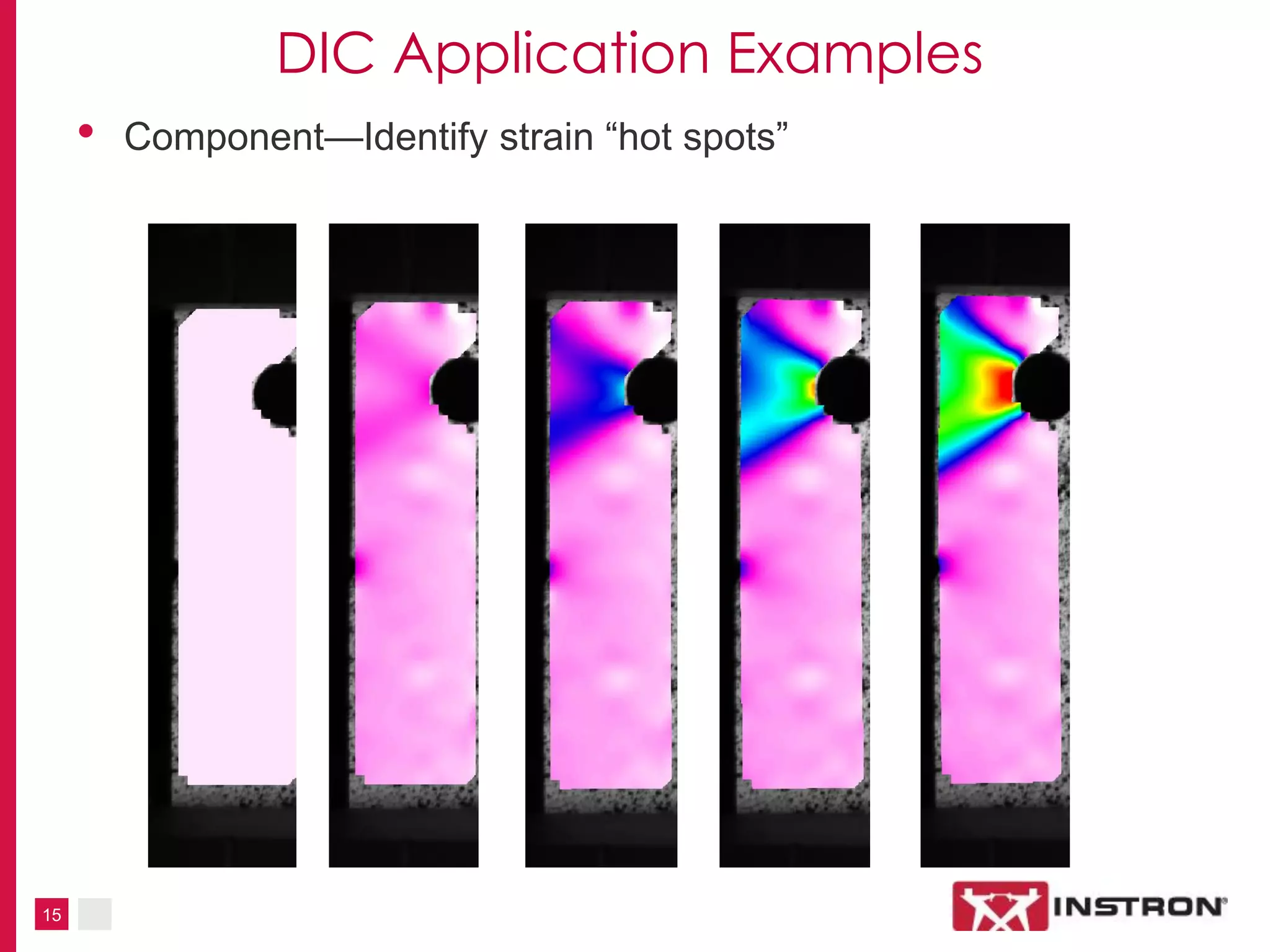
DIC Application Examples
• Component—Identify strain “hot spots”
16
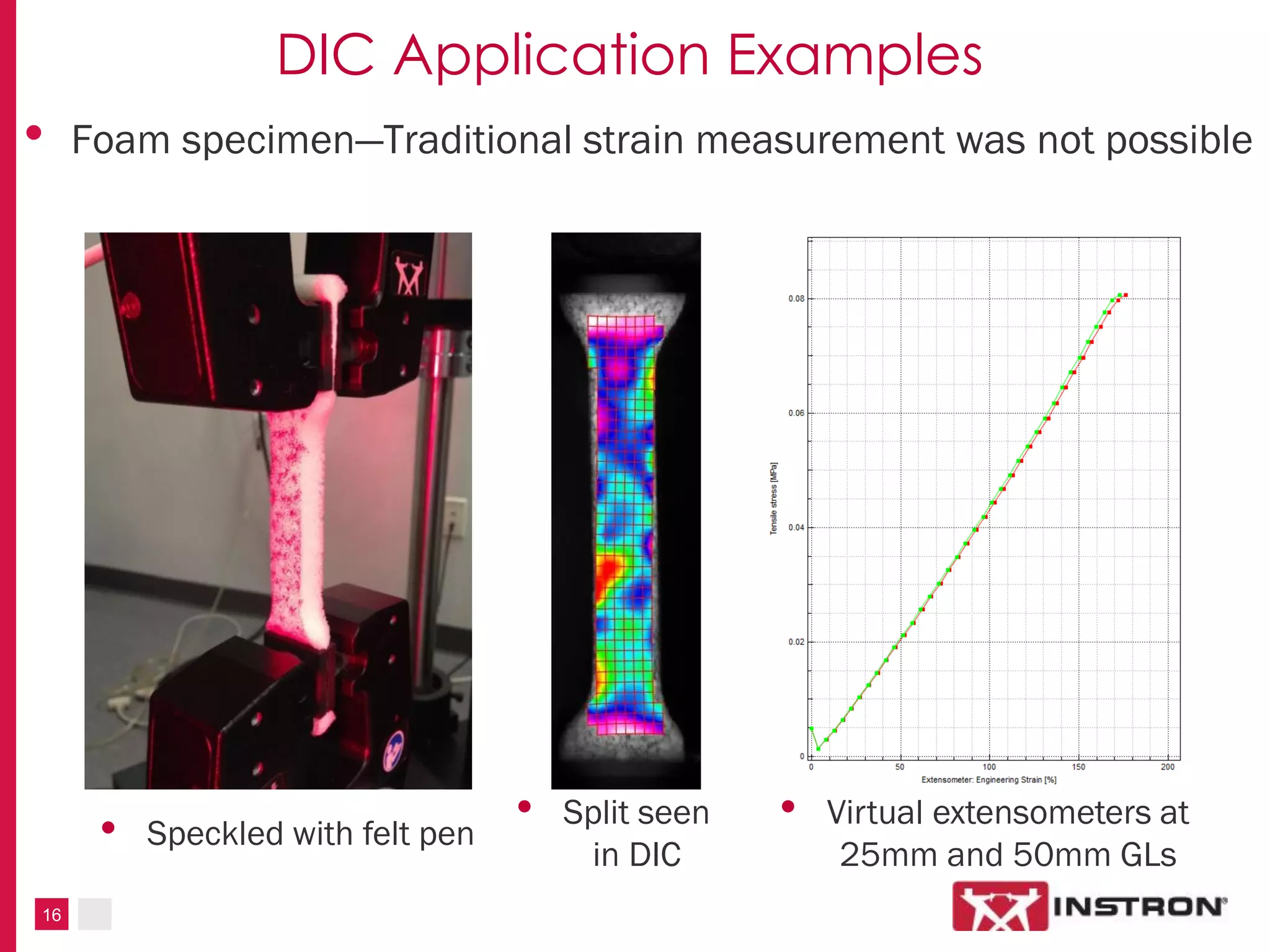
DIC Application Examples
• Foam specimen—Traditional strain measurement was not possible
• Speckled with felt pen
• Split seen
in DIC
• Virtual extensometers at
25mm and 50mm GLs
17
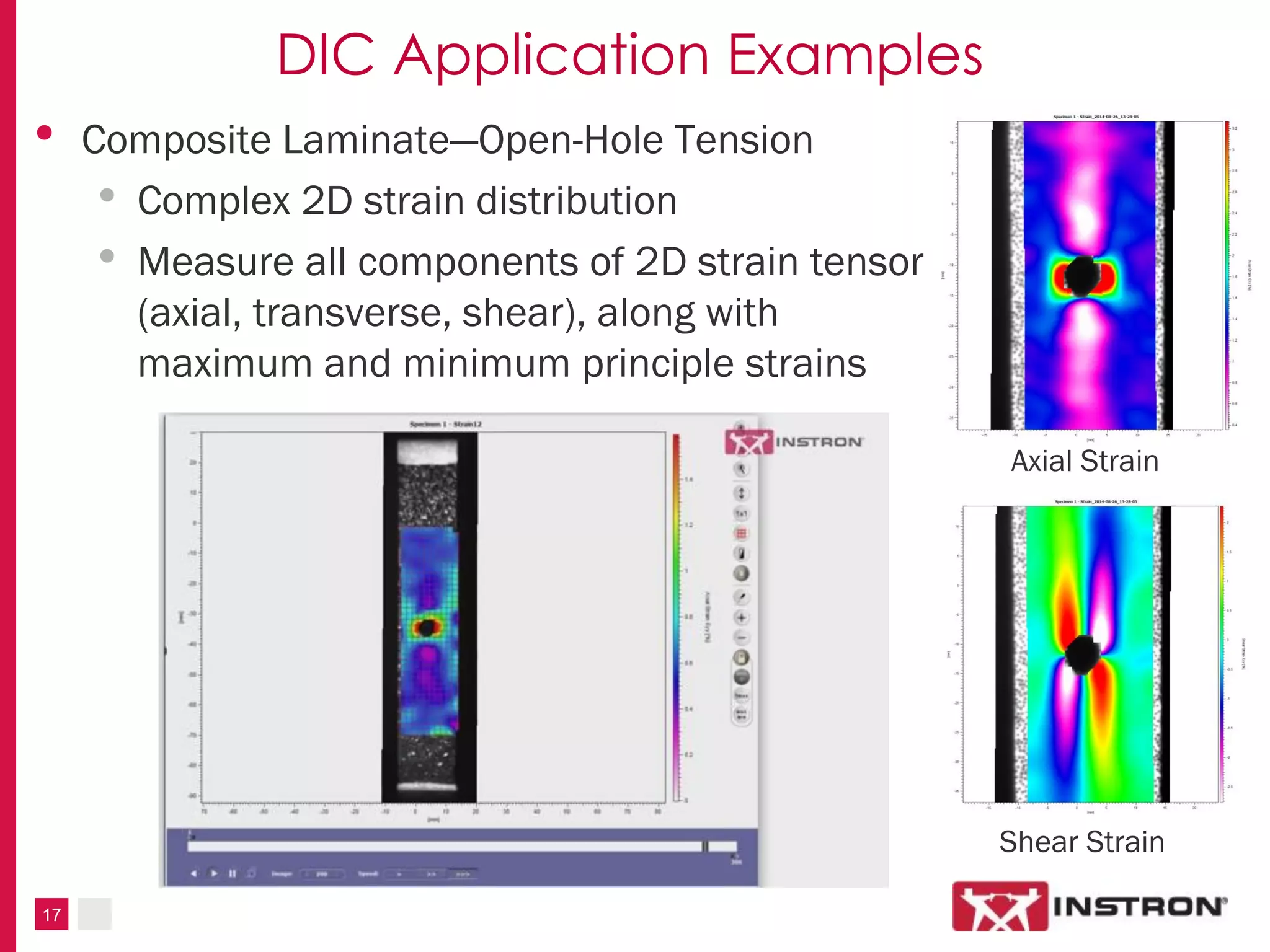
DIC Application Examples
• Composite Laminate—Open-Hole Tension
• Complex 2D strain distribution
• Measure all components of 2D strain tensor
(axial, transverse, shear), along with
maximum and minimum principle strains
Shear Strain
Axial Strain
18
What Can We Do Next?
• If you’re interested in further discussions:
• Arrange a demonstration on site by our sales engineer
• Visit our applications laboratories and bring samples
• Send samples for us to test
Thanks for your time!

Introduction to Digital Image Correlation (DIC)

  • 1.
    Ian McEnteggart, Instron® CompositesMarketing Manager An Introduction to Digital Image Correlation (DIC)
  • 2.
    2 What is DigitalImage Correlation? Images Displacement Strain Analysis of image surface over time Use of cross correlation to determine displacement Strain calculated from displacement An optical method to measure deformation on an object’s surface
  • 3.
    3 • Non-contact strainmeasurement • Full-field data (like thousands of tiny extensometers) • Extract “conventional” 1D strain plots • Identify strain hot spots over a large area • Don’t need to know where to place the strain gauge/extensometer before the test starts • Validate correct specimen alignment What are the Benefits of DIC?
  • 4.
    4 Sample Preparation • Applyspeckle pattern using: • Airbrush • Standard spray aerosol • Brush—flicking • Transferable stickers • Rubber stamp • Some materials can be left without speckling: • Certain composites • Concrete • Textiles/fabric
  • 5.
  • 6.
    6 Calculating Full-Field Displacement •Repeated for each subset over the entire surface • The result is a regular map of displacements over the entire specimen surface Specimen surface image Split into small subsets Pattern recognized for each subset As the specimen deforms, axial (x) and transverse (y) displacements for each subset are calculated
  • 7.
    7 Calculating Strain • Strainat each location is calculated using central differencing • Strain calculated in the x and y directions separately • For the x direction: ∆𝐿 = 𝐿 𝑡 − 𝐿0 𝜀 = ∆𝐿 𝐿0
  • 8.
    8 Analysis of VariousStrain and Displacement Data Axial Strain Transverse Strain Shear Strain Poisson’s Ratio Minimum Normal Strain Maximum Normal Strain Axial Displacement Transverse Displacement
  • 9.
    9 Extracting 1D Plots •Use virtual extensometer for calculating strain/displacement between to points. • Use virtual strain gauge for calculating average strain over a defined area.
  • 10.
    Advanced Video Extensometer(AVE) 2 & DIC Replay
  • 11.
    11 AVE 2: Versatileand Capable • Doesn’t require operator to attach extensometer, reducing operator influence and increasing consistency • 1 micron accuracy—measure modulus to ISO 527 • Patented LED lighting and fan system eliminates environmental influences • Measures both tensile and compressive strain • Can be used on chambers for cold and hot tensile tests • Can be used for full-field strain measurement using Digital Image Correlation Software
  • 12.
    12 DIC Replay • Streamlinedfull-field strain package tailored for the materials testing market • Allows users to analyze advanced strain characteristics after the test • No PhD degree required! Simple integration & convenient mounting •Consumes images saved by Instron® AVE camera •No spaghetti cabling •Synchronizes with data collected from the testing system
  • 13.
    13 Why Instron DIC? Integratedand synchronous collection of all data from testing system, e.g. force and camera Only 1 PCIntegrated camera and lighting unit sits on the frame out of the way of testing area. Polarized light is used so ambient light doesn’t matter. Easy to use, where users can focus on analyzing and understanding their results rather than assembling test rigs.
  • 14.
    14 DIC Application Examples •Multiple extensometers for the same sample • Can decide location post test
  • 15.
    15 DIC Application Examples •Component—Identify strain “hot spots”
  • 16.
    16 DIC Application Examples •Foam specimen—Traditional strain measurement was not possible • Speckled with felt pen • Split seen in DIC • Virtual extensometers at 25mm and 50mm GLs
  • 17.
    17 DIC Application Examples •Composite Laminate—Open-Hole Tension • Complex 2D strain distribution • Measure all components of 2D strain tensor (axial, transverse, shear), along with maximum and minimum principle strains Shear Strain Axial Strain
  • 18.
    18 What Can WeDo Next? • If you’re interested in further discussions: • Arrange a demonstration on site by our sales engineer • Visit our applications laboratories and bring samples • Send samples for us to test
  • 19.