Mechanical tests of metals
Destructive tests
Classification of mechanical tests
• Destructive test
• Non – Destructive test
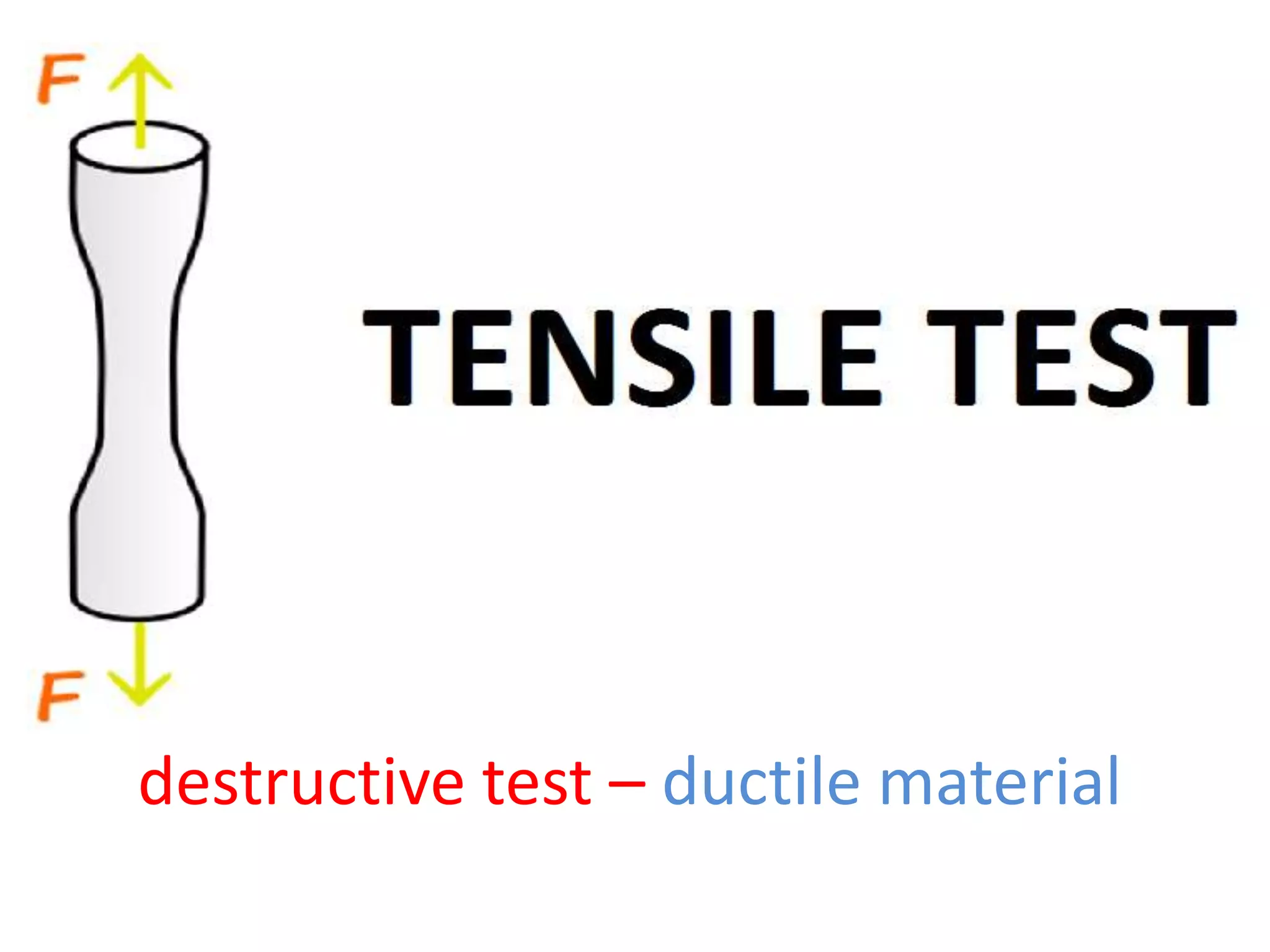
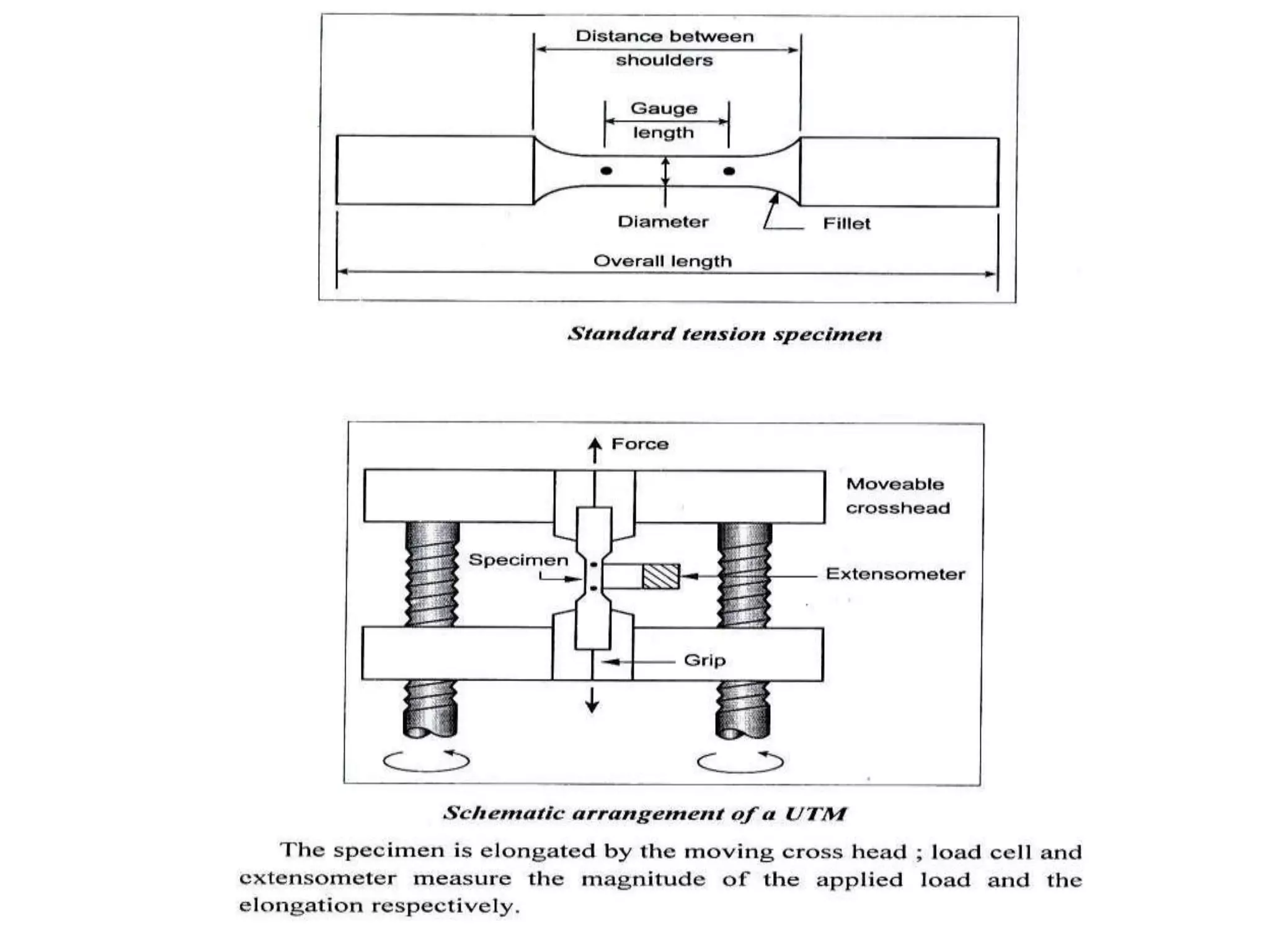
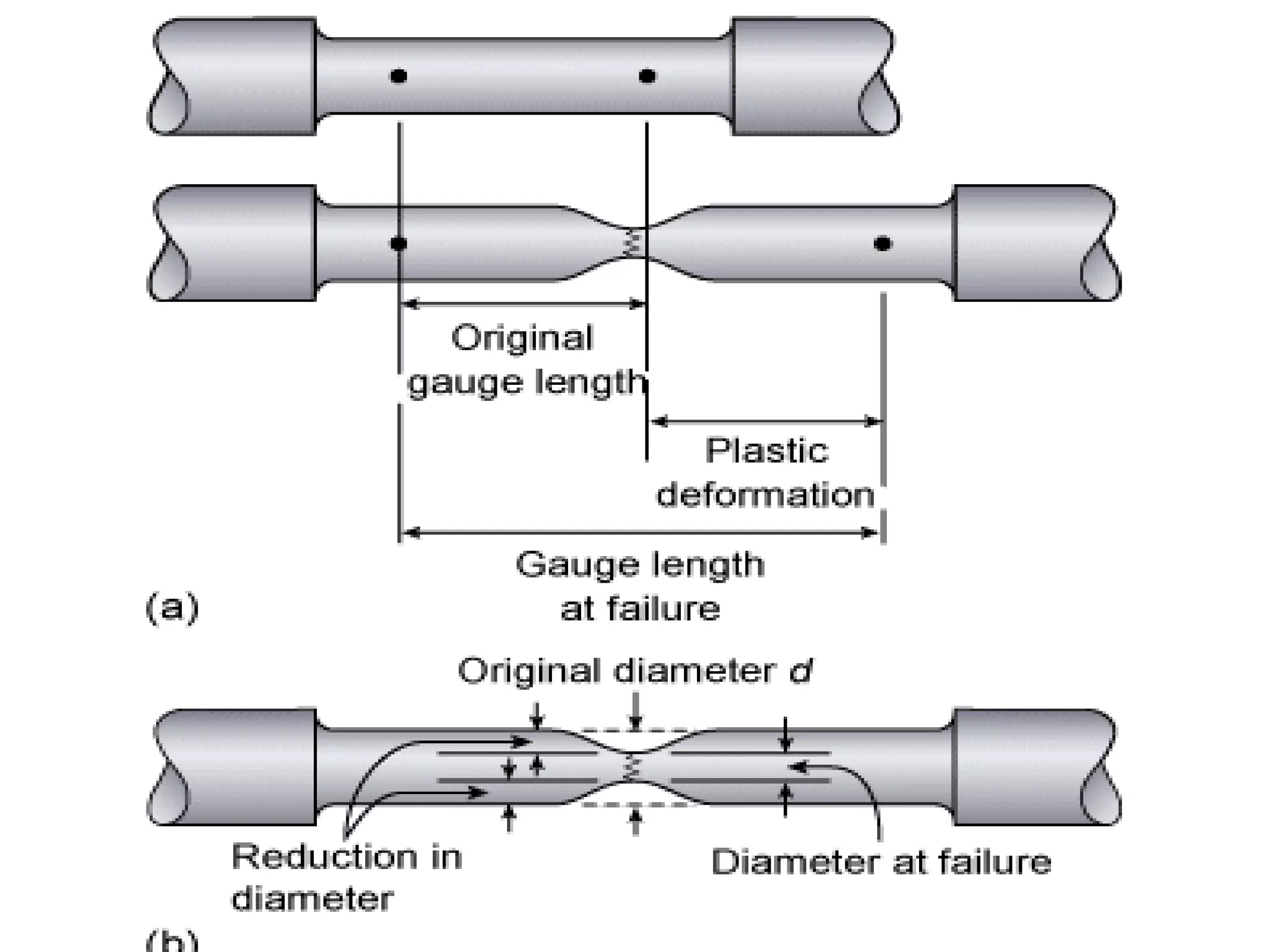
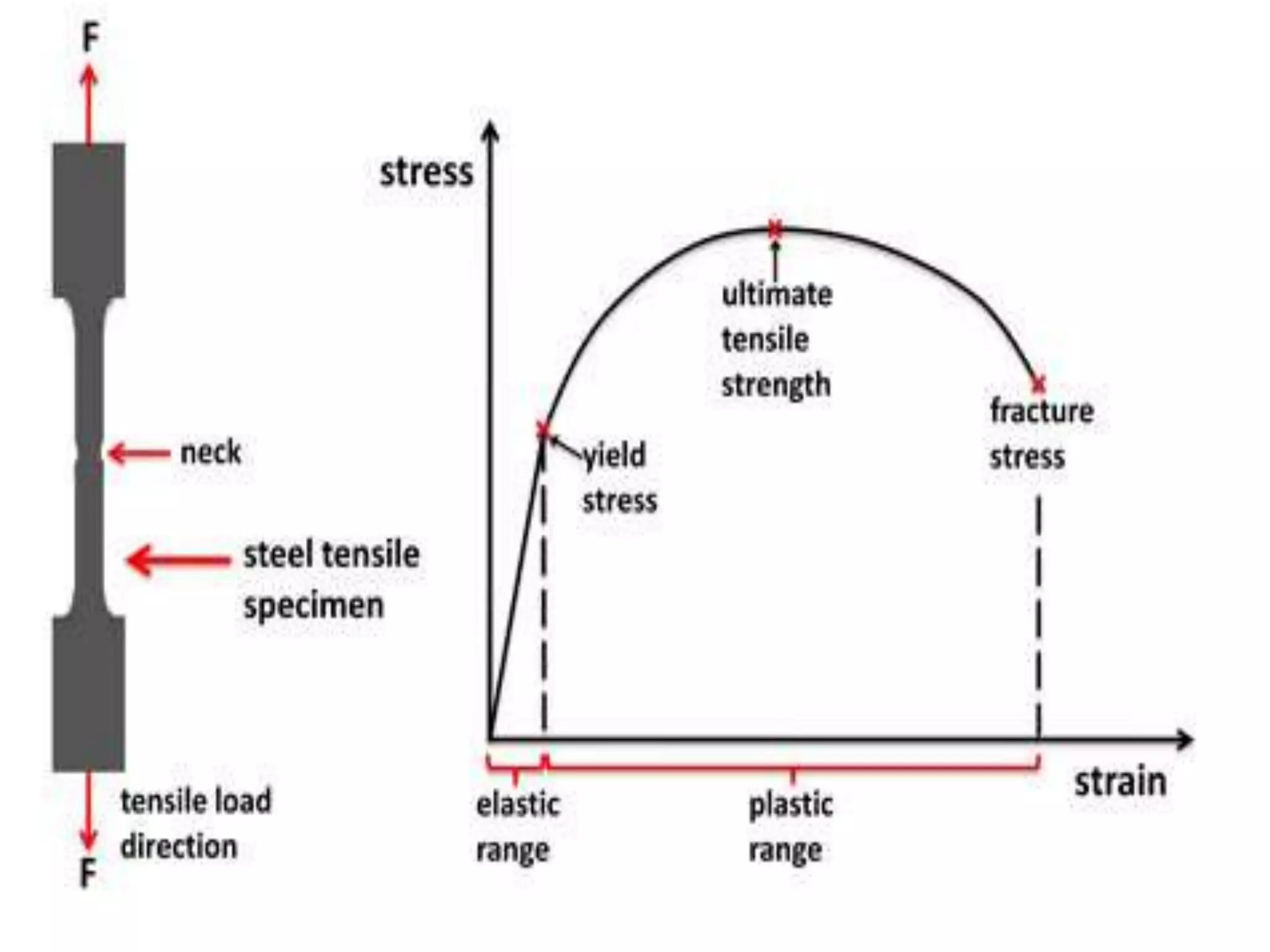
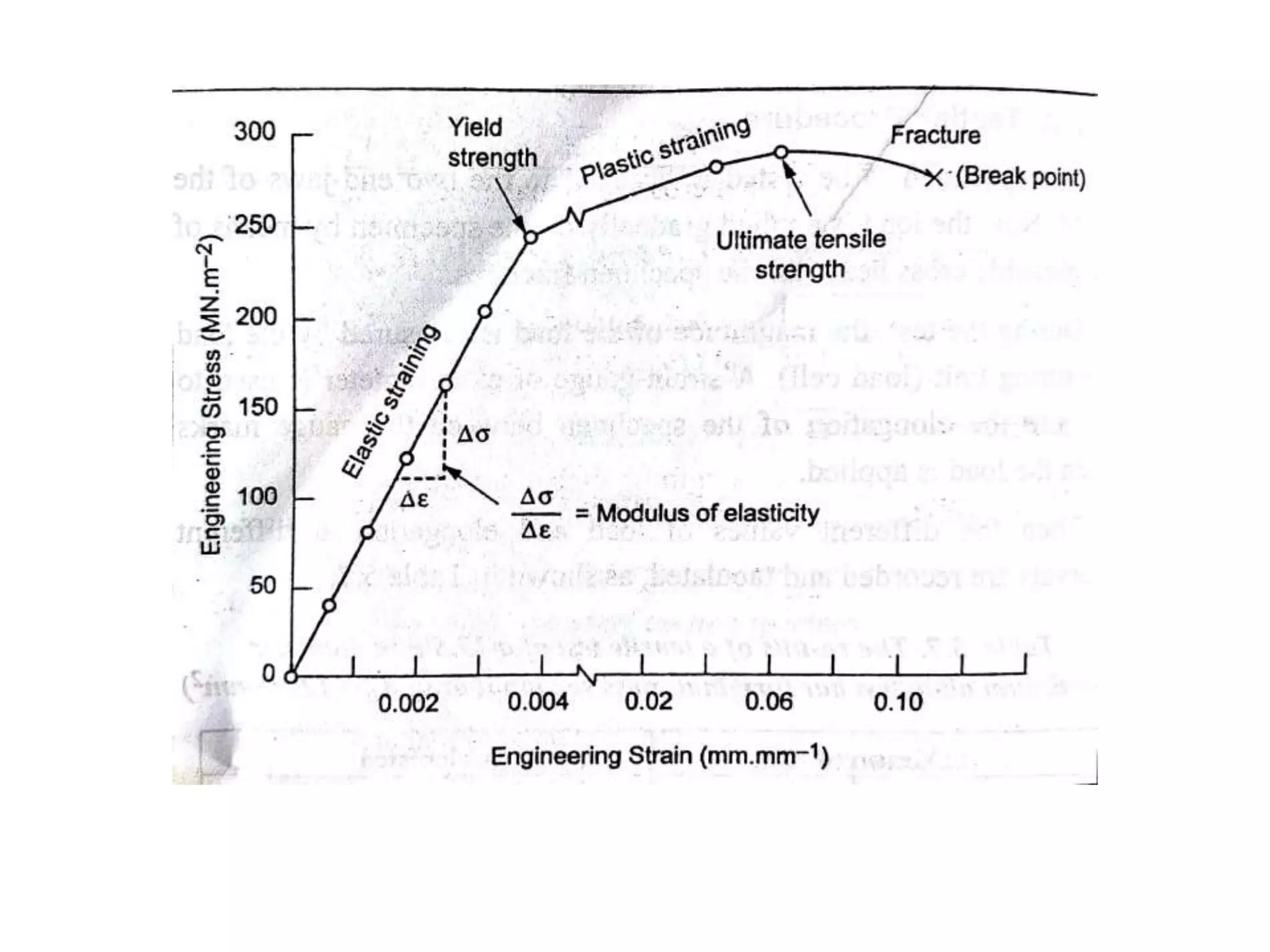
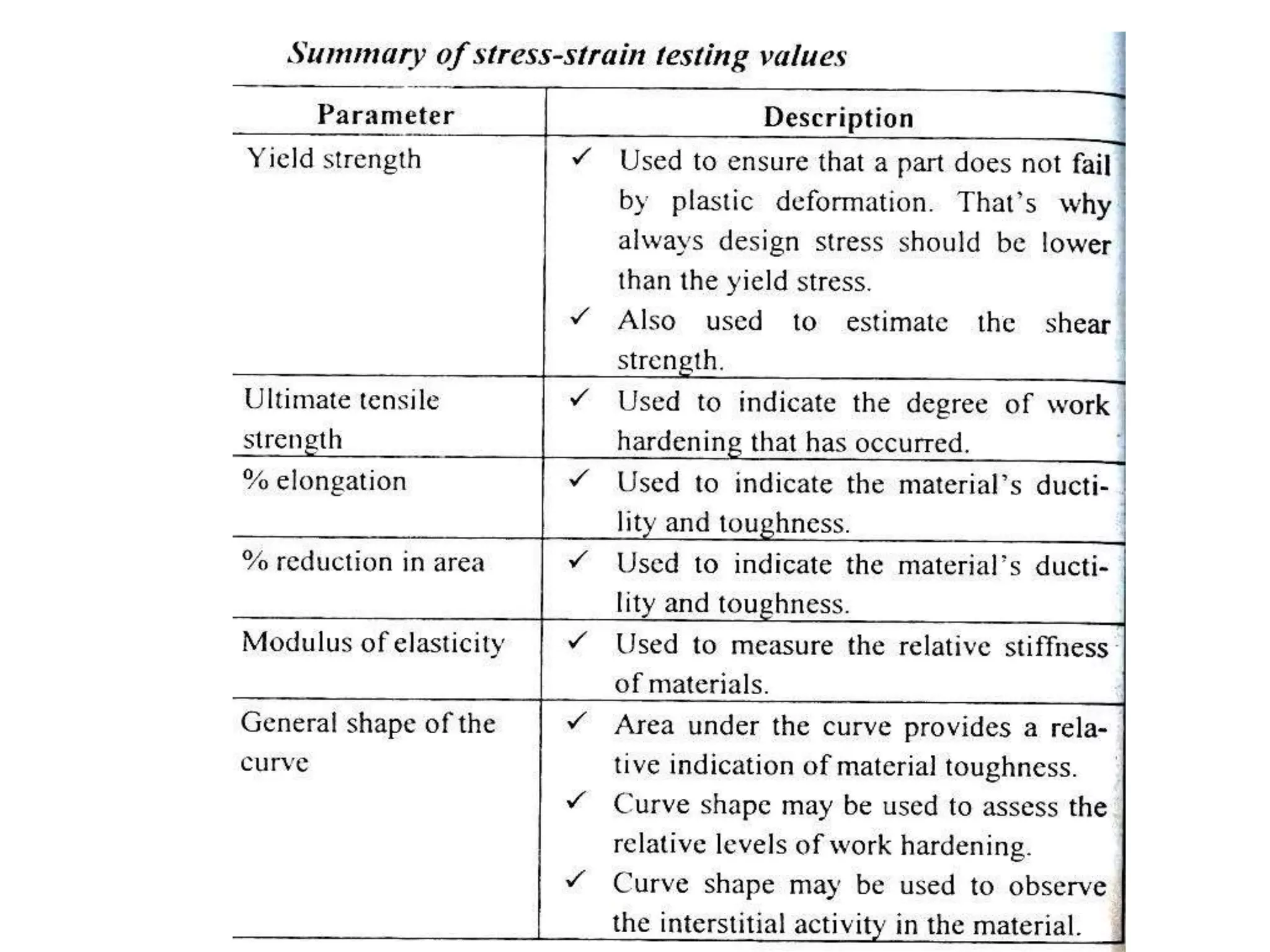
Tensile test
destructive test – ductile material
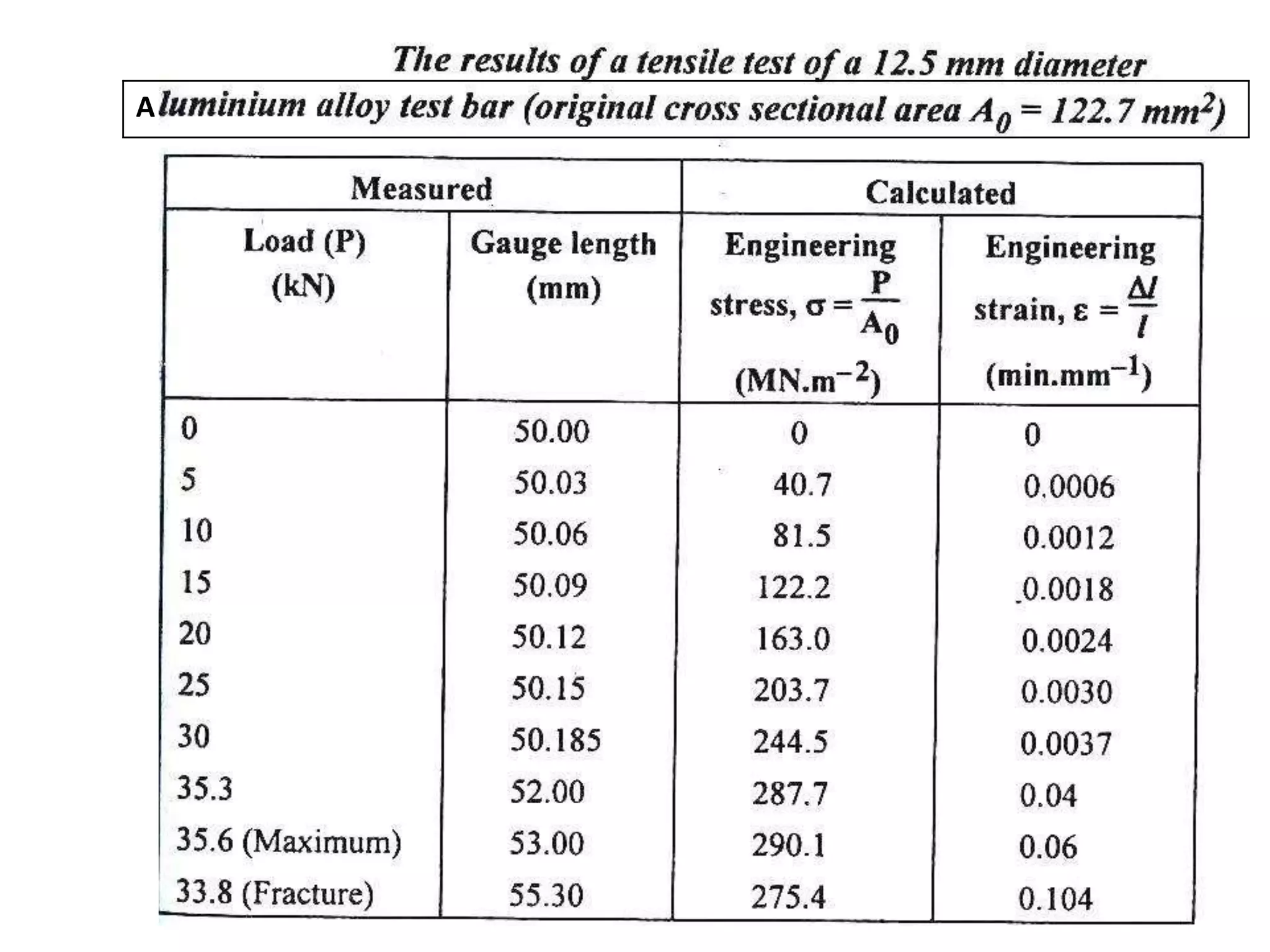
We find
.
.
.
.
A
.
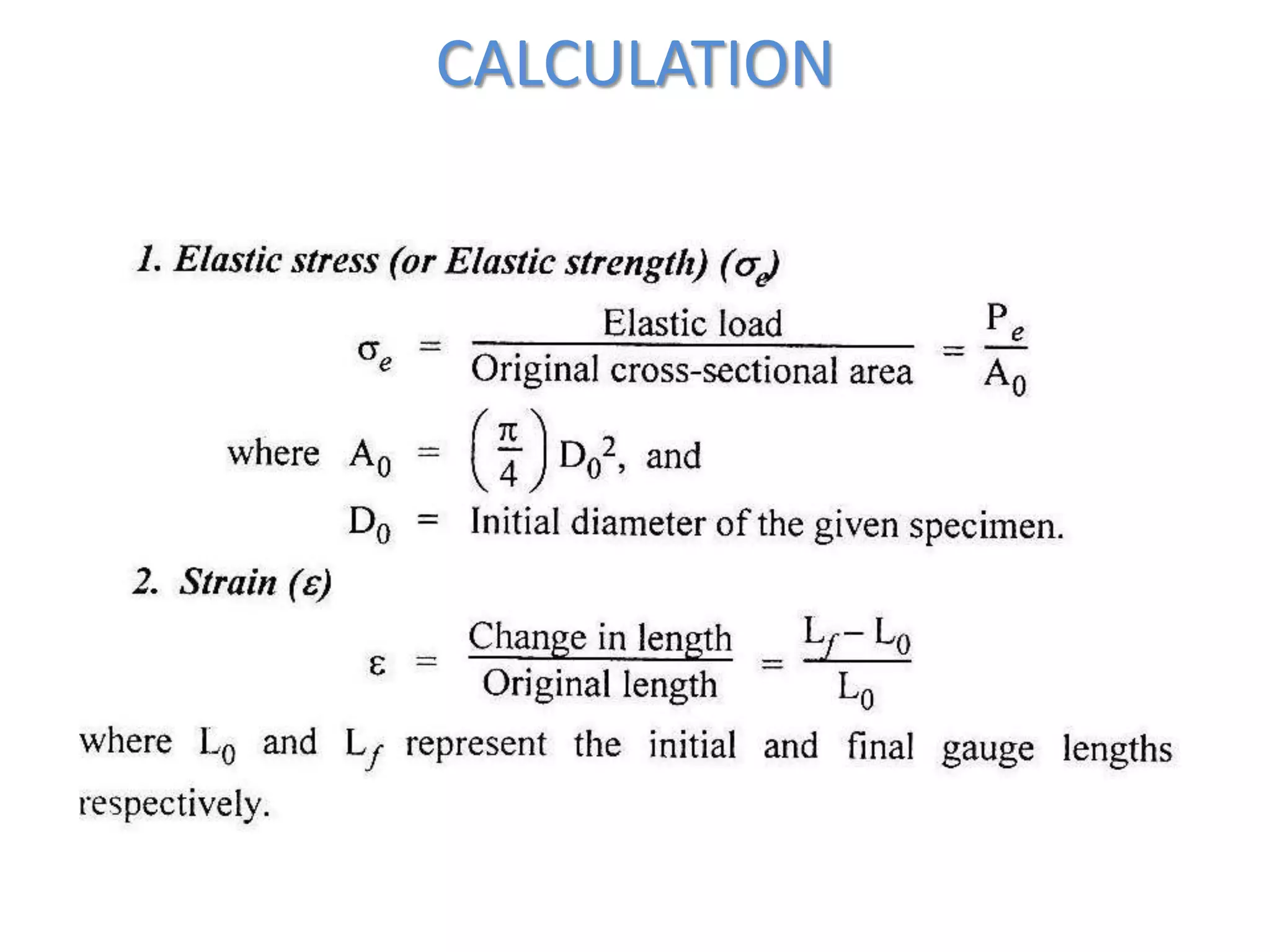
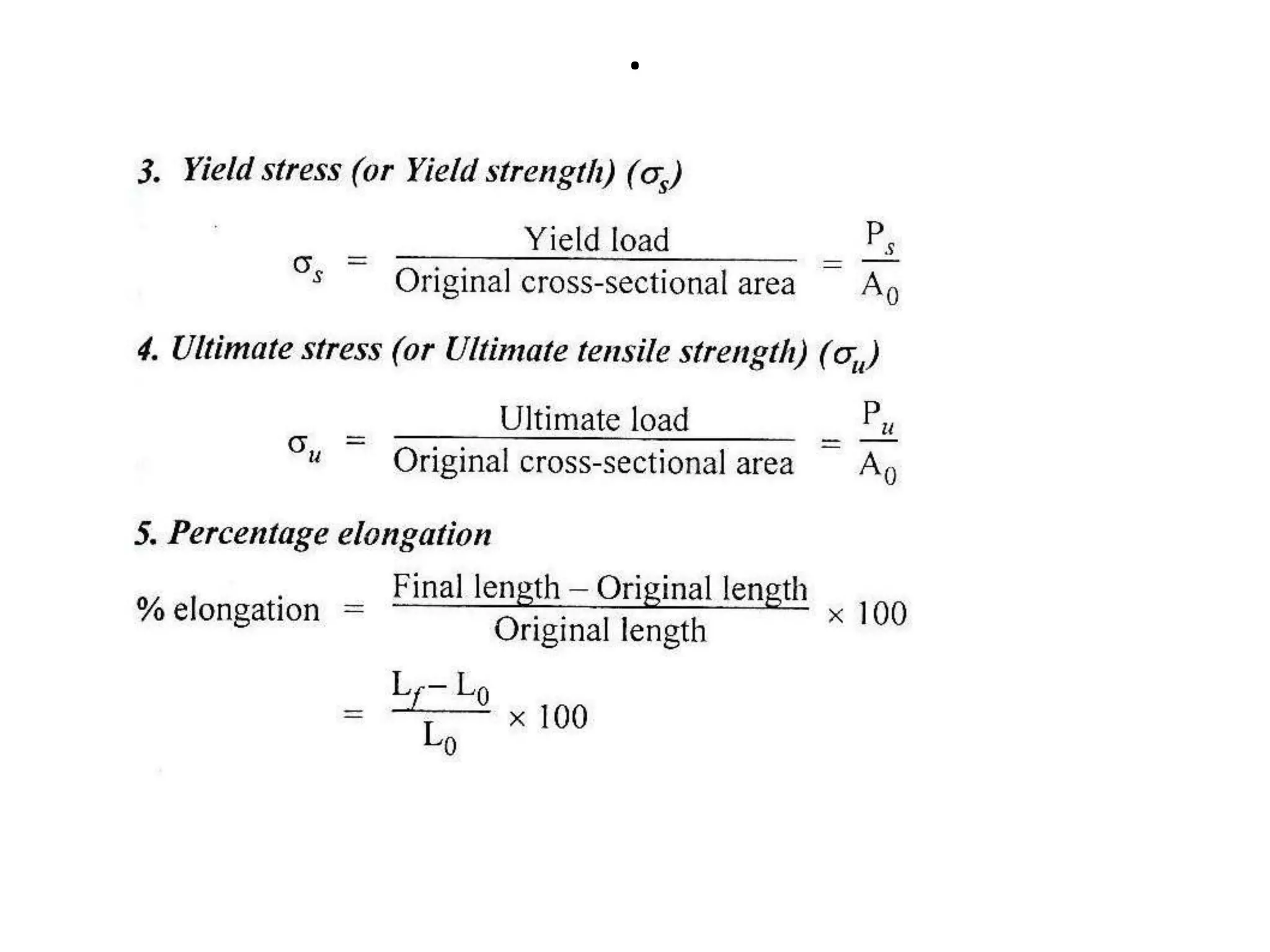
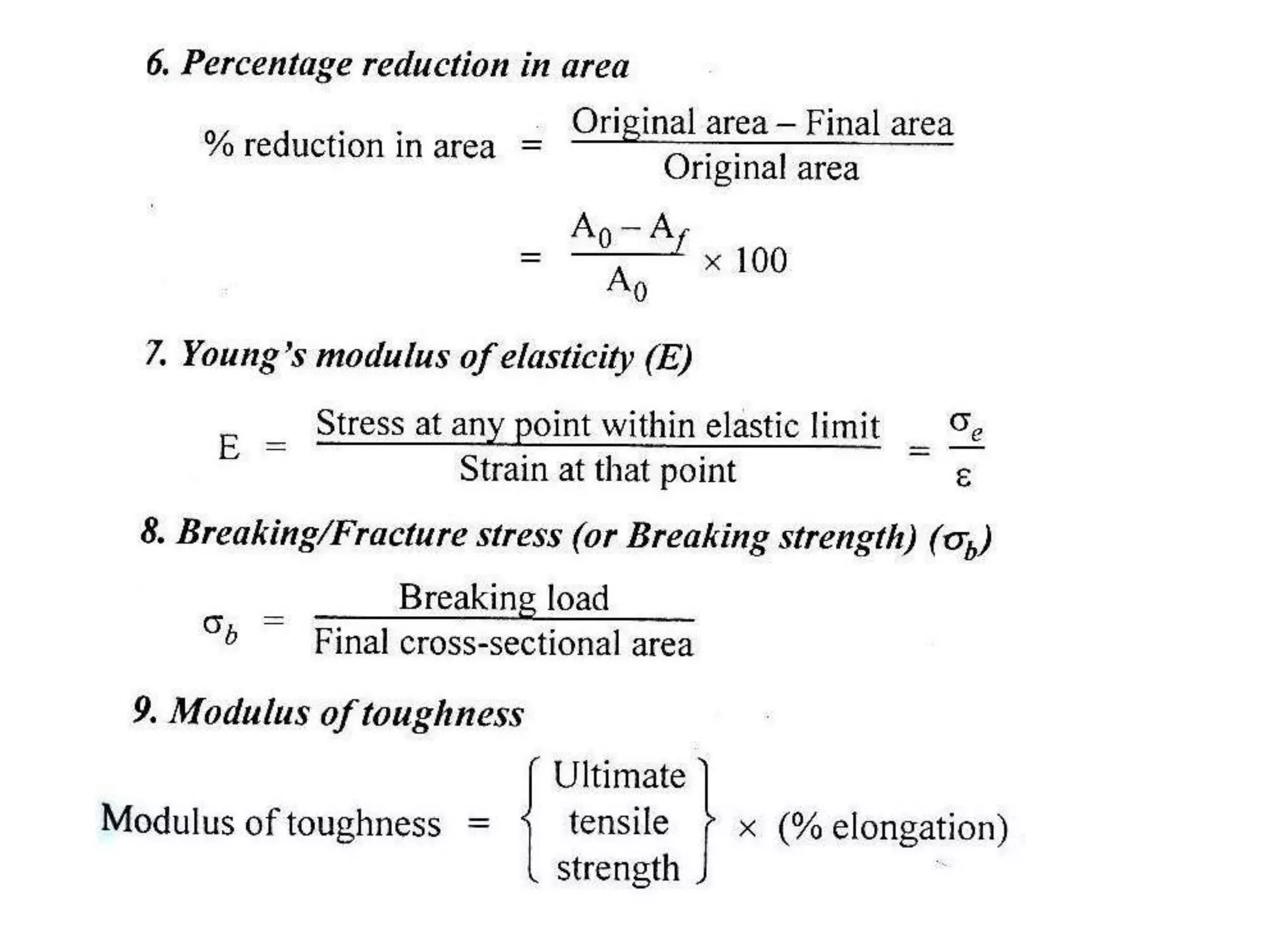
CALCULATION
.
.
.
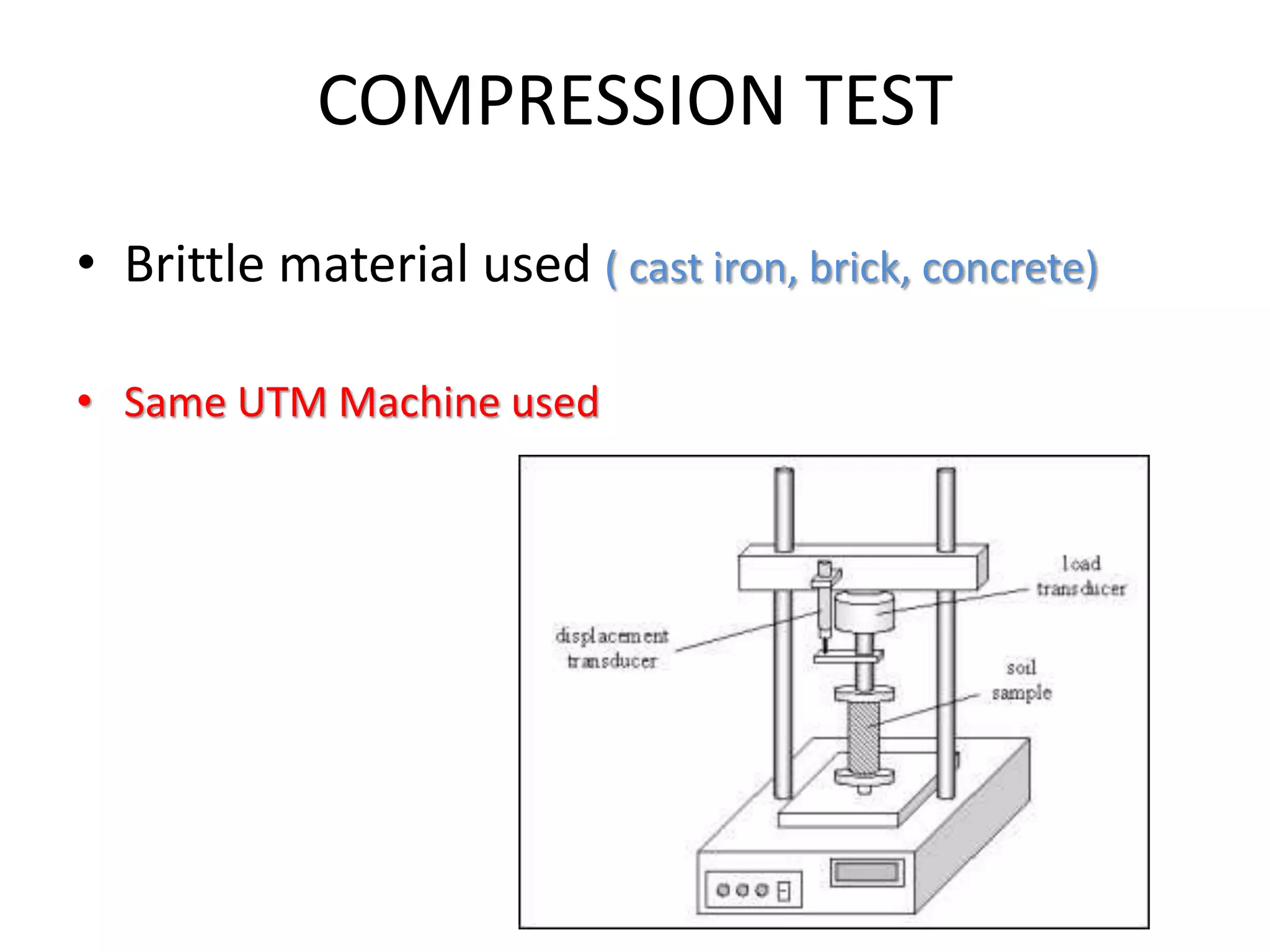
COMPRESSION TEST
• Brittle material used ( cast iron, brick, concrete)
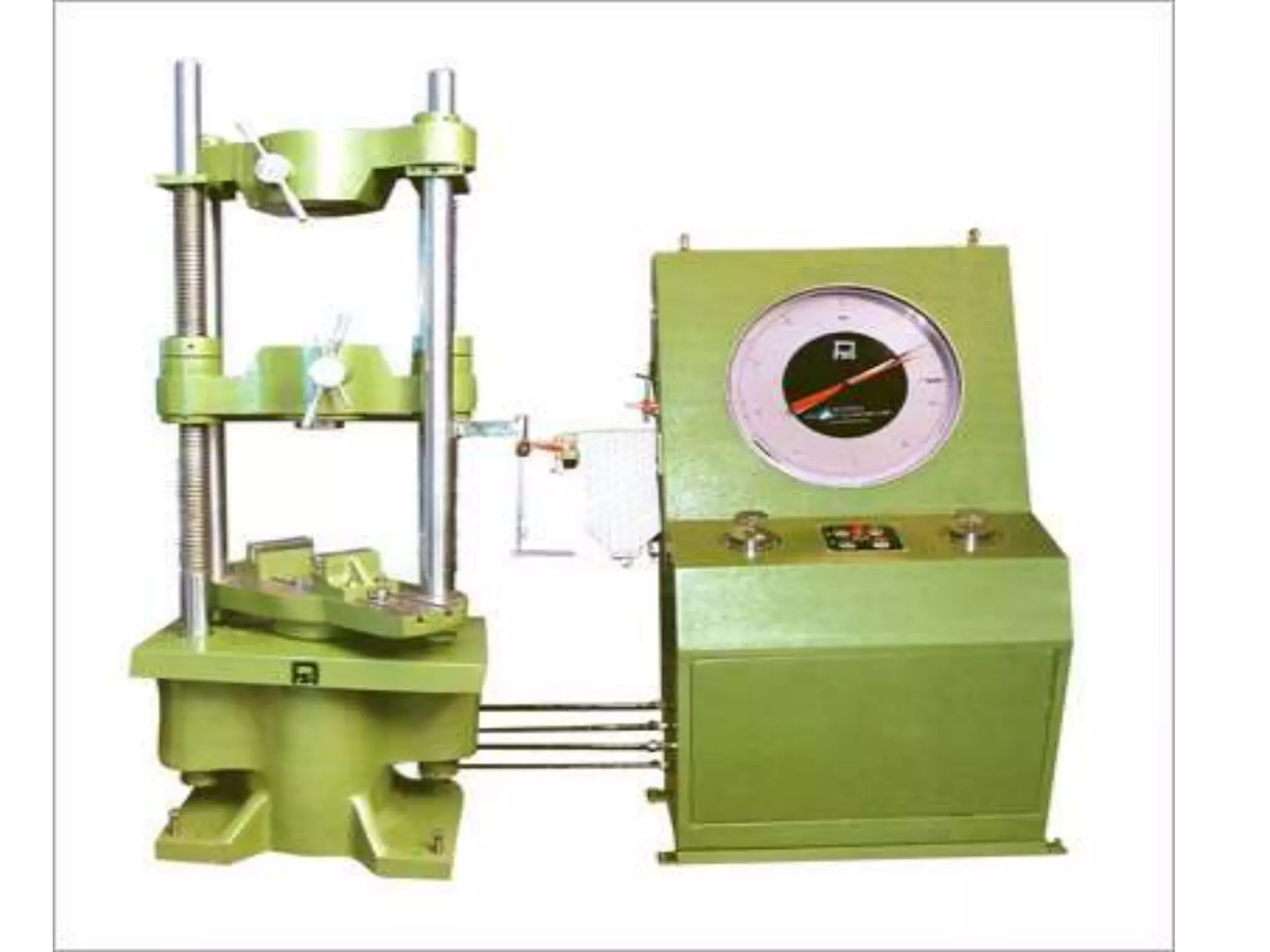
• Same UTM Machine used
measurement
• Compression load is gradually applied on the
specimen and the reduction in length is
recorded
Shear test
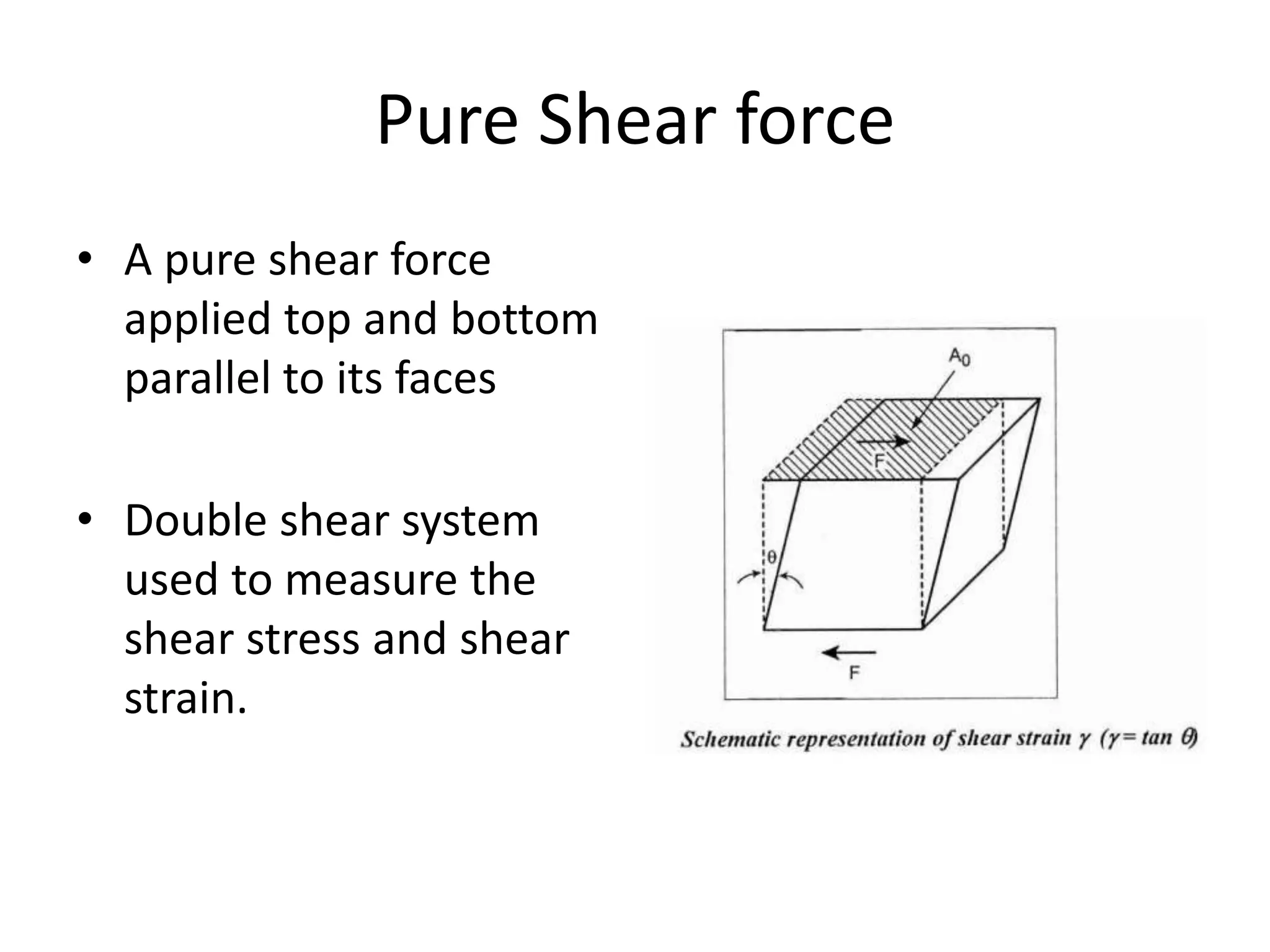
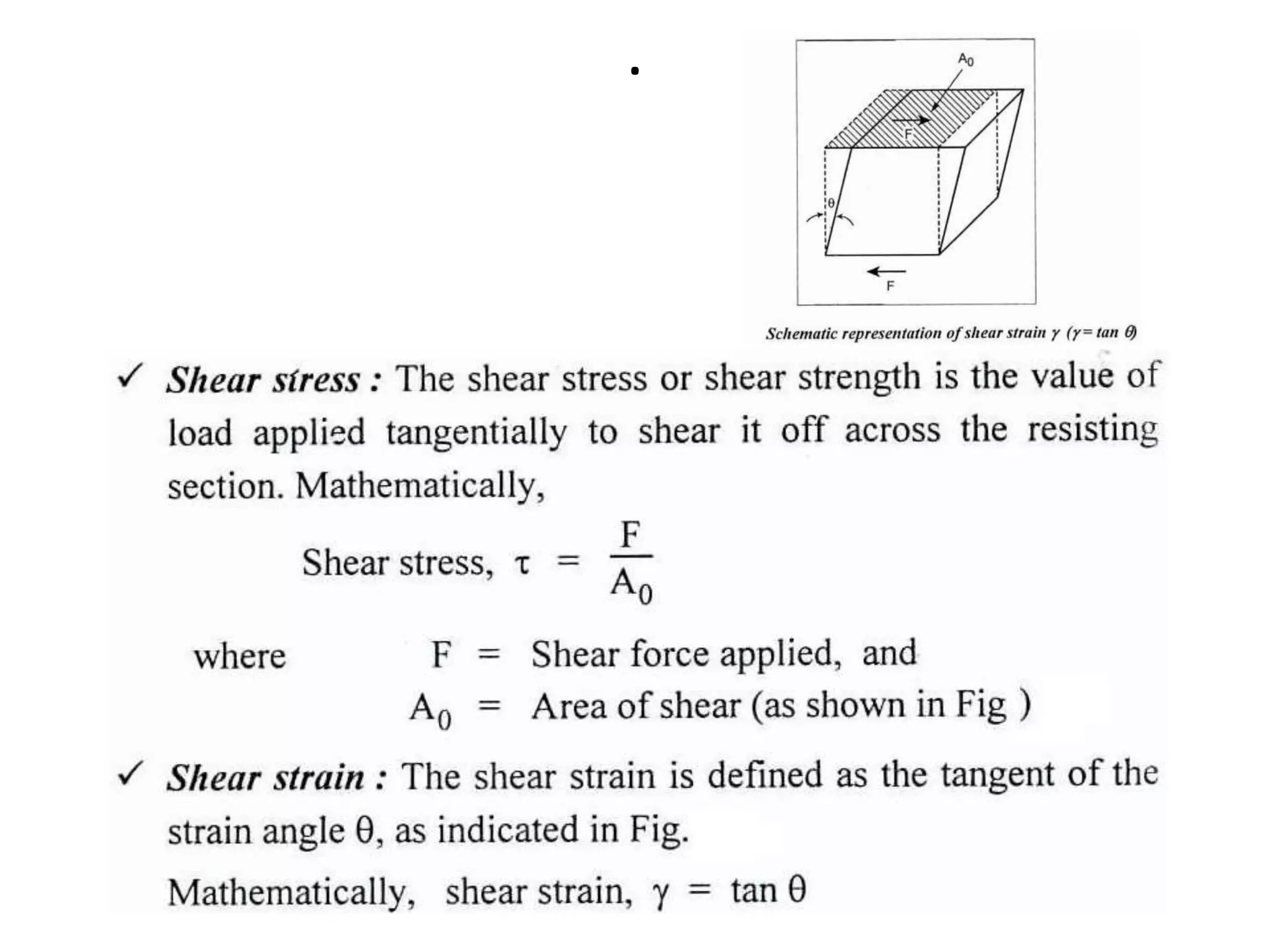
Pure shear force applied
To measure shear strength
Pure Shear force
• A pure shear force
applied top and bottom
parallel to its faces
• Double shear system
used to measure the
shear stress and shear
strain.
.
Limitations of shear test
• Need attachment with UTM machine .
• Material at last gets bend
• So we will get the bending stress also, not the
pure shear type.
• Very difficult in processing
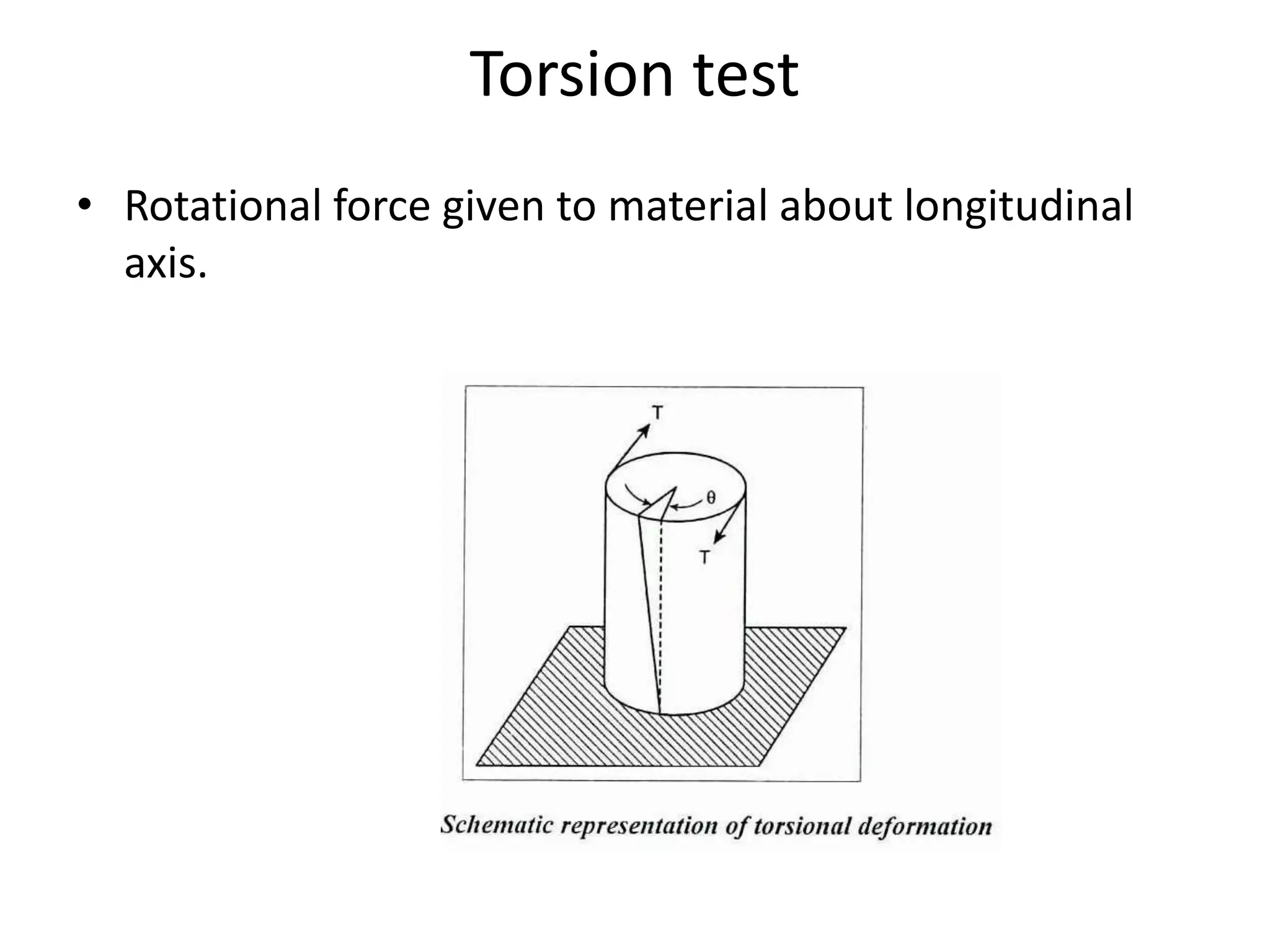
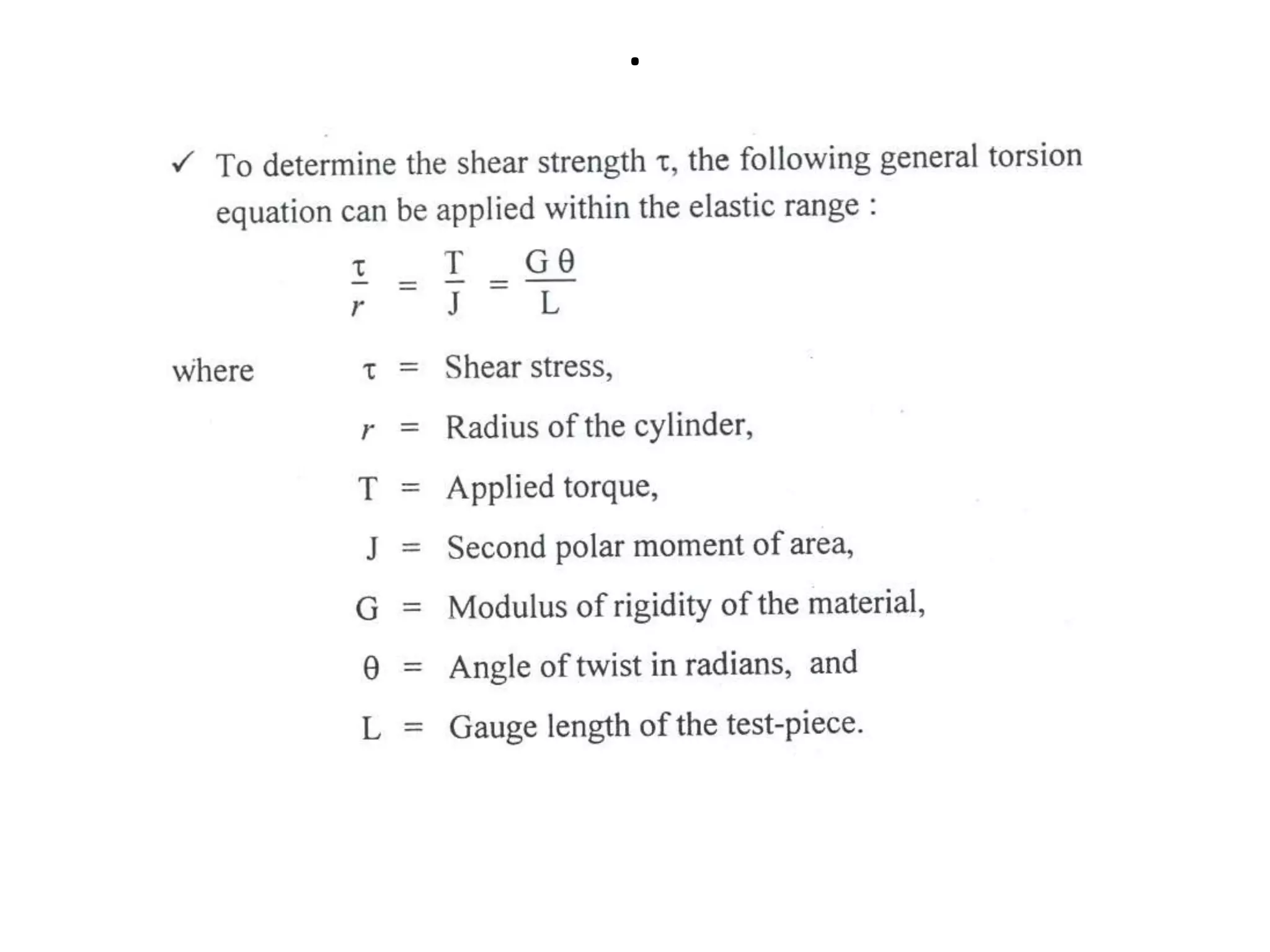
Torsion test
• Rotational force given to material about longitudinal
axis.
.
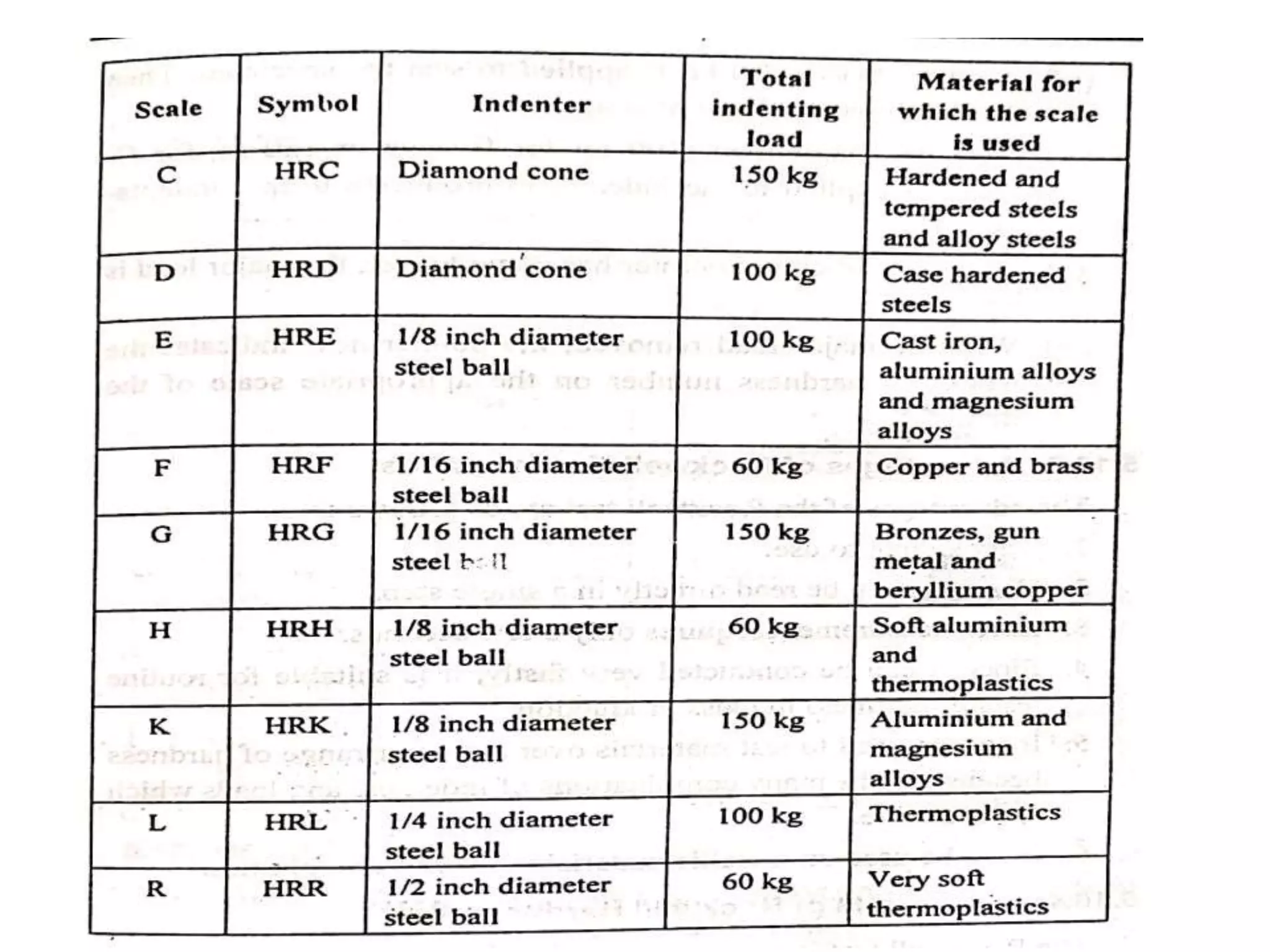
HARDNESS TEST
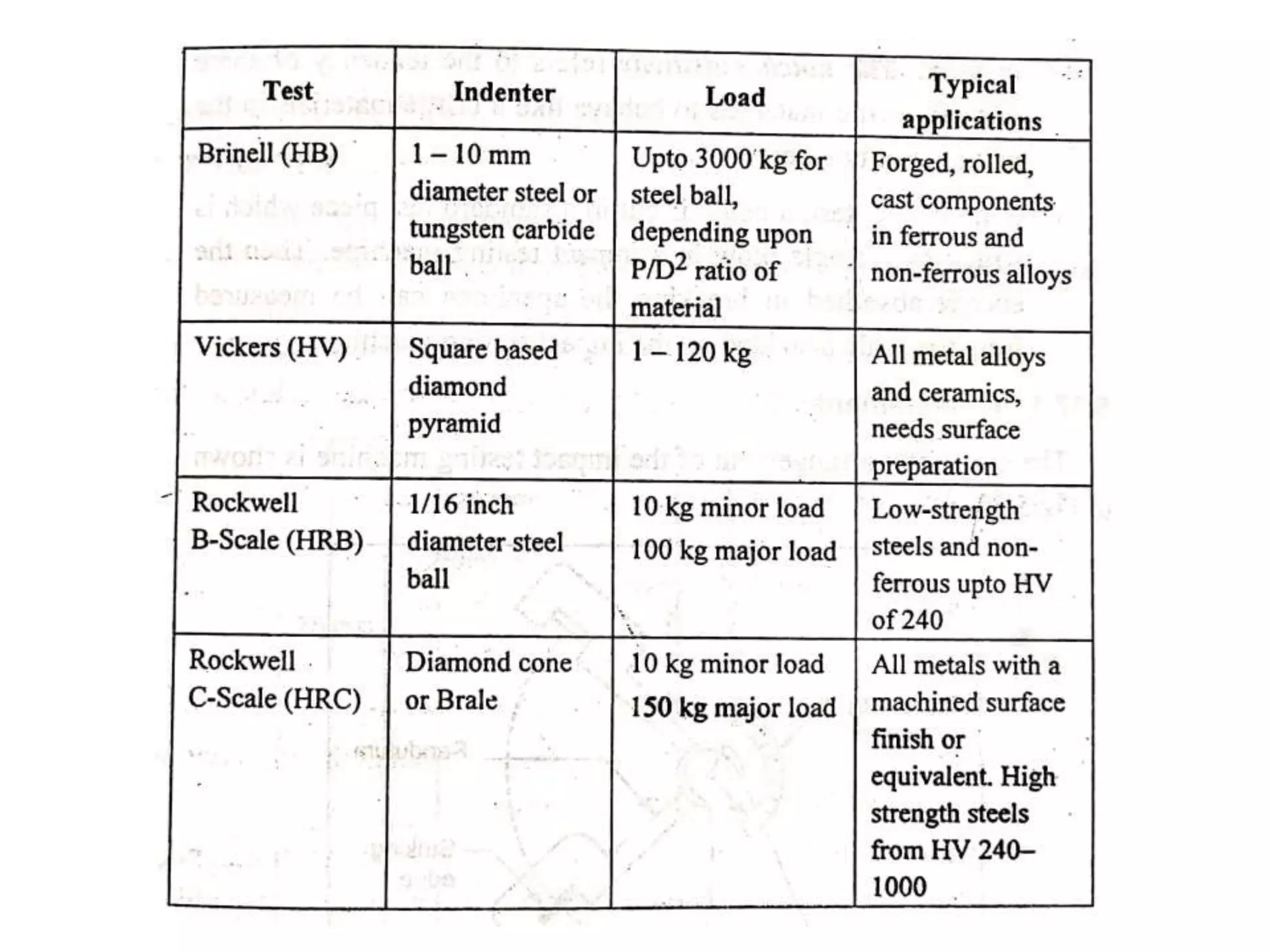
Brinell Hardness
Vickers Hardness
Rockwell Hardness
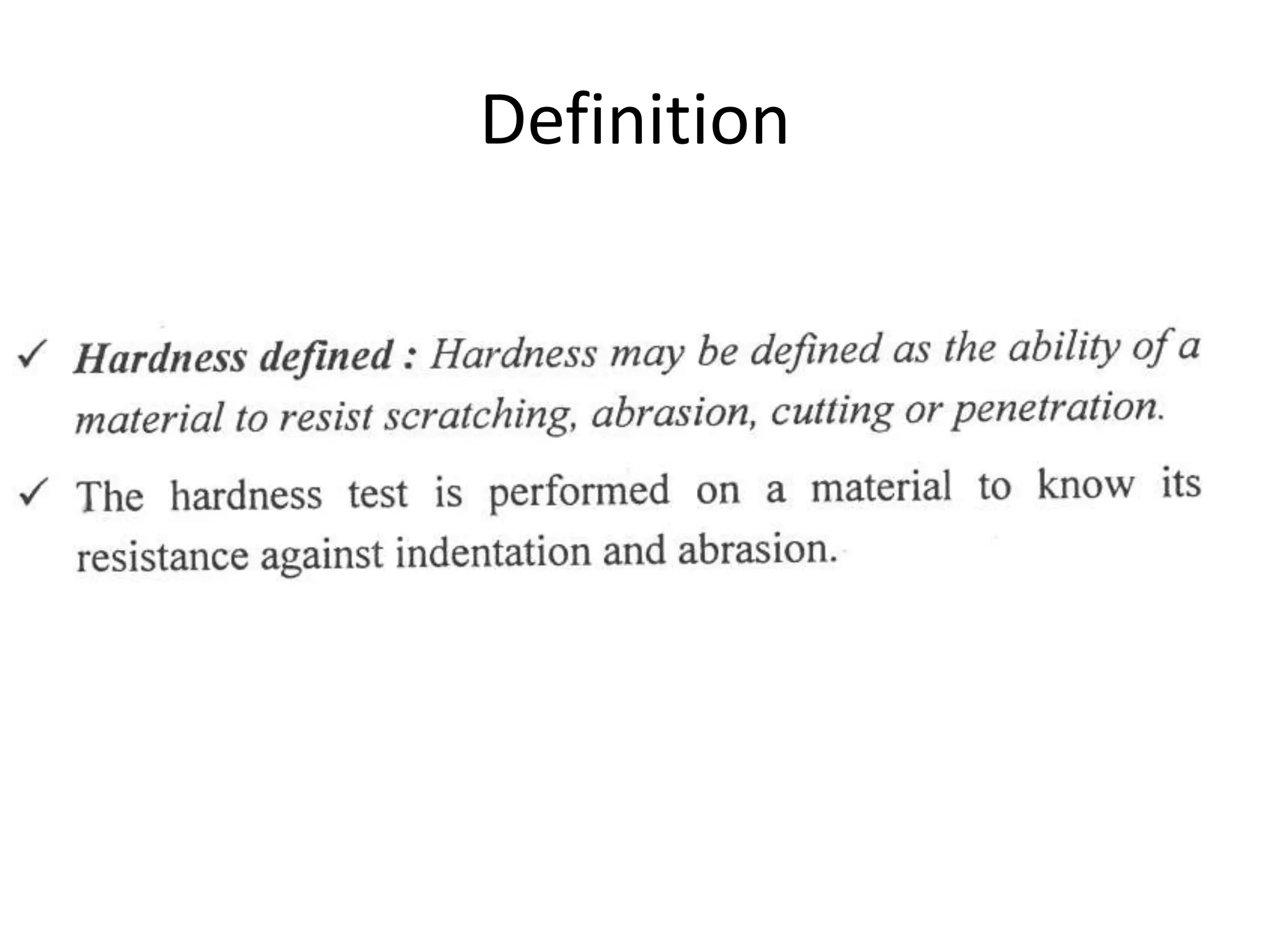
Definition
Types
• Brinell Hardness
• Vickers Hardness
• Rockwell Hardness
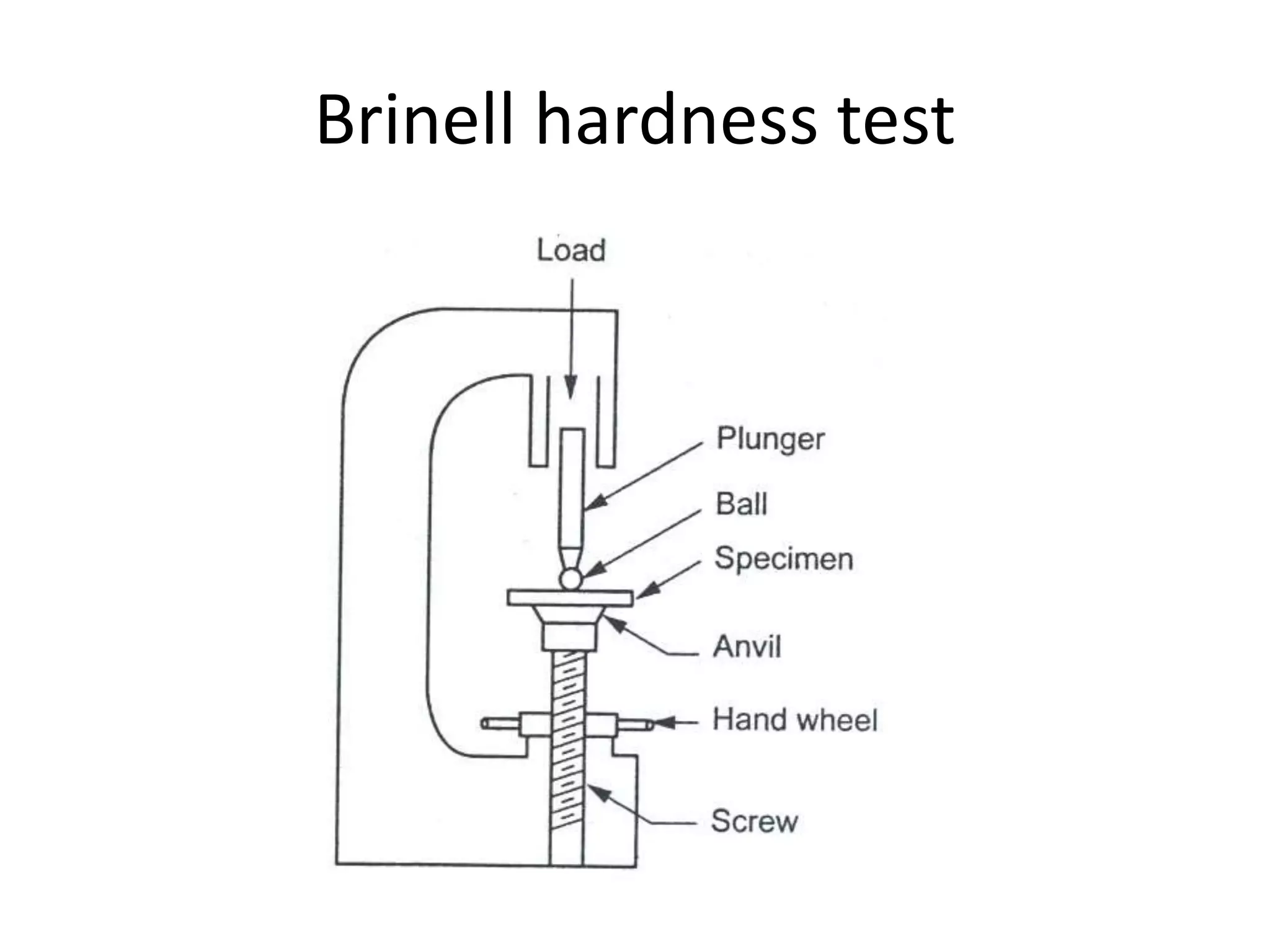
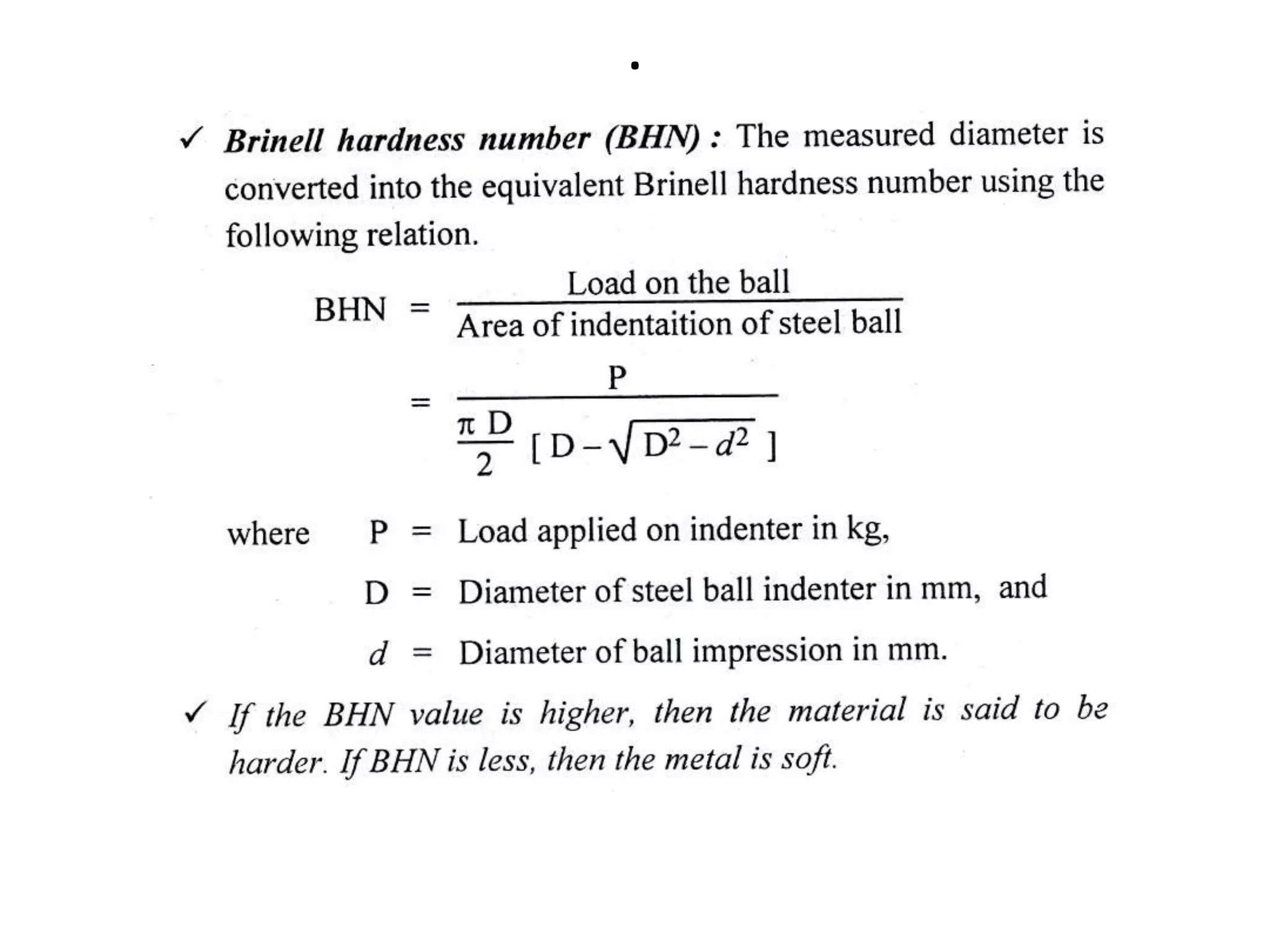
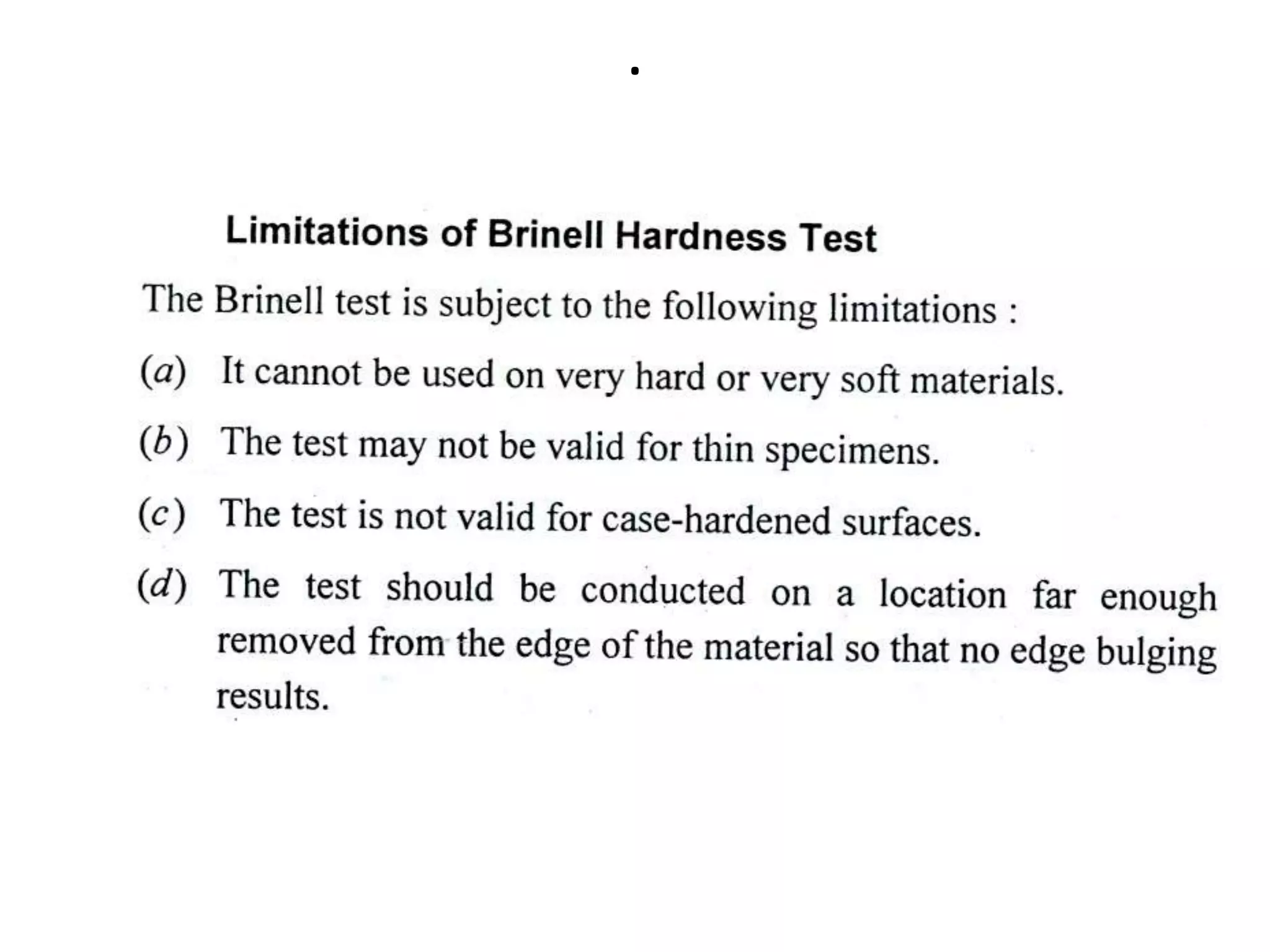
Brinell hardness test
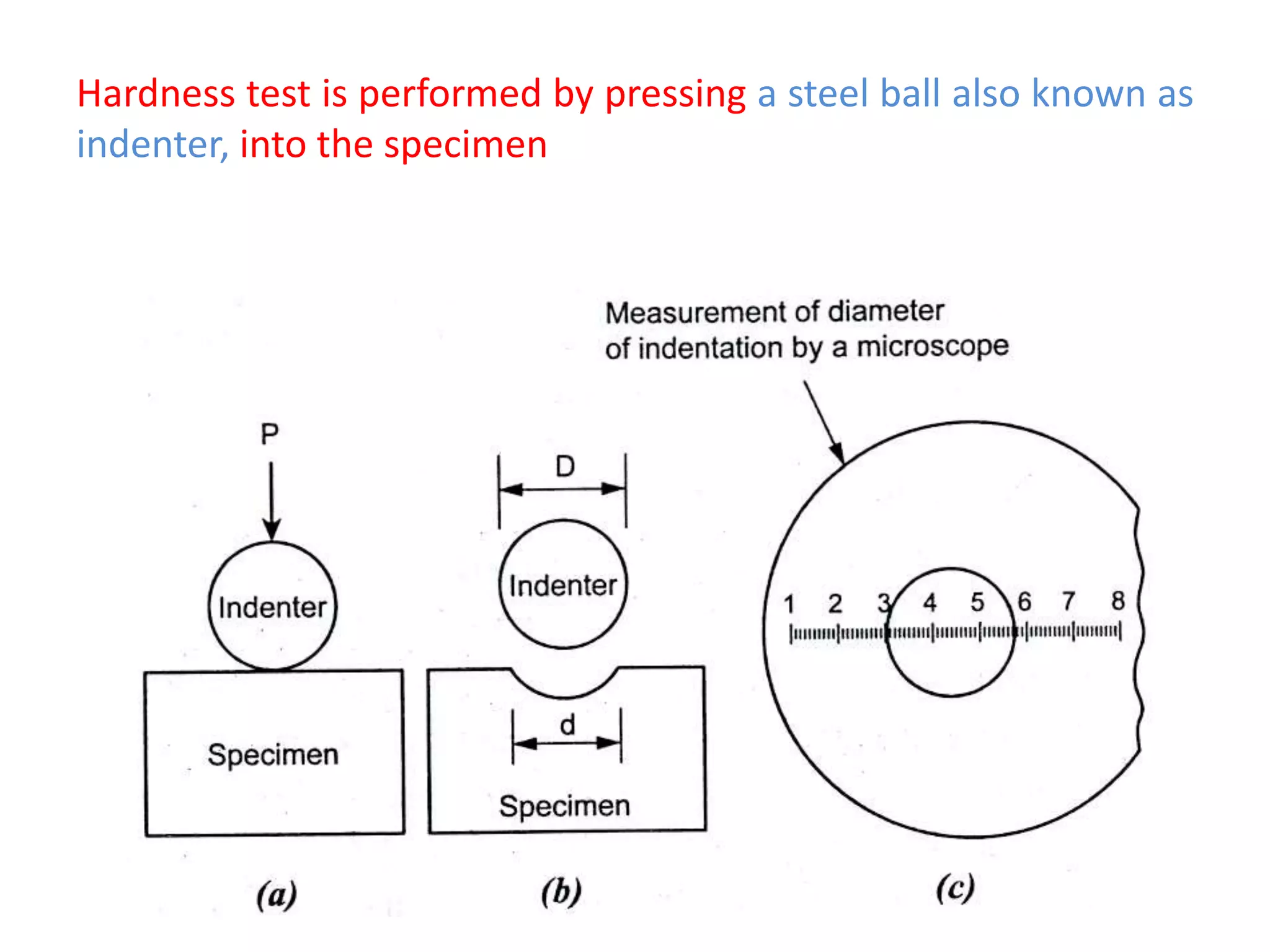
Hardness test is performed by pressing a steel ball also known as
indenter, into the specimen
.
.
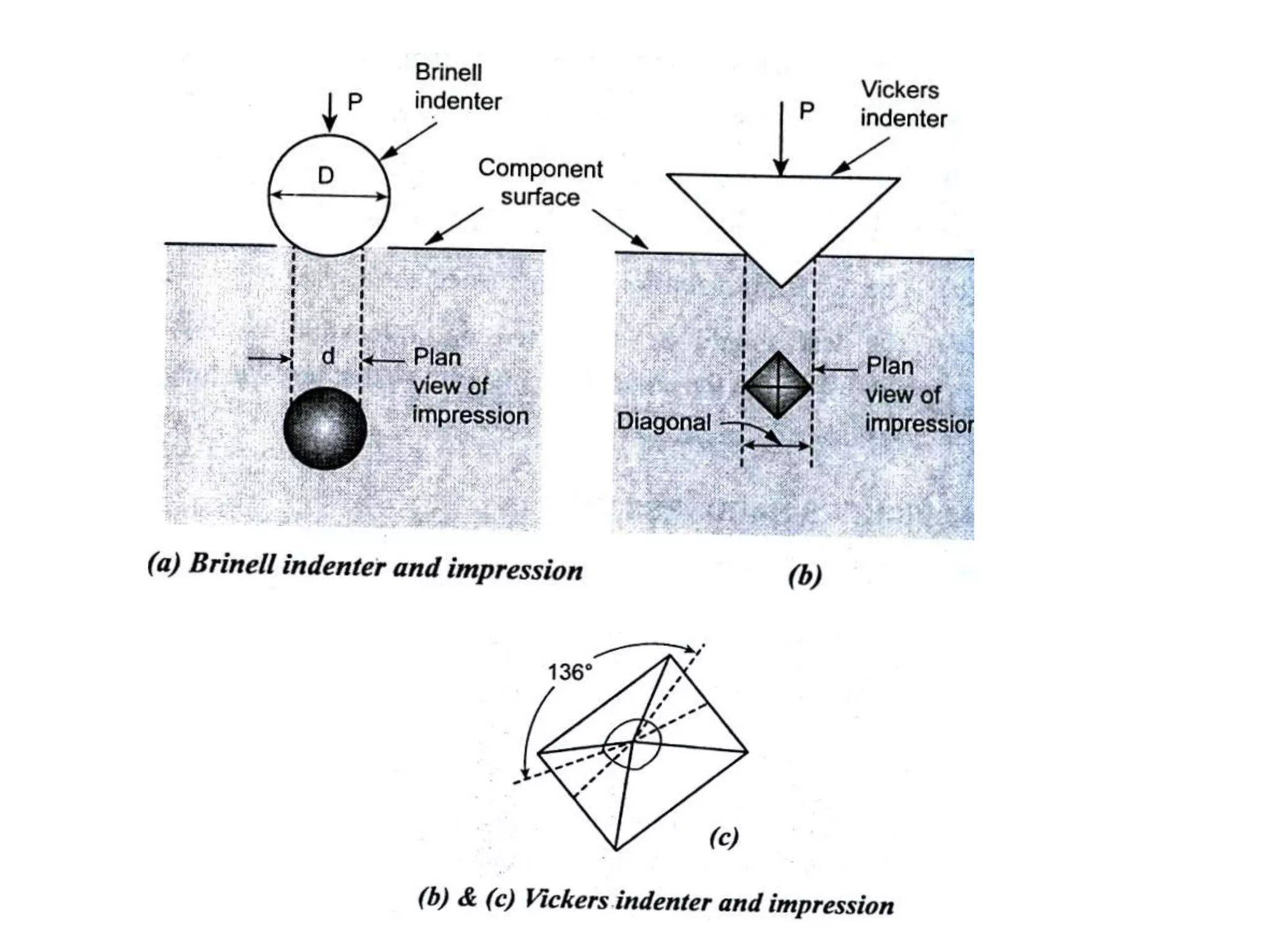
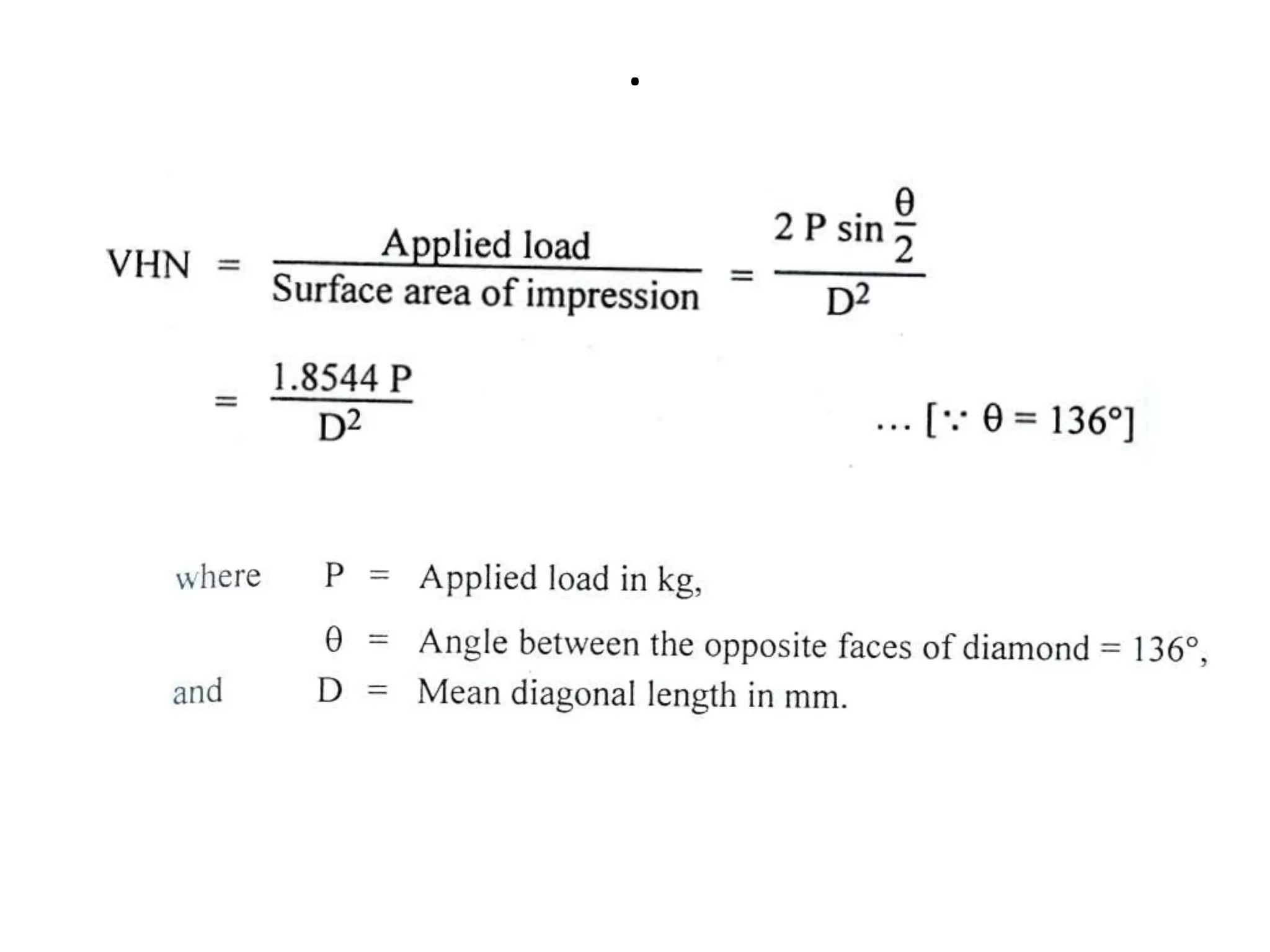
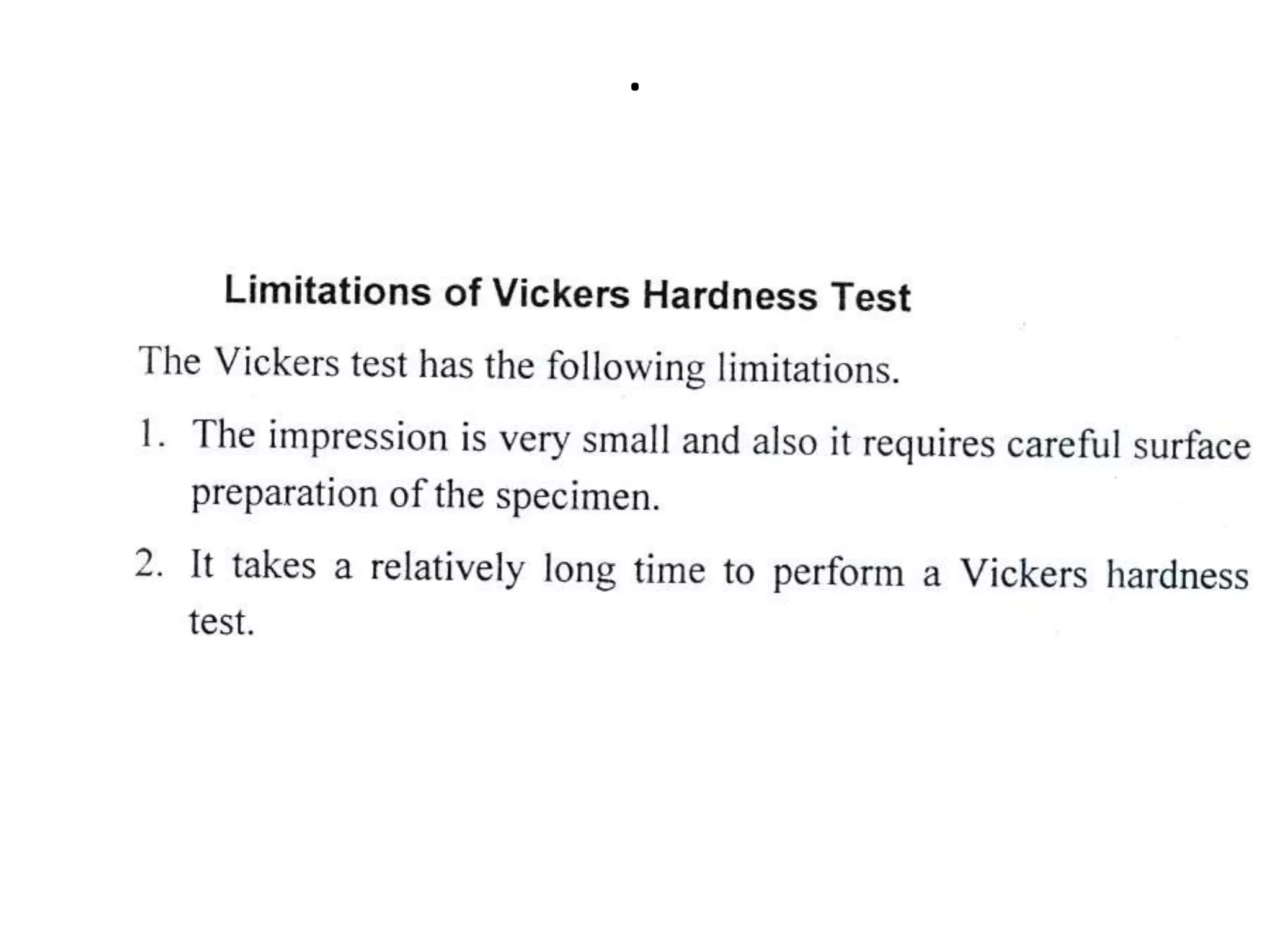
Vickers hardness test
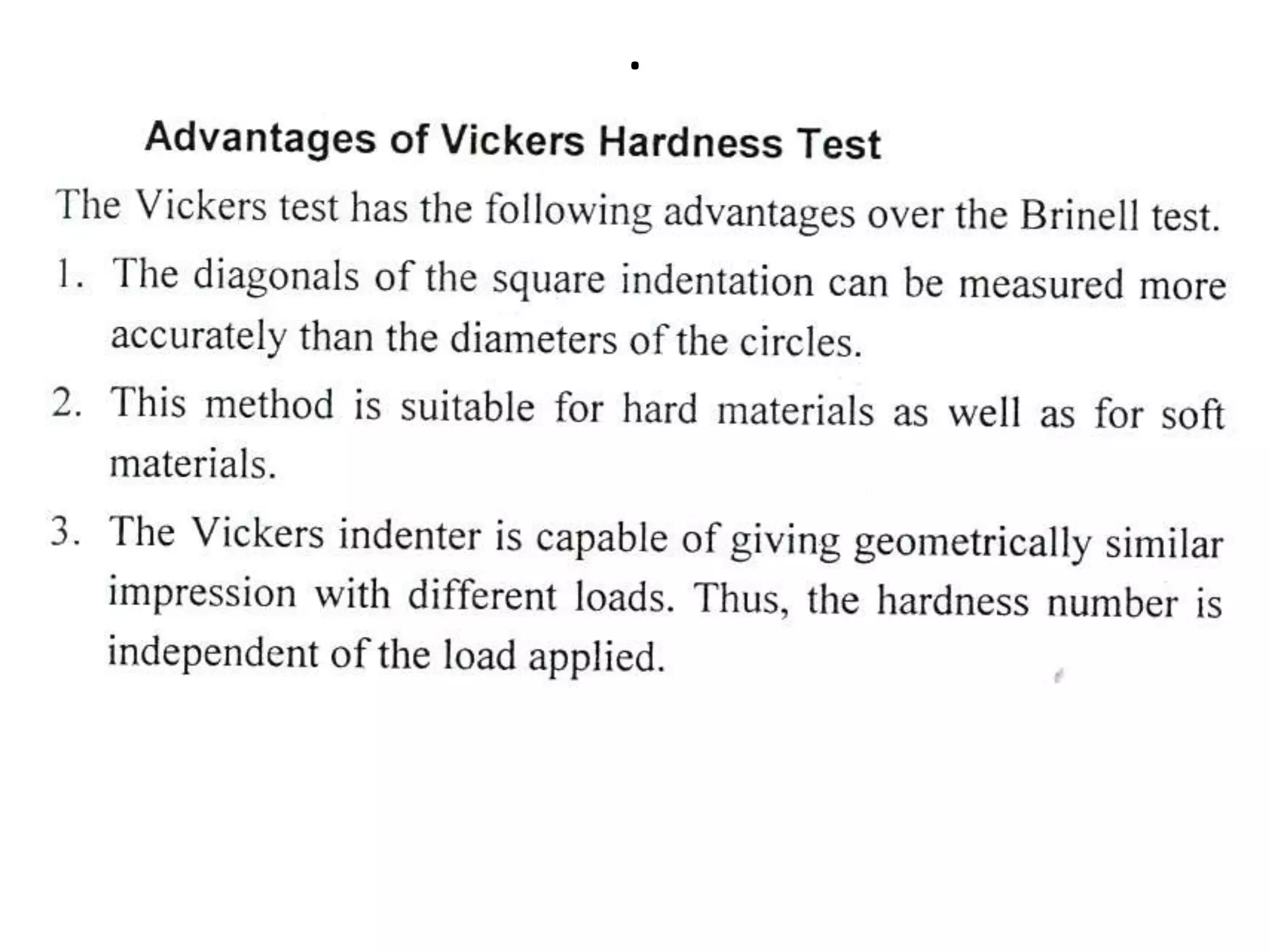
High accuracy than brinell due to
square based diamond pyramid
indenter
.
.
.
.
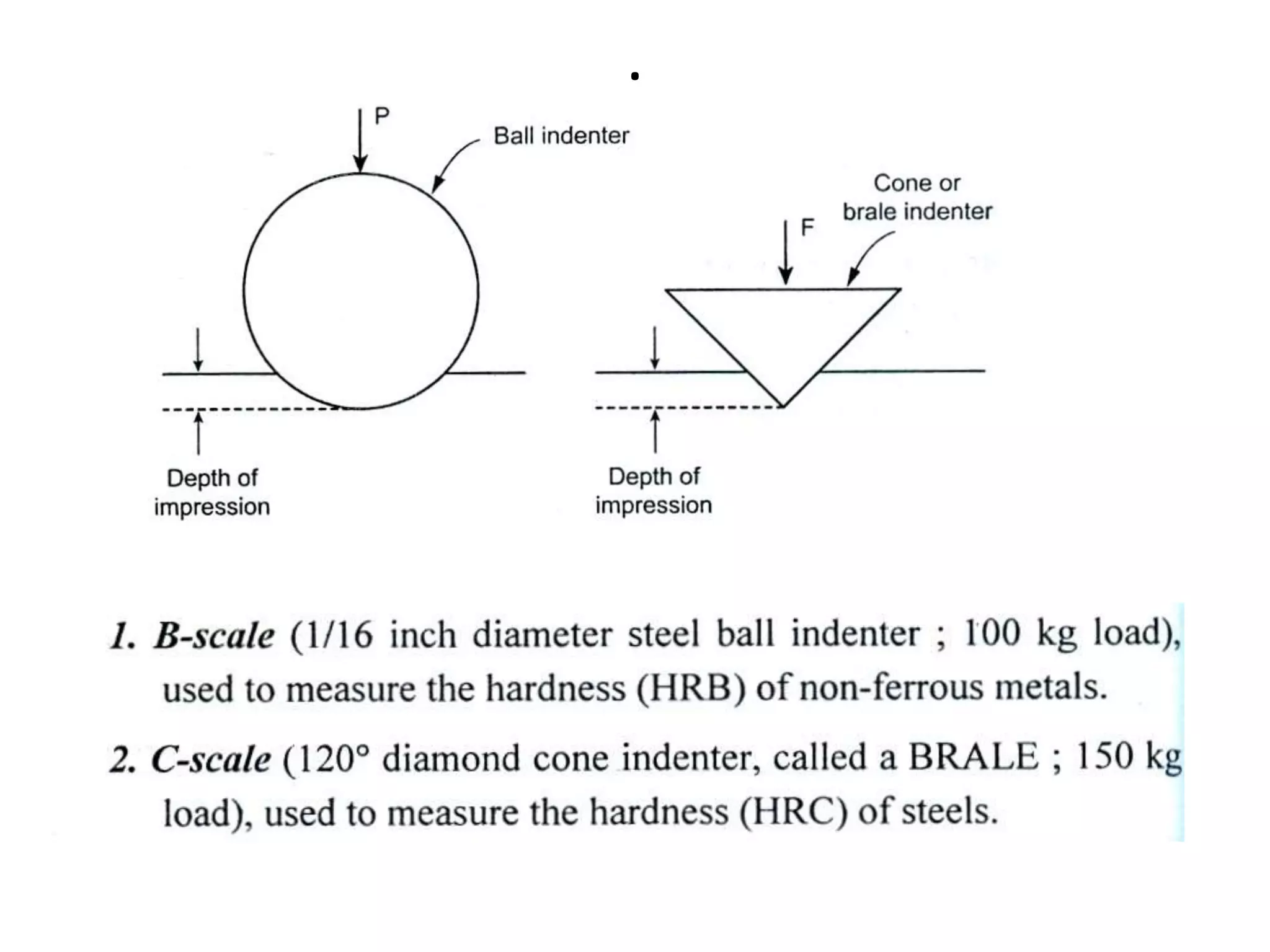
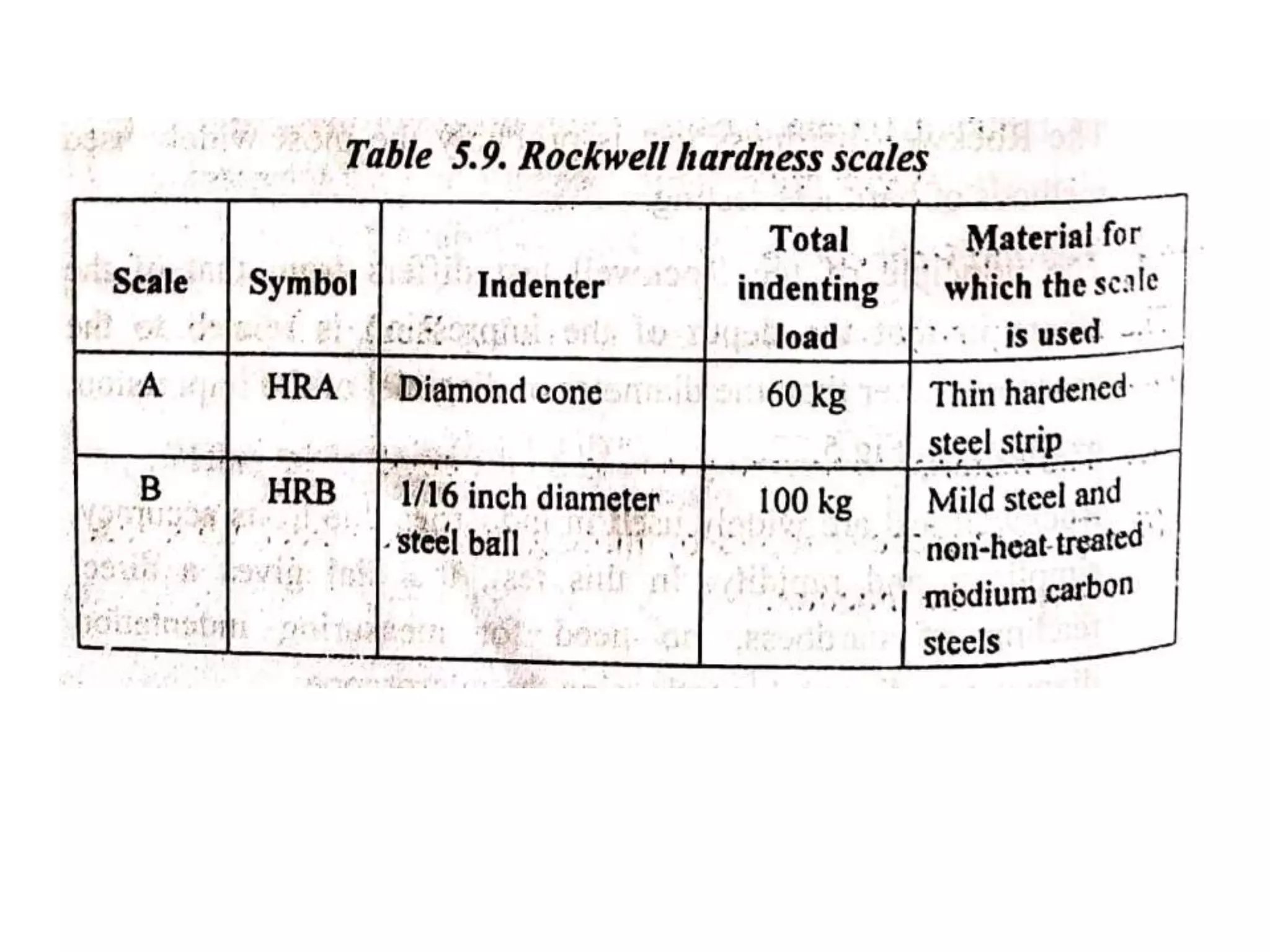
Rockwell hardness test
Industries used due to its high
accuracy, simplicity and rapidity
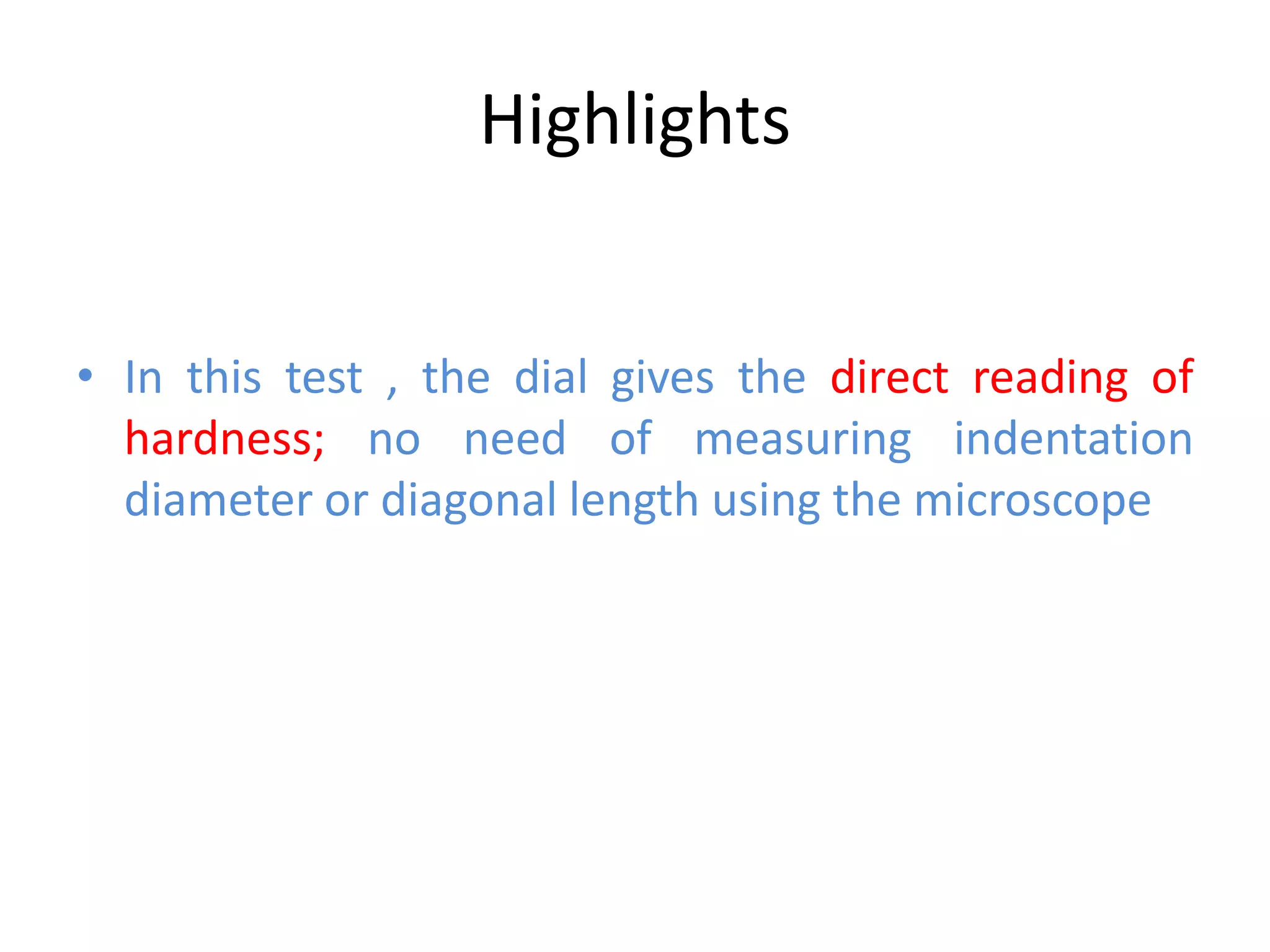
Highlights
• In this test , the dial gives the direct reading of
hardness; no need of measuring indentation
diameter or diagonal length using the microscope
.
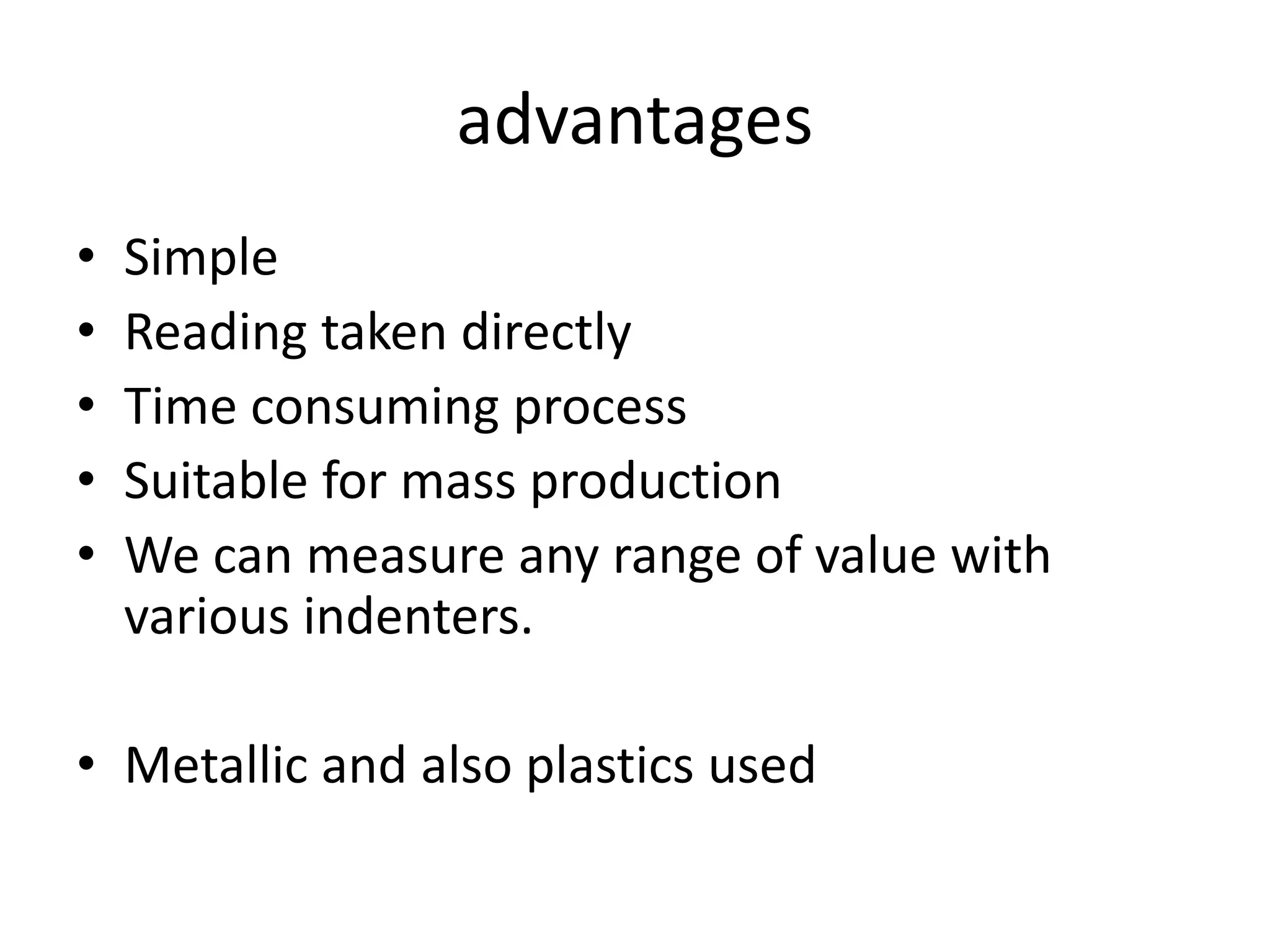
advantages
• Simple
• Reading taken directly
• Time consuming process
• Suitable for mass production
• We can measure any range of value with
various indenters.
• Metallic and also plastics used
limitations
• Its not accurate than vickers test
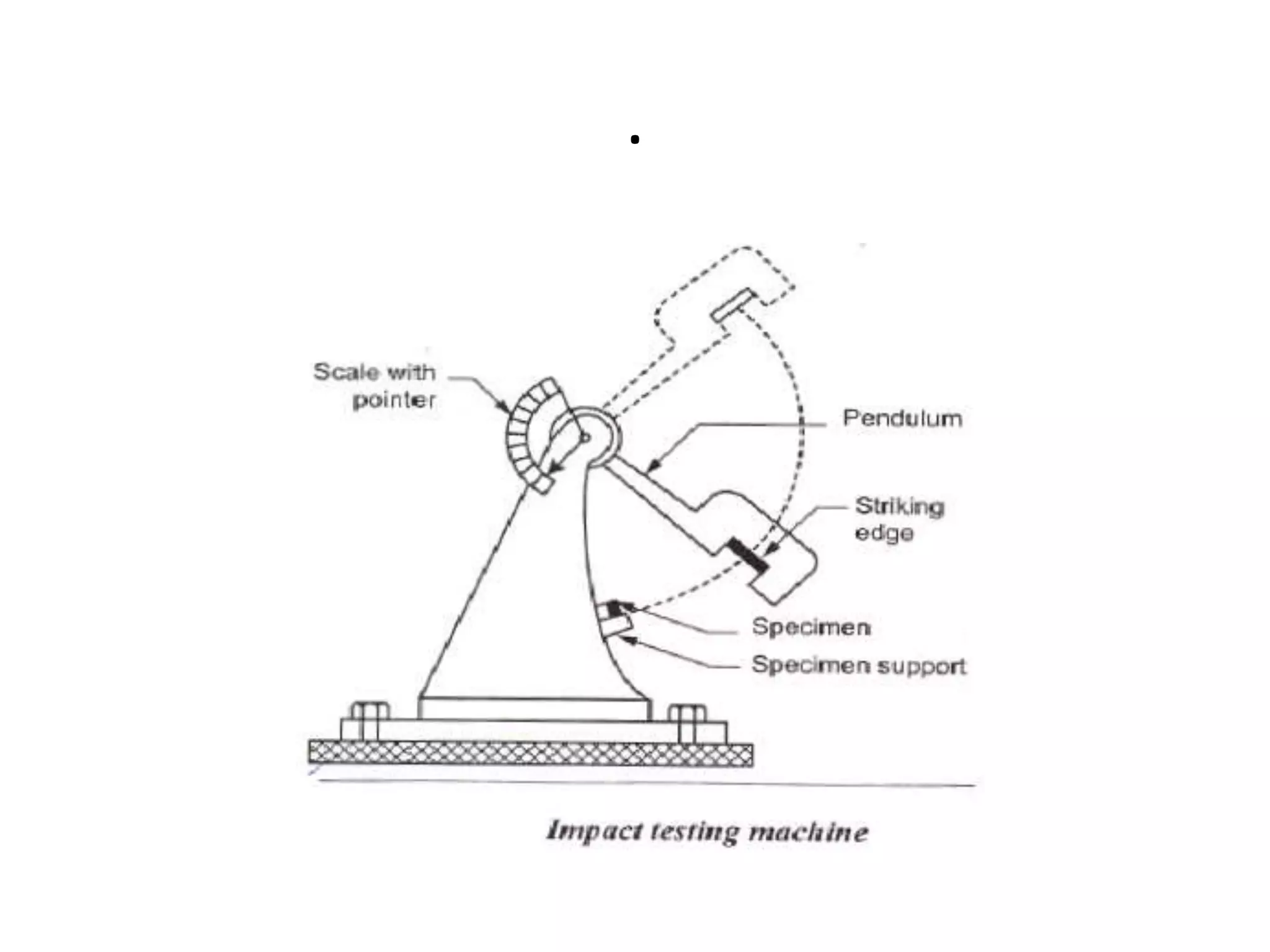
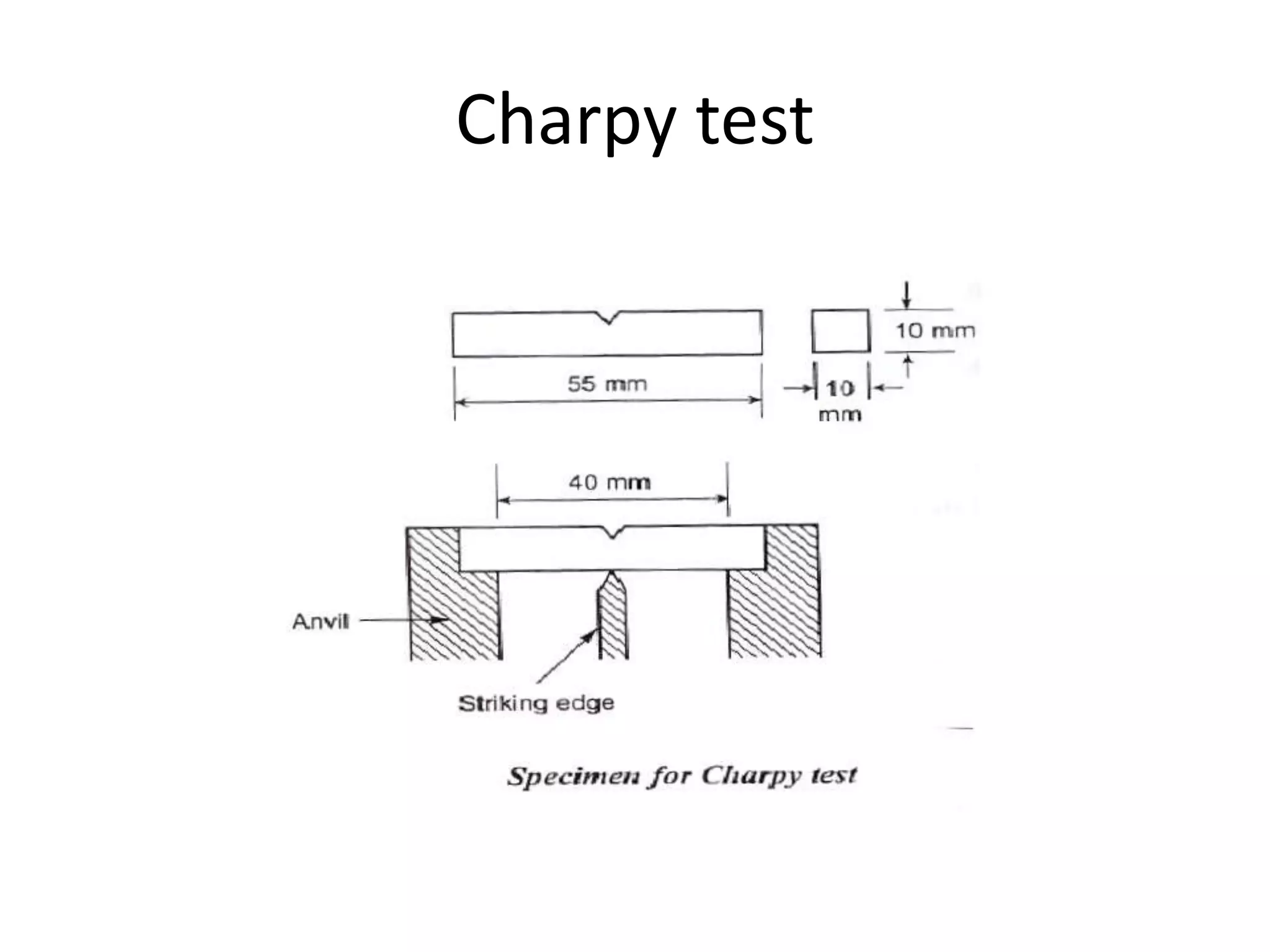
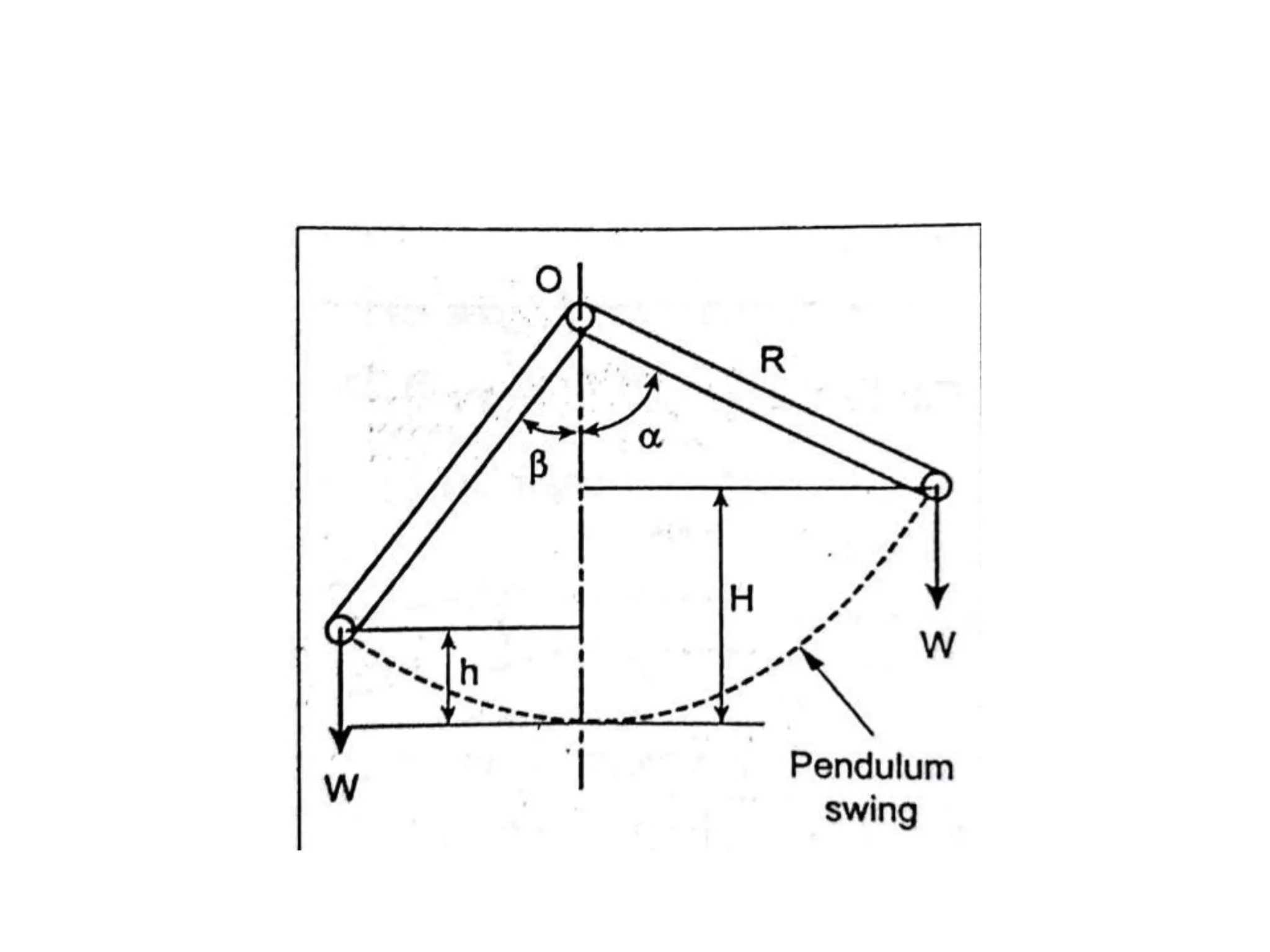
IMPACT TEST-
TO STUDY THE BEHAVIOUR OF THE MATERIAL UNDER SUDDEN LOAD
IZOD TEST
CHARPY TEST
IMPACT STRENGTH
• The ability of the material withstand a
blow(force) without fracture
.
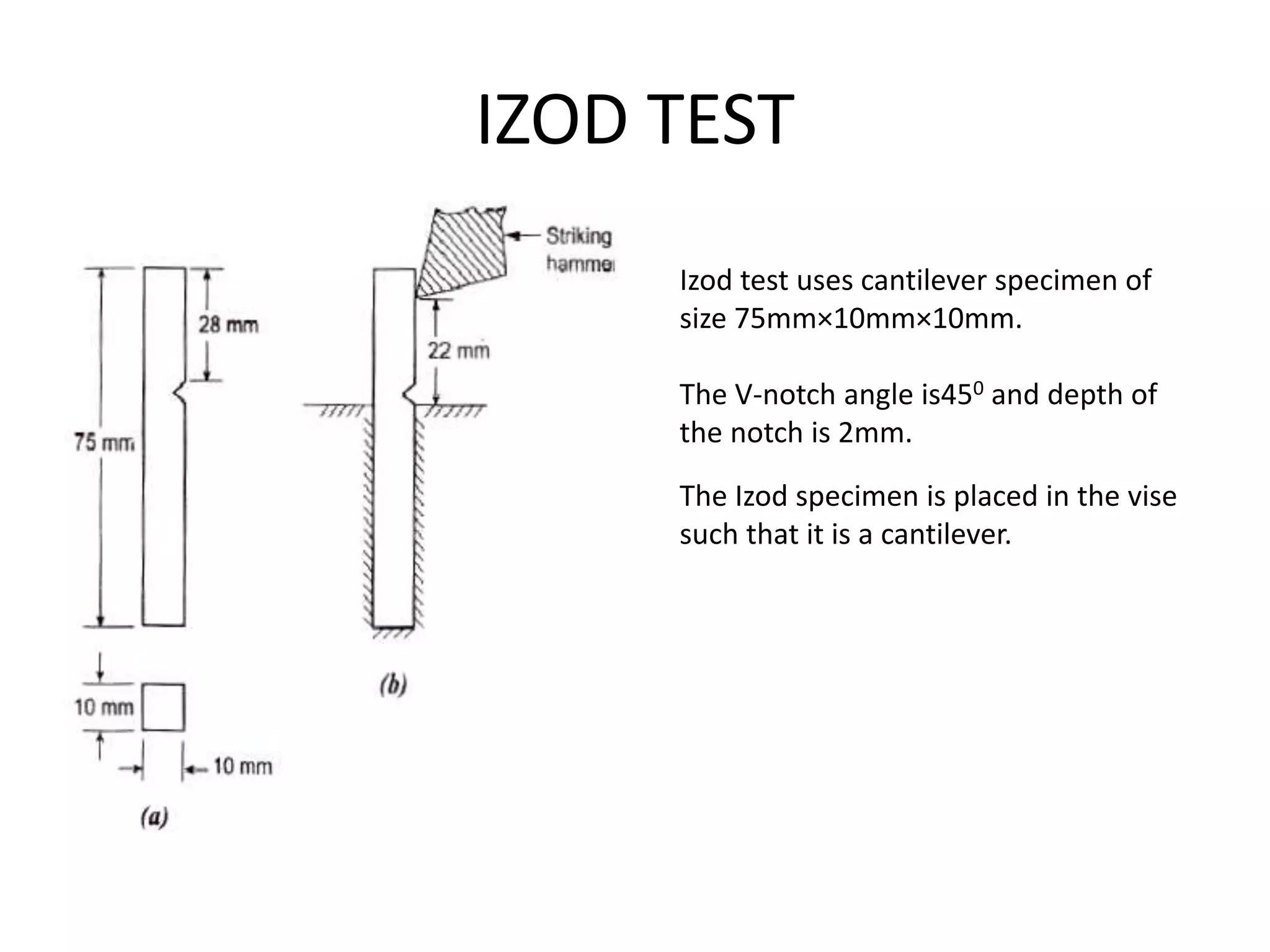
IZOD TEST
Izod test uses cantilever specimen of
size 75mm×10mm×10mm.
The V-notch angle is450 and depth of
the notch is 2mm.
The Izod specimen is placed in the vise
such that it is a cantilever.
Charpy test
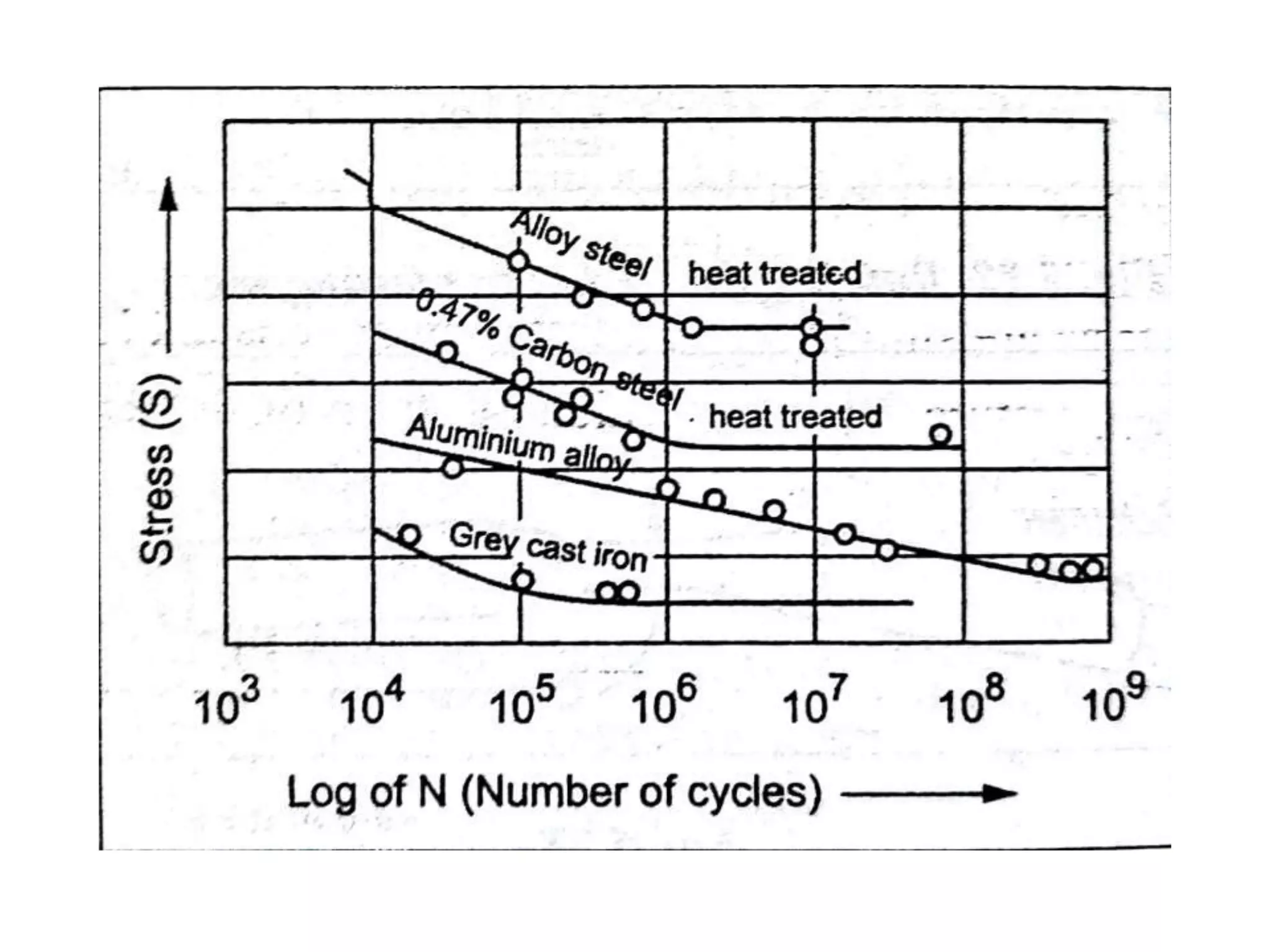
FATIGUE TESTS
• The capacity of material to withstand repeatedly
applied stresses is known as fatigue
FATIGUE TESTS
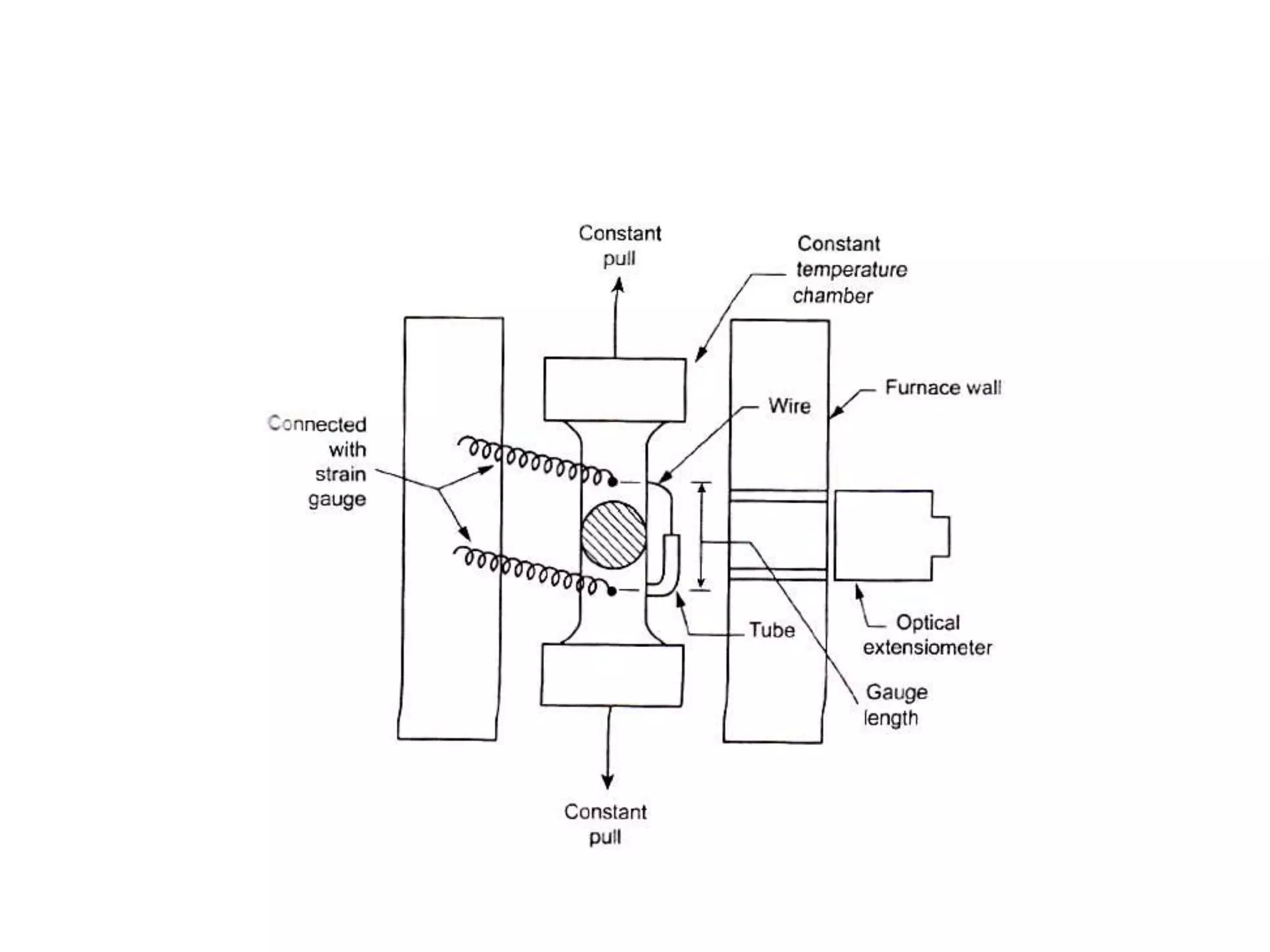
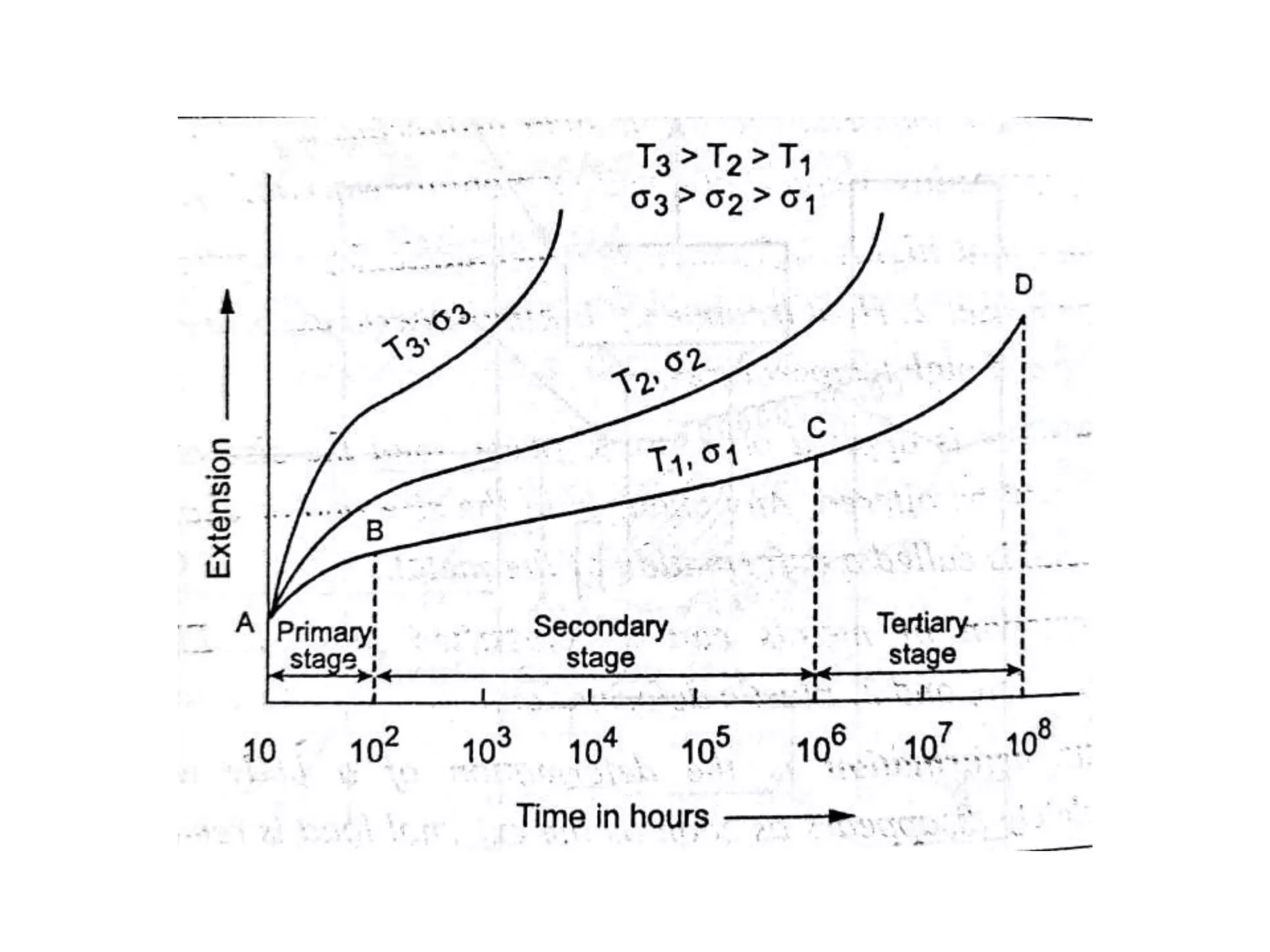
Creep test
• The continuous deformation of a metal under
a steady load is known as creep.
• The purpose of creep tests is to determine the
creep limit.
• The creep limit or the limiting creep stress is
defined as the stress that will not break the
specimen when applied for an infinite period
at a specific constant temperature.
BASIC REQUIREMENTS FOR CREEP TEST
• It must posses means for applying and
maintaining a constant load
• There must be a furnace capable of keeping
the temperature of the test- piece at the
desired value to within very close limits.
• There should be means for the measurement
of test- piece extension.

Testing of UTM-Hardness-Impact