LAMINATED OBJECT
MANUFACTURING
SUBMITTED TO:
Pr. Praveen Singh
SUBMITTED BY :
ANKIT RAGHUWANSHI
MECHANICAL A
3rd YEAR
ENR. NO. 0901ME131015
MADHAV INSTITUTE OF TECHNOLOGY
AND SCIENCE GWALIOR
WHAT IS LAMINATED OBJECT
MANUFACTURING?
1.It is type of solid rapid
prototyping used to
create low cost 3D
model using lasers
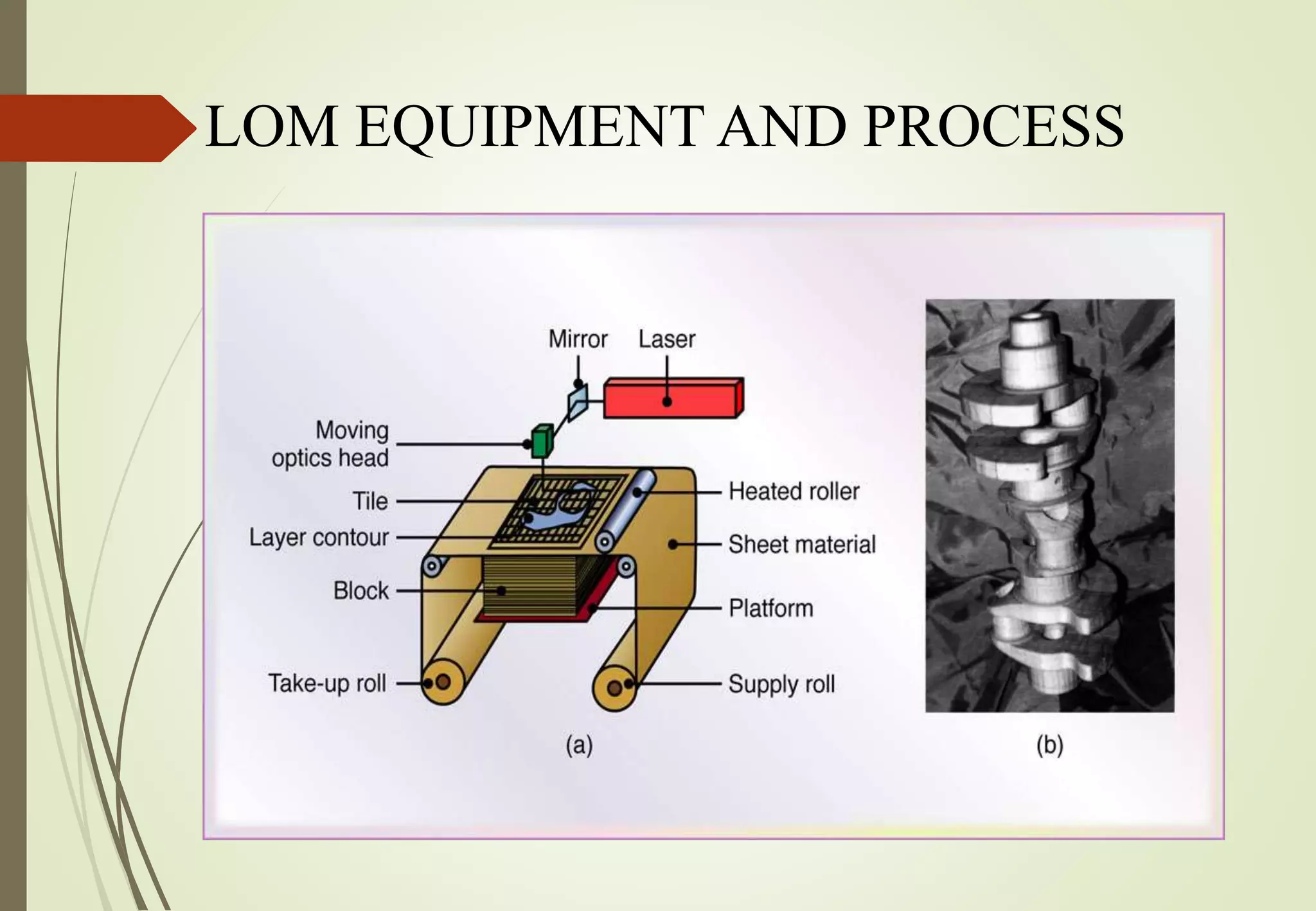
LOM EQUIPMENT AND PROCESS
The laminated objects manufacturing
1. Hybrid process which involves
adding and subtracting material to
create a part
2. Feed spindle supplies the material
and a Take-up spindle controls the
excess.
3. Layers the material with thickness
ranges from 0.001 – 0.005 inches
4. Each layer is cut with a CO2 laser
MATERIALS
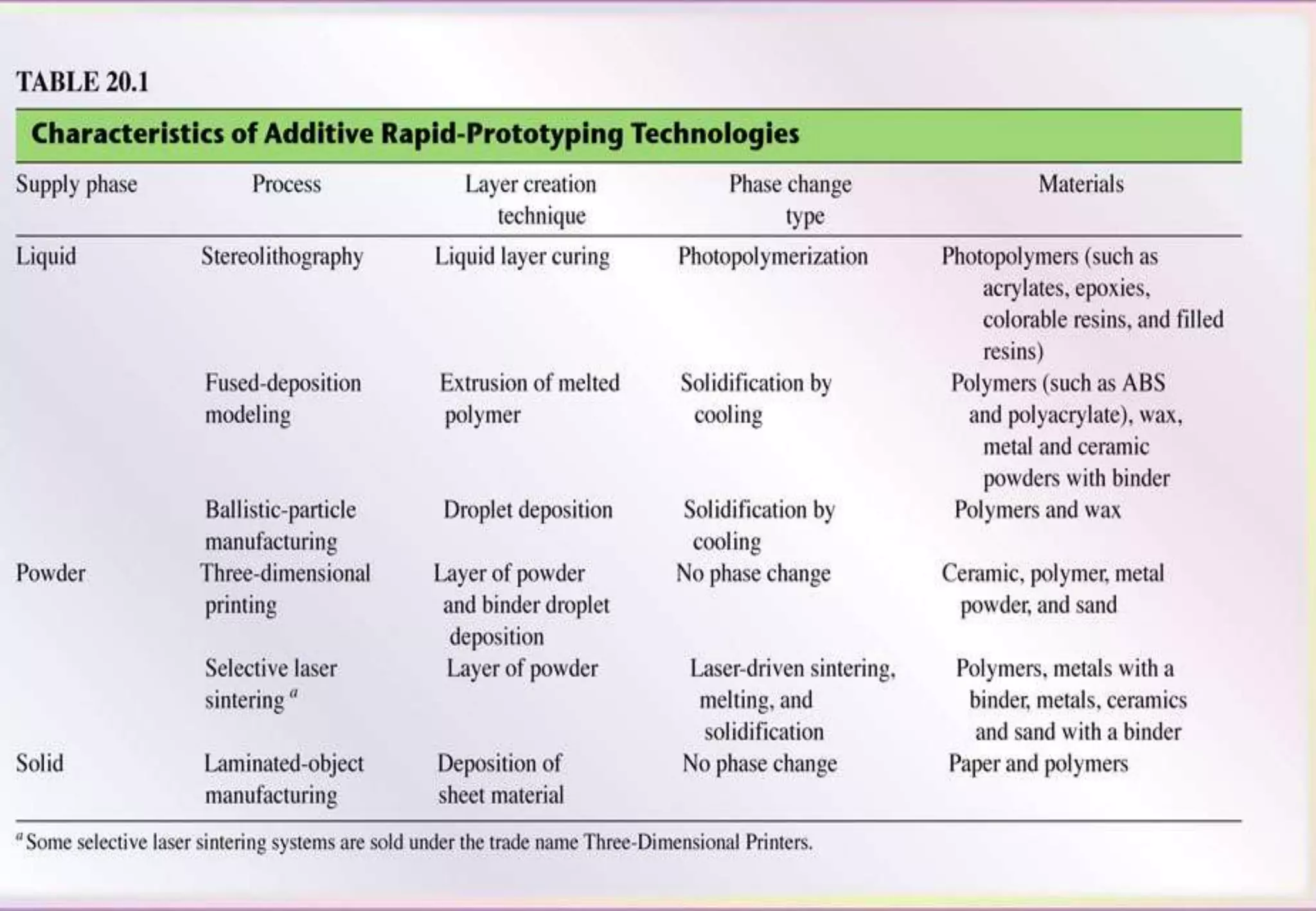
The most common materials used in LOM are
thermoplastics such as PVC; Paper (.002-.02inch);
Composites (Ferrous metals; Non-ferrous metals;
Ceramics)
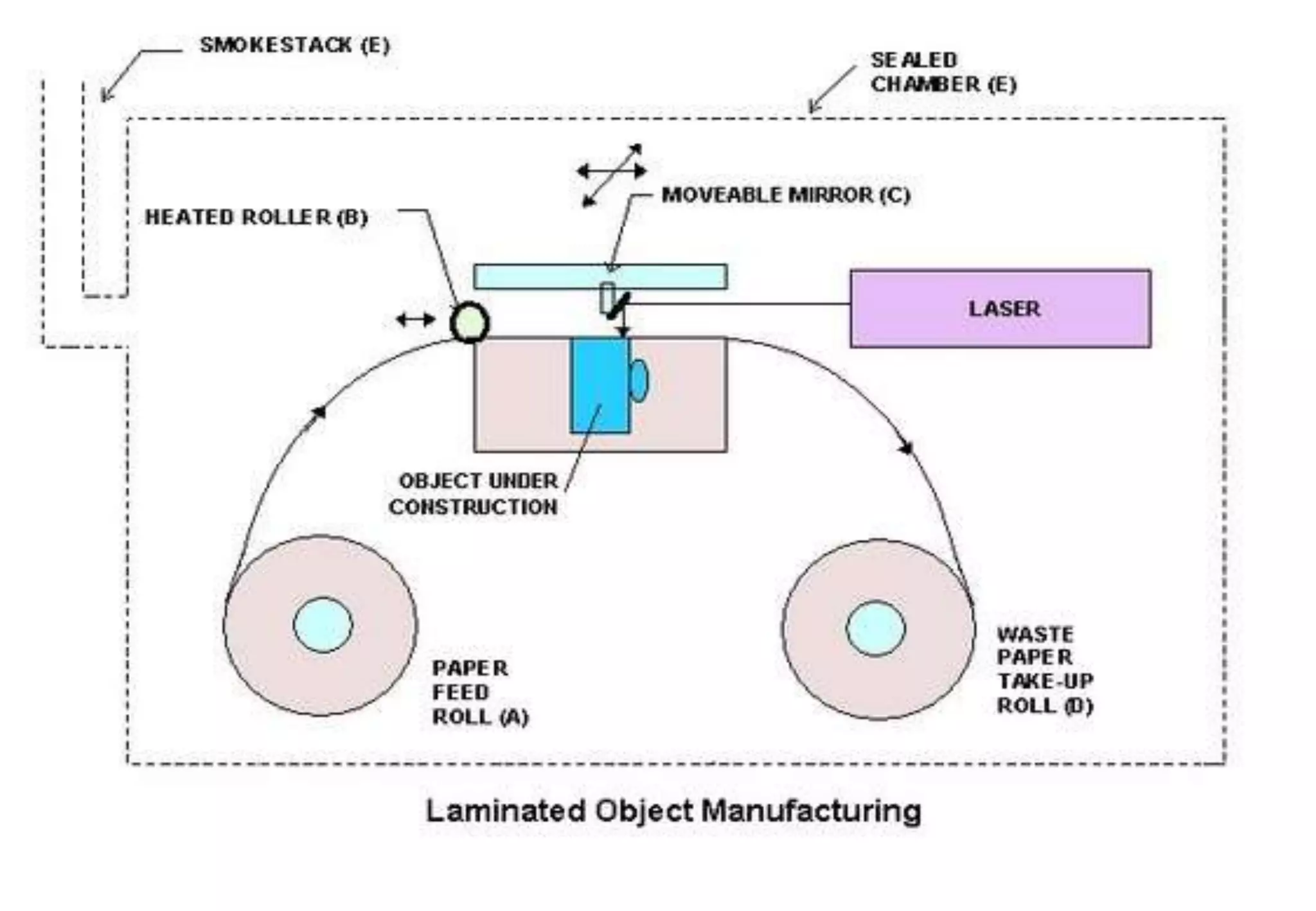
Material is usually a paper sheet laminated with
adhesive on one side, but plastic and metal
laminates are appearing.
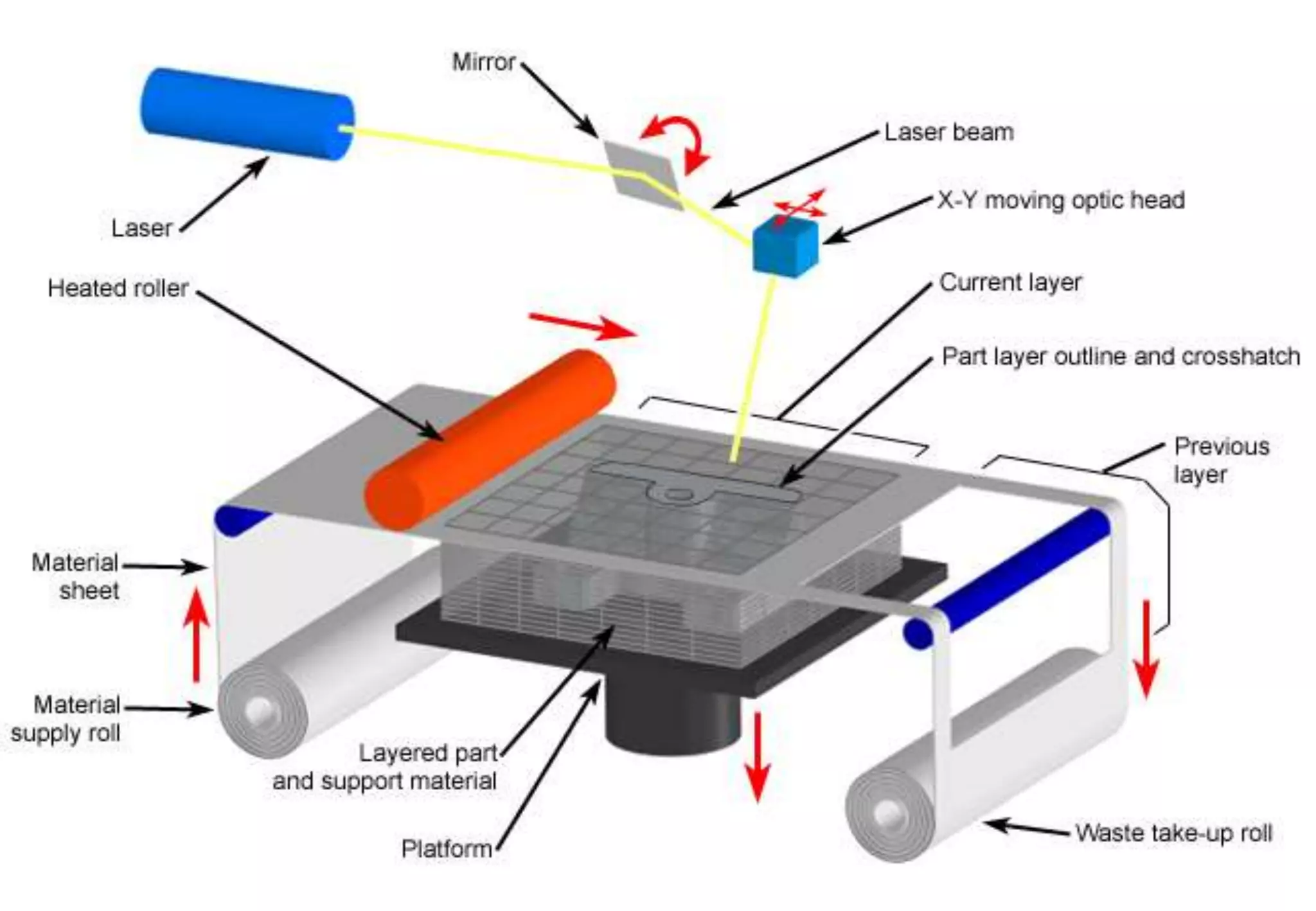
1. Layer fabrication starts with sheet being adhered
to substrate with the heated roller.
2. The laser then traces out the outline of the layer.
3. Non-part areas are cross-hatched to facilitate
removal of waste material.
4. Once the laser cutting is complete, the platform
moves down and out of the way so that fresh
sheet material can be rolled into position.
5. Once new material is in position, the platform
moves back up to one layer below its previous
position.
6. The process can now be repeated.
Basic Process
LOM PARTS
FINAL JOINING
CONTOUR GENERATION
SET OF LAYER
SLICE
3D MODEL
What gets made?
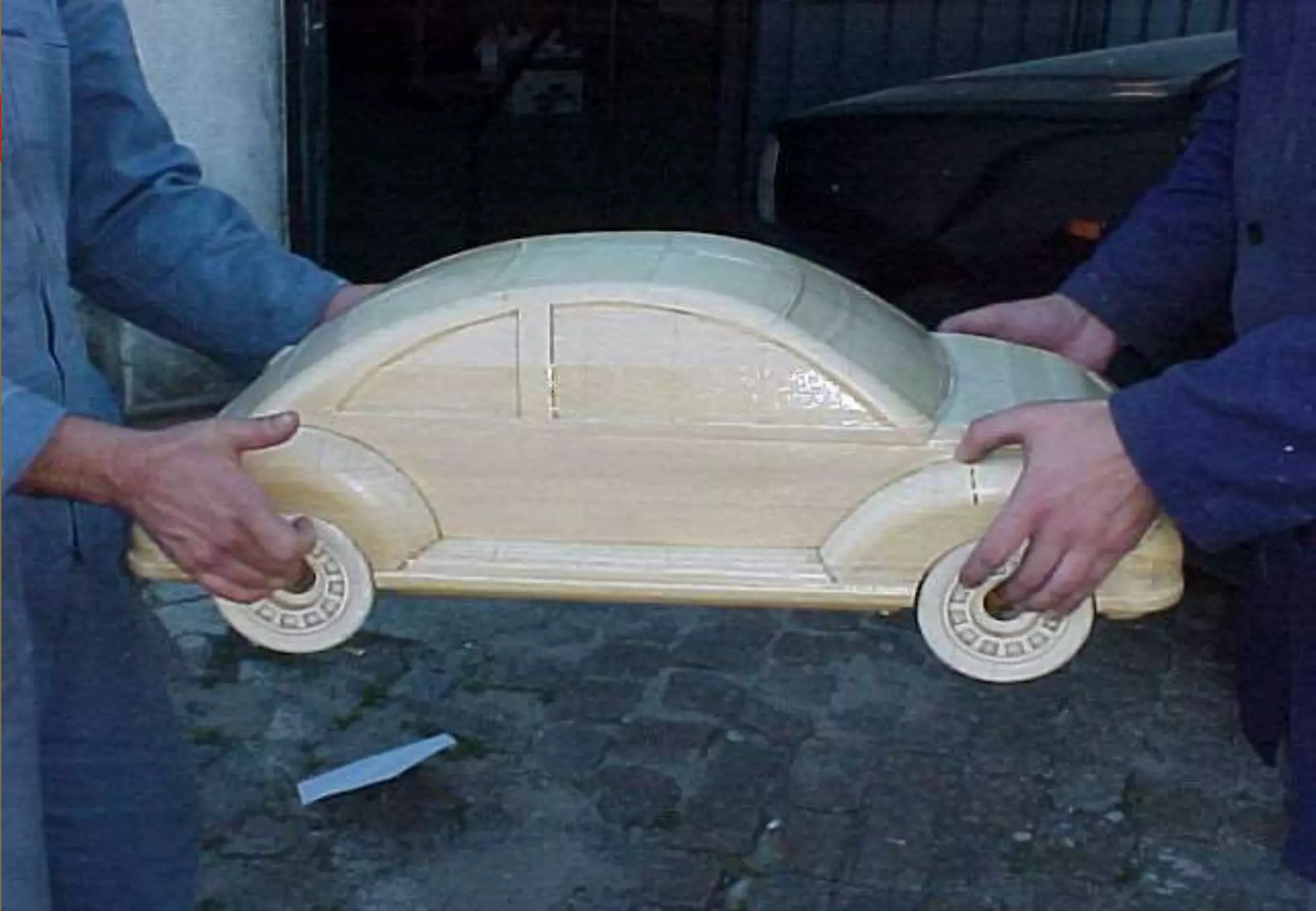
LOM is used primarily for creating scaled models
and conceptual prototypes that can be tested for
form or design. It can also be used to make
patterns for use in traditional manufacturing, such
as sand molded casting, a metal casting process
and for Investment casting patterns ,direct use
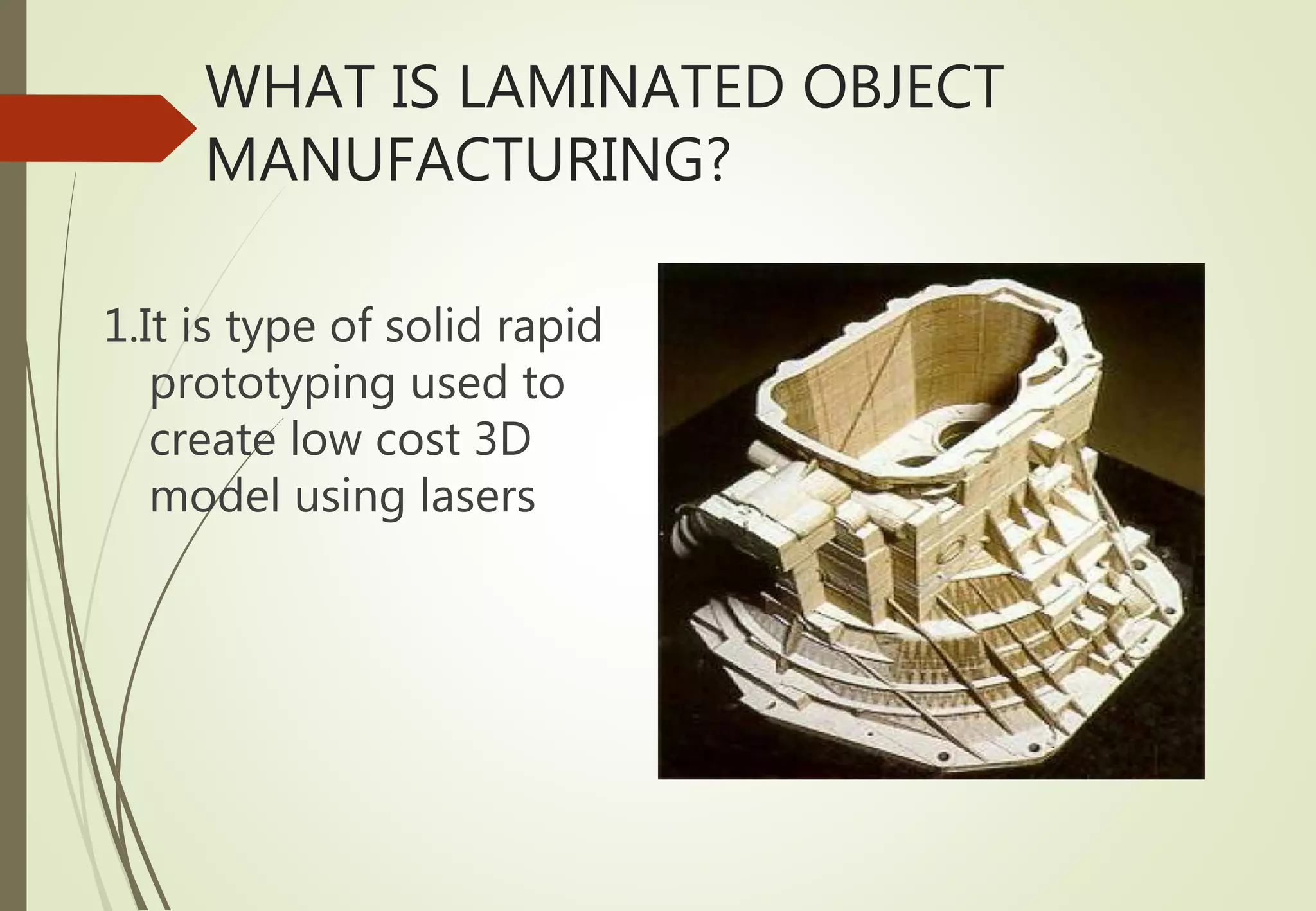
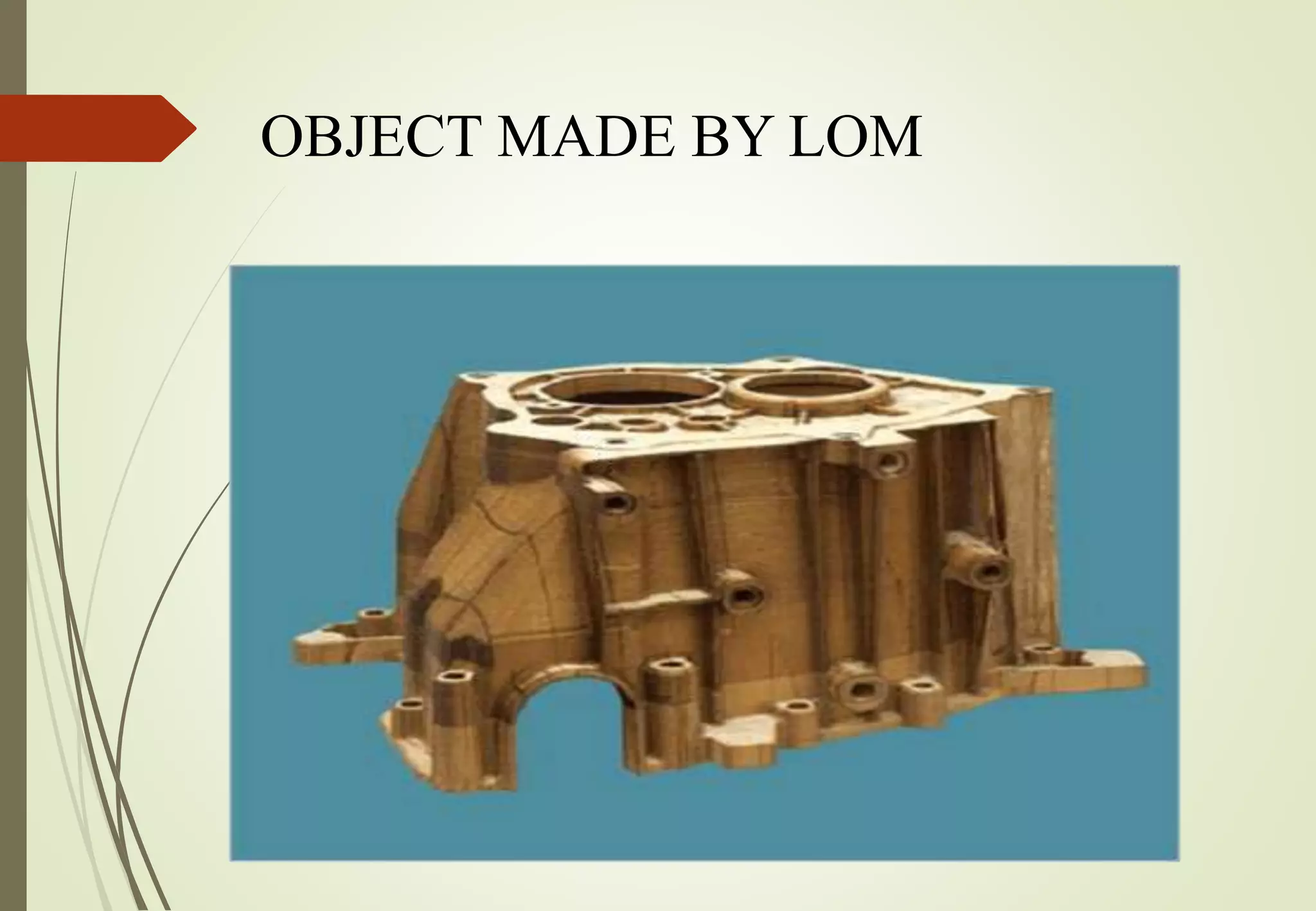
OBJECT MADE BY LOM
LOM layers of plastic or paper are fused or
laminated together using heat and pressure
and then cut into the desired shape using
computer.
3 D PRINTING USING LOM
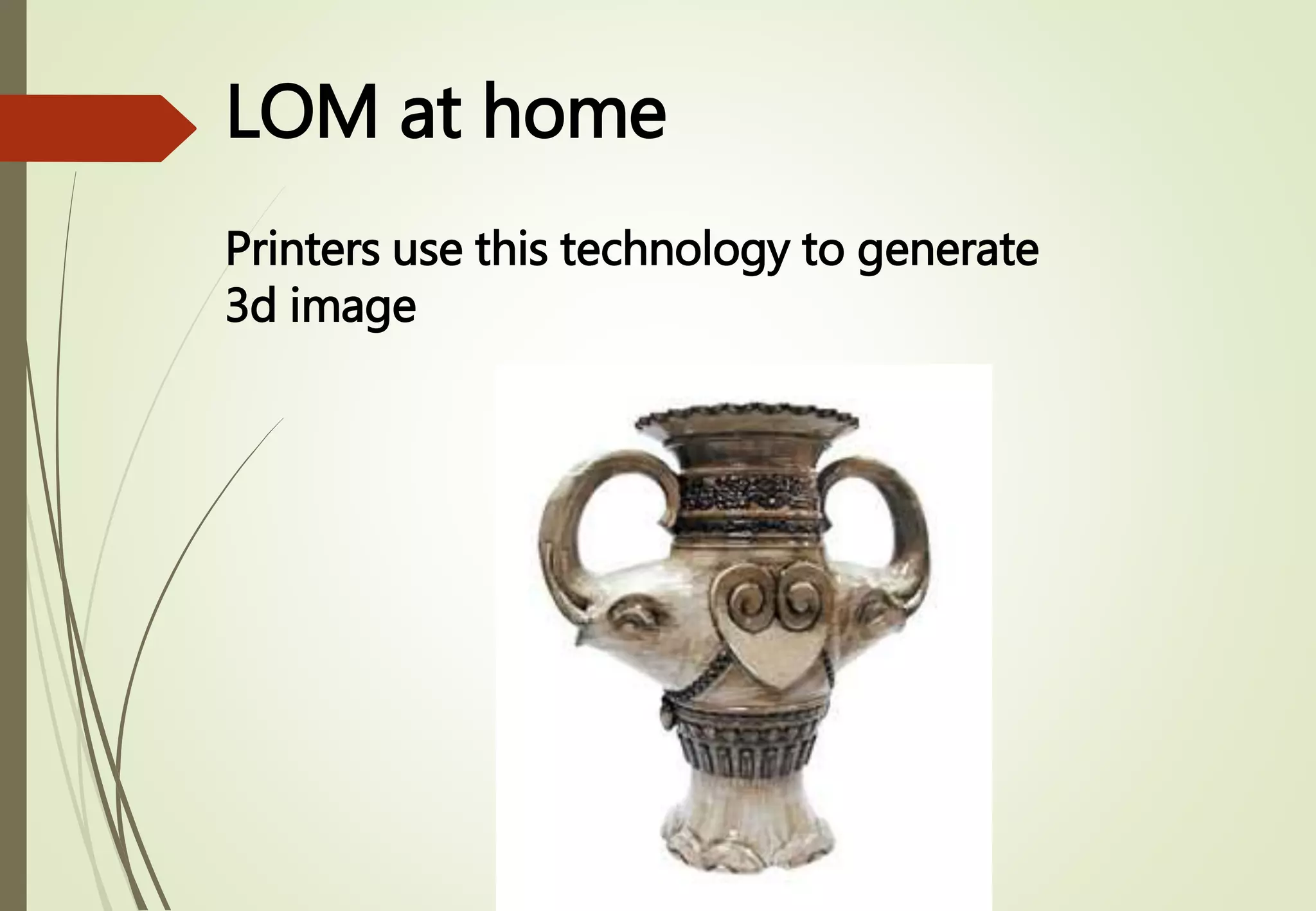
LOM at home
Printers use this technology to generate
3d image
• Ability to produce larger-scaled models
• Uses very inexpensive paper
• Fast and accurate
• Good handling strength
• Environmentally friendly
• Not health threatening
• Precision claimed to be ±0.005 in.
• Variety of material can be used such as paper ,
plastics , composites and ceramics
DISADVANTAGES
• Paper is cheap but is not very stable.
• Need decubing which requires a lot of labour
• Produce smoke or fumes
• Fire hazard
• Not ideal for making complex geometries .
• It is not used to create functional prototypes.
Laminated object manufacturing

Laminated object manufacturing

  • 1.
    LAMINATED OBJECT MANUFACTURING SUBMITTED TO: Pr.Praveen Singh SUBMITTED BY : ANKIT RAGHUWANSHI MECHANICAL A 3rd YEAR ENR. NO. 0901ME131015 MADHAV INSTITUTE OF TECHNOLOGY AND SCIENCE GWALIOR
  • 2.
    WHAT IS LAMINATEDOBJECT MANUFACTURING? 1.It is type of solid rapid prototyping used to create low cost 3D model using lasers
  • 4.
  • 7.
    The laminated objectsmanufacturing 1. Hybrid process which involves adding and subtracting material to create a part 2. Feed spindle supplies the material and a Take-up spindle controls the excess. 3. Layers the material with thickness ranges from 0.001 – 0.005 inches 4. Each layer is cut with a CO2 laser
  • 8.
    MATERIALS The most commonmaterials used in LOM are thermoplastics such as PVC; Paper (.002-.02inch); Composites (Ferrous metals; Non-ferrous metals; Ceramics)
  • 9.
    Material is usuallya paper sheet laminated with adhesive on one side, but plastic and metal laminates are appearing. 1. Layer fabrication starts with sheet being adhered to substrate with the heated roller. 2. The laser then traces out the outline of the layer. 3. Non-part areas are cross-hatched to facilitate removal of waste material. 4. Once the laser cutting is complete, the platform moves down and out of the way so that fresh sheet material can be rolled into position. 5. Once new material is in position, the platform moves back up to one layer below its previous position. 6. The process can now be repeated. Basic Process
  • 10.
    LOM PARTS FINAL JOINING CONTOURGENERATION SET OF LAYER SLICE 3D MODEL
  • 11.
    What gets made? LOMis used primarily for creating scaled models and conceptual prototypes that can be tested for form or design. It can also be used to make patterns for use in traditional manufacturing, such as sand molded casting, a metal casting process and for Investment casting patterns ,direct use
  • 12.
  • 14.
    LOM layers ofplastic or paper are fused or laminated together using heat and pressure and then cut into the desired shape using computer. 3 D PRINTING USING LOM
  • 15.
    LOM at home Printersuse this technology to generate 3d image
  • 16.
    • Ability toproduce larger-scaled models • Uses very inexpensive paper • Fast and accurate • Good handling strength • Environmentally friendly • Not health threatening • Precision claimed to be ±0.005 in. • Variety of material can be used such as paper , plastics , composites and ceramics
  • 17.
    DISADVANTAGES • Paper ischeap but is not very stable. • Need decubing which requires a lot of labour • Produce smoke or fumes • Fire hazard • Not ideal for making complex geometries . • It is not used to create functional prototypes.