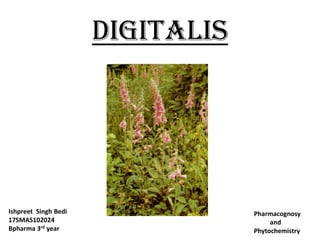
Digitalis
Ishpreet Singh Bedi
17SMAS102024
Bpharma 3rd year
Pharmacognosy
and
Phytochemistry
•A drug prepared from the dried leaves of foxgloves and containing
substances that stimulate the heart muscle.
•The term digitalis is also used for drug preparations that contain
cardiac glycosides, particularly one called digoxin, extracted from
various plants of this genus.
•Digitalis is an example of a cardio-active or cardiotonic drug, in other
words a steroid which has the ability to exert a specific and powerful
action on the cardiac muscle in animals, and has been used in the
treatment of heart conditions ever since its discovery in 1775.
•Biological source: It is obtained from dried leaves of digitalis
pupurea.
•Family: Scrophulariaceae
It is required to contain at least 0.3 % of total cardenolides
calculated as digitoxin
After collection from the field,leaves are dried immediately at a
temperature not exceeding 60°C and ate stored in moisture proof
container.
•Chemical constituents:
Digitalis contain 0.2 to 0.45% of both primary and secondary
glycosides.
•Primary glycosides:purpurea glycoside A and B glucogetaloxin and
secondary are digitoxin.
Primary glycosides are less stable and less significant than
second glycosides
Purpurea glycosides A and B constitute the principle active
constituent of fresh leaves.
•Mechanism of action
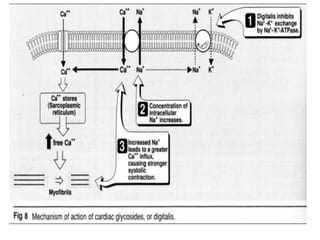
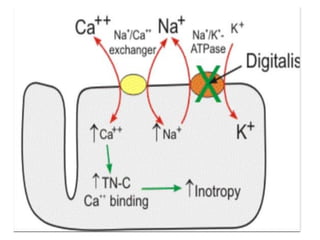
 Digitoxin inhibits the Na-K-ATPase membrane pump, resulting in an
increase in intracellular sodium and Calcium concentration.
 Increase in concentration of calcium may promote activation of
contractile proteins.
Digitoxin also acts on the electrical activity of the heart increasing
the slope of face4 depolarization, shortening the action potential
duration and decreasing the maximum diastolic potential.
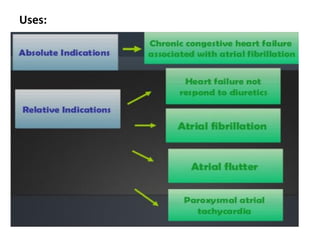
•Indications:
Congestive heart failure atrial flutter arterial tachycardia atrial
fibrillation.
•Dosage:
adult and child age 12 years and above, orally 1.2 21.6 mg per day
in divided dose child 1 to 2 year age 0.04 mg per kg weight.
•Contraindications:
hypersensitivity hypokalemia pregnancy lactation hepatic disease
ventricular tachycardia.
•Side effect:
Hypersensitivity hypokalemia hepatic disease A.V block ventricular
tachycardia.
•Nursing care:
To monitor drug level during therapy.
 To monitor apical pulse rate blood pressure during therapy.
To carry out blood investigations, BUN, creatinine, ALT.
To advise patient to take banana orange juice in diet as they are rich
source of potassium.
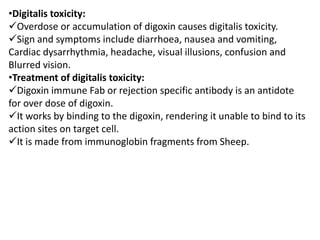
•Digitalis toxicity:
Overdose or accumulation of digoxin causes digitalis toxicity.
Sign and symptoms include diarrhoea, nausea and vomiting,
Cardiac dysarrhythmia, headache, visual illusions, confusion and
Blurred vision.
•Treatment of digitalis toxicity:
Digoxin immune Fab or rejection specific antibody is an antidote
for over dose of digoxin.
It works by binding to the digoxin, rendering it unable to bind to its
action sites on target cell.
It is made from immunoglobin fragments from Sheep.
Uses:
Questions:
1. Illustrate MOA of Digitalis. (3)
2. Discuss briefly about exchange of sodium and
calcium ions in digitalis. (5)
3. Give a brief description about digitalis. (10)

Digitalis

  • 1.
    Digitalis Ishpreet Singh Bedi 17SMAS102024 Bpharma3rd year Pharmacognosy and Phytochemistry
  • 2.
    •A drug preparedfrom the dried leaves of foxgloves and containing substances that stimulate the heart muscle. •The term digitalis is also used for drug preparations that contain cardiac glycosides, particularly one called digoxin, extracted from various plants of this genus. •Digitalis is an example of a cardio-active or cardiotonic drug, in other words a steroid which has the ability to exert a specific and powerful action on the cardiac muscle in animals, and has been used in the treatment of heart conditions ever since its discovery in 1775. •Biological source: It is obtained from dried leaves of digitalis pupurea. •Family: Scrophulariaceae It is required to contain at least 0.3 % of total cardenolides calculated as digitoxin After collection from the field,leaves are dried immediately at a temperature not exceeding 60°C and ate stored in moisture proof container.
  • 3.
    •Chemical constituents: Digitalis contain0.2 to 0.45% of both primary and secondary glycosides. •Primary glycosides:purpurea glycoside A and B glucogetaloxin and secondary are digitoxin. Primary glycosides are less stable and less significant than second glycosides Purpurea glycosides A and B constitute the principle active constituent of fresh leaves. •Mechanism of action  Digitoxin inhibits the Na-K-ATPase membrane pump, resulting in an increase in intracellular sodium and Calcium concentration.  Increase in concentration of calcium may promote activation of contractile proteins. Digitoxin also acts on the electrical activity of the heart increasing the slope of face4 depolarization, shortening the action potential duration and decreasing the maximum diastolic potential.
  • 4.
    •Indications: Congestive heart failureatrial flutter arterial tachycardia atrial fibrillation. •Dosage: adult and child age 12 years and above, orally 1.2 21.6 mg per day in divided dose child 1 to 2 year age 0.04 mg per kg weight. •Contraindications: hypersensitivity hypokalemia pregnancy lactation hepatic disease ventricular tachycardia. •Side effect: Hypersensitivity hypokalemia hepatic disease A.V block ventricular tachycardia. •Nursing care: To monitor drug level during therapy.  To monitor apical pulse rate blood pressure during therapy. To carry out blood investigations, BUN, creatinine, ALT. To advise patient to take banana orange juice in diet as they are rich source of potassium.
  • 5.
    •Digitalis toxicity: Overdose oraccumulation of digoxin causes digitalis toxicity. Sign and symptoms include diarrhoea, nausea and vomiting, Cardiac dysarrhythmia, headache, visual illusions, confusion and Blurred vision. •Treatment of digitalis toxicity: Digoxin immune Fab or rejection specific antibody is an antidote for over dose of digoxin. It works by binding to the digoxin, rendering it unable to bind to its action sites on target cell. It is made from immunoglobin fragments from Sheep.
  • 8.
  • 9.
    Questions: 1. Illustrate MOAof Digitalis. (3) 2. Discuss briefly about exchange of sodium and calcium ions in digitalis. (5) 3. Give a brief description about digitalis. (10)