DIGITAL UNIVERSITY AJAY KUMAR GARG NEXT GENERATION APPROCH TORWARDS EDUCATION [email_address] ISBN: 978-84-614-7422-6 ISBN: 978-84-614-7423-3 INTED 2011 ( www.inted2011.org) VALENCIA (SPAIN)- 7 TH  -9 TH  MARCH, 2011
EDUCATIONAL OBJECTIVE How to deliver  high quality   educational content in non-traditional ways, while still keeping students interested, motivated, and focused?
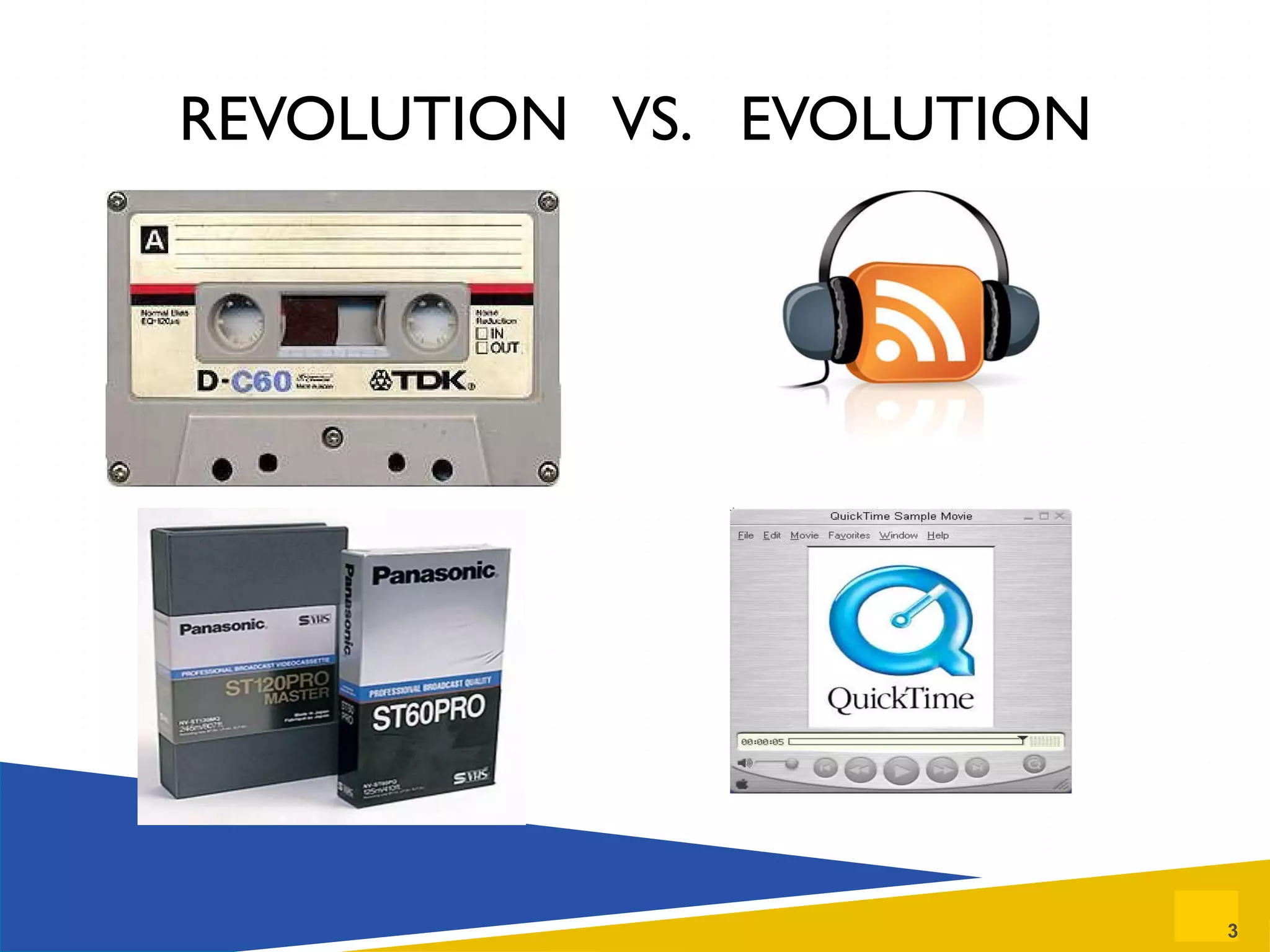
REVOLUTION  VS.  EVOLUTION
PROBLEMS AND CONSIDERATIONS
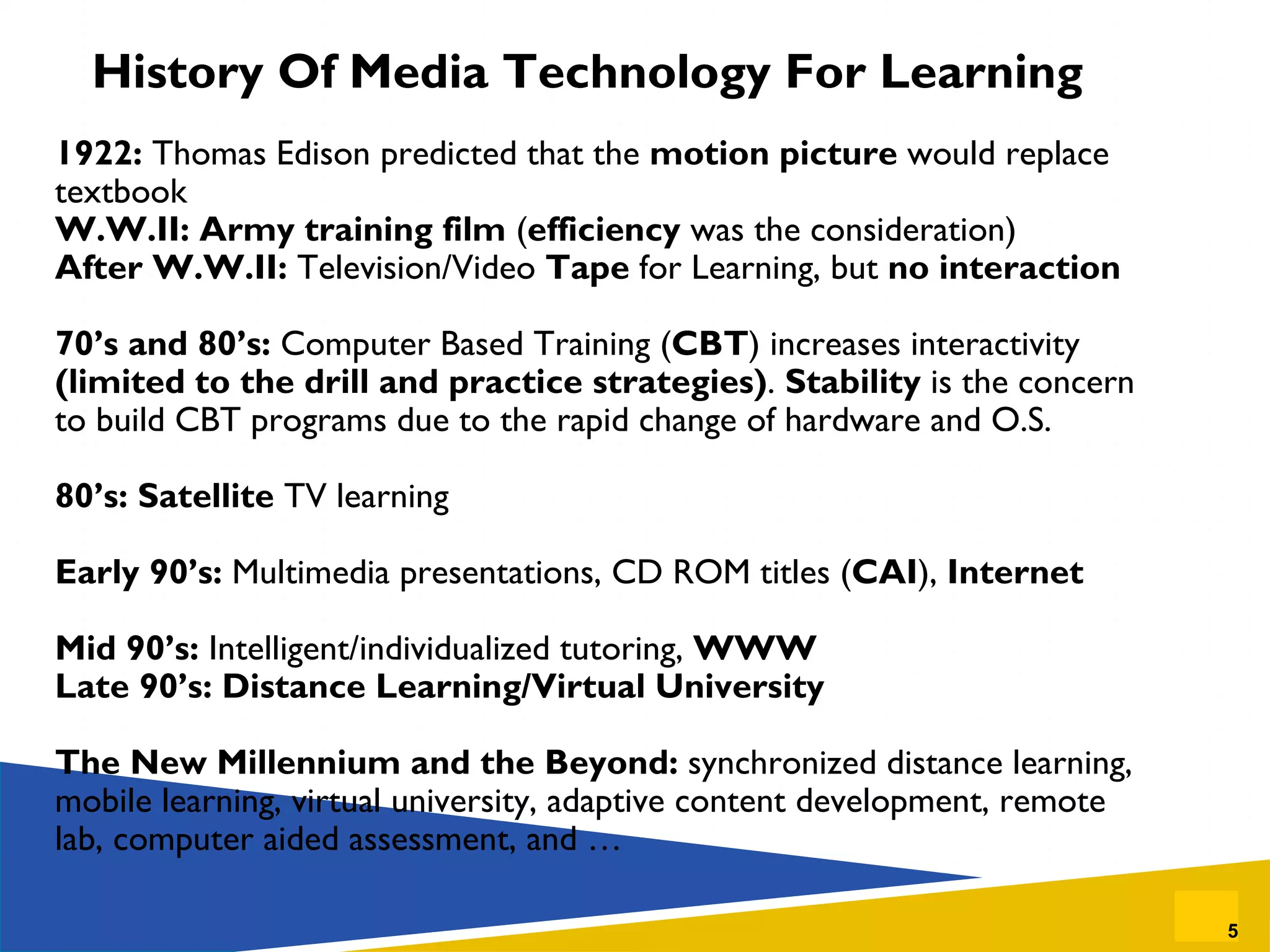
History Of Media Technology For Learning 1922:  Thomas Edison predicted that the  motion picture  would replace textbook W.W.II: Army training film  ( efficiency  was the consideration) After W.W.II:  Television/Video  Tape  for Learning, but  no interaction 70’s and 80’s:  Computer Based Training ( CBT ) increases interactivity  (limited to the drill and practice strategies) .  Stability  is the concern to build CBT programs due to the rapid change of hardware and O.S. 80’s: Satellite  TV learning Early 90’s:  Multimedia presentations, CD ROM titles ( CAI ),  Internet Mid 90’s:  Intelligent/individualized tutoring,  WWW Late 90’s: Distance Learning/Virtual University The New Millennium and the Beyond:  synchronized distance learning, mobile learning, virtual university, adaptive content development, remote lab, computer aided assessment, and …
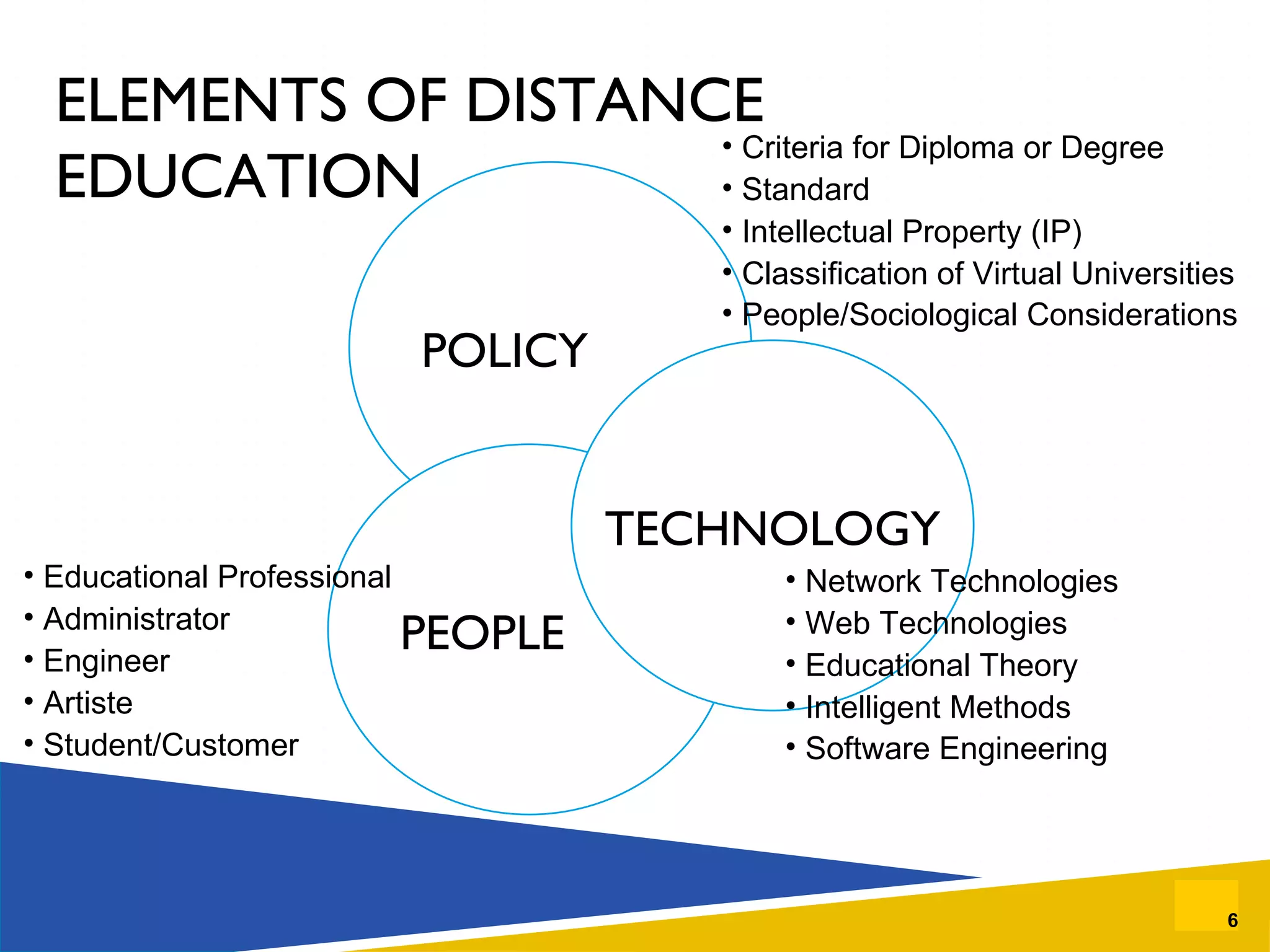
ELEMENTS OF DISTANCE  EDUCATION POLICY PEOPLE TECHNOLOGY Educational Professional Administrator Engineer Artiste Student/Customer Network Technologies Web Technologies Educational Theory Intelligent Methods Software Engineering   Criteria for Diploma or Degree Standard Intellectual Property (IP) Classification of Virtual Universities People/Sociological Considerations
RESEARCH ISSUES Instructor load in  content development Courseware/Platform Standard Efficient courseware development tools Instructor load in  e-mail Q and A FAQ summarization and auto-reply Unbiased exam  and automatic student assessment Intelligent tutoring  and individualized tests Awareness  from others at a regular interval Universal and mobile  accessibility Remote lab  and virtual lab Scalability Broadband and real-time  communication
Public accountability Competition for students Cost escalations Limited resources Scarcity of information technology personnel Changing customer needs and expectations are just a few of the many  challenges facing the Higher Education early in the new millennium. Challenges in Higher Education..
INCREASING DEMAND FOR EDUCATION Globally, one new big university should be built every week just to sustain current participation rates. Building and maintenance of campuses are expensive. Training new professors is expensive and time-consuming
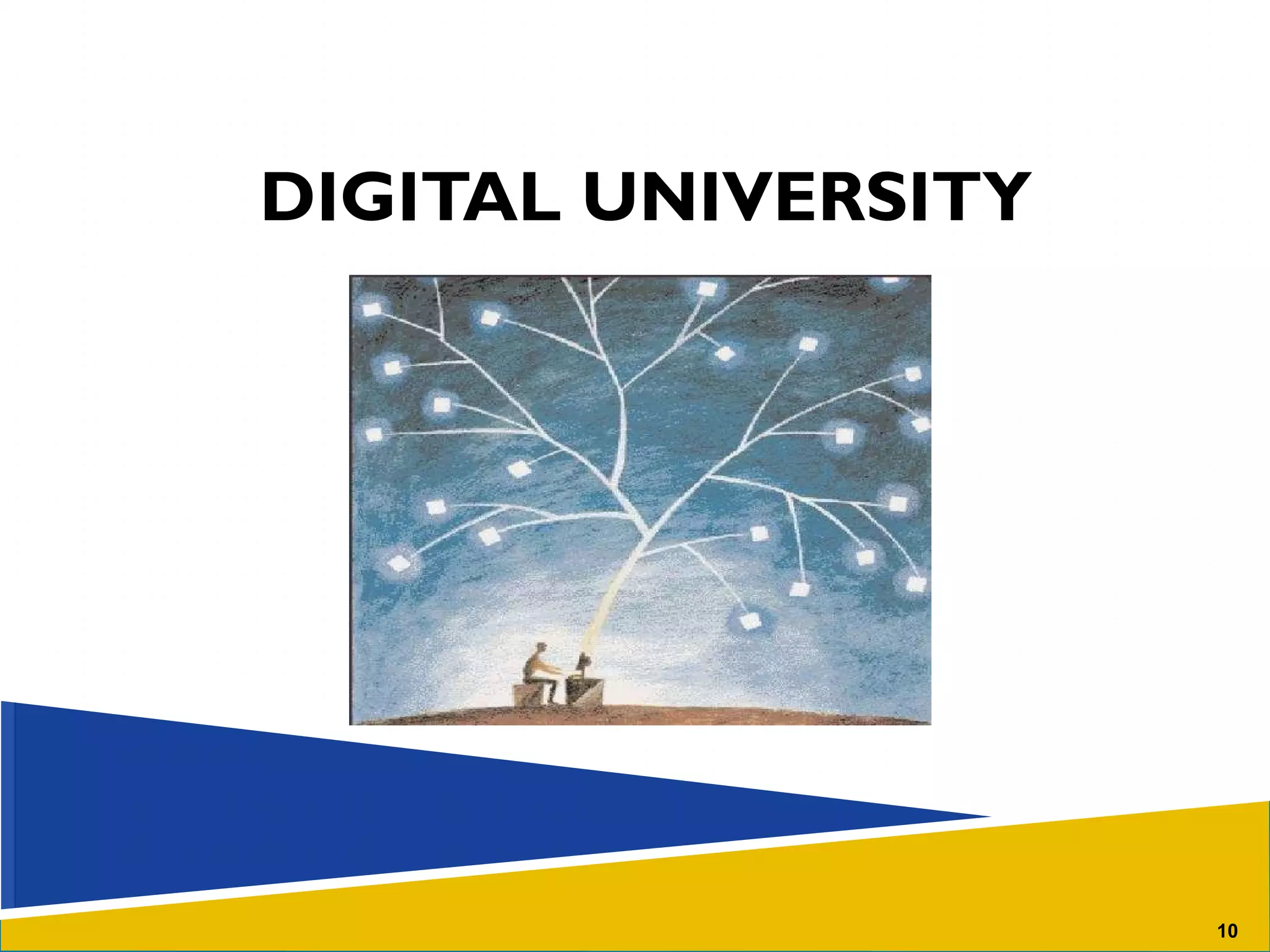
DIGITAL UNIVERSITY
DIGITAL UNIVERSITY Setup towards bringing all the universities under one roof Student can have access to all the details of each university Shrink the expenses and students can easily get quality education right on their desktop
DIGITAL UNIVERSITY Concept comes as a boon to all the aspirants The details of all the universities can be accessed by a click  Students can learn when and where they want. Students can move quickly through easy material and spend more time on difficult material. Students practice new vocabulary and develop communication skills while working with others to complete assignments
FEATURES Expand  the number of students  Facilitate  quality assurance, learner-centred pedagogy, life-long learning Reduce  costs, the sense of isolation, brain-drain over borders  Facilitate  mobility, joint study programmes and cross-cultural communication and international networks Enable women to study from home and  people in remote or dangerous areas to study within secure places
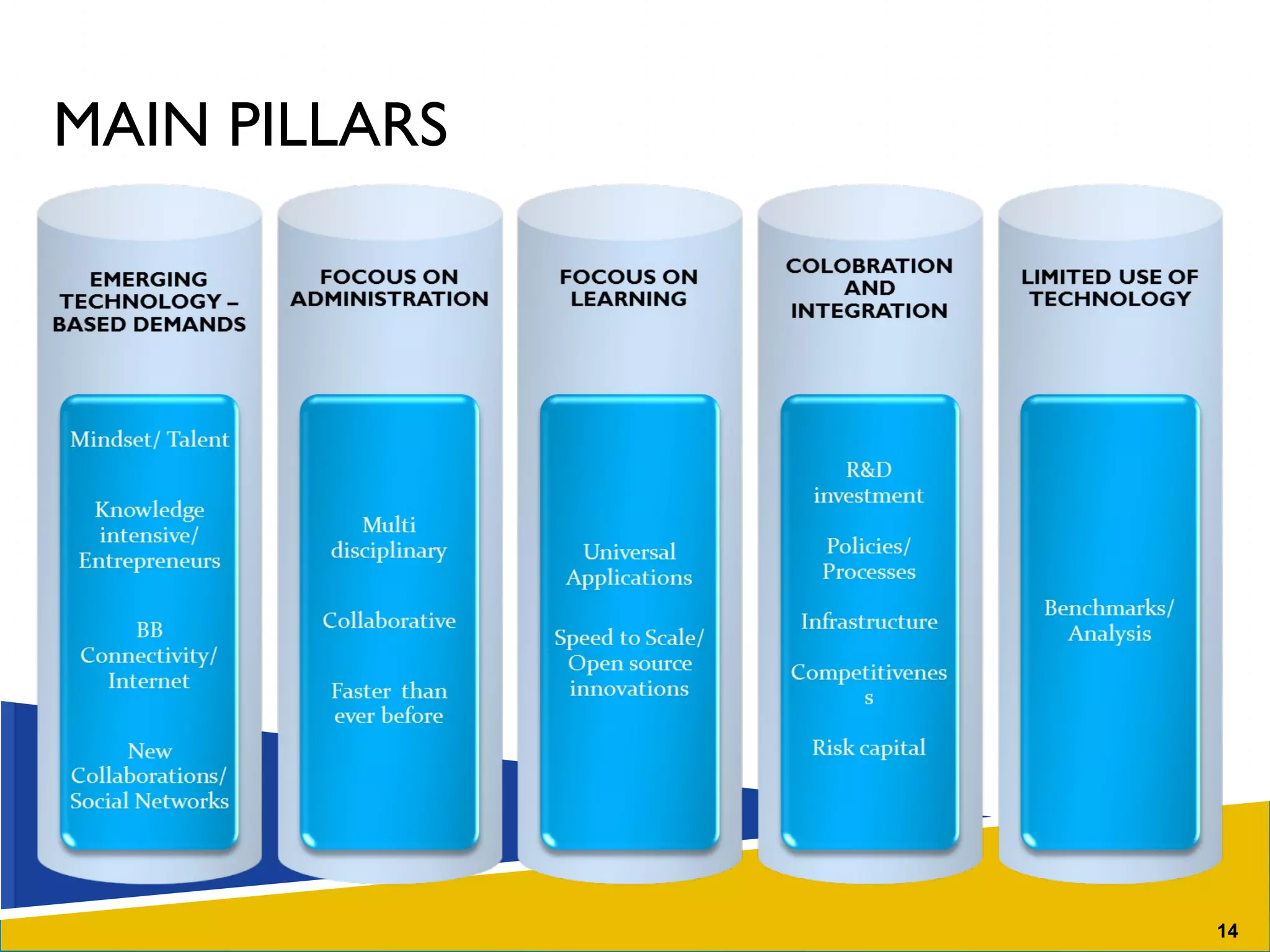
MAIN PILLARS
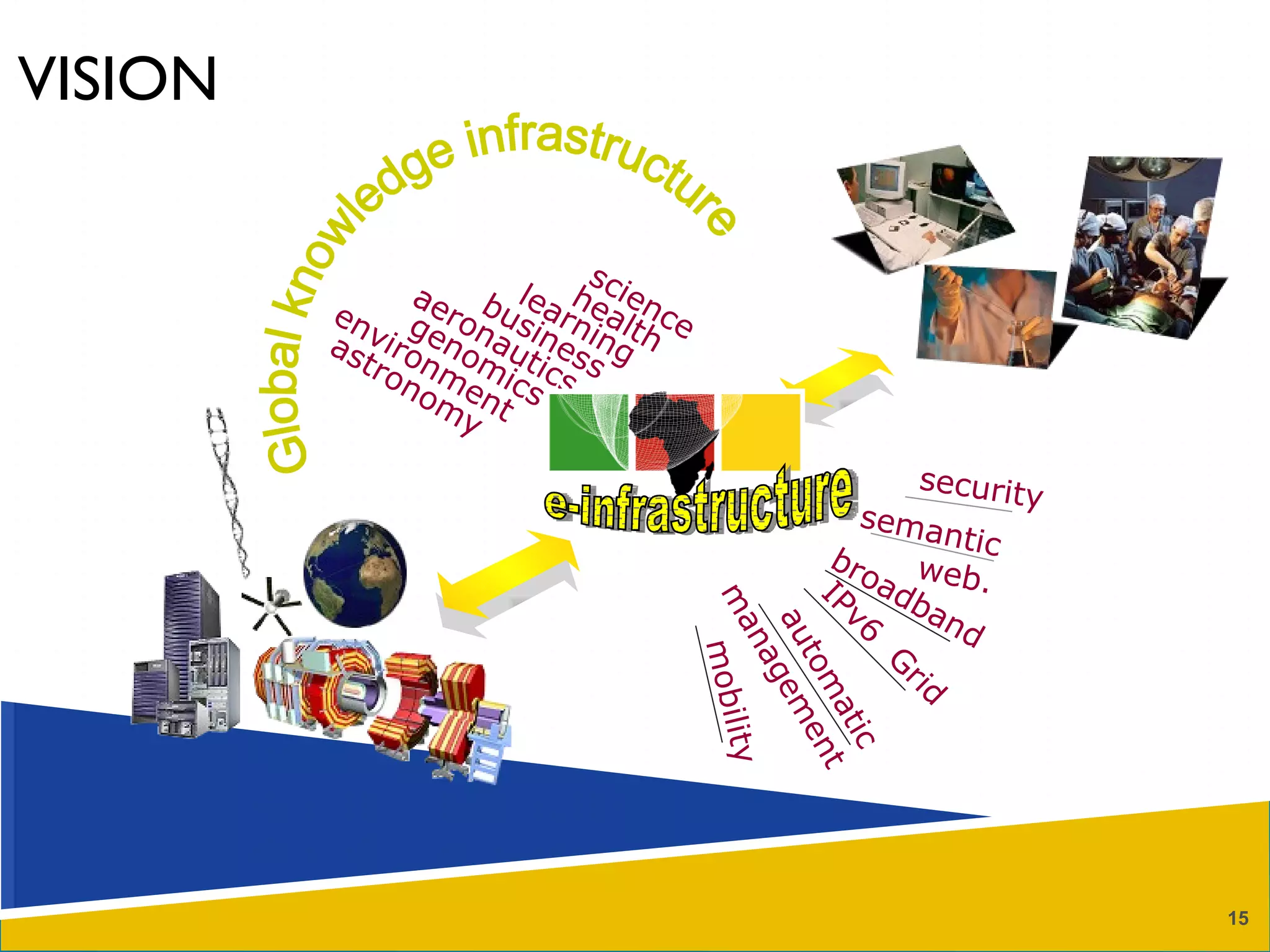
VISION Global knowledge infrastructure e-infrastructure security mobility semantic web. automatic management broadband learning business aeronautics genomics environment astronomy health science IPv6  Grid
WEB ADDS NEW DIMENSION Web/Internet offers unprecedented  opportunities Related to openness, accessibility, networking connectivity, democratization, decentralization Power of 1 billion connected people vs. 1 billion unconnected people Wireless  adds  Mobility & Flexibility Web  provides Video presence & Virtual reality Search engines, OSP, OCW, Vlabs, etc. are new tools  to train & engage the young
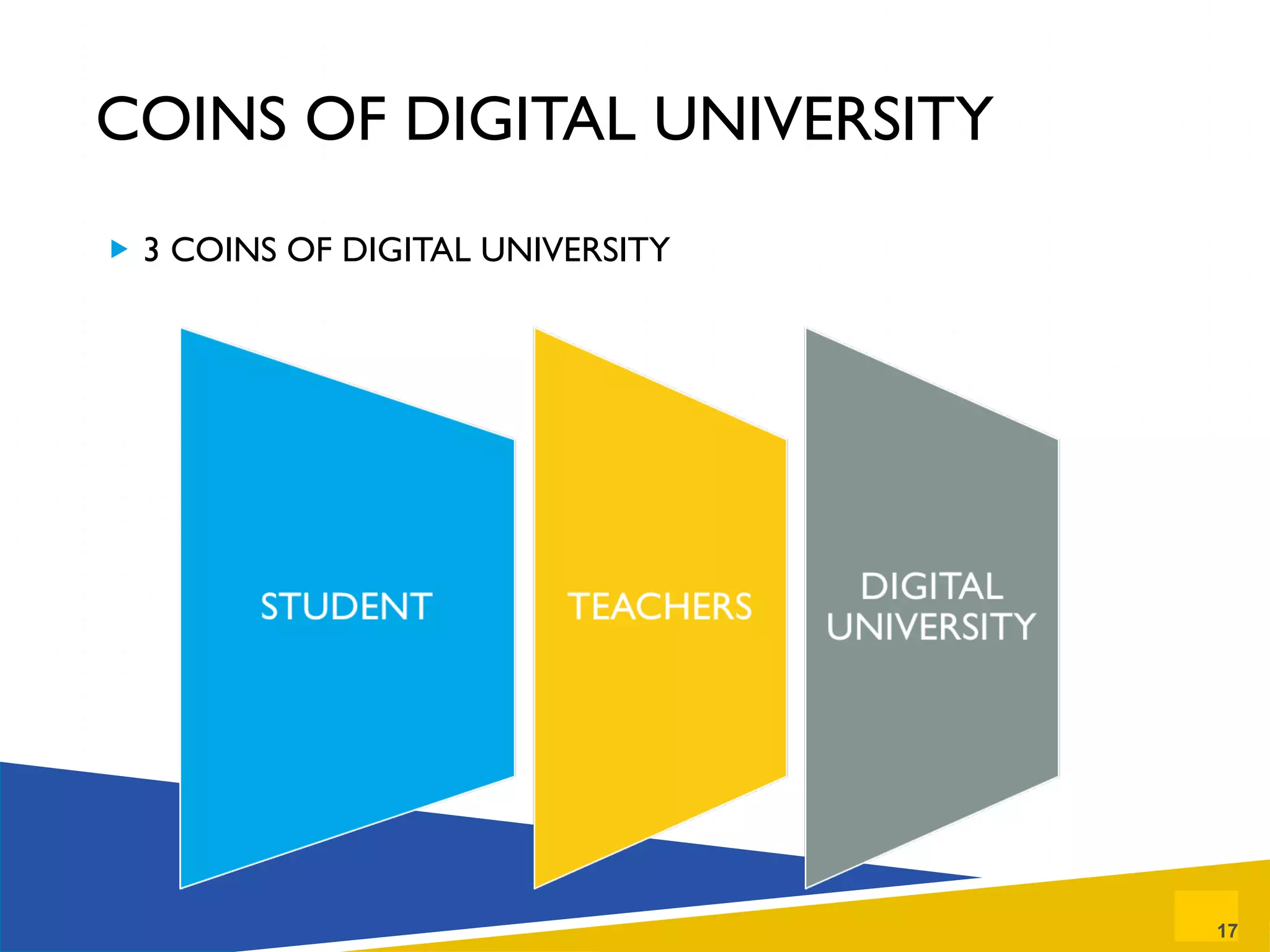
COINS OF DIGITAL UNIVERSITY 3 COINS OF DIGITAL UNIVERSITY
FUTURE  WORK In the future, network intelligence will not just relate to the creative routing of connection based on simple database look-ups, but may take on much broader meaning and provide easy access of NGN for e-Learning Process.
REFERENCES I.Ben Yahia, E.Bertin, N.Crespi, “Service Definition for Next Generation Networks”, ICN’06, April 2006 . J.C.Crimi, “Next Generation Network Sevices”, A Telecordia Technologies White Paper 2004.
THANK YOU

Digital University

  • 1.
    DIGITAL UNIVERSITY AJAYKUMAR GARG NEXT GENERATION APPROCH TORWARDS EDUCATION [email_address] ISBN: 978-84-614-7422-6 ISBN: 978-84-614-7423-3 INTED 2011 ( www.inted2011.org) VALENCIA (SPAIN)- 7 TH -9 TH MARCH, 2011
  • 2.
    EDUCATIONAL OBJECTIVE Howto deliver high quality educational content in non-traditional ways, while still keeping students interested, motivated, and focused?
  • 3.
    REVOLUTION VS. EVOLUTION
  • 4.
  • 5.
    History Of MediaTechnology For Learning 1922: Thomas Edison predicted that the motion picture would replace textbook W.W.II: Army training film ( efficiency was the consideration) After W.W.II: Television/Video Tape for Learning, but no interaction 70’s and 80’s: Computer Based Training ( CBT ) increases interactivity (limited to the drill and practice strategies) . Stability is the concern to build CBT programs due to the rapid change of hardware and O.S. 80’s: Satellite TV learning Early 90’s: Multimedia presentations, CD ROM titles ( CAI ), Internet Mid 90’s: Intelligent/individualized tutoring, WWW Late 90’s: Distance Learning/Virtual University The New Millennium and the Beyond: synchronized distance learning, mobile learning, virtual university, adaptive content development, remote lab, computer aided assessment, and …
  • 6.
    ELEMENTS OF DISTANCE EDUCATION POLICY PEOPLE TECHNOLOGY Educational Professional Administrator Engineer Artiste Student/Customer Network Technologies Web Technologies Educational Theory Intelligent Methods Software Engineering Criteria for Diploma or Degree Standard Intellectual Property (IP) Classification of Virtual Universities People/Sociological Considerations
  • 7.
    RESEARCH ISSUES Instructorload in content development Courseware/Platform Standard Efficient courseware development tools Instructor load in e-mail Q and A FAQ summarization and auto-reply Unbiased exam and automatic student assessment Intelligent tutoring and individualized tests Awareness from others at a regular interval Universal and mobile accessibility Remote lab and virtual lab Scalability Broadband and real-time communication
  • 8.
    Public accountability Competitionfor students Cost escalations Limited resources Scarcity of information technology personnel Changing customer needs and expectations are just a few of the many challenges facing the Higher Education early in the new millennium. Challenges in Higher Education..
  • 9.
    INCREASING DEMAND FOREDUCATION Globally, one new big university should be built every week just to sustain current participation rates. Building and maintenance of campuses are expensive. Training new professors is expensive and time-consuming
  • 10.
  • 11.
    DIGITAL UNIVERSITY Setuptowards bringing all the universities under one roof Student can have access to all the details of each university Shrink the expenses and students can easily get quality education right on their desktop
  • 12.
    DIGITAL UNIVERSITY Conceptcomes as a boon to all the aspirants The details of all the universities can be accessed by a click Students can learn when and where they want. Students can move quickly through easy material and spend more time on difficult material. Students practice new vocabulary and develop communication skills while working with others to complete assignments
  • 13.
    FEATURES Expand the number of students Facilitate quality assurance, learner-centred pedagogy, life-long learning Reduce costs, the sense of isolation, brain-drain over borders Facilitate mobility, joint study programmes and cross-cultural communication and international networks Enable women to study from home and people in remote or dangerous areas to study within secure places
  • 14.
  • 15.
    VISION Global knowledgeinfrastructure e-infrastructure security mobility semantic web. automatic management broadband learning business aeronautics genomics environment astronomy health science IPv6 Grid
  • 16.
    WEB ADDS NEWDIMENSION Web/Internet offers unprecedented opportunities Related to openness, accessibility, networking connectivity, democratization, decentralization Power of 1 billion connected people vs. 1 billion unconnected people Wireless adds Mobility & Flexibility Web provides Video presence & Virtual reality Search engines, OSP, OCW, Vlabs, etc. are new tools to train & engage the young
  • 17.
    COINS OF DIGITALUNIVERSITY 3 COINS OF DIGITAL UNIVERSITY
  • 18.
    FUTURE WORKIn the future, network intelligence will not just relate to the creative routing of connection based on simple database look-ups, but may take on much broader meaning and provide easy access of NGN for e-Learning Process.
  • 19.
    REFERENCES I.Ben Yahia,E.Bertin, N.Crespi, “Service Definition for Next Generation Networks”, ICN’06, April 2006 . J.C.Crimi, “Next Generation Network Sevices”, A Telecordia Technologies White Paper 2004.
  • 20.

Editor's Notes

  • #6 Innovation involves thinking differently and creatively to create solutions that have an impact in terms of social and economic value. Innovation can also enable solutions to problems which are not being met in the conventional way of doing things. Innovation should also go beyond formal R&D parameters to mean new things: process innovation, organisational innovation or new applications of old knowledge