Alev Elçi Eastern Mediterranean University, North Cyprus 8 November 2009 “ICT for Innovations in Training”
Outline Challenges in Education Change in students’ learning preferences Need change in teachers Need change in teaching environments Social Networks Role of faculty Role of students Results & Discussion
Challenges in Education Change in needs & expectations of students ( Ellis, R. ,  1993 ;  Fallows, S., & Bhanot, R. ,  2005).  Change in learning environments ( Grodecka, K., Pata, K., & Valjataga, T. ,  2008).  Need to embrace 21st century learning skills ( Solomon, G., & Schrum, L. ,  2007).
Change in 21st Century  Students’ learning Learning styles Games Learning time and place Networks Use of Technology  Experiential Constructivist Creativity
Need change in Teachers Facilitator Guide Data miners  Networking Collaborative Communicative Friend Available 24/7
Need change in Learning Environments  Online Accessible 24/7  Social Forming Communities Collaborative
Used Social Networks and Wikis Social Networks Facebook Ning Wikis Wikispaces Wetpaint
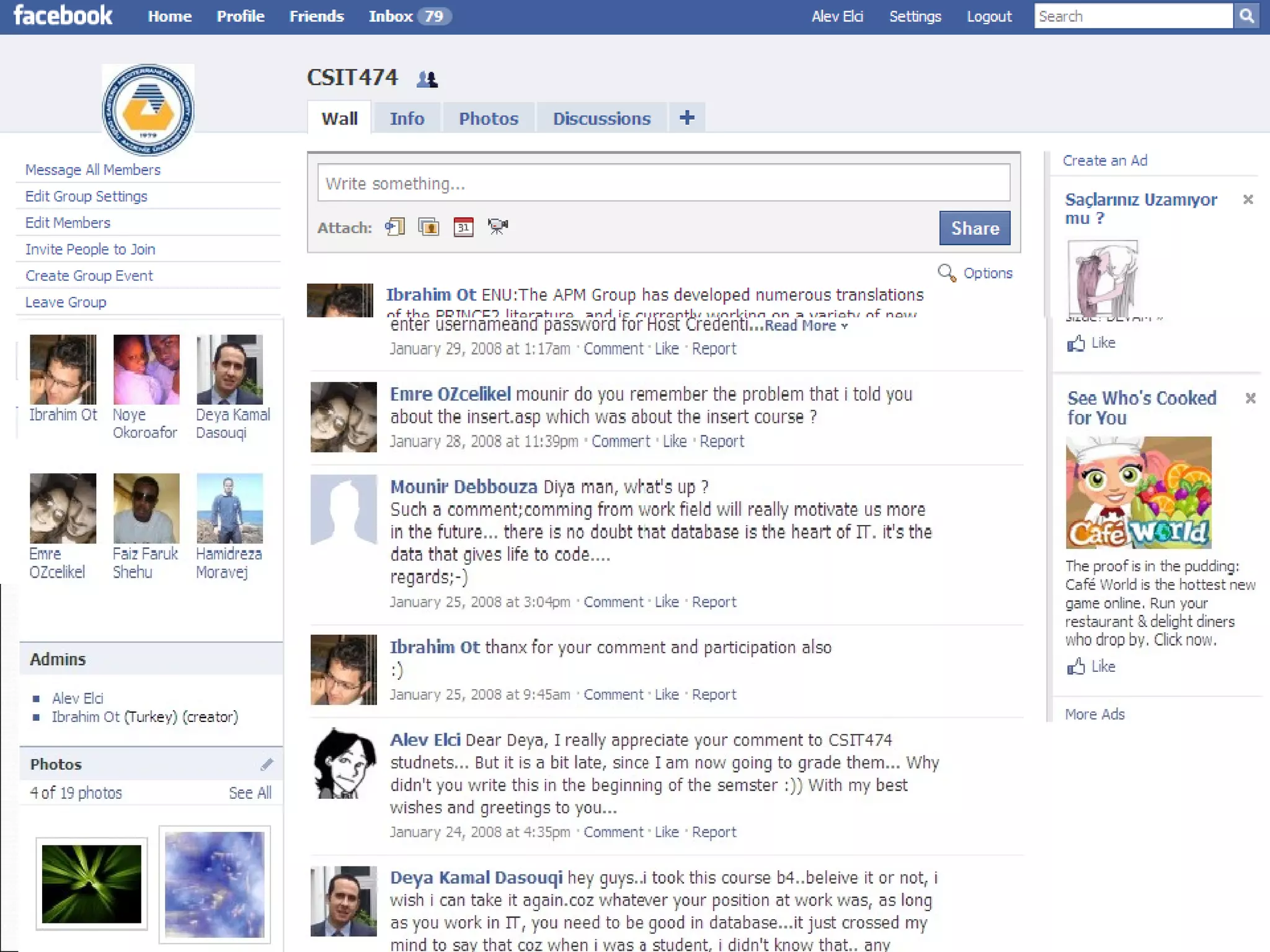
Facebook Used in IT Department since 2007 forming groups CSIT474 Advanced Database Management for DBA in Oracle CSIT422 Project Management in IT Sharing content related Links Videos Photos Communication Discussions Peer to peer learning
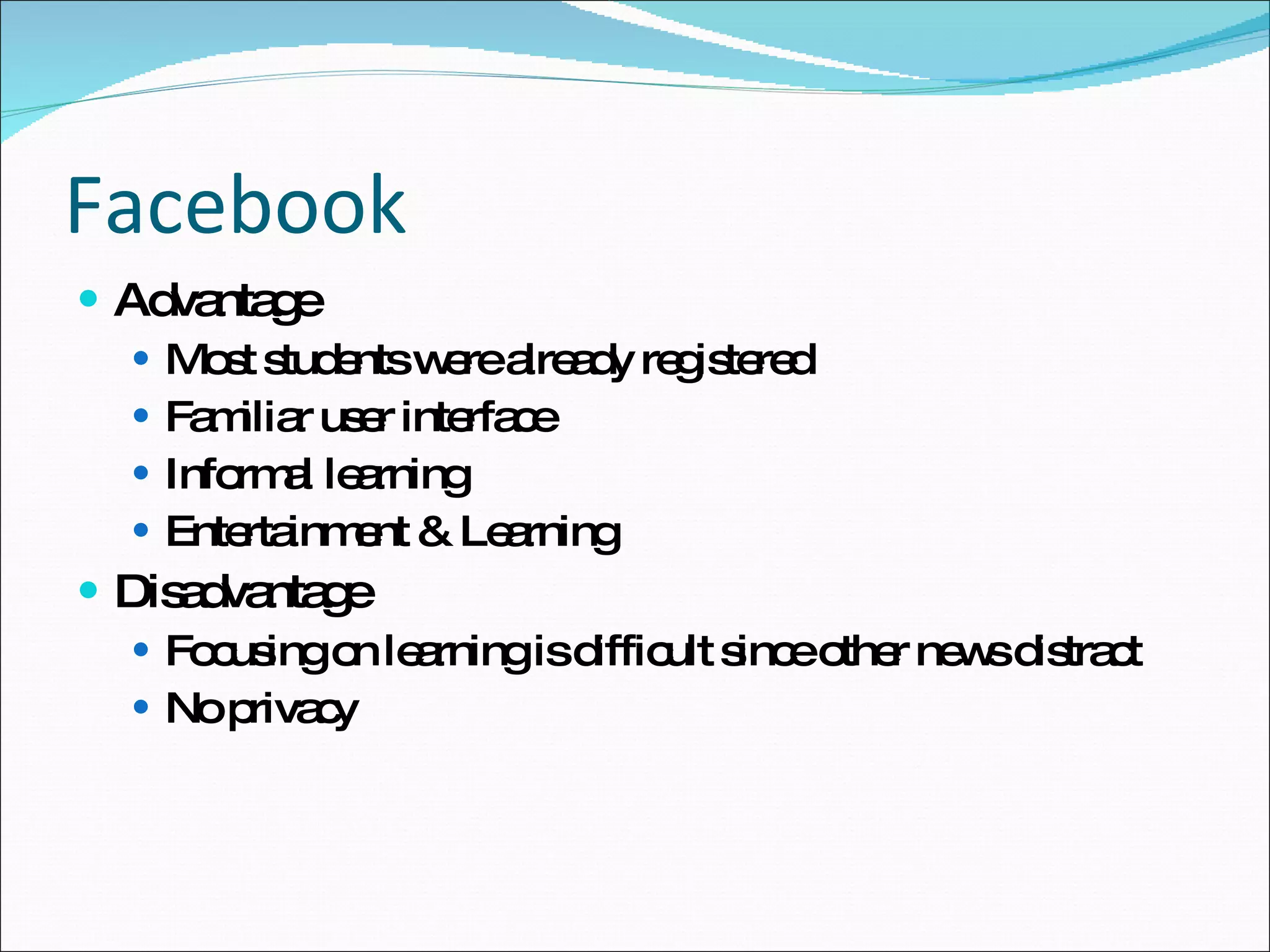
Facebook Advantage Most students were already registered Familiar user interface Informal learning Entertainment & Learning Disadvantage Focusing on learning is difficult since other news distract No privacy
Facebook groups http://www.facebook.com/editaccount.php?language#/group.php?gid=17894549712&ref=ts http://www.facebook.com/editaccount.php?language#/group.php?gid=17790879328&ref=ts
 
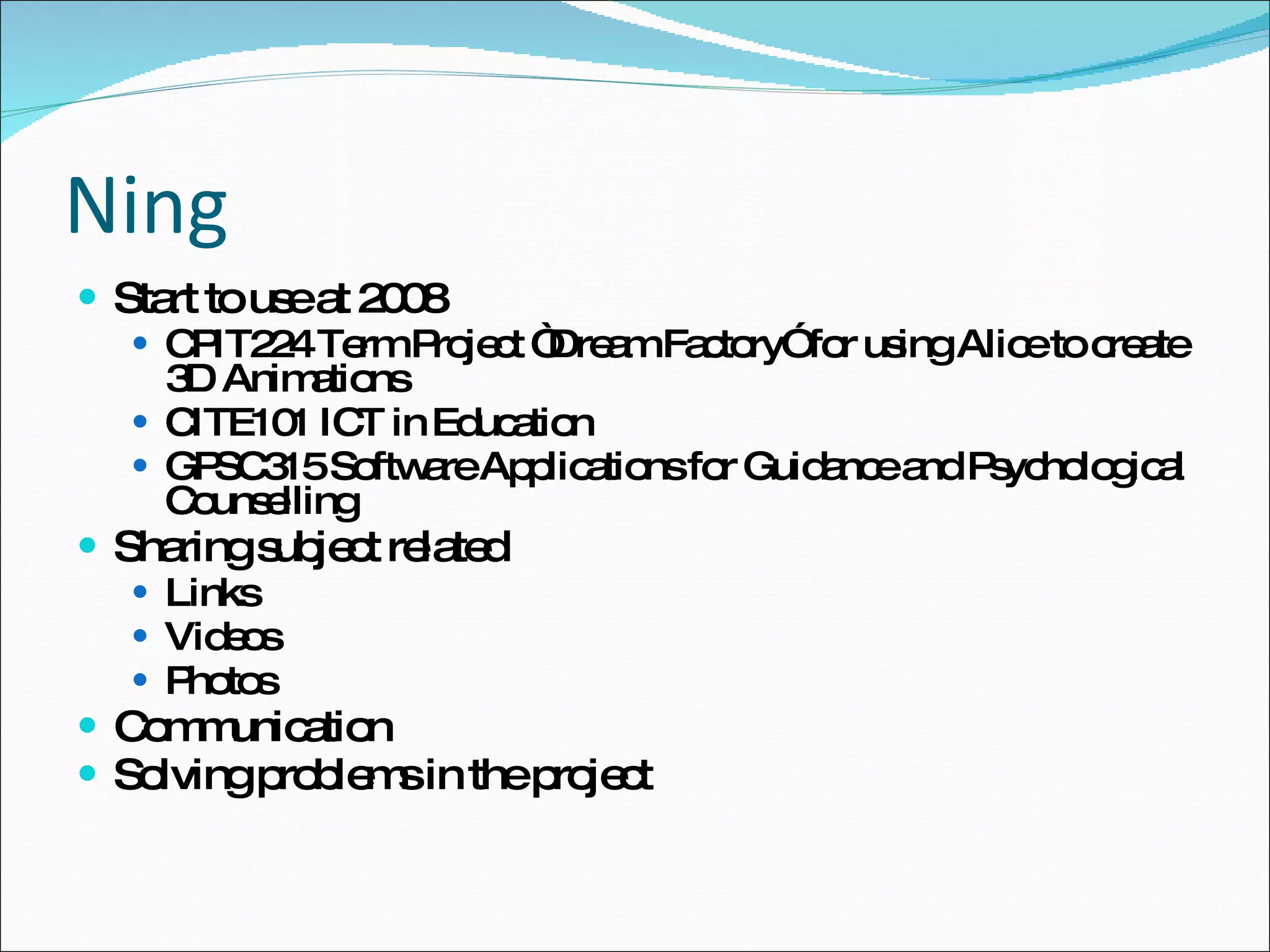
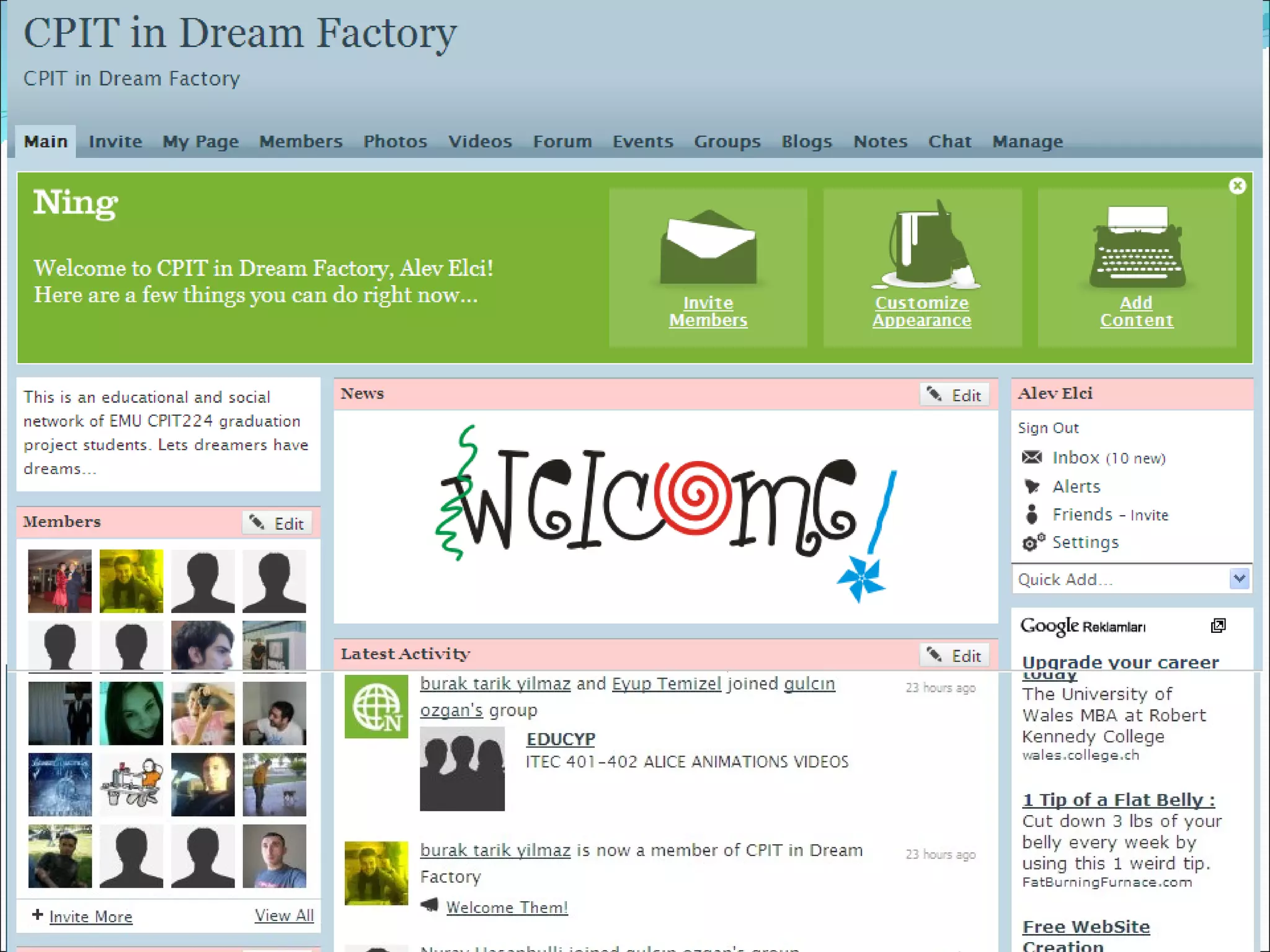
Ning Start to use at 2008  CPIT224 Term Project “Dream Factory” for using Alice to create 3D Animations CITE101 ICT in Education GPSC315 Software Applications for Guidance and Psychological Counselling Sharing subject related Links Videos Photos Communication Solving problems in the project
Ning Advantage Private community is selected Share experiences Entertainment & Learning Previous semesters contributions are available Disadvantage No sustainability after the course ends http://the-end.ning.com http://cite101.ning.com http://gpsc315.ning.com
 
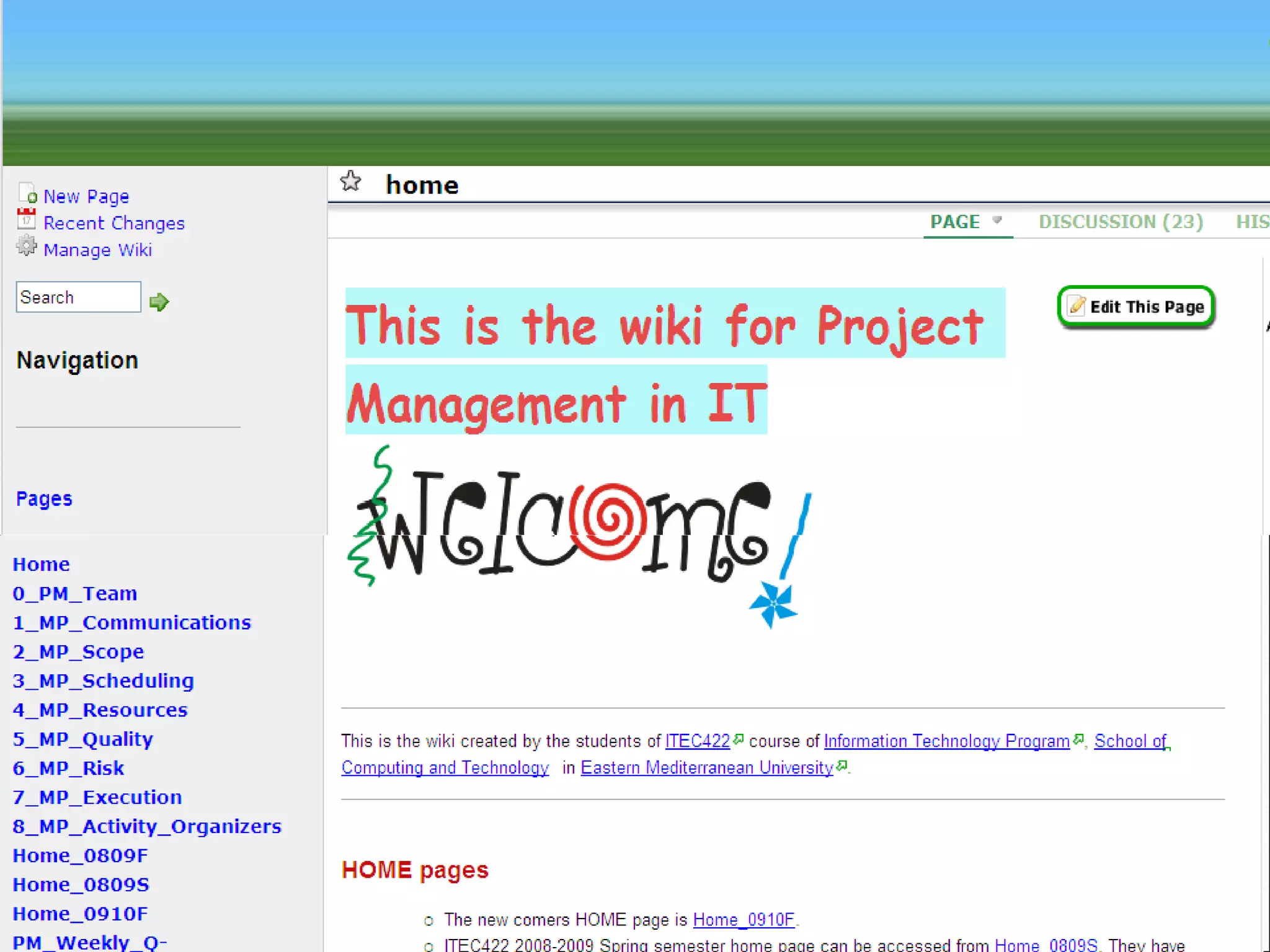
Wikis ITEC422 Project Management in IT For developing and collaborating in class projects Prepare another wiki project  Collaborative writing Adding, editing, changing content Commenting each others contributions Ease of use  Effective
Wikis Advantage Project management collaboration and communication Creating common reports and documents  Disadvantage Training is needed http://pminit.wikispaces.com/
 
Role of faculty in facilitation of new forms of learning Attract early adopters Competence development Role model Creating communities for faculty development in collaborative educational technologies
Role of students in facilitation of new forms of learning Early adopters Lead group discussions Increase motivation
Result & Discussion Facilitating new forms of  l earning with  c ollaborative  t echnologies  may close the gap between teachers and students that exists in traditional teaching. Also formal and informal learning environments can be hand in hand. Collaboration is more than competition where entertaining while learning is a priority. Teachers needs to be prepared to integrate technology in the curriculum for including new forms of learning activities . Also the sustainability is needed for future competence development.
References Ellis, R. (1993). Quality assurance for university teaching: Issues and approaches. In H.Eggins (Series Ed.), & R. Ellis (Vol. Ed.),  The Society for Research into Higher Education. Quality Assurance for University Teaching . Great Briton: Open University Press. Fallows, S., & Bhanot, R. (Eds.). (2005). Quality in ICT-based higher education: Some introductory questions. In J. Wisdom (Series Ed.),  The staff and educational development series. Quality issues in ICT-based higher education . NY: RoutledgeFalmer. Grodecka, K., Pata, K., & Valjataga, T. (2008). How to Use Social Software in Higher Education. A handbook from the iCamp project (2005-2008). Solomon, G., & Schrum, L. (2007). Web 2.0: new Tools, new schools. International Society for Technology in Education. Washington DC: ISTE.
Thank You... [email_address] http://sct.emu.edu.tr/alev   New forms of learning for the new generation learners

Facilitation new forms of Learning with Collaborative Technologies

  • 1.
    Alev Elçi EasternMediterranean University, North Cyprus 8 November 2009 “ICT for Innovations in Training”
  • 2.
    Outline Challenges inEducation Change in students’ learning preferences Need change in teachers Need change in teaching environments Social Networks Role of faculty Role of students Results & Discussion
  • 3.
    Challenges in EducationChange in needs & expectations of students ( Ellis, R. , 1993 ; Fallows, S., & Bhanot, R. , 2005). Change in learning environments ( Grodecka, K., Pata, K., & Valjataga, T. , 2008). Need to embrace 21st century learning skills ( Solomon, G., & Schrum, L. , 2007).
  • 4.
    Change in 21stCentury Students’ learning Learning styles Games Learning time and place Networks Use of Technology Experiential Constructivist Creativity
  • 5.
    Need change inTeachers Facilitator Guide Data miners Networking Collaborative Communicative Friend Available 24/7
  • 6.
    Need change inLearning Environments Online Accessible 24/7 Social Forming Communities Collaborative
  • 7.
    Used Social Networksand Wikis Social Networks Facebook Ning Wikis Wikispaces Wetpaint
  • 8.
    Facebook Used inIT Department since 2007 forming groups CSIT474 Advanced Database Management for DBA in Oracle CSIT422 Project Management in IT Sharing content related Links Videos Photos Communication Discussions Peer to peer learning
  • 9.
    Facebook Advantage Moststudents were already registered Familiar user interface Informal learning Entertainment & Learning Disadvantage Focusing on learning is difficult since other news distract No privacy
  • 10.
    Facebook groups http://www.facebook.com/editaccount.php?language#/group.php?gid=17894549712&ref=tshttp://www.facebook.com/editaccount.php?language#/group.php?gid=17790879328&ref=ts
  • 11.
  • 12.
    Ning Start touse at 2008 CPIT224 Term Project “Dream Factory” for using Alice to create 3D Animations CITE101 ICT in Education GPSC315 Software Applications for Guidance and Psychological Counselling Sharing subject related Links Videos Photos Communication Solving problems in the project
  • 13.
    Ning Advantage Privatecommunity is selected Share experiences Entertainment & Learning Previous semesters contributions are available Disadvantage No sustainability after the course ends http://the-end.ning.com http://cite101.ning.com http://gpsc315.ning.com
  • 14.
  • 15.
    Wikis ITEC422 ProjectManagement in IT For developing and collaborating in class projects Prepare another wiki project Collaborative writing Adding, editing, changing content Commenting each others contributions Ease of use Effective
  • 16.
    Wikis Advantage Projectmanagement collaboration and communication Creating common reports and documents Disadvantage Training is needed http://pminit.wikispaces.com/
  • 17.
  • 18.
    Role of facultyin facilitation of new forms of learning Attract early adopters Competence development Role model Creating communities for faculty development in collaborative educational technologies
  • 19.
    Role of studentsin facilitation of new forms of learning Early adopters Lead group discussions Increase motivation
  • 20.
    Result & DiscussionFacilitating new forms of l earning with c ollaborative t echnologies may close the gap between teachers and students that exists in traditional teaching. Also formal and informal learning environments can be hand in hand. Collaboration is more than competition where entertaining while learning is a priority. Teachers needs to be prepared to integrate technology in the curriculum for including new forms of learning activities . Also the sustainability is needed for future competence development.
  • 21.
    References Ellis, R.(1993). Quality assurance for university teaching: Issues and approaches. In H.Eggins (Series Ed.), & R. Ellis (Vol. Ed.), The Society for Research into Higher Education. Quality Assurance for University Teaching . Great Briton: Open University Press. Fallows, S., & Bhanot, R. (Eds.). (2005). Quality in ICT-based higher education: Some introductory questions. In J. Wisdom (Series Ed.), The staff and educational development series. Quality issues in ICT-based higher education . NY: RoutledgeFalmer. Grodecka, K., Pata, K., & Valjataga, T. (2008). How to Use Social Software in Higher Education. A handbook from the iCamp project (2005-2008). Solomon, G., & Schrum, L. (2007). Web 2.0: new Tools, new schools. International Society for Technology in Education. Washington DC: ISTE.
  • 22.
    Thank You... [email_address]http://sct.emu.edu.tr/alev New forms of learning for the new generation learners