Digimap Roam webinar 
12th November 2014 
Carol Blackwood – Geo User Support 
Vivienne Mayo – User Support
Digimap’s Ordnance Survey Collection 
What can I do with Roam? 
• View current OS maps 
• Customise your map: 
– Add annotations 
– Select map features 
– Select different basemap 
– Add hillshading 
• Measure lines and shapes 
• Save map within Roam 
• Import your own map data – 
points, lines or polygons 
• Print A4 – A0
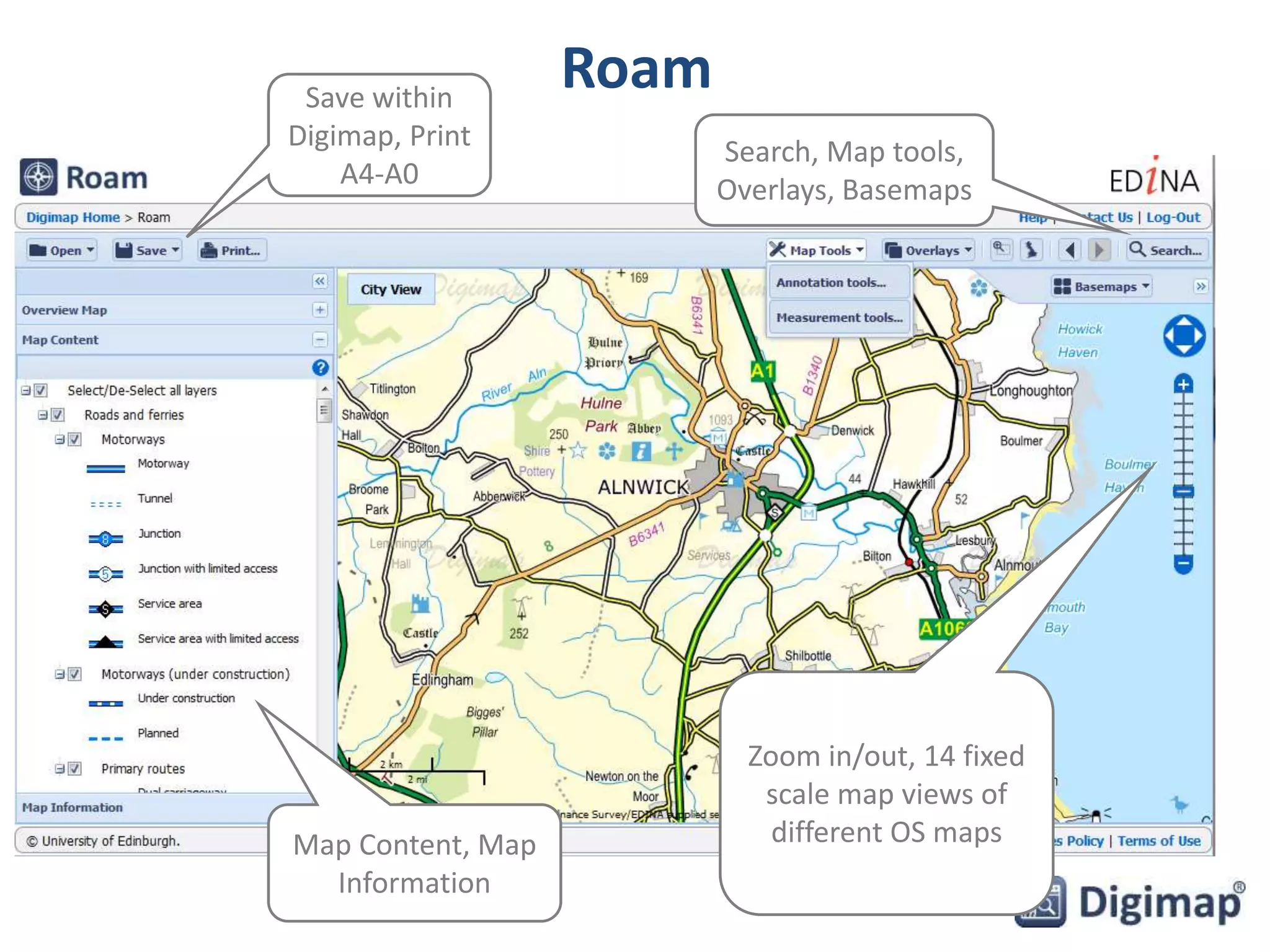
Roam 
Zoom in/out, 14 fixed 
scale map views of 
different OS maps 
Save within 
Digimap, Print 
A4-A0 
Search, Map tools, 
Overlays, Basemaps 
Map Content, Map 
Information
Content 
Look at all Roam features: 
1. Helvellyn 
– Search, navigate, select map features, measure, add hillshading 
2. Archaeological dig site 
– Change basemap, add polygon & label, save, print 
3. Carlisle Flood Warning areas 
– Import your own map data
Map 1 – Helvellyn 
• Place name 
search 
• Zoom out 
• Map Content: 
only want to 
display water 
and land 
features 
• Measure shape 
• Overlays – add 
hillshading
Search 
• Can pan/zoom to your 
location, or use Search 
• Tab 1: place name/ 
road / postcode 
• Tab 2: British National 
Grid reference or 
Lat/Long
Place name Gazetteer 
• Place name search 
uses the OS 1: 50000 
Scale Gazetteer 
• Same database that 
is used on the 
Landranger Maps
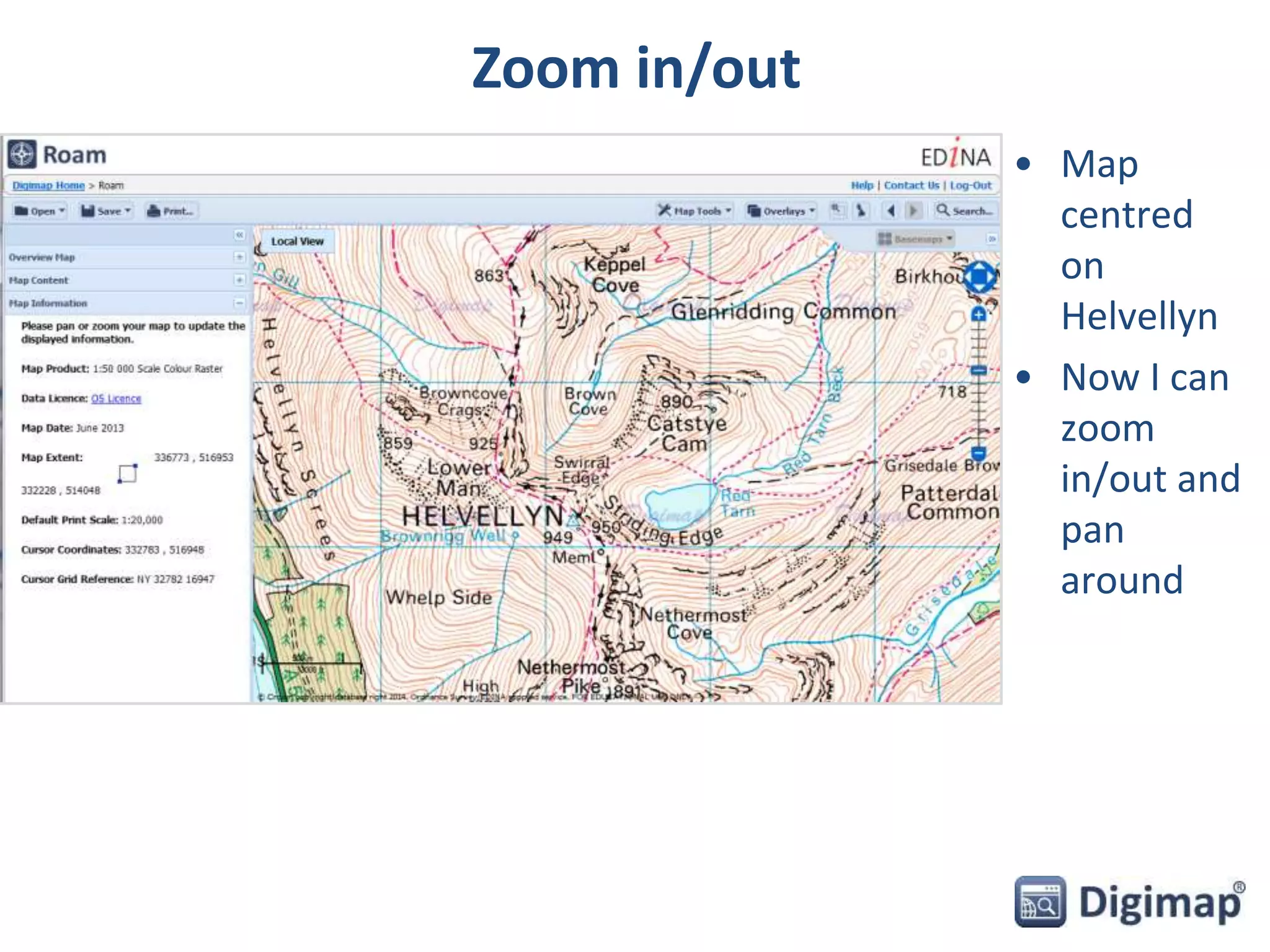
Zoom in/out 
• Map 
centred 
on 
Helvellyn 
• Now I can 
zoom 
in/out and 
pan 
around
Navigation 
• Zoom in/out 
– Click on any notch on the scale bar 
– Double click to zoom in 
– Scroll wheel on mouse 
• Pan 
– Click and drag the map 
– Click NSEW on the compass 
• Full extent / Previous / Next views
Zoomed out to Metropolitan View
Map Information 
Details: 
• Map product 
• Data licence – 2 possibilities: 
– OS Licence (Digimap licence, 
educational use only) 
– OS OpenData (wider use 
permitted, see OS Open Data 
website for full details) 
• Date of creation by OS 
• Default print scale 
• Grid references
Map Content 
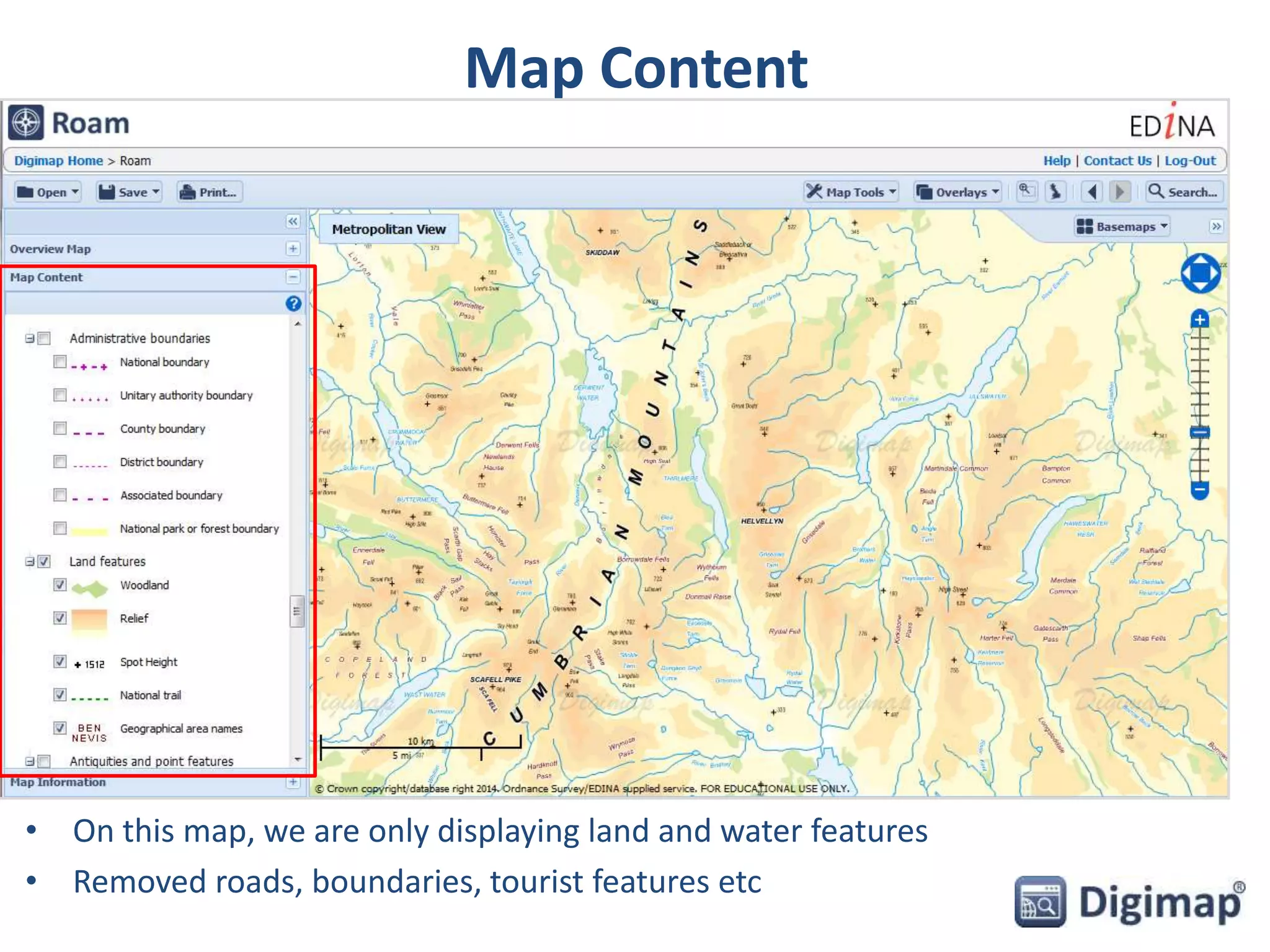
• On this map, we are only displaying land and water features 
• Removed roads, boundaries, tourist features etc
Map Content 
• Feature selection available in 8 of 
Roam’s 14 views 
• Unavailable when you are viewing a 
raster map - when unavailable, you will 
see the message ‘View has no layer 
selection’ 
• TIP: check the basemaps for alternative 
maps where feature selection may be 
possible
Raster v Vector map data 
• Raster map data is a matrix of 
cells (or pixels) in a grid: 
– scanned maps, digital aerial 
photographs, satellite images, 
digital pictures. 
– geo-referenced, geographic 
coordinates of the location 
added. 
– useful as background for 
displaying other data. 
• Vector map data stores data on 
individual map features e.g. 
– Points such as train stations. 
– Lines such as railway tracks and 
rivers. 
– Polygons such as buildings or 
fields. 
– We can view, query and analyse 
vector map data.
Measurements 
• Available under 
Map tools 
• Measure distances 
or areas 
• Not possible to 
save the 
measurements or 
print on your map
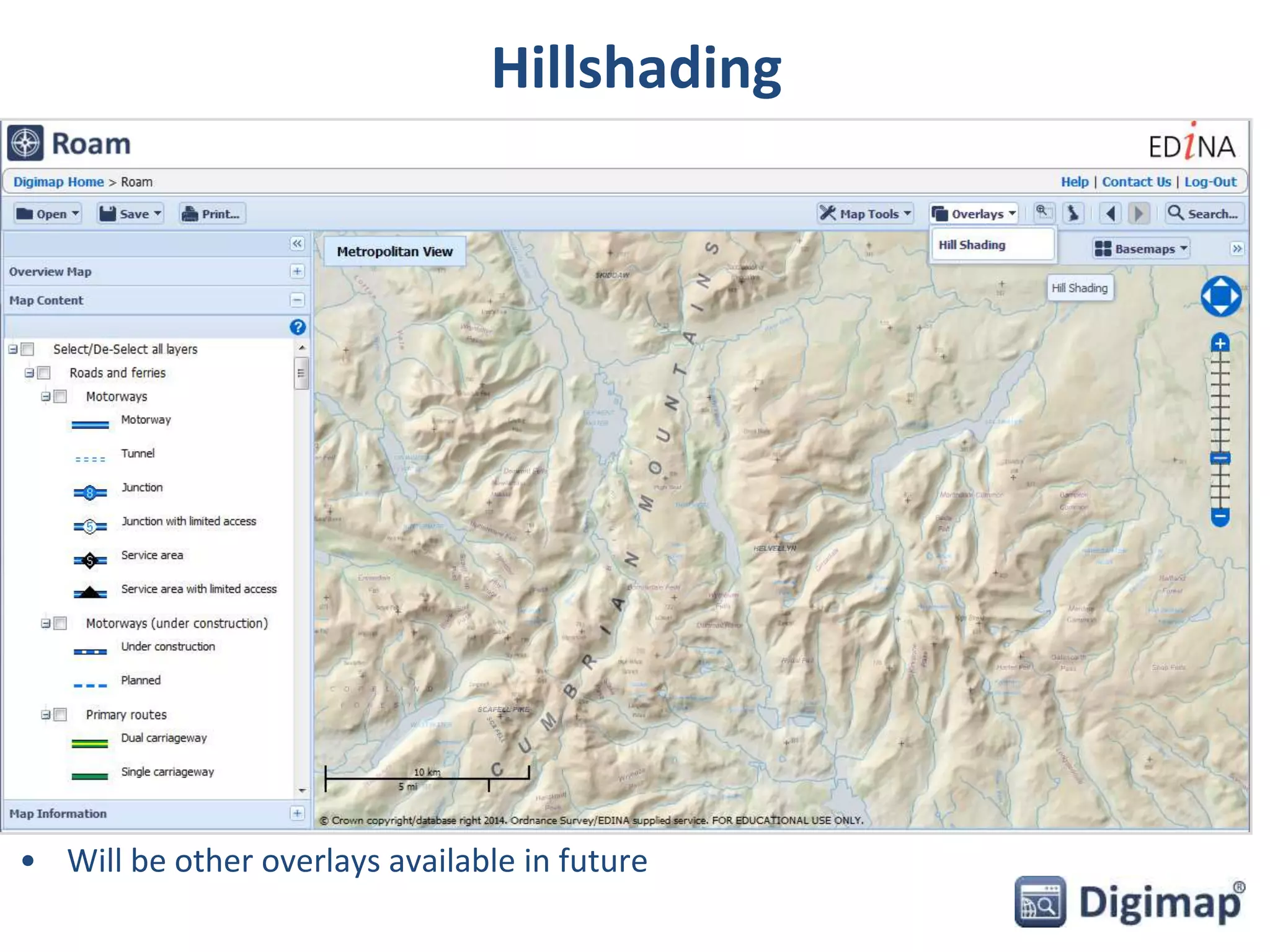
Hillshading 
• Will be other overlays available in future
Map 2 – Archaeological dig site 
• Search 
using a 
postcode 
• Zoom in 
• Add a 
polygon and 
a label 
• Basemaps 
• Print 
• Save 
options
Search with postcode
Zoom in
Basemaps 
• Basemaps offer maps at same 
scale, in a different cartographic 
style 
• Available in several of Roam’s map 
views: 
– Plan, Building and Detailed 
– Street, Neighbourhood 
– District 
– City, Metropolitan 
• Tip: in Street and Neighbourhood 
views, switching basemap means you 
can select features in Map 
Content…default is raster map, some 
of basemaps are vector.
Annotation tools 
• Now, we want to add a polygon over the 
empty site 
• Easier to select colour and line 
colour/width before you draw
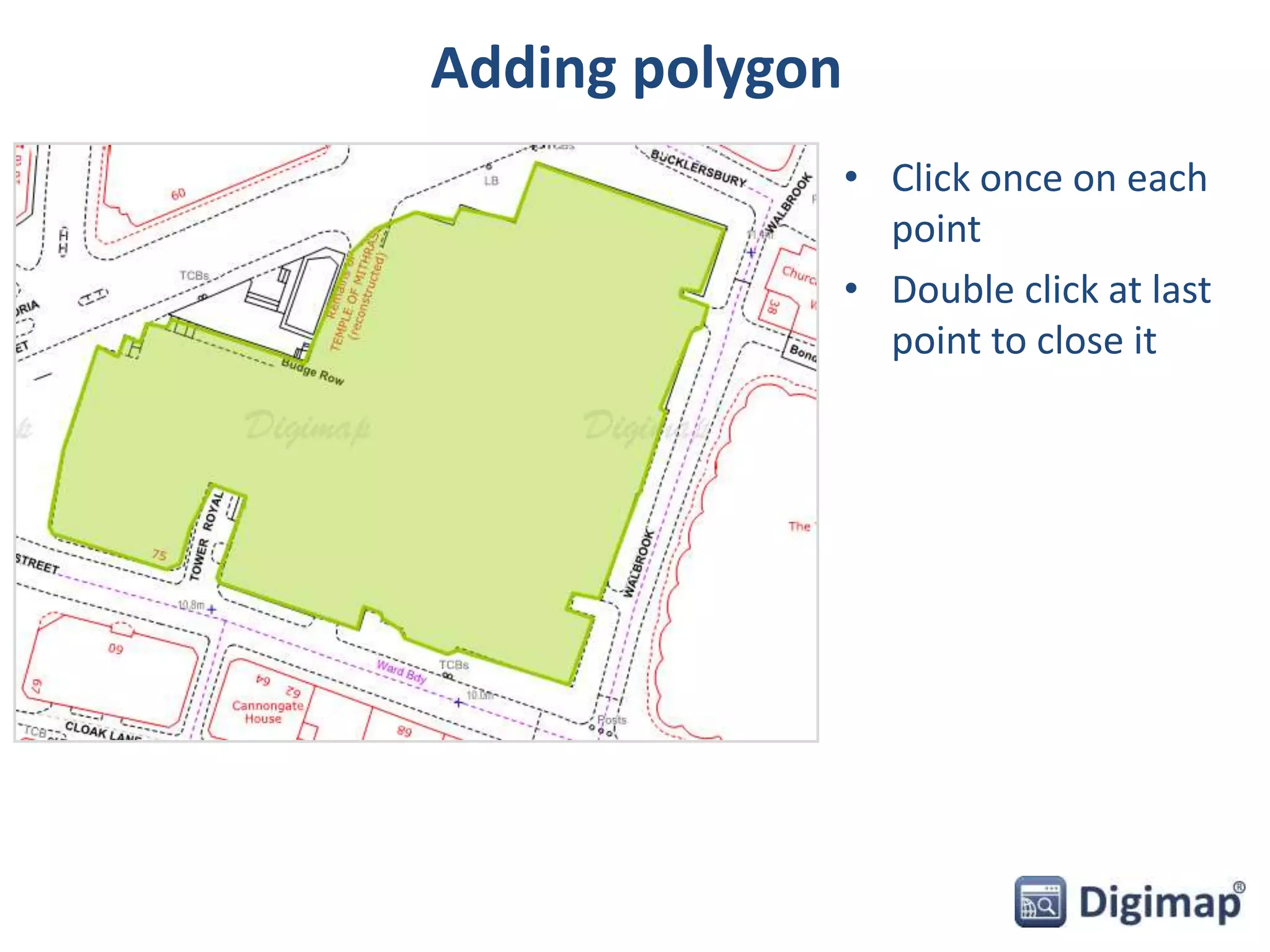
Adding polygon 
• Click once on each 
point 
• Double click at last 
point to close it
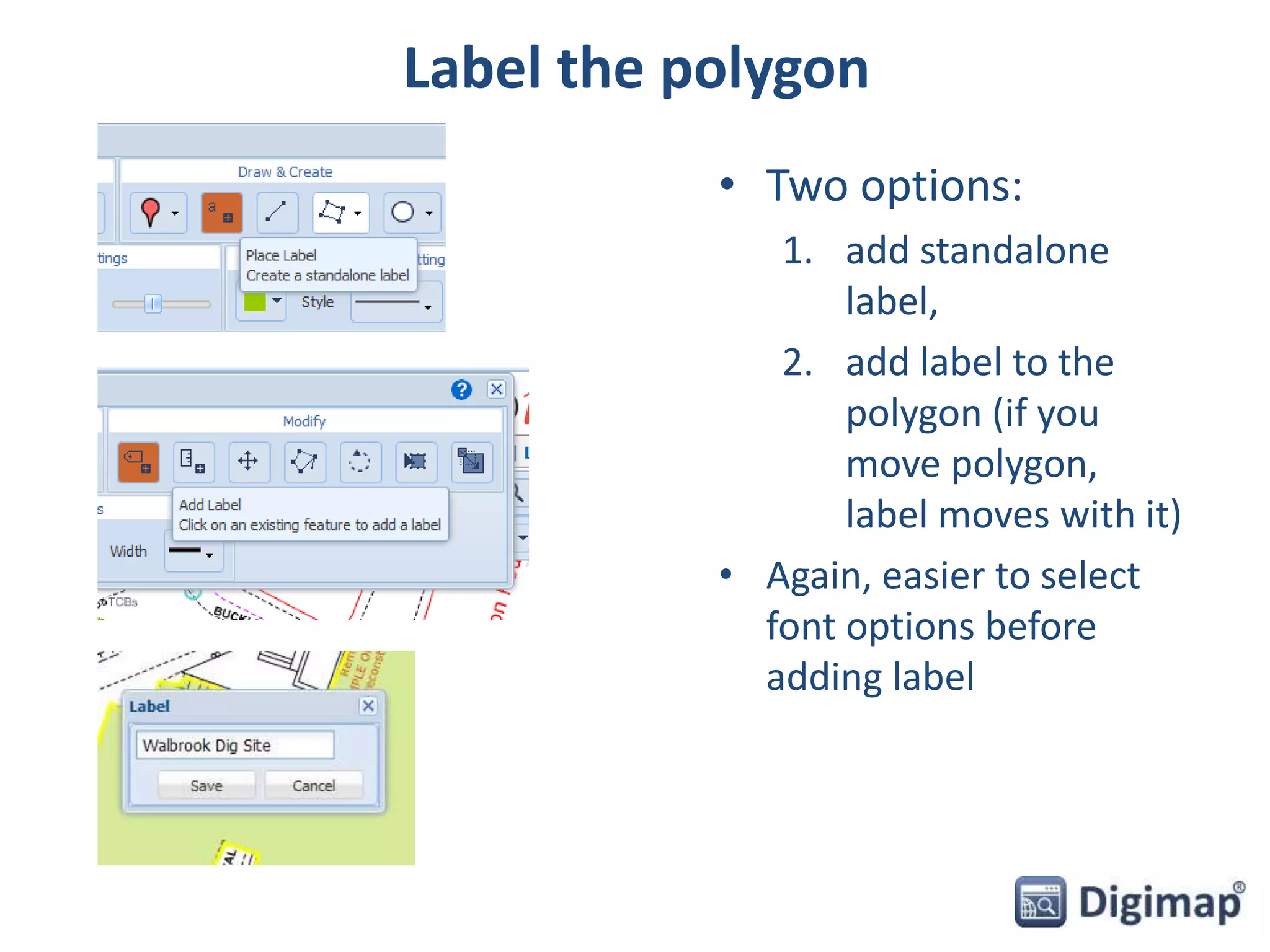
Label the polygon 
• Two options: 
1. add standalone 
label, 
2. add label to the 
polygon (if you 
move polygon, 
label moves with it) 
• Again, easier to select 
font options before 
adding label
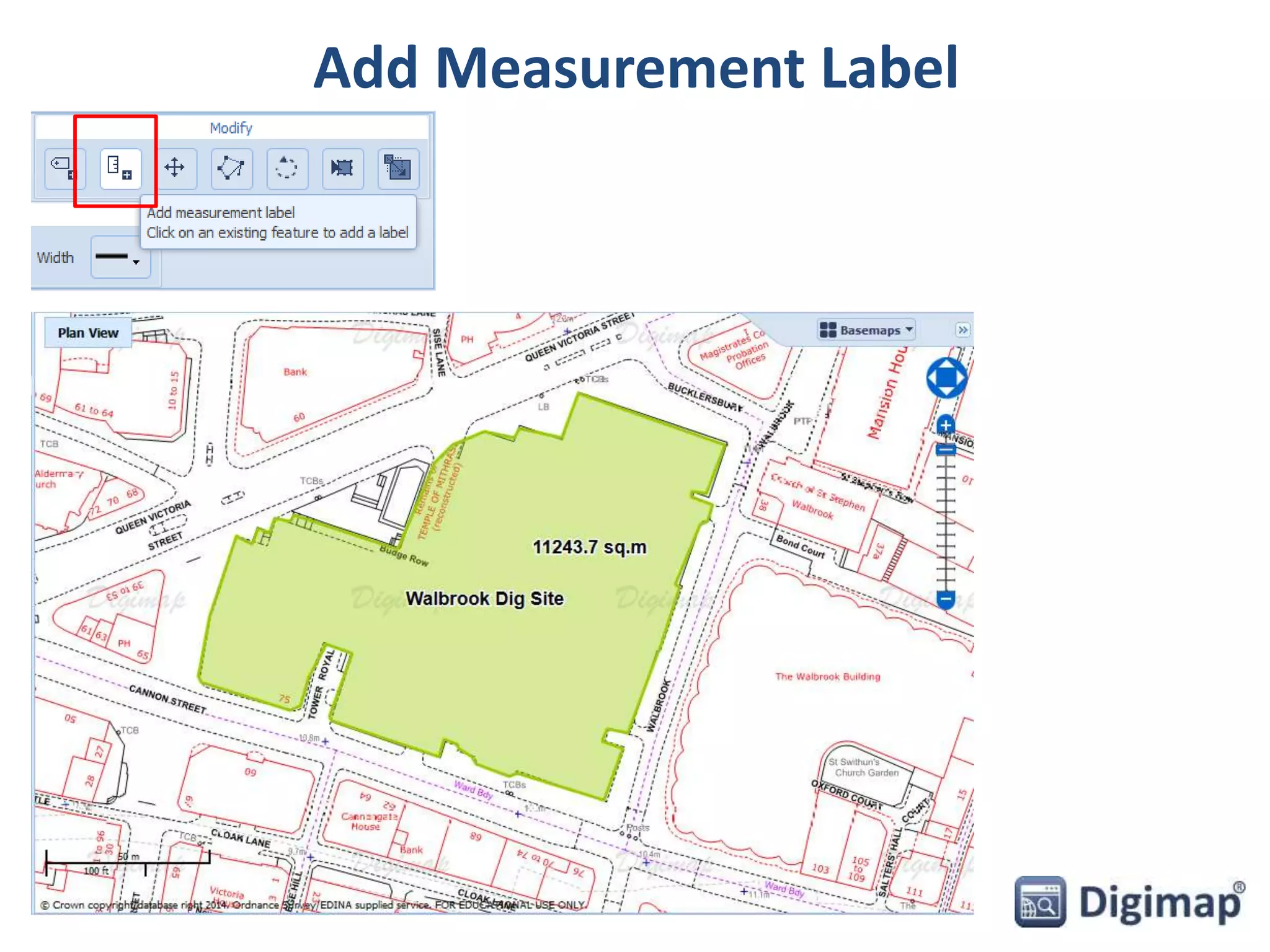
Add Measurement Label
Print
Print 
Note 2 tabs: 
1. Content shows 
type of map 
2. Layout shows 
area covered 
by map 
(changes if 
select different 
scale or paper 
size)
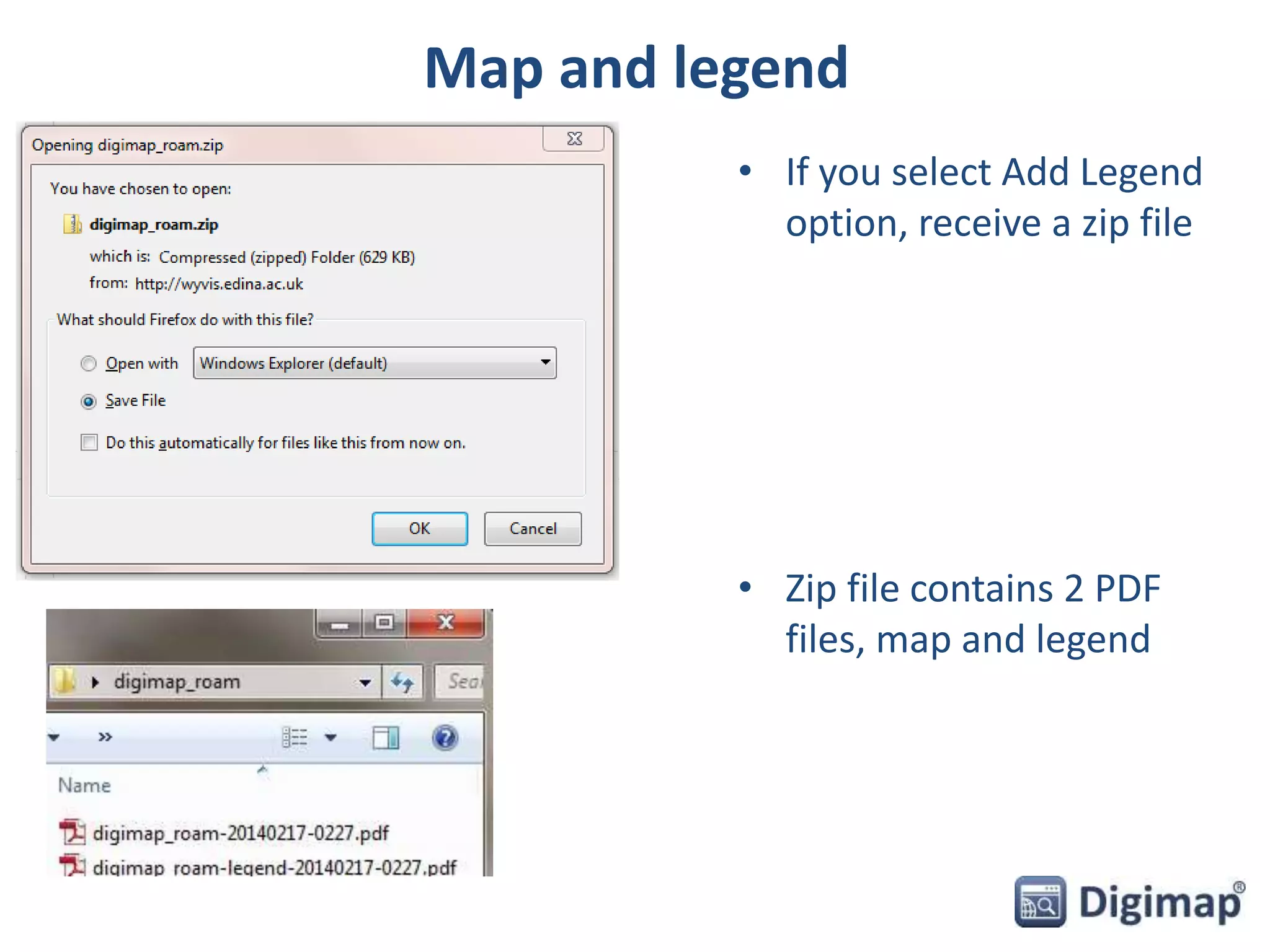
Map and legend 
• If you select Add Legend 
option, receive a zip file 
• Zip file contains 2 PDF 
files, map and legend
PDF print example
Legend extract
Save 
• Save > My Maps saves your map 
within Digimap 
– No limit to number of maps you 
can save 
– Available as long as your 
registration remains active 
• Open > My Maps to retrieve 
your saved maps
Display annotation in another Roam
Display annotations in another Roam
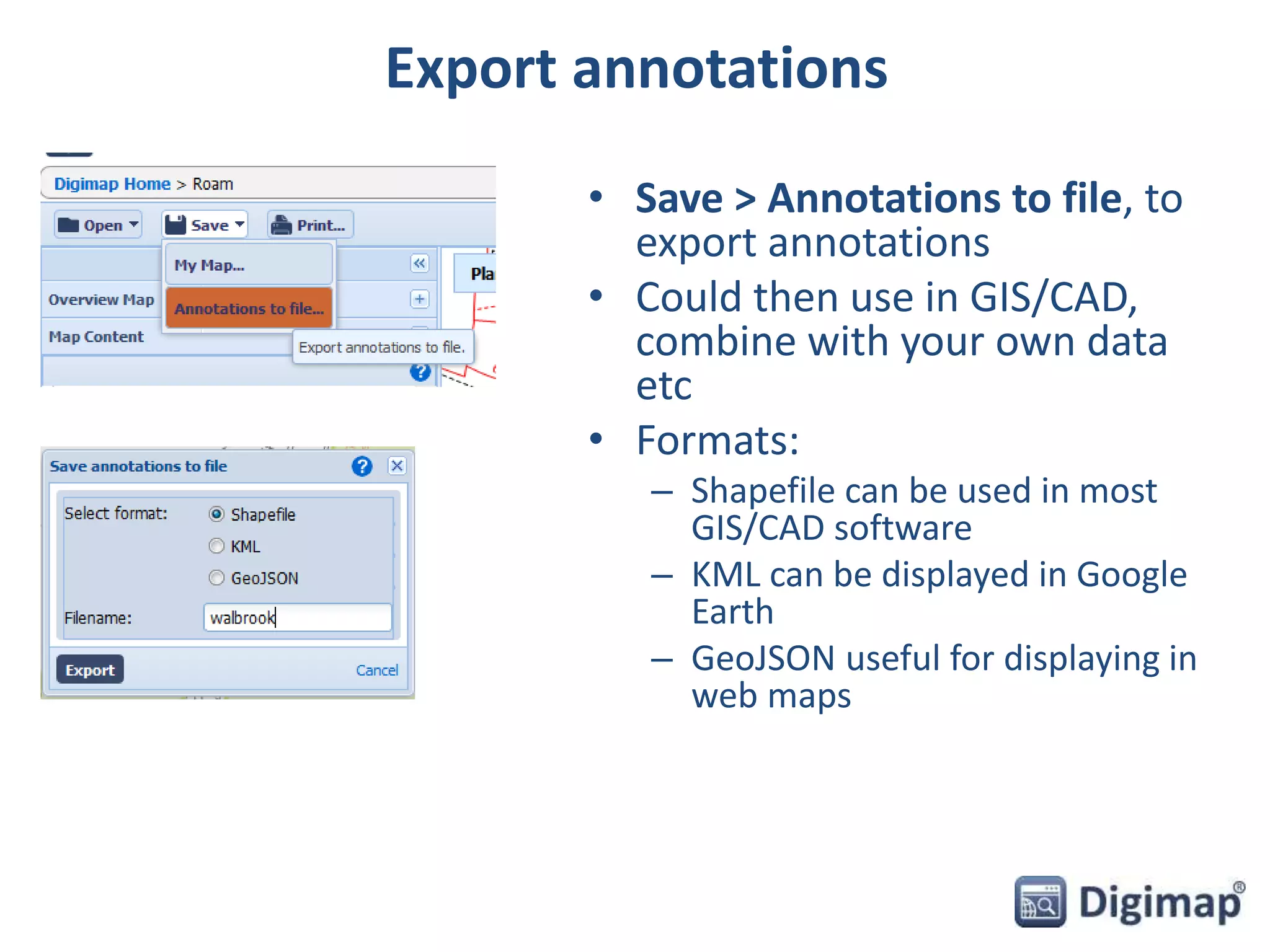
Export annotations 
• Save > Annotations to file, to 
export annotations 
• Could then use in GIS/CAD, 
combine with your own data 
etc 
• Formats: 
– Shapefile can be used in most 
GIS/CAD software 
– KML can be displayed in Google 
Earth 
– GeoJSON useful for displaying in 
web maps
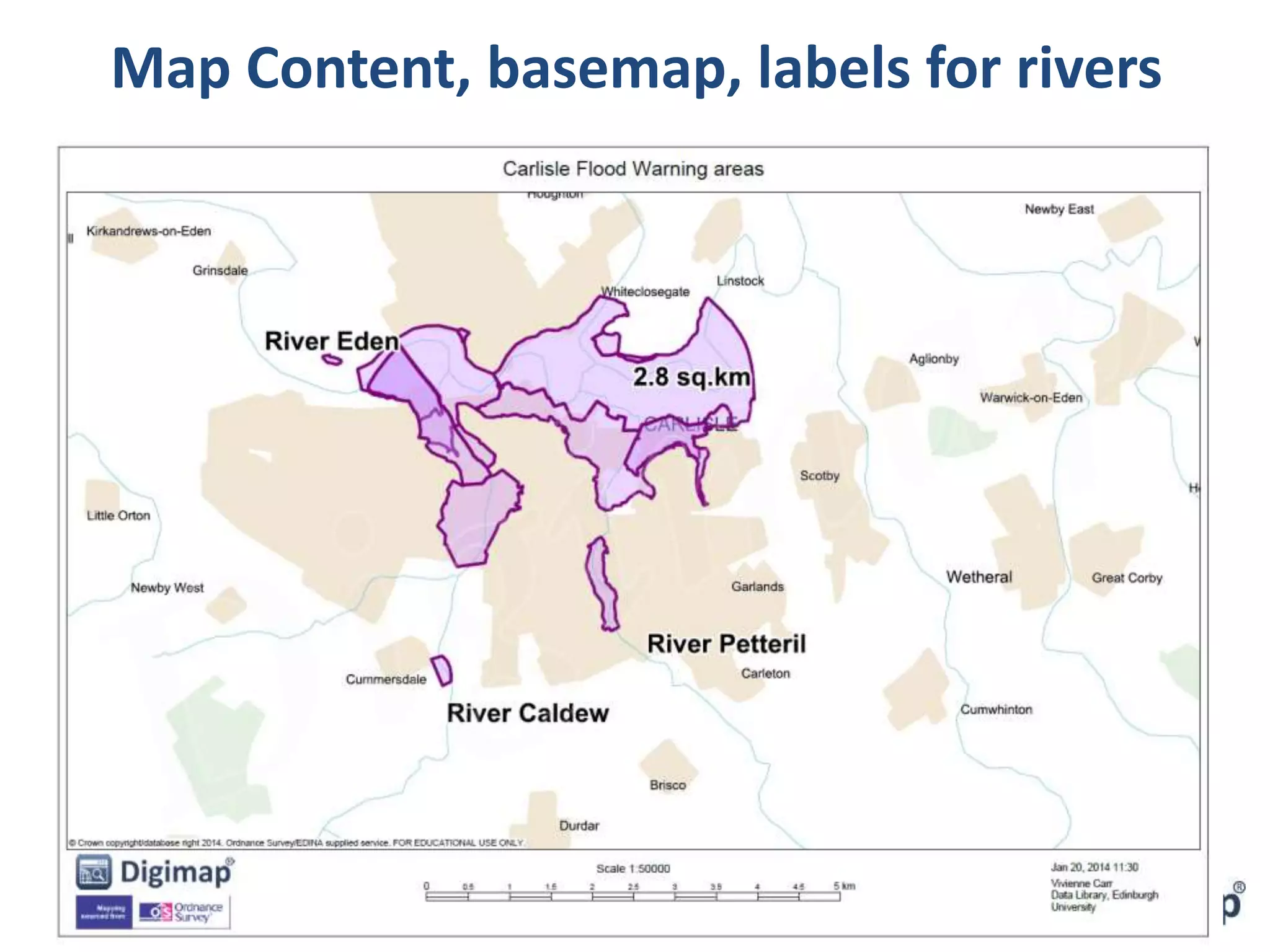
Map 3 – Carlisle Flood areas 
• Import the 
flood warning 
area polygons 
• Change 
basemap 
• Map Content 
• Label the rivers
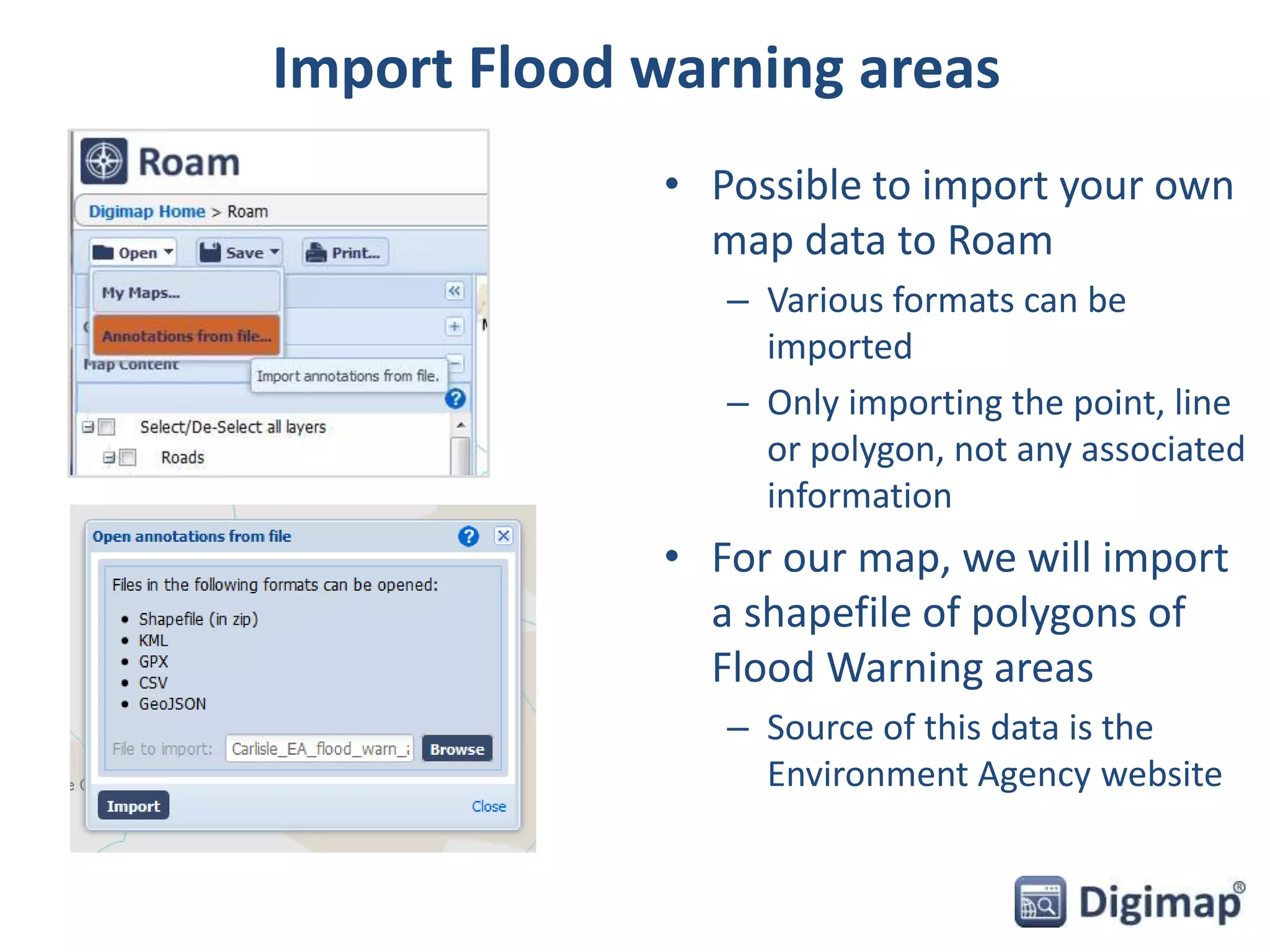
Import Flood warning areas 
• Possible to import your own 
map data to Roam 
– Various formats can be 
imported 
– Only importing the point, line 
or polygon, not any associated 
information 
• For our map, we will import 
a shapefile of polygons of 
Flood Warning areas 
– Source of this data is the 
Environment Agency website
Map displaying imported file
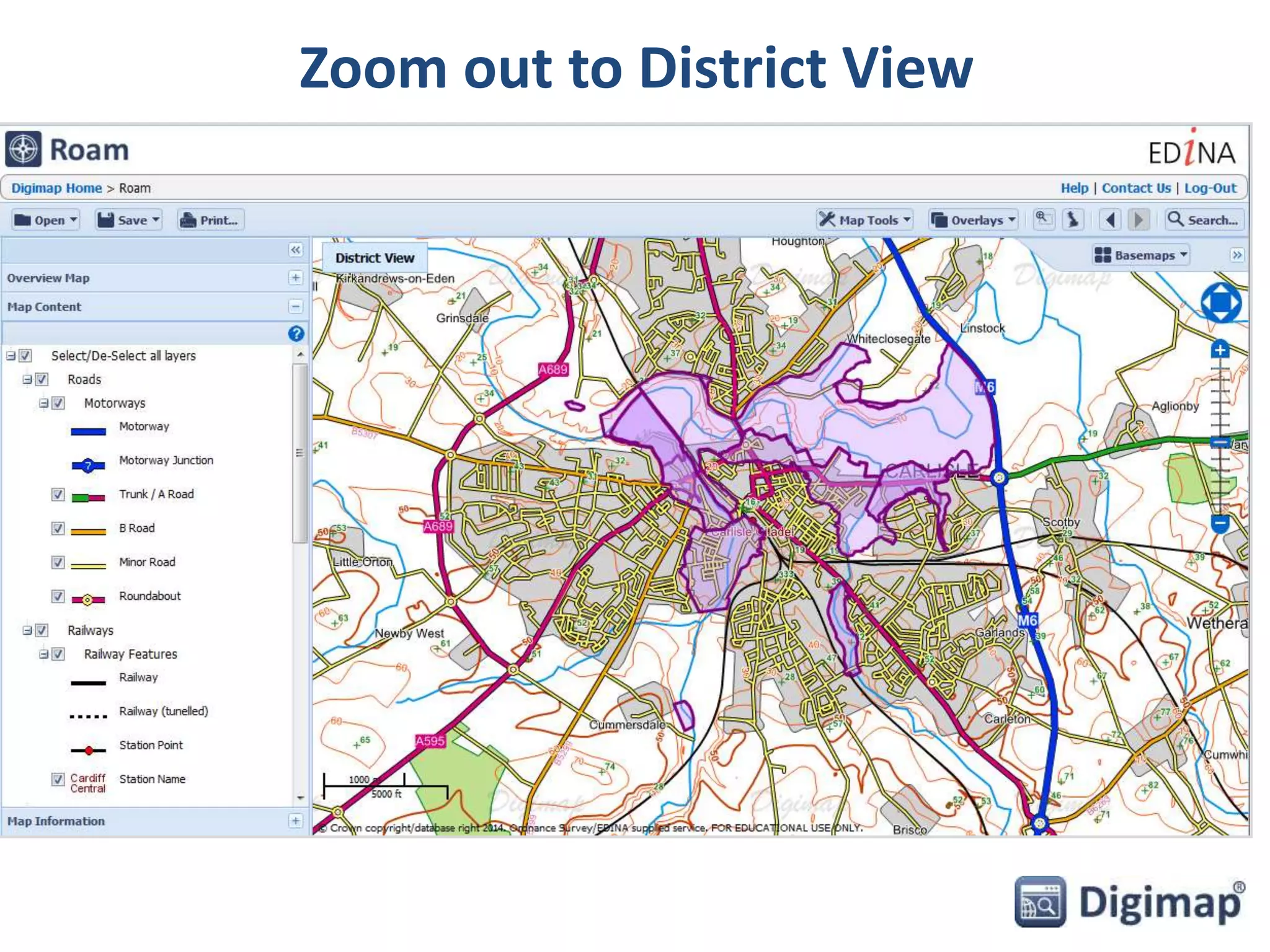
Zoom out to District View
Map Content, basemap, labels for rivers
Resources 
• Chat tool – users 
can chat to staff in 
office hours. Well 
used. 
• Digimap Resource 
centre: 
– Working to 
streamline and 
organise. 
– New YouTube 
videos. 
• What do you need?
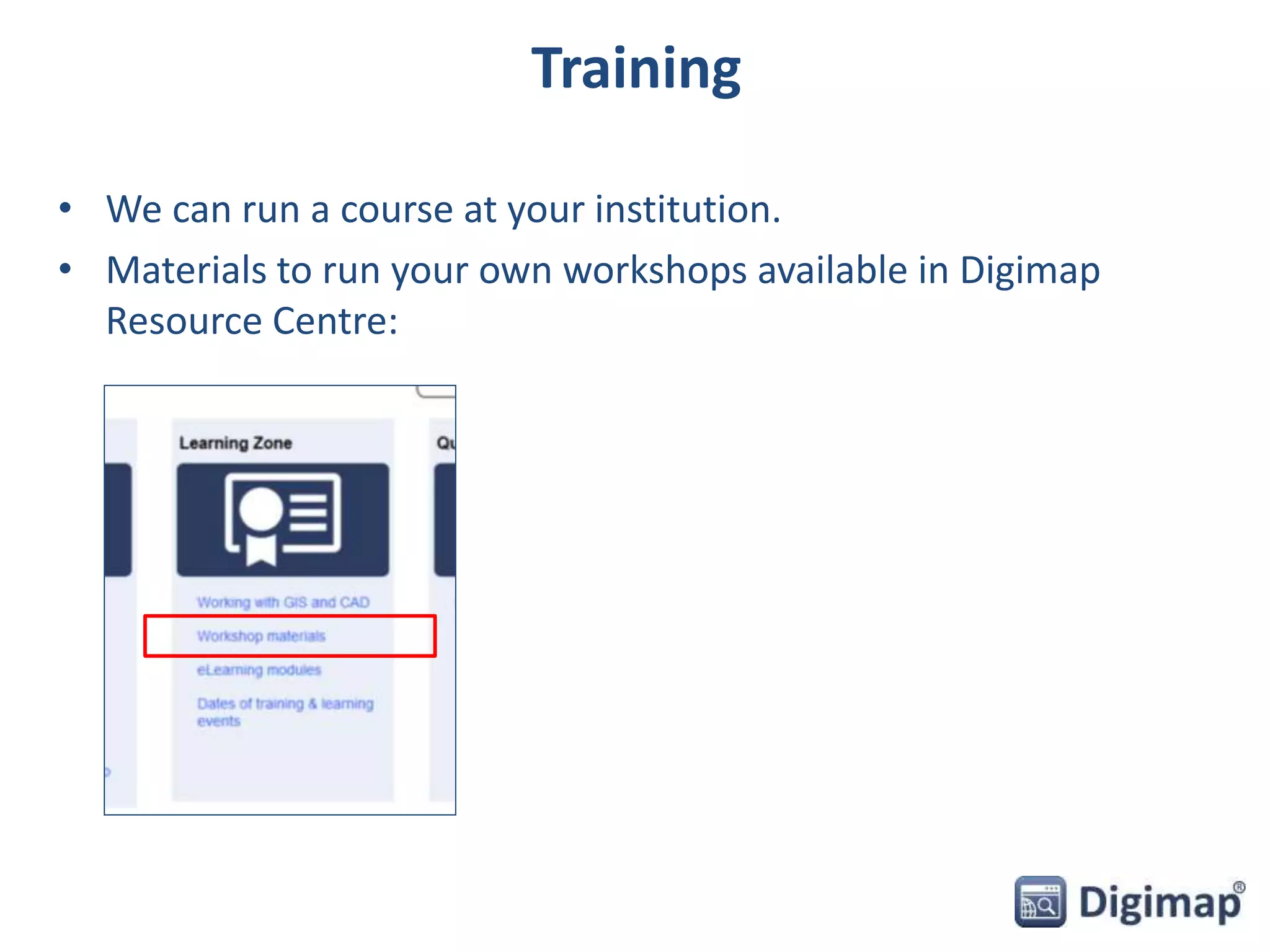
Training 
• We can run a course at your institution. 
• Materials to run your own workshops available in Digimap 
Resource Centre:
Questions 
• Ask us anything!

Digimap Roam webinar

  • 1.
    Digimap Roam webinar 12th November 2014 Carol Blackwood – Geo User Support Vivienne Mayo – User Support
  • 2.
    Digimap’s Ordnance SurveyCollection What can I do with Roam? • View current OS maps • Customise your map: – Add annotations – Select map features – Select different basemap – Add hillshading • Measure lines and shapes • Save map within Roam • Import your own map data – points, lines or polygons • Print A4 – A0
  • 3.
    Roam Zoom in/out,14 fixed scale map views of different OS maps Save within Digimap, Print A4-A0 Search, Map tools, Overlays, Basemaps Map Content, Map Information
  • 4.
    Content Look atall Roam features: 1. Helvellyn – Search, navigate, select map features, measure, add hillshading 2. Archaeological dig site – Change basemap, add polygon & label, save, print 3. Carlisle Flood Warning areas – Import your own map data
  • 5.
    Map 1 –Helvellyn • Place name search • Zoom out • Map Content: only want to display water and land features • Measure shape • Overlays – add hillshading
  • 6.
    Search • Canpan/zoom to your location, or use Search • Tab 1: place name/ road / postcode • Tab 2: British National Grid reference or Lat/Long
  • 7.
    Place name Gazetteer • Place name search uses the OS 1: 50000 Scale Gazetteer • Same database that is used on the Landranger Maps
  • 8.
    Zoom in/out •Map centred on Helvellyn • Now I can zoom in/out and pan around
  • 9.
    Navigation • Zoomin/out – Click on any notch on the scale bar – Double click to zoom in – Scroll wheel on mouse • Pan – Click and drag the map – Click NSEW on the compass • Full extent / Previous / Next views
  • 10.
    Zoomed out toMetropolitan View
  • 11.
    Map Information Details: • Map product • Data licence – 2 possibilities: – OS Licence (Digimap licence, educational use only) – OS OpenData (wider use permitted, see OS Open Data website for full details) • Date of creation by OS • Default print scale • Grid references
  • 12.
    Map Content •On this map, we are only displaying land and water features • Removed roads, boundaries, tourist features etc
  • 13.
    Map Content •Feature selection available in 8 of Roam’s 14 views • Unavailable when you are viewing a raster map - when unavailable, you will see the message ‘View has no layer selection’ • TIP: check the basemaps for alternative maps where feature selection may be possible
  • 14.
    Raster v Vectormap data • Raster map data is a matrix of cells (or pixels) in a grid: – scanned maps, digital aerial photographs, satellite images, digital pictures. – geo-referenced, geographic coordinates of the location added. – useful as background for displaying other data. • Vector map data stores data on individual map features e.g. – Points such as train stations. – Lines such as railway tracks and rivers. – Polygons such as buildings or fields. – We can view, query and analyse vector map data.
  • 15.
    Measurements • Availableunder Map tools • Measure distances or areas • Not possible to save the measurements or print on your map
  • 16.
    Hillshading • Willbe other overlays available in future
  • 17.
    Map 2 –Archaeological dig site • Search using a postcode • Zoom in • Add a polygon and a label • Basemaps • Print • Save options
  • 18.
  • 19.
  • 20.
    Basemaps • Basemapsoffer maps at same scale, in a different cartographic style • Available in several of Roam’s map views: – Plan, Building and Detailed – Street, Neighbourhood – District – City, Metropolitan • Tip: in Street and Neighbourhood views, switching basemap means you can select features in Map Content…default is raster map, some of basemaps are vector.
  • 21.
    Annotation tools •Now, we want to add a polygon over the empty site • Easier to select colour and line colour/width before you draw
  • 22.
    Adding polygon •Click once on each point • Double click at last point to close it
  • 23.
    Label the polygon • Two options: 1. add standalone label, 2. add label to the polygon (if you move polygon, label moves with it) • Again, easier to select font options before adding label
  • 24.
  • 25.
  • 26.
    Print Note 2tabs: 1. Content shows type of map 2. Layout shows area covered by map (changes if select different scale or paper size)
  • 27.
    Map and legend • If you select Add Legend option, receive a zip file • Zip file contains 2 PDF files, map and legend
  • 28.
  • 29.
  • 30.
    Save • Save> My Maps saves your map within Digimap – No limit to number of maps you can save – Available as long as your registration remains active • Open > My Maps to retrieve your saved maps
  • 31.
  • 32.
  • 33.
    Export annotations •Save > Annotations to file, to export annotations • Could then use in GIS/CAD, combine with your own data etc • Formats: – Shapefile can be used in most GIS/CAD software – KML can be displayed in Google Earth – GeoJSON useful for displaying in web maps
  • 34.
    Map 3 –Carlisle Flood areas • Import the flood warning area polygons • Change basemap • Map Content • Label the rivers
  • 35.
    Import Flood warningareas • Possible to import your own map data to Roam – Various formats can be imported – Only importing the point, line or polygon, not any associated information • For our map, we will import a shapefile of polygons of Flood Warning areas – Source of this data is the Environment Agency website
  • 36.
  • 37.
    Zoom out toDistrict View
  • 38.
    Map Content, basemap,labels for rivers
  • 39.
    Resources • Chattool – users can chat to staff in office hours. Well used. • Digimap Resource centre: – Working to streamline and organise. – New YouTube videos. • What do you need?
  • 40.
    Training • Wecan run a course at your institution. • Materials to run your own workshops available in Digimap Resource Centre:
  • 41.
    Questions • Askus anything!