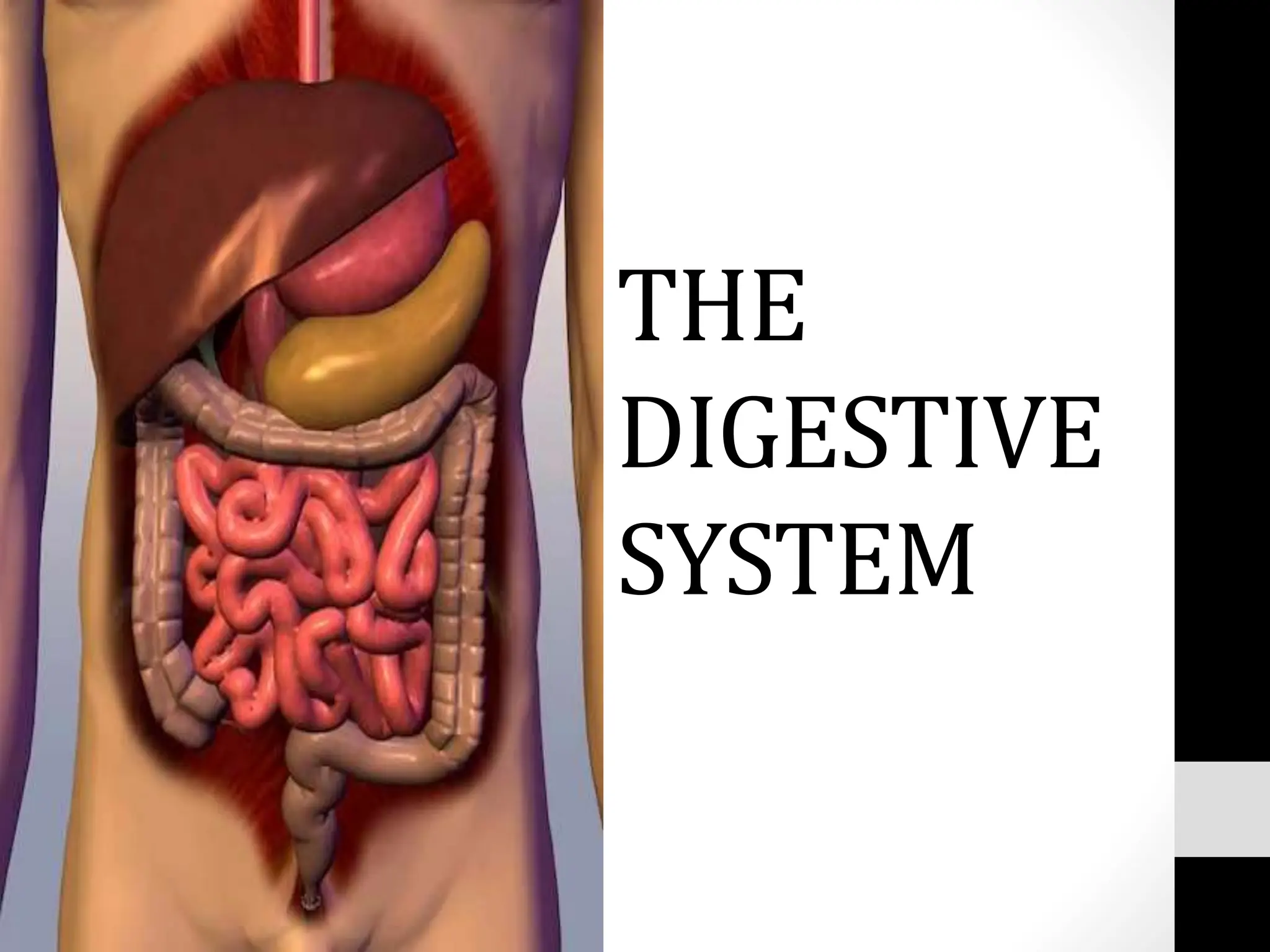
THE
DIGESTIVE
SYSTEM
OBJECTIVE
• Describe the process of digestion; and
• Identify and locate the organs and substances
that are involved in the digestion process, and
give the functions of each.
DIGESTIVE SYSTEM
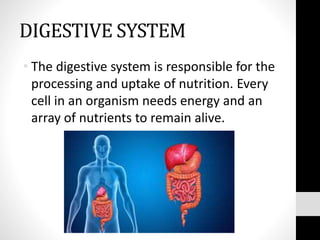
• The digestive system is responsible for the
processing and uptake of nutrition. Every
cell in an organism needs energy and an
array of nutrients to remain alive.
4 main functions of the
Digestive System
• Ingestion
• Digestion of food
• Absorption of nutrients
• Elimination of solid food waste.
INGESTION
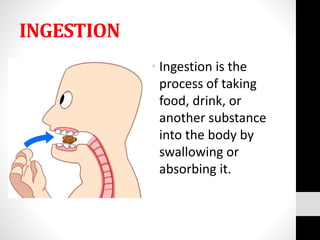
• Ingestion is the
process of taking
food, drink, or
another substance
into the body by
swallowing or
absorbing it.
MOUTH
• Mouth is the anterior opening and it is guarded
by upper and lower lips.
• It contains oral glands, tongue, and teeth.
• One of the functions of the mouth is to ingests
food.
• Another function of the mouth is to chews and
mixes food.
DIGESTION OF FOOD
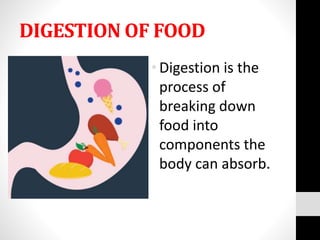
•Digestion is the
process of
breaking down
food into
components the
body can absorb.
ESOPHAGUS
• The main function of the esophagus is to propels food to
stomach.
• The esophagus is a hollow, muscular tube that carries
food and liquid from your throat to your stomach.
STOMACH
• One of the functions of stomach is to mixes and churns
food with gastric juices.
• Gastric acid, gastric juice, or stomach acid is a digestive
fluid formed within the stomach lining.
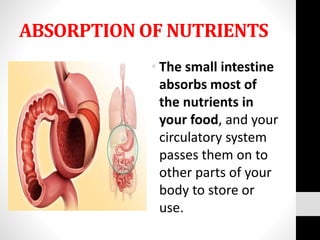
ABSORPTION OF NUTRIENTS
• The small intestine
absorbs most of
the nutrients in
your food, and your
circulatory system
passes them on to
other parts of your
body to store or
use.
SMALL INTESTINE
• The small intestine helps to further digest food coming
from the stomach. This is where absorption occurs.
• The muscles of the small intestine mix food with
digestive juices from the pancreas, liver, and intestine,
and push the mixture forward for further digestion. The
walls of the small intestine absorb water and the
digested nutrients into your bloodstream.
PANCREAS & LIVER
• The pancreas and liver together with the gall bladder are
called the accessory organs of digestive system.
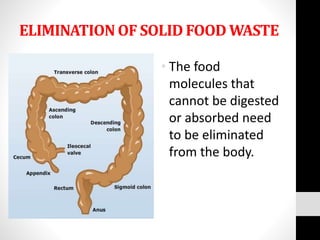
ELIMINATION OF SOLID FOOD WASTE
• The food
molecules that
cannot be digested
or absorbed need
to be eliminated
from the body.
LARGE INTESTINE
• The large intestine is where food waste is formed into
stool/feces, stored, and finally excreted through the
process of elimination.
RECTUM
• The rectum is the lower end part of the large intestine.
This is where the stool/feces being stored.
ANUS
• The function of the anus is to exit fecal matter regulated
by the by the anal sphincter.
THANKYOU FOR
LISTENING!

SCIENCE8-The-Digestive-System.pptx

  • 1.
  • 2.
    OBJECTIVE • Describe theprocess of digestion; and • Identify and locate the organs and substances that are involved in the digestion process, and give the functions of each.
  • 3.
    DIGESTIVE SYSTEM • Thedigestive system is responsible for the processing and uptake of nutrition. Every cell in an organism needs energy and an array of nutrients to remain alive.
  • 4.
    4 main functionsof the Digestive System • Ingestion • Digestion of food • Absorption of nutrients • Elimination of solid food waste.
  • 5.
    INGESTION • Ingestion isthe process of taking food, drink, or another substance into the body by swallowing or absorbing it.
  • 6.
    MOUTH • Mouth isthe anterior opening and it is guarded by upper and lower lips. • It contains oral glands, tongue, and teeth. • One of the functions of the mouth is to ingests food. • Another function of the mouth is to chews and mixes food.
  • 7.
    DIGESTION OF FOOD •Digestionis the process of breaking down food into components the body can absorb.
  • 8.
    ESOPHAGUS • The mainfunction of the esophagus is to propels food to stomach. • The esophagus is a hollow, muscular tube that carries food and liquid from your throat to your stomach. STOMACH • One of the functions of stomach is to mixes and churns food with gastric juices. • Gastric acid, gastric juice, or stomach acid is a digestive fluid formed within the stomach lining.
  • 9.
    ABSORPTION OF NUTRIENTS •The small intestine absorbs most of the nutrients in your food, and your circulatory system passes them on to other parts of your body to store or use.
  • 10.
    SMALL INTESTINE • Thesmall intestine helps to further digest food coming from the stomach. This is where absorption occurs. • The muscles of the small intestine mix food with digestive juices from the pancreas, liver, and intestine, and push the mixture forward for further digestion. The walls of the small intestine absorb water and the digested nutrients into your bloodstream. PANCREAS & LIVER • The pancreas and liver together with the gall bladder are called the accessory organs of digestive system.
  • 11.
    ELIMINATION OF SOLIDFOOD WASTE • The food molecules that cannot be digested or absorbed need to be eliminated from the body.
  • 12.
    LARGE INTESTINE • Thelarge intestine is where food waste is formed into stool/feces, stored, and finally excreted through the process of elimination. RECTUM • The rectum is the lower end part of the large intestine. This is where the stool/feces being stored. ANUS • The function of the anus is to exit fecal matter regulated by the by the anal sphincter.
  • 13.