Dieta e microbiota intestinale: quale
rapporto
Davide Festi, Ramona Schiumerini
Dipartimento di Scienze Mediche e Chirurgiche
Università di Bologna
davide.festi@unibo.it
M.A.S.T.E.R. ECM in Gastroenterologia 2018
Focus on: Microbiota e dintorni
Roma, 9 Febbraio 2018
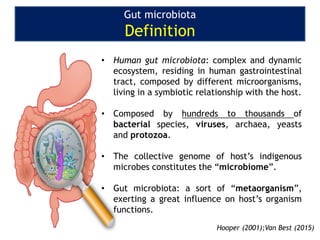
Gut microbiota
Definition
• Human gut microbiota: complex and dynamic
ecosystem, residing in human gastrointestinal
tract, composed by different microorganisms,
living in a symbiotic relationship with the host.
• Composed by hundreds to thousands of
bacterial species, viruses, archaea, yeasts
and protozoa.
• The collective genome of host’s indigenous
microbes constitutes the “microbiome”.
• Gut microbiota: a sort of “metaorganism”,
exerting a great influence on host’s organism
functions.
Hooper (2001);Van Best (2015)
 Barrier function and protection against pathogens
 Maturation and modulation of immune system
 Metabolic functions
 Promotion of mucosal trophism
 Influence on neurological health and performance
Gut microbiota
Beneficial functions in host organism
Gut microbiota
Microbiome and host:
a mutualistic relationship
• Microbiome ferments substrated that humans cannot and
produces biologically active metabolites
Hurst NR, 2014
• Microbiome has a bidirectional relationship with the
endocrine system
Neuman H, 2015
• Microbiome has genes not possessed by humans
Harvil R, 2016
Gut microbiota
Factors affecting composition
• Host genotype
Benson AK, 2010
• Age
Yatsumenko T, 2012
• Sex
Bolnick DI, 2014
• Environmental factors
Voreades N, 2014
Gut microbiota
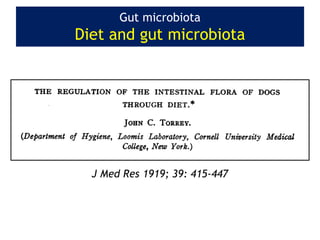
Diet and gut microbiota
J Med Res 1919; 39: 415-447
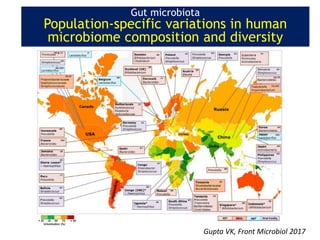
Gupta VK, Front Microbiol 2017
Gut microbiota
Population-specific variations in human
microbiome composition and diversity
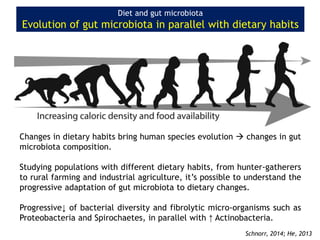
Changes in dietary habits bring human species evolution  changes in gut
microbiota composition.
Studying populations with different dietary habits, from hunter-gatherers
to rural farming and industrial agriculture, it’s possible to understand the
progressive adaptation of gut microbiota to dietary changes.
Progressive↓ of bacterial diversity and fibrolytic micro-organisms such as
Proteobacteria and Spirochaetes, in parallel with ↑ Actinobacteria.
Diet and gut microbiota
Evolution of gut microbiota in parallel with dietary habits
Schnorr, 2014; He, 2013
Diet and gut microbiota
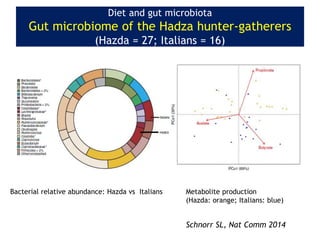
Gut microbiome of the Hadza hunter-gatherers
(Hazda = 27; Italians = 16)
Metabolite production
(Hazda: orange; Italians: blue)
Bacterial relative abundance: Hazda vs Italians
Schnorr SL, Nat Comm 2014
Diet and gut microbiota
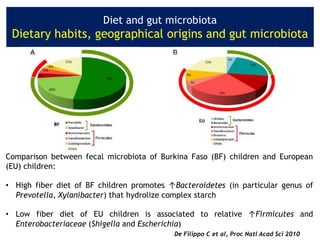
Dietary habits, geographical origins and gut microbiota
Comparison between fecal microbiota of Burkina Faso (BF) children and European
(EU) children:
• High fiber diet of BF children promotes ↑Bacteroidetes (in particular genus of
Prevotella, Xylanibacter) that hydrolize complex starch
• Low fiber diet of EU children is associated to relative ↑Firmicutes and
Enterobacteriaceae (Shigella and Escherichia)
De Filippo C et al, Proc Natl Acad Sci 2010
Diet and gut microbiota
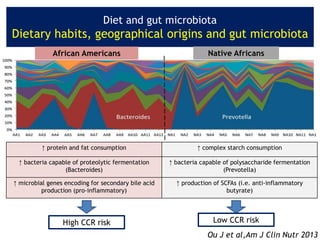
Dietary habits, geographical origins and gut microbiota
Native AfricansAfrican Americans
High CCR risk Low CCR risk
Ou J et al,Am J Clin Nutr 2013
↑ protein and fat consumption ↑ complex starch consumption
↑ bacteria capable of proteolytic fermentation
(Bacteroides)
↑ bacteria capable of polysaccharide fermentation
(Prevotella)
↑ microbial genes encoding for secondary bile acid
production (pro-inflammatory)
↑ production of SCFAs (i.e. anti-inflammatory
butyrate)
Diet and gut microbiota
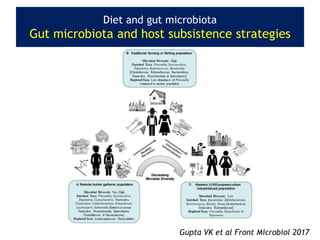
Gut microbiota and host subsistence strategies
Gupta VK et al Front Microbiol 2017
Diet and gut microbiota
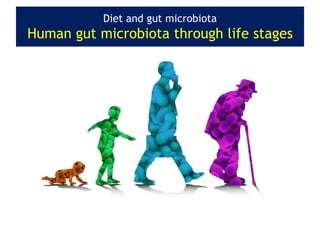
Human gut microbiota through life stages
Diet and gut microbiota
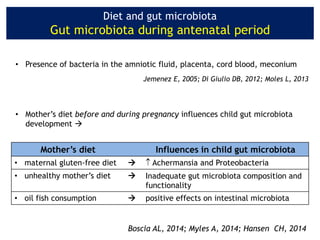
Gut microbiota during antenatal period
• Presence of bacteria in the amniotic fluid, placenta, cord blood, meconium
Jemenez E, 2005; Di Giulio DB, 2012; Moles L, 2013
• Mother’s diet before and during pregnancy influences child gut microbiota
development 
Mother’s diet Influences in child gut microbiota
• maternal gluten-free diet   Achermansia and Proteobacteria
• unhealthy mother’s diet  Inadequate gut microbiota composition and
functionality
• oil fish consumption  positive effects on intestinal microbiota
Boscia AL, 2014; Myles A, 2014; Hansen CH, 2014
Diet and gut microbiota
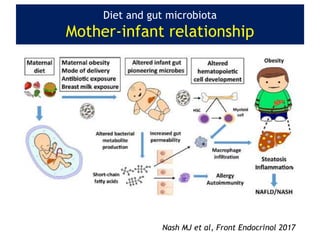
Mother-infant relationship
Nash MJ et al, Front Endocrinol 2017
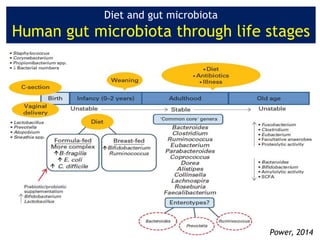
Power, 2014
Diet and gut microbiota
Human gut microbiota through life stages
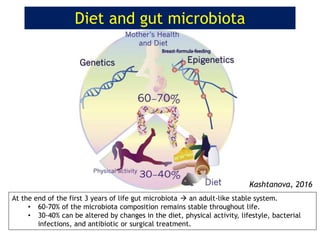
At the end of the first 3 years of life gut microbiota  an adult-like stable system.
• 60-70% of the microbiota composition remains stable throughout life.
• 30-40% can be altered by changes in the diet, physical activity, lifestyle, bacterial
infections, and antibiotic or surgical treatment.
Kashtanova, 2016
Diet and gut microbiota
• Gut microbiota rapid turnover (doulble within 1hr)
(Sonnenburg JL, 2016)
• Diurnal oscillations driven primarly by food intake rhythm
(Zarrinpar, 2014)
• Gut microbiota responds rapidly to large changes in diet (short
term and long-term responders)
(Wu GD, 2011, Arumugam M, 2011; David LA, 2014)
• Long-term dietary habits  composition of an individual’s gut
microbiota
(Wu GD, 2011, 2016)
Diet and gut microbiota
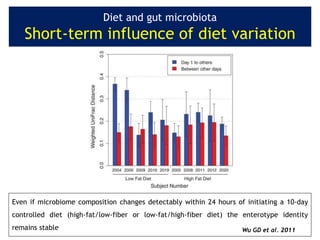
Even if microbiome composition changes detectably within 24 hours of initiating a 10-day
controlled diet (high-fat/low-fiber or low-fat/high-fiber diet) the enterotype identity
remains stable Wu GD et al. 2011
Diet and gut microbiota
Short-term influence of diet variation
Diet and gut microbiota
The concept of enterotypes
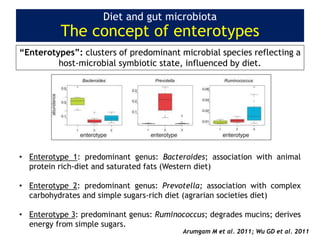
“Enterotypes”: clusters of predominant microbial species reflecting a
host-microbial symbiotic state, influenced by diet.
• Enterotype 1: predominant genus: Bacteroides; association with animal
protein rich-diet and saturated fats (Western diet)
• Enterotype 2: predominant genus: Prevotella; association with complex
carbohydrates and simple sugars-rich diet (agrarian societies diet)
• Enterotype 3: predominant genus: Ruminococcus; degrades mucins; derives
energy from simple sugars.
Arumgam M et al. 2011; Wu GD et al. 2011
• Little, or no clear, segregation into enterotypes among stool samples of
200 subject
(Huse et al. 2012)
Diet and gut microbiota
The «shadows» of enterotypes concept
• Only two distinct clusters enterotypes (Prevotella and Bacteroides),
because the third enterotype dominated by Ruminococcus appeared to be
fused with Bacteroides (Wu et al. 2011)
• Not fixed entities, but a continuous gradient
(Wu GD, 2011; Jeffery IB, 2012; Koren O, 2013; Knights D, 2014)
Diet and gut microbiota
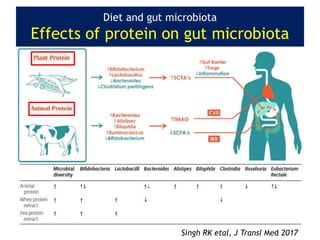
Effects of protein on gut microbiota
Singh RK etal, J Transl Med 2017
Diet and gut microbiota
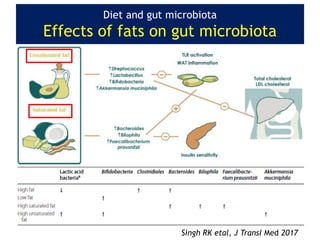
Effects of fats on gut microbiota
Singh RK etal, J Transl Med 2017
Diet and gut microbiota
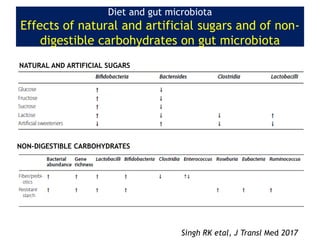
Effects of natural and artificial sugars and of non-
digestible carbohydrates on gut microbiota
Singh RK etal, J Transl Med 2017
NATURAL AND ARTIFICIAL SUGARS
NON-DIGESTIBLE CARBOHYDRATES
Diet and gut microbiota
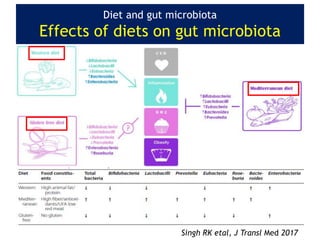
Effects of diets on gut microbiota
Singh RK etal, J Transl Med 2017
Diet and gut microbiota
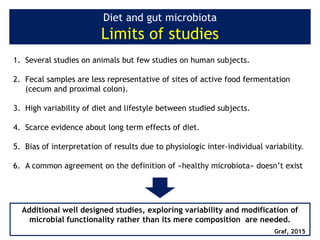
Limits of studies
1. Several studies on animals but few studies on human subjects.
2. Fecal samples are less representative of sites of active food fermentation
(cecum and proximal colon).
3. High variability of diet and lifestyle between studied subjects.
4. Scarce evidence about long term effects of diet.
5. Bias of interpretation of results due to physiologic inter-individual variability.
6. A common agreement on the definition of «healthy microbiota» doesn’t exist
Additional well designed studies, exploring variability and modification of
microbial functionality rather than its mere composition are needed.
Graf, 2015
Diet and gut microbiota
Role of microbiota biodiversity
• modern diet  ↓ agrobiodiversity
(FAO, 2004)
• ↑ widespread of antibiotics and pesticides  ↓microbiota richness
(Cho, 2012)
• Gut microbiota richness is well correlated with health
(Chatelier, 2013)
• More diverse is diet, more diverse is microbiome, more adaptable
to perturbations (Heiman, 2016)
• Microbial biodiversity  strictly related to its functional richness
↑ adaptability to perturbations (Heiman, 2016)
Diet and gut microbiota
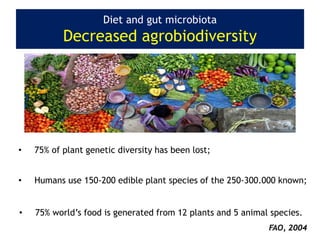
Decreased agrobiodiversity
• 75% of plant genetic diversity has been lost;
• Humans use 150-200 edible plant species of the 250-300.000 known;
• 75% world’s food is generated from 12 plants and 5 animal species.
FAO, 2004
Diet and gut microbiota
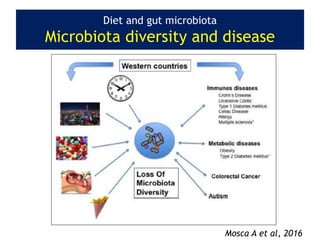
Microbiota diversity and disease
Mosca A et al, 2016
Diet and gut microbiota
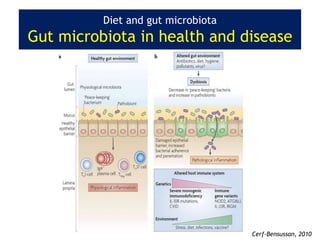
Gut microbiota in health and disease
Cerf-Bensussan, 2010
Diet and gut microbiota
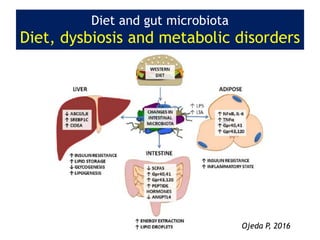
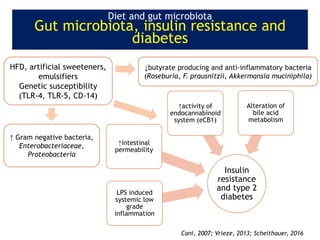
Diet, dysbiosis and metabolic disorders
Ojeda P, 2016
Diet and gut microbiota
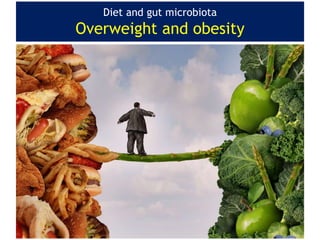
Overweight and obesity
Diet and gut microbiota
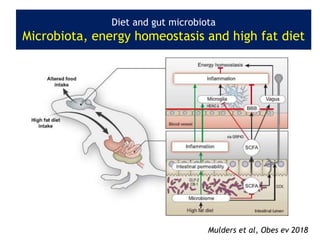
Microbiota, energy homeostasis and high fat diet
Mulders et al, Obes ev 2018
Insulin
resistance
and type 2
diabetes
LPS induced
systemic low
grade
inflammation
↑intestinal
permeability
Alteration of
bile acid
metabolism
↑activity of
endocannabinoid
system (eCB1)
HFD, artificial sweeteners,
emulsifiers
Genetic susceptibility
(TLR-4, TLR-5, CD-14)
Cani, 2007; Vrieze, 2013; Scheithauer, 2016
↓butyrate producing and anti-inflammatory bacteria
(Roseburia, F. prausnitzii, Akkermansia muciniphila)
↑ Gram negative bacteria,
Enterobacteriaceae,
Proteobacteria
Diet and gut microbiota
Gut microbiota, insulin resistance and
diabetes
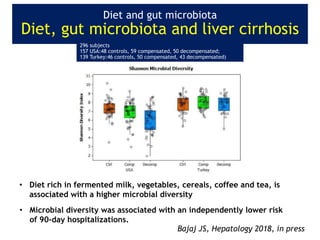
Bajaj JS, Hepatology 2018, in press
• Microbial diversity was associated with an independently lower risk
of 90-day hospitalizations.
• Diet rich in fermented milk, vegetables, cereals, coffee and tea, is
associated with a higher microbial diversity
Diet and gut microbiota
Diet, gut microbiota and liver cirrhosis
296 subjects
157 USA:48 controls, 59 compensated, 50 decompensated;
139 Turkey:46 controls, 50 compensated, 43 decompensated)
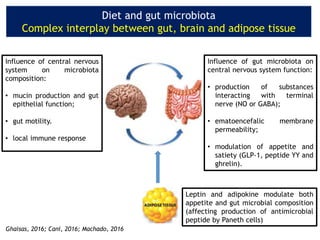
Diet and gut microbiota
Complex interplay between gut, brain and adipose tissue
Influence of gut microbiota on
central nervous system function:
• production of substances
interacting with terminal
nerve (NO or GABA);
• ematoencefalic membrane
permeability;
• modulation of appetite and
satiety (GLP-1, peptide YY and
ghrelin).
Influence of central nervous
system on microbiota
composition:
• mucin production and gut
epithelial function;
• gut motility.
• local immune response
Ghaisas, 2016; Cani, 2016; Machado, 2016
Leptin and adipokine modulate both
appetite and gut microbial composition
(affecting production of antimicrobial
peptide by Paneth cells)
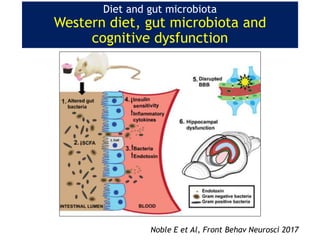
Diet and gut microbiota
Western diet, gut microbiota and
cognitive dysfunction
Noble E et Al, Front Behav Neurosci 2017
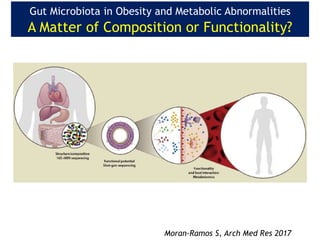
Gut Microbiota in Obesity and Metabolic Abnormalities
A Matter of Composition or Functionality?
Moran-Ramos S, Arch Med Res 2017
Diet and gut microbiota
How to manipulate gut microbiota
1. Probiotics: live micro-organisms which, when administered in adequate
amounts, confer a health benefit on the host.
 Psychobiotics: live bacteria which, when ingested, confer mental
health benefits through interactions with commensal gut bacteria.
2. Prebiotics: selectively fermented ingredients that allow specific changes,
both in the composition and/or activity in the gastrointestinal microflora
that confer benefits upon host well-being and health.
3. Antibiotics
4. Fecal microbiota transplantation: transfer of fecal material containing
bacteria and natural antibacterials from a healthy individual into a
specific recipient.
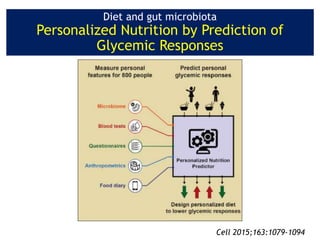
Cell 2015;163:1079-1094
Diet and gut microbiota
Personalized Nutrition by Prediction of
Glycemic Responses
Diet and gut microbiota
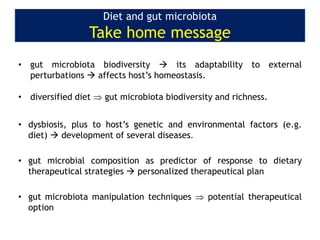
Take home message
• Gut microbiota is a complex “metaorganism” which exerts a great
influence on host’s homeostasis.
• Genetic and environmental factors affect its composition, during all
stages of life. Diet seems to represent the most influent
determinant.
• Even if gut microbiota composition rapidly responds to dietary
changes, long-term dietary habits seem to really delineate its
identity.
• gut microbiota biodiversity  its adaptability to external
perturbations  affects host’s homeostasis.
• gut microbial composition as predictor of response to dietary
therapeutical strategies  personalized therapeutical plan
• gut microbiota manipulation techniques  potential therapeutical
option
Diet and gut microbiota
Take home message
• diversified diet  gut microbiota biodiversity and richness.
• dysbiosis, plus to host’s genetic and environmental factors (e.g.
diet)  development of several diseases.
Dieta e microbiota: quale rapporto?
Grazie per l’attenzione
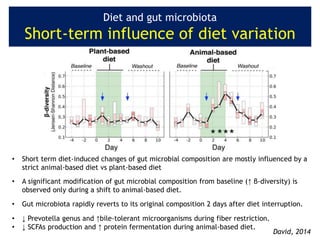
• Short term diet-induced changes of gut microbial composition are mostly influenced by a
strict animal-based diet vs plant-based diet
• A significant modification of gut microbial composition from baseline (↑ β-diversity) is
observed only during a shift to animal-based diet.
• Gut microbiota rapidly reverts to its original composition 2 days after diet interruption.
• ↓ Prevotella genus and ↑bile-tolerant microorganisms during fiber restriction.
• ↓ SCFAs production and ↑ protein fermentation during animal-based diet.
David, 2014
Diet and gut microbiota
Short-term influence of diet variation

Dieta e Microbiota intestinale: quale rapporto

  • 1.
    Dieta e microbiotaintestinale: quale rapporto Davide Festi, Ramona Schiumerini Dipartimento di Scienze Mediche e Chirurgiche Università di Bologna davide.festi@unibo.it M.A.S.T.E.R. ECM in Gastroenterologia 2018 Focus on: Microbiota e dintorni Roma, 9 Febbraio 2018
  • 2.
    Gut microbiota Definition • Humangut microbiota: complex and dynamic ecosystem, residing in human gastrointestinal tract, composed by different microorganisms, living in a symbiotic relationship with the host. • Composed by hundreds to thousands of bacterial species, viruses, archaea, yeasts and protozoa. • The collective genome of host’s indigenous microbes constitutes the “microbiome”. • Gut microbiota: a sort of “metaorganism”, exerting a great influence on host’s organism functions. Hooper (2001);Van Best (2015)
  • 3.
     Barrier functionand protection against pathogens  Maturation and modulation of immune system  Metabolic functions  Promotion of mucosal trophism  Influence on neurological health and performance Gut microbiota Beneficial functions in host organism
  • 4.
    Gut microbiota Microbiome andhost: a mutualistic relationship • Microbiome ferments substrated that humans cannot and produces biologically active metabolites Hurst NR, 2014 • Microbiome has a bidirectional relationship with the endocrine system Neuman H, 2015 • Microbiome has genes not possessed by humans Harvil R, 2016
  • 5.
    Gut microbiota Factors affectingcomposition • Host genotype Benson AK, 2010 • Age Yatsumenko T, 2012 • Sex Bolnick DI, 2014 • Environmental factors Voreades N, 2014
  • 6.
    Gut microbiota Diet andgut microbiota J Med Res 1919; 39: 415-447
  • 7.
    Gupta VK, FrontMicrobiol 2017 Gut microbiota Population-specific variations in human microbiome composition and diversity
  • 8.
    Changes in dietaryhabits bring human species evolution  changes in gut microbiota composition. Studying populations with different dietary habits, from hunter-gatherers to rural farming and industrial agriculture, it’s possible to understand the progressive adaptation of gut microbiota to dietary changes. Progressive↓ of bacterial diversity and fibrolytic micro-organisms such as Proteobacteria and Spirochaetes, in parallel with ↑ Actinobacteria. Diet and gut microbiota Evolution of gut microbiota in parallel with dietary habits Schnorr, 2014; He, 2013
  • 9.
    Diet and gutmicrobiota Gut microbiome of the Hadza hunter-gatherers (Hazda = 27; Italians = 16) Metabolite production (Hazda: orange; Italians: blue) Bacterial relative abundance: Hazda vs Italians Schnorr SL, Nat Comm 2014
  • 10.
    Diet and gutmicrobiota Dietary habits, geographical origins and gut microbiota Comparison between fecal microbiota of Burkina Faso (BF) children and European (EU) children: • High fiber diet of BF children promotes ↑Bacteroidetes (in particular genus of Prevotella, Xylanibacter) that hydrolize complex starch • Low fiber diet of EU children is associated to relative ↑Firmicutes and Enterobacteriaceae (Shigella and Escherichia) De Filippo C et al, Proc Natl Acad Sci 2010
  • 11.
    Diet and gutmicrobiota Dietary habits, geographical origins and gut microbiota Native AfricansAfrican Americans High CCR risk Low CCR risk Ou J et al,Am J Clin Nutr 2013 ↑ protein and fat consumption ↑ complex starch consumption ↑ bacteria capable of proteolytic fermentation (Bacteroides) ↑ bacteria capable of polysaccharide fermentation (Prevotella) ↑ microbial genes encoding for secondary bile acid production (pro-inflammatory) ↑ production of SCFAs (i.e. anti-inflammatory butyrate)
  • 12.
    Diet and gutmicrobiota Gut microbiota and host subsistence strategies Gupta VK et al Front Microbiol 2017
  • 13.
    Diet and gutmicrobiota Human gut microbiota through life stages
  • 14.
    Diet and gutmicrobiota Gut microbiota during antenatal period • Presence of bacteria in the amniotic fluid, placenta, cord blood, meconium Jemenez E, 2005; Di Giulio DB, 2012; Moles L, 2013 • Mother’s diet before and during pregnancy influences child gut microbiota development  Mother’s diet Influences in child gut microbiota • maternal gluten-free diet   Achermansia and Proteobacteria • unhealthy mother’s diet  Inadequate gut microbiota composition and functionality • oil fish consumption  positive effects on intestinal microbiota Boscia AL, 2014; Myles A, 2014; Hansen CH, 2014
  • 15.
    Diet and gutmicrobiota Mother-infant relationship Nash MJ et al, Front Endocrinol 2017
  • 16.
    Power, 2014 Diet andgut microbiota Human gut microbiota through life stages
  • 17.
    At the endof the first 3 years of life gut microbiota  an adult-like stable system. • 60-70% of the microbiota composition remains stable throughout life. • 30-40% can be altered by changes in the diet, physical activity, lifestyle, bacterial infections, and antibiotic or surgical treatment. Kashtanova, 2016 Diet and gut microbiota
  • 18.
    • Gut microbiotarapid turnover (doulble within 1hr) (Sonnenburg JL, 2016) • Diurnal oscillations driven primarly by food intake rhythm (Zarrinpar, 2014) • Gut microbiota responds rapidly to large changes in diet (short term and long-term responders) (Wu GD, 2011, Arumugam M, 2011; David LA, 2014) • Long-term dietary habits  composition of an individual’s gut microbiota (Wu GD, 2011, 2016) Diet and gut microbiota
  • 19.
    Even if microbiomecomposition changes detectably within 24 hours of initiating a 10-day controlled diet (high-fat/low-fiber or low-fat/high-fiber diet) the enterotype identity remains stable Wu GD et al. 2011 Diet and gut microbiota Short-term influence of diet variation
  • 20.
    Diet and gutmicrobiota The concept of enterotypes “Enterotypes”: clusters of predominant microbial species reflecting a host-microbial symbiotic state, influenced by diet. • Enterotype 1: predominant genus: Bacteroides; association with animal protein rich-diet and saturated fats (Western diet) • Enterotype 2: predominant genus: Prevotella; association with complex carbohydrates and simple sugars-rich diet (agrarian societies diet) • Enterotype 3: predominant genus: Ruminococcus; degrades mucins; derives energy from simple sugars. Arumgam M et al. 2011; Wu GD et al. 2011
  • 21.
    • Little, orno clear, segregation into enterotypes among stool samples of 200 subject (Huse et al. 2012) Diet and gut microbiota The «shadows» of enterotypes concept • Only two distinct clusters enterotypes (Prevotella and Bacteroides), because the third enterotype dominated by Ruminococcus appeared to be fused with Bacteroides (Wu et al. 2011) • Not fixed entities, but a continuous gradient (Wu GD, 2011; Jeffery IB, 2012; Koren O, 2013; Knights D, 2014)
  • 22.
    Diet and gutmicrobiota Effects of protein on gut microbiota Singh RK etal, J Transl Med 2017
  • 23.
    Diet and gutmicrobiota Effects of fats on gut microbiota Singh RK etal, J Transl Med 2017
  • 24.
    Diet and gutmicrobiota Effects of natural and artificial sugars and of non- digestible carbohydrates on gut microbiota Singh RK etal, J Transl Med 2017 NATURAL AND ARTIFICIAL SUGARS NON-DIGESTIBLE CARBOHYDRATES
  • 25.
    Diet and gutmicrobiota Effects of diets on gut microbiota Singh RK etal, J Transl Med 2017
  • 26.
    Diet and gutmicrobiota Limits of studies 1. Several studies on animals but few studies on human subjects. 2. Fecal samples are less representative of sites of active food fermentation (cecum and proximal colon). 3. High variability of diet and lifestyle between studied subjects. 4. Scarce evidence about long term effects of diet. 5. Bias of interpretation of results due to physiologic inter-individual variability. 6. A common agreement on the definition of «healthy microbiota» doesn’t exist Additional well designed studies, exploring variability and modification of microbial functionality rather than its mere composition are needed. Graf, 2015
  • 27.
    Diet and gutmicrobiota Role of microbiota biodiversity • modern diet  ↓ agrobiodiversity (FAO, 2004) • ↑ widespread of antibiotics and pesticides  ↓microbiota richness (Cho, 2012) • Gut microbiota richness is well correlated with health (Chatelier, 2013) • More diverse is diet, more diverse is microbiome, more adaptable to perturbations (Heiman, 2016) • Microbial biodiversity  strictly related to its functional richness ↑ adaptability to perturbations (Heiman, 2016)
  • 28.
    Diet and gutmicrobiota Decreased agrobiodiversity • 75% of plant genetic diversity has been lost; • Humans use 150-200 edible plant species of the 250-300.000 known; • 75% world’s food is generated from 12 plants and 5 animal species. FAO, 2004
  • 29.
    Diet and gutmicrobiota Microbiota diversity and disease Mosca A et al, 2016
  • 30.
    Diet and gutmicrobiota Gut microbiota in health and disease Cerf-Bensussan, 2010
  • 31.
    Diet and gutmicrobiota Diet, dysbiosis and metabolic disorders Ojeda P, 2016
  • 32.
    Diet and gutmicrobiota Overweight and obesity
  • 33.
    Diet and gutmicrobiota Microbiota, energy homeostasis and high fat diet Mulders et al, Obes ev 2018
  • 34.
    Insulin resistance and type 2 diabetes LPSinduced systemic low grade inflammation ↑intestinal permeability Alteration of bile acid metabolism ↑activity of endocannabinoid system (eCB1) HFD, artificial sweeteners, emulsifiers Genetic susceptibility (TLR-4, TLR-5, CD-14) Cani, 2007; Vrieze, 2013; Scheithauer, 2016 ↓butyrate producing and anti-inflammatory bacteria (Roseburia, F. prausnitzii, Akkermansia muciniphila) ↑ Gram negative bacteria, Enterobacteriaceae, Proteobacteria Diet and gut microbiota Gut microbiota, insulin resistance and diabetes
  • 35.
    Bajaj JS, Hepatology2018, in press • Microbial diversity was associated with an independently lower risk of 90-day hospitalizations. • Diet rich in fermented milk, vegetables, cereals, coffee and tea, is associated with a higher microbial diversity Diet and gut microbiota Diet, gut microbiota and liver cirrhosis 296 subjects 157 USA:48 controls, 59 compensated, 50 decompensated; 139 Turkey:46 controls, 50 compensated, 43 decompensated)
  • 36.
    Diet and gutmicrobiota Complex interplay between gut, brain and adipose tissue Influence of gut microbiota on central nervous system function: • production of substances interacting with terminal nerve (NO or GABA); • ematoencefalic membrane permeability; • modulation of appetite and satiety (GLP-1, peptide YY and ghrelin). Influence of central nervous system on microbiota composition: • mucin production and gut epithelial function; • gut motility. • local immune response Ghaisas, 2016; Cani, 2016; Machado, 2016 Leptin and adipokine modulate both appetite and gut microbial composition (affecting production of antimicrobial peptide by Paneth cells)
  • 37.
    Diet and gutmicrobiota Western diet, gut microbiota and cognitive dysfunction Noble E et Al, Front Behav Neurosci 2017
  • 38.
    Gut Microbiota inObesity and Metabolic Abnormalities A Matter of Composition or Functionality? Moran-Ramos S, Arch Med Res 2017
  • 39.
    Diet and gutmicrobiota How to manipulate gut microbiota 1. Probiotics: live micro-organisms which, when administered in adequate amounts, confer a health benefit on the host.  Psychobiotics: live bacteria which, when ingested, confer mental health benefits through interactions with commensal gut bacteria. 2. Prebiotics: selectively fermented ingredients that allow specific changes, both in the composition and/or activity in the gastrointestinal microflora that confer benefits upon host well-being and health. 3. Antibiotics 4. Fecal microbiota transplantation: transfer of fecal material containing bacteria and natural antibacterials from a healthy individual into a specific recipient.
  • 40.
    Cell 2015;163:1079-1094 Diet andgut microbiota Personalized Nutrition by Prediction of Glycemic Responses
  • 41.
    Diet and gutmicrobiota Take home message • Gut microbiota is a complex “metaorganism” which exerts a great influence on host’s homeostasis. • Genetic and environmental factors affect its composition, during all stages of life. Diet seems to represent the most influent determinant. • Even if gut microbiota composition rapidly responds to dietary changes, long-term dietary habits seem to really delineate its identity.
  • 42.
    • gut microbiotabiodiversity  its adaptability to external perturbations  affects host’s homeostasis. • gut microbial composition as predictor of response to dietary therapeutical strategies  personalized therapeutical plan • gut microbiota manipulation techniques  potential therapeutical option Diet and gut microbiota Take home message • diversified diet  gut microbiota biodiversity and richness. • dysbiosis, plus to host’s genetic and environmental factors (e.g. diet)  development of several diseases.
  • 43.
    Dieta e microbiota:quale rapporto? Grazie per l’attenzione
  • 44.
    • Short termdiet-induced changes of gut microbial composition are mostly influenced by a strict animal-based diet vs plant-based diet • A significant modification of gut microbial composition from baseline (↑ β-diversity) is observed only during a shift to animal-based diet. • Gut microbiota rapidly reverts to its original composition 2 days after diet interruption. • ↓ Prevotella genus and ↑bile-tolerant microorganisms during fiber restriction. • ↓ SCFAs production and ↑ protein fermentation during animal-based diet. David, 2014 Diet and gut microbiota Short-term influence of diet variation