Bacteria and
Our Health
The microbiome is the
collection of trillions of
microbes living in and on
the human body.
These microbes exert major
influence over your hormones,
appetite, immune system,
neurotransmitters, and even
your genes.
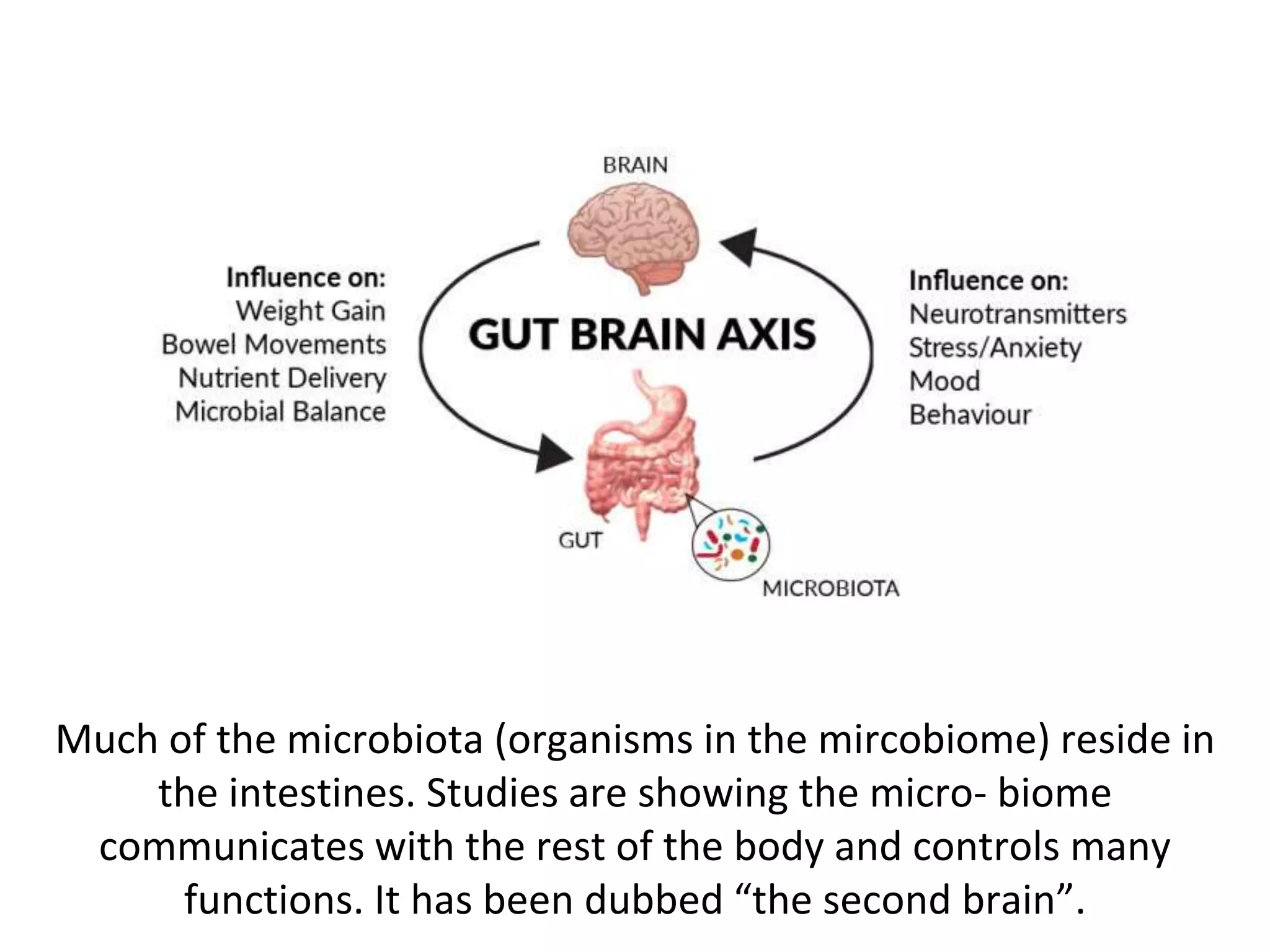
Much of the microbiota (organisms in the mircobiome) reside in
the intestines. Studies are showing the micro- biome
communicates with the rest of the body and controls many
functions. It has been dubbed “the second brain”.
Health Problems Caused by
Imbalanced Microbiome
• Autoimmune diseases (RA,
Lupus, Psoriasis, MS, others)
• Cancer
• Diabetes
• Depression, mental health
• Weight/obesity
• Heart health
• Skin health
• Digestive disorders:
• Crohn’s
• IBS
• Ulcerative Colitis
• Constipation/diarrhea
• Headaches/migraines
What Causes Microbiome
Imbalance?
• Antibiotics,
• Pathogens,
viruses
• NSAIDS
(Ibuprofen,
etc)
• Other
medications
• Stress
• Hygiene Hypotheses
• Alcohol, drugs
• C-sections, not breast-
feeding
• Poor nutrition (processed
foods)
• Environmental toxins (BPA,
etc)
Good vs Bad
Good Bugs
• Lactobacillus
• Acidophilus
• Rhamnosus
• Bifido Bacterium
• Many more…
Bad Bugs
• C. diff
• H. Pylori
• E. coli
• Many more…
How to Keep Microbiome Healthy
and Strong
• Natural and fresh food diet, including fermented foods
(pickles, Kimchee, sauerkraut, yogurt, Kefir, Kombucha, beer,
wine, miso) *raw milk
• Mostly plant-based diet (SCFA’s and fiber- prebiotics,
butyrate)
• Probiotics and prebiotics, other supplements
• Managing Stress, good sleep
• Exercise
• Limiting exposure to environmental toxins
• Exposure to good dirt, and some germs
The Four R’s Approach
• Remove: food allergens (most common: gluten, dairy, soy, corn, sugar),
irritants, toxins
• Replace: superfoods, stomach acid, digestive enzymes
• Reinoculate: add probiotics and prebiotics via food and
supplements, or fecal transplant
• Repair: leaky gut, with foods and supplements
Reinoculate and
Repair Gut Wall
• Probiotics
• Prebiotics
• Carnosine, Zinc
• DGL
• Glutamine
• Marshmallow
• Quercetin
• Butyrate
Probiotics
What to look for:
• Diversity in strains
• Enough organisms (10-50 billion
depending on situation)
• Delivery to gut
• Living, not dead
Some reputable Brands:
• Prescript Assist
• Probiogen
• Jarrow
• Ultimate Flora
• Garden of Life
• Florastor (Sacchromyces
Boulardii)
Super Foods for Repairing Leaky
Gut
• Bone broth
• Asparagus
• Artichoke Hearts
• Fermented foods
• Garlic
• Onions, Leeks
• Radishes
• Tomatoes-cooked*
Probiotics could become to the 21st century, what
Antibiotics were to the 20th century!
The Human Microbiome Project (HMP) was a United
States National Institutes of Health (NIH) initiative with
the goal of identifying and characterizing the
microorganisms which are found in association with
both healthy and diseased humans (the
human microbiome).
Books
Coaches to guide and provide customized support
Equipment and physical classes geared for people 40+
Nutritional supplements and anti-aging products
Community environment in a spa-like, eco-friendly setting
Education classes that teach sustainable, self-reliant care

Microbiome Talk

  • 1.
  • 2.
    The microbiome isthe collection of trillions of microbes living in and on the human body. These microbes exert major influence over your hormones, appetite, immune system, neurotransmitters, and even your genes.
  • 3.
    Much of themicrobiota (organisms in the mircobiome) reside in the intestines. Studies are showing the micro- biome communicates with the rest of the body and controls many functions. It has been dubbed “the second brain”.
  • 4.
    Health Problems Causedby Imbalanced Microbiome • Autoimmune diseases (RA, Lupus, Psoriasis, MS, others) • Cancer • Diabetes • Depression, mental health • Weight/obesity • Heart health • Skin health • Digestive disorders: • Crohn’s • IBS • Ulcerative Colitis • Constipation/diarrhea • Headaches/migraines
  • 5.
    What Causes Microbiome Imbalance? •Antibiotics, • Pathogens, viruses • NSAIDS (Ibuprofen, etc) • Other medications • Stress • Hygiene Hypotheses • Alcohol, drugs • C-sections, not breast- feeding • Poor nutrition (processed foods) • Environmental toxins (BPA, etc)
  • 6.
    Good vs Bad GoodBugs • Lactobacillus • Acidophilus • Rhamnosus • Bifido Bacterium • Many more… Bad Bugs • C. diff • H. Pylori • E. coli • Many more…
  • 7.
    How to KeepMicrobiome Healthy and Strong • Natural and fresh food diet, including fermented foods (pickles, Kimchee, sauerkraut, yogurt, Kefir, Kombucha, beer, wine, miso) *raw milk • Mostly plant-based diet (SCFA’s and fiber- prebiotics, butyrate) • Probiotics and prebiotics, other supplements • Managing Stress, good sleep • Exercise • Limiting exposure to environmental toxins • Exposure to good dirt, and some germs
  • 8.
    The Four R’sApproach • Remove: food allergens (most common: gluten, dairy, soy, corn, sugar), irritants, toxins • Replace: superfoods, stomach acid, digestive enzymes • Reinoculate: add probiotics and prebiotics via food and supplements, or fecal transplant • Repair: leaky gut, with foods and supplements
  • 9.
    Reinoculate and Repair GutWall • Probiotics • Prebiotics • Carnosine, Zinc • DGL • Glutamine • Marshmallow • Quercetin • Butyrate
  • 10.
    Probiotics What to lookfor: • Diversity in strains • Enough organisms (10-50 billion depending on situation) • Delivery to gut • Living, not dead Some reputable Brands: • Prescript Assist • Probiogen • Jarrow • Ultimate Flora • Garden of Life • Florastor (Sacchromyces Boulardii)
  • 11.
    Super Foods forRepairing Leaky Gut • Bone broth • Asparagus • Artichoke Hearts • Fermented foods • Garlic • Onions, Leeks • Radishes • Tomatoes-cooked*
  • 12.
    Probiotics could becometo the 21st century, what Antibiotics were to the 20th century!
  • 13.
    The Human MicrobiomeProject (HMP) was a United States National Institutes of Health (NIH) initiative with the goal of identifying and characterizing the microorganisms which are found in association with both healthy and diseased humans (the human microbiome).
  • 16.
  • 18.
    Coaches to guideand provide customized support Equipment and physical classes geared for people 40+ Nutritional supplements and anti-aging products Community environment in a spa-like, eco-friendly setting Education classes that teach sustainable, self-reliant care

Editor's Notes

  • #3 Microbes= bacteria, fungi, viruses- living organisms to small to see with human eye In current discussions the microbiome is more about the bacteria in our digestive tract- starting in our mouths and going through our stomachs and intestines and colons, also in the vaginal area
  • #4 Dr. Michael Gershon was first to coin this phrase this in 1990’s. He was a professor and researcher of cell biology and pathology.
  • #5 https://www.nature.com/articles/ncomms12015#discussion- MS http://www.mdedge.com/neurologyreviews/article/101679/multiple-sclerosis/gut-microbiome-may-aid-treatment-and-prevention https://microbiomejournal.biomedcentral.com/articles/10.1186/s40168-016-0171-4- FMS http://cancerpreventionresearch.aacrjournals.org/content/10/4/226 https://genomemedicine.biomedcentral.com/articles/10.1186/s13073-016-0303-2
  • #7 More about balance
  • #8 SCFA’s- short chain fatty acids: are produced by bacteria in the gut during fermentation of insoluble fibre from dietary plant matter. The short-chain fatty acid butyrate is particularly important for colon health because it is the primary energy source for colonic cells and has anti-carcinogenic as well as anti-inflammatory properties[7] that are important for keeping colon cells healthy.[8
  • #9 There are variations of this
  • #20 Coach will partner with clients to guide them toward creating and implementing health/life goals and educate them about all the different options available for self-empowerment. The coach provides motivation, accountability and genuine concern for the client. They also can work with the clients’ doctors to coordinate a program that encompasses all their health/wellness needs. Equipment will be more appropriate and sustainable for aging population: treadmills, bikes, machines that focus on lower back, knees, gentle strengthening, group classes that will be 30 minutes instead of 60 education classes that help people understand the basis of their health issues more and provide latest natural and self-reliant approaches to healing or coping with – Thrive 5 a community that supports and promotes sustainable health, kindness, sharing of ideas, getting to know each other, in a natural, eco-friendly building