The Leaky Gut
Syndrome
Dr. Fathi Neana, MD
Chief of Orthopaedics
Dr. Fakhry & Al-Garzaie Hospital
Saudi Arabia
July, 21 - 2017
Now we know why !
‫ه‬ َ‫اّلل‬ َ‫ل‬‫و‬ُ‫س‬َ‫ر‬ َ‫ل‬‫ا‬َ‫ق‬‫ﷺ‬:ً‫ء‬‫َا‬‫ع‬‫ه‬‫و‬ ٌّ‫ي‬‫ه‬‫َم‬‫د‬‫آ‬ َ َ‫َل‬َ‫م‬ ‫ا‬َ‫م‬ٍ‫ن‬ْ‫ط‬َ‫ب‬ ْ‫ن‬‫ه‬‫م‬ ‫ا‬ًّ‫َر‬‫ش‬‫ا‬ ‫ه‬‫ب‬ْ‫س‬َ‫ح‬‫ه‬‫ب‬َ‫َان‬‫ك‬ ْ‫ن‬‫ه‬‫إ‬َ‫ف‬ ُ‫ه‬َ‫ب‬ْ‫ل‬ُ‫ص‬ َ‫ن‬ْ‫م‬‫ه‬‫ق‬ُ‫ي‬ ٌ‫ت‬ َ‫َُل‬‫ك‬ُ‫أ‬ َ‫م‬َ‫د‬‫آ‬ ‫ه‬‫ن‬ْ‫ب‬َ‫َل‬
‫ه‬‫ه‬‫ه‬‫س‬َ‫ف‬َ‫ن‬‫ه‬‫ل‬ ٌ‫ث‬ُ‫ل‬ُ‫ث‬َ‫و‬ ‫ه‬‫ه‬‫ه‬‫ب‬‫ا‬َ‫َر‬‫ش‬‫ه‬‫ل‬ ٌ‫ث‬ُ‫ل‬ُ‫ث‬َ‫و‬ ‫ه‬‫ه‬‫ه‬‫ام‬َ‫ع‬َ‫ط‬‫ه‬‫ل‬ ٌ‫ث‬ُ‫ل‬ُ‫ث‬َ‫ف‬ َ‫ة‬َ‫ل‬‫ا‬َ‫ح‬َ‫م‬.
‫األلباني‬ ‫وصححه‬ ‫الترمذي‬ ‫رواه‬
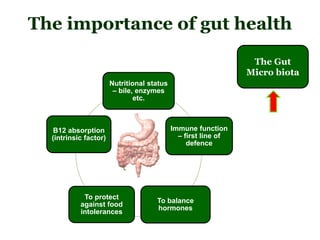
Nutritional status
– bile, enzymes
etc.
Immune function
– first line of
defence
To balance
hormones
To protect
against food
intolerances
B12 absorption
(intrinsic factor)
The importance of gut health
The Gut
Micro biota
The Gut Microbiota
Micro biota
The microorganisms that live in an established environment
Microbiome = a complex “organ”
The full complement of microbes, their genes, and genomes in a particular
environment
Complex community of microbes estimated
to contain
1- 200 trillion cells
2- > 1000 diverse microbial species
3- 10 x the number of human cells in our body
4- Gut Microbiome is 150 x larger than the human genome
5- 100 to 1,000 times more DNA than ours!!!
6- 20,000 functions & make 100’s of thousands of biochemicals
7- Genes for making hormones, enzymes, etc. (Humans = 23,000 - Microbes =
4.5 million)
8- Found in “sterile” zones (e.g. lungs & womb)
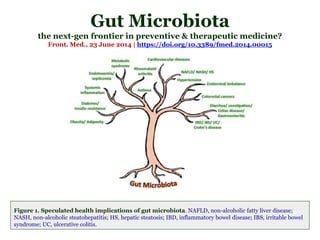
Gut Microbiota
the next-gen frontier in preventive & therapeutic medicine?
Front. Med., 23 June 2014 | https://doi.org/10.3389/fmed.2014.00015
Figure 1. Speculated health implications of gut microbiota. NAFLD, non-alcoholic fatty liver disease;
NASH, non-alcoholic steatohepatitis; HS, hepatic steatosis; IBD, inflammatory bowel disease; IBS, irritable bowel
syndrome; UC, ulcerative colitis.
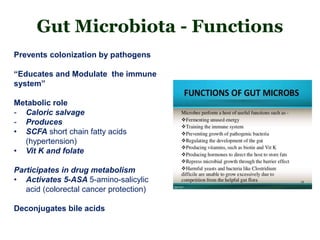
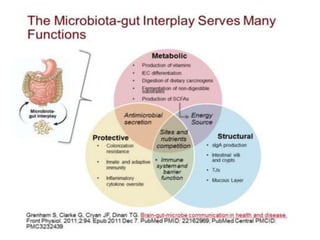
Prevents colonization by pathogens
“Educates and Modulate the immune
system”
Metabolic role
- Caloric salvage
- Produces
• SCFA short chain fatty acids
(hypertension)
• Vit K and folate
Participates in drug metabolism
• Activates 5-ASA 5-amino-salicylic
acid (colorectal cancer protection)
Deconjugates bile acids
Gut Microbiota - Functions
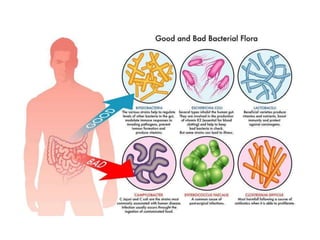
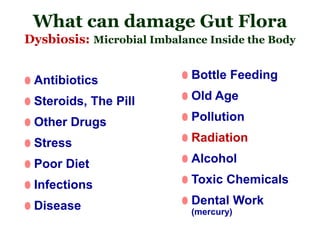
What can damage Gut Flora
Dysbiosis: Microbial Imbalance Inside the Body
Antibiotics
Steroids, The Pill
Other Drugs
Stress
Poor Diet
Infections
Disease
Bottle Feeding
Old Age
Pollution
Radiation
Alcohol
Toxic Chemicals
Dental Work
(mercury)
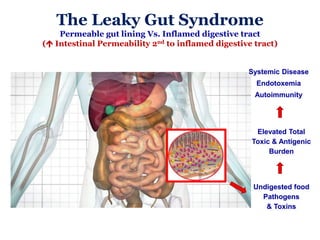
The Leaky Gut Syndrome
Permeable gut lining Vs. Inflamed digestive tract
( Intestinal Permeability 2nd to inflamed digestive tract)
Elevated Total
Toxic & Antigenic
Burden
Systemic Disease
Endotoxemia
Autoimmunity
Undigested food
Pathogens
& Toxins
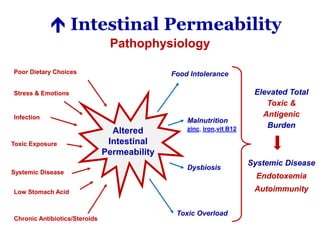
Altered
Intestinal
Permeability
Poor Dietary Choices
Stress & Emotions
Infection
Chronic Antibiotics/Steroids
Systemic Disease
Toxic Exposure
Food Intolerance
Malnutrition
zinc, iron,vit B12
Dysbiosis
Toxic Overload
Elevated Total
Toxic &
Antigenic
Burden
Low Stomach Acid
Systemic Disease
Endotoxemia
Autoimmunity
 Intestinal Permeability
Pathophysiology
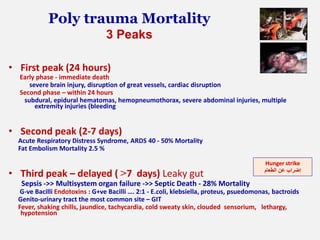
Poly trauma Mortality
3 Peaks
• First peak (24 hours)
Early phase - immediate death
severe brain injury, disruption of great vessels, cardiac disruption
Second phase – within 24 hours
subdural, epidural hematomas, hemopneumothorax, severe abdominal injuries, multiple
extremity injuries (bleeding
• Second peak (2-7 days)
Acute Respiratory Distress Syndrome, ARDS 40 - 50% Mortality
Fat Embolism Mortality 2.5 %
• Third peak – delayed ( <7 days) Leaky gut
Sepsis ->> Multisystem organ failure ->> Septic Death - 28% Mortality
G-ve Bacilli Endotoxins : G+ve Bacilli …. 2:1 - E.coli, klebsiella, proteus, psuedomonas, bactroids
Genito-urinary tract the most common site – GIT
Fever, shaking chills, jaundice, tachycardia, cold sweaty skin, clouded sensorium, lethargy,
hypotension
Hunger strike
‫الطعام‬ ‫عن‬ ‫إضراب‬
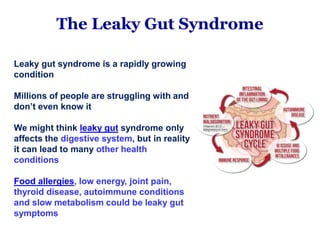
The Leaky Gut Syndrome
Leaky gut syndrome is a rapidly growing
condition
Millions of people are struggling with and
don’t even know it
We might think leaky gut syndrome only
affects the digestive system, but in reality
it can lead to many other health
conditions
Food allergies, low energy, joint pain,
thyroid disease, autoimmune conditions
and slow metabolism could be leaky gut
symptoms
Permeable gut vs. leaky gut syndrome?
These terms are often used interchangeably
They can be perceived very differently by health professionals
• Controversy exists with the term ‘leaky gut syndrome
• ‘Leaky gut’ is simply a term used for a permeable gut lining
associated with inflammation
• Nutrition practitioners - the term ‘leaky gut’ is more commonly used
• Medical doctors - may prefer to use the term ‘permeable gut
lining’ or ‘inflamed digestive tract’
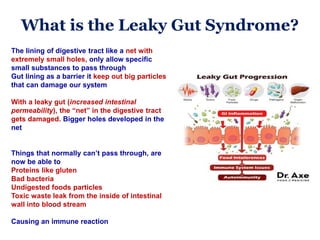
What is the Leaky Gut Syndrome?
The lining of digestive tract like a net with
extremely small holes, only allow specific
small substances to pass through
Gut lining as a barrier it keep out big particles
that can damage our system
With a leaky gut (increased intestinal
permeability), the “net” in the digestive tract
gets damaged. Bigger holes developed in the
net
Things that normally can’t pass through, are
now be able to
Proteins like gluten
Bad bacteria
Undigested foods particles
Toxic waste leak from the inside of intestinal
wall into blood stream
Causing an immune reaction
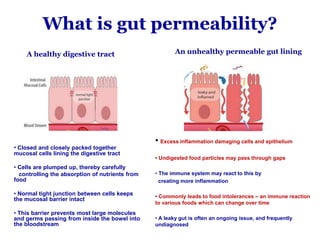
What is gut permeability?
A healthy digestive tract
• Closed and closely packed together
mucosal cells lining the digestive tract
• Cells are plumped up, thereby carefully
controlling the absorption of nutrients from
food
• Normal tight junction between cells keeps
the mucosal barrier intact
• This barrier prevents most large molecules
and germs passing from inside the bowel into
the bloodstream
An unhealthy permeable gut lining
• Excess inflammation damaging cells and epithelium
• Undigested food particles may pass through gaps
• The immune system may react to this by
creating more inflammation
• Commonly leads to food intolerances – an immune reaction
to various foods which can change over time
• A leaky gut is often an ongoing issue, and frequently
undiagnosed
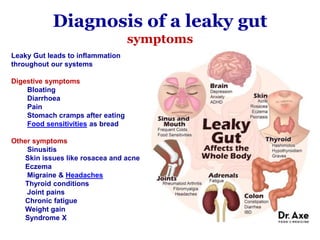
Diagnosis of a leaky gut
symptoms
Leaky Gut leads to inflammation
throughout our systems
Digestive symptoms
Bloating
Diarrhoea
Pain
Stomach cramps after eating
Food sensitivities as bread
Other symptoms
Sinusitis
Skin issues like rosacea and acne
Eczema
Migraine & Headaches
Thyroid conditions
Joint pains
Chronic fatigue
Weight gain
Syndrome X
Digestive symptoms
• Digestive symptoms are often not a priority to clients
• Clients may want to concentrate on other goals such
as
overcoming fatigue (associated with leaky gut)
– Diarrhoea
– Constipation
– Burning sensation in the stomach
– Passing a stool shortly after eating
– Pain after drinking alcohol or spicy food
– Stomach cramps
– Gas
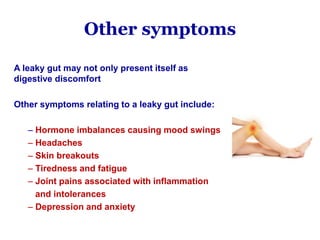
Other symptoms
A leaky gut may not only present itself as
digestive discomfort
Other symptoms relating to a leaky gut include:
– Hormone imbalances causing mood swings
– Headaches
– Skin breakouts
– Tiredness and fatigue
– Joint pains associated with inflammation
and intolerances
– Depression and anxiety
Health issues linked to gut permeability
Conditions may increase gut permeability
•
• Inflammatory bowel diseases IBD
– ulcerative colitis
– Crohn’s disease
• Irritable bowel syndrome IBS
Signs and symptoms are uncomfortable
IBS - doesn't cause changes in bowel tissue or increase risk of colorectal cancer
unlike ulcerative colitis and Crohn's disease, which are forms of inflammatory bowel disease
• Gastritis (inflammation of the stomach – several causes)
• HIV / AIDS
• Type 1 diabetes
Diagnosis of a leaky gut
Tests
• A digestive stool analysis can test secretory IgA (Immunoglobulin A) levels
• IgA is an antibody used by the immune system to identify and fight off
unwanted objects such as infectious bacteria; this specific type of antibody is
produced in mucosal linings (the gut wall)
• As unwanted undigested food particles may pass through the gut lining, an
immune reaction involving high levels of IgA antibodies may suggest a
permeable gut lining
• Test for food intolerances: if IgG antibodies are produced, a leaky gut is very
likely
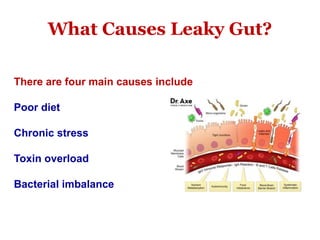
There are four main causes include
Poor diet
Chronic stress
Toxin overload
Bacterial imbalance
What Causes Leaky Gut?
• Possible causes
– chronic inflammation
– nutritional deficiencies
– fatty acid deficiencies
– improper digestion
–high intake of commonly aggravating foods
– Chronic stress
• Other possible causes
– parasites
– pathogenic bacteria
Damage Gut Flora Dysbiosis: Microbial Imbalance
– yeast infections
What Causes Leaky Gut?
The role of chronic inflammation
Chronic inflammation causes continuous
breakdown of cells
Excess inflammation can damage mucosal
cells’ tight junctions
Inflammation may be a result of an
inflammatory diet or medication
Inflammation exacerbates pain and
sensitivity to foods
Too much inflammation stalls the healing
process
• Possible causes
– chronic inflammation
– nutritional deficiencies
– fatty acid deficiencies
– improper digestion
–high intake of commonly
aggravating foods
– Chronic stress
• Other possible causes
– parasites
– pathogenic bacteria
– yeast infections
What Causes Leaky Gut?
Nutritional deficiencies
• Nutrients required for the integrity of the
mucosal cells
– zinc
– antioxidants
– protein
– fatty acids
• A leaky gut may also result in nutritional
deficiencies due to inflamed villi and
reduced ability of mucosal cells to absorb
nutrients
• Possible causes
– chronic inflammation
– nutritional deficiencies
– fatty acid deficiencies
– improper digestion
–high intake of commonly
aggravating foods
– Chronic stress
• Other possible causes
– parasites
– pathogenic bacteria
– yeast infections
What Causes Leaky Gut?
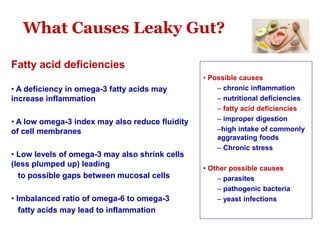
Fatty acid deficiencies
• A deficiency in omega-3 fatty acids may
increase inflammation
• A low omega-3 index may also reduce fluidity
of cell membranes
• Low levels of omega-3 may also shrink cells
(less plumped up) leading
to possible gaps between mucosal cells
• Imbalanced ratio of omega-6 to omega-3
fatty acids may lead to inflammation
• Possible causes
– chronic inflammation
– nutritional deficiencies
– fatty acid deficiencies
– improper digestion
–high intake of commonly
aggravating foods
– Chronic stress
• Other possible causes
– parasites
– pathogenic bacteria
– yeast infections
What Causes Leaky Gut?
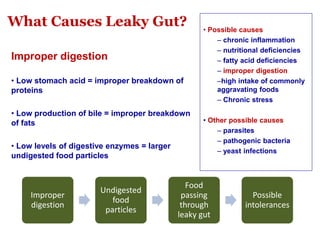
Improper
digestion
Undigested
food
particles
Food
passing
through
leaky gut
Possible
intolerances
Improper digestion
• Low stomach acid = improper breakdown of
proteins
• Low production of bile = improper breakdown
of fats
• Low levels of digestive enzymes = larger
undigested food particles
• Possible causes
– chronic inflammation
– nutritional deficiencies
– fatty acid deficiencies
– improper digestion
–high intake of commonly
aggravating foods
– Chronic stress
• Other possible causes
– parasites
– pathogenic bacteria
– yeast infections
What Causes Leaky Gut?
High intake of commonly
aggravating foods
• Foods commonly associated with a
permeable gut lining:
– gluten
– dairy
– peanuts
– pulses (lentils, beans)
– spicy food
• Foods which an individual has become
intolerant to due to IgG antibody reaction, or
other immune reactions
• Possible causes
– chronic inflammation
– nutritional deficiencies
– fatty acid deficiencies
– improper digestion
–high intake of commonly
aggravating foods
– Chronic stress
• Other possible causes
– parasites
– pathogenic bacteria
– yeast infections
What Causes Leaky Gut?
Is gluten to blame?
• Gluten - a protein found in grains:
wheat, barley and rye
• It can be very difficult to process in the body and
can result in immune reactions leading to unwanted
symptoms such as digestive cramps
• Gluten is one of the most common food
intolerances and can negatively affect symptoms of
a leaky gut
• Gluten is not the cause of a leaky gut for everyone
• Small quantities of gluten may be tolerated,
although constant intake of gluten is too much to
handle for many people
• Possible causes
– chronic inflammation
– nutritional deficiencies
– fatty acid deficiencies
– improper digestion
–high intake of commonly
aggravating foods
– Chronic stress
• Other possible causes
– parasites
– pathogenic bacteria
– yeast infections
What Causes Leaky Gut?
Spicy food
• Spicy food - chilli peppers contain a
compound called capsaicin
• Causes irritation to mucosal cells, including
the lips, tongue, mouth and digestive tract
• Leaky gut + chilli = a burning sensation in
the stomach and a bout of diarrhoea
• Possible causes
– chronic inflammation
– nutritional deficiencies
– fatty acid deficiencies
– improper digestion
–high intake of commonly
aggravating foods
– Chronic stress
• Other possible causes
– parasites
– pathogenic bacteria
– yeast infections
What Causes Leaky Gut?
Other foods which may aggravate a leaky
gut
• Ginger – the spicy / irritating compound is
gingerol (related to capsaicin)
• Raw garlic
• Raw onions
• Although these foods are considered to be anti-
inflammatory, they can also cause irritation to your
gut lining if it is already semi-permeable
• Direct contact of such strong foods on already
damaged cells can result in an instant burning
sensation in the stomach or intestines
• Possible causes
– chronic inflammation
– nutritional deficiencies
– fatty acid deficiencies
– improper digestion
–high intake of commonly
aggravating foods
– Chronic stress
• Other possible causes
– parasites
– pathogenic bacteria
– yeast infections
What Causes Leaky Gut?
Stress and a leaky gut
• Stress can increase stomach acid production
– often leading to gastritis / ulcers
• Stress may reduce ability to digest food by
reducing production of digestive enzymes
• Higher requirements for vitamins and
minerals
• Possible causes
– chronic inflammation
– nutritional deficiencies
– fatty acid deficiencies
– improper digestion
–high intake of commonly
aggravating foods
– Chronic stress
• Other possible causes
– parasites
– pathogenic bacteria
– yeast infections
What Causes Leaky Gut?
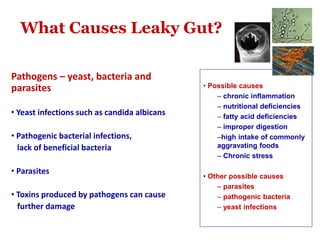
Pathogens – yeast, bacteria and
parasites
• Yeast infections such as candida albicans
• Pathogenic bacterial infections,
lack of beneficial bacteria
• Parasites
• Toxins produced by pathogens can cause
further damage
• Possible causes
– chronic inflammation
– nutritional deficiencies
– fatty acid deficiencies
– improper digestion
–high intake of commonly
aggravating foods
– Chronic stress
• Other possible causes
– parasites
– pathogenic bacteria
– yeast infections
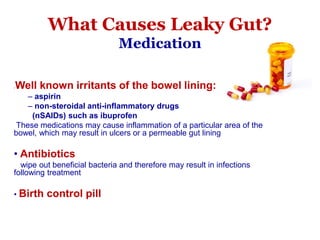
• Well known irritants of the bowel lining:
– aspirin
– non-steroidal anti-inflammatory drugs
(nSAIDs) such as ibuprofen
These medications may cause inflammation of a particular area of the
bowel, which may result in ulcers or a permeable gut lining
• Antibiotics
wipe out beneficial bacteria and therefore may result in infections
following treatment
• Birth control pill
What Causes Leaky Gut?
Medication
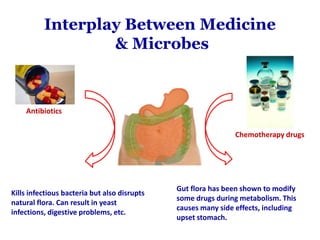
Interplay Between Medicine
& Microbes
Antibiotics
Kills infectious bacteria but also disrupts
natural flora. Can result in yeast
infections, digestive problems, etc.
Chemotherapy drugs
Gut flora has been shown to modify
some drugs during metabolism. This
causes many side effects, including
upset stomach.
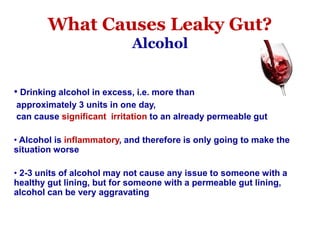
• Drinking alcohol in excess, i.e. more than
approximately 3 units in one day,
can cause significant irritation to an already permeable gut
• Alcohol is inflammatory, and therefore is only going to make the
situation worse
• 2-3 units of alcohol may not cause any issue to someone with a
healthy gut lining, but for someone with a permeable gut lining,
alcohol can be very aggravating
What Causes Leaky Gut?
Alcohol
How Cell Phones and Wireless
Routers Mess Up Your Gut
July 11, 2016 Rob EMF, Microbiome, Research
The concept of a leaky Blood Brain Barrier fits in very neatly with the concept of leaky
gut.
The latter disorder results in proteins, allergens, toxins, and other unwanted things getting into the blood
stream,
while the (a leaky brain), allows the same offenders into the brain from the bloodstream through an otherwise
protective membrane.
It is logical that anything that makes one biological barrier more porous would do the
same for another. Research scientists just yet to look at it specifically for the gut.
Cell membranes shown to become “leaky” in a way, through a disruption of the VGCC.
The “voltage-gated calcium channel,” which functions as a gateway of certain ions into and out
of the cell, whose excessive activation can result in excitotoxicity.
The particular study I’ve linked also discusses the DNA damage caused by EMFs, which is
clearly visible in “comet assays.” DNA damage is one crucial step on the way to cancer. Here
is a visual comparison between the assays showing DNA damage from already-accepted-as-
harmful Gamma radiation and the damage from microwave radiation.
The good news is there’s a solution to
successfully healing leaky gut
There is a four (4R)-step process that includes:
1- Remove foods and factors that damage the gut
2- Replace with healing foods
3- Repair with specific supplements
4- Rebalance with probiotic
The 4-Step Plan to Heal Leaky Gut
The top foods to remove that cause leaky gut are
sugar
grains
conventional meat
conventional dairy and
GMO foods - Genetically modified foods.
The top toxic exposures to eliminate are
tap water
pesticides
NSAIDS
antibiotics
But remember to always consult with your physician if he or she has
prescribed these for you.
1- Remove foods and factors that
damage the gut
1- Bone Broth – broth contains collagen and the amino acids proline and glycine that
can help heal your damaged cell walls
2- Raw Cultured Dairy – contains both probiotics and SCFA’s that can help heal the
gut. Pastured kefir, yogurt, amasai, butter and raw cheese are some of the best.
3- Fermented Vegetables – contain organic acids that balance intestinal pH and
probiotics to support the gut. Sauerkraut, kimchi and kvass are excellent sources.
4- Coconut Products – all coconut products are especially good for your gut. The
MCFA’s (medium chain fatty acids) in coconut are easier to digest than other fats. Also,
coconut kefir contains probiotics that support digestive system.
5- Sprouted Seeds – chia seeds, flaxseeds and hemp seeds that have been sprouted
are great sources of fiber that can help support the growth of beneficial bacteria. But if
you have severe leaky gut, you may need to start out getting your fiber from steamed
vegetables and fruit.
Also, consuming foods that have omega-3 fats are beneficial — anti-inflammatory
foods like grass-fed beef, lamb and wild-caught fish like salmon.
2- Replace with healing foods
The Leaky Gut Diet and 5 Healing Foods
l-glutamine, probiotics, digestive enzymes, aloe vera
juice, quercetin, NAG and licorice root.
1- Probiotics are the most important supplement to take because it helps replenish
good bacteria and crowds out bad bacteria. I recommend getting probiotics in both food
and supplement form. I see people all the time only follow part of the protocol in
healing their leaky gut syndrome by removing the damaging irritants. But the part they
often leave out is re-inoculating their gut with beneficial bacteria that will keep bad
bacteria at bay.
So load up on BOTH probiotic-rich foods and take AT LEAST 50 billion units of probiotics
daily from a high-quality brand.
2- Digestive enzymes (one or two capsules at the beginning of each meal) ensure
that foods are fully digested, decreasing the chance that partially digested foods particles
and proteins are damaging your gut wall.
3- Repair with specific supplements
Top 5 Supplements for Healing Leaky Gut
3- L-Glutamine is critical for any program designed to heal leaky gut. Glutamine
powder is an essential amino acid supplement that is anti-inflammatory and necessary
for the growth and repair of your intestinal lining. L-glutamine benefits include acting as a
protector: coating your cell walls and acting as a repellent to irritants. Take 2–5 grams
twice daily.
4- Licorice Root (DGL) is an adaptogenic herb that helps balance cortisol levels and
improves acid production in the stomach. DGL supports the body’s natural processes for
maintaining the mucosal lining of the stomach and duodenum. This herb is especially
beneficial if someone’s leaky gut is being caused by emotional stress. Take 500 milligrams
twice daily.
5- Quercetin has also been shown to improve gut barrier function by sealing the gut
because it supports creation of tight junction proteins. It also stabilizes mast cells and
reduces the release of histamine, which is common in food intolerance. New studies have
also shown its effectiveness in healing ulcerative colitis. Take 500 milligrams three times
daily with meals.
If you can follow the above protocol, you are well on your way to successfully
treating your gut for good.
3- Repair with specific supplements
Top 5 Supplements for Healing Leaky Gut
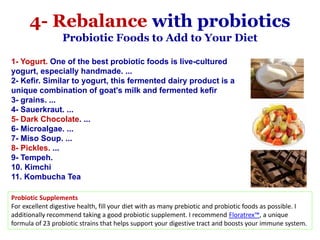
1- Yogurt. One of the best probiotic foods is live-cultured
yogurt, especially handmade. ...
2- Kefir. Similar to yogurt, this fermented dairy product is a
unique combination of goat's milk and fermented kefir
3- grains. ...
4- Sauerkraut. ...
5- Dark Chocolate. ...
6- Microalgae. ...
7- Miso Soup. ...
8- Pickles. ...
9- Tempeh.
10. Kimchi
11. Kombucha Tea
Probiotic Supplements
For excellent digestive health, fill your diet with as many prebiotic and probiotic foods as possible. I
additionally recommend taking a good probiotic supplement. I recommend Floratrex™, a unique
formula of 23 probiotic strains that helps support your digestive tract and boosts your immune system.
4- Rebalance with probiotics
Probiotic Foods to Add to Your Diet
The leaky gut syndrome

The leaky gut syndrome

  • 1.
    The Leaky Gut Syndrome Dr.Fathi Neana, MD Chief of Orthopaedics Dr. Fakhry & Al-Garzaie Hospital Saudi Arabia July, 21 - 2017
  • 2.
    Now we knowwhy ! ‫ه‬ َ‫اّلل‬ َ‫ل‬‫و‬ُ‫س‬َ‫ر‬ َ‫ل‬‫ا‬َ‫ق‬‫ﷺ‬:ً‫ء‬‫َا‬‫ع‬‫ه‬‫و‬ ٌّ‫ي‬‫ه‬‫َم‬‫د‬‫آ‬ َ َ‫َل‬َ‫م‬ ‫ا‬َ‫م‬ٍ‫ن‬ْ‫ط‬َ‫ب‬ ْ‫ن‬‫ه‬‫م‬ ‫ا‬ًّ‫َر‬‫ش‬‫ا‬ ‫ه‬‫ب‬ْ‫س‬َ‫ح‬‫ه‬‫ب‬َ‫َان‬‫ك‬ ْ‫ن‬‫ه‬‫إ‬َ‫ف‬ ُ‫ه‬َ‫ب‬ْ‫ل‬ُ‫ص‬ َ‫ن‬ْ‫م‬‫ه‬‫ق‬ُ‫ي‬ ٌ‫ت‬ َ‫َُل‬‫ك‬ُ‫أ‬ َ‫م‬َ‫د‬‫آ‬ ‫ه‬‫ن‬ْ‫ب‬َ‫َل‬ ‫ه‬‫ه‬‫ه‬‫س‬َ‫ف‬َ‫ن‬‫ه‬‫ل‬ ٌ‫ث‬ُ‫ل‬ُ‫ث‬َ‫و‬ ‫ه‬‫ه‬‫ه‬‫ب‬‫ا‬َ‫َر‬‫ش‬‫ه‬‫ل‬ ٌ‫ث‬ُ‫ل‬ُ‫ث‬َ‫و‬ ‫ه‬‫ه‬‫ه‬‫ام‬َ‫ع‬َ‫ط‬‫ه‬‫ل‬ ٌ‫ث‬ُ‫ل‬ُ‫ث‬َ‫ف‬ َ‫ة‬َ‫ل‬‫ا‬َ‫ح‬َ‫م‬. ‫األلباني‬ ‫وصححه‬ ‫الترمذي‬ ‫رواه‬
  • 3.
    Nutritional status – bile,enzymes etc. Immune function – first line of defence To balance hormones To protect against food intolerances B12 absorption (intrinsic factor) The importance of gut health The Gut Micro biota
  • 5.
    The Gut Microbiota Microbiota The microorganisms that live in an established environment Microbiome = a complex “organ” The full complement of microbes, their genes, and genomes in a particular environment Complex community of microbes estimated to contain 1- 200 trillion cells 2- > 1000 diverse microbial species 3- 10 x the number of human cells in our body 4- Gut Microbiome is 150 x larger than the human genome 5- 100 to 1,000 times more DNA than ours!!! 6- 20,000 functions & make 100’s of thousands of biochemicals 7- Genes for making hormones, enzymes, etc. (Humans = 23,000 - Microbes = 4.5 million) 8- Found in “sterile” zones (e.g. lungs & womb)
  • 6.
    Gut Microbiota the next-genfrontier in preventive & therapeutic medicine? Front. Med., 23 June 2014 | https://doi.org/10.3389/fmed.2014.00015 Figure 1. Speculated health implications of gut microbiota. NAFLD, non-alcoholic fatty liver disease; NASH, non-alcoholic steatohepatitis; HS, hepatic steatosis; IBD, inflammatory bowel disease; IBS, irritable bowel syndrome; UC, ulcerative colitis.
  • 7.
    Prevents colonization bypathogens “Educates and Modulate the immune system” Metabolic role - Caloric salvage - Produces • SCFA short chain fatty acids (hypertension) • Vit K and folate Participates in drug metabolism • Activates 5-ASA 5-amino-salicylic acid (colorectal cancer protection) Deconjugates bile acids Gut Microbiota - Functions
  • 9.
    What can damageGut Flora Dysbiosis: Microbial Imbalance Inside the Body Antibiotics Steroids, The Pill Other Drugs Stress Poor Diet Infections Disease Bottle Feeding Old Age Pollution Radiation Alcohol Toxic Chemicals Dental Work (mercury)
  • 10.
    The Leaky GutSyndrome Permeable gut lining Vs. Inflamed digestive tract ( Intestinal Permeability 2nd to inflamed digestive tract) Elevated Total Toxic & Antigenic Burden Systemic Disease Endotoxemia Autoimmunity Undigested food Pathogens & Toxins
  • 11.
    Altered Intestinal Permeability Poor Dietary Choices Stress& Emotions Infection Chronic Antibiotics/Steroids Systemic Disease Toxic Exposure Food Intolerance Malnutrition zinc, iron,vit B12 Dysbiosis Toxic Overload Elevated Total Toxic & Antigenic Burden Low Stomach Acid Systemic Disease Endotoxemia Autoimmunity  Intestinal Permeability Pathophysiology
  • 12.
    Poly trauma Mortality 3Peaks • First peak (24 hours) Early phase - immediate death severe brain injury, disruption of great vessels, cardiac disruption Second phase – within 24 hours subdural, epidural hematomas, hemopneumothorax, severe abdominal injuries, multiple extremity injuries (bleeding • Second peak (2-7 days) Acute Respiratory Distress Syndrome, ARDS 40 - 50% Mortality Fat Embolism Mortality 2.5 % • Third peak – delayed ( <7 days) Leaky gut Sepsis ->> Multisystem organ failure ->> Septic Death - 28% Mortality G-ve Bacilli Endotoxins : G+ve Bacilli …. 2:1 - E.coli, klebsiella, proteus, psuedomonas, bactroids Genito-urinary tract the most common site – GIT Fever, shaking chills, jaundice, tachycardia, cold sweaty skin, clouded sensorium, lethargy, hypotension Hunger strike ‫الطعام‬ ‫عن‬ ‫إضراب‬
  • 13.
    The Leaky GutSyndrome Leaky gut syndrome is a rapidly growing condition Millions of people are struggling with and don’t even know it We might think leaky gut syndrome only affects the digestive system, but in reality it can lead to many other health conditions Food allergies, low energy, joint pain, thyroid disease, autoimmune conditions and slow metabolism could be leaky gut symptoms
  • 14.
    Permeable gut vs.leaky gut syndrome? These terms are often used interchangeably They can be perceived very differently by health professionals • Controversy exists with the term ‘leaky gut syndrome • ‘Leaky gut’ is simply a term used for a permeable gut lining associated with inflammation • Nutrition practitioners - the term ‘leaky gut’ is more commonly used • Medical doctors - may prefer to use the term ‘permeable gut lining’ or ‘inflamed digestive tract’
  • 15.
    What is theLeaky Gut Syndrome? The lining of digestive tract like a net with extremely small holes, only allow specific small substances to pass through Gut lining as a barrier it keep out big particles that can damage our system With a leaky gut (increased intestinal permeability), the “net” in the digestive tract gets damaged. Bigger holes developed in the net Things that normally can’t pass through, are now be able to Proteins like gluten Bad bacteria Undigested foods particles Toxic waste leak from the inside of intestinal wall into blood stream Causing an immune reaction
  • 16.
    What is gutpermeability? A healthy digestive tract • Closed and closely packed together mucosal cells lining the digestive tract • Cells are plumped up, thereby carefully controlling the absorption of nutrients from food • Normal tight junction between cells keeps the mucosal barrier intact • This barrier prevents most large molecules and germs passing from inside the bowel into the bloodstream An unhealthy permeable gut lining • Excess inflammation damaging cells and epithelium • Undigested food particles may pass through gaps • The immune system may react to this by creating more inflammation • Commonly leads to food intolerances – an immune reaction to various foods which can change over time • A leaky gut is often an ongoing issue, and frequently undiagnosed
  • 17.
    Diagnosis of aleaky gut symptoms Leaky Gut leads to inflammation throughout our systems Digestive symptoms Bloating Diarrhoea Pain Stomach cramps after eating Food sensitivities as bread Other symptoms Sinusitis Skin issues like rosacea and acne Eczema Migraine & Headaches Thyroid conditions Joint pains Chronic fatigue Weight gain Syndrome X
  • 18.
    Digestive symptoms • Digestivesymptoms are often not a priority to clients • Clients may want to concentrate on other goals such as overcoming fatigue (associated with leaky gut) – Diarrhoea – Constipation – Burning sensation in the stomach – Passing a stool shortly after eating – Pain after drinking alcohol or spicy food – Stomach cramps – Gas
  • 19.
    Other symptoms A leakygut may not only present itself as digestive discomfort Other symptoms relating to a leaky gut include: – Hormone imbalances causing mood swings – Headaches – Skin breakouts – Tiredness and fatigue – Joint pains associated with inflammation and intolerances – Depression and anxiety
  • 20.
    Health issues linkedto gut permeability Conditions may increase gut permeability • • Inflammatory bowel diseases IBD – ulcerative colitis – Crohn’s disease • Irritable bowel syndrome IBS Signs and symptoms are uncomfortable IBS - doesn't cause changes in bowel tissue or increase risk of colorectal cancer unlike ulcerative colitis and Crohn's disease, which are forms of inflammatory bowel disease • Gastritis (inflammation of the stomach – several causes) • HIV / AIDS • Type 1 diabetes
  • 21.
    Diagnosis of aleaky gut Tests • A digestive stool analysis can test secretory IgA (Immunoglobulin A) levels • IgA is an antibody used by the immune system to identify and fight off unwanted objects such as infectious bacteria; this specific type of antibody is produced in mucosal linings (the gut wall) • As unwanted undigested food particles may pass through the gut lining, an immune reaction involving high levels of IgA antibodies may suggest a permeable gut lining • Test for food intolerances: if IgG antibodies are produced, a leaky gut is very likely
  • 23.
    There are fourmain causes include Poor diet Chronic stress Toxin overload Bacterial imbalance What Causes Leaky Gut?
  • 24.
    What Causes LeakyGut? • Possible causes – chronic inflammation – nutritional deficiencies – fatty acid deficiencies – improper digestion –high intake of commonly aggravating foods – Chronic stress • Other possible causes – parasites – pathogenic bacteria Damage Gut Flora Dysbiosis: Microbial Imbalance – yeast infections
  • 25.
    What Causes LeakyGut? The role of chronic inflammation Chronic inflammation causes continuous breakdown of cells Excess inflammation can damage mucosal cells’ tight junctions Inflammation may be a result of an inflammatory diet or medication Inflammation exacerbates pain and sensitivity to foods Too much inflammation stalls the healing process • Possible causes – chronic inflammation – nutritional deficiencies – fatty acid deficiencies – improper digestion –high intake of commonly aggravating foods – Chronic stress • Other possible causes – parasites – pathogenic bacteria – yeast infections
  • 26.
    What Causes LeakyGut? Nutritional deficiencies • Nutrients required for the integrity of the mucosal cells – zinc – antioxidants – protein – fatty acids • A leaky gut may also result in nutritional deficiencies due to inflamed villi and reduced ability of mucosal cells to absorb nutrients • Possible causes – chronic inflammation – nutritional deficiencies – fatty acid deficiencies – improper digestion –high intake of commonly aggravating foods – Chronic stress • Other possible causes – parasites – pathogenic bacteria – yeast infections
  • 27.
    What Causes LeakyGut? Fatty acid deficiencies • A deficiency in omega-3 fatty acids may increase inflammation • A low omega-3 index may also reduce fluidity of cell membranes • Low levels of omega-3 may also shrink cells (less plumped up) leading to possible gaps between mucosal cells • Imbalanced ratio of omega-6 to omega-3 fatty acids may lead to inflammation • Possible causes – chronic inflammation – nutritional deficiencies – fatty acid deficiencies – improper digestion –high intake of commonly aggravating foods – Chronic stress • Other possible causes – parasites – pathogenic bacteria – yeast infections
  • 28.
    What Causes LeakyGut? Improper digestion Undigested food particles Food passing through leaky gut Possible intolerances Improper digestion • Low stomach acid = improper breakdown of proteins • Low production of bile = improper breakdown of fats • Low levels of digestive enzymes = larger undigested food particles • Possible causes – chronic inflammation – nutritional deficiencies – fatty acid deficiencies – improper digestion –high intake of commonly aggravating foods – Chronic stress • Other possible causes – parasites – pathogenic bacteria – yeast infections
  • 29.
    What Causes LeakyGut? High intake of commonly aggravating foods • Foods commonly associated with a permeable gut lining: – gluten – dairy – peanuts – pulses (lentils, beans) – spicy food • Foods which an individual has become intolerant to due to IgG antibody reaction, or other immune reactions • Possible causes – chronic inflammation – nutritional deficiencies – fatty acid deficiencies – improper digestion –high intake of commonly aggravating foods – Chronic stress • Other possible causes – parasites – pathogenic bacteria – yeast infections
  • 30.
    What Causes LeakyGut? Is gluten to blame? • Gluten - a protein found in grains: wheat, barley and rye • It can be very difficult to process in the body and can result in immune reactions leading to unwanted symptoms such as digestive cramps • Gluten is one of the most common food intolerances and can negatively affect symptoms of a leaky gut • Gluten is not the cause of a leaky gut for everyone • Small quantities of gluten may be tolerated, although constant intake of gluten is too much to handle for many people • Possible causes – chronic inflammation – nutritional deficiencies – fatty acid deficiencies – improper digestion –high intake of commonly aggravating foods – Chronic stress • Other possible causes – parasites – pathogenic bacteria – yeast infections
  • 31.
    What Causes LeakyGut? Spicy food • Spicy food - chilli peppers contain a compound called capsaicin • Causes irritation to mucosal cells, including the lips, tongue, mouth and digestive tract • Leaky gut + chilli = a burning sensation in the stomach and a bout of diarrhoea • Possible causes – chronic inflammation – nutritional deficiencies – fatty acid deficiencies – improper digestion –high intake of commonly aggravating foods – Chronic stress • Other possible causes – parasites – pathogenic bacteria – yeast infections
  • 32.
    What Causes LeakyGut? Other foods which may aggravate a leaky gut • Ginger – the spicy / irritating compound is gingerol (related to capsaicin) • Raw garlic • Raw onions • Although these foods are considered to be anti- inflammatory, they can also cause irritation to your gut lining if it is already semi-permeable • Direct contact of such strong foods on already damaged cells can result in an instant burning sensation in the stomach or intestines • Possible causes – chronic inflammation – nutritional deficiencies – fatty acid deficiencies – improper digestion –high intake of commonly aggravating foods – Chronic stress • Other possible causes – parasites – pathogenic bacteria – yeast infections
  • 33.
    What Causes LeakyGut? Stress and a leaky gut • Stress can increase stomach acid production – often leading to gastritis / ulcers • Stress may reduce ability to digest food by reducing production of digestive enzymes • Higher requirements for vitamins and minerals • Possible causes – chronic inflammation – nutritional deficiencies – fatty acid deficiencies – improper digestion –high intake of commonly aggravating foods – Chronic stress • Other possible causes – parasites – pathogenic bacteria – yeast infections
  • 34.
    What Causes LeakyGut? Pathogens – yeast, bacteria and parasites • Yeast infections such as candida albicans • Pathogenic bacterial infections, lack of beneficial bacteria • Parasites • Toxins produced by pathogens can cause further damage • Possible causes – chronic inflammation – nutritional deficiencies – fatty acid deficiencies – improper digestion –high intake of commonly aggravating foods – Chronic stress • Other possible causes – parasites – pathogenic bacteria – yeast infections
  • 35.
    • Well knownirritants of the bowel lining: – aspirin – non-steroidal anti-inflammatory drugs (nSAIDs) such as ibuprofen These medications may cause inflammation of a particular area of the bowel, which may result in ulcers or a permeable gut lining • Antibiotics wipe out beneficial bacteria and therefore may result in infections following treatment • Birth control pill What Causes Leaky Gut? Medication
  • 36.
    Interplay Between Medicine &Microbes Antibiotics Kills infectious bacteria but also disrupts natural flora. Can result in yeast infections, digestive problems, etc. Chemotherapy drugs Gut flora has been shown to modify some drugs during metabolism. This causes many side effects, including upset stomach.
  • 37.
    • Drinking alcoholin excess, i.e. more than approximately 3 units in one day, can cause significant irritation to an already permeable gut • Alcohol is inflammatory, and therefore is only going to make the situation worse • 2-3 units of alcohol may not cause any issue to someone with a healthy gut lining, but for someone with a permeable gut lining, alcohol can be very aggravating What Causes Leaky Gut? Alcohol
  • 38.
    How Cell Phonesand Wireless Routers Mess Up Your Gut July 11, 2016 Rob EMF, Microbiome, Research The concept of a leaky Blood Brain Barrier fits in very neatly with the concept of leaky gut. The latter disorder results in proteins, allergens, toxins, and other unwanted things getting into the blood stream, while the (a leaky brain), allows the same offenders into the brain from the bloodstream through an otherwise protective membrane. It is logical that anything that makes one biological barrier more porous would do the same for another. Research scientists just yet to look at it specifically for the gut. Cell membranes shown to become “leaky” in a way, through a disruption of the VGCC. The “voltage-gated calcium channel,” which functions as a gateway of certain ions into and out of the cell, whose excessive activation can result in excitotoxicity. The particular study I’ve linked also discusses the DNA damage caused by EMFs, which is clearly visible in “comet assays.” DNA damage is one crucial step on the way to cancer. Here is a visual comparison between the assays showing DNA damage from already-accepted-as- harmful Gamma radiation and the damage from microwave radiation.
  • 40.
    The good newsis there’s a solution to successfully healing leaky gut There is a four (4R)-step process that includes: 1- Remove foods and factors that damage the gut 2- Replace with healing foods 3- Repair with specific supplements 4- Rebalance with probiotic The 4-Step Plan to Heal Leaky Gut
  • 41.
    The top foodsto remove that cause leaky gut are sugar grains conventional meat conventional dairy and GMO foods - Genetically modified foods. The top toxic exposures to eliminate are tap water pesticides NSAIDS antibiotics But remember to always consult with your physician if he or she has prescribed these for you. 1- Remove foods and factors that damage the gut
  • 42.
    1- Bone Broth– broth contains collagen and the amino acids proline and glycine that can help heal your damaged cell walls 2- Raw Cultured Dairy – contains both probiotics and SCFA’s that can help heal the gut. Pastured kefir, yogurt, amasai, butter and raw cheese are some of the best. 3- Fermented Vegetables – contain organic acids that balance intestinal pH and probiotics to support the gut. Sauerkraut, kimchi and kvass are excellent sources. 4- Coconut Products – all coconut products are especially good for your gut. The MCFA’s (medium chain fatty acids) in coconut are easier to digest than other fats. Also, coconut kefir contains probiotics that support digestive system. 5- Sprouted Seeds – chia seeds, flaxseeds and hemp seeds that have been sprouted are great sources of fiber that can help support the growth of beneficial bacteria. But if you have severe leaky gut, you may need to start out getting your fiber from steamed vegetables and fruit. Also, consuming foods that have omega-3 fats are beneficial — anti-inflammatory foods like grass-fed beef, lamb and wild-caught fish like salmon. 2- Replace with healing foods The Leaky Gut Diet and 5 Healing Foods
  • 43.
    l-glutamine, probiotics, digestiveenzymes, aloe vera juice, quercetin, NAG and licorice root. 1- Probiotics are the most important supplement to take because it helps replenish good bacteria and crowds out bad bacteria. I recommend getting probiotics in both food and supplement form. I see people all the time only follow part of the protocol in healing their leaky gut syndrome by removing the damaging irritants. But the part they often leave out is re-inoculating their gut with beneficial bacteria that will keep bad bacteria at bay. So load up on BOTH probiotic-rich foods and take AT LEAST 50 billion units of probiotics daily from a high-quality brand. 2- Digestive enzymes (one or two capsules at the beginning of each meal) ensure that foods are fully digested, decreasing the chance that partially digested foods particles and proteins are damaging your gut wall. 3- Repair with specific supplements Top 5 Supplements for Healing Leaky Gut
  • 44.
    3- L-Glutamine iscritical for any program designed to heal leaky gut. Glutamine powder is an essential amino acid supplement that is anti-inflammatory and necessary for the growth and repair of your intestinal lining. L-glutamine benefits include acting as a protector: coating your cell walls and acting as a repellent to irritants. Take 2–5 grams twice daily. 4- Licorice Root (DGL) is an adaptogenic herb that helps balance cortisol levels and improves acid production in the stomach. DGL supports the body’s natural processes for maintaining the mucosal lining of the stomach and duodenum. This herb is especially beneficial if someone’s leaky gut is being caused by emotional stress. Take 500 milligrams twice daily. 5- Quercetin has also been shown to improve gut barrier function by sealing the gut because it supports creation of tight junction proteins. It also stabilizes mast cells and reduces the release of histamine, which is common in food intolerance. New studies have also shown its effectiveness in healing ulcerative colitis. Take 500 milligrams three times daily with meals. If you can follow the above protocol, you are well on your way to successfully treating your gut for good. 3- Repair with specific supplements Top 5 Supplements for Healing Leaky Gut
  • 45.
    1- Yogurt. Oneof the best probiotic foods is live-cultured yogurt, especially handmade. ... 2- Kefir. Similar to yogurt, this fermented dairy product is a unique combination of goat's milk and fermented kefir 3- grains. ... 4- Sauerkraut. ... 5- Dark Chocolate. ... 6- Microalgae. ... 7- Miso Soup. ... 8- Pickles. ... 9- Tempeh. 10. Kimchi 11. Kombucha Tea Probiotic Supplements For excellent digestive health, fill your diet with as many prebiotic and probiotic foods as possible. I additionally recommend taking a good probiotic supplement. I recommend Floratrex™, a unique formula of 23 probiotic strains that helps support your digestive tract and boosts your immune system. 4- Rebalance with probiotics Probiotic Foods to Add to Your Diet