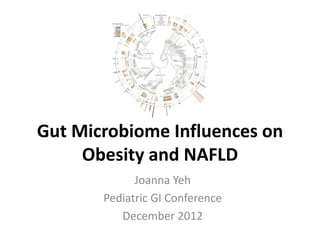
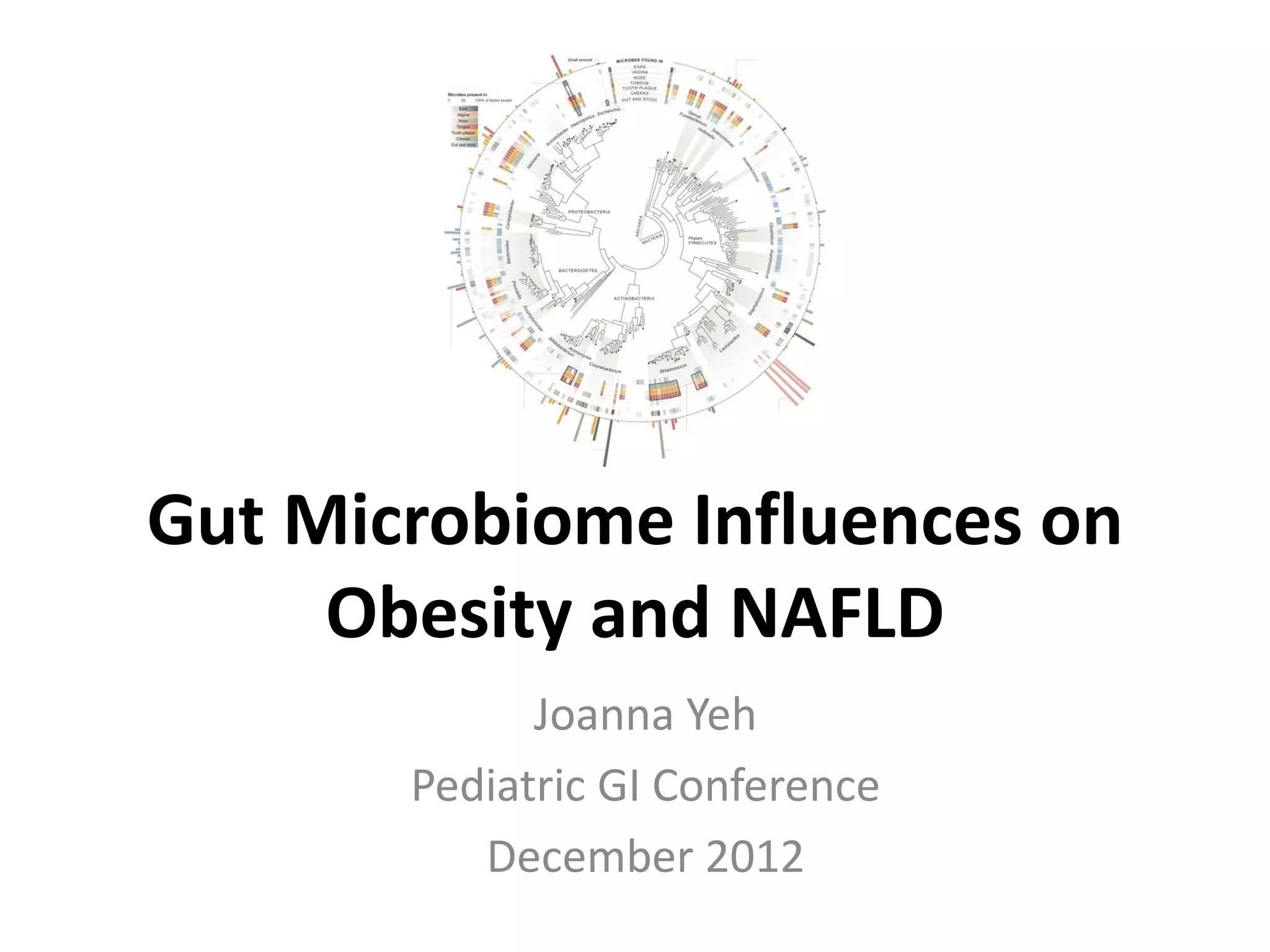
Gut Microbiome Influences on
Obesity and NAFLD
Joanna Yeh
Pediatric GI Conference
December 2012
Objectives
• Review the basics of gut microbiome and its
relationship to health.
• Understand how influences of microbiome are
being investigated with increasing number of
diseases.
• Review current understanding of microbiome
in relation to obesity.
• Discuss two recent papers regarding
microbiome and NAFLD.
Definitions
• Microbiota: microbial community.
• Microbiome: can refer to microbiota but can also
refer to collective genomes and gene products of
microbes living within and on humans.
• Metagenome: collection of genomes within
complex microbial communities and human DNA,
some also include RNA and proteins and other
metabolites.
• Biodiversity is a measure of the complexity of a
community. Includes number of taxa (richness) and
their range of abundance (evenness).
Johnson, Pediatrics, 2012
Weinstock, Nature, 2012
The human gut metagenome has at
least 100 times as many genes as “us.”
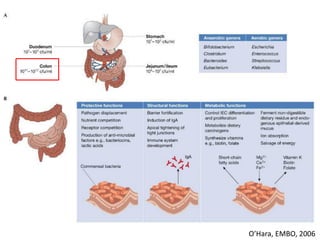
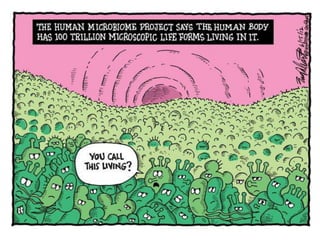
There are 10 to 100 trillion microbes in
our GI tract, most in the distal gut.
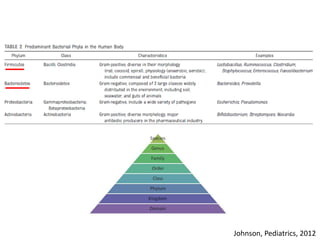
Two phyla (Bacteroidetes and
Firmicutes) make up >90% in adults.
Gill, Science, 2006
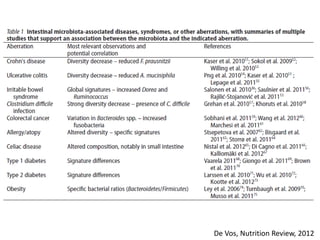
In 2007, the NIH Human Microbiome
Project was formed.
O’Hara, EMBO, 2006
Johnson, Pediatrics, 2012
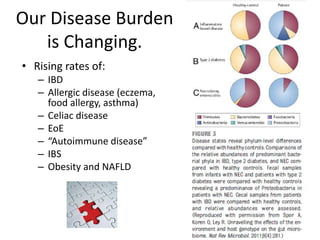
Our Disease Burden
is Changing.
• Rising rates of:
– IBD
– Allergic disease (eczema,
food allergy, asthma)
– Celiac disease
– EoE
– “Autoimmune disease”
– IBS
– Obesity and NAFLD
De Vos, Nutrition Review, 2012
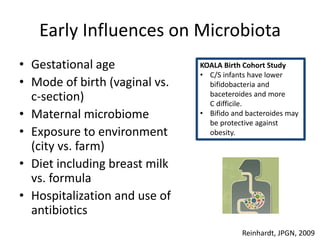
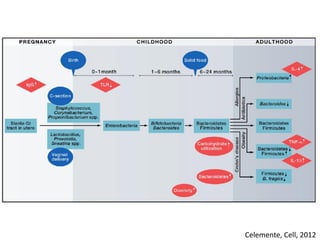
Early Influences on Microbiota
• Gestational age
• Mode of birth (vaginal vs.
c-section)
• Maternal microbiome
• Exposure to environment
(city vs. farm)
• Diet including breast milk
vs. formula
• Hospitalization and use of
antibiotics
KOALA Birth Cohort Study
• C/S infants have lower
bifidobacteria and
baceteroides and more
C difficile.
• Bifido and bacteroides may
be protective against
obesity.
Reinhardt, JPGN, 2009
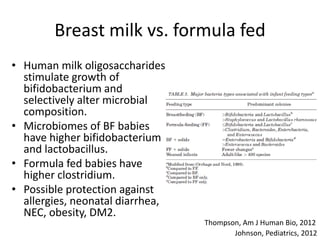
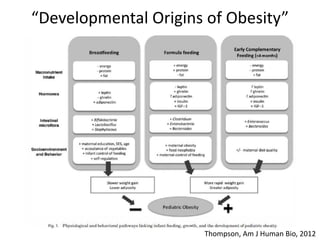
Breast milk vs. formula fed
• Human milk oligosaccharides
stimulate growth of
bifidobacterium and
selectively alter microbial
composition.
• Microbiomes of BF babies
have higher bifidobacterium
and lactobacillus.
• Formula fed babies have
higher clostridium.
• Possible protection against
allergies, neonatal diarrhea,
NEC, obesity, DM2.
Johnson, Pediatrics, 2012
Thompson, Am J Human Bio, 2012
Celemente, Cell, 2012
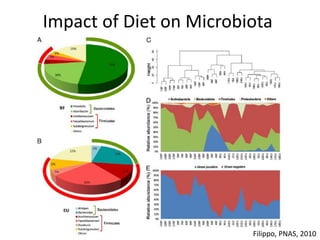
Impact of Diet on Microbiota
Filippo, PNAS, 2010
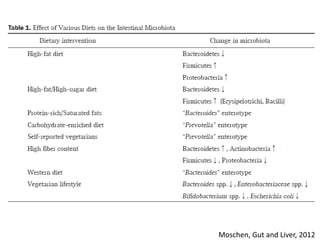
Moschen, Gut and Liver, 2012
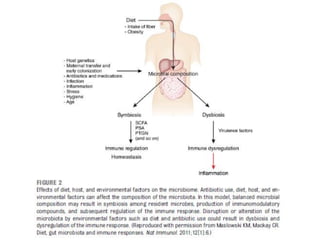
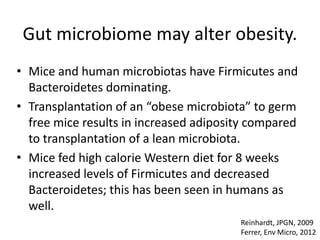
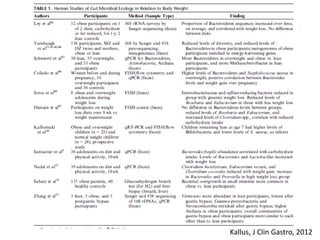
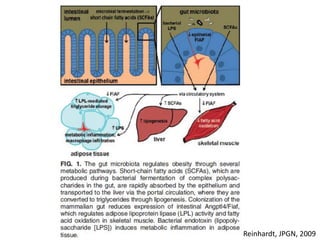
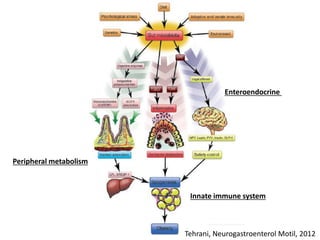
Gut microbiome may alter obesity.
• Mice and human microbiotas have Firmicutes and
Bacteroidetes dominating.
• Transplantation of an “obese microbiota” to germ
free mice results in increased adiposity compared
to transplantation of a lean microbiota.
• Mice fed high calorie Western diet for 8 weeks
increased levels of Firmicutes and decreased
Bacteroidetes; this has been seen in humans as
well.
Reinhardt, JPGN, 2009
Ferrer, Env Micro, 2012
Kallus, J Clin Gastro, 2012
Reinhardt, JPGN, 2009
Tehrani, Neurogastroenterol Motil, 2012
Peripheral metabolism
Enteroendocrine
Innate immune system
“Developmental Origins of Obesity”
Thompson, Am J Human Bio, 2012
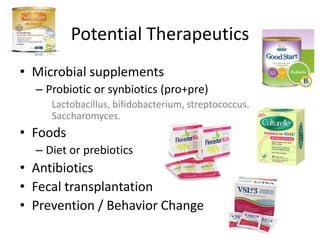
Potential Therapeutics
• Microbial supplements
– Probiotic or synbiotics (pro+pre)
Lactobacillus, bifidobacterium, streptococcus.
Saccharomyces.
• Foods
– Diet or prebiotics
• Antibiotics
• Fecal transplantation
• Prevention / Behavior Change
Hepatology, 2012 (ahead of print)
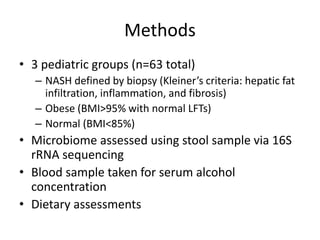
Methods
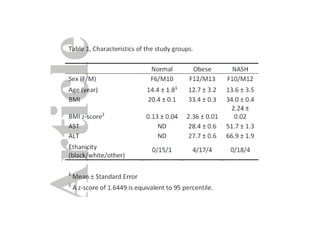
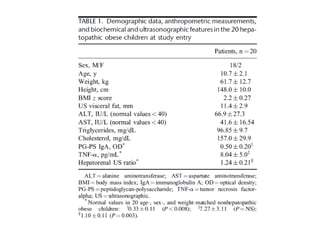
• 3 pediatric groups (n=63 total)
– NASH defined by biopsy (Kleiner’s criteria: hepatic fat
infiltration, inflammation, and fibrosis)
– Obese (BMI>95% with normal LFTs)
– Normal (BMI<85%)
• Microbiome assessed using stool sample via 16S
rRNA sequencing
• Blood sample taken for serum alcohol
concentration
• Dietary assessments
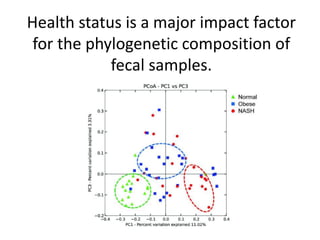
Health status is a major impact factor
for the phylogenetic composition of
fecal samples.
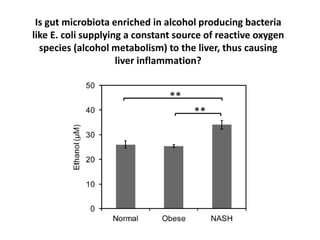
Is gut microbiota enriched in alcohol producing bacteria
like E. coli supplying a constant source of reactive oxygen
species (alcohol metabolism) to the liver, thus causing
liver inflammation?
Conclusions
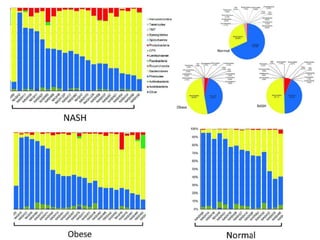
• NASH microbiome is distinct from normal and
obese microbiomes.
• Some statistically significant differences:
– Bifidobacterium: NASH<obese <normal
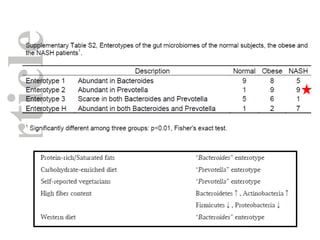
– Prevotella: NASH>obese>>>normal
– Escherichia: NASH>>obese>normal
• Escherichia is abundant in NASH microbiome
compared to obese.
• The fact that Escherichia are ethanol producers
may provide a mechanism.
Questions
• Liver ultrasound indicated that some obese patients
had fatty liver.
• Conflicting microbiomes compared to prior studies in
mice and humans.
• What other mechanisms might contribute to NAFLD
besides alcohol production? Absorption of
nutrients/digestion? Immune mediated? Gut
hormones?
• Does fatty liver lead to microbiome changes?
(chicken/egg)
• Why would Escherichia be increased in NASH patients?
JPGN, 2011
Methods
• Double blind, placebo controlled pilot study.
• Recruit obese children, ALT>40 at least 3 months, US
diagnosed fatty liver.
• Exclude: other causes of liver disease were ruled out,
on antibiotics, past pharmacologic treatment for
obesity.
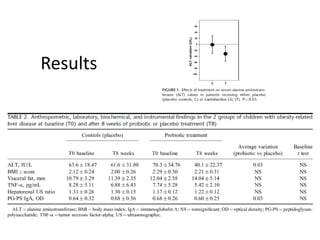
• Randomized to placebo vs. Lactobacillus GG (12 billion
CFU/day) x 8 weeks.
• Primary outcome: ALT improvement or normalization.
• Secondary outcome: changes in liver echogenicity,
TNFalpha, H2BT, PG-PS ab.
Results
Conclusions
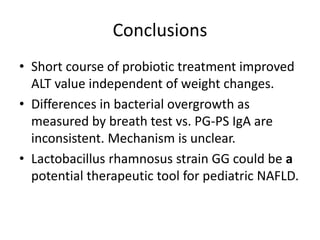
• Short course of probiotic treatment improved
ALT value independent of weight changes.
• Differences in bacterial overgrowth as
measured by breath test vs. PG-PS IgA are
inconsistent. Mechanism is unclear.
• Lactobacillus rhamnosus strain GG could be a
potential therapeutic tool for pediatric NAFLD.
Questions
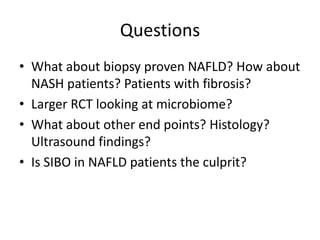
• What about biopsy proven NAFLD? How about
NASH patients? Patients with fibrosis?
• Larger RCT looking at microbiome?
• What about other end points? Histology?
Ultrasound findings?
• Is SIBO in NAFLD patients the culprit?
Take home points
• Microbiome is increasingly being investigated
for potential contribution to many diseases.
• Individual microbiomes are influenced by
many factors starting from birth.
• Microbiome, through a variety of possible
mechanisms, may influence obesity.
• Pro and prebiotics are being investigated as
treatment options for NAFLD.
References
• Clemente, et al, “The impact of the gut microbiota on human health: an integrative view,” Cell, 2012.
• De Filippo, et al, “Impact of diet in shaping gut microbiota revealed by a comparative study in children
from Europe and rural Africa,” PNAS, 2010.
• Ferrer, et al, “Microbiota from the distal guts of lean and obese adolescents exhibit partial functional
redundancy besides clear differences in community structure,” Env Microbiology, 2012.
• Gill, et al, “Metagenomic analysis of the human distal gut microbiome,” Science, 206.
• Harris, et al, “Is the gut microbiota a new factor contributing to obesity and its metabolic disorders?”
J Obesity, 2012.
• Johnson, et al, “The human microbiome and its potential importance to pediatrics,” Pediatrics, 2012.
• Kallus, et al, “The intestinal microbiota and obesity,” J Clin Gastro, 2012.
• Moschen, et al, “Dietary factors: major regulartors of the gut’s microbiota,” Gut and Liver, 2012.
• O’Hara, et al, “The gut as a forgotten organ,” EMBO Reports, 2006.
• Reinhardt, et al, “Intestinal microbiota during infancy and its implications for obesity,” JPGN, 2009.
• Tehrani, “Obesity and its associated disease: a role for microbiota?” Neurogastroenterol Motil, 2012.
• Thompson, “Developmental origins of obesity,” Am J Human Bio, 2012.
• Vajro, et al, “Effects of lactobacillus rhamnosus strain GG in pediatric obesity-related liver disease,”
JPGN, 2011.
• Weinstock, “Genomic approaches to studying the human microbiota,” Nature, 2012.
• Zhu, et al, “Characterization of the gut microbiome in non-alcoholic steatohepatitis (NASH) patients: a
connection between endogenous alcohol and NASH,” Hepatology, 2012.
Gut microbiome obesity nafld

Gut microbiome obesity nafld

  • 1.
    Gut Microbiome Influenceson Obesity and NAFLD Joanna Yeh Pediatric GI Conference December 2012
  • 2.
    Objectives • Review thebasics of gut microbiome and its relationship to health. • Understand how influences of microbiome are being investigated with increasing number of diseases. • Review current understanding of microbiome in relation to obesity. • Discuss two recent papers regarding microbiome and NAFLD.
  • 3.
    Definitions • Microbiota: microbialcommunity. • Microbiome: can refer to microbiota but can also refer to collective genomes and gene products of microbes living within and on humans. • Metagenome: collection of genomes within complex microbial communities and human DNA, some also include RNA and proteins and other metabolites. • Biodiversity is a measure of the complexity of a community. Includes number of taxa (richness) and their range of abundance (evenness). Johnson, Pediatrics, 2012 Weinstock, Nature, 2012
  • 4.
    The human gutmetagenome has at least 100 times as many genes as “us.” There are 10 to 100 trillion microbes in our GI tract, most in the distal gut. Two phyla (Bacteroidetes and Firmicutes) make up >90% in adults. Gill, Science, 2006 In 2007, the NIH Human Microbiome Project was formed.
  • 5.
  • 6.
  • 7.
    Our Disease Burden isChanging. • Rising rates of: – IBD – Allergic disease (eczema, food allergy, asthma) – Celiac disease – EoE – “Autoimmune disease” – IBS – Obesity and NAFLD
  • 8.
    De Vos, NutritionReview, 2012
  • 9.
    Early Influences onMicrobiota • Gestational age • Mode of birth (vaginal vs. c-section) • Maternal microbiome • Exposure to environment (city vs. farm) • Diet including breast milk vs. formula • Hospitalization and use of antibiotics KOALA Birth Cohort Study • C/S infants have lower bifidobacteria and baceteroides and more C difficile. • Bifido and bacteroides may be protective against obesity. Reinhardt, JPGN, 2009
  • 11.
    Breast milk vs.formula fed • Human milk oligosaccharides stimulate growth of bifidobacterium and selectively alter microbial composition. • Microbiomes of BF babies have higher bifidobacterium and lactobacillus. • Formula fed babies have higher clostridium. • Possible protection against allergies, neonatal diarrhea, NEC, obesity, DM2. Johnson, Pediatrics, 2012 Thompson, Am J Human Bio, 2012
  • 12.
  • 13.
    Impact of Dieton Microbiota Filippo, PNAS, 2010
  • 14.
    Moschen, Gut andLiver, 2012
  • 15.
    Gut microbiome mayalter obesity. • Mice and human microbiotas have Firmicutes and Bacteroidetes dominating. • Transplantation of an “obese microbiota” to germ free mice results in increased adiposity compared to transplantation of a lean microbiota. • Mice fed high calorie Western diet for 8 weeks increased levels of Firmicutes and decreased Bacteroidetes; this has been seen in humans as well. Reinhardt, JPGN, 2009 Ferrer, Env Micro, 2012
  • 16.
    Kallus, J ClinGastro, 2012
  • 17.
  • 18.
    Tehrani, Neurogastroenterol Motil,2012 Peripheral metabolism Enteroendocrine Innate immune system
  • 19.
    “Developmental Origins ofObesity” Thompson, Am J Human Bio, 2012
  • 20.
    Potential Therapeutics • Microbialsupplements – Probiotic or synbiotics (pro+pre) Lactobacillus, bifidobacterium, streptococcus. Saccharomyces. • Foods – Diet or prebiotics • Antibiotics • Fecal transplantation • Prevention / Behavior Change
  • 21.
  • 22.
    Methods • 3 pediatricgroups (n=63 total) – NASH defined by biopsy (Kleiner’s criteria: hepatic fat infiltration, inflammation, and fibrosis) – Obese (BMI>95% with normal LFTs) – Normal (BMI<85%) • Microbiome assessed using stool sample via 16S rRNA sequencing • Blood sample taken for serum alcohol concentration • Dietary assessments
  • 24.
    Health status isa major impact factor for the phylogenetic composition of fecal samples.
  • 27.
    Is gut microbiotaenriched in alcohol producing bacteria like E. coli supplying a constant source of reactive oxygen species (alcohol metabolism) to the liver, thus causing liver inflammation?
  • 28.
    Conclusions • NASH microbiomeis distinct from normal and obese microbiomes. • Some statistically significant differences: – Bifidobacterium: NASH<obese <normal – Prevotella: NASH>obese>>>normal – Escherichia: NASH>>obese>normal • Escherichia is abundant in NASH microbiome compared to obese. • The fact that Escherichia are ethanol producers may provide a mechanism.
  • 29.
    Questions • Liver ultrasoundindicated that some obese patients had fatty liver. • Conflicting microbiomes compared to prior studies in mice and humans. • What other mechanisms might contribute to NAFLD besides alcohol production? Absorption of nutrients/digestion? Immune mediated? Gut hormones? • Does fatty liver lead to microbiome changes? (chicken/egg) • Why would Escherichia be increased in NASH patients?
  • 30.
  • 31.
    Methods • Double blind,placebo controlled pilot study. • Recruit obese children, ALT>40 at least 3 months, US diagnosed fatty liver. • Exclude: other causes of liver disease were ruled out, on antibiotics, past pharmacologic treatment for obesity. • Randomized to placebo vs. Lactobacillus GG (12 billion CFU/day) x 8 weeks. • Primary outcome: ALT improvement or normalization. • Secondary outcome: changes in liver echogenicity, TNFalpha, H2BT, PG-PS ab.
  • 33.
  • 34.
    Conclusions • Short courseof probiotic treatment improved ALT value independent of weight changes. • Differences in bacterial overgrowth as measured by breath test vs. PG-PS IgA are inconsistent. Mechanism is unclear. • Lactobacillus rhamnosus strain GG could be a potential therapeutic tool for pediatric NAFLD.
  • 35.
    Questions • What aboutbiopsy proven NAFLD? How about NASH patients? Patients with fibrosis? • Larger RCT looking at microbiome? • What about other end points? Histology? Ultrasound findings? • Is SIBO in NAFLD patients the culprit?
  • 36.
    Take home points •Microbiome is increasingly being investigated for potential contribution to many diseases. • Individual microbiomes are influenced by many factors starting from birth. • Microbiome, through a variety of possible mechanisms, may influence obesity. • Pro and prebiotics are being investigated as treatment options for NAFLD.
  • 37.
    References • Clemente, etal, “The impact of the gut microbiota on human health: an integrative view,” Cell, 2012. • De Filippo, et al, “Impact of diet in shaping gut microbiota revealed by a comparative study in children from Europe and rural Africa,” PNAS, 2010. • Ferrer, et al, “Microbiota from the distal guts of lean and obese adolescents exhibit partial functional redundancy besides clear differences in community structure,” Env Microbiology, 2012. • Gill, et al, “Metagenomic analysis of the human distal gut microbiome,” Science, 206. • Harris, et al, “Is the gut microbiota a new factor contributing to obesity and its metabolic disorders?” J Obesity, 2012. • Johnson, et al, “The human microbiome and its potential importance to pediatrics,” Pediatrics, 2012. • Kallus, et al, “The intestinal microbiota and obesity,” J Clin Gastro, 2012. • Moschen, et al, “Dietary factors: major regulartors of the gut’s microbiota,” Gut and Liver, 2012. • O’Hara, et al, “The gut as a forgotten organ,” EMBO Reports, 2006. • Reinhardt, et al, “Intestinal microbiota during infancy and its implications for obesity,” JPGN, 2009. • Tehrani, “Obesity and its associated disease: a role for microbiota?” Neurogastroenterol Motil, 2012. • Thompson, “Developmental origins of obesity,” Am J Human Bio, 2012. • Vajro, et al, “Effects of lactobacillus rhamnosus strain GG in pediatric obesity-related liver disease,” JPGN, 2011. • Weinstock, “Genomic approaches to studying the human microbiota,” Nature, 2012. • Zhu, et al, “Characterization of the gut microbiome in non-alcoholic steatohepatitis (NASH) patients: a connection between endogenous alcohol and NASH,” Hepatology, 2012.