www.Examville.com Online practice tests, live classes, tutoring, study guides Q&A, premium content and more .
DIENCEPHALON
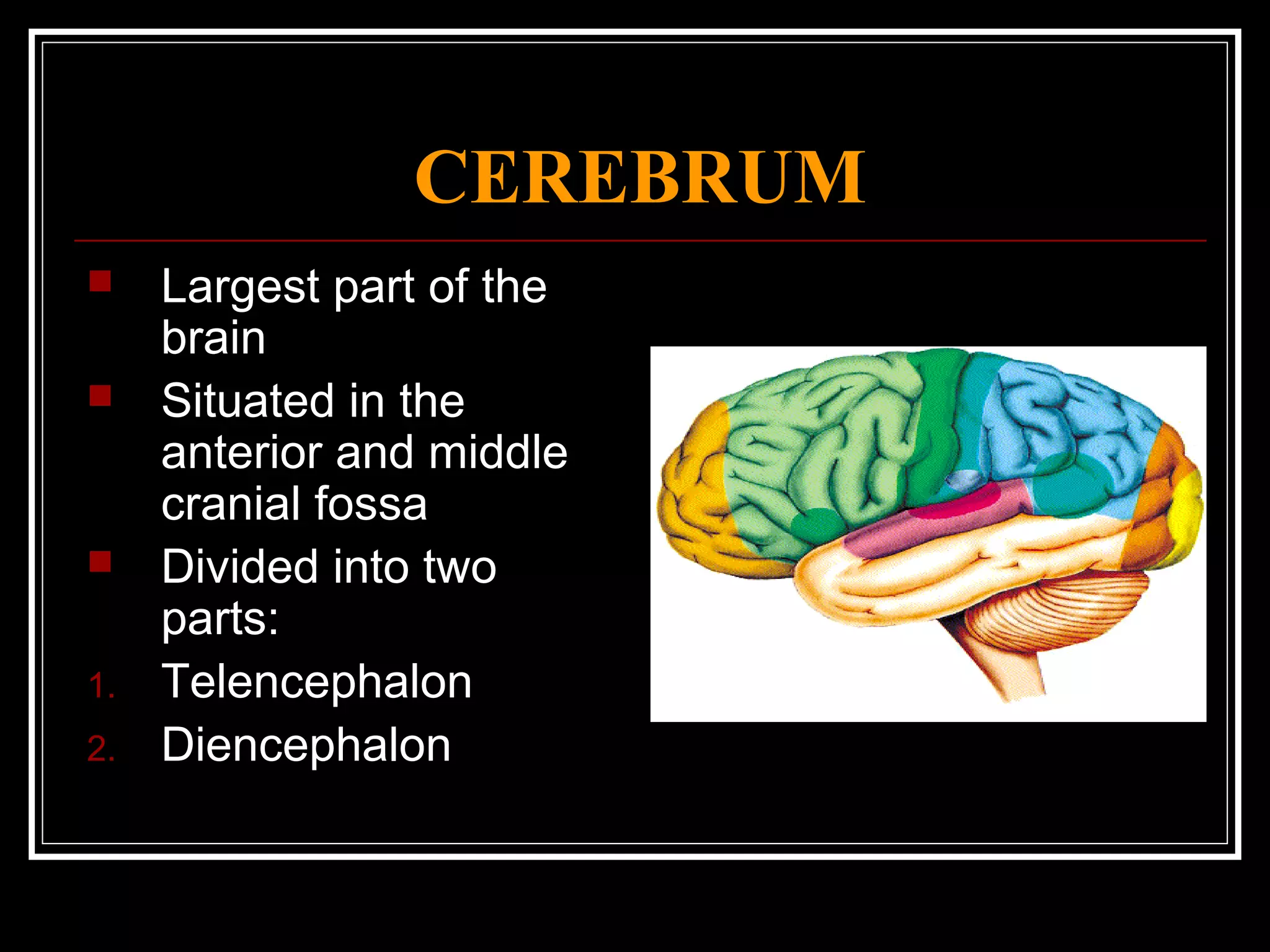
CEREBRUM Largest part of the brain Situated in the anterior and middle cranial fossa Divided into two parts: Telencephalon Diencephalon
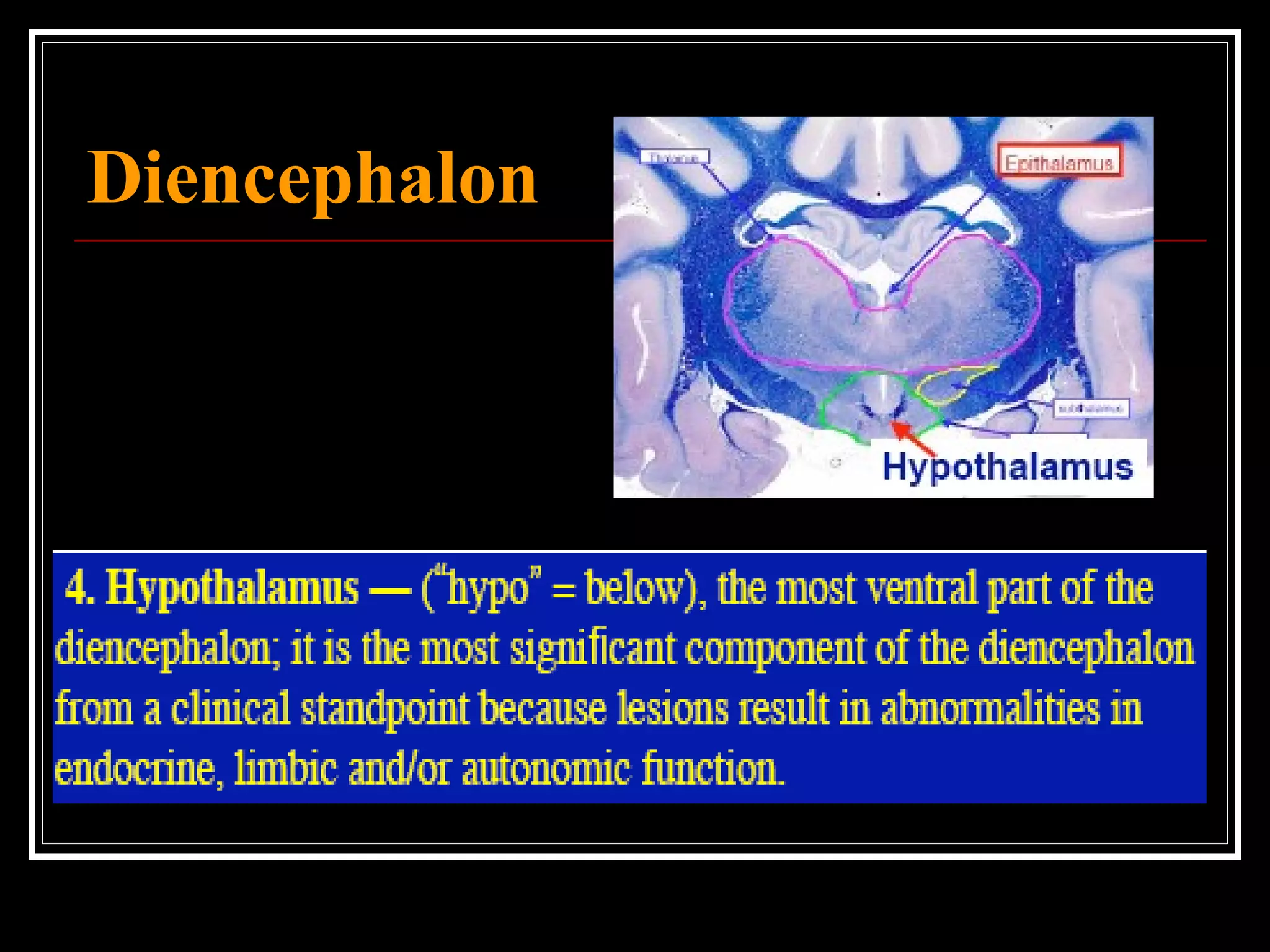
Diencephalon Sits on top of the brain stem Enclosed by the cerebral hemispheres Made of four parts: Thalamus Hypothalamus Epithalamus Subthalamus
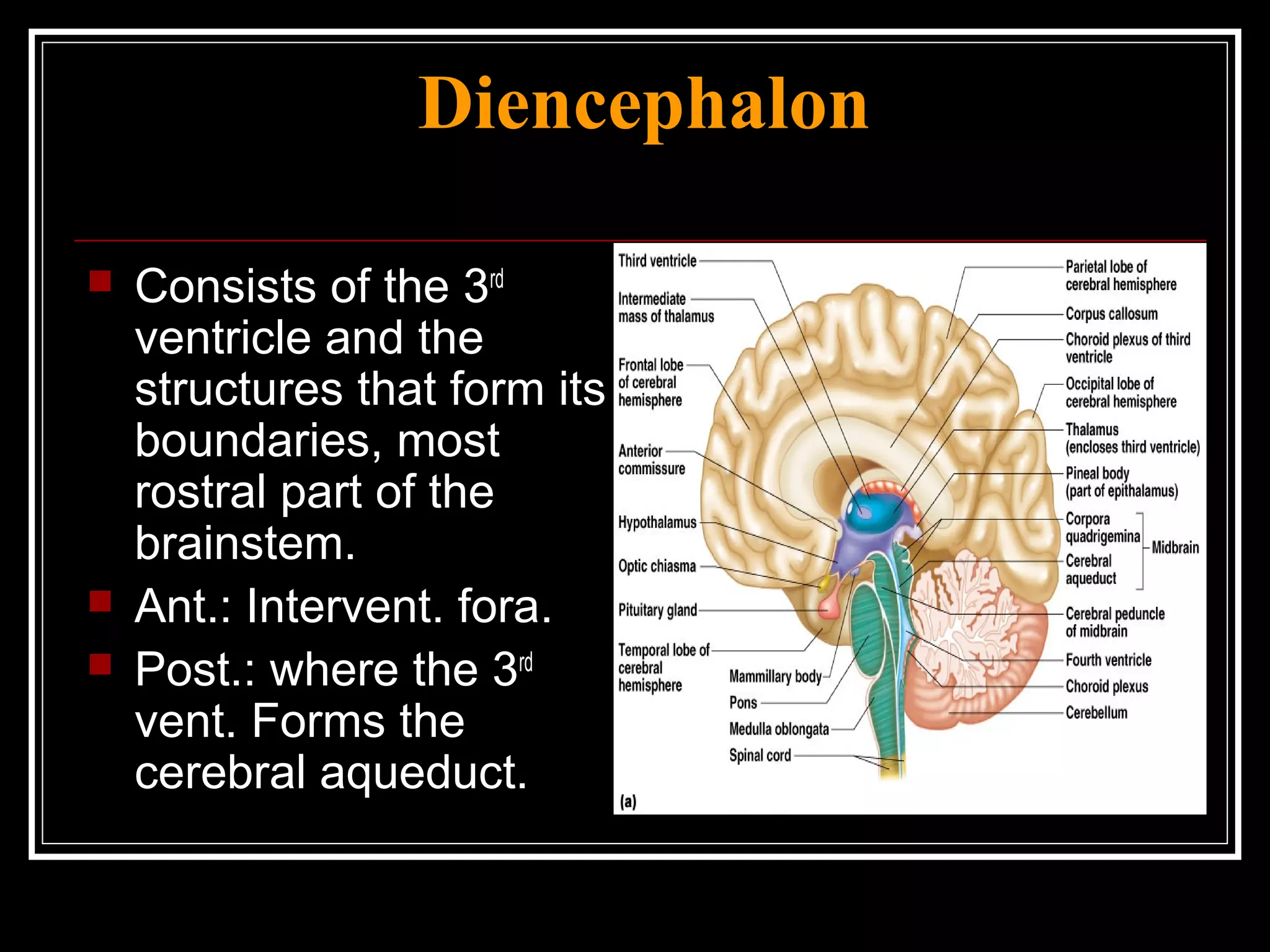
Diencephalon Consists of the 3 rd  ventricle and the structures that form its boundaries, most rostral part of the brainstem. Ant.: Intervent. fora. Post.: where the 3 rd  vent. Forms the cerebral aqueduct.
CHARACTERISTICS OF THE MIDBRAIN-DIENCEPHALIC JUNCTION Addition of several masses of neurons surrounding the rostral part of the post. and lat. Mesencephalon. Medial and lateral geniculate body fiber. Cerebral aqueduct expands into 3 rd  vent. Sup. Colliculi replaced by pre-tectal region Fasc. Retroflexor – vertical fibers traversing the medial portion of the red nucleus.
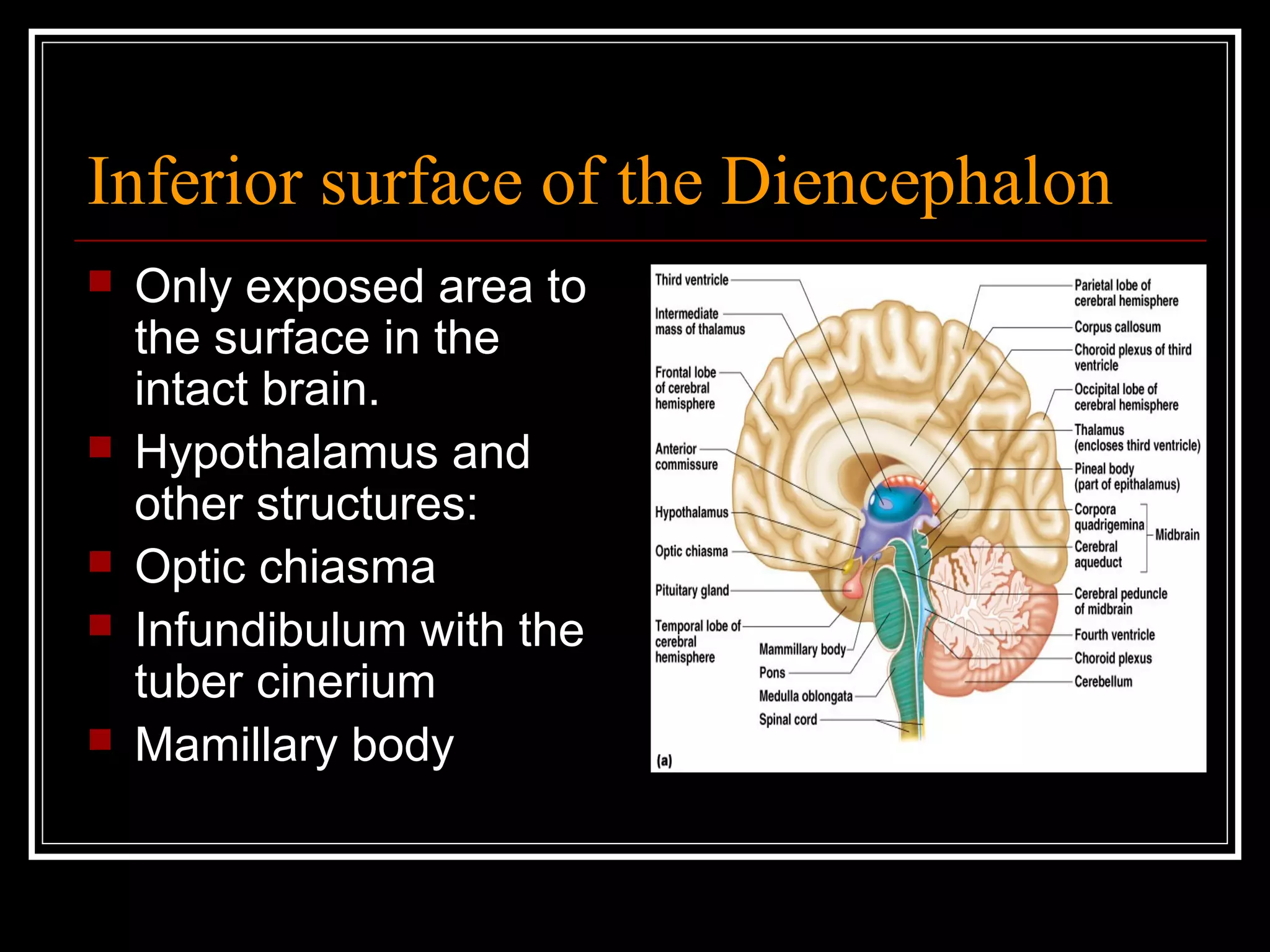
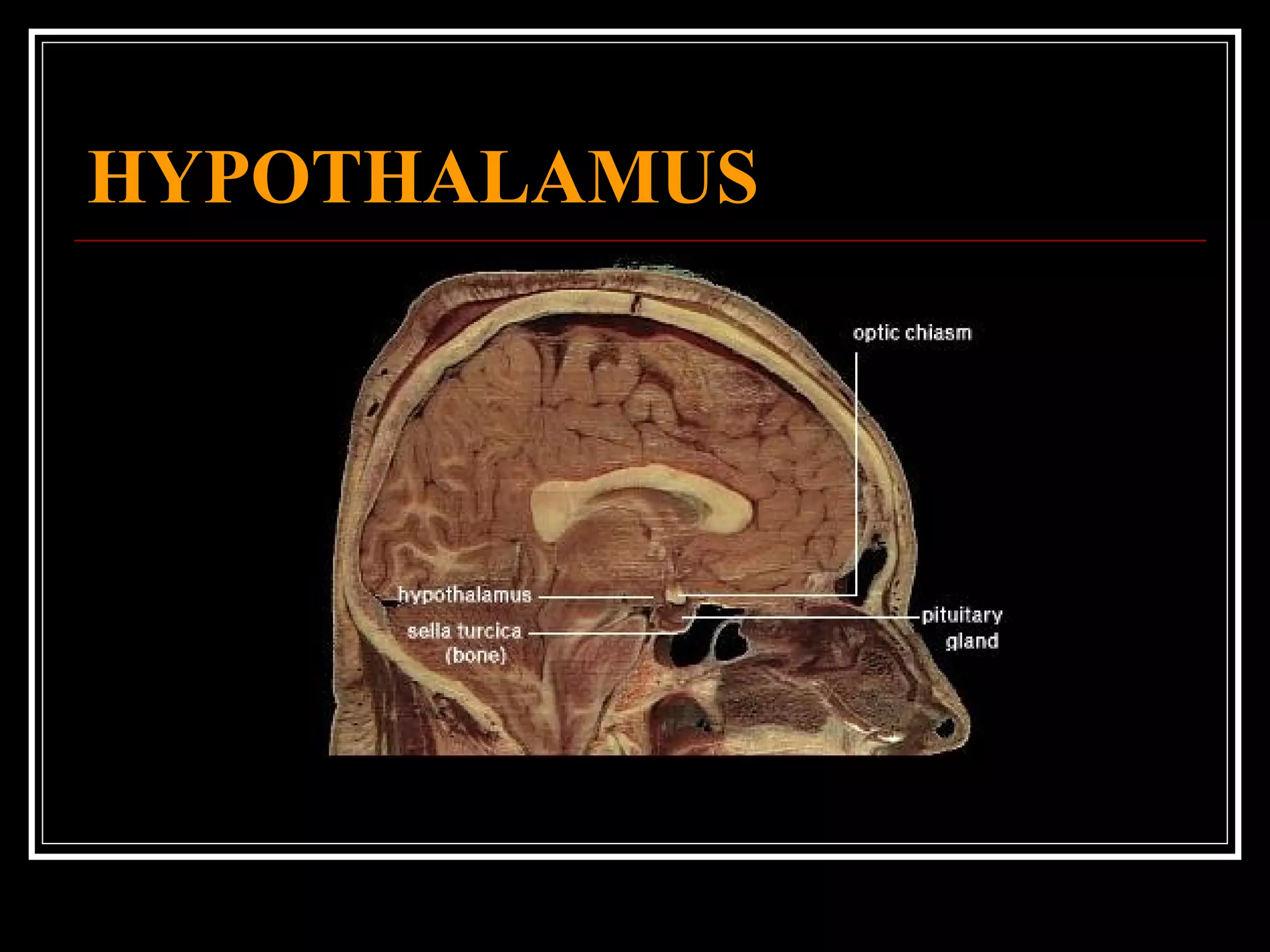
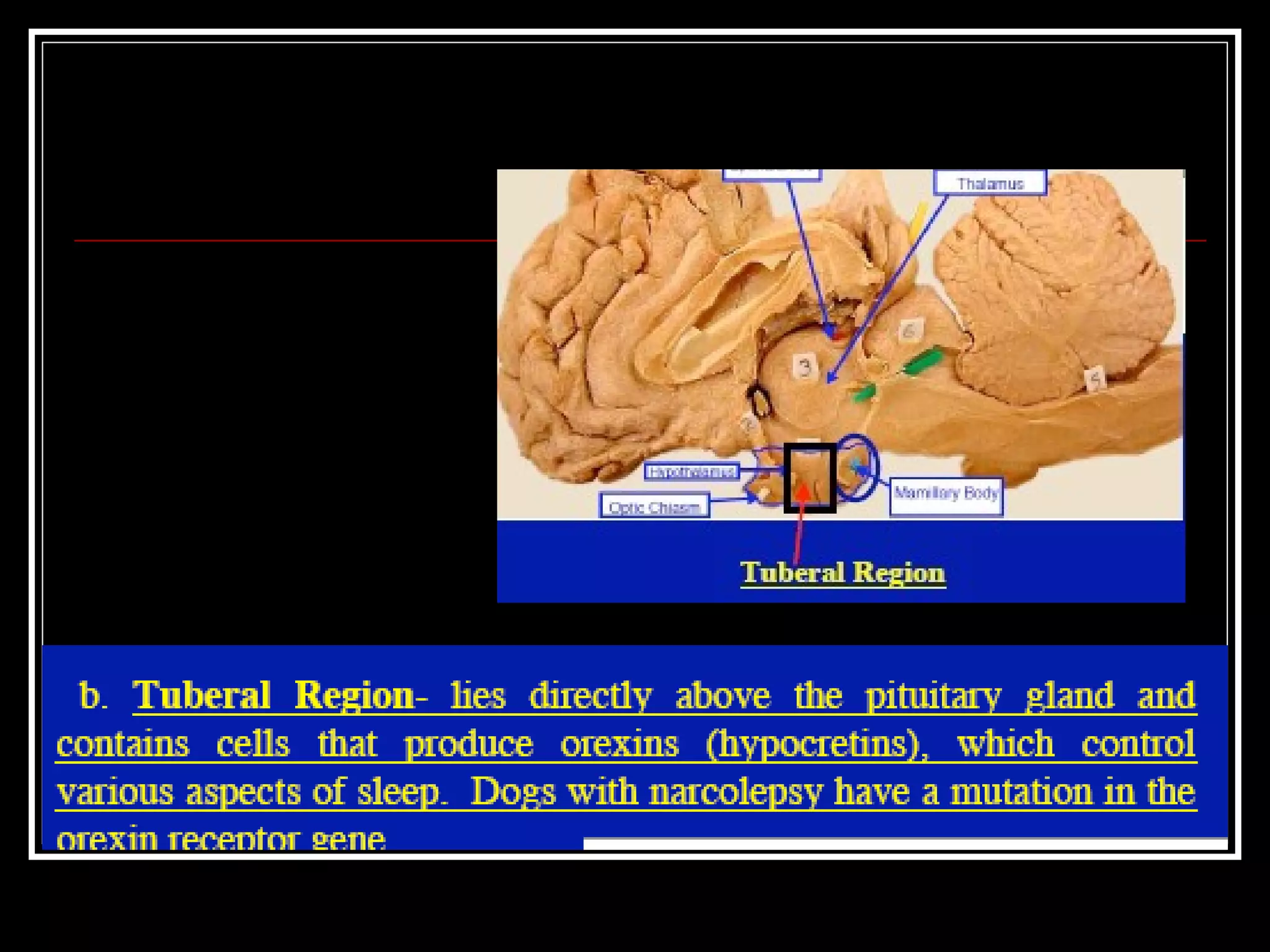
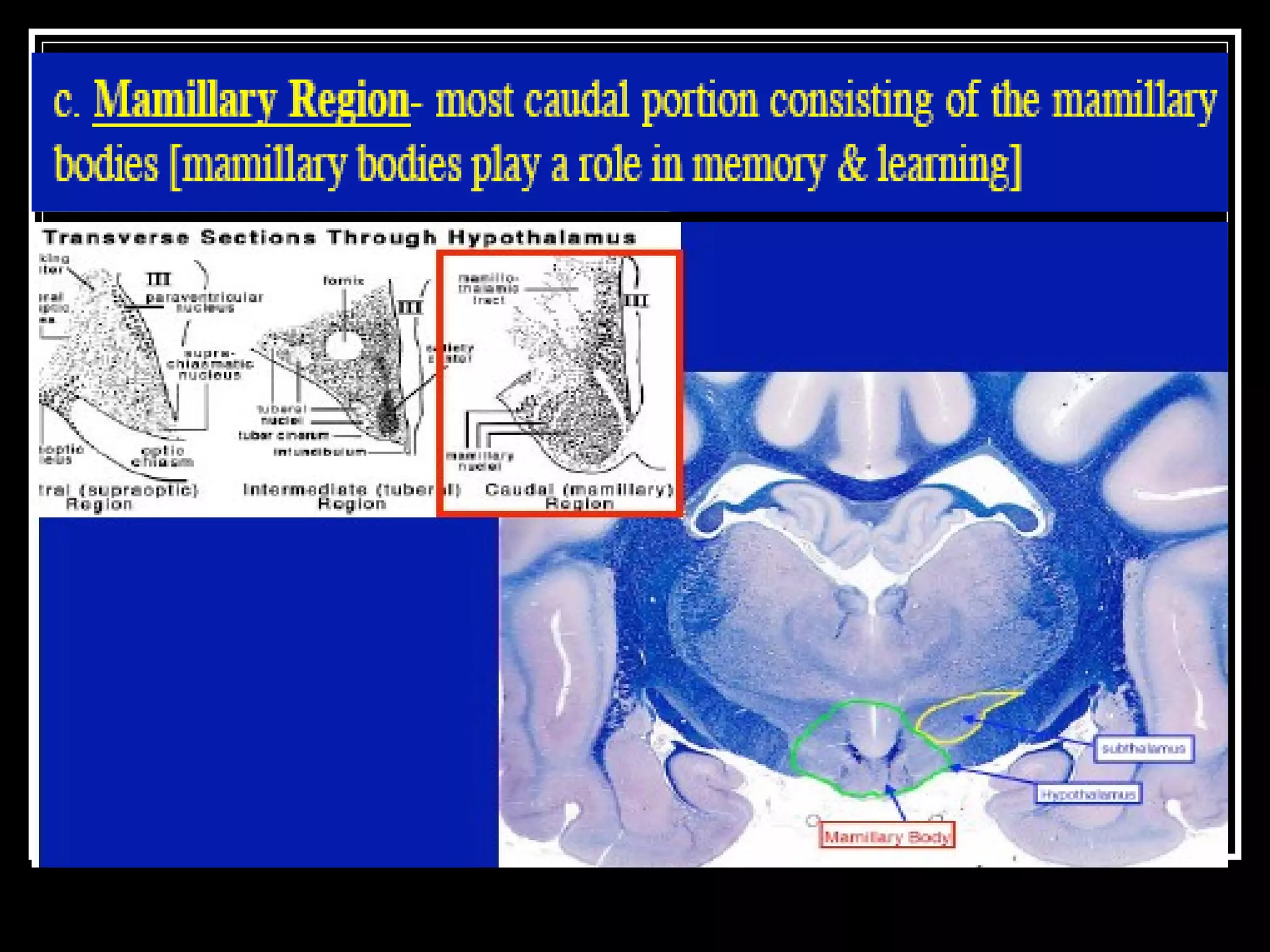
Inferior surface of the Diencephalon Only exposed area to the surface in the intact brain. Hypothalamus and other structures: Optic chiasma Infundibulum with the tuber cinerium Mamillary body
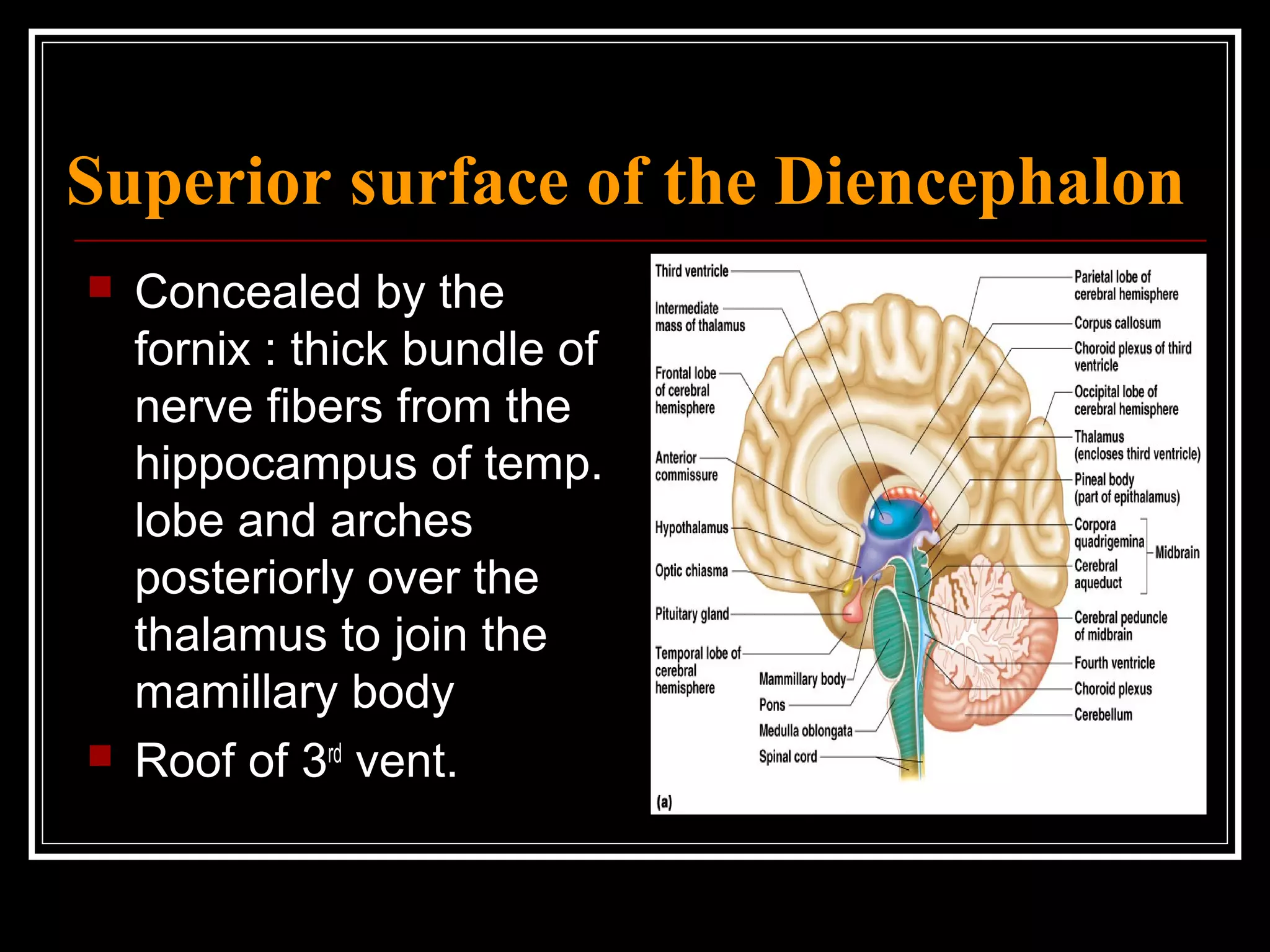
Superior surface of the Diencephalon Concealed by the fornix : thick bundle of nerve fibers from the hippocampus of temp. lobe and arches posteriorly over the thalamus to join the mamillary body Roof of 3 rd  vent.
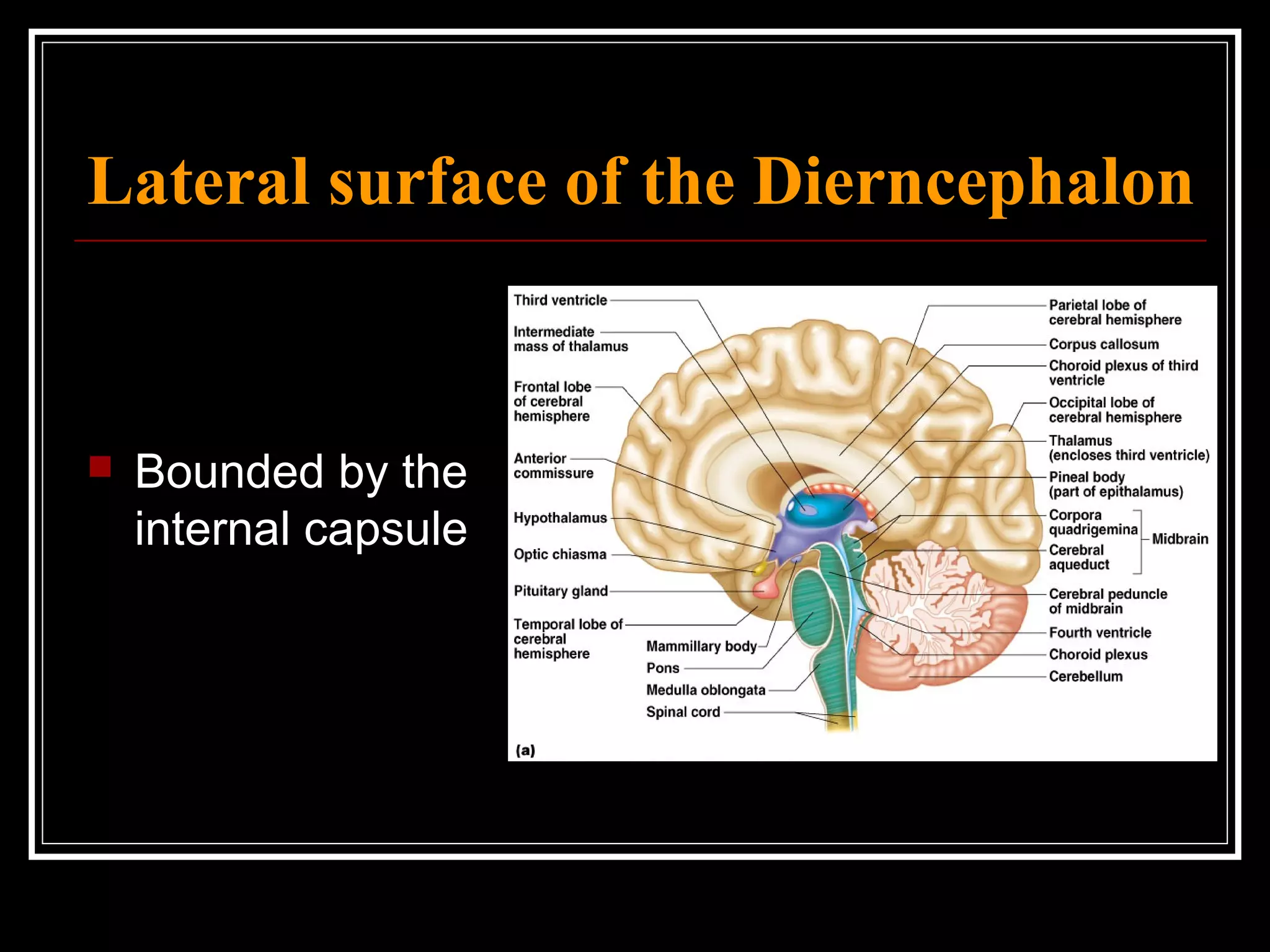
Lateral surface of the Dierncephalon Bounded by the internal capsule
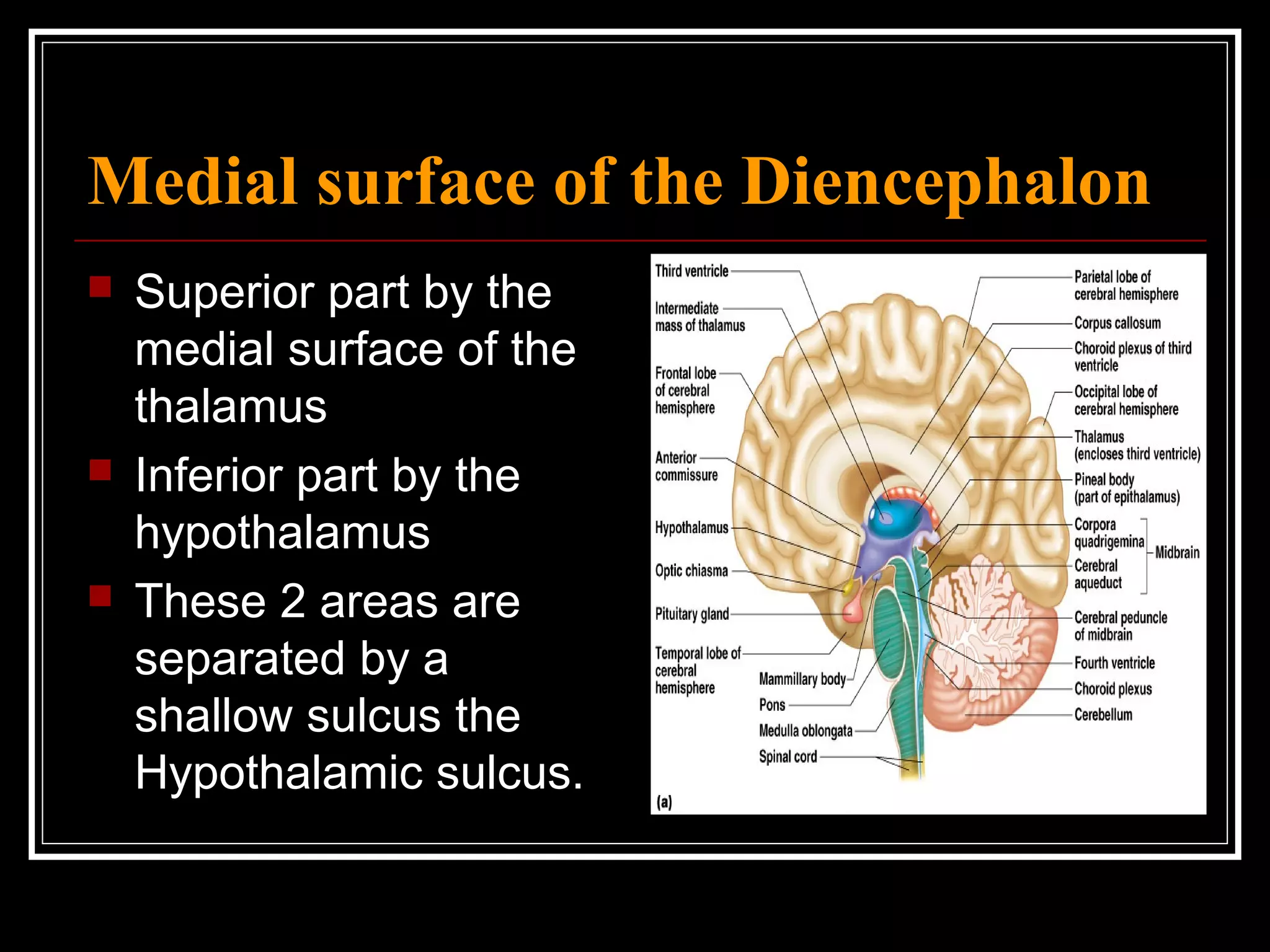
Medial surface of the Diencephalon Superior part by the medial surface of the thalamus Inferior part by the hypothalamus These 2 areas are separated by a shallow sulcus the Hypothalamic sulcus.
Diencephalon
Diencephalon
Diencephalon
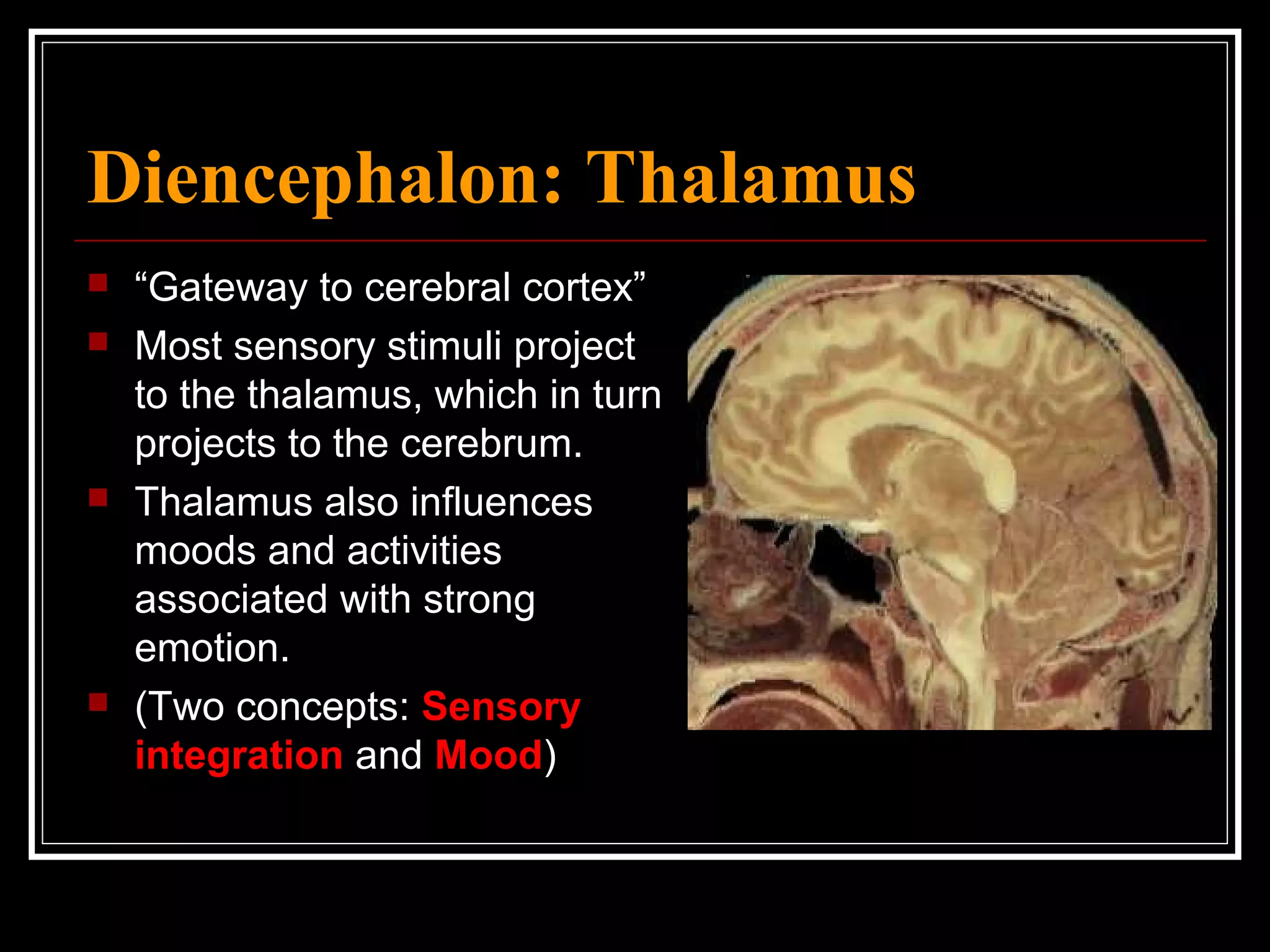
Diencephalon: Thalamus “ Gateway to cerebral cortex” Most sensory stimuli project to the thalamus, which in turn projects to the cerebrum. Thalamus also influences moods and activities associated with strong emotion. (Two concepts:  Sensory integration  and  Mood )
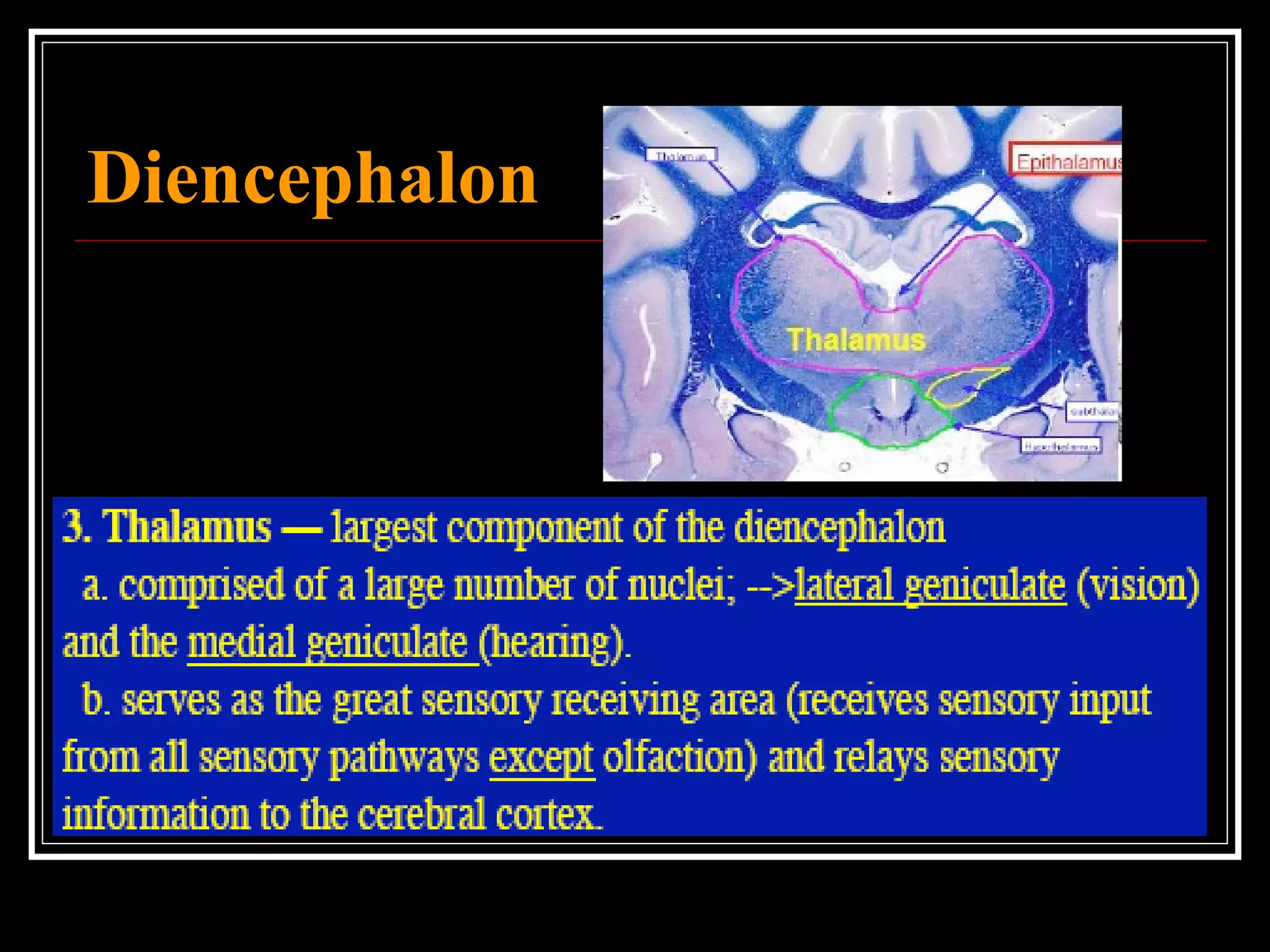
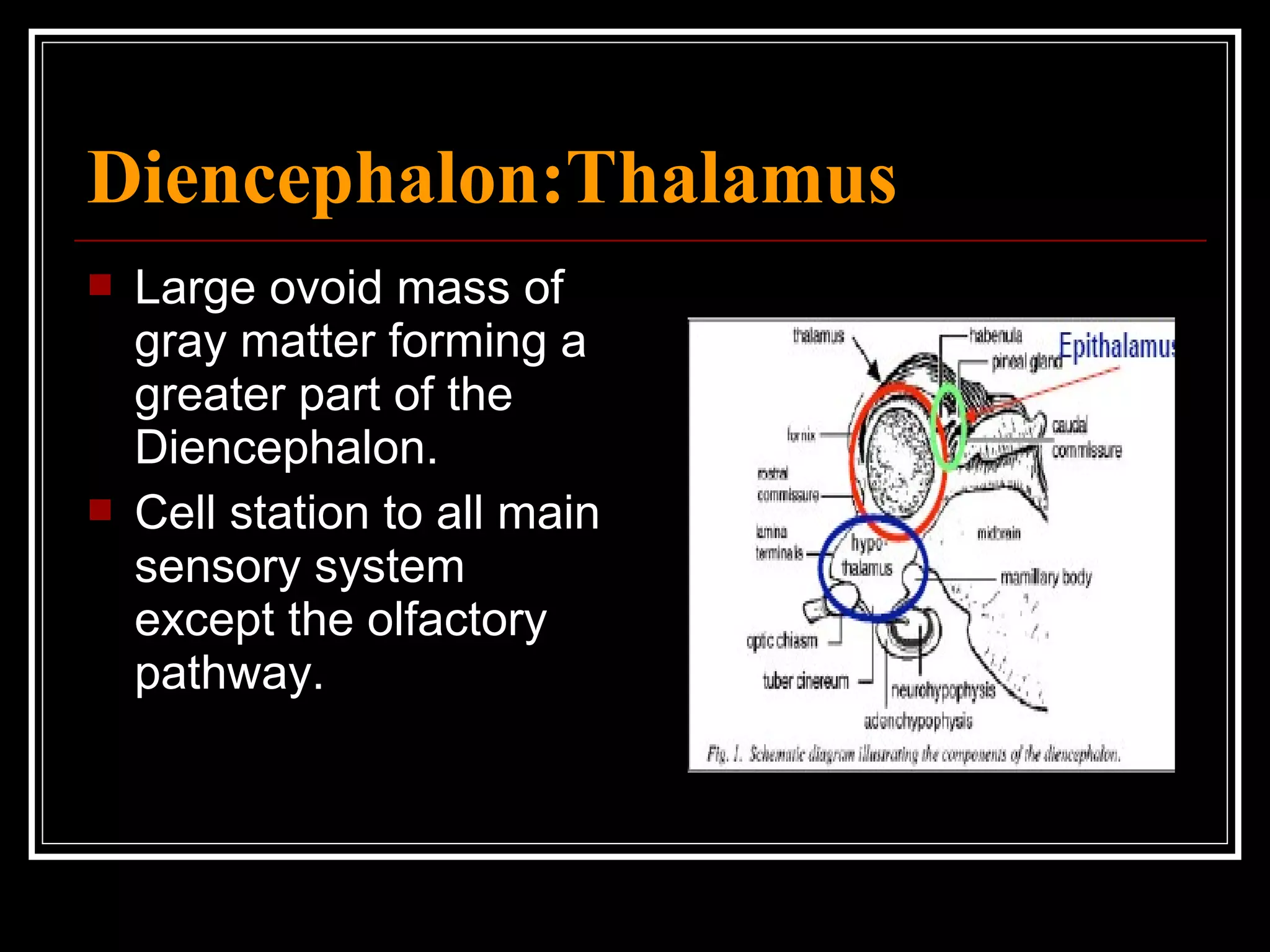
Diencephalon:Thalamus Large ovoid mass of gray matter forming a greater part of the Diencephalon. Cell station to all main sensory system except the olfactory pathway.
Diencephalon
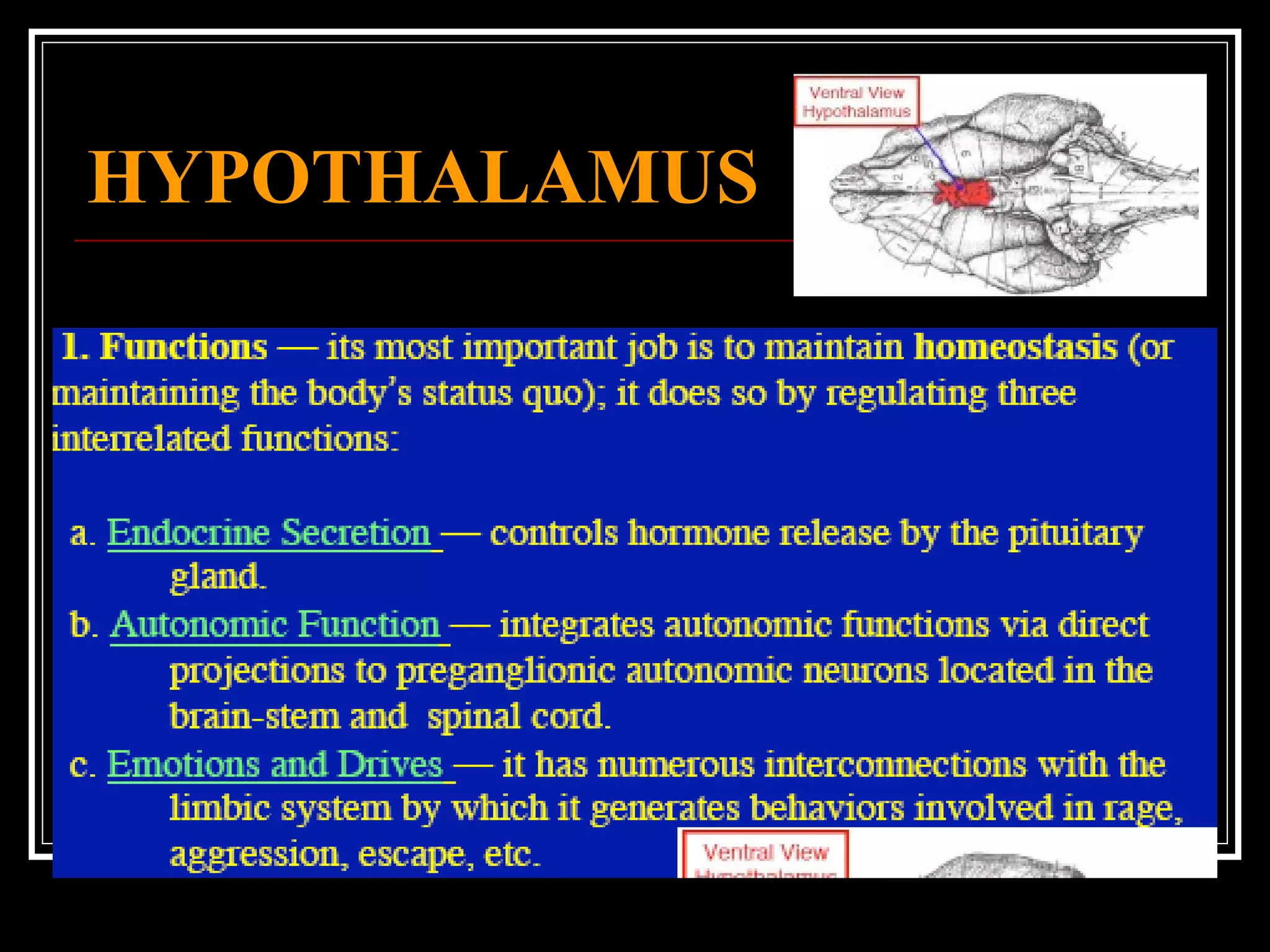
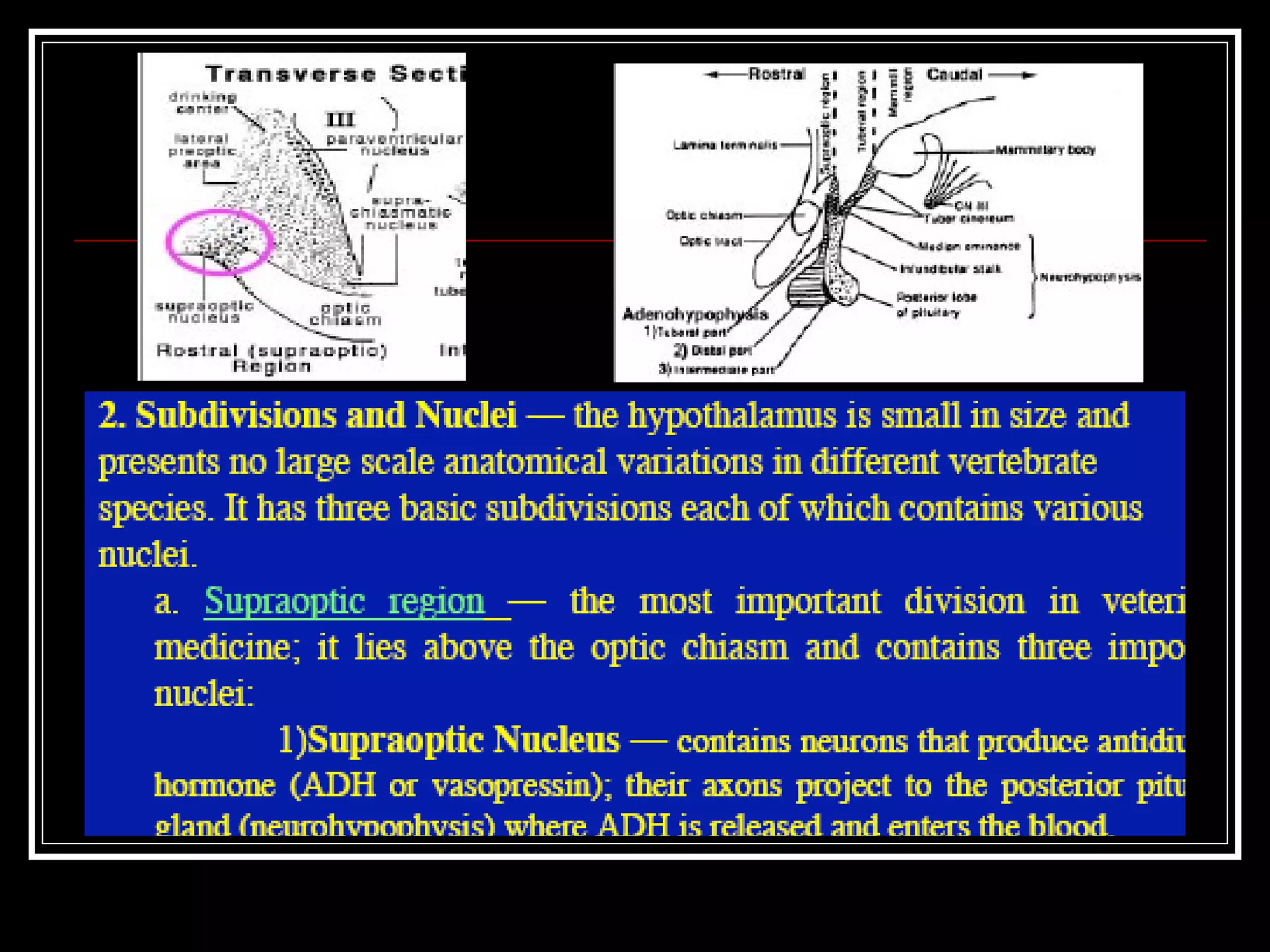
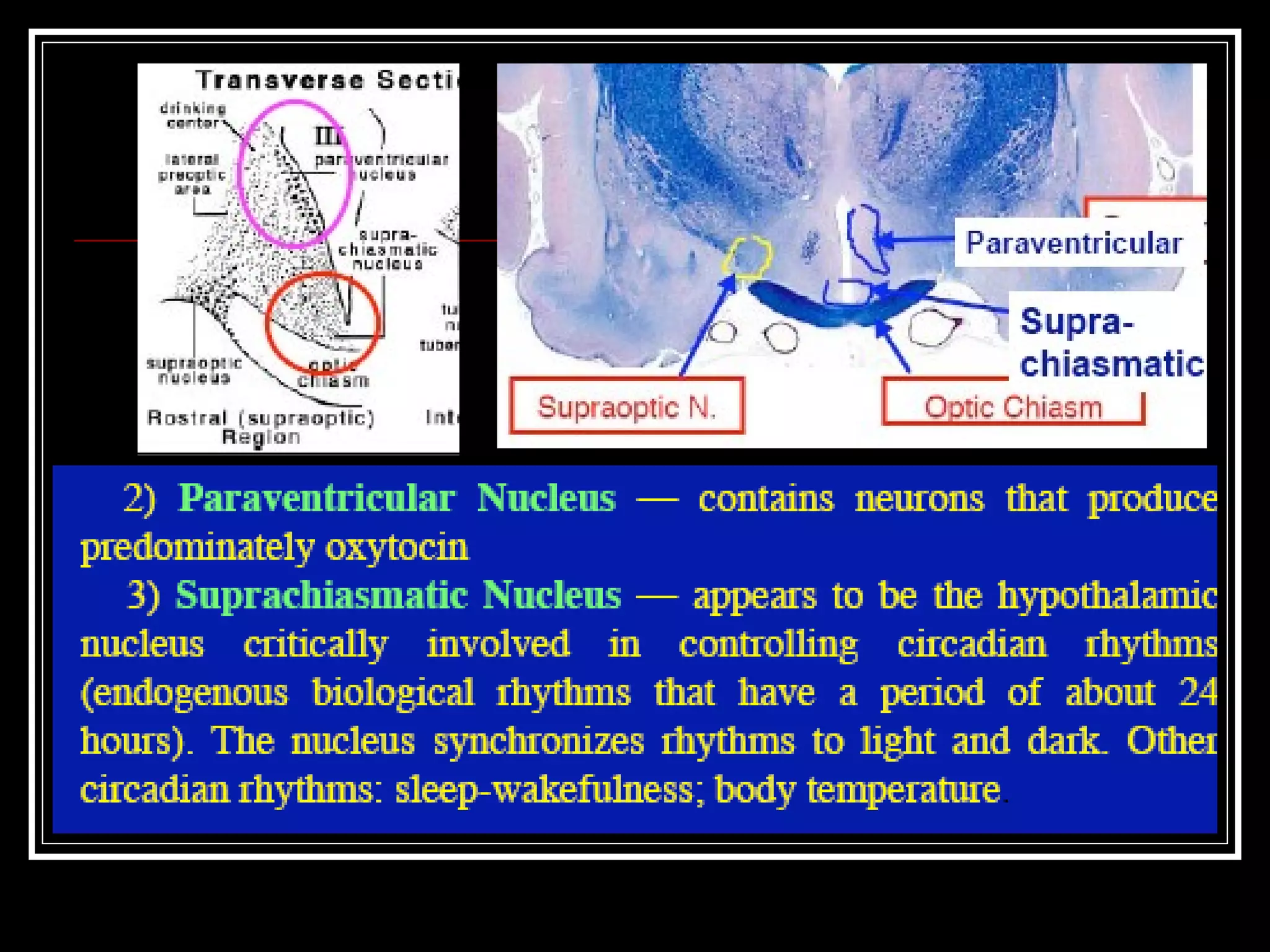
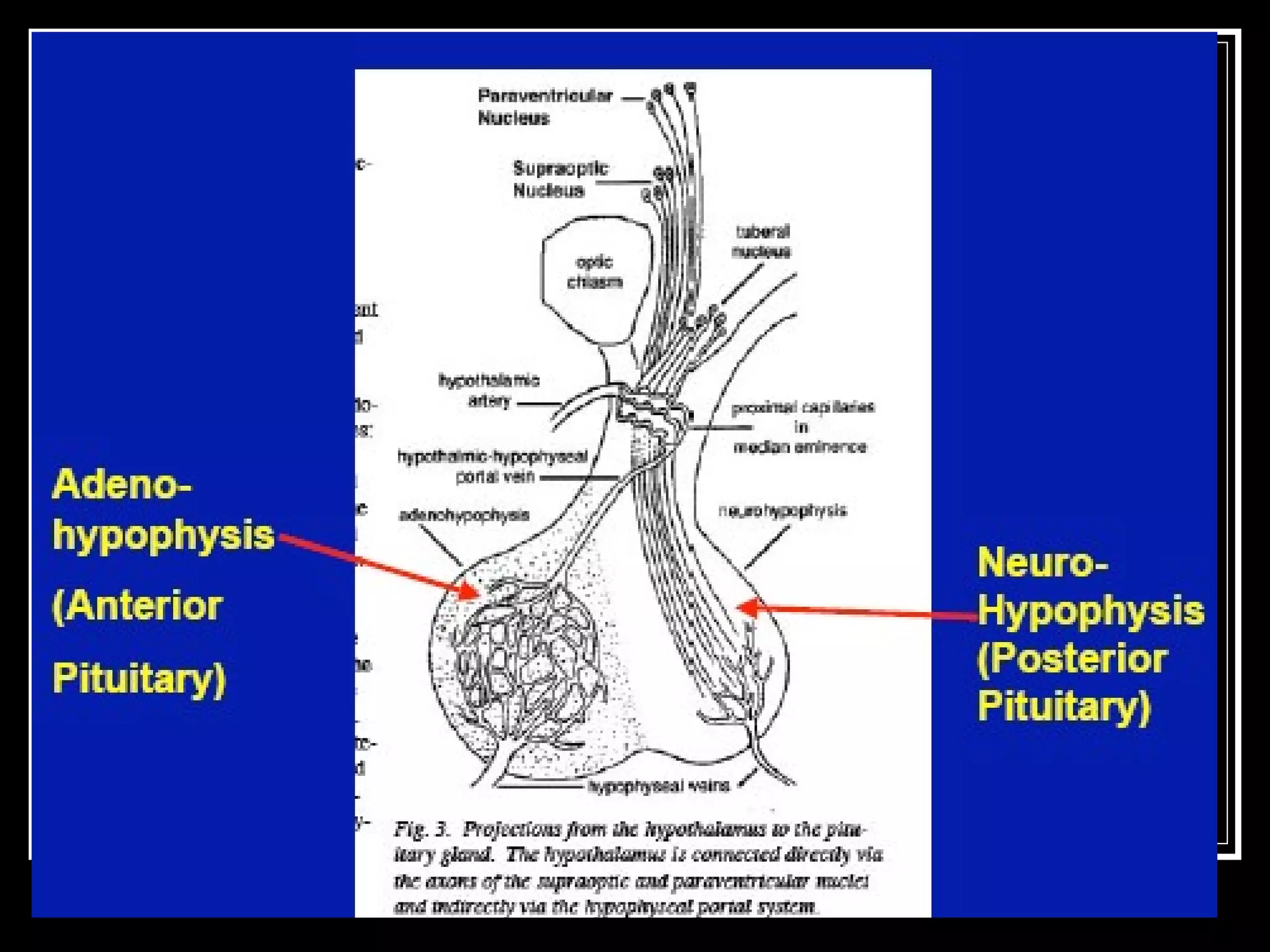
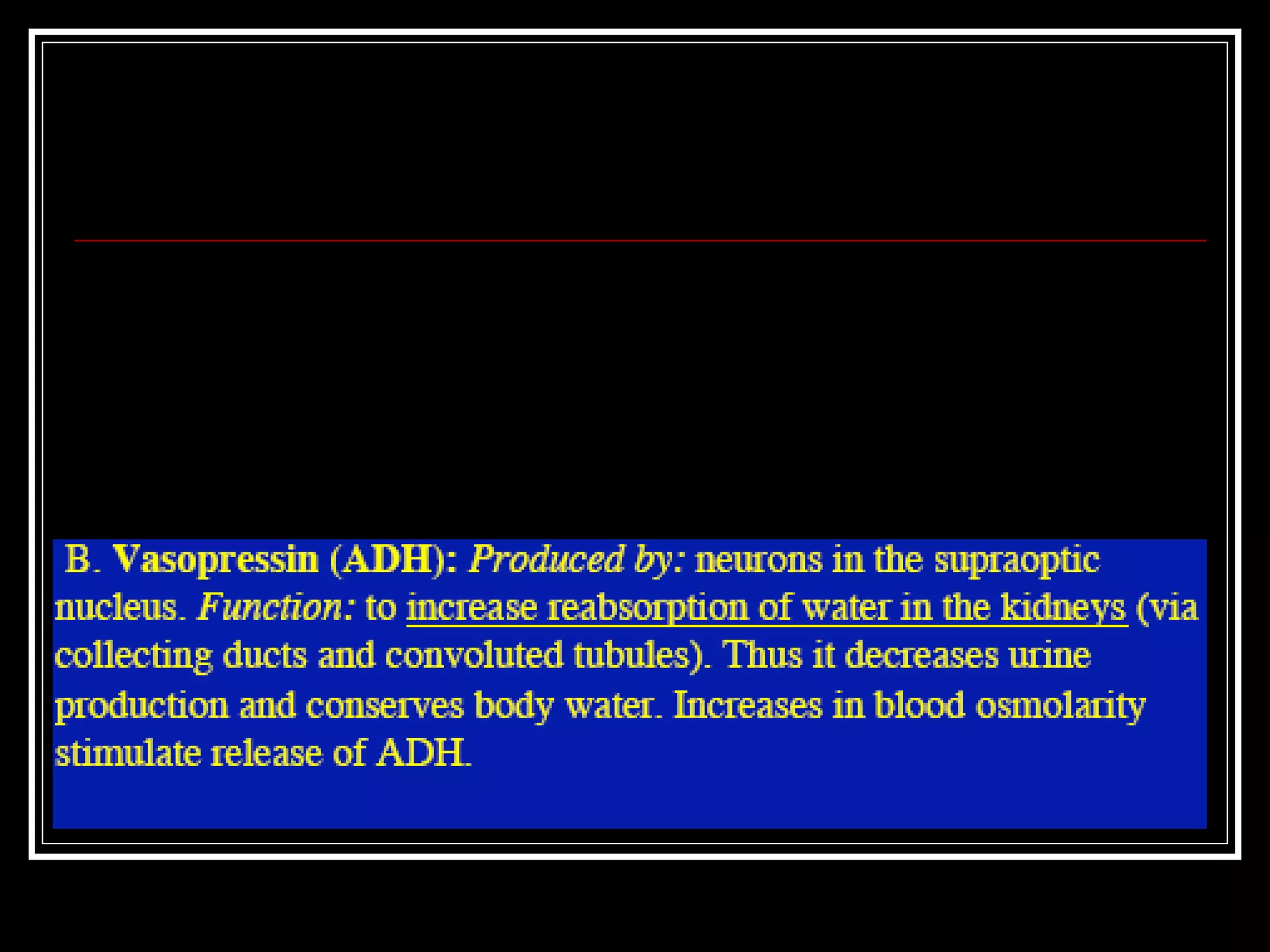
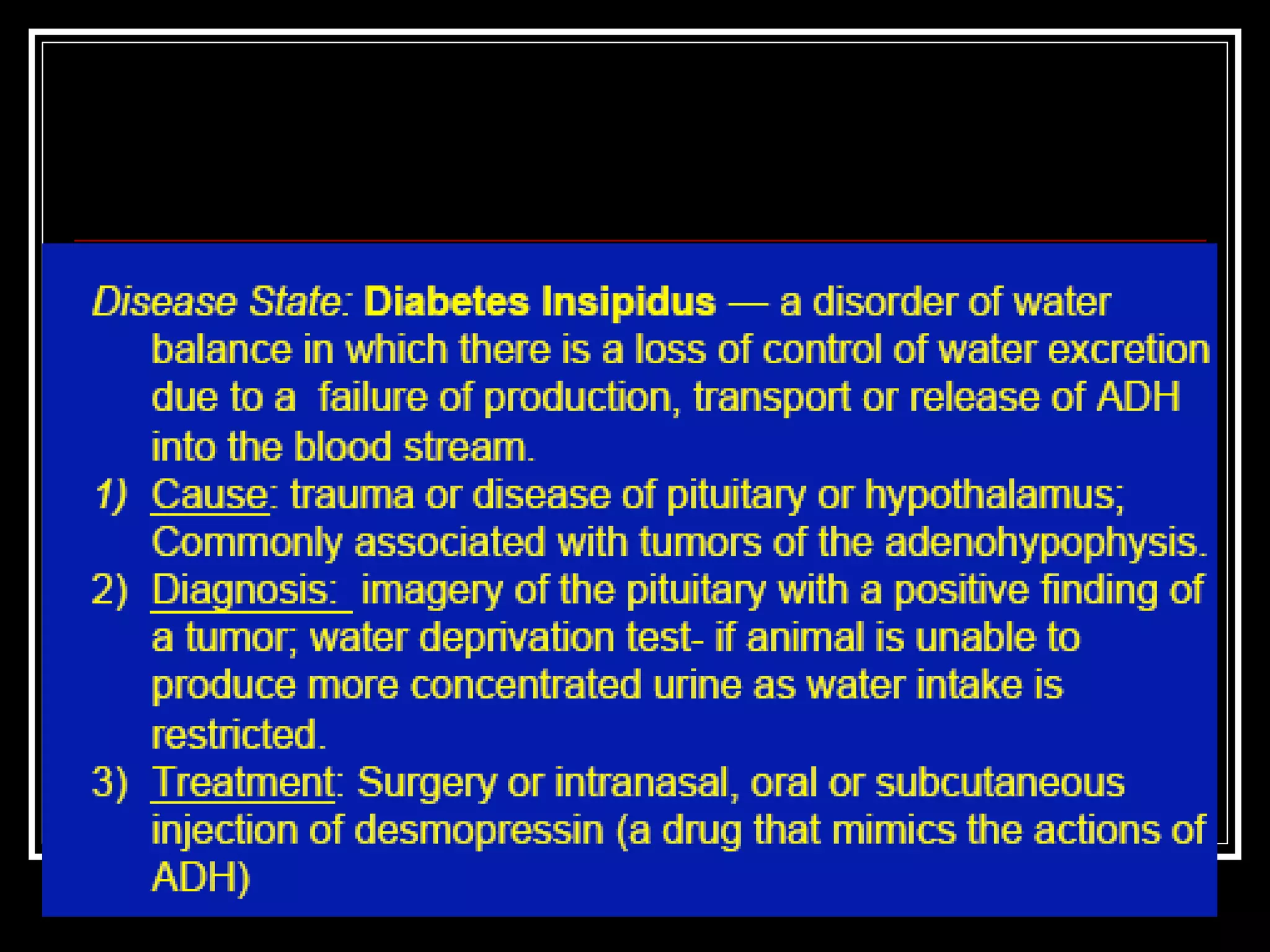
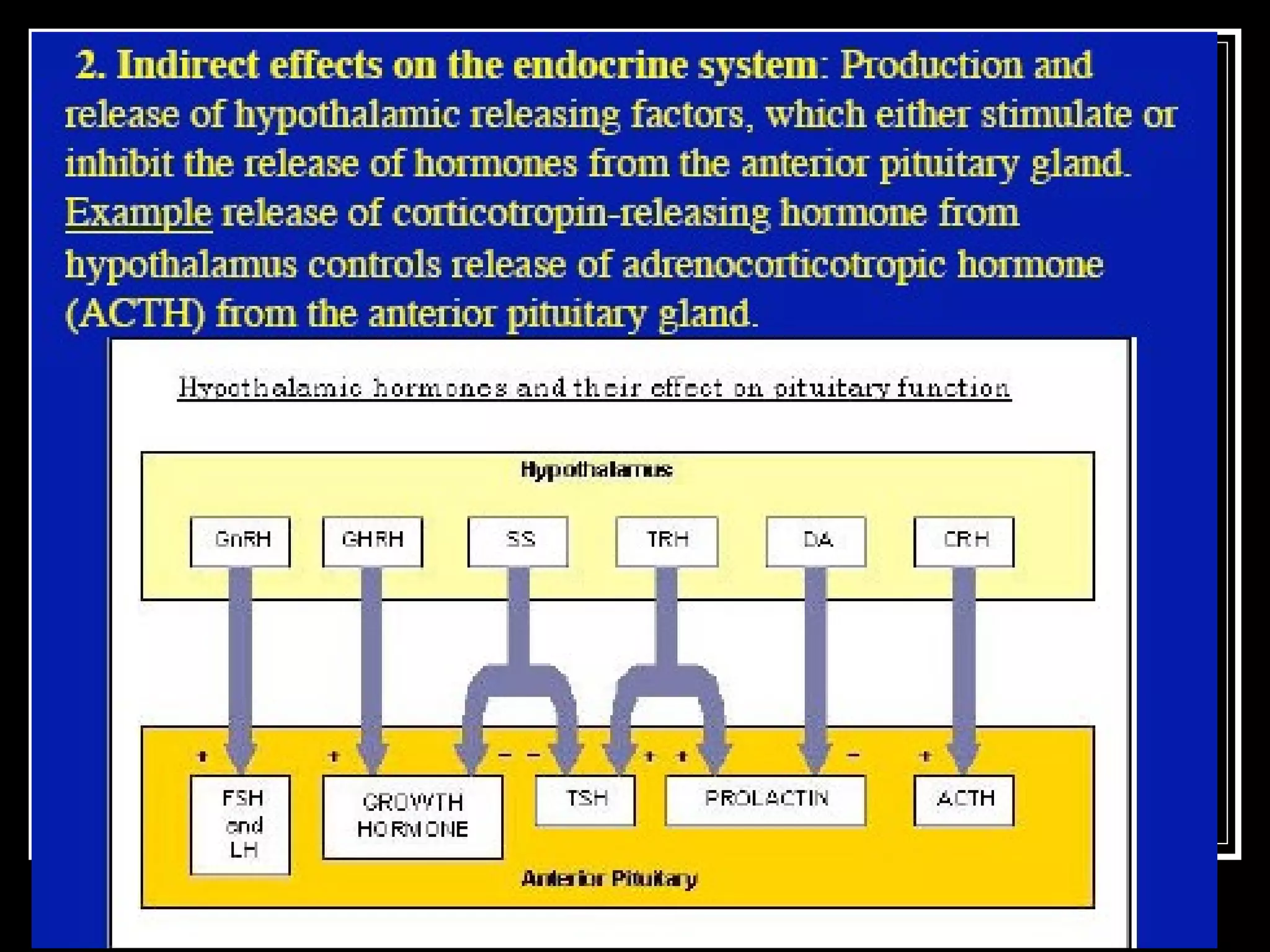
HYPOTHALAMUS
HYPOTHALAMUS


It’s FREE to join. http://www.examville.com

Diencephalon

  • 1.
    www.Examville.com Online practicetests, live classes, tutoring, study guides Q&A, premium content and more .
  • 2.
  • 3.
    CEREBRUM Largest partof the brain Situated in the anterior and middle cranial fossa Divided into two parts: Telencephalon Diencephalon
  • 4.
    Diencephalon Sits ontop of the brain stem Enclosed by the cerebral hemispheres Made of four parts: Thalamus Hypothalamus Epithalamus Subthalamus
  • 5.
    Diencephalon Consists ofthe 3 rd ventricle and the structures that form its boundaries, most rostral part of the brainstem. Ant.: Intervent. fora. Post.: where the 3 rd vent. Forms the cerebral aqueduct.
  • 6.
    CHARACTERISTICS OF THEMIDBRAIN-DIENCEPHALIC JUNCTION Addition of several masses of neurons surrounding the rostral part of the post. and lat. Mesencephalon. Medial and lateral geniculate body fiber. Cerebral aqueduct expands into 3 rd vent. Sup. Colliculi replaced by pre-tectal region Fasc. Retroflexor – vertical fibers traversing the medial portion of the red nucleus.
  • 7.
    Inferior surface ofthe Diencephalon Only exposed area to the surface in the intact brain. Hypothalamus and other structures: Optic chiasma Infundibulum with the tuber cinerium Mamillary body
  • 8.
    Superior surface ofthe Diencephalon Concealed by the fornix : thick bundle of nerve fibers from the hippocampus of temp. lobe and arches posteriorly over the thalamus to join the mamillary body Roof of 3 rd vent.
  • 9.
    Lateral surface ofthe Dierncephalon Bounded by the internal capsule
  • 10.
    Medial surface ofthe Diencephalon Superior part by the medial surface of the thalamus Inferior part by the hypothalamus These 2 areas are separated by a shallow sulcus the Hypothalamic sulcus.
  • 11.
  • 12.
  • 13.
  • 14.
    Diencephalon: Thalamus “Gateway to cerebral cortex” Most sensory stimuli project to the thalamus, which in turn projects to the cerebrum. Thalamus also influences moods and activities associated with strong emotion. (Two concepts: Sensory integration and Mood )
  • 15.
    Diencephalon:Thalamus Large ovoidmass of gray matter forming a greater part of the Diencephalon. Cell station to all main sensory system except the olfactory pathway.
  • 16.
  • 17.
  • 18.
  • 19.
  • 20.
  • 21.
  • 22.
  • 23.
  • 24.
  • 25.
  • 26.
  • 27.
  • 28.
  • 29.
  • 30.
  • 31.
  • 32.
  • 33.
  • 34.
  • 35.
  • 36.
  • 37.
    It’s FREE tojoin. http://www.examville.com