www.Examville.com
Online practice tests, live classes, tutoring, study guides
Q&A, premium content and more.
The Body Fluid CompartmentsThe Body Fluid Compartments ::
Extracellular and IntracellularExtracellular and Intracellular
Fluids:Fluids:
Interstitial Fluid and EdemaInterstitial Fluid and Edema
Body Fluids and The
Kidneys
The maintenance of a relatively constant volume and a stableThe maintenance of a relatively constant volume and a stable
composition of the body fluids is essential for homeostasiscomposition of the body fluids is essential for homeostasis
Fluid Intake and Output are Balanced During Steady-State
Conditions
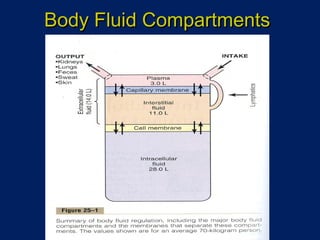
Body Fluid CompartmentsBody Fluid Compartments
1. Extracellular Fluid Compartment - 14.0 L1. Extracellular Fluid Compartment - 14.0 L
Interstitial - 11.0 L = 3/4Interstitial - 11.0 L = 3/4
Plasma - 3.0 L = 1/4Plasma - 3.0 L = 1/4
2. Extracellular Fluid Compartment = 28.0 L
3. Transcellular Fluid Compartment 1to 2 liters - includes fluid in the
following Spaces:
° Synovial
° Peritoneal
° Pericardial
° Intraocular
° Cerebrospinal fluid
Total Body Water is 60% of the body weight =Total Body Water is 60% of the body weight =
42 liters42 liters
Extracellular Fluid 20% = 14.0LExtracellular Fluid 20% = 14.0L
Intracellular Fluid 40% = 28.0LIntracellular Fluid 40% = 28.0L
Blood Volume
Blood contains both extracellular fluid (the fluid in the plasma)
and intracellular fluid ( the fluid in the red blood cells)
Constituents of Extracellular Fluid andConstituents of Extracellular Fluid and
Intracellular FluidIntracellular Fluid
Regulation of Fluid Exchange and Osmotic
Equilibrium Between Intracellular and Extracellular
Fluid
Basic Principles of Osmosis and Osmotic Pressure
Osmotic Equilibrium is Maintain Between Intracellular Fluid
and Extracellular Fluid
Isotonic, Hypotonic and Hypertonic Fluids
Osmotic Equilibrium Between Intracellular and Extracellular Fluids is
Rapidly Attained
Volume and Osmolality of Extracellular Fluid in Abnormal States
Basic Principles to Calculate Changes in Intracellular and
Extracellular Fluid Volumes and Types of Therapy
1. Water moves rapidly across cell membrane; therefore the osmolarities of ICF
and ECF remain almost exactly equal to each other.
2. Cell membranes are most completely impermeable to many solutes; therefore
the number of osmoles in the ECF or ICF remain constant.
Effect of Adding Saline Solution to the Extracellular Fluid
Clinical Abnormalities of Fluid Volume Regulation: Hyponatremia
and Hypernatremia
Causes of Hyponatremia:
- Excess Water
- Loss of Sodium
Causes of Hypernatremia:
- Water loss
- Excess of Sodium
EDEMA: presence of excess fluid in the body tissues
A. Intracellular Edema
A. depression of the metabolic systems of the tissues
B. lack of adequate nutrition to the cells
C. Inflammation
B. Extracellular Edema
A. abnormal leakage of fluid from the plasma to the interstitial spaces
across the capillaries
B. failure of the lymphatics to return fluid from the interstitium back into
the blood
The most common clinical cause of interstitial fluid accumulation is
excessive capillary fluid filtration
Factors That Can Increase Capillary Filtration
1. Increase Filtration Coefficient - product of
permeability and surface area of the capillaries ( kf )
2.Increase Capillary Hydrostatic Pressure ( Pc )
3. Decrease capillary Colloid Osmotic Pressure
( iic)
Filtration = Kf x ( Pc - Pif - iic +iiif )
Major Factors that cause Increased Capillary Filtration of Fluid
and Protein into the Interstitium:
1. Increased capillary Hydrostatic Pressure
2. Decreased Plasma Colloid Osmotic Pressure
3. Increased Capillary Permeability
Summary of Causes of Extracellular Edema
1. Increased capillary pressure
A. Excessive kidney retention of salt and water
1. Acute and chronic kidney failure
2. Mineralocorticoid excess
B. High venous pressure
1. Heart failure
2. Venous obstruction
3. Failure of venous pump
A. paralysis of muscle
B. immobilized parts of body
C. Failure of venous valves
C. Decreased arteriolar resistance
1. Excessive body heat
2. Insufficiency of sympathetic
nervous system
3. Vasodilator drugs
II. Decreased plasma proteins
A. Loss of proteins in urine ( nephrotic syndrome )
B. Loss of proteins from denuded skin areas
1. Burns
2. Wounds
C. Failure to produce proteins
1. Liver disease
2. Serious protein or caloric malnutrition
III. Increased capillary permeability
A. Immune reactions that cause release of histamine
B. Toxins
C. Bacterial infections
D. Vitamin deficiency, especially vitamin C
E. Prolonged ischemia
F. Burns
IV. Blockage of lymph return
A. Cancer
B. Infections ( filarial nematodes)
C. Surgery
D. Congenital absence or abnormality of
lymphatic vessels
Safety Factors That Prevent Edema
1. The safety factors caused by low tissue compliance ( -3 mmHg )
2. The safety factor caused by increased lymph flow ( 7 mmHg )
3. The safety factor caused by washdown of proteins from the
interstitial spaces ( 7 mmHg )
It’s FREE to join.
http://www.examville.com

Body fluids

  • 1.
    www.Examville.com Online practice tests,live classes, tutoring, study guides Q&A, premium content and more.
  • 2.
    The Body FluidCompartmentsThe Body Fluid Compartments :: Extracellular and IntracellularExtracellular and Intracellular Fluids:Fluids: Interstitial Fluid and EdemaInterstitial Fluid and Edema Body Fluids and The Kidneys
  • 3.
    The maintenance ofa relatively constant volume and a stableThe maintenance of a relatively constant volume and a stable composition of the body fluids is essential for homeostasiscomposition of the body fluids is essential for homeostasis Fluid Intake and Output are Balanced During Steady-State Conditions
  • 4.
    Body Fluid CompartmentsBodyFluid Compartments
  • 5.
    1. Extracellular FluidCompartment - 14.0 L1. Extracellular Fluid Compartment - 14.0 L Interstitial - 11.0 L = 3/4Interstitial - 11.0 L = 3/4 Plasma - 3.0 L = 1/4Plasma - 3.0 L = 1/4 2. Extracellular Fluid Compartment = 28.0 L 3. Transcellular Fluid Compartment 1to 2 liters - includes fluid in the following Spaces: ° Synovial ° Peritoneal ° Pericardial ° Intraocular ° Cerebrospinal fluid
  • 6.
    Total Body Wateris 60% of the body weight =Total Body Water is 60% of the body weight = 42 liters42 liters Extracellular Fluid 20% = 14.0LExtracellular Fluid 20% = 14.0L Intracellular Fluid 40% = 28.0LIntracellular Fluid 40% = 28.0L Blood Volume Blood contains both extracellular fluid (the fluid in the plasma) and intracellular fluid ( the fluid in the red blood cells)
  • 7.
    Constituents of ExtracellularFluid andConstituents of Extracellular Fluid and Intracellular FluidIntracellular Fluid
  • 9.
    Regulation of FluidExchange and Osmotic Equilibrium Between Intracellular and Extracellular Fluid Basic Principles of Osmosis and Osmotic Pressure Osmotic Equilibrium is Maintain Between Intracellular Fluid and Extracellular Fluid
  • 10.
    Isotonic, Hypotonic andHypertonic Fluids
  • 11.
    Osmotic Equilibrium BetweenIntracellular and Extracellular Fluids is Rapidly Attained Volume and Osmolality of Extracellular Fluid in Abnormal States Basic Principles to Calculate Changes in Intracellular and Extracellular Fluid Volumes and Types of Therapy 1. Water moves rapidly across cell membrane; therefore the osmolarities of ICF and ECF remain almost exactly equal to each other. 2. Cell membranes are most completely impermeable to many solutes; therefore the number of osmoles in the ECF or ICF remain constant.
  • 12.
    Effect of AddingSaline Solution to the Extracellular Fluid
  • 15.
    Clinical Abnormalities ofFluid Volume Regulation: Hyponatremia and Hypernatremia
  • 16.
    Causes of Hyponatremia: -Excess Water - Loss of Sodium Causes of Hypernatremia: - Water loss - Excess of Sodium
  • 17.
    EDEMA: presence ofexcess fluid in the body tissues A. Intracellular Edema A. depression of the metabolic systems of the tissues B. lack of adequate nutrition to the cells C. Inflammation B. Extracellular Edema A. abnormal leakage of fluid from the plasma to the interstitial spaces across the capillaries B. failure of the lymphatics to return fluid from the interstitium back into the blood
  • 18.
    The most commonclinical cause of interstitial fluid accumulation is excessive capillary fluid filtration Factors That Can Increase Capillary Filtration 1. Increase Filtration Coefficient - product of permeability and surface area of the capillaries ( kf ) 2.Increase Capillary Hydrostatic Pressure ( Pc ) 3. Decrease capillary Colloid Osmotic Pressure ( iic) Filtration = Kf x ( Pc - Pif - iic +iiif )
  • 19.
    Major Factors thatcause Increased Capillary Filtration of Fluid and Protein into the Interstitium: 1. Increased capillary Hydrostatic Pressure 2. Decreased Plasma Colloid Osmotic Pressure 3. Increased Capillary Permeability
  • 20.
    Summary of Causesof Extracellular Edema 1. Increased capillary pressure A. Excessive kidney retention of salt and water 1. Acute and chronic kidney failure 2. Mineralocorticoid excess B. High venous pressure 1. Heart failure 2. Venous obstruction 3. Failure of venous pump A. paralysis of muscle B. immobilized parts of body C. Failure of venous valves
  • 21.
    C. Decreased arteriolarresistance 1. Excessive body heat 2. Insufficiency of sympathetic nervous system 3. Vasodilator drugs II. Decreased plasma proteins A. Loss of proteins in urine ( nephrotic syndrome ) B. Loss of proteins from denuded skin areas 1. Burns 2. Wounds C. Failure to produce proteins 1. Liver disease 2. Serious protein or caloric malnutrition
  • 22.
    III. Increased capillarypermeability A. Immune reactions that cause release of histamine B. Toxins C. Bacterial infections D. Vitamin deficiency, especially vitamin C E. Prolonged ischemia F. Burns IV. Blockage of lymph return A. Cancer B. Infections ( filarial nematodes) C. Surgery D. Congenital absence or abnormality of lymphatic vessels
  • 23.
    Safety Factors ThatPrevent Edema 1. The safety factors caused by low tissue compliance ( -3 mmHg ) 2. The safety factor caused by increased lymph flow ( 7 mmHg ) 3. The safety factor caused by washdown of proteins from the interstitial spaces ( 7 mmHg )
  • 25.
    It’s FREE tojoin. http://www.examville.com