Downloaded 48 times

1. The document discusses the framework and steps for designing authentic assessment. It involves defining the skills and knowledge to be learned, designing real-world tasks to demonstrate them, and developing evaluation criteria. 2. Authentic assessments mirror real work contexts through tasks, physical and social environments, and demonstration of competencies. Appropriate preparation and management is needed when using real world learning contexts. 3. When implementing authentic assessments, it is important to clearly define learning outcomes, set limits on submission size to manage workload, and provide students with performance standards and criteria for self-assessment.
This slide introduces the team members involved in designing authentic assessment, listed with their identification numbers.
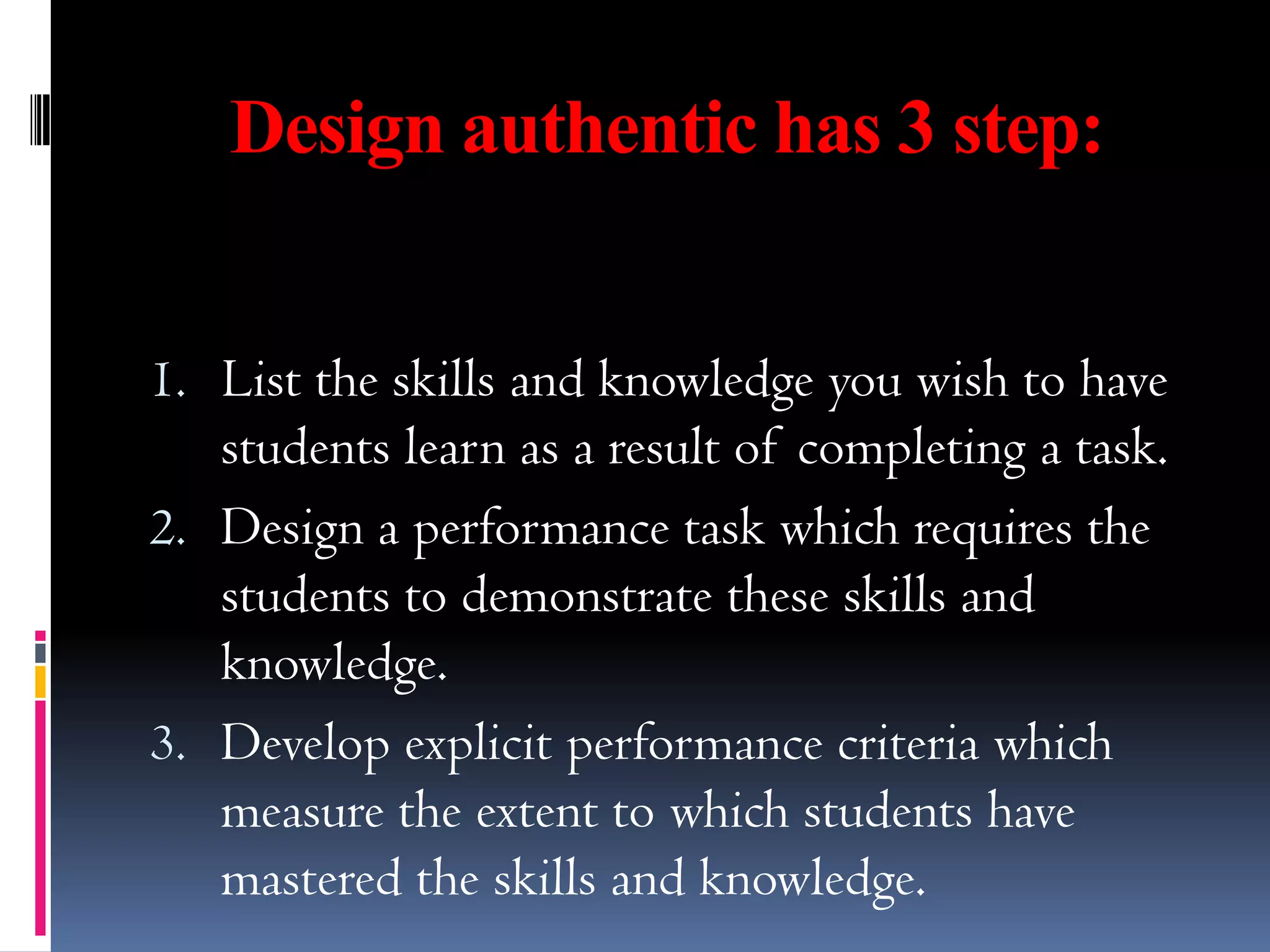
Outlines three key steps: listing skills, designing performance tasks, and developing performance criteria.
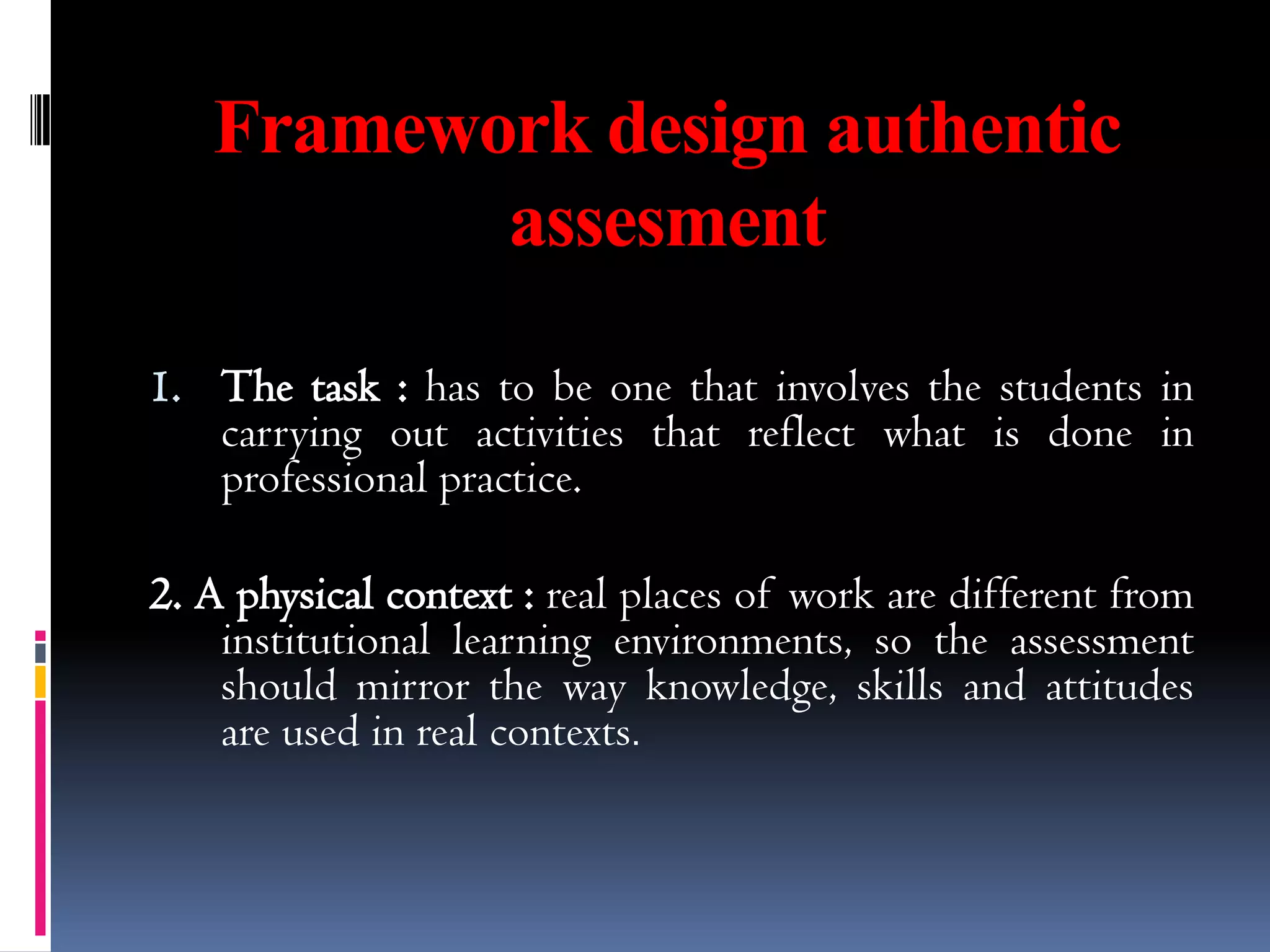
Describes a framework that includes task relevance to professional practice and a physical context reflecting real workplace environments.
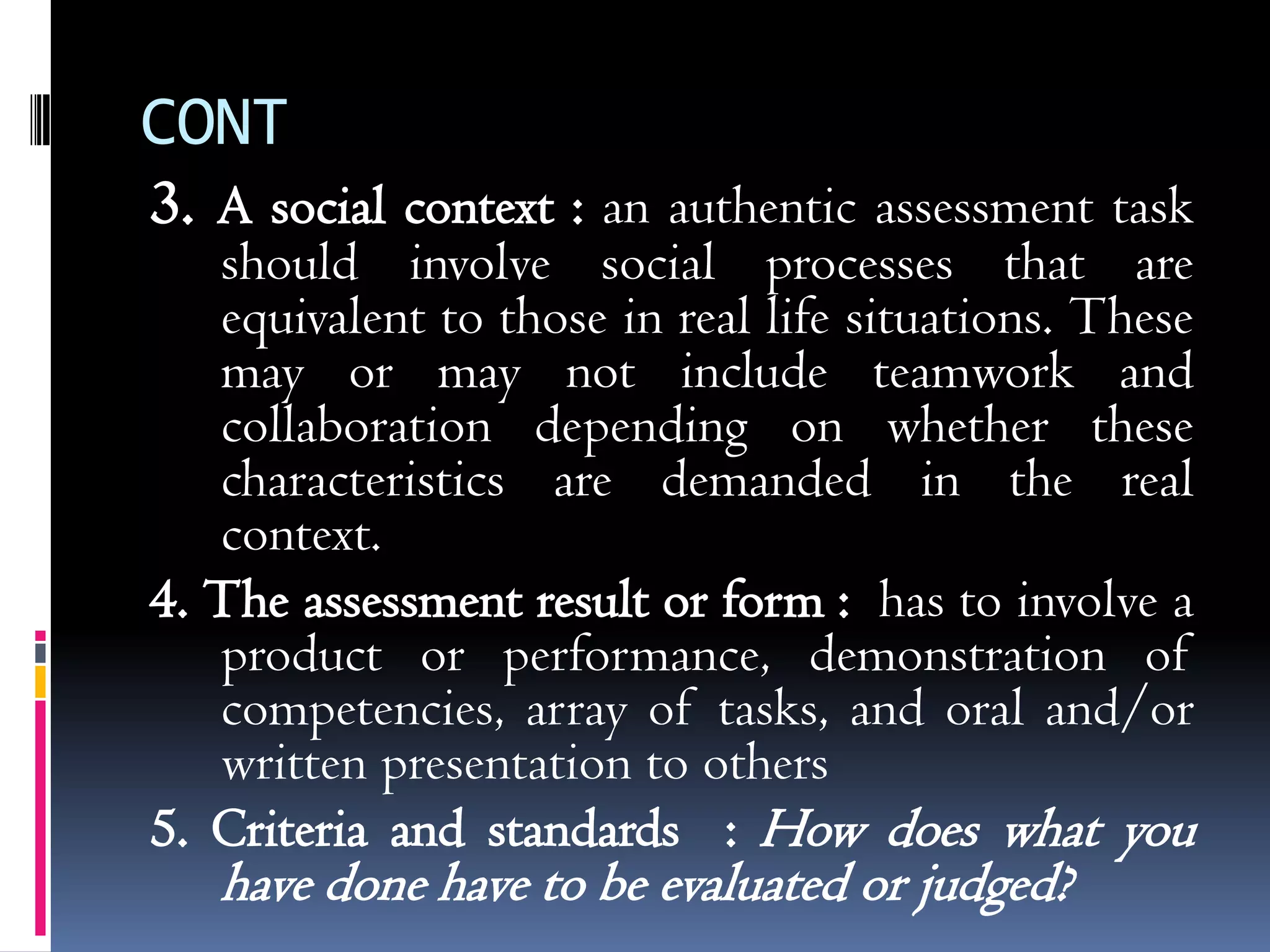
Discusses social context in assessments, assessment forms involving real performances, and evaluation criteria.
Stresses clear articulation of learning outcomes and performance criteria that help students understand and assess their achievements.
Highlights the risks associated with real-world learning placements and the importance of proper management and duty of care.
Addresses the challenge of managing large submissions in authentic assessments, suggesting limits on submission sizes to ease workload.


![[Group 7] Stages of ESP Course Design: Identifying and Conducting Steps of Ne...](https://cdn.slidesharecdn.com/ss_thumbnails/group7stagesofespcoursedesignidentifyingandconductingstepsofneedassessment-130507043533-phpapp01-thumbnail.jpg?width=640&height=640&fit=bounds)


