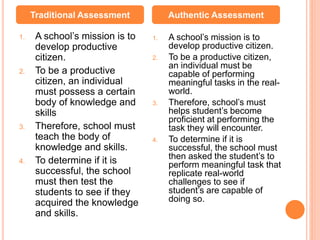
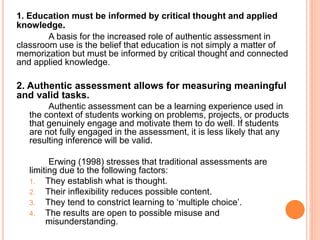
1. Authentic assessment is a holistic approach to evaluation that considers a student's knowledge, skills, and attitudes through engaging tasks that demonstrate real-world application. It differs from traditional assessment by measuring meaningful tasks instead of just testing memorization.
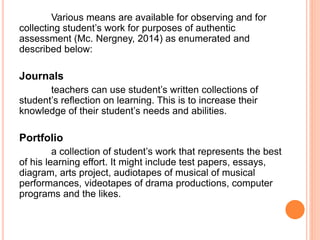
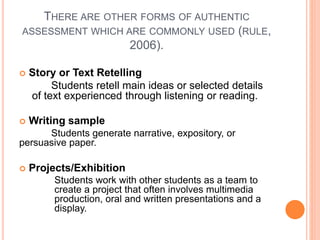
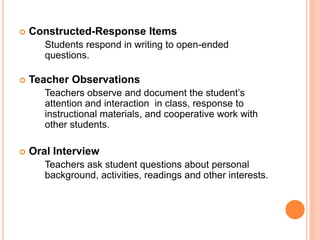
2. Authentic assessment allows students to perform tasks that genuinely engage them and are valid measures of learning. Some common forms of authentic assessment include portfolios, rubrics, observations, interviews, and projects.
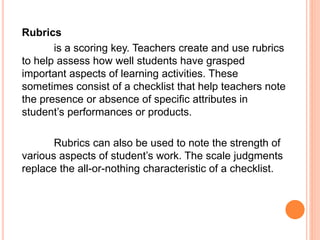
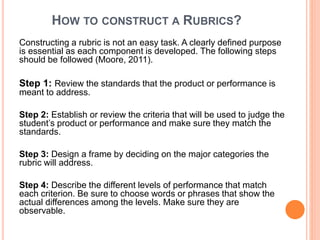
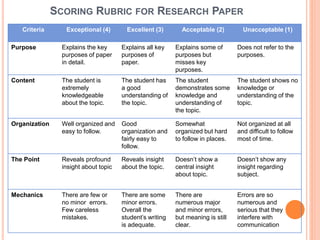
3. When developing rubrics to guide authentic assessment, teachers should clearly define purposes and criteria based on standards, describe different performance levels, and ensure the rubrics can provide observable and meaningful feedback.