Authentic Learning
Designing
So, why would you want to go to the
trouble of designing for Authentic
Learning?
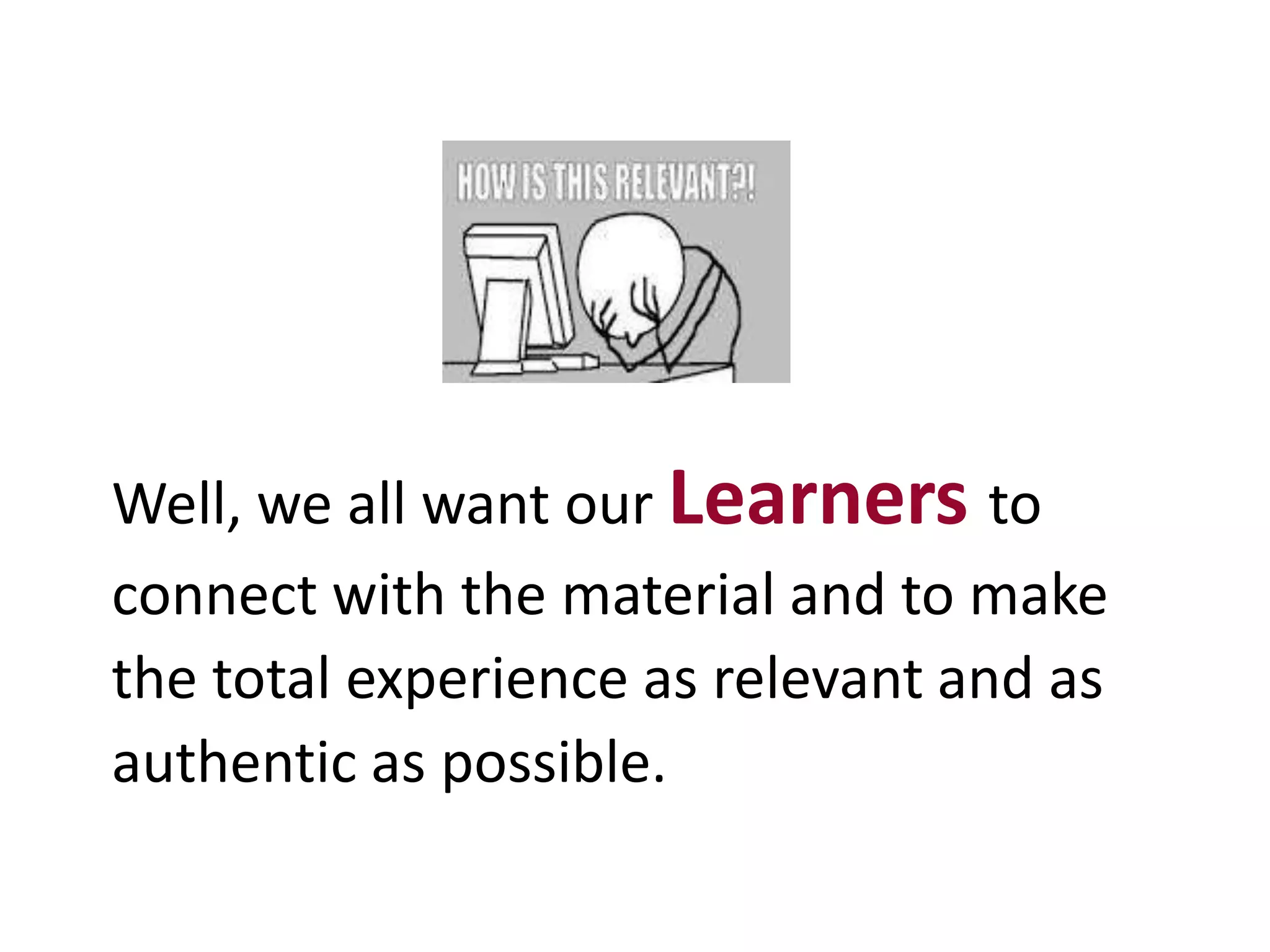
Well, we all want our Learners to
connect with the material and to make
the total experience as relevant and as
authentic as possible.
And the more Authentic your learning
experience is, the better your chances of
your material connecting with your learners.
So how do you make learning
experiences Authentic?
Let’s look at 10 point checklist. We can apply
this list and any course and check how
authentic the learning experience is.
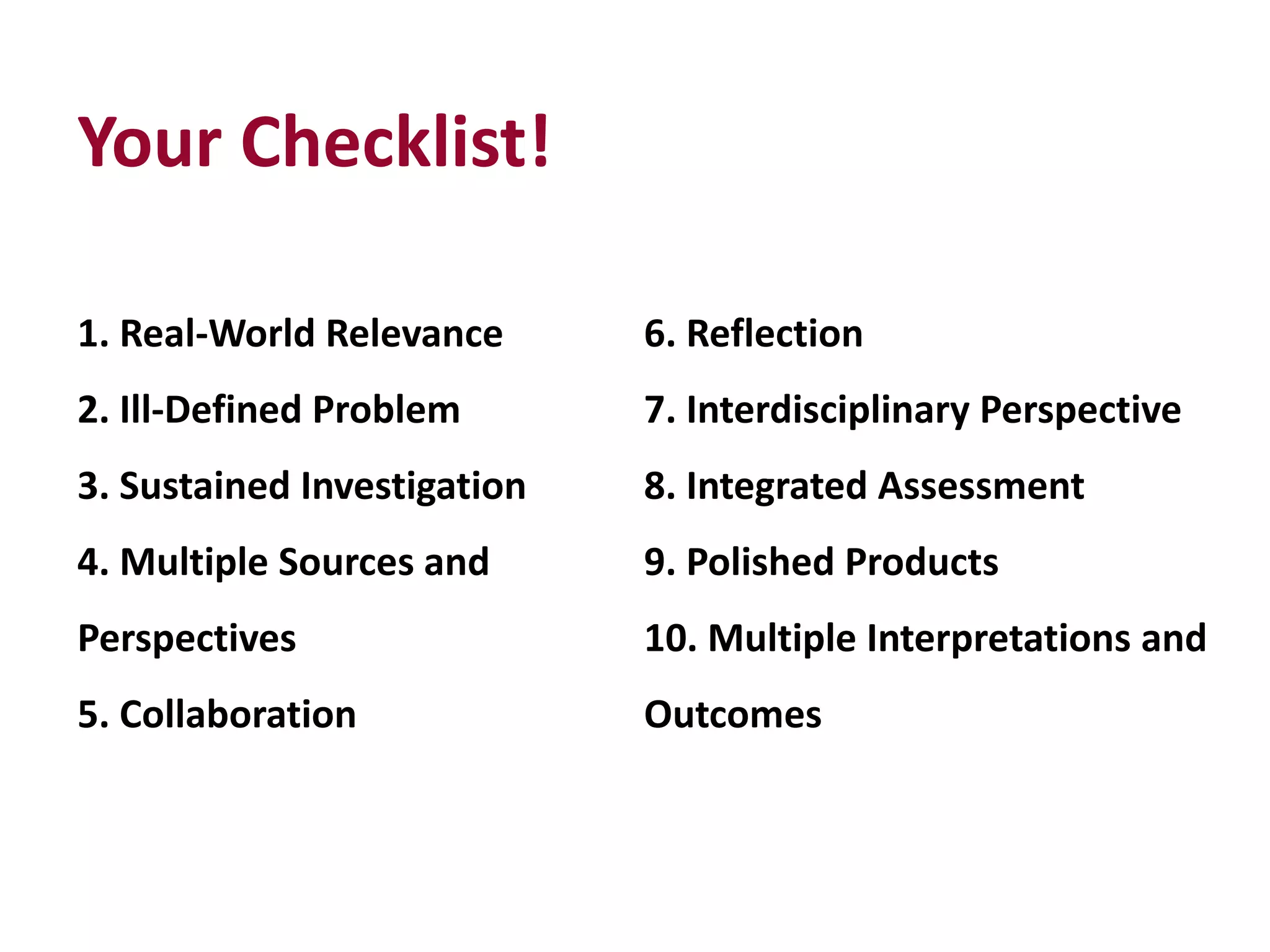
Your Checklist!
1. Real-World Relevance
2. Ill-Defined Problem
3. Sustained Investigation
4. Multiple Sources and
Perspectives
5. Collaboration
6. Reflection
7. Interdisciplinary Perspective
8. Integrated Assessment
9. Polished Products
10. Multiple Interpretations and
Outcomes
Don’t Panic!
We are going to look at each point
individually
Would you rather work on a
problem that is abstracted from
reality or one that has real
world relevance?
1. Real World Relevance
Well, when you thinks
about it, the closer the
problem is to reality the
more real it will be for your
learners.
Q2. Should the problem be clearly defined or
should your learners be challenged to identify
the tasks and subtasks needed to complete a
major task?
2. Ill-Defined Problem
It’s best to challenge your learners to identify
the tasks and subtasks needed to complete a
major task.
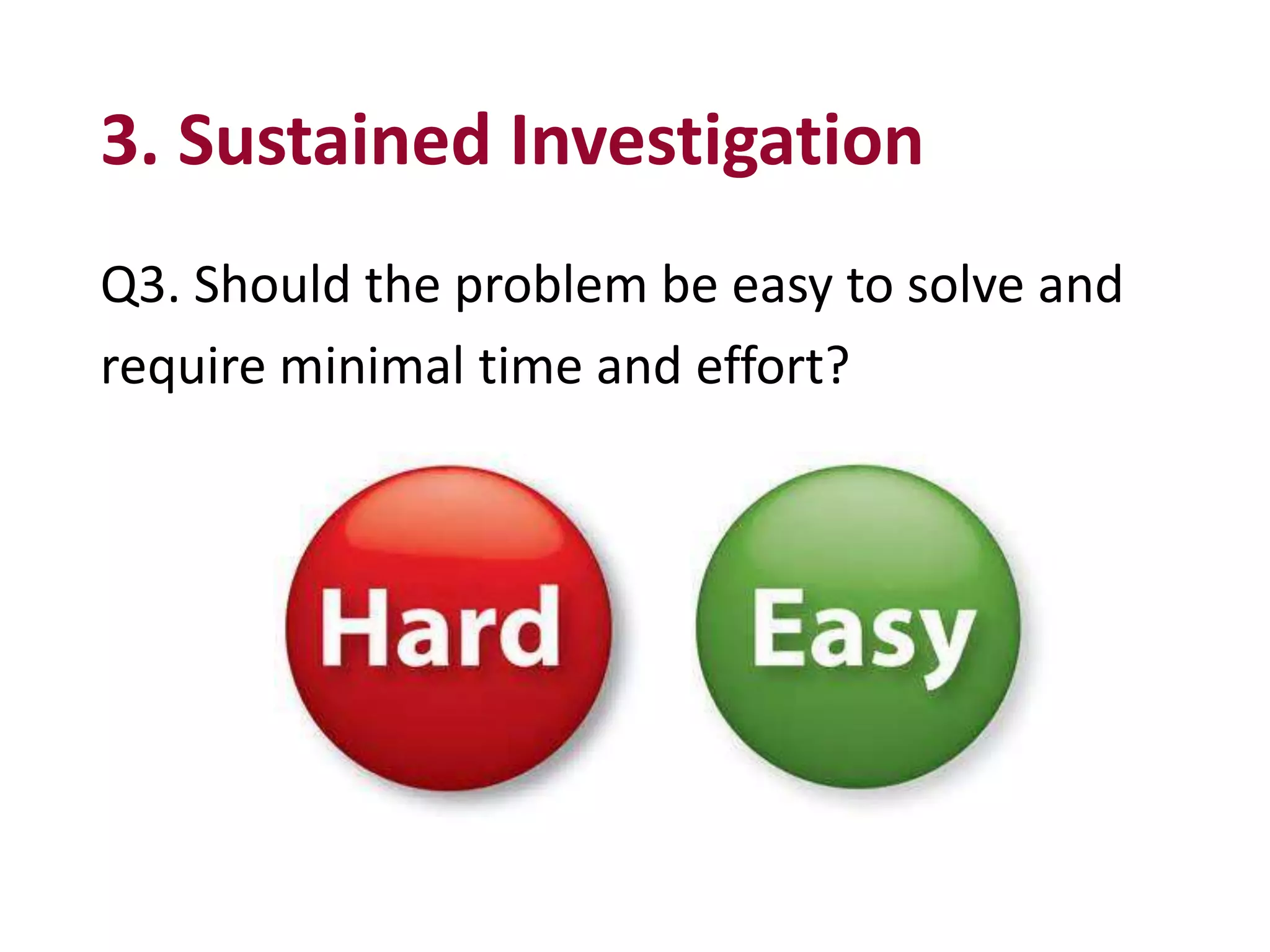
3. Sustained Investigation
Q3. Should the problem be easy to solve and
require minimal time and effort?
3. Sustained Investigation
You’ll get a more authentic
experience if your Learners are
tasked with research over a
sustained period of time, requiring
significant commitment in terms
of time and resources.
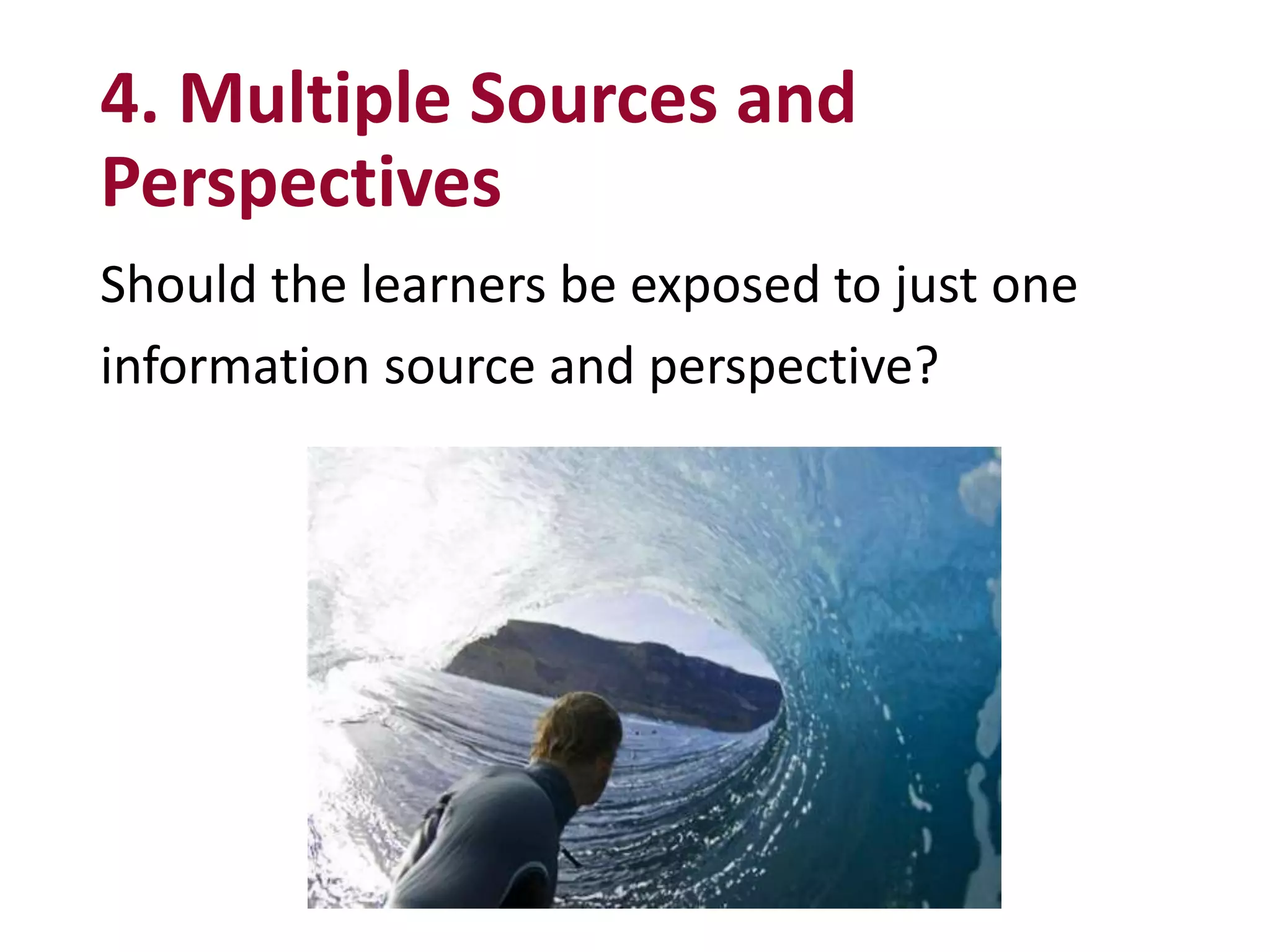
Should the learners be exposed to just one
information source and perspective?
4. Multiple Sources and
Perspectives
Or Multiple Sources
and Perspectives?
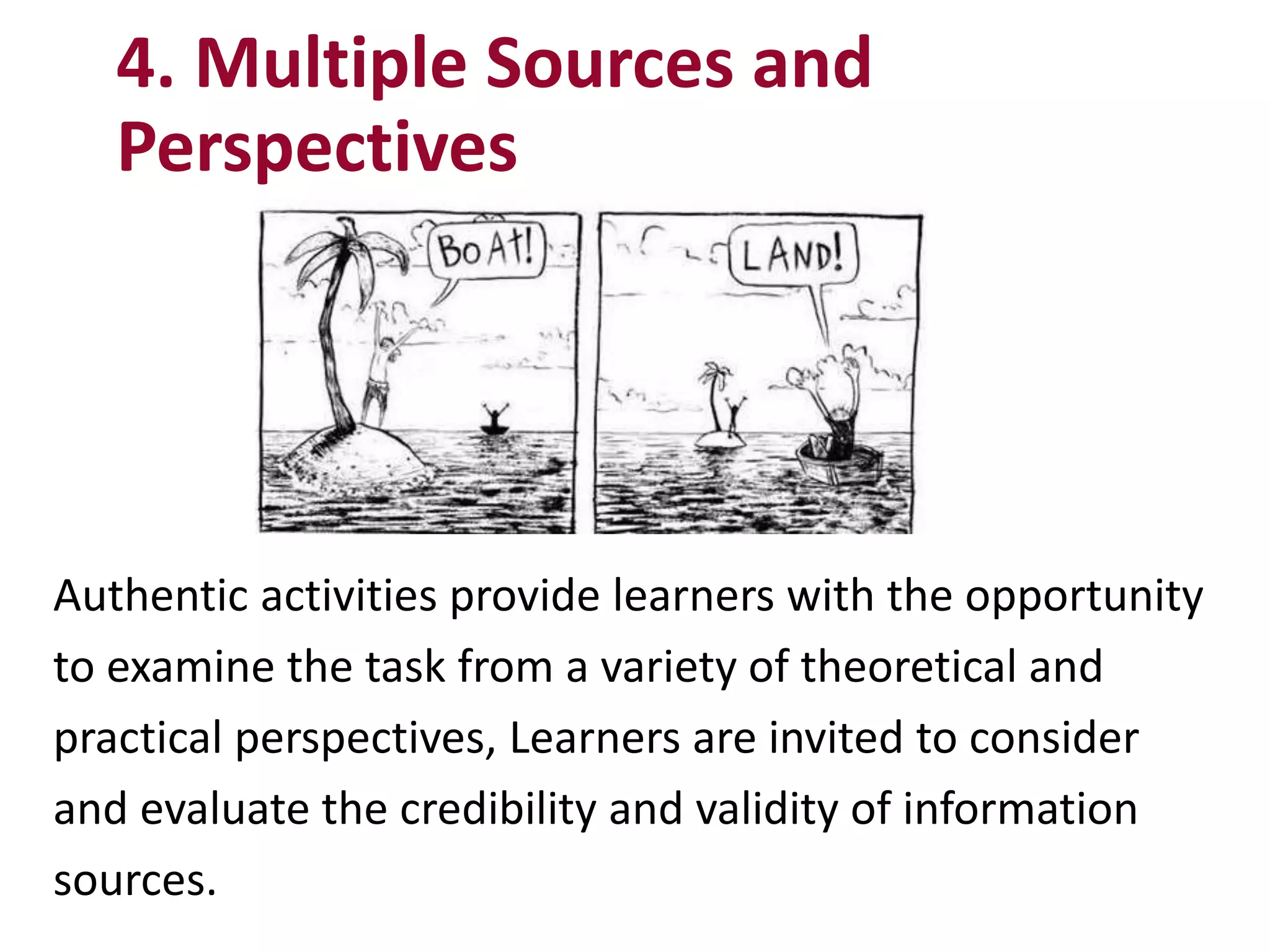
Authentic activities provide learners with the opportunity
to examine the task from a variety of theoretical and
practical perspectives, Learners are invited to consider
and evaluate the credibility and validity of information
sources.
4. Multiple Sources and
Perspectives
Should the learners work alone or with other
people?
5. Collaboration
5. Collaboration
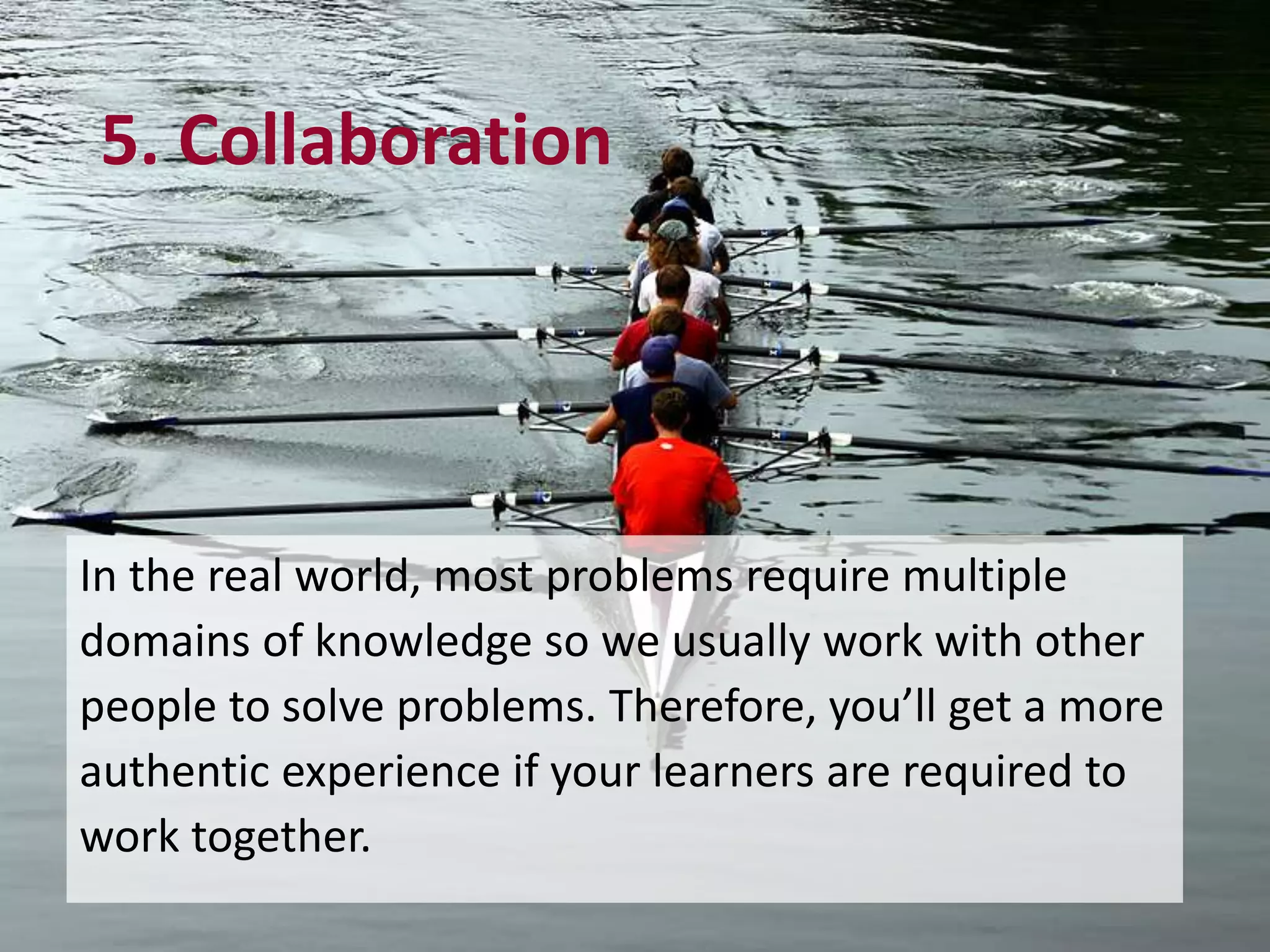
In the real world, most problems require multiple
domains of knowledge so we usually work with other
people to solve problems. Therefore, you’ll get a more
authentic experience if your learners are required to
work together.
6. Reflection
Should we build in time in the
schedule to let the learners
reflect upon their experiences
and performance or just skip
it?
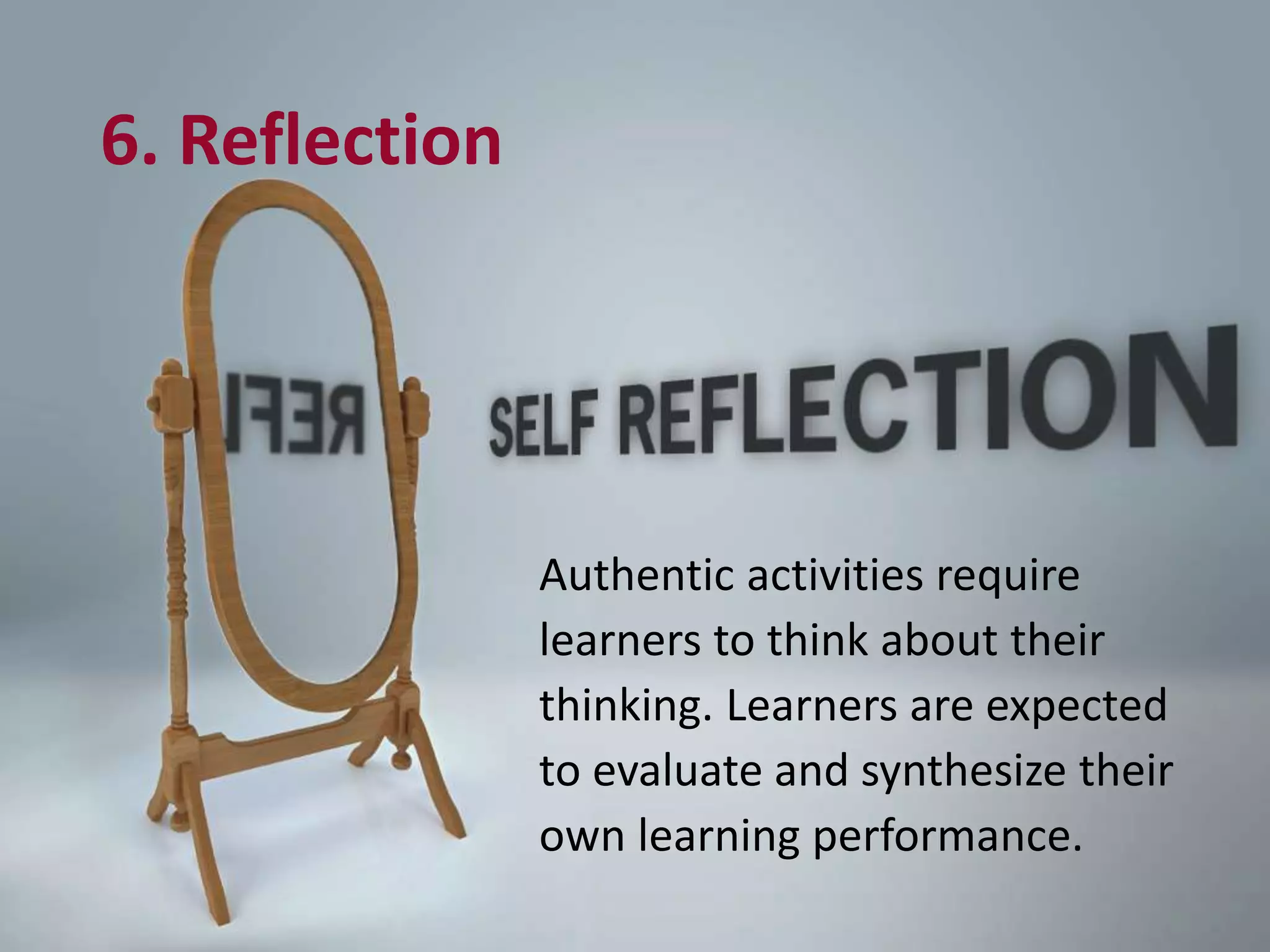
6. Reflection
Authentic activities require
learners to think about their
thinking. Learners are expected
to evaluate and synthesize their
own learning performance.
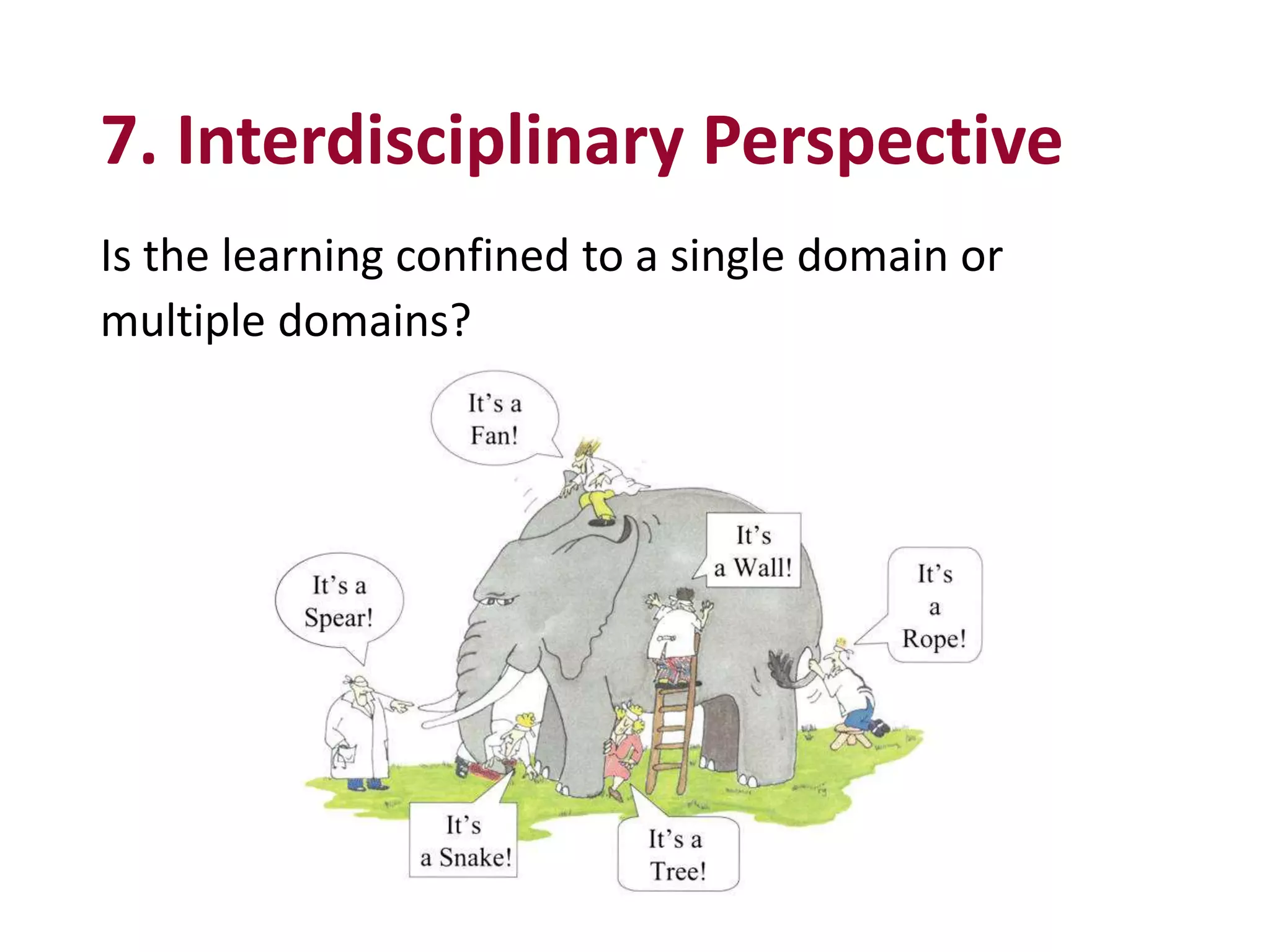
7. Interdisciplinary Perspective
Is the learning confined to a single domain or
multiple domains?
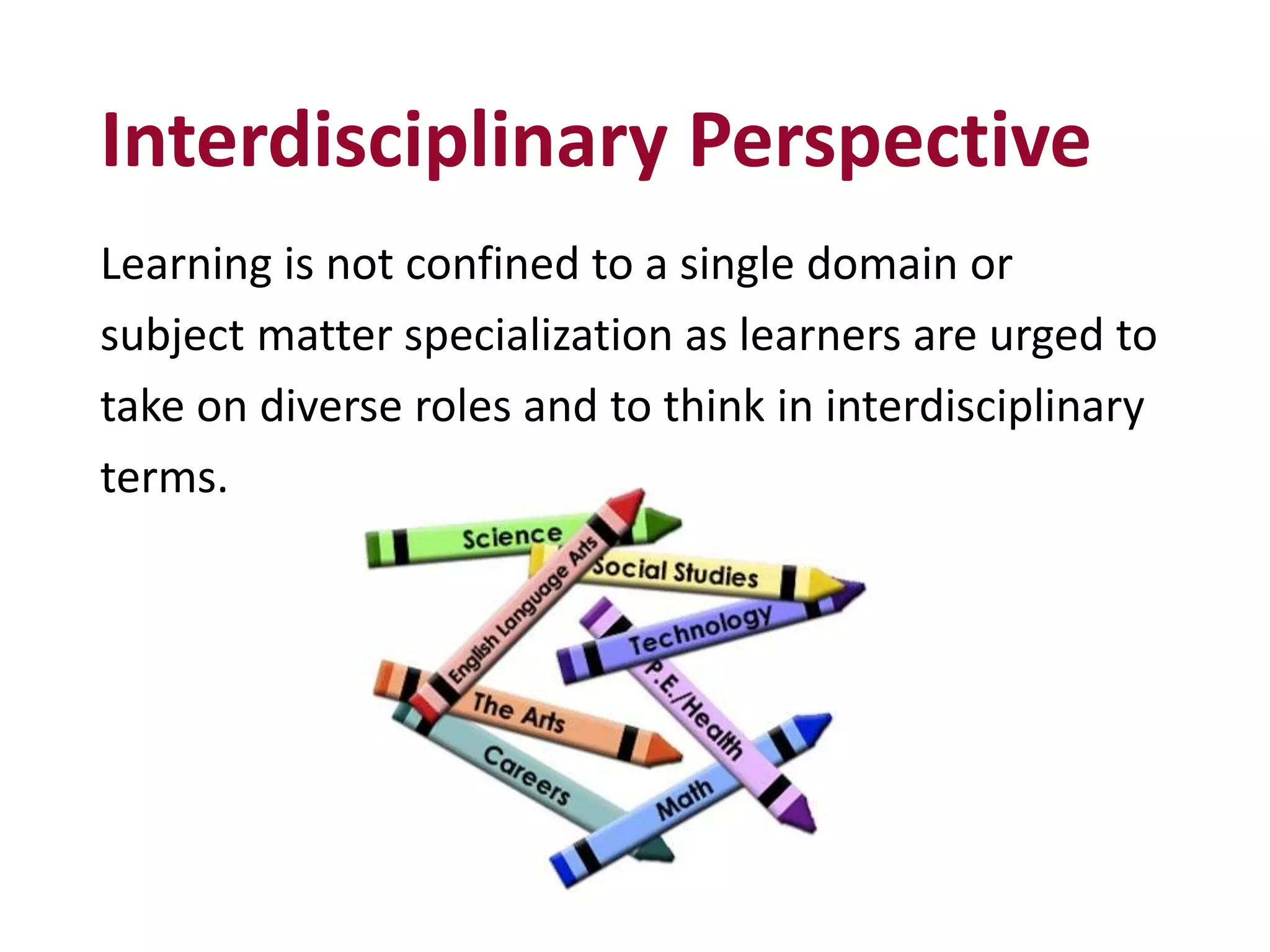
Interdisciplinary Perspective
Learning is not confined to a single domain or
subject matter specialization as learners are urged to
take on diverse roles and to think in interdisciplinary
terms.
8. Integrated Assessment
Should the assessments be narrowly focused on a
short term recall of the content covered?
Integrated Assessment
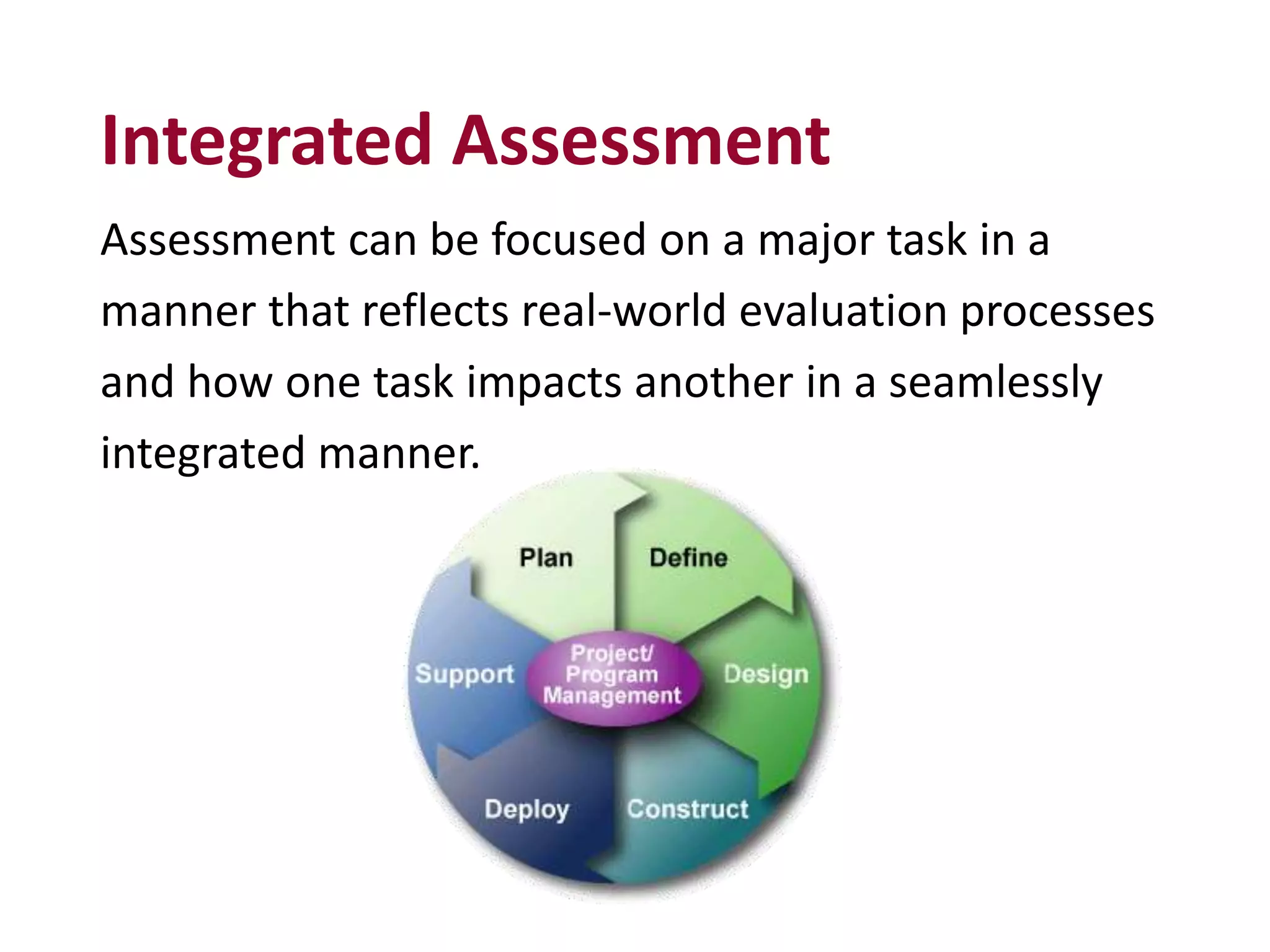
Assessment can be focused on a major task in a
manner that reflects real-world evaluation processes
and how one task impacts another in a seamlessly
integrated manner.
9. Polished Products
Should the final product have no relevance to what
would be presented in a real world setting?
Polished Products
In line with integrated assessments, course outcomes
may entail the creation of a product which is relevant
and applicable to the work environment.
10. Multiple Interpretations and
Outcomes
Is there just the one perfect answer or solution like
what you find in a mathematics textbook?
Multiple Interpretations and
Outcomes
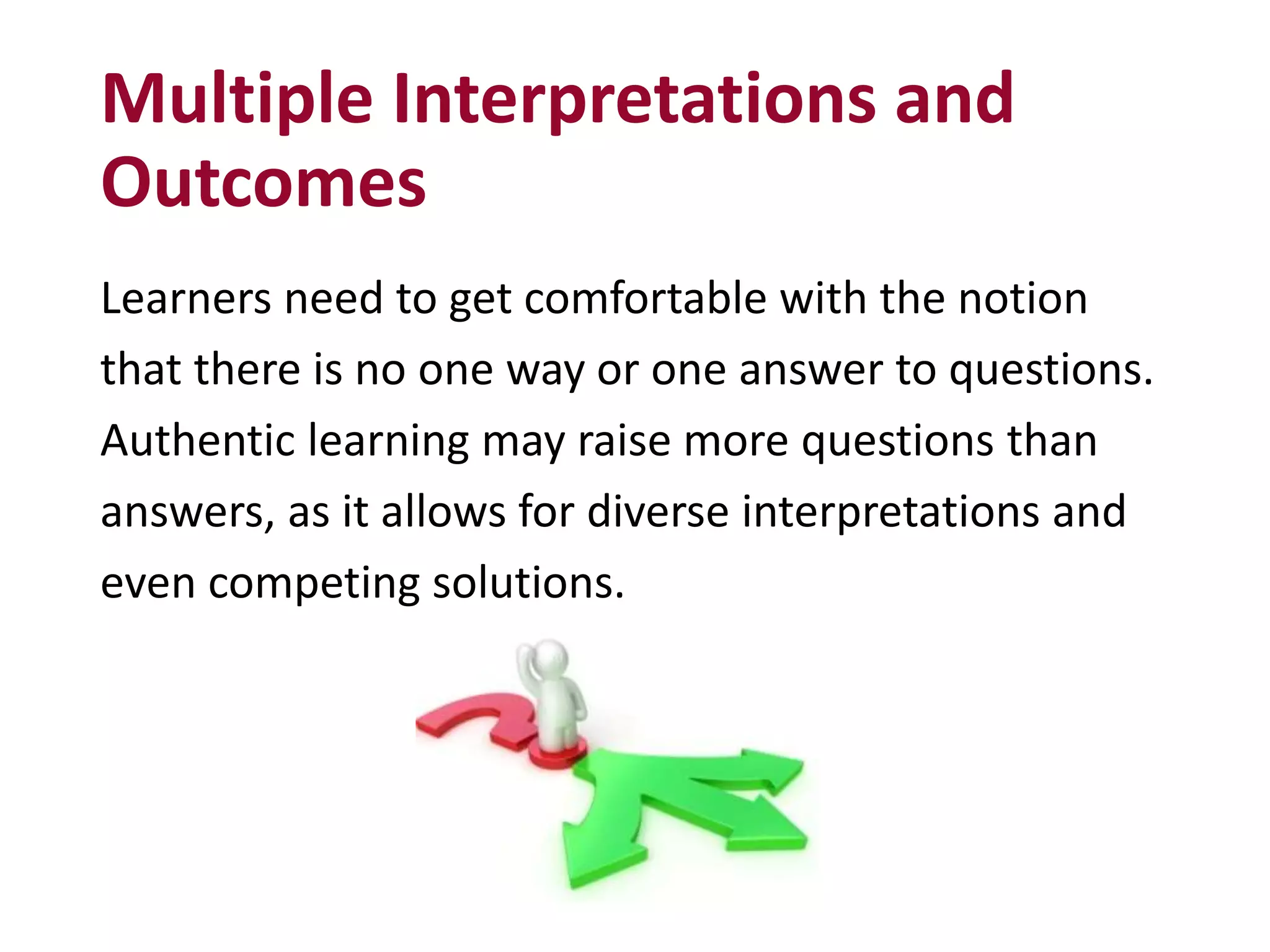
Learners need to get comfortable with the notion
that there is no one way or one answer to questions.
Authentic learning may raise more questions than
answers, as it allows for diverse interpretations and
even competing solutions.
Think About!
Now think of a course you have
recently participated in. Use the
checklist to see how well it measures
up against Authentic Learning.

Designing Authentic Learning

  • 1.
  • 2.
    So, why wouldyou want to go to the trouble of designing for Authentic Learning?
  • 3.
    Well, we allwant our Learners to connect with the material and to make the total experience as relevant and as authentic as possible.
  • 4.
    And the moreAuthentic your learning experience is, the better your chances of your material connecting with your learners.
  • 5.
    So how doyou make learning experiences Authentic?
  • 6.
    Let’s look at10 point checklist. We can apply this list and any course and check how authentic the learning experience is.
  • 7.
    Your Checklist! 1. Real-WorldRelevance 2. Ill-Defined Problem 3. Sustained Investigation 4. Multiple Sources and Perspectives 5. Collaboration 6. Reflection 7. Interdisciplinary Perspective 8. Integrated Assessment 9. Polished Products 10. Multiple Interpretations and Outcomes
  • 8.
  • 9.
    We are goingto look at each point individually
  • 10.
    Would you ratherwork on a problem that is abstracted from reality or one that has real world relevance? 1. Real World Relevance
  • 11.
    1. Real WorldRelevance Well, when you thinks about it, the closer the problem is to reality the more real it will be for your learners.
  • 12.
    Q2. Should theproblem be clearly defined or should your learners be challenged to identify the tasks and subtasks needed to complete a major task? 2. Ill-Defined Problem
  • 13.
    2. Ill-Defined Problem It’sbest to challenge your learners to identify the tasks and subtasks needed to complete a major task.
  • 14.
    3. Sustained Investigation Q3.Should the problem be easy to solve and require minimal time and effort?
  • 15.
    3. Sustained Investigation You’llget a more authentic experience if your Learners are tasked with research over a sustained period of time, requiring significant commitment in terms of time and resources.
  • 16.
    Should the learnersbe exposed to just one information source and perspective? 4. Multiple Sources and Perspectives
  • 17.
  • 18.
    Authentic activities providelearners with the opportunity to examine the task from a variety of theoretical and practical perspectives, Learners are invited to consider and evaluate the credibility and validity of information sources. 4. Multiple Sources and Perspectives
  • 19.
    Should the learnerswork alone or with other people? 5. Collaboration
  • 20.
    5. Collaboration In thereal world, most problems require multiple domains of knowledge so we usually work with other people to solve problems. Therefore, you’ll get a more authentic experience if your learners are required to work together.
  • 21.
    6. Reflection Should webuild in time in the schedule to let the learners reflect upon their experiences and performance or just skip it?
  • 22.
    6. Reflection Authentic activitiesrequire learners to think about their thinking. Learners are expected to evaluate and synthesize their own learning performance.
  • 23.
    7. Interdisciplinary Perspective Isthe learning confined to a single domain or multiple domains?
  • 24.
    Interdisciplinary Perspective Learning isnot confined to a single domain or subject matter specialization as learners are urged to take on diverse roles and to think in interdisciplinary terms.
  • 25.
    8. Integrated Assessment Shouldthe assessments be narrowly focused on a short term recall of the content covered?
  • 26.
    Integrated Assessment Assessment canbe focused on a major task in a manner that reflects real-world evaluation processes and how one task impacts another in a seamlessly integrated manner.
  • 27.
    9. Polished Products Shouldthe final product have no relevance to what would be presented in a real world setting?
  • 28.
    Polished Products In linewith integrated assessments, course outcomes may entail the creation of a product which is relevant and applicable to the work environment.
  • 29.
    10. Multiple Interpretationsand Outcomes Is there just the one perfect answer or solution like what you find in a mathematics textbook?
  • 30.
    Multiple Interpretations and Outcomes Learnersneed to get comfortable with the notion that there is no one way or one answer to questions. Authentic learning may raise more questions than answers, as it allows for diverse interpretations and even competing solutions.
  • 31.
    Think About! Now thinkof a course you have recently participated in. Use the checklist to see how well it measures up against Authentic Learning.