
Nithin Kalorth

DESIGN – AN INTRODUCTION
Definition

 Design is the planning that lay the basis
  for the making of every object or system.
 The field of design includes art, industry
  and our daily spheres of life.
Design must be :

 Economical
 Customer friendly
 Attractive
 Appealing
 Convincing
 New
 Technological.
Stages of Design

 Analysing
 Planning
 Organizing
 Presenting
Elements of Design
LINE
Basic geographic shape for connecting two elements.
Vertical line
Horizontal
Diagonal
Curve
Spiral
Zigzag
Oval
Circle
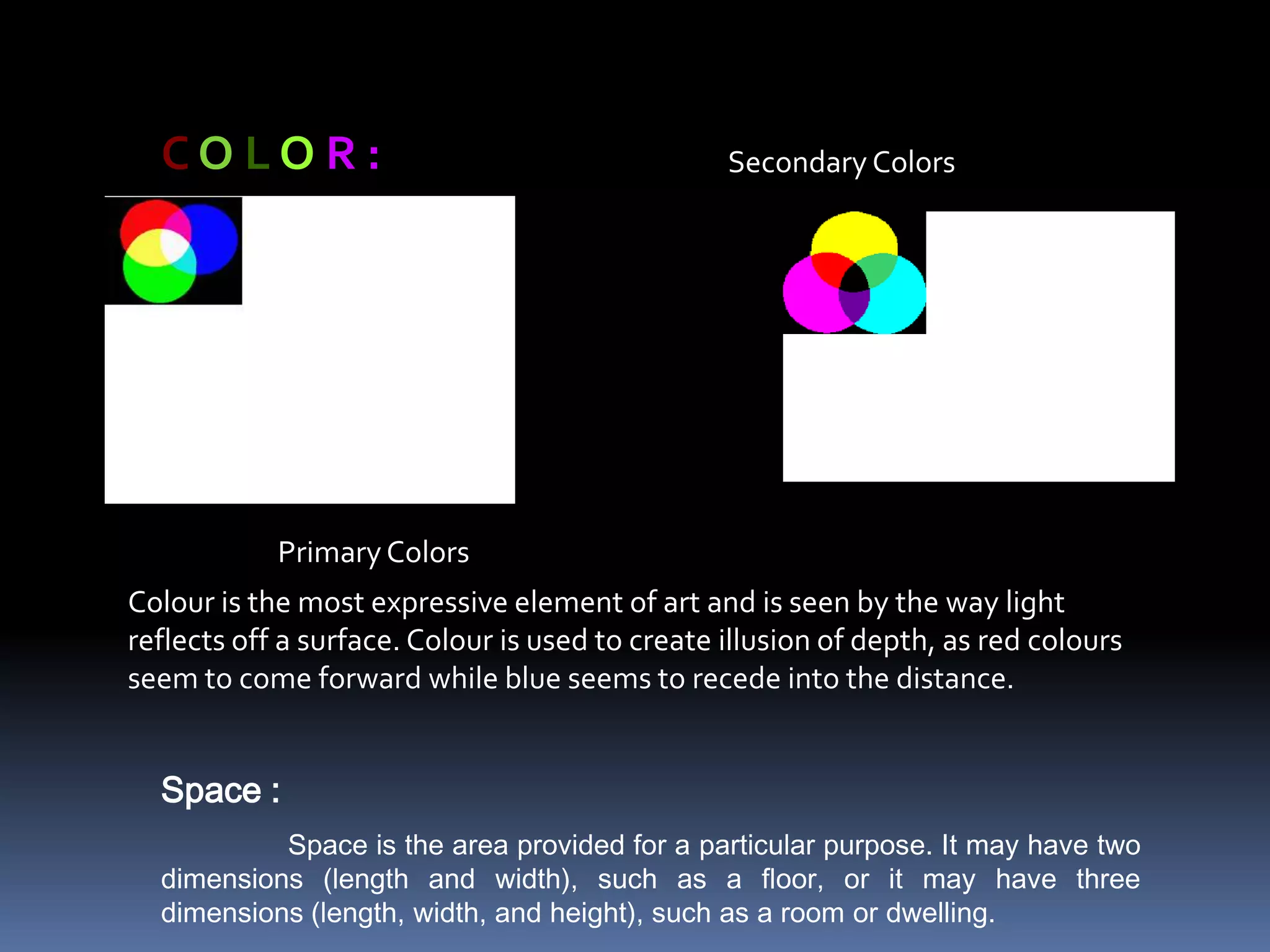
COLOR:                                         Secondary Colors


            Primary Colors
Colour is the most expressive element of art and is seen by the way light
reflects off a surface. Colour is used to create illusion of depth, as red colours
seem to come forward while blue seems to recede into the distance.


  Space :
           Space is the area provided for a particular purpose. It may have two
  dimensions (length and width), such as a floor, or it may have three
  dimensions (length, width, and height), such as a room or dwelling.
Texture:
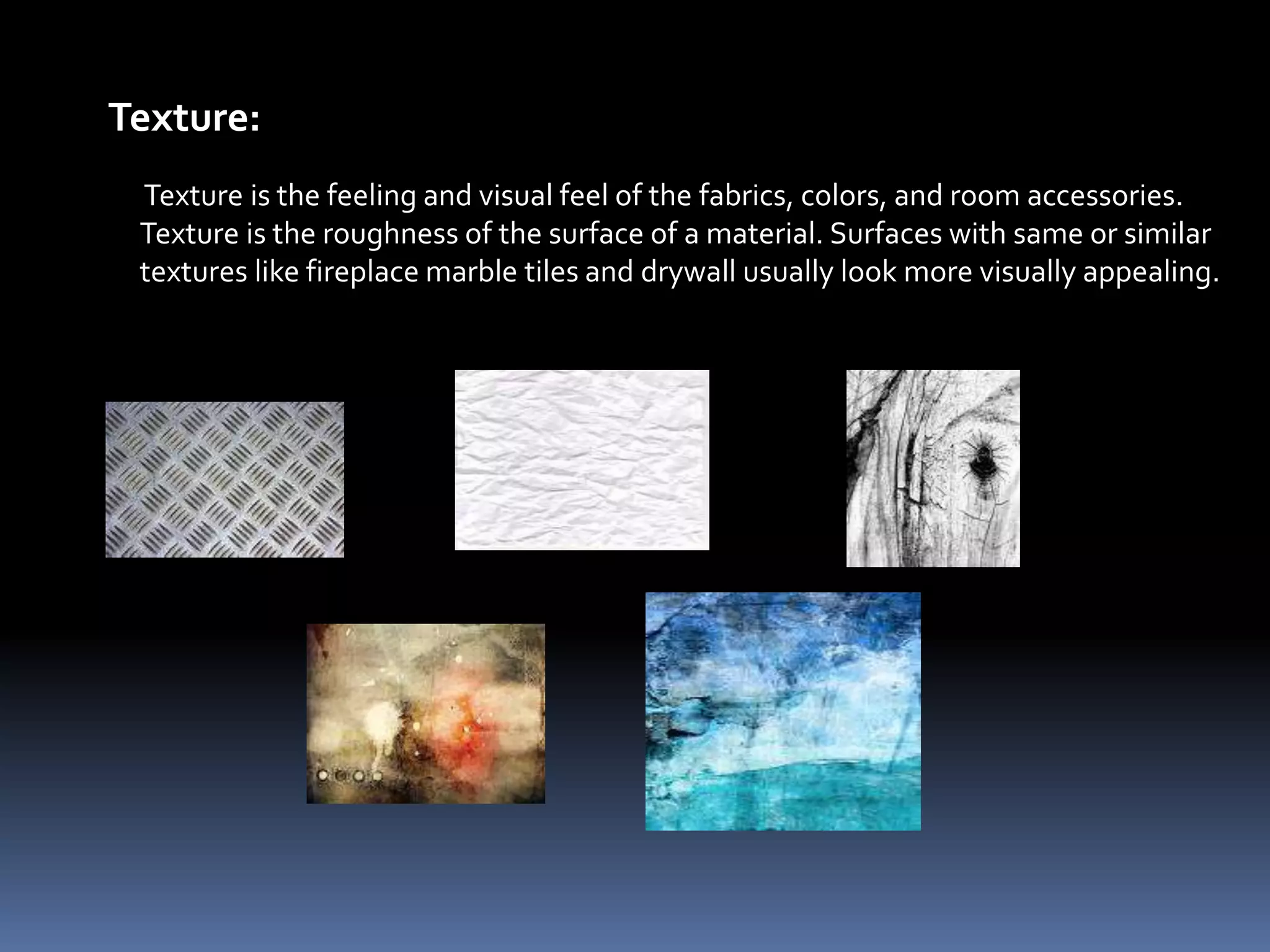
 Texture is the feeling and visual feel of the fabrics, colors, and room accessories.
 Texture is the roughness of the surface of a material. Surfaces with same or similar
 textures like fireplace marble tiles and drywall usually look more visually appealing.
Value:

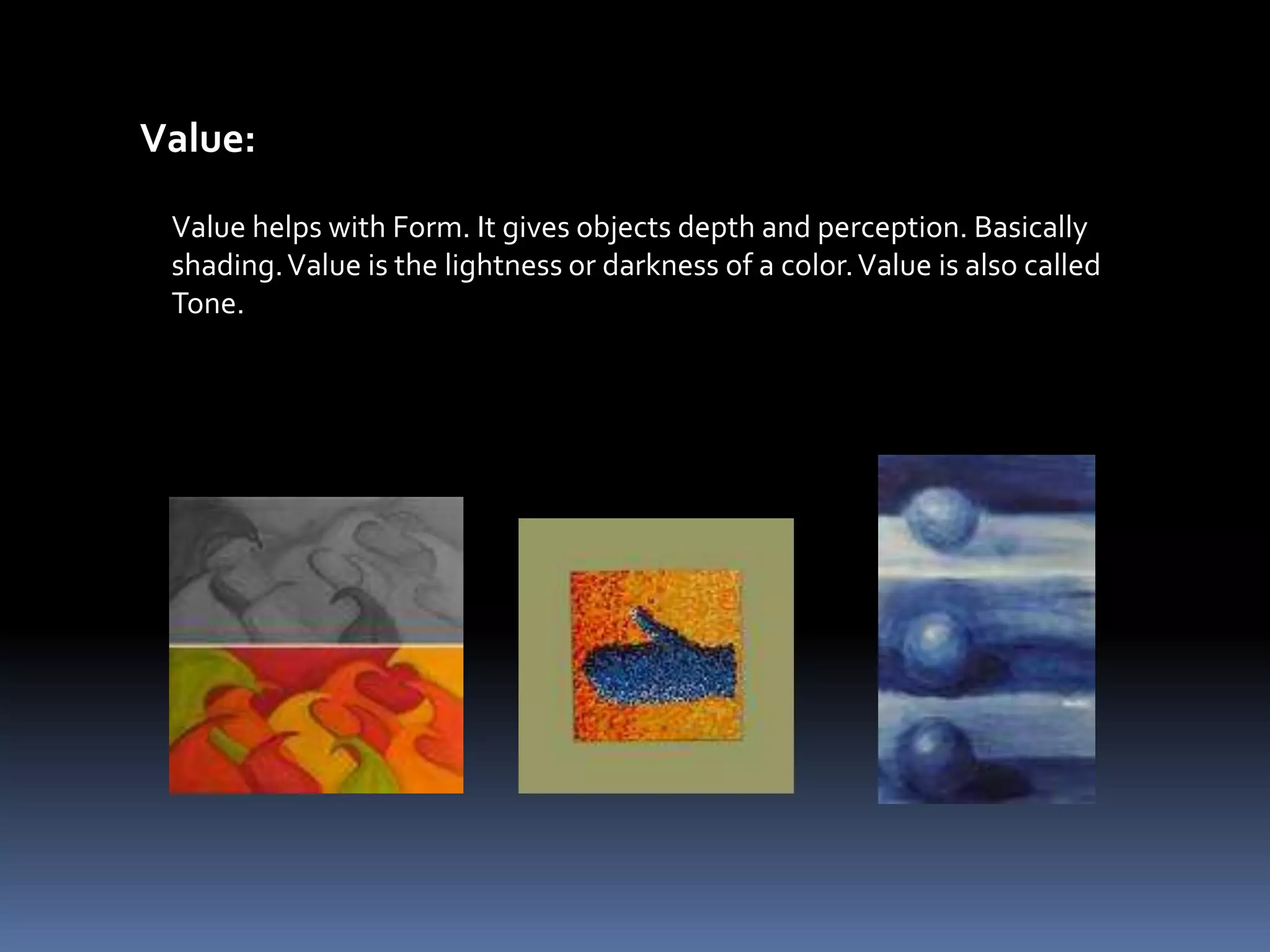
 Value helps with Form. It gives objects depth and perception. Basically
 shading. Value is the lightness or darkness of a color. Value is also called
 Tone.
Shape:


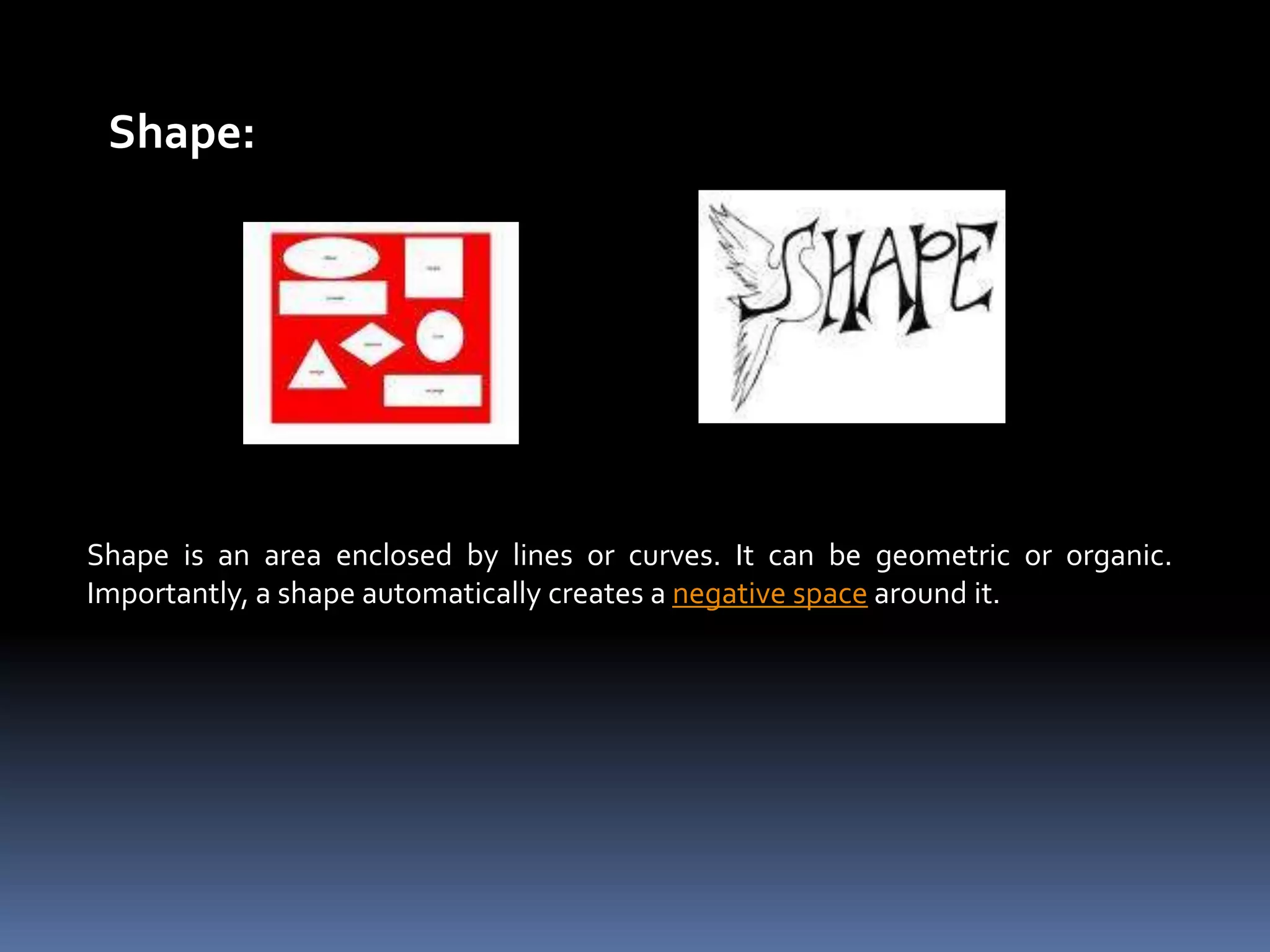
Shape is an area enclosed by lines or curves. It can be geometric or organic.
Importantly, a shape automatically creates a negative space around it.
Type:
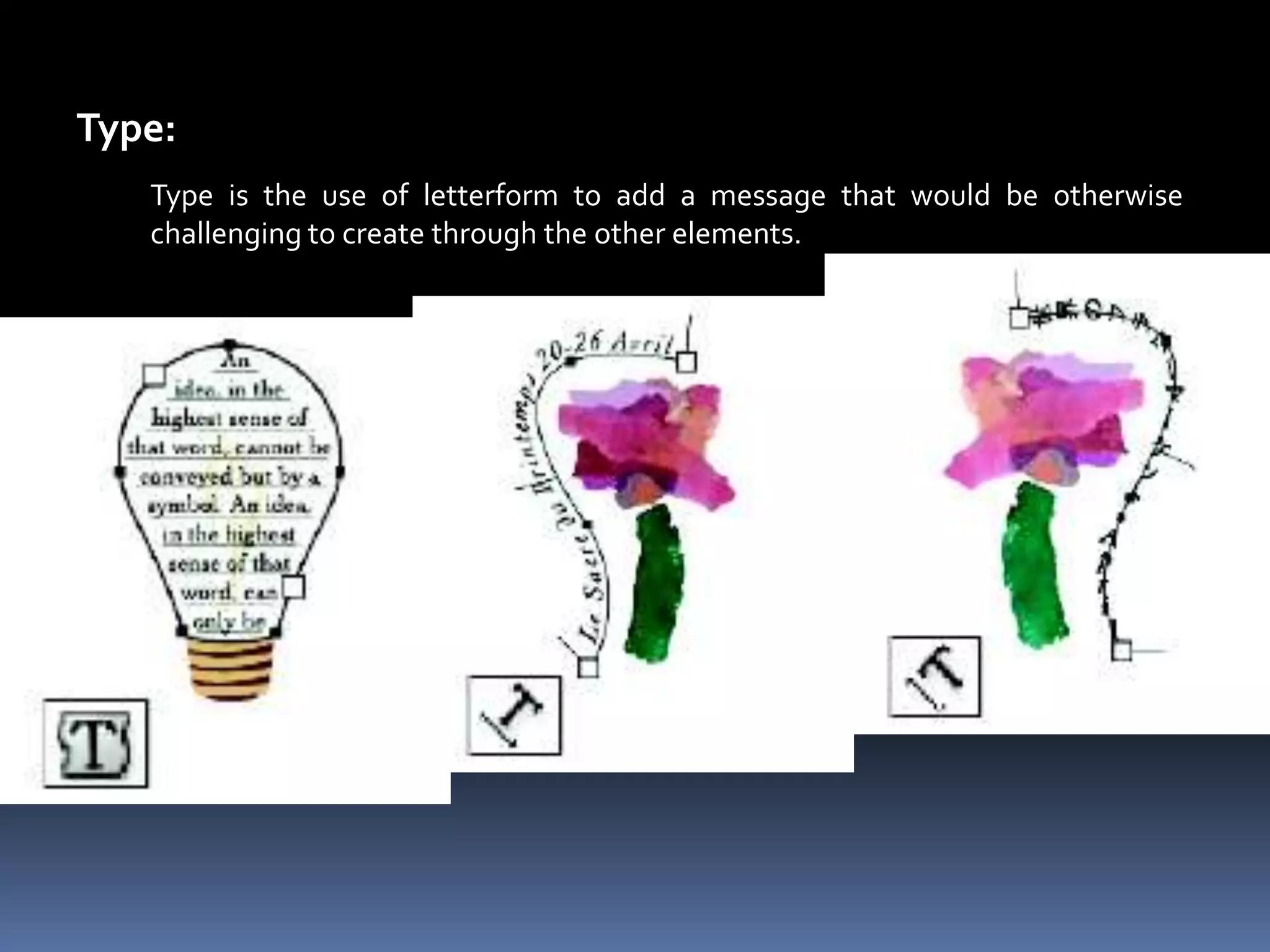
   Type is the use of letterform to add a message that would be otherwise
   challenging to create through the other elements.
Direction:


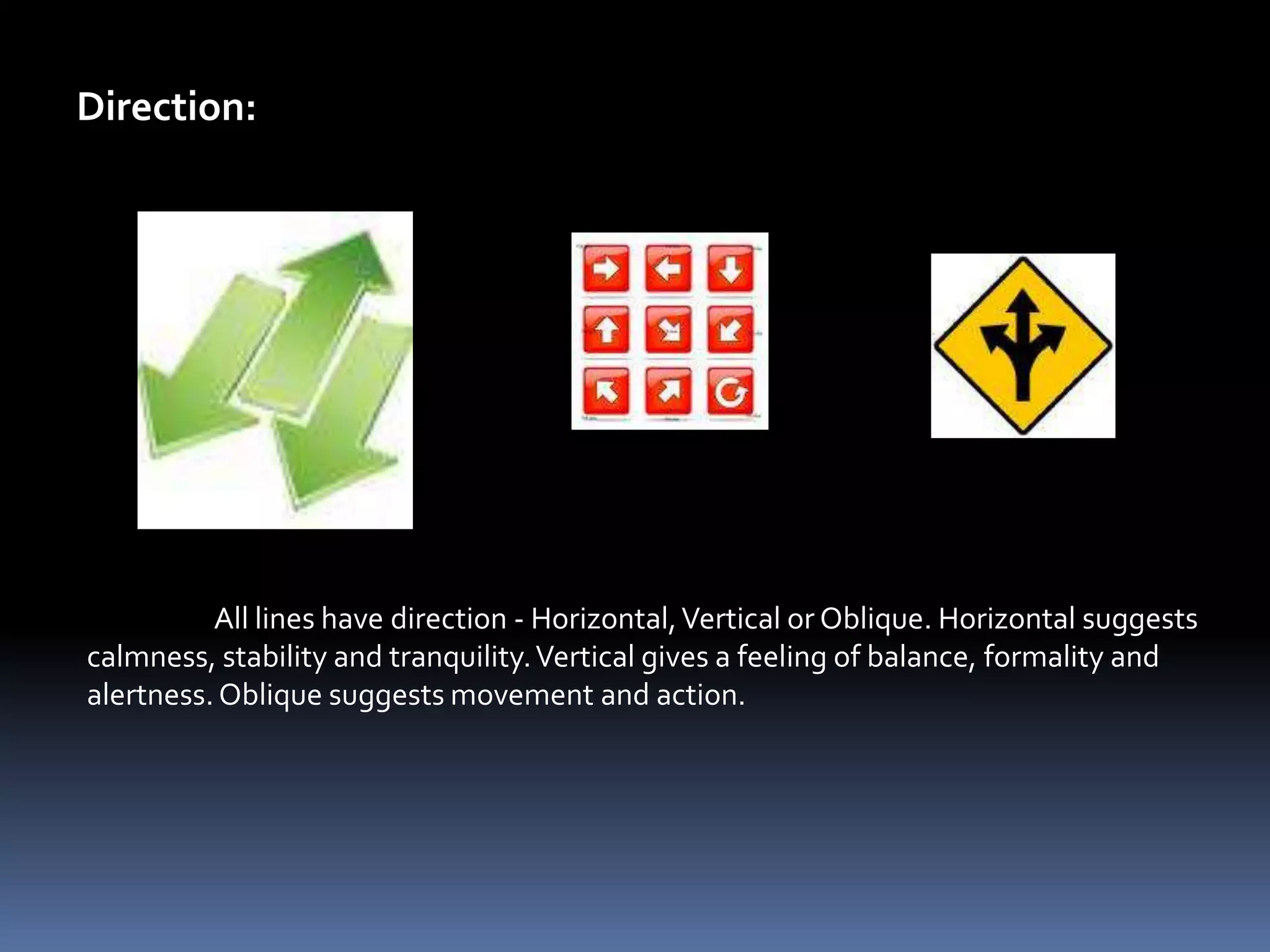
          All lines have direction - Horizontal, Vertical or Oblique. Horizontal suggests
calmness, stability and tranquility. Vertical gives a feeling of balance, formality and
alertness. Oblique suggests movement and action.
Size
                                 Size is simply the relationship of the area
                                 occupied by one shape to that of
                                 another.


Forms and Shapes:

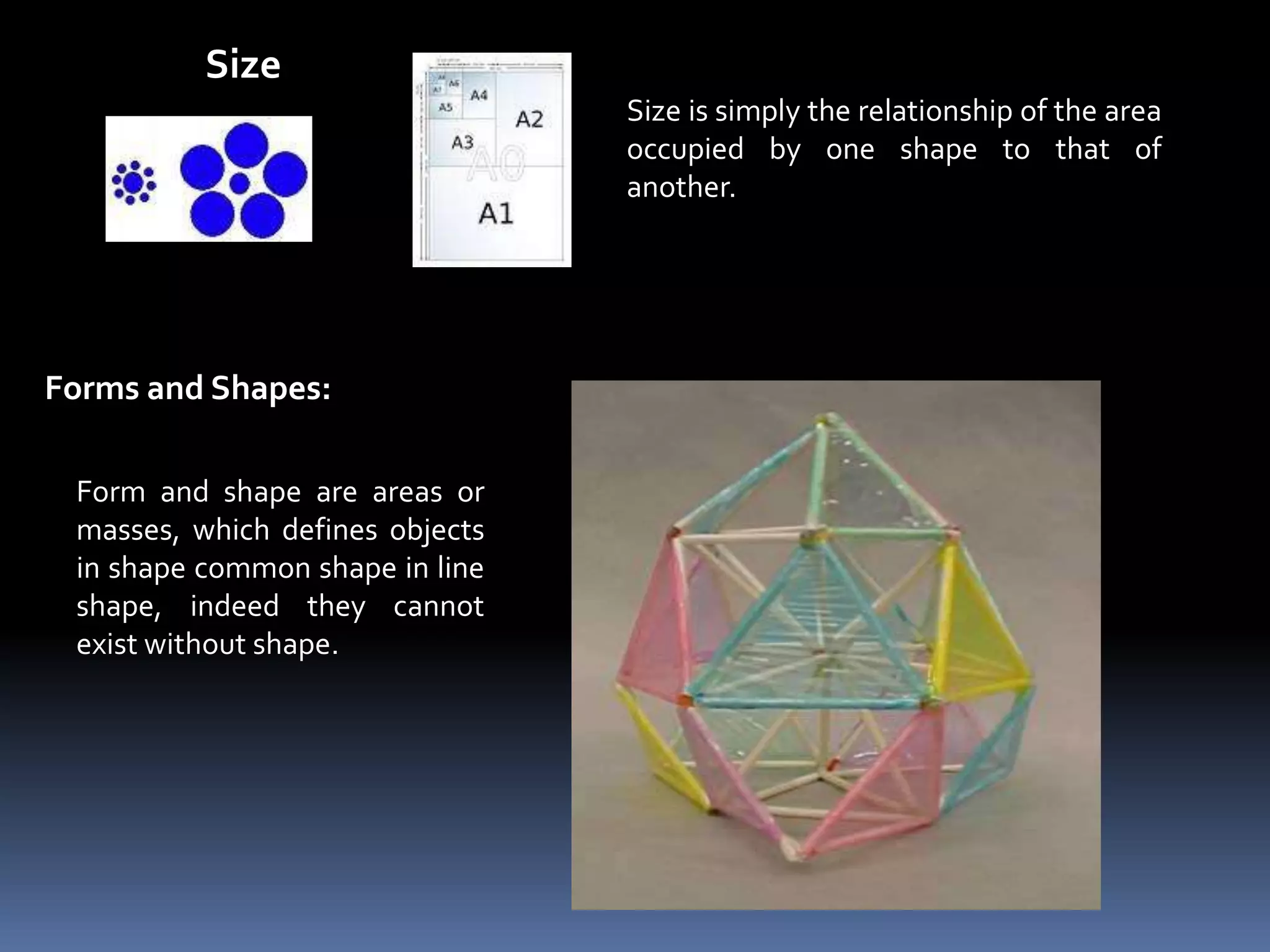
 Form and shape are areas or
 masses, which defines objects
 in shape common shape in line
 shape, indeed they cannot
 exist without shape.
Principles of Design:
These principles are found in nature and it is necessary to understand them and to
interpret ideas as a unified whole.


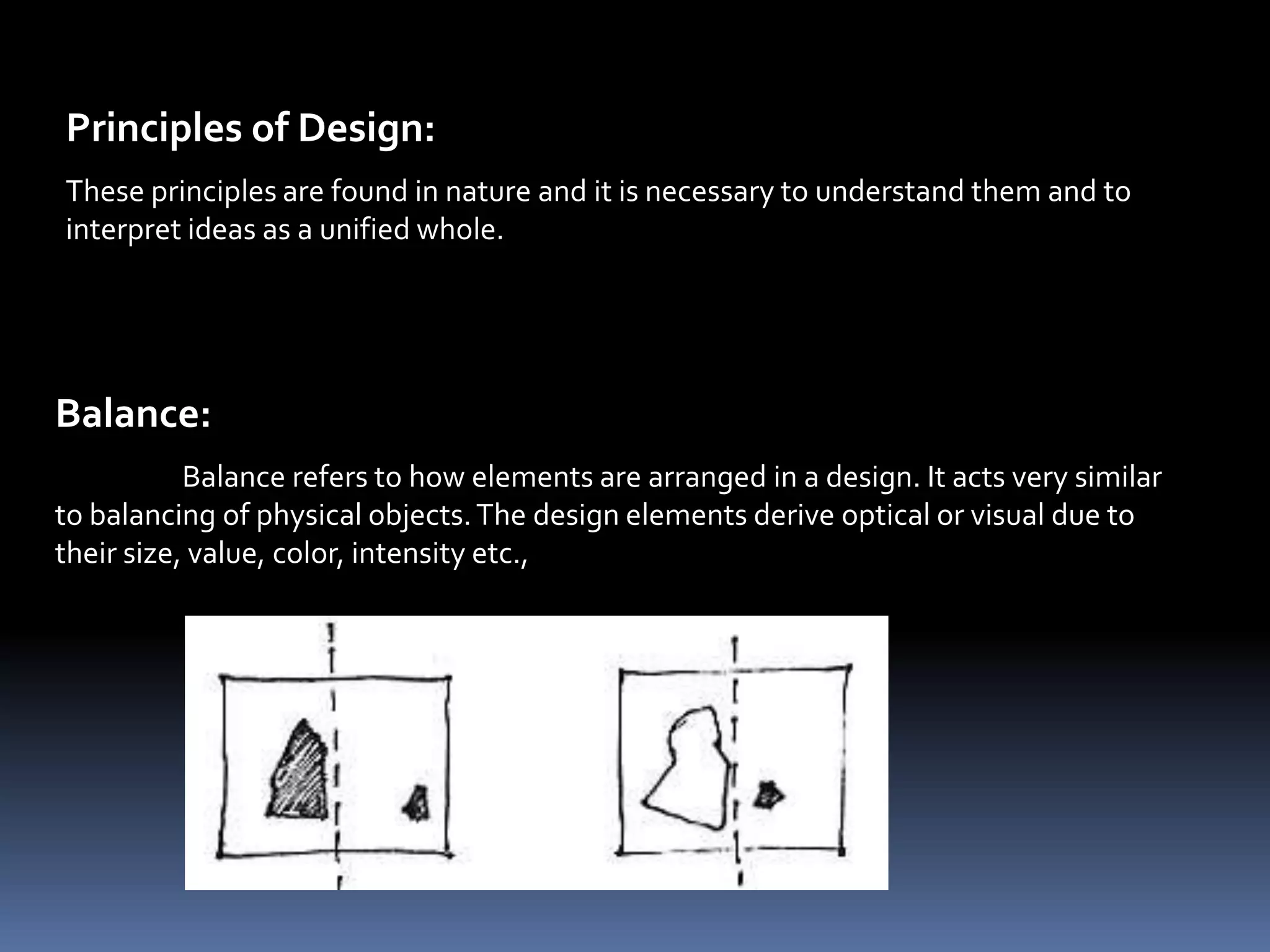
Balance:
           Balance refers to how elements are arranged in a design. It acts very similar
to balancing of physical objects. The design elements derive optical or visual due to
their size, value, color, intensity etc.,
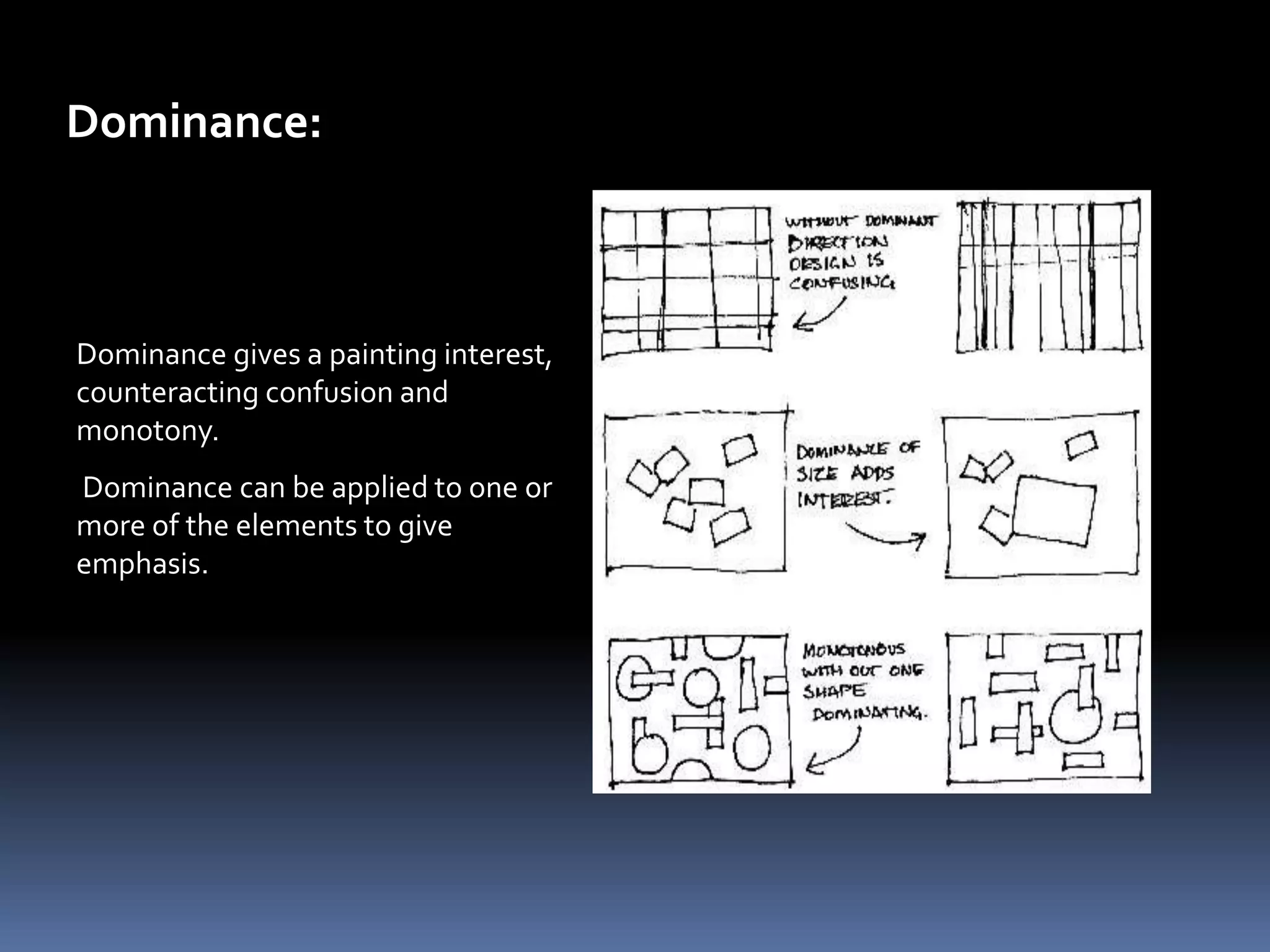
Dominance:


Dominance gives a painting interest,
counteracting confusion and
monotony.
Dominance can be applied to one or
more of the elements to give
emphasis.
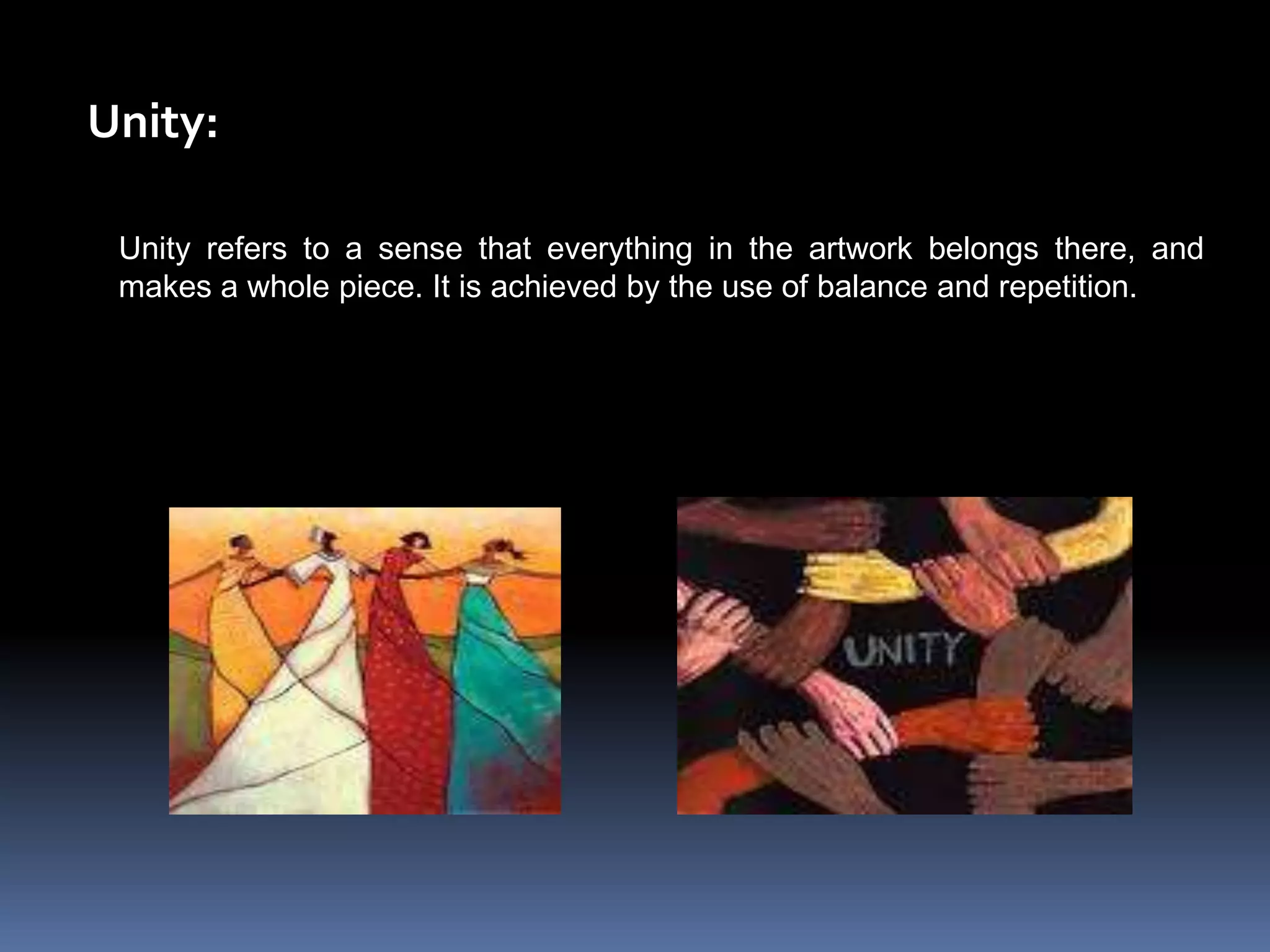
Unity:

 Unity refers to a sense that everything in the artwork belongs there, and
 makes a whole piece. It is achieved by the use of balance and repetition.
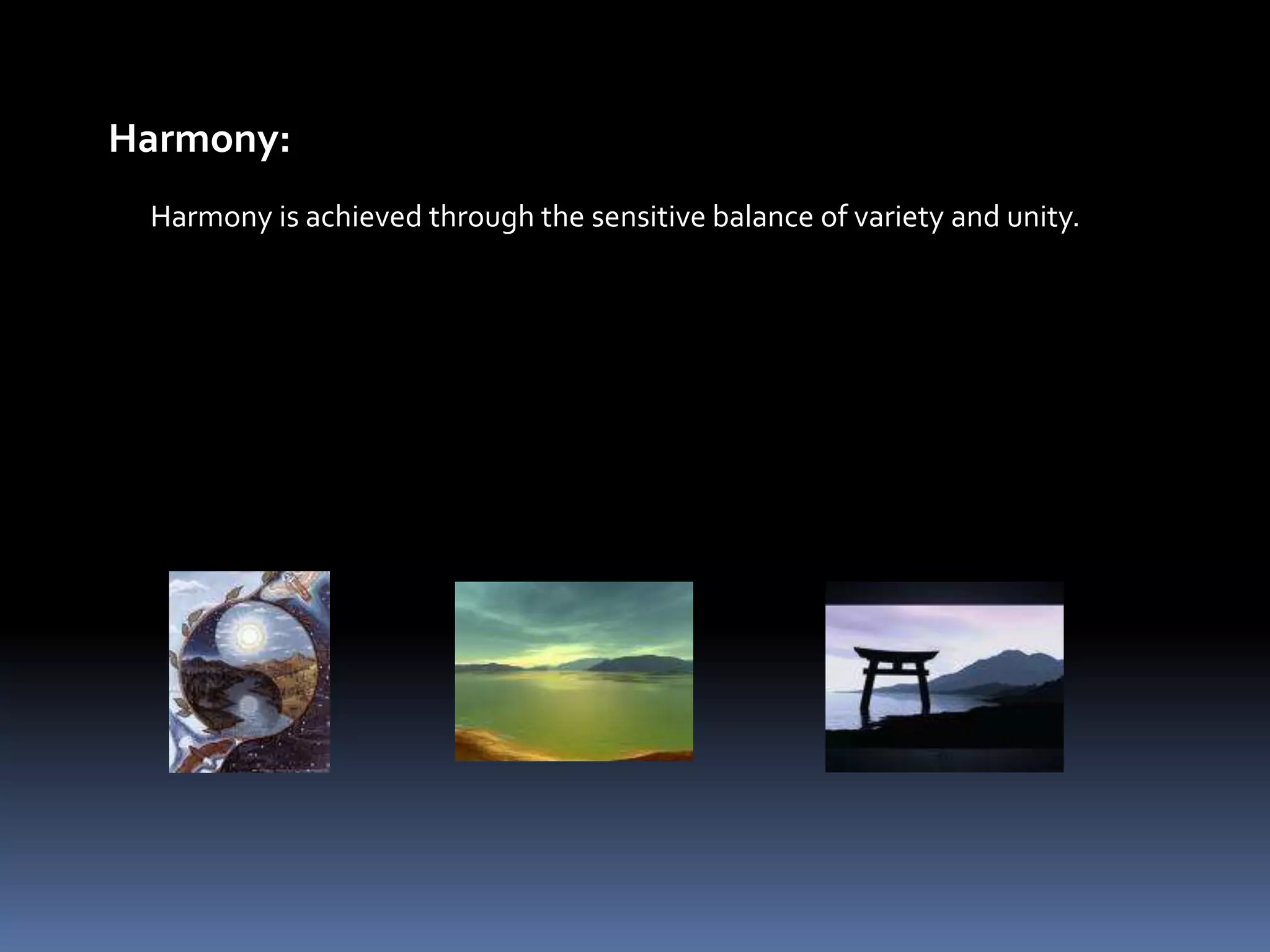
Harmony:
 Harmony is achieved through the sensitive balance of variety and unity.
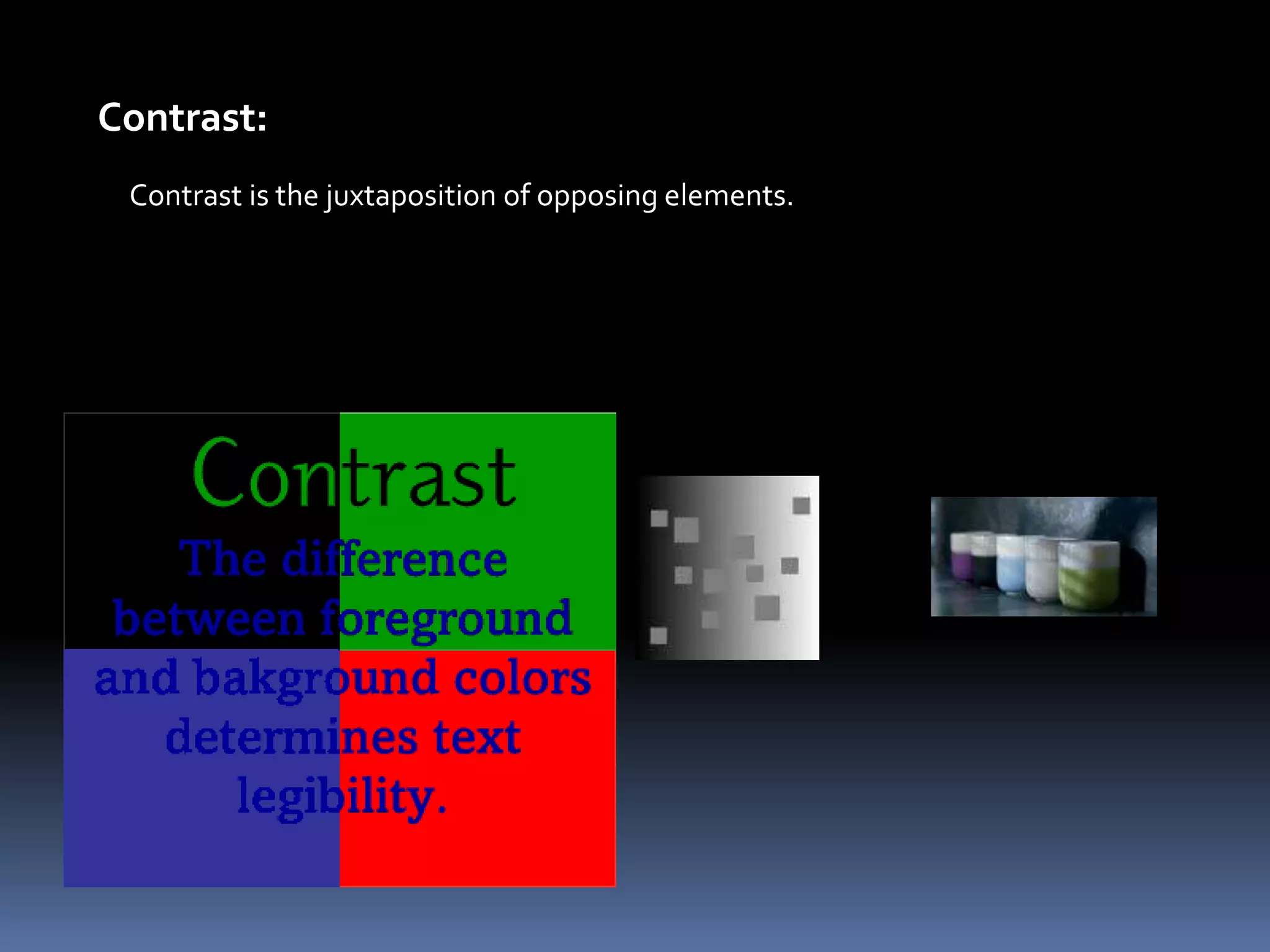
Contrast:
 Contrast is the juxtaposition of opposing elements.
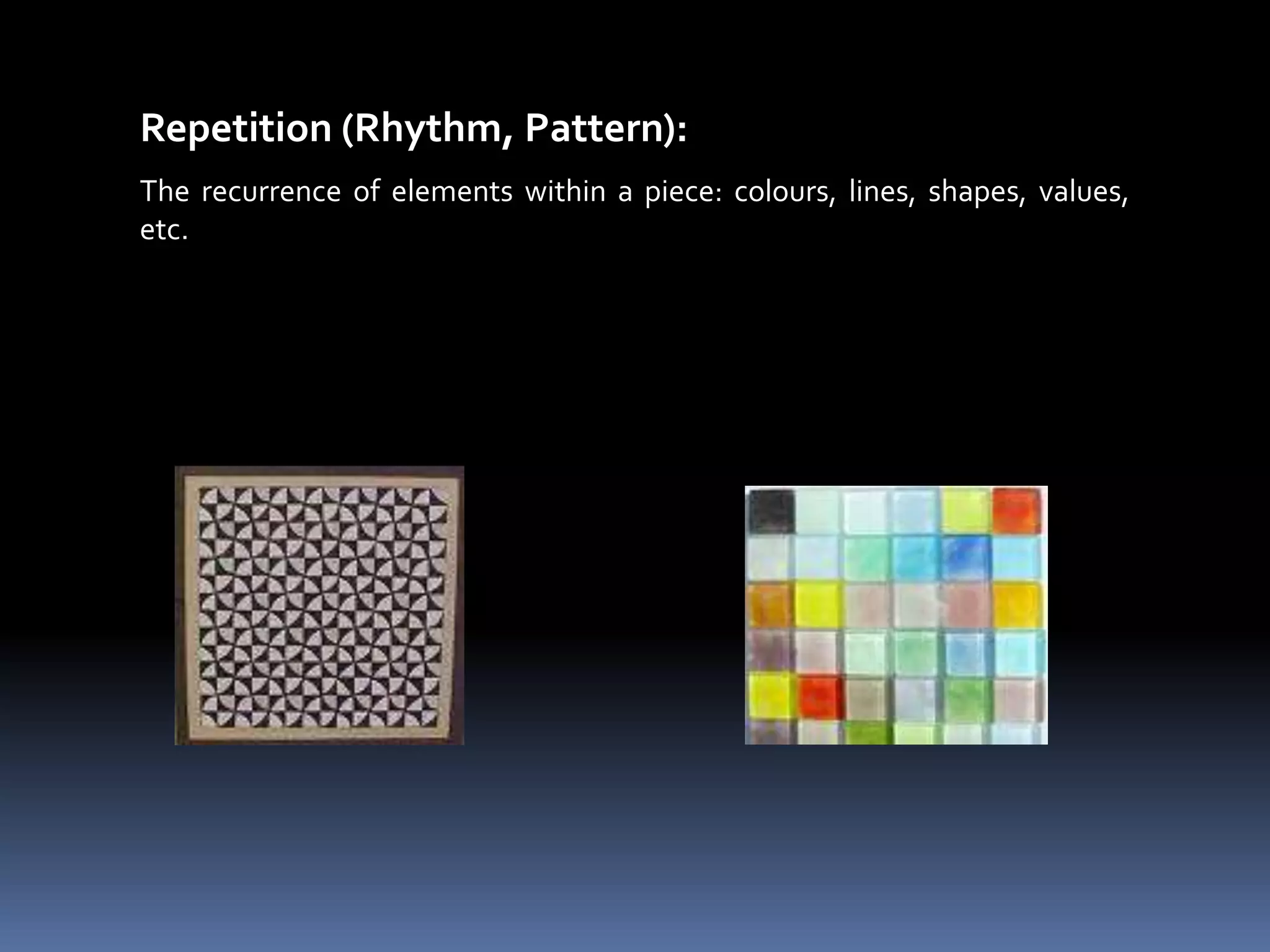
Repetition (Rhythm, Pattern):
The recurrence of elements within a piece: colours, lines, shapes, values,
etc.
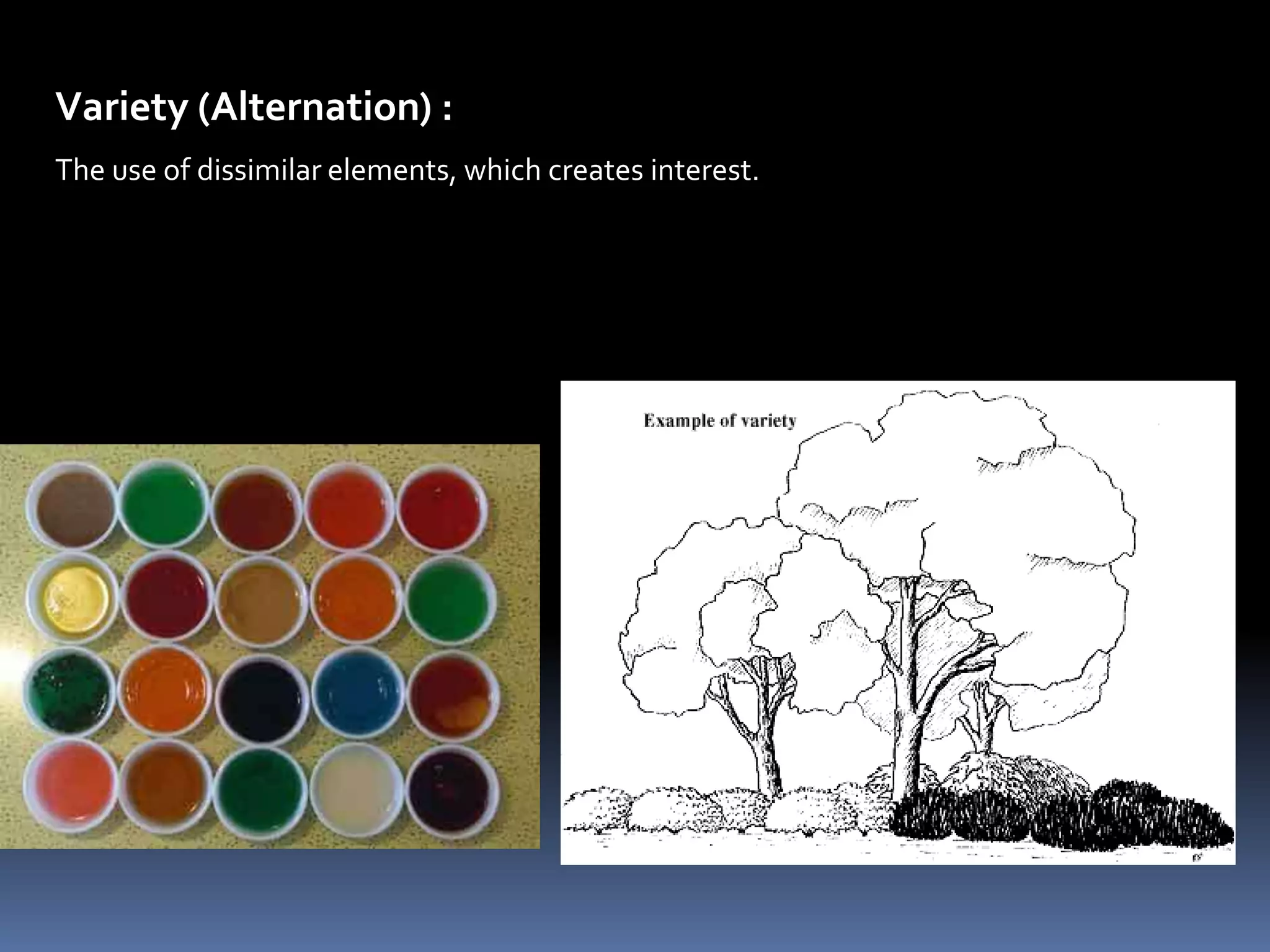
Variety (Alternation) :
The use of dissimilar elements, which creates interest.
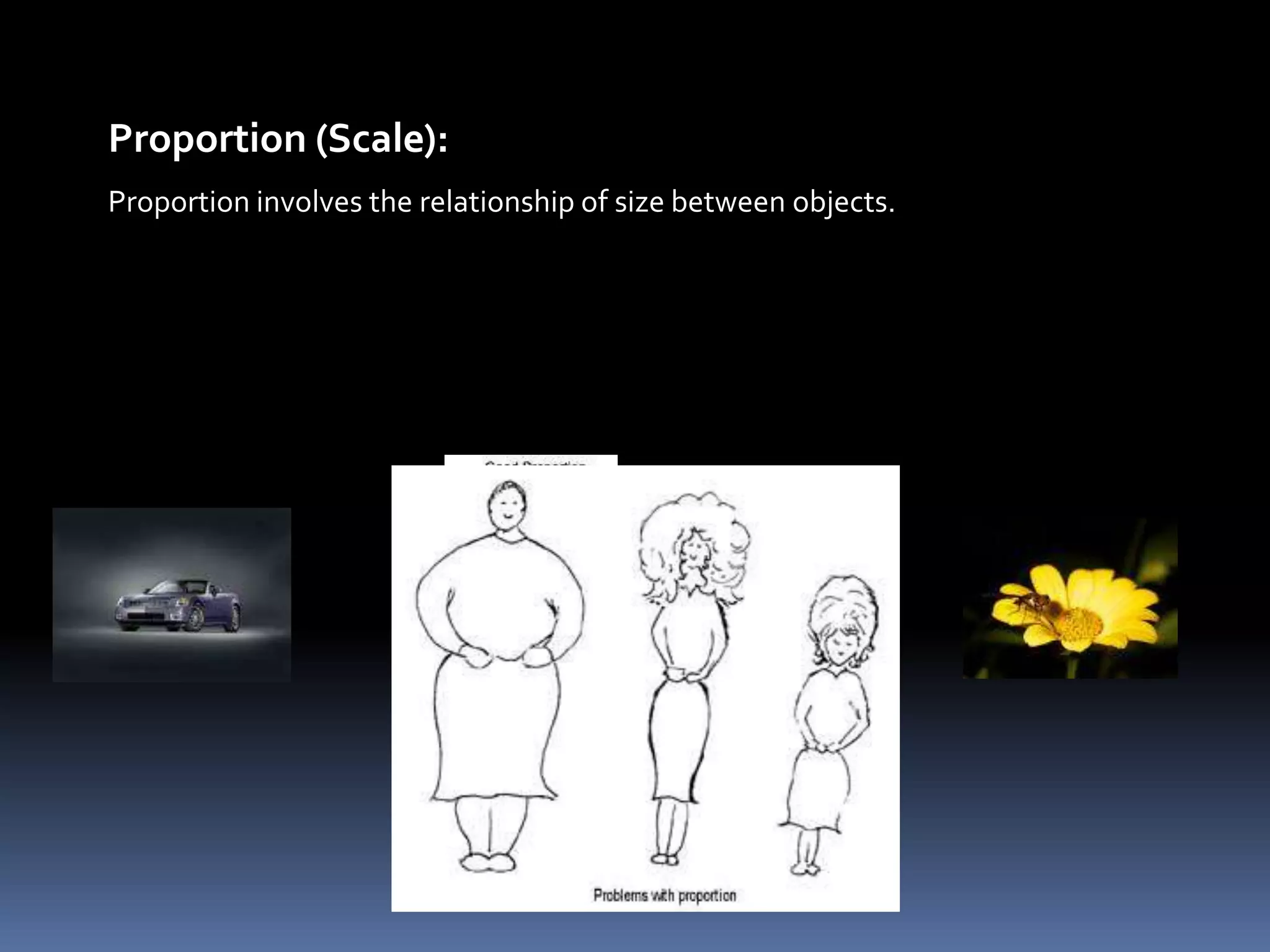
Proportion (Scale):
Proportion involves the relationship of size between objects.
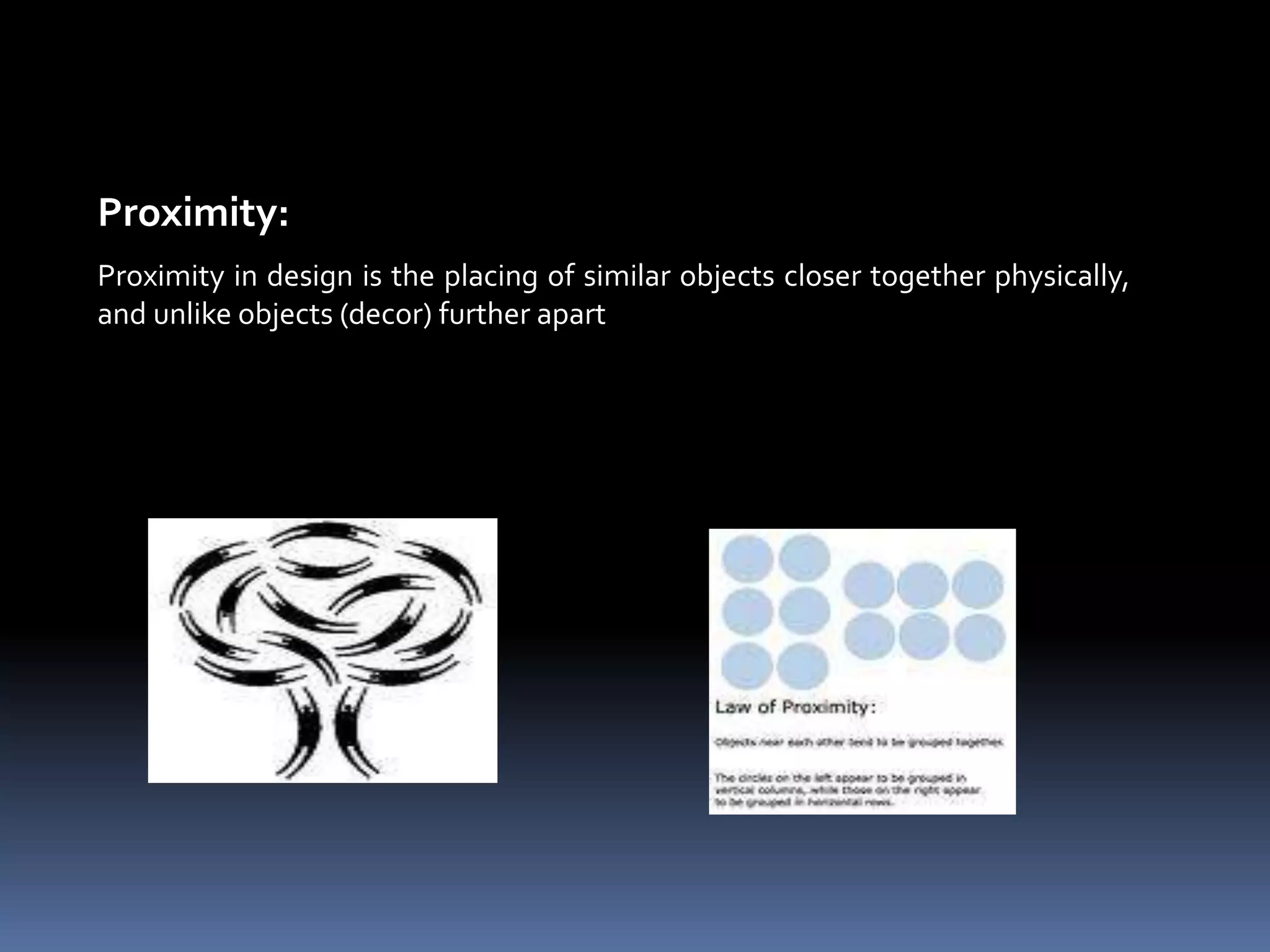
Proximity:
Proximity in design is the placing of similar objects closer together physically,
and unlike objects (decor) further apart
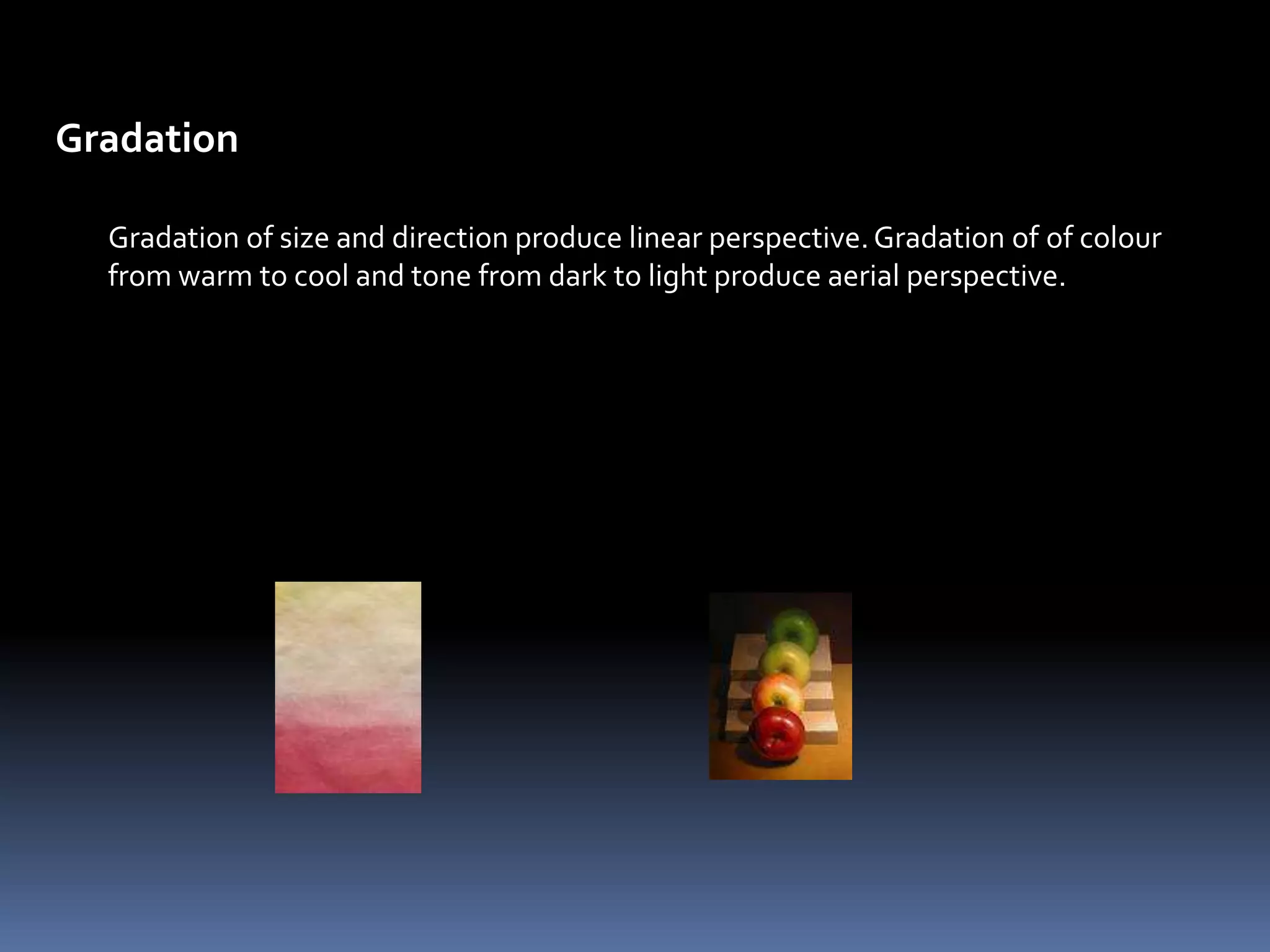
Gradation

  Gradation of size and direction produce linear perspective. Gradation of of colour
  from warm to cool and tone from dark to light produce aerial perspective.

Design – An introduction

  • 1.
  • 2.
    Definition  Design isthe planning that lay the basis for the making of every object or system.  The field of design includes art, industry and our daily spheres of life.
  • 3.
    Design must be:  Economical  Customer friendly  Attractive  Appealing  Convincing  New  Technological.
  • 4.
    Stages of Design Analysing  Planning  Organizing  Presenting
  • 6.
    Elements of Design LINE Basicgeographic shape for connecting two elements. Vertical line Horizontal Diagonal Curve Spiral Zigzag Oval Circle
  • 7.
    COLOR: Secondary Colors Primary Colors Colour is the most expressive element of art and is seen by the way light reflects off a surface. Colour is used to create illusion of depth, as red colours seem to come forward while blue seems to recede into the distance. Space : Space is the area provided for a particular purpose. It may have two dimensions (length and width), such as a floor, or it may have three dimensions (length, width, and height), such as a room or dwelling.
  • 8.
    Texture: Texture isthe feeling and visual feel of the fabrics, colors, and room accessories. Texture is the roughness of the surface of a material. Surfaces with same or similar textures like fireplace marble tiles and drywall usually look more visually appealing.
  • 9.
    Value: Value helpswith Form. It gives objects depth and perception. Basically shading. Value is the lightness or darkness of a color. Value is also called Tone.
  • 10.
    Shape: Shape is anarea enclosed by lines or curves. It can be geometric or organic. Importantly, a shape automatically creates a negative space around it.
  • 11.
    Type: Type is the use of letterform to add a message that would be otherwise challenging to create through the other elements.
  • 12.
    Direction: All lines have direction - Horizontal, Vertical or Oblique. Horizontal suggests calmness, stability and tranquility. Vertical gives a feeling of balance, formality and alertness. Oblique suggests movement and action.
  • 13.
    Size Size is simply the relationship of the area occupied by one shape to that of another. Forms and Shapes: Form and shape are areas or masses, which defines objects in shape common shape in line shape, indeed they cannot exist without shape.
  • 14.
    Principles of Design: Theseprinciples are found in nature and it is necessary to understand them and to interpret ideas as a unified whole. Balance: Balance refers to how elements are arranged in a design. It acts very similar to balancing of physical objects. The design elements derive optical or visual due to their size, value, color, intensity etc.,
  • 15.
    Dominance: Dominance gives apainting interest, counteracting confusion and monotony. Dominance can be applied to one or more of the elements to give emphasis.
  • 16.
    Unity: Unity refersto a sense that everything in the artwork belongs there, and makes a whole piece. It is achieved by the use of balance and repetition.
  • 17.
    Harmony: Harmony isachieved through the sensitive balance of variety and unity.
  • 18.
    Contrast: Contrast isthe juxtaposition of opposing elements.
  • 19.
    Repetition (Rhythm, Pattern): Therecurrence of elements within a piece: colours, lines, shapes, values, etc.
  • 20.
    Variety (Alternation) : Theuse of dissimilar elements, which creates interest.
  • 21.
    Proportion (Scale): Proportion involvesthe relationship of size between objects.
  • 22.
    Proximity: Proximity in designis the placing of similar objects closer together physically, and unlike objects (decor) further apart
  • 23.
    Gradation Gradationof size and direction produce linear perspective. Gradation of of colour from warm to cool and tone from dark to light produce aerial perspective.