DENTINOGENESIS
   IMPERFECTA
(HEREDITARY OPALESCENT DENTIN)


        ESMINO, PRECIOUS GRACE H.
                 DMD2D
DENTINOGENESIS IMPERFECTA
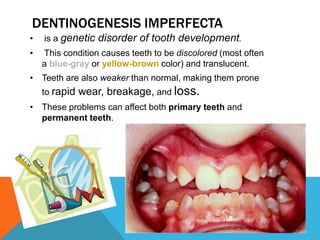
•   is a genetic disorder of tooth development.
•   This condition causes teeth to be discolored (most often
    a blue-gray or yellow-brown color) and translucent.
• Teeth are also weaker than normal, making them prone
    to rapid wear, breakage, and loss.
• These problems can affect both primary teeth and
  permanent teeth.
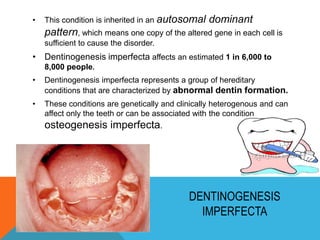
•   This condition is inherited in an autosomal   dominant
    pattern, which means one copy of the altered gene in each cell is
    sufficient to cause the disorder.
• Dentinogenesis imperfecta affects an estimated 1 in 6,000 to
    8,000 people.
•   Dentinogenesis imperfecta represents a group of hereditary
    conditions that are characterized by abnormal dentin formation.
•   These conditions are genetically and clinically heterogenous and can
    affect only the teeth or can be associated with the condition
    osteogenesis imperfecta.


                                            DENTINOGENESIS
                                              IMPERFECTA
OF
TYPE 1
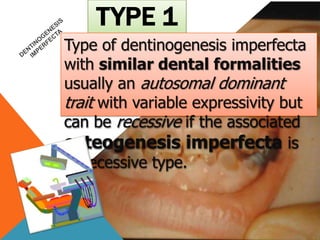
Type of dentinogenesis imperfecta
with similar dental formalities
usually an autosomal dominant
trait with variable expressivity but
can be recessive if the associated
osteogenesis imperfecta is
of recessive type.
TYPE 2
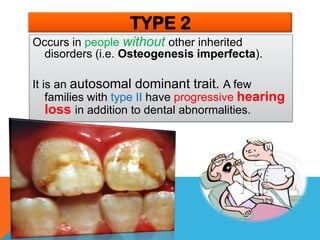
Occurs in people without other inherited
  disorders (i.e. Osteogenesis imperfecta).

It is an autosomal dominant trait. A few
    families with type II have progressive hearing
    loss in addition to dental abnormalities.
C L I N I C A L F E AT U R E S
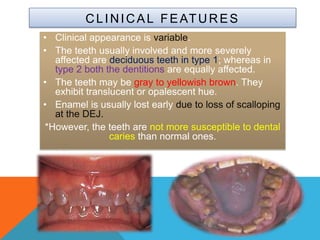
• Clinical appearance is variable.
• The teeth usually involved and more severely
  affected are deciduous teeth in type 1; whereas in
  type 2 both the dentitions are equally affected.
• The teeth may be gray to yellowish brown. They
  exhibit translucent or opalescent hue.
• Enamel is usually lost early due to loss of scalloping
  at the DEJ.
*However, the teeth are not more susceptible to dental
                caries than normal ones.
R A D I O G R A P H I C F E AT U R E S


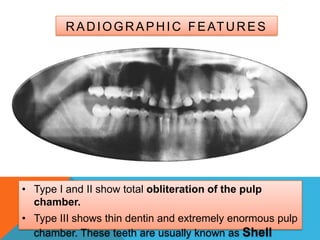
• Type I and II show total obliteration of the pulp
  chamber.
• Type III shows thin dentin and extremely enormous pulp
  chamber. These teeth are usually known as Shell
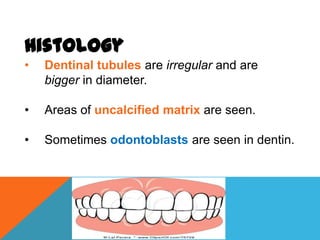
Histology
•   Dentinal tubules are irregular and are
    bigger in diameter.

•   Areas of uncalcified matrix are seen.

•   Sometimes odontoblasts are seen in dentin.
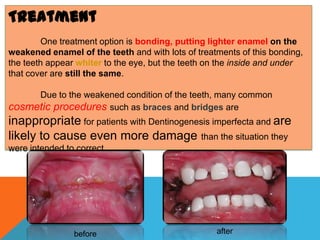
Treatment
        One treatment option is bonding, putting lighter enamel on the
weakened enamel of the teeth and with lots of treatments of this bonding,
the teeth appear whiter to the eye, but the teeth on the inside and under
that cover are still the same.

     Due to the weakened condition of the teeth, many common
cosmetic procedures such as braces and bridges are
inappropriate for patients with Dentinogenesis imperfecta and are
likely to cause even more damage than the situation they
were intended to correct.


                before                             after

Dentinogenesis imperfecta

  • 1.
    DENTINOGENESIS IMPERFECTA (HEREDITARY OPALESCENT DENTIN) ESMINO, PRECIOUS GRACE H. DMD2D
  • 2.
    DENTINOGENESIS IMPERFECTA • is a genetic disorder of tooth development. • This condition causes teeth to be discolored (most often a blue-gray or yellow-brown color) and translucent. • Teeth are also weaker than normal, making them prone to rapid wear, breakage, and loss. • These problems can affect both primary teeth and permanent teeth.
  • 3.
    This condition is inherited in an autosomal dominant pattern, which means one copy of the altered gene in each cell is sufficient to cause the disorder. • Dentinogenesis imperfecta affects an estimated 1 in 6,000 to 8,000 people. • Dentinogenesis imperfecta represents a group of hereditary conditions that are characterized by abnormal dentin formation. • These conditions are genetically and clinically heterogenous and can affect only the teeth or can be associated with the condition osteogenesis imperfecta. DENTINOGENESIS IMPERFECTA
  • 4.
  • 5.
    TYPE 1 Type ofdentinogenesis imperfecta with similar dental formalities usually an autosomal dominant trait with variable expressivity but can be recessive if the associated osteogenesis imperfecta is of recessive type.
  • 6.
    TYPE 2 Occurs inpeople without other inherited disorders (i.e. Osteogenesis imperfecta). It is an autosomal dominant trait. A few families with type II have progressive hearing loss in addition to dental abnormalities.
  • 7.
    C L IN I C A L F E AT U R E S • Clinical appearance is variable. • The teeth usually involved and more severely affected are deciduous teeth in type 1; whereas in type 2 both the dentitions are equally affected. • The teeth may be gray to yellowish brown. They exhibit translucent or opalescent hue. • Enamel is usually lost early due to loss of scalloping at the DEJ. *However, the teeth are not more susceptible to dental caries than normal ones.
  • 8.
    R A DI O G R A P H I C F E AT U R E S • Type I and II show total obliteration of the pulp chamber. • Type III shows thin dentin and extremely enormous pulp chamber. These teeth are usually known as Shell
  • 9.
    Histology • Dentinal tubules are irregular and are bigger in diameter. • Areas of uncalcified matrix are seen. • Sometimes odontoblasts are seen in dentin.
  • 10.
    Treatment One treatment option is bonding, putting lighter enamel on the weakened enamel of the teeth and with lots of treatments of this bonding, the teeth appear whiter to the eye, but the teeth on the inside and under that cover are still the same. Due to the weakened condition of the teeth, many common cosmetic procedures such as braces and bridges are inappropriate for patients with Dentinogenesis imperfecta and are likely to cause even more damage than the situation they were intended to correct. before after