Presented by:
Anupama Mukundan
 What is dentinogenesis
 Introduction to dentinogenesis
 Classification
 Etiology
 Clinical features
 Radiographic features
 Histopathologic features
 Treatment

imperfecta


Dentinogenesis is the formation of dentin, which
starts before amelogenesis.



Dentin is formed by odontoblast cells.

Dentinogenesis takes place in two phases:
1. formation of organic collagen matrix
2. deposition of hydroxyapetite crystals



Is an inherited disorder of dentin
formation



Autosomal dominant condition



Affects deciduous and permanent teeth
SHIELDS CLASSIFICATION
1. TYPE - I
2. TYPE - II
3. TYPE- III

1.

REVISED CLASSIFICATION
DENTINOGENESIS IMPERFECTA 1
DENTINOGENESIS IMPERFECTA 2

WITKOP CLASSIFICATION
1. DENTINOGENESIS IMPERFECTA
2. HEREDITARY OPALASCENT DENTIN
3. BRANDYWINE ISOLATE


TYPE I: Occurs in patients affected with
osteogenesis imperfecta



TYPE II : Is not associated with osteogenesis
imperfecta



TYPE III: “Brandywine type” rare condition,
seen in racial isolate of Maryland, exhibits
multiple pulp exposures and periapical lesions
in deciduous dentition.
DENTINOGENESIS IMPERFECTA 1
 Without osteogenesis imperfecta
 Corresponds to type II of shields classification
DENTINOGENESIS IMPERFECTA 2
 Corresponds to type III of shields classification


THERE IS NO SUBSTITUTE IN THE PRESENT
CLASSIFICATION FOR THE CATEGORY
DESIGNATED AS TYPE I IN THE SHIELDS
CLASSIFICATION
SYNONYMS
 OPALESCENT DENTIN


DENTINOGENESIS IMPERFECTA WITHOUT
OSTEOGENESIS IMPERFECTA



OPALESCENT TEETH WITHOUT
OSTEOGENESIS IMPERFECTA




SHIELDS TYPE II
CAPDEPONT TEETH


MUTATION IN THE DENTIN SIALO PHOSPHO
PROTEIN (DSPP) gene ENCODING DENTIN
PHOSPHOPROTEIN AND DENTIN SIALOPROTEIN


Clearly distinct from osteogenesis imperfecta with
opalescent teeth & affects only the teeth



No increased frequency of bone fracture is seen



Frequency: 1 in 6000-8000
Synonyms
 SHIELDS TYPE III
 BRANDYWINE TYPE DENTINOGENESIS

IMPERFECTA


Some researchers say it is a separate mutation from DGI 1



Shield et al 1973 stated that markedly enlarged pulp chambers
and pulp exposures occurs in deciduous teeth do not occur in
DGI 1



Witkop 1975 suggested both are same



Recent studies suggests both are result of mutation in two tightly
linked genes



MacDougall et al 1999 stated DGI 2 differ from DGI 1 by the
presence of multiple pulp exposures normal non mineralized pulp
chambers ,and general appearance of shell teeth




Affects males and females equally
Teeth are blue gray or amber brown and opalescent
Few days after eruption teeth may achieve a normal
color, following which they become translucent


Finally become gray or brown with bluish reflection from
enamel



Enamel may split readily from dentin when subjected to
occlusal stress



Severe attrition of teeth



Obliterated pulp chamber



Sauk et al (1976)increase in glycosaminoglycans in edta
soluble dentin in teeth from patients with this disorder as
compared to controls and less gag in edta insoluble residue


Teeth are not sensitive



Dentin is soft and easily penetrable but not caries prone
because of structural change in dentin



In some case there may be hypomineralised area on
the enamel


Bulb shaped or bell shaped crowns of teeth with
constricted cervical areas



Roots - thin and spiked



Obliteration of coronal and radicular pulp chamber
depending on age



Cementum, alveolar bone and PDL appears normal



Type 2large pulp chambers with thin shell of dentin
and enamel “shell teeth”


Enamelnormal



Mantle dentin (narrow zone of dentin below
enamel)normal



Remaining dentin severely dysplastic with
vast areas of amorphous matrix with globular or
interglobular foci of mineralization



Reduced number of dentinal tubules


Tubules distorted, irregular in shape, widely spaced
,larger in size



Absence of odontoblastic processes and presence of
degenerating cellular debris instead



Large area of atubular dentin



Pulp chamber and root canal obliterated by abnormal
dentin deposition



DEJ smooth or flattened instead of scalloped
(responsible for early chipping of enamel)
 Increased

water content (60 % than

normal)
 Decreased mineral content
 Density, x-ray absorption and hardness
are low
 Micro hardness near to cementum
AIMED AT PREVENTING LOSS OF ENAMEL AND
DENTIN THROUGH ATTRITION
Mild –moderate cases (no enamel loss or rapid
wear of teeth)
1. Routine restorative techniques Eg:amalgam,
composite
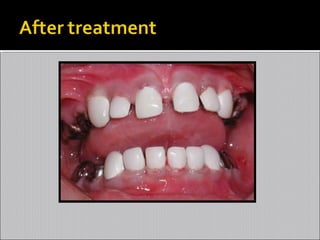
2. Bonding of veneers for esthetics as they mask
opalescence of anterior teeth
3. Bleaching to an extend lightens the color
Severe cases: (significant enamel loss and rapid
wear)
1. Full coverage crown restoration


2. Primary teeth
 stainless steel in posteriors
 stainless steel with open face

anterior teeth

3. Permanent

composite for

teeth porcelain fused metal crowns
 Shafer’s

text book of oral pathology (6 th

edition)
 Oral

and maxillofacial pathology-Neville
(3rd edition)
THANK YOU

Dentinogenesis imperfecta

  • 1.
  • 2.
     What isdentinogenesis  Introduction to dentinogenesis  Classification  Etiology  Clinical features  Radiographic features  Histopathologic features  Treatment imperfecta
  • 3.
     Dentinogenesis is theformation of dentin, which starts before amelogenesis.  Dentin is formed by odontoblast cells. Dentinogenesis takes place in two phases: 1. formation of organic collagen matrix 2. deposition of hydroxyapetite crystals 
  • 4.
     Is an inheriteddisorder of dentin formation  Autosomal dominant condition  Affects deciduous and permanent teeth
  • 5.
    SHIELDS CLASSIFICATION 1. TYPE- I 2. TYPE - II 3. TYPE- III 1. REVISED CLASSIFICATION DENTINOGENESIS IMPERFECTA 1 DENTINOGENESIS IMPERFECTA 2 WITKOP CLASSIFICATION 1. DENTINOGENESIS IMPERFECTA 2. HEREDITARY OPALASCENT DENTIN 3. BRANDYWINE ISOLATE
  • 6.
     TYPE I: Occursin patients affected with osteogenesis imperfecta  TYPE II : Is not associated with osteogenesis imperfecta  TYPE III: “Brandywine type” rare condition, seen in racial isolate of Maryland, exhibits multiple pulp exposures and periapical lesions in deciduous dentition.
  • 7.
    DENTINOGENESIS IMPERFECTA 1 Without osteogenesis imperfecta  Corresponds to type II of shields classification DENTINOGENESIS IMPERFECTA 2  Corresponds to type III of shields classification  THERE IS NO SUBSTITUTE IN THE PRESENT CLASSIFICATION FOR THE CATEGORY DESIGNATED AS TYPE I IN THE SHIELDS CLASSIFICATION
  • 8.
    SYNONYMS  OPALESCENT DENTIN  DENTINOGENESISIMPERFECTA WITHOUT OSTEOGENESIS IMPERFECTA  OPALESCENT TEETH WITHOUT OSTEOGENESIS IMPERFECTA   SHIELDS TYPE II CAPDEPONT TEETH
  • 9.
     MUTATION IN THEDENTIN SIALO PHOSPHO PROTEIN (DSPP) gene ENCODING DENTIN PHOSPHOPROTEIN AND DENTIN SIALOPROTEIN
  • 10.
     Clearly distinct fromosteogenesis imperfecta with opalescent teeth & affects only the teeth  No increased frequency of bone fracture is seen  Frequency: 1 in 6000-8000
  • 11.
    Synonyms  SHIELDS TYPEIII  BRANDYWINE TYPE DENTINOGENESIS IMPERFECTA
  • 12.
     Some researchers sayit is a separate mutation from DGI 1  Shield et al 1973 stated that markedly enlarged pulp chambers and pulp exposures occurs in deciduous teeth do not occur in DGI 1  Witkop 1975 suggested both are same  Recent studies suggests both are result of mutation in two tightly linked genes  MacDougall et al 1999 stated DGI 2 differ from DGI 1 by the presence of multiple pulp exposures normal non mineralized pulp chambers ,and general appearance of shell teeth
  • 13.
       Affects males andfemales equally Teeth are blue gray or amber brown and opalescent Few days after eruption teeth may achieve a normal color, following which they become translucent
  • 14.
     Finally become grayor brown with bluish reflection from enamel  Enamel may split readily from dentin when subjected to occlusal stress  Severe attrition of teeth  Obliterated pulp chamber  Sauk et al (1976)increase in glycosaminoglycans in edta soluble dentin in teeth from patients with this disorder as compared to controls and less gag in edta insoluble residue
  • 15.
     Teeth are notsensitive  Dentin is soft and easily penetrable but not caries prone because of structural change in dentin  In some case there may be hypomineralised area on the enamel
  • 16.
     Bulb shaped orbell shaped crowns of teeth with constricted cervical areas  Roots - thin and spiked  Obliteration of coronal and radicular pulp chamber depending on age  Cementum, alveolar bone and PDL appears normal  Type 2large pulp chambers with thin shell of dentin and enamel “shell teeth”
  • 18.
     Enamelnormal  Mantle dentin (narrowzone of dentin below enamel)normal  Remaining dentin severely dysplastic with vast areas of amorphous matrix with globular or interglobular foci of mineralization  Reduced number of dentinal tubules
  • 19.
     Tubules distorted, irregularin shape, widely spaced ,larger in size  Absence of odontoblastic processes and presence of degenerating cellular debris instead  Large area of atubular dentin  Pulp chamber and root canal obliterated by abnormal dentin deposition  DEJ smooth or flattened instead of scalloped (responsible for early chipping of enamel)
  • 20.
     Increased water content(60 % than normal)  Decreased mineral content  Density, x-ray absorption and hardness are low  Micro hardness near to cementum
  • 21.
    AIMED AT PREVENTINGLOSS OF ENAMEL AND DENTIN THROUGH ATTRITION Mild –moderate cases (no enamel loss or rapid wear of teeth) 1. Routine restorative techniques Eg:amalgam, composite 2. Bonding of veneers for esthetics as they mask opalescence of anterior teeth 3. Bleaching to an extend lightens the color
  • 22.
    Severe cases: (significantenamel loss and rapid wear) 1. Full coverage crown restoration  2. Primary teeth  stainless steel in posteriors  stainless steel with open face anterior teeth 3. Permanent composite for teeth porcelain fused metal crowns
  • 25.
     Shafer’s text bookof oral pathology (6 th edition)  Oral and maxillofacial pathology-Neville (3rd edition)
  • 26.

Editor's Notes

  • #16 Teeth are not sensitive even if most of the surface enamel is lost as dentinal tubules are haphazardly arranged and most of them are devoid of odontoblastic processes little scope for microorganism entry due to obliterated dentinal tubules