Downloaded 131 times


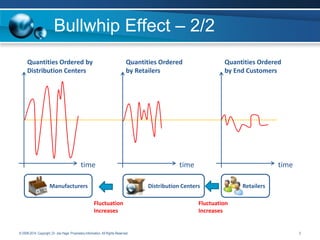
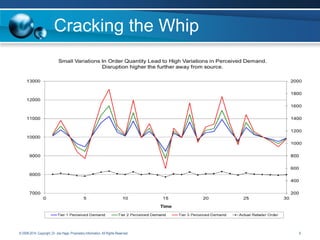


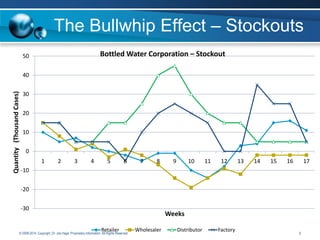

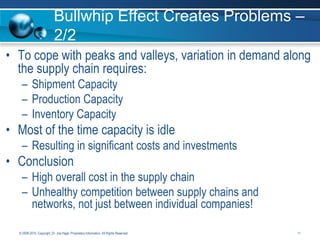


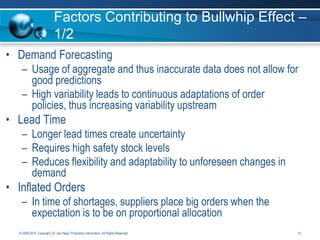
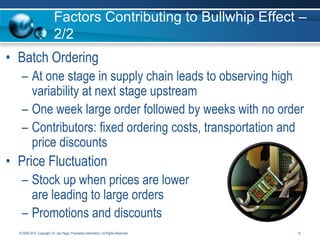


The document discusses the bullwhip effect, which describes how small changes in customer demand can lead to significant order variations up the supply chain, causing inefficiencies and increased costs. Factors such as demand forecasting inaccuracies, lead time uncertainty, inflated orders, and batch ordering contribute to this phenomenon. Ultimately, the document emphasizes that traditional supply chains often fail to communicate consumer demand accurately, resulting in elevated buffer stocks and suboptimal outcomes for the entire network.


![Bullwhip effect[1]](https://cdn.slidesharecdn.com/ss_thumbnails/bullwhipeffect1-120723034504-phpapp01-thumbnail.jpg?width=640&height=640&fit=bounds)


