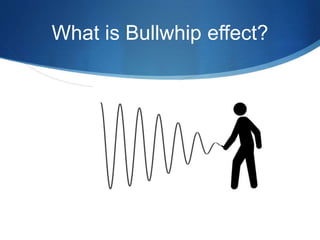
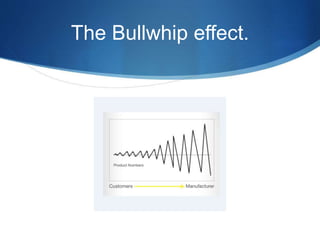
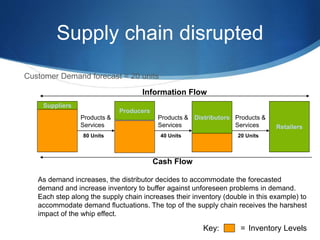
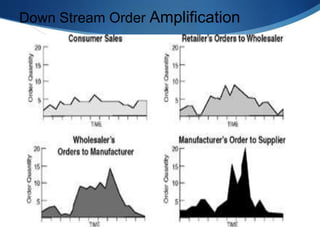
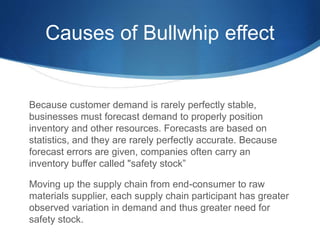
The bullwhip effect refers to larger swings in inventory levels and orders as one moves up the supply chain away from the customer. It occurs as each company amplifies the fluctuations in customer demand when placing orders with its suppliers. This results in excess and insufficient inventory levels throughout the supply chain. The bullwhip effect is caused by factors like forecast errors, batch ordering, pricing variations, and a lack of demand information sharing between supply chain partners. To reduce the bullwhip effect, companies should improve communication, demand forecasting, information sharing, and move towards a demand-driven supply chain model.

















![Bullwhip effect[1]](https://cdn.slidesharecdn.com/ss_thumbnails/bullwhipeffect1-120723034504-phpapp01-thumbnail.jpg?width=640&height=640&fit=bounds)


