Presentation By:
Gagandeep Sohanpal
Vaibhav Kakkar
Sanchit Bahl
Gaurav Dora
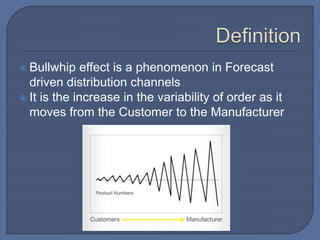
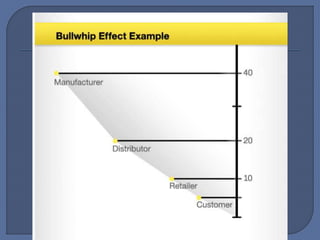
 Bullwhip effect is a phenomenon in Forecast
driven distribution channels
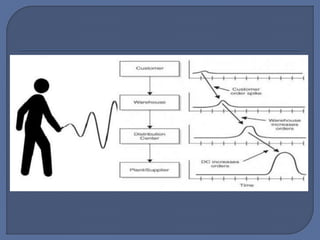
 It is the increase in the variability of order as it
moves from the Customer to the Manufacturer
In a supply chain plagued with Bullwhip effect, the
distortion in information is escalated as it moves up in the
chain
Some symptoms of Bullwhip are:
1. Excessive inventory
2. Poor product forecast
3. Insufficient capacities
4. Long backlogs
5. Uncertain Product planning
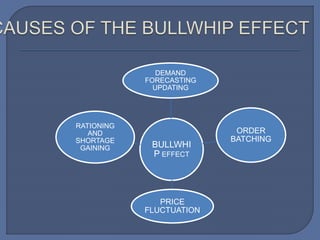
BULLWHI
P EFFECT
DEMAND
FORECASTING
UPDATING
ORDER
BATCHING
PRICE
FLUCTUATION
RATIONING
AND
SHORTAGE
GAINING
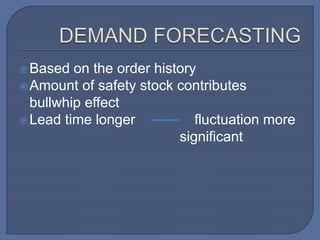
Based on the order history
Amount of safety stock contributes
bullwhip effect
Lead time longer fluctuation more
significant
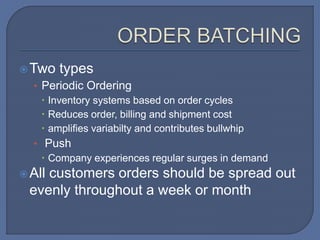
Two types
• Periodic Ordering
 Inventory systems based on order cycles
 Reduces order, billing and shipment cost
 amplifies variabilty and contributes bullwhip
• Push
 Company experiences regular surges in demand
All customers orders should be spread out
evenly throughout a week or month
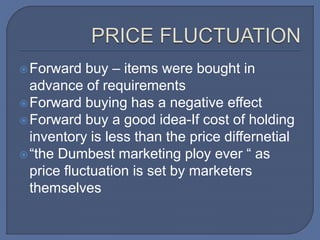
Forward buy – items were bought in
advance of requirements
Forward buying has a negative effect
Forward buy a good idea-If cost of holding
inventory is less than the price differnetial
“the Dumbest marketing ploy ever “ as
price fluctuation is set by marketers
themselves
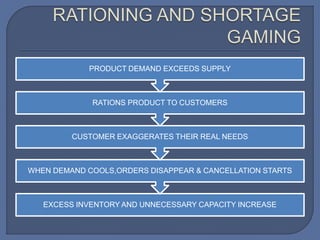
EXCESS INVENTORY AND UNNECESSARY CAPACITY INCREASE
WHEN DEMAND COOLS,ORDERS DISAPPEAR & CANCELLATION STARTS
CUSTOMER EXAGGERATES THEIR REAL NEEDS
RATIONS PRODUCT TO CUSTOMERS
PRODUCT DEMAND EXCEEDS SUPPLY
 Forecasting at each level of supply chain.
 Processing the demand input from the
immediate downstream member.
 The downstream data should be made
available to the upstream site – VMI/CRP
 Companies using VMI are P&G, Nestle, HP
etc.
 Multiple organizations in a supply chain
should use the same forecasting method.
 Bypassing the downstream site like in case of
Dell.
 Just-in-time replenishment.
Variable, non-periodic schedule from the
downstream.
Total Cost = Ordering Cost + Carrying Cost
Use of Electronic Data Interchange(EDI).
Use of full-truckloads – Mixed-SKU(P&G),
Composite Distribution(eg. TESCO,
Sainsbury), third party logistics.
Reduce the frequency and level of
wholesale price discounting.
No exaggeration of orders.
THANK YOU

The bullwhip effect in supply chains

  • 1.
    Presentation By: Gagandeep Sohanpal VaibhavKakkar Sanchit Bahl Gaurav Dora
  • 2.
     Bullwhip effectis a phenomenon in Forecast driven distribution channels  It is the increase in the variability of order as it moves from the Customer to the Manufacturer
  • 3.
    In a supplychain plagued with Bullwhip effect, the distortion in information is escalated as it moves up in the chain Some symptoms of Bullwhip are: 1. Excessive inventory 2. Poor product forecast 3. Insufficient capacities 4. Long backlogs 5. Uncertain Product planning
  • 6.
  • 7.
    Based on theorder history Amount of safety stock contributes bullwhip effect Lead time longer fluctuation more significant
  • 8.
    Two types • PeriodicOrdering  Inventory systems based on order cycles  Reduces order, billing and shipment cost  amplifies variabilty and contributes bullwhip • Push  Company experiences regular surges in demand All customers orders should be spread out evenly throughout a week or month
  • 9.
    Forward buy –items were bought in advance of requirements Forward buying has a negative effect Forward buy a good idea-If cost of holding inventory is less than the price differnetial “the Dumbest marketing ploy ever “ as price fluctuation is set by marketers themselves
  • 10.
    EXCESS INVENTORY ANDUNNECESSARY CAPACITY INCREASE WHEN DEMAND COOLS,ORDERS DISAPPEAR & CANCELLATION STARTS CUSTOMER EXAGGERATES THEIR REAL NEEDS RATIONS PRODUCT TO CUSTOMERS PRODUCT DEMAND EXCEEDS SUPPLY
  • 12.
     Forecasting ateach level of supply chain.  Processing the demand input from the immediate downstream member.  The downstream data should be made available to the upstream site – VMI/CRP  Companies using VMI are P&G, Nestle, HP etc.  Multiple organizations in a supply chain should use the same forecasting method.  Bypassing the downstream site like in case of Dell.  Just-in-time replenishment.
  • 13.
    Variable, non-periodic schedulefrom the downstream. Total Cost = Ordering Cost + Carrying Cost Use of Electronic Data Interchange(EDI). Use of full-truckloads – Mixed-SKU(P&G), Composite Distribution(eg. TESCO, Sainsbury), third party logistics.
  • 14.
    Reduce the frequencyand level of wholesale price discounting. No exaggeration of orders.
  • 15.