Final Year Seminar
National Institute Of Technology, Hamirpu





Prepared By : Mirza Abdul Waris Beigh
Roll No: 10289
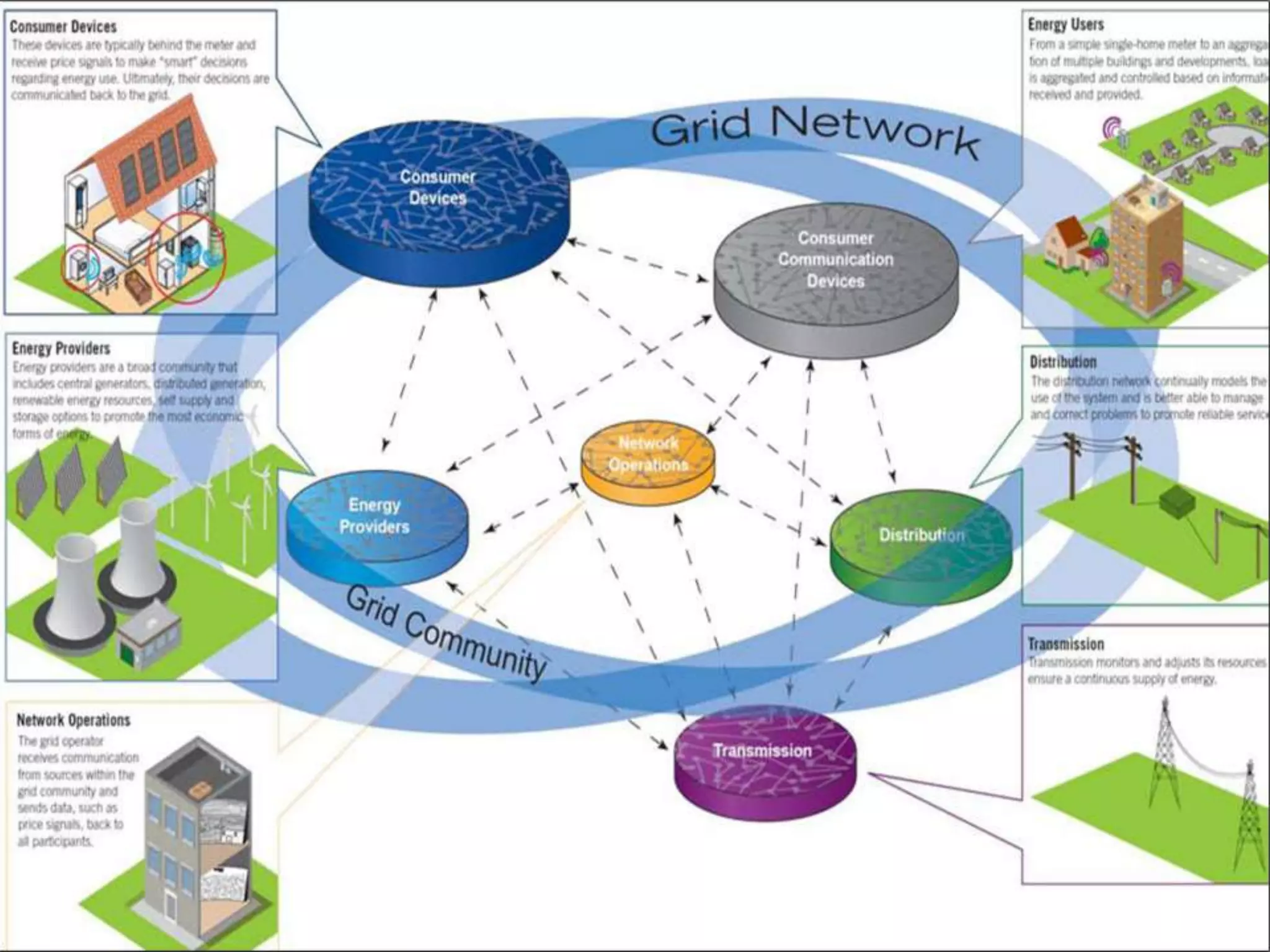
 Smart

Grid is the modernization of the electricity
delivery system so that it monitors, protects and
automatically optimizes the operation of its
interconnected elements.
 Smart grid is the integration of information and
communications system into electric
transmission and distribution networks.
 The flow of electricity from utility to consumer
becomes a two-way conversation i.e. two way
flow of information.
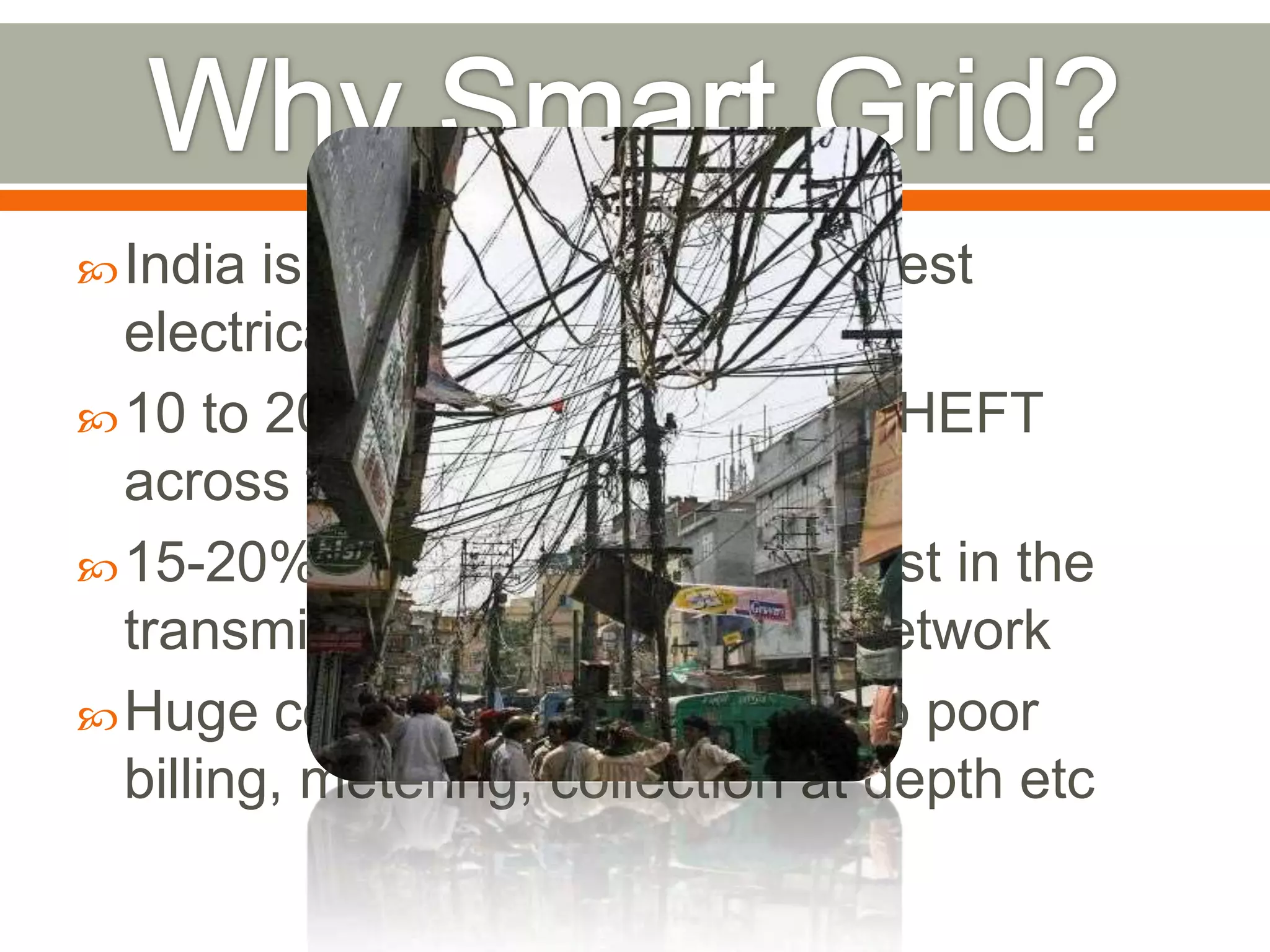
 India

is having one of the weakest
electrical grids in the world
 10 to 20 % of power is lost to THEFT
across the utilities in India.
 15-20% power transmitted is lost in the
transmission and distribution network
 Huge commercial losses due to poor
billing, metering, collection at depth etc
Proactive

management of electrical
network during emergency situations.
Better demand supply / demand
response management.
Better power quality
Reduce carbon emissions.
Increasing demand for energy : requires
more complex and critical solution with
better energy management
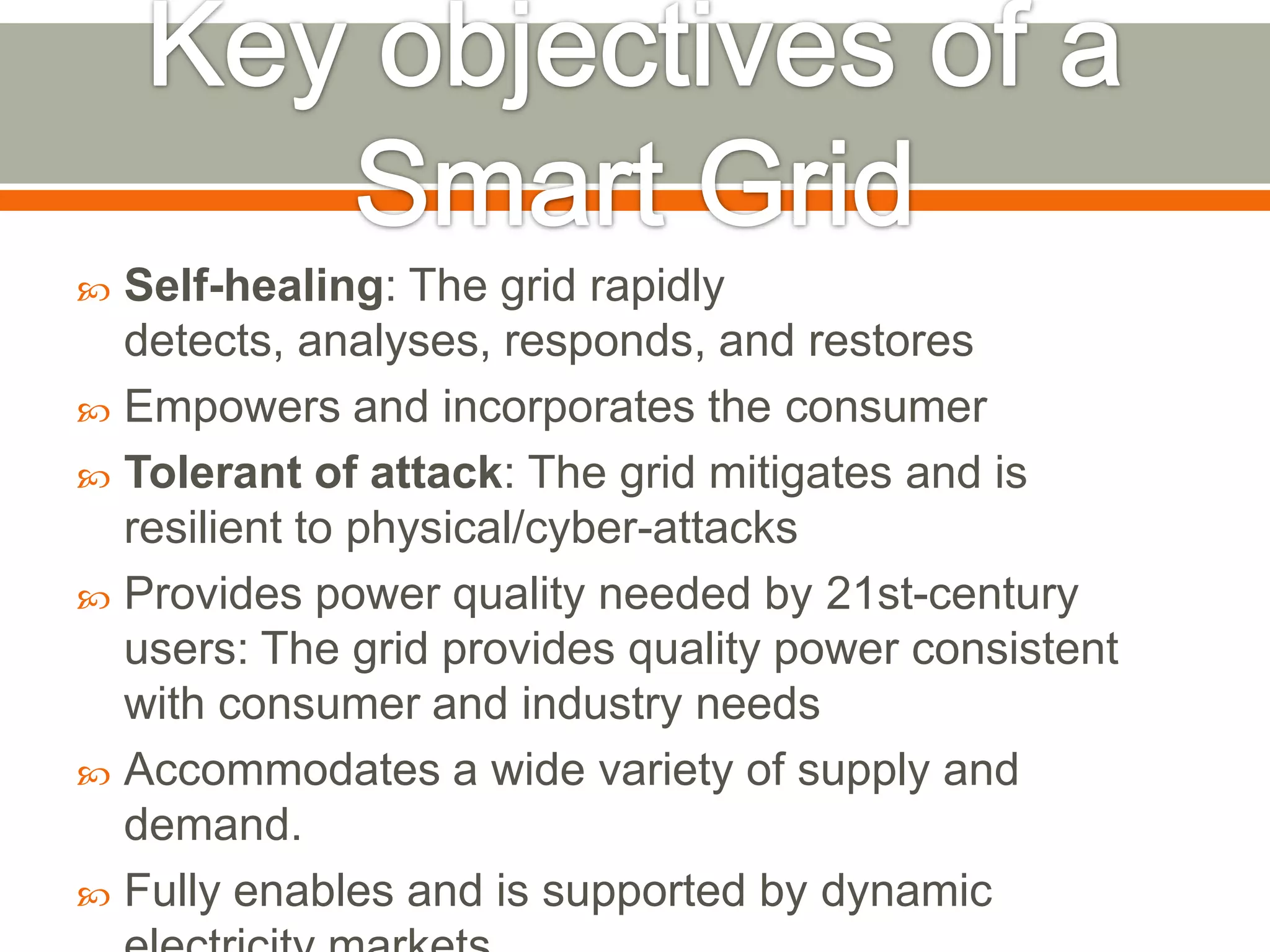
Self-healing: The grid rapidly
detects, analyses, responds, and restores
 Empowers and incorporates the consumer
 Tolerant of attack: The grid mitigates and is
resilient to physical/cyber-attacks
 Provides power quality needed by 21st-century
users: The grid provides quality power consistent
with consumer and industry needs
 Accommodates a wide variety of supply and
demand.
 Fully enables and is supported by dynamic

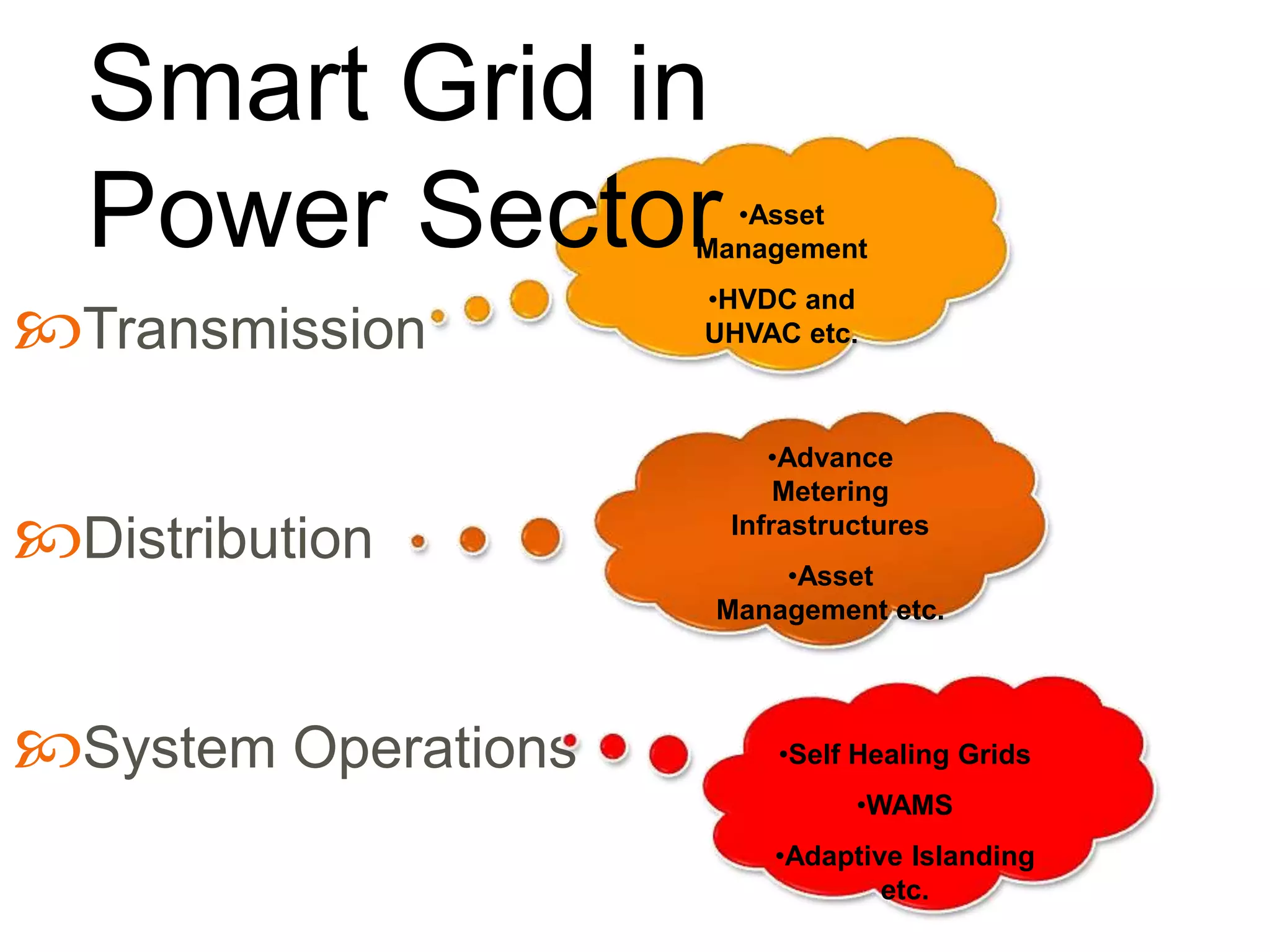
Smart Grid in
Power Sector

•Asset
Management

Transmission
Distribution
System Operations

•HVDC and
UHVAC etc.

•Advance
Metering
Infrastructures
•Asset
Management etc.

•Self Healing Grids
•WAMS
•Adaptive Islanding
etc.


Smart Metering –
 Automatic, Time of Use, Consumer Communication & Load Control



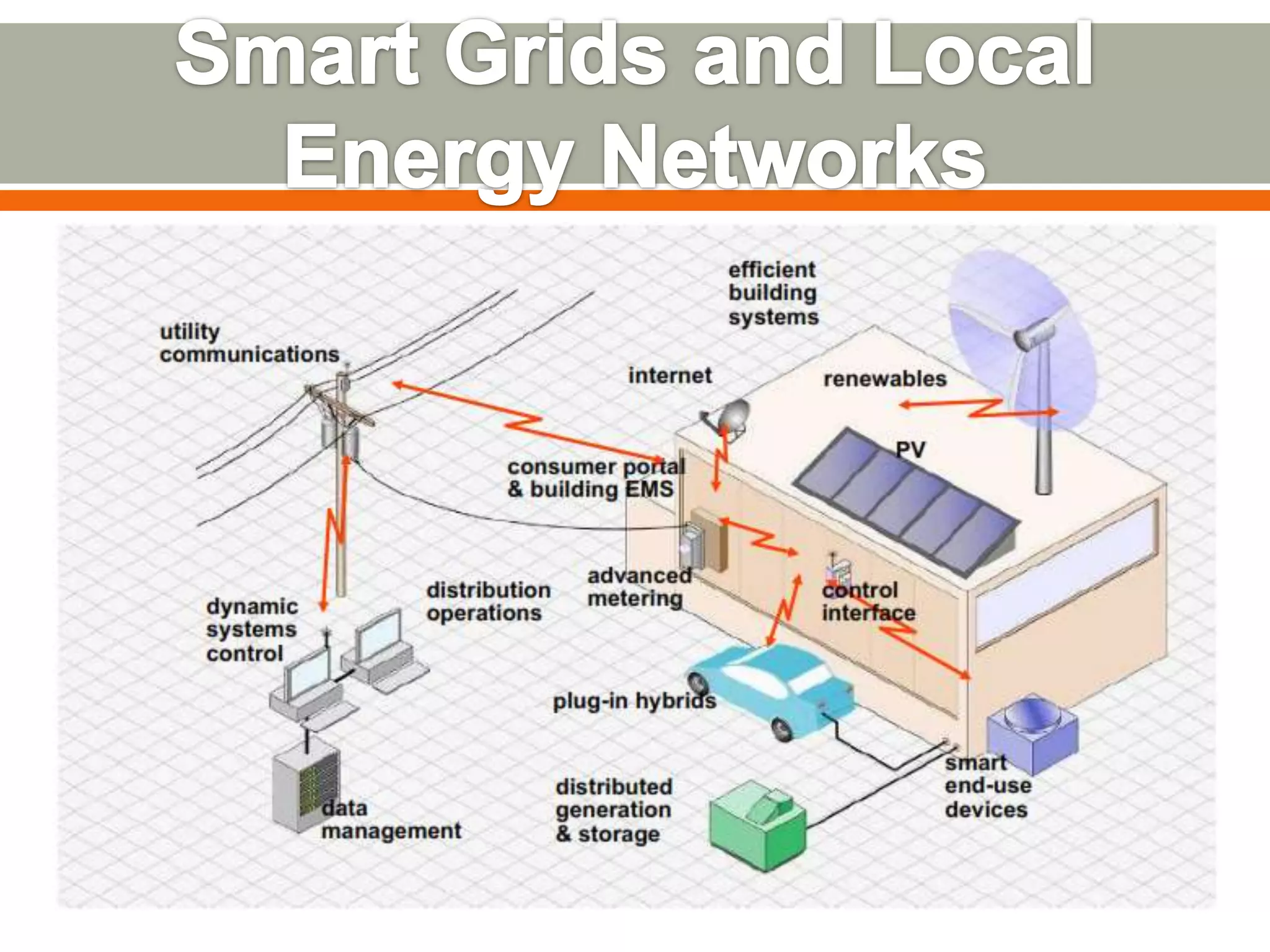
Communications : Automated Metering
Infrastructure (AMI) – LAN, WAN, HAN



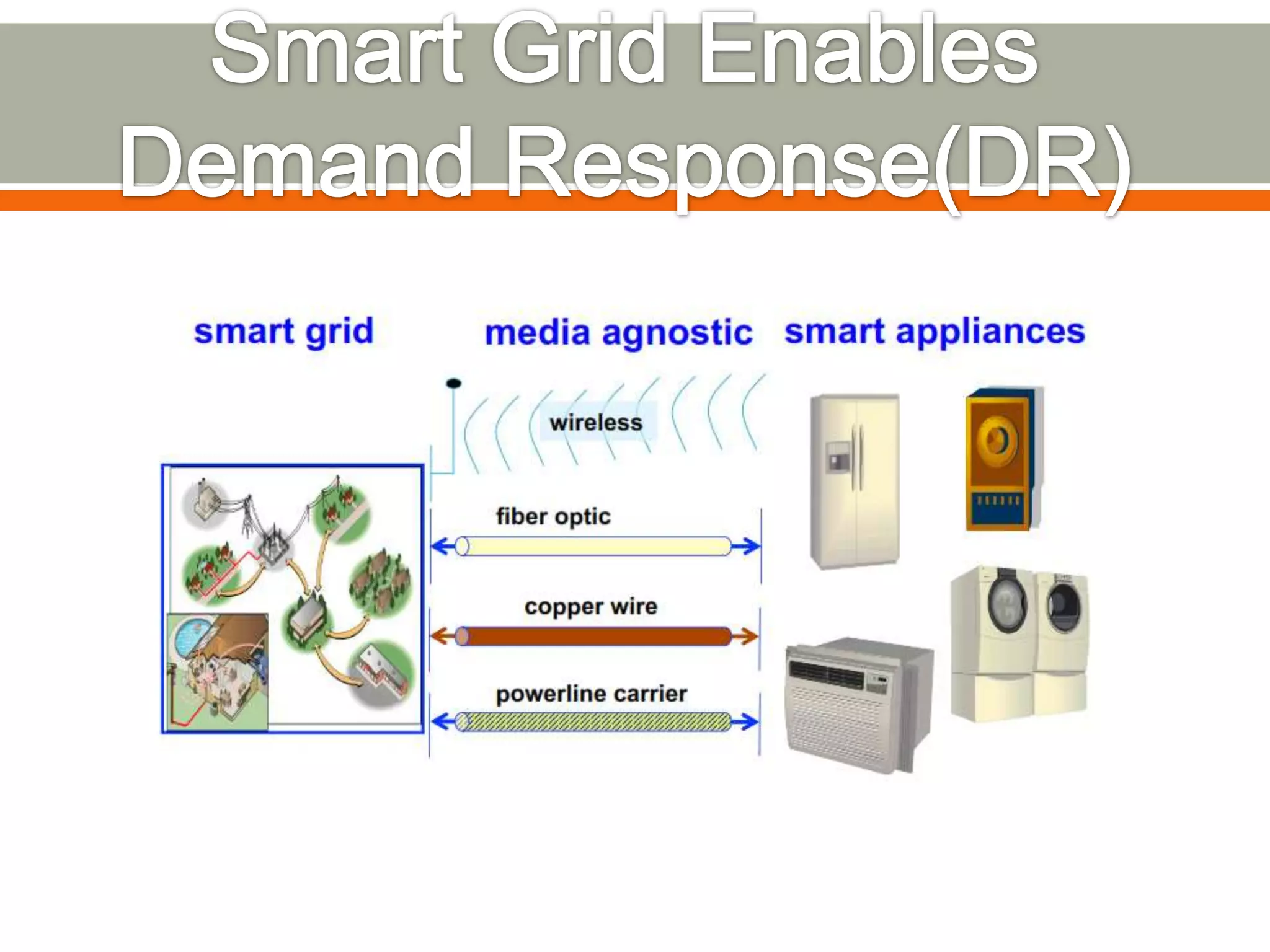
DRMS (Demand Response Management)



In Home enabling technology
o Demand in three category:

• Immediate, Deferrable, Storable
o Customer aggregation & De-aggregation required for Peak shifting
 Enhance

power system measurements
and enable the transformation of data into
information.
 Evaluate the health of equipment, the
integrity of the grid, and support advanced
protective relaying.
 Enable consumer choice and demand
response, and help relieve congestion
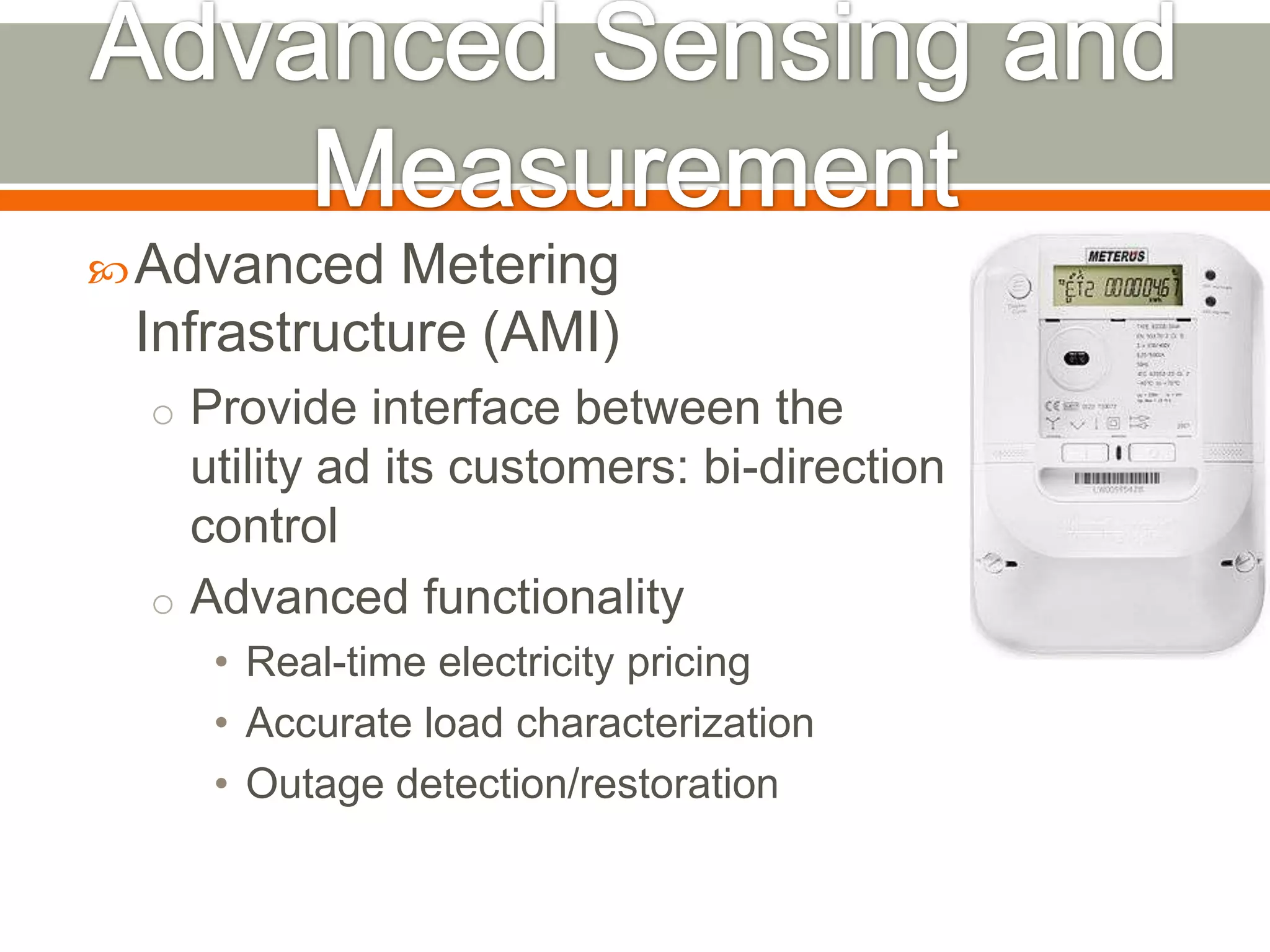
 Advanced

Metering
Infrastructure (AMI)
o Provide interface between the

utility ad its customers: bi-direction
control
o Advanced functionality
• Real-time electricity pricing
• Accurate load characterization
• Outage detection/restoration
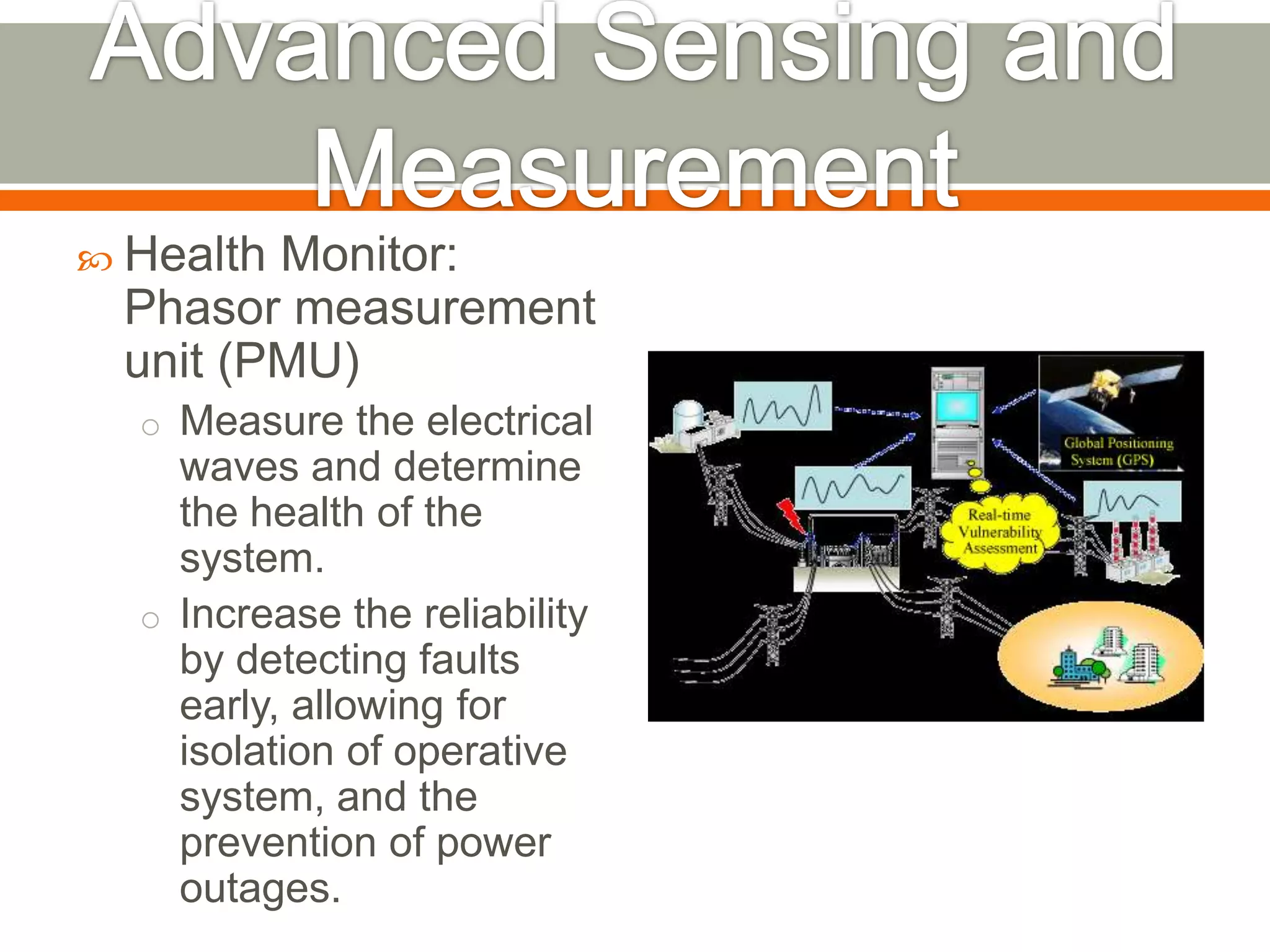
 Health

Monitor:
Phasor measurement
unit (PMU)
o Measure the electrical

waves and determine
the health of the
system.
o Increase the reliability
by detecting faults
early, allowing for
isolation of operative
system, and the
prevention of power
outages.
The Key to Effective Demand Side Management
 AMI

is a basic element of the smart grid; its role
is to furnish information and active interactive
capability to service providers and customers
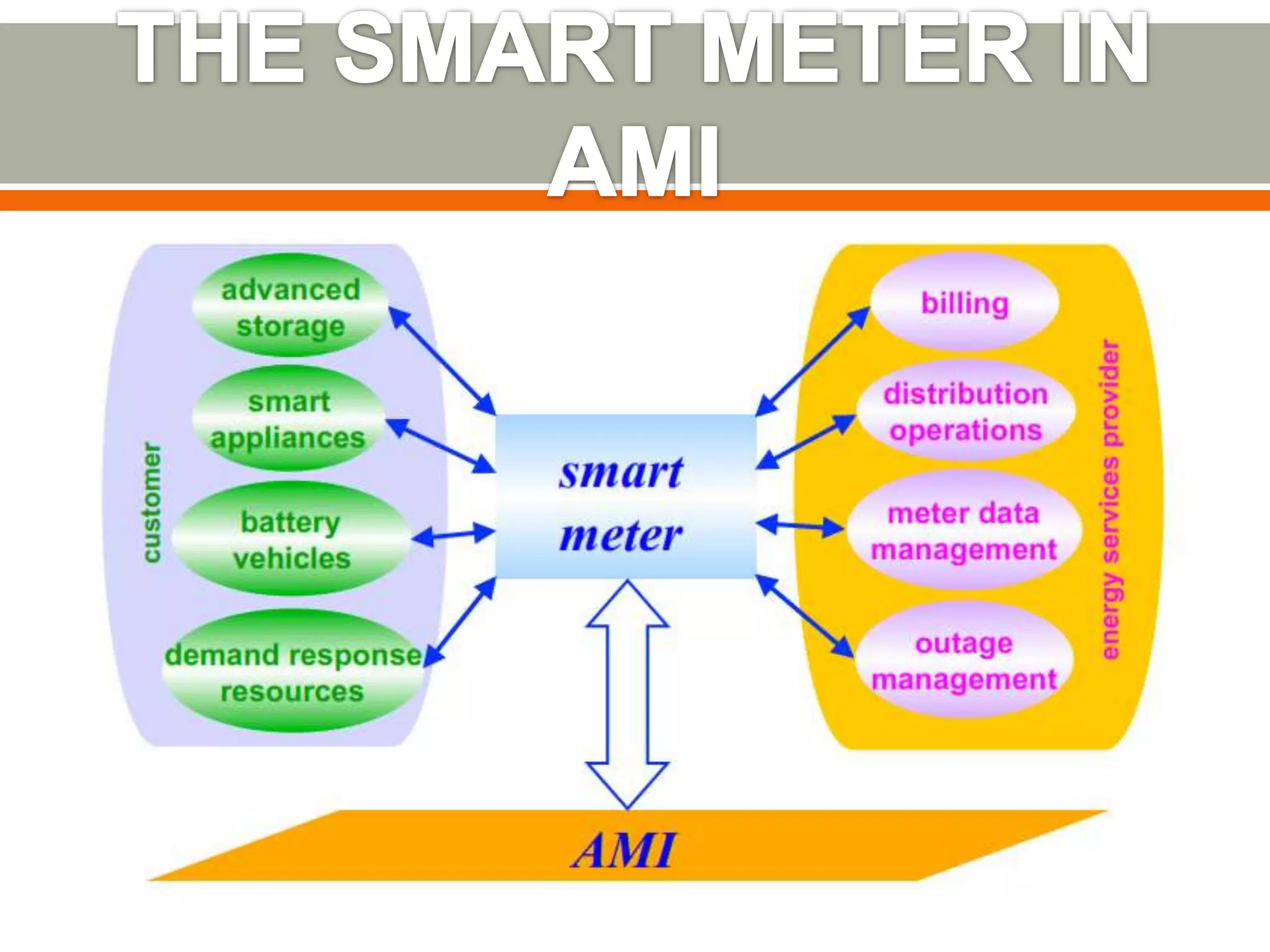
 AMI consists of smart meters, integrated two
way communications infrastructure, active
customer
interface,
and
meter
data
management system to gather and store
customer data
 In addition, AMI provides interfaces to other
electricity company enterprise systems
 The

smart meter is the central nervous system
of the AMI
 The ability to collect consumption data in
discrete time intervals allows the utilities to
charge time differentiated rates for electricity
usage
 The meter can also perform other useful
advanced functions, such as remote
connect/disconnect
 The meter is also a key need in the


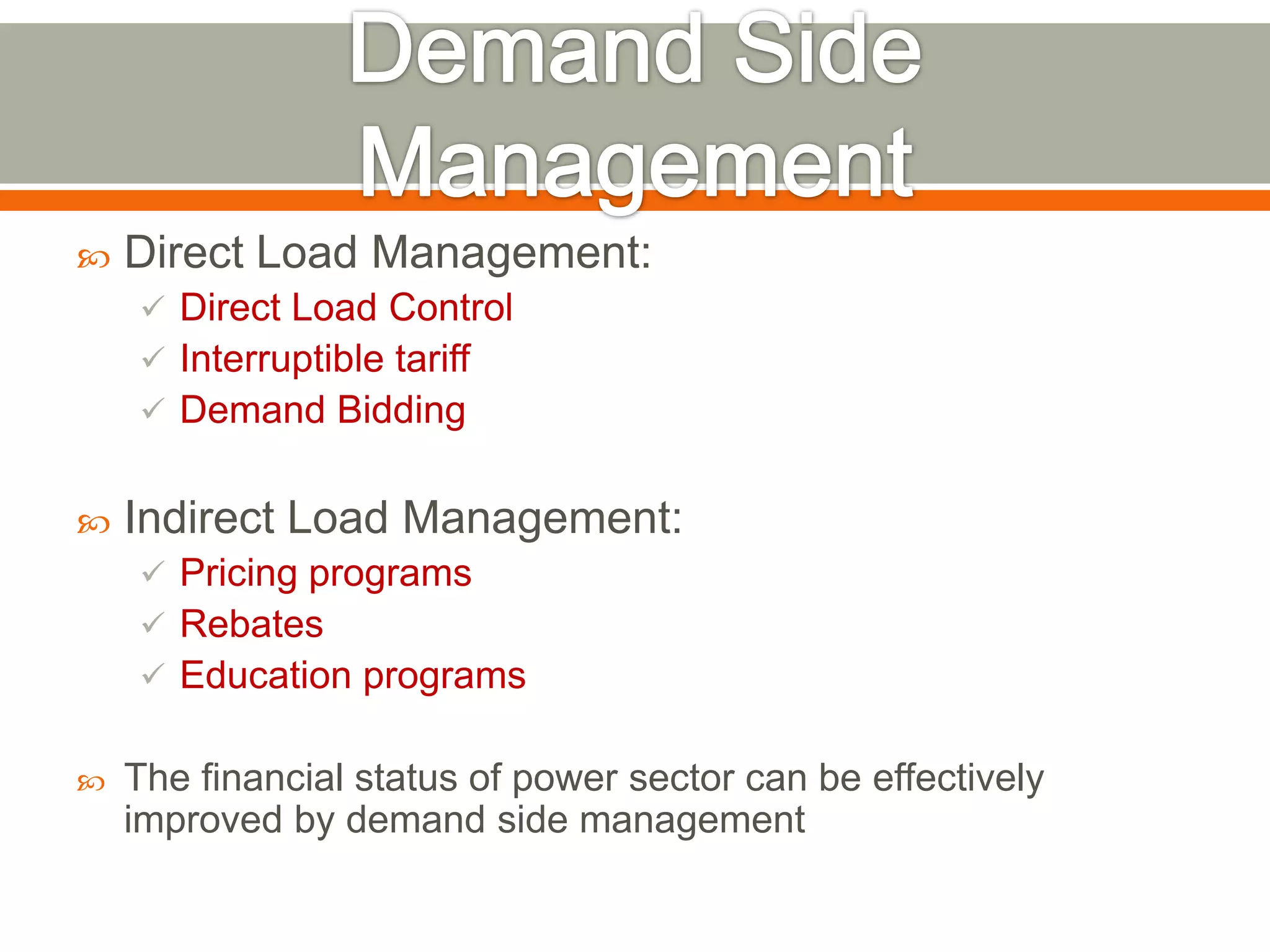
Direct Load Management:
 Direct Load Control
 Interruptible tariff
 Demand Bidding



Indirect Load Management:
 Pricing programs
 Rebates
 Education programs



The financial status of power sector can be effectively
improved by demand side management
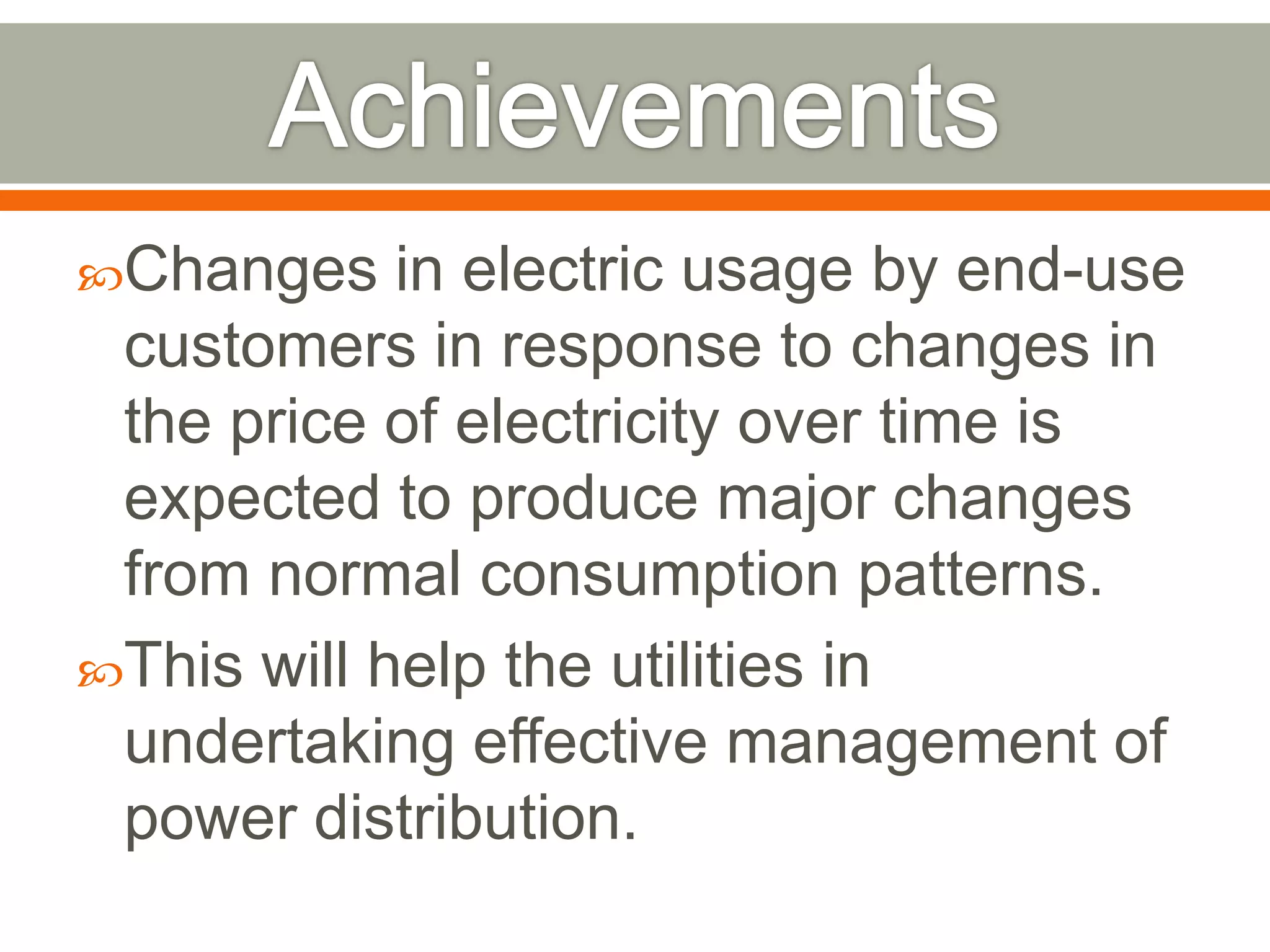
Changes

in electric usage by end-use
customers in response to changes in
the price of electricity over time is
expected to produce major changes
from normal consumption patterns.
This will help the utilities in
undertaking effective management of
power distribution.
 Energy Usage Information
 Efficient Communication between Utilities and

Customers
 Consumer Enrollment in DR programs
 In Home Technology- Availability & Purchase

, Device Provisioning
Demand Side Management of a Smart Grid

Demand Side Management of a Smart Grid

  • 1.
    Final Year Seminar NationalInstitute Of Technology, Hamirpu   Prepared By : Mirza Abdul Waris Beigh Roll No: 10289
  • 2.
     Smart Grid isthe modernization of the electricity delivery system so that it monitors, protects and automatically optimizes the operation of its interconnected elements.  Smart grid is the integration of information and communications system into electric transmission and distribution networks.  The flow of electricity from utility to consumer becomes a two-way conversation i.e. two way flow of information.
  • 3.
     India is havingone of the weakest electrical grids in the world  10 to 20 % of power is lost to THEFT across the utilities in India.  15-20% power transmitted is lost in the transmission and distribution network  Huge commercial losses due to poor billing, metering, collection at depth etc
  • 4.
    Proactive management of electrical networkduring emergency situations. Better demand supply / demand response management. Better power quality Reduce carbon emissions. Increasing demand for energy : requires more complex and critical solution with better energy management
  • 6.
    Self-healing: The gridrapidly detects, analyses, responds, and restores  Empowers and incorporates the consumer  Tolerant of attack: The grid mitigates and is resilient to physical/cyber-attacks  Provides power quality needed by 21st-century users: The grid provides quality power consistent with consumer and industry needs  Accommodates a wide variety of supply and demand.  Fully enables and is supported by dynamic 
  • 7.
    Smart Grid in PowerSector •Asset Management Transmission Distribution System Operations •HVDC and UHVAC etc. •Advance Metering Infrastructures •Asset Management etc. •Self Healing Grids •WAMS •Adaptive Islanding etc.
  • 9.
     Smart Metering – Automatic, Time of Use, Consumer Communication & Load Control  Communications : Automated Metering Infrastructure (AMI) – LAN, WAN, HAN  DRMS (Demand Response Management)  In Home enabling technology o Demand in three category: • Immediate, Deferrable, Storable o Customer aggregation & De-aggregation required for Peak shifting
  • 10.
     Enhance power systemmeasurements and enable the transformation of data into information.  Evaluate the health of equipment, the integrity of the grid, and support advanced protective relaying.  Enable consumer choice and demand response, and help relieve congestion
  • 11.
     Advanced Metering Infrastructure (AMI) oProvide interface between the utility ad its customers: bi-direction control o Advanced functionality • Real-time electricity pricing • Accurate load characterization • Outage detection/restoration
  • 12.
     Health Monitor: Phasor measurement unit(PMU) o Measure the electrical waves and determine the health of the system. o Increase the reliability by detecting faults early, allowing for isolation of operative system, and the prevention of power outages.
  • 13.
    The Key toEffective Demand Side Management
  • 14.
     AMI is abasic element of the smart grid; its role is to furnish information and active interactive capability to service providers and customers  AMI consists of smart meters, integrated two way communications infrastructure, active customer interface, and meter data management system to gather and store customer data  In addition, AMI provides interfaces to other electricity company enterprise systems
  • 16.
     The smart meteris the central nervous system of the AMI  The ability to collect consumption data in discrete time intervals allows the utilities to charge time differentiated rates for electricity usage  The meter can also perform other useful advanced functions, such as remote connect/disconnect  The meter is also a key need in the
  • 17.
     Direct Load Management: Direct Load Control  Interruptible tariff  Demand Bidding  Indirect Load Management:  Pricing programs  Rebates  Education programs  The financial status of power sector can be effectively improved by demand side management
  • 20.
    Changes in electric usageby end-use customers in response to changes in the price of electricity over time is expected to produce major changes from normal consumption patterns. This will help the utilities in undertaking effective management of power distribution.
  • 21.
     Energy UsageInformation  Efficient Communication between Utilities and Customers  Consumer Enrollment in DR programs  In Home Technology- Availability & Purchase , Device Provisioning