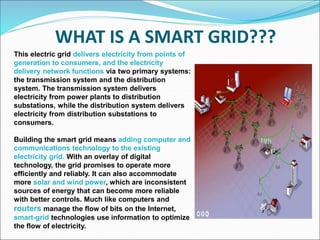
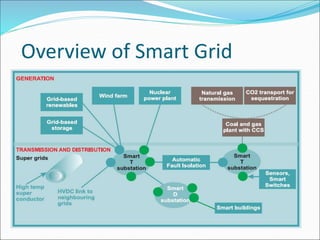
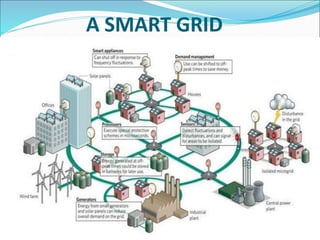
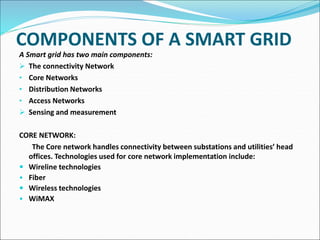
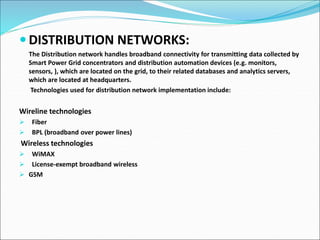
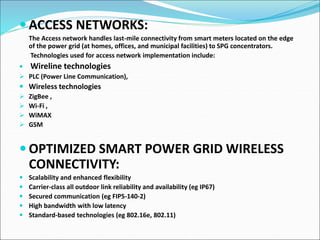
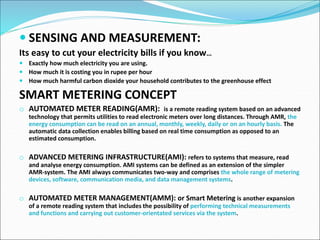
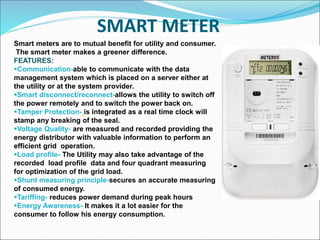
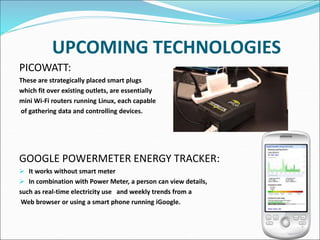
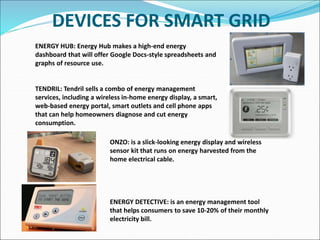
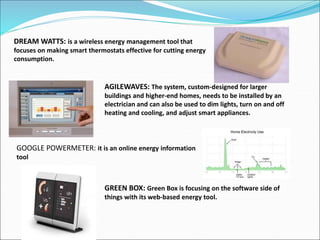
The document discusses smart grid technology, including its definition, components, benefits, and upcoming technologies. A smart grid uses digital technology and two-way communication to more efficiently deliver electricity from points of generation to consumers. Key components include smart meters that provide consumers with energy usage data, as well as sensing and communication technologies throughout the transmission and distribution systems. A smart grid is expected to improve reliability, accommodate more renewable energy, and empower consumers to better manage their energy usage and costs. However, fully implementing smart grid technology faces challenges around coordination across the large existing electric grid infrastructure.