Fibrillation Treatment
Defibrillation
DC (Dirrect Current) Shock
Komarudin
Objectives
• Equipment
• Technique
• Algorithm of Fibrilation Treatment
Anatomy of the Equipment
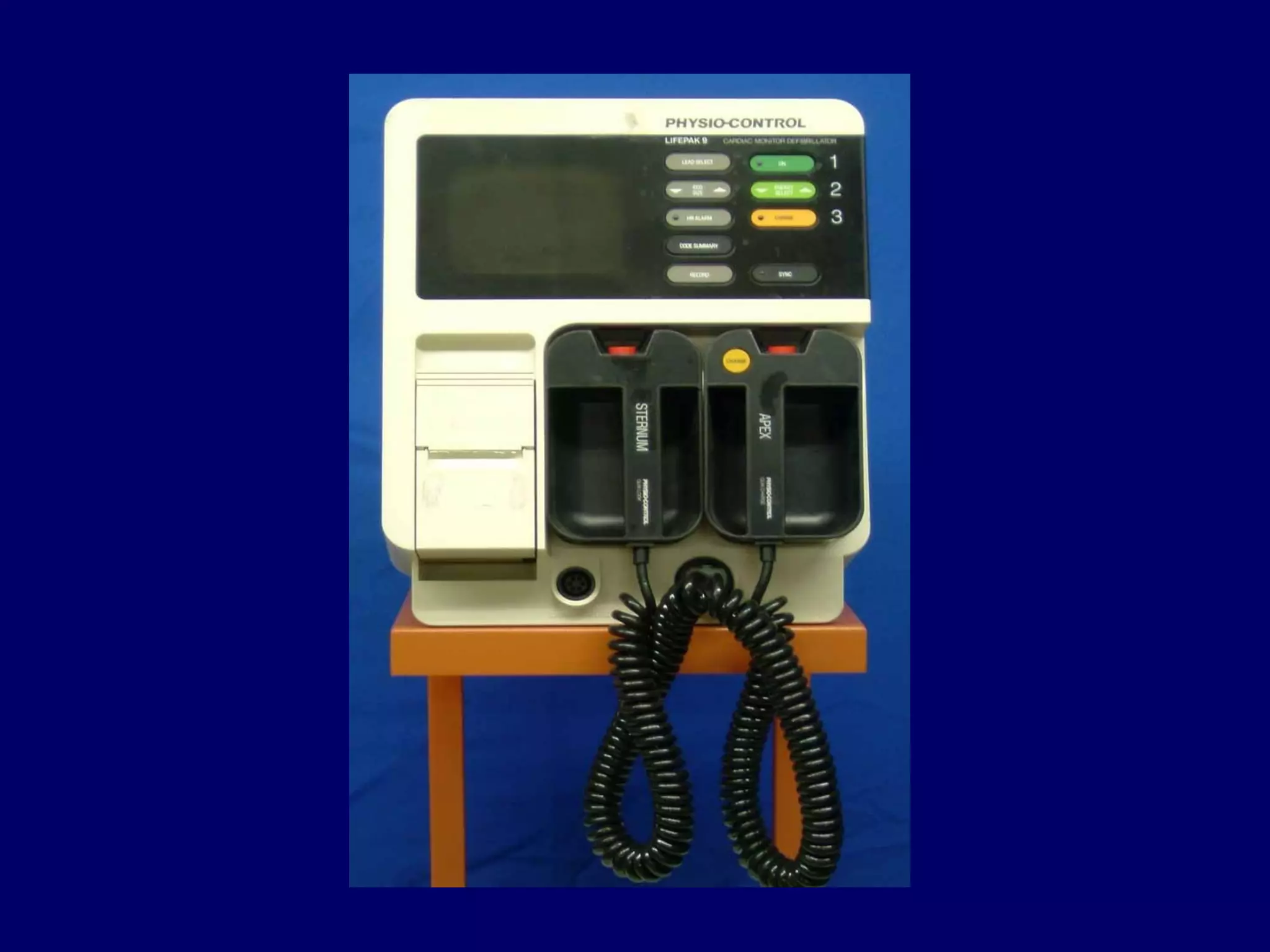
•Defibrillator
Monitoring screen
Connecting leads & electrodes
Panel for energy
setting Panel to choose
unsynchronized or
synchronized
• Pads & Conductive gel
Technique
A Turn On Defibrillator.
B. Plug in monitoring Electrodes
C. Recognize Cardiac Rhythm. : Indication
D. Set Energy Level
Technique ( continue )
E. Apply conductive gel to paddles
F. Apply paddles to chest wall
G. Paddles placement :
Anterolateral
a. One paddle to right of upper
sternum below clavicle
b. One paddle to left of nipple with
center in midaxillary line
Paddle Positions – Defibrillation
Technique ( continue )
H. Paddle pressure :
Adult ; 25 lbs of pressure to each
paddle
Paediatric ; ensure good contact
with chest wall
I. Ensure electrical safety ;
Patient /Personnel /Operator
Technique ( continue )
J. Charge capacitor
K. Depress both discharge buttons
simultaneously
L. Assess patient ( ECG, pulse, respiration etc)
M. If unsuccessful advance energy level and
repeat process ( standard protocol should be
followed)
Defibrillation || DC (Dirrect Current) Shock

Defibrillation || DC (Dirrect Current) Shock

  • 1.
  • 2.
    Objectives • Equipment • Technique •Algorithm of Fibrilation Treatment
  • 3.
    Anatomy of theEquipment •Defibrillator Monitoring screen Connecting leads & electrodes Panel for energy setting Panel to choose unsynchronized or synchronized • Pads & Conductive gel
  • 5.
    Technique A Turn OnDefibrillator. B. Plug in monitoring Electrodes C. Recognize Cardiac Rhythm. : Indication D. Set Energy Level
  • 6.
    Technique ( continue) E. Apply conductive gel to paddles F. Apply paddles to chest wall G. Paddles placement : Anterolateral a. One paddle to right of upper sternum below clavicle b. One paddle to left of nipple with center in midaxillary line
  • 7.
    Paddle Positions –Defibrillation
  • 8.
    Technique ( continue) H. Paddle pressure : Adult ; 25 lbs of pressure to each paddle Paediatric ; ensure good contact with chest wall I. Ensure electrical safety ; Patient /Personnel /Operator
  • 9.
    Technique ( continue) J. Charge capacitor K. Depress both discharge buttons simultaneously L. Assess patient ( ECG, pulse, respiration etc) M. If unsuccessful advance energy level and repeat process ( standard protocol should be followed)